Why Are My Tomato Leaves Curling? 9 Causes & Fixes
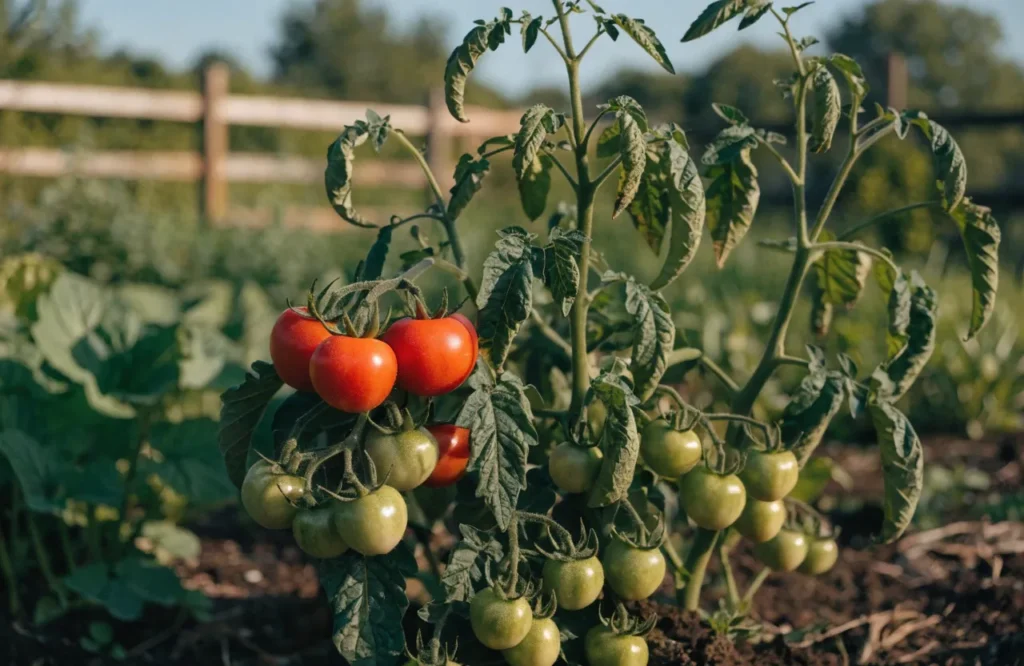
If you’ve walked outside to find your tomato leaves curling, rolling, or twisting, you’re not alone, “why are my tomato leaves curling” is one of the most common questions tomato growers search every summer. The good news: most cases of tomato leaves curling are not a sign of disease. In most home gardens, curling is simply the plant’s way of coping with heat, uneven watering, or a recent transplant, and a simple remedy is usually all it takes.
But leaf curl can occasionally point to something more serious, herbicide drift, a nutrient imbalance, pests, or a virus, so it’s worth learning how to tell the difference, and what treatment each cause actually needs, before you reach for pruning shears or a spray bottle.
Quick Answer: Tomato leaves curling is most often a normal stress response to heat, inconsistent watering, or transplant shock, not a disease, and usually clears up on its own once conditions even out. Check the curl direction and color first: if leaves are still green and the plant is flowering and fruiting, it’s almost certainly temporary. If new growth is twisted or yellowing spreads across the whole plant, that points to herbicide drift or a virus, which need a different response entirely.
🌱 Expert Tip: Before you touch fertilizer, pruners, or a spray bottle, check the time of day. If leaves are curled at 2 p.m. and flat again by 8 a.m., that’s a normal heat response, not a problem to fix. Reserve action for curling that’s still present in the cool of the morning, since that’s the pattern that actually signals a watering, nutrient, or pest issue underneath.
Table of Contents
At a Glance: Why Are Tomato Leaves Curling?
Most tomato leaves curling comes down to one of three buckets:
- Environmental stress (heat, inconsistent watering, transplant shock, pruning, root disturbance), harmless and temporary in almost all cases
- Nutrient or chemical stress (too much nitrogen, herbicide drift), fixable, though herbicide damage can be permanent in severe cases
- Pests or disease (aphids, whiteflies, broad mites, tomato yellow leaf curl virus, and other tomato plant diseases), he least common bucket, but the one that needs the fastest action
If your plant is still green, flowering, and setting fruit, the curling is very likely temporary and your harvest is safe.
How to Diagnose Tomato Leaves Curling: Direction, Location, and Color
Before treating anything, take 60 seconds to inspect the whole plant, not just one leaf:
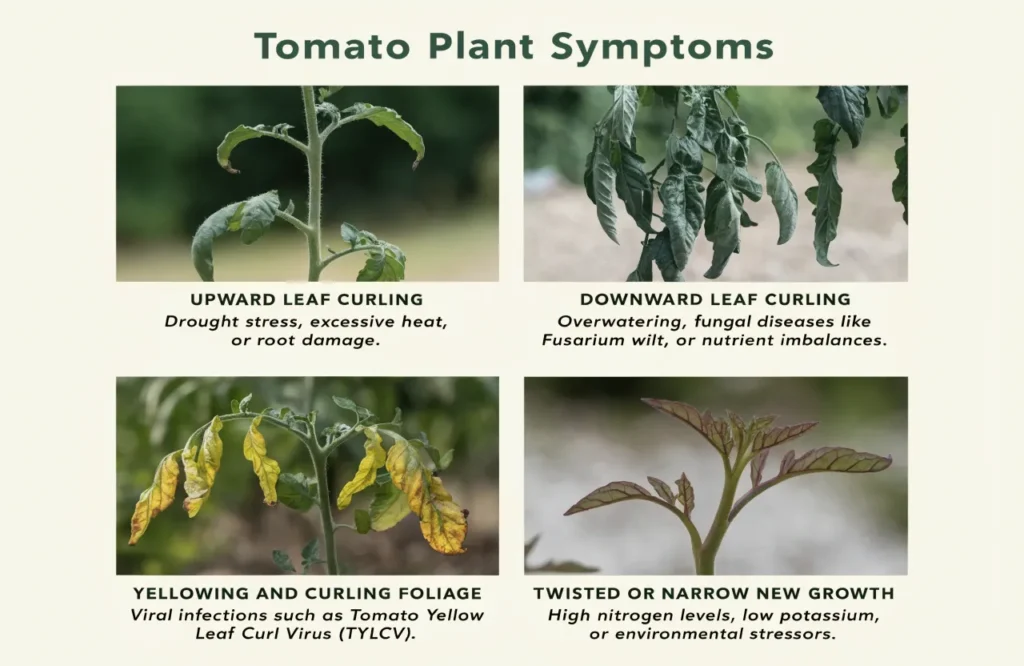
- Which way are the leaves curling, up or down? Tomato leaves curling up and down are actually two different diagnostic signals. Upward curling usually points to heat or moisture stress. Tomato plant leaves curling down more often signal root stress, overwatering, or herbicide exposure.
- Where on the plant is it happening? Curling that starts on the lower, older leaves is typically environmental. Curling concentrated on new growth is more concerning, that’s the pattern most associated with herbicide drift or viral infection.
- Is the color normal? Leaves that stay green are usually just stressed. If tomato leaves are turning yellow alongside curling, or you notice mottling or purple veining, that combination points to a nutrient problem or virus rather than simple stress.
- Is the shape normal, or twisted and narrow? Simple curling is a defense response. Twisted, strap-like, or oddly shaped new leaves suggest chemical injury.
With that framework in mind, here are the nine most common causes of tomato leaves curling, in order of how often they actually occur.
9 Causes of Tomato Leaves Curling (And How to Fix Each One)
1. Heat Stress: Tomato Leaves Curling From Sun and Heat
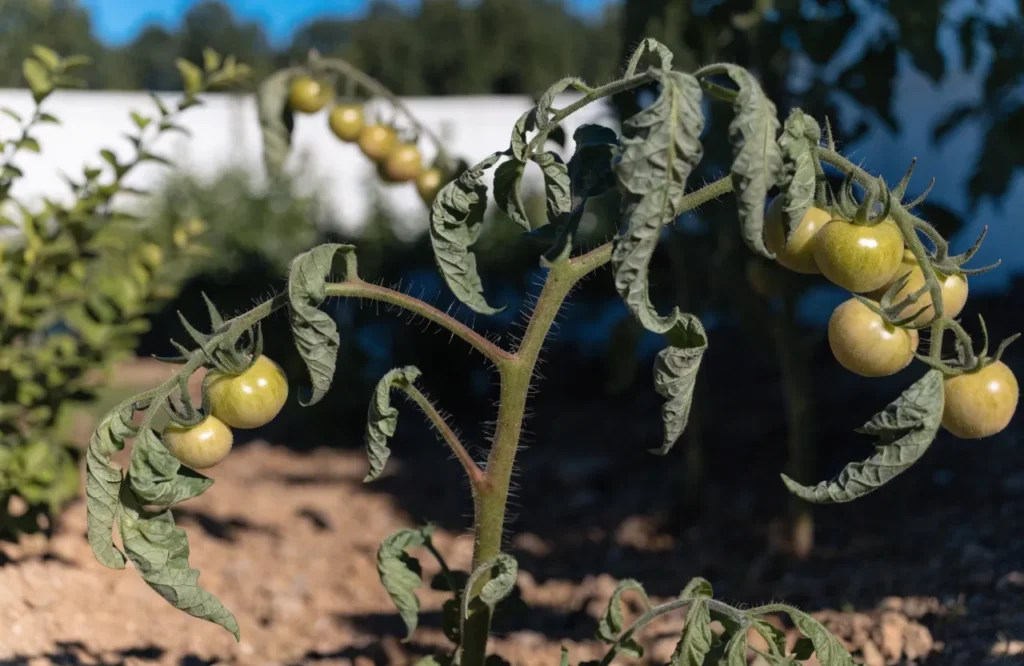
When temperatures climb into the 90°F+ range, tomato plants curl their leaves inward to reduce the surface area exposed to sun and wind. This lowers water loss through transpiration and is one of the plant’s most basic survival mechanisms. If you’re growing tomatoes in pots, expect this to happen more often, containers heat up and dry out faster than garden soil.
What it looks like: Leaves, usually the older, lower ones first, curl upward and inward but stay green. Flowers remain attached and fruit keeps sizing normally.
Fix it:
- Use 30% shade cloth during the hottest stretch of the day
- Water deeply once or twice a week rather than lightly every day
- Apply 2–3 inches of mulch to keep roots cooler and soil moisture more consistent
2. Inconsistent Watering: Tomato Leaves Curling Up and Down
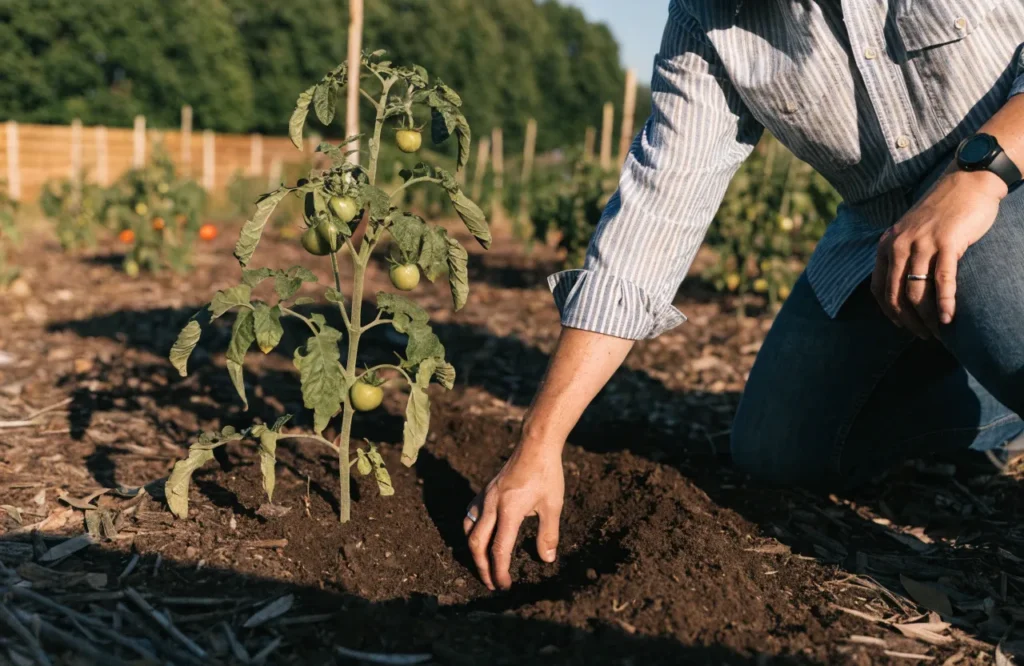
Tomatoes are unusually sensitive to swings between dry and saturated soil. Both underwatering and overwatering can trigger curling, which is why watering is often misdiagnosed. Rather than sticking to a fixed calendar, how often you water tomato plants should really depend on what the soil itself is telling you.
What it looks like: Curling leaf edges, afternoon wilting that recovers by morning, and, over time, cracked fruit or blossom end rot.
Fix it:
- Check soil moisture a few inches down before watering, don’t go by the surface alone
- Water deeply and consistently rather than a quick daily sprinkle
- Set up drip irrigation or self-watering systems if you tend to forget
3. Physiological Leaf Roll: A Harmless Type of Tomato Leaf Curl
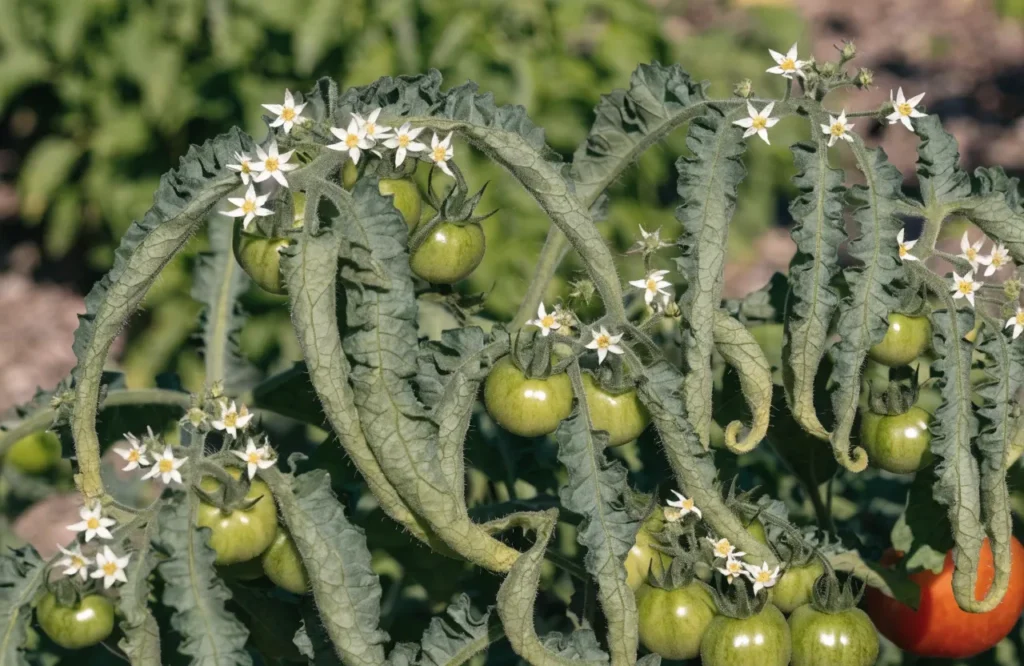
This is the cause behind more unnecessary panic than any other. Physiological leaf roll happens when a tomato plant experiences a combination of minor stressors, heat, heavy fruit load, recent pruning, or root disturbance, and responds by rolling its leaves tightly upward.
What it looks like: Leaves cup or roll into tube shapes but stay a healthy green. It’s most common on plants that have been recently staked or pruned, and it shows up more in indeterminate varieties than determinate ones, a difference worth understanding if you’re picking which type to grow.
Fix it: In most cases, nothing. If the plant is still flowering and fruiting normally, leave it alone, it typically resolves on its own within a couple of weeks.
4. Transplant Shock and New Tomato Leaves Curling
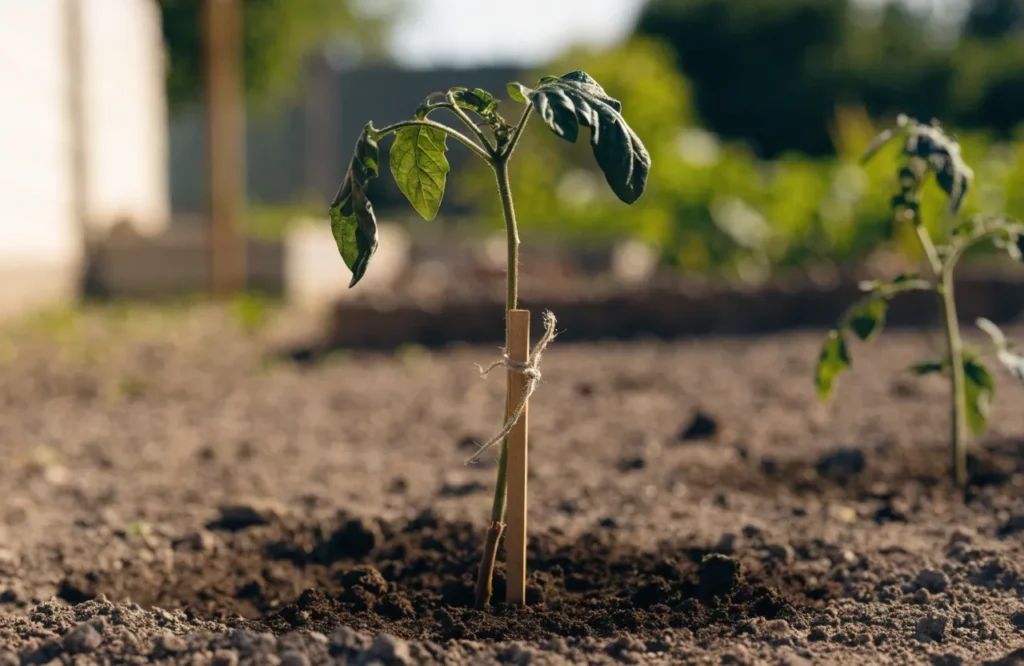
Curling right after you move seedlings into the garden is one of the easiest causes to diagnose, simply because of the timing, it’s a normal bump in the road during the early tomato growing stages, between transplanting and the plant putting down real roots.
What it looks like: Leaves curl and the plant looks slightly wilted for a few days after transplanting, while fine feeder roots regrow.
Fix it: Keep soil consistently moist, hold off on fertilizer for the first week or two, and shield young plants from intense afternoon sun until they’re established.
5. Root Disturbance Behind Tomato Leaves Curling
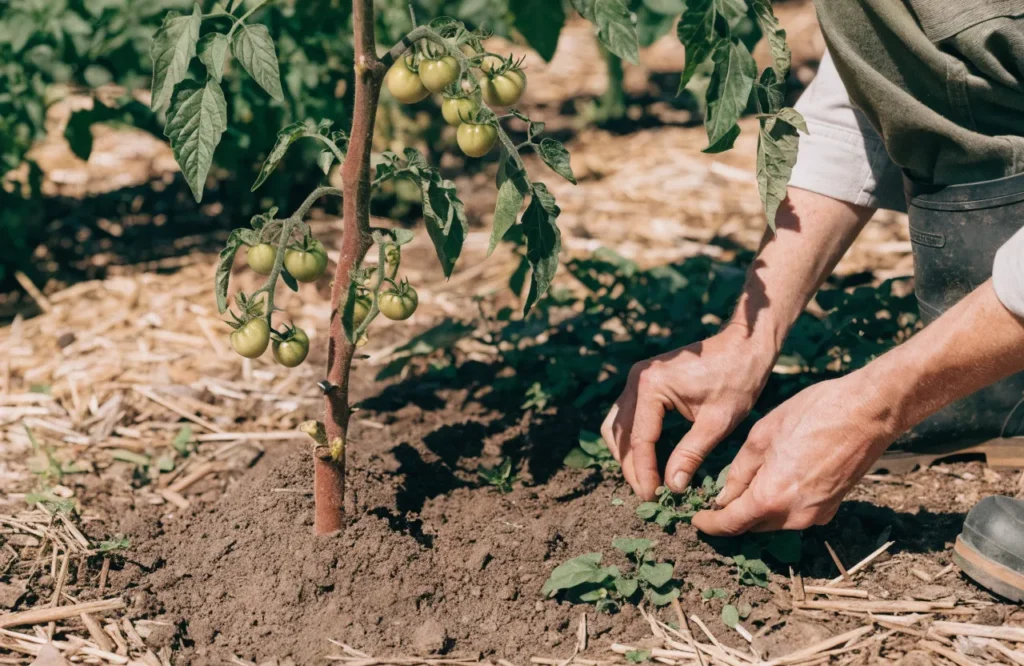
Weeding too aggressively, planting certain crops too close to the stem, or cultivating deeply near the base can damage the shallow surface roots tomatoes rely on for water and nutrient uptake. Picking the right tomato companion plants and giving each plant enough spacing from the start goes a long way toward avoiding this in the first place.
Fix it: Weed shallowly near the base, mulch instead of tilling to control weeds, and give the plant a few days to recover, no other intervention is usually needed.
6. Too Much Nitrogen: A Common Cause of Curling Tomato Leaves
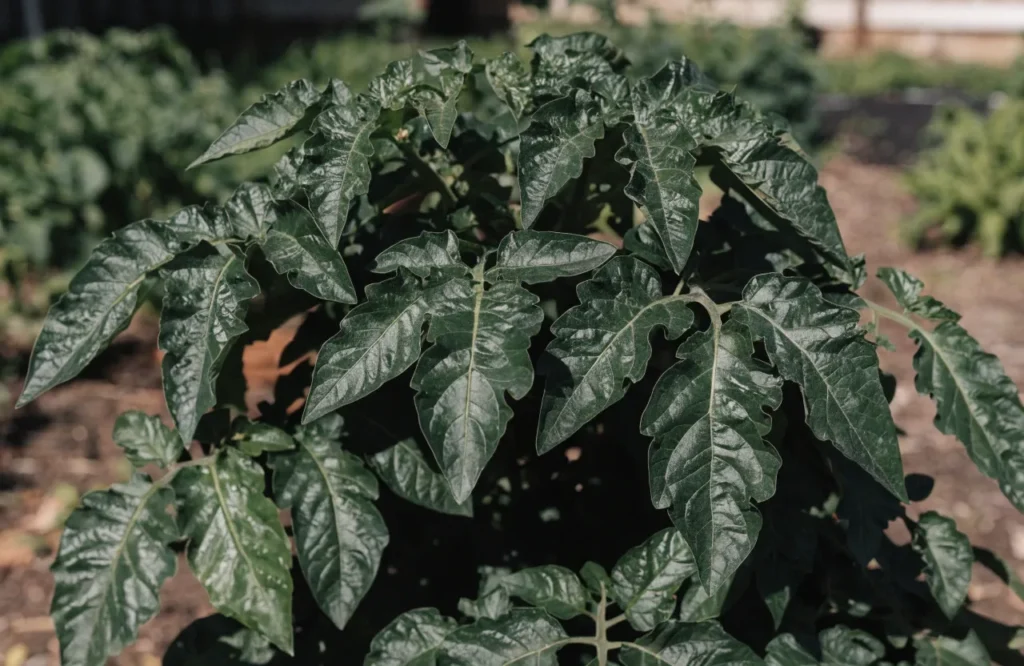
Excess nitrogen pushes a tomato plant into rapid leafy growth that its root system and nutrient supply can’t keep pace with, which shows up as curling.
What it looks like: Leaves are dark green, thick, and leathery, with few flowers or fruit, often after applying lawn fertilizer nearby or over-feeding throughout the season.
Fix it:
- Switch to a tomato fertilizer with balanced nitrogen, phosphorus, and potassium instead of a general lawn or all-purpose feed
- Test your soil before next season, or build your beds with the right soil for tomatoes from the start so you’re not overcorrecting mid-season
- Feed on a schedule rather than continuously
7. Herbicide Drift: Tomato Leaves Curling and Twisting
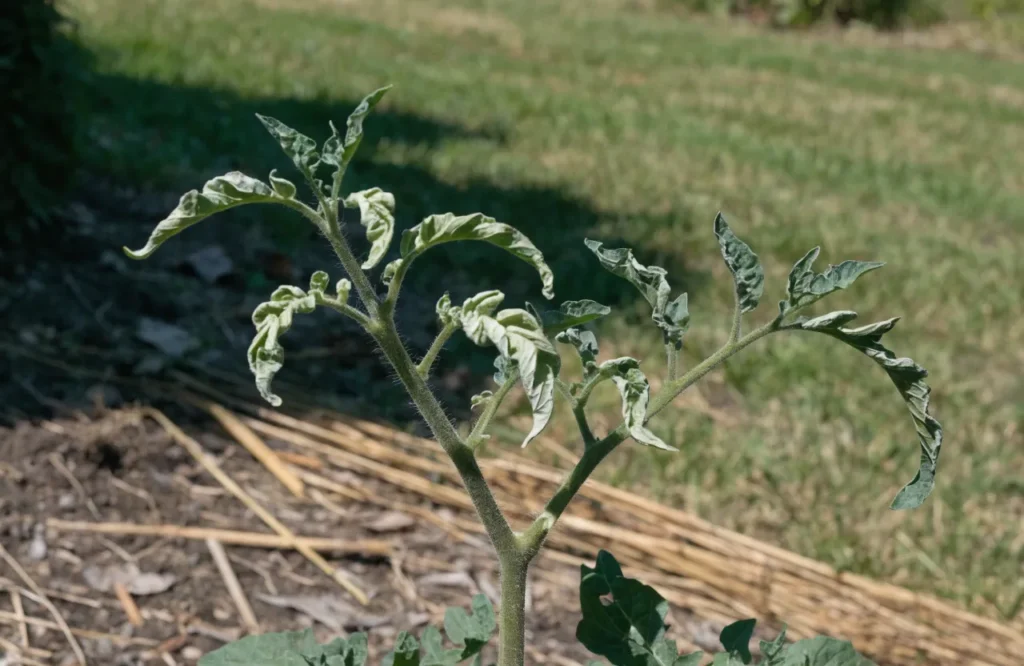
This is one of the few causes of tomato leaf curl that can’t be reversed. Tomatoes are extremely sensitive to broadleaf herbicides like 2,4-D and dicamba, which can drift from a neighbor’s lawn treatment, a nearby field, or even contaminated compost or grass clippings.
What it looks like: New tomato leaves curling into narrow, strap-like, or “C”-shaped growth is the classic herbicide signature, it’s almost always the newest, youngest leaves that show it first and worst. Stems may twist as well, and flowers can drop. Unlike heat stress, damage often looks worse on one side of the plant, whichever side faced the spray.
Fix it: Trim away severely distorted growth and monitor the plant; mild exposure sometimes allows partial recovery. Severe cases usually require removing the plant. Avoid herbicide use nearby on windy days, and never compost clippings from treated lawns.
8. Pests That Cause Tomato Leaf Curl
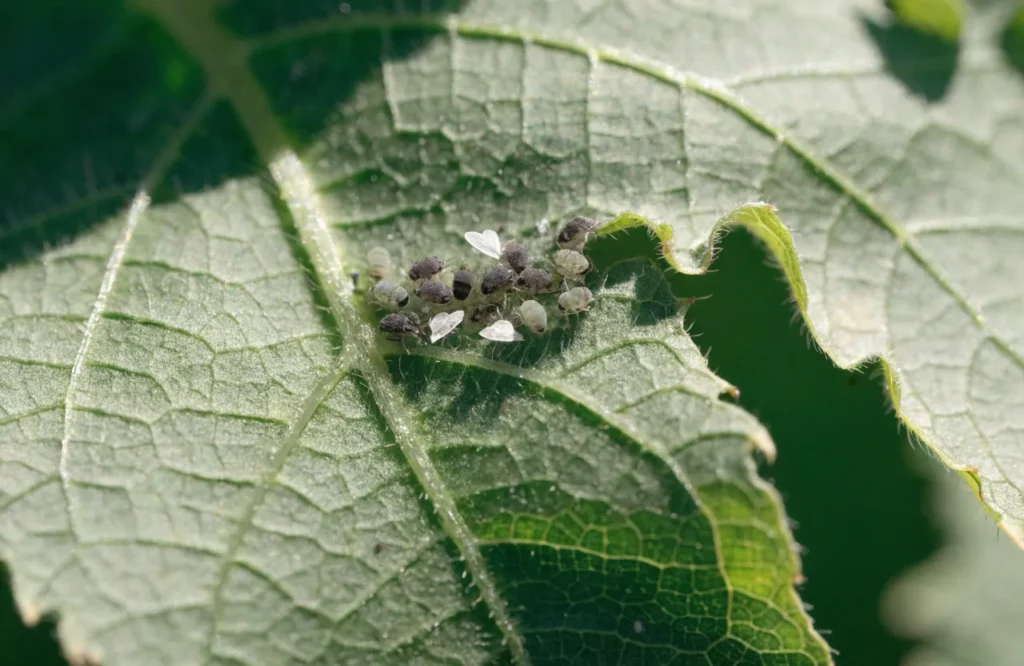
Sap-sucking insects damage leaf tissue as they feed, which causes curling and distortion. Crowded plants make this worse, since poor airflow lets pests spread quickly between neighbors, good tomato spacing makes both early detection and control easier.
What it looks like: Check the undersides of leaves for aphids or whiteflies. Broad mites are nearly invisible to the naked eye but leave a bronzed, distorted look on new growth.
Fix it: A strong blast of water knocks down light aphid populations. For heavier infestations, use neem oil or insecticidal soap, and add floating row covers to prevent whitefly buildup. If you’re not certain what you’re looking at, comparing symptoms against the full range of tomato plant diseases can help narrow it down.
9. Tomato Yellow Leaf Curl Virus (TYLCV) Treatment
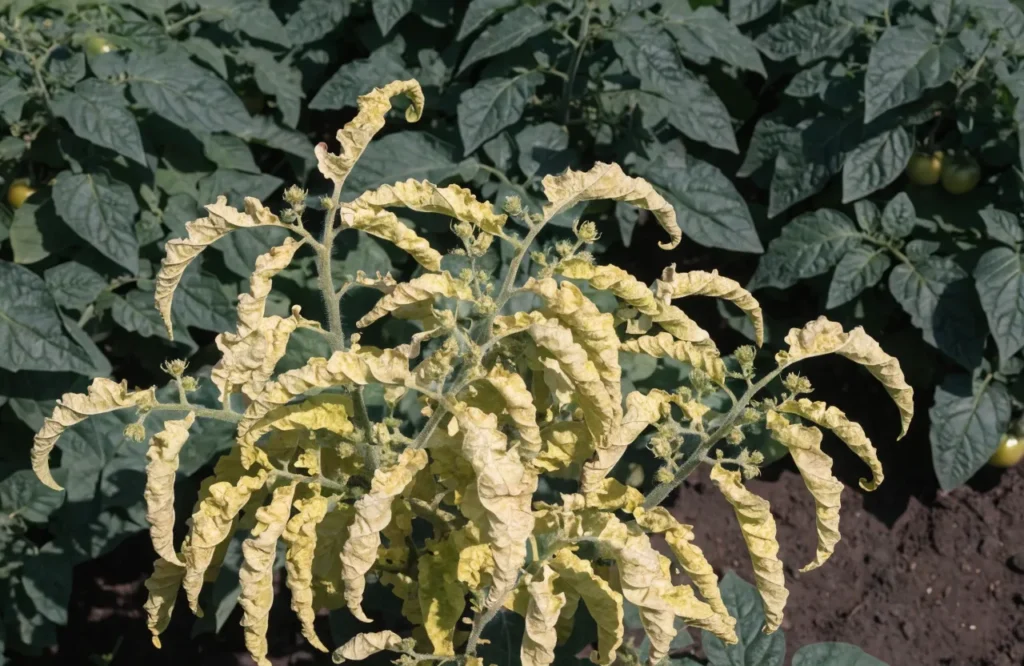
This is the cause gardeners fear most, and it’s also one of the most over-diagnosed. TYLCV is spread by whiteflies and, while serious, is far less common in home gardens than physiological leaf roll or heat stress. It’s also the cause behind most “tomato plant leaves curling and yellowing” searches, since yellowing is its most distinctive symptom, though it’s worth ruling out the other reasons tomato leaves turn yellow before assuming the worst.
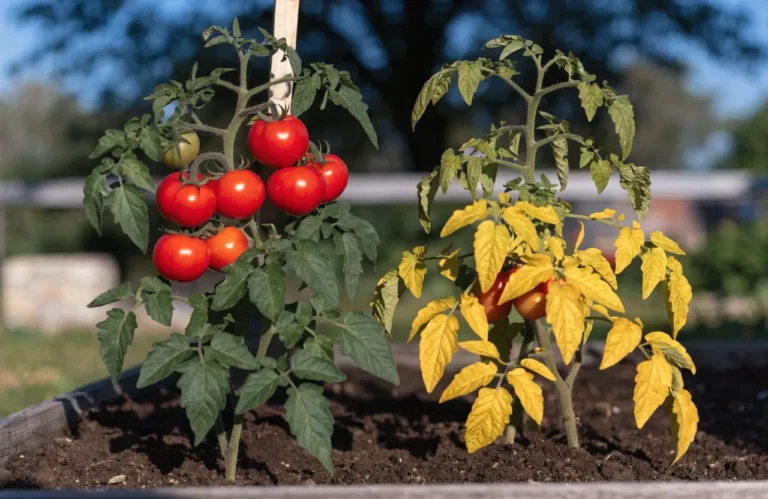
What it looks like: Unlike localized stress curling, TYLCV affects the entire plant. Leaves are small, cupped, and pale-to-yellow with visible veining; the plant is noticeably stunted and bushy, and flowers or young fruit often drop.
Tomato leaf curl virus treatment: No cure or spray reverses TYLCV once a plant is infected, treatment means removal, not recovery. Remove and destroy infected plants immediately (bag and trash them; never compost), and contact your local extension office, which can confirm the diagnosis and advise on disposal. Prevention is the real “treatment”: choose TYLCV-resistant tomato varieties, use reflective mulch and row covers to deter whiteflies, and control weeds that host the virus between seasons.
When Tomato Leaf Curl Is a Sign of a Serious Problem
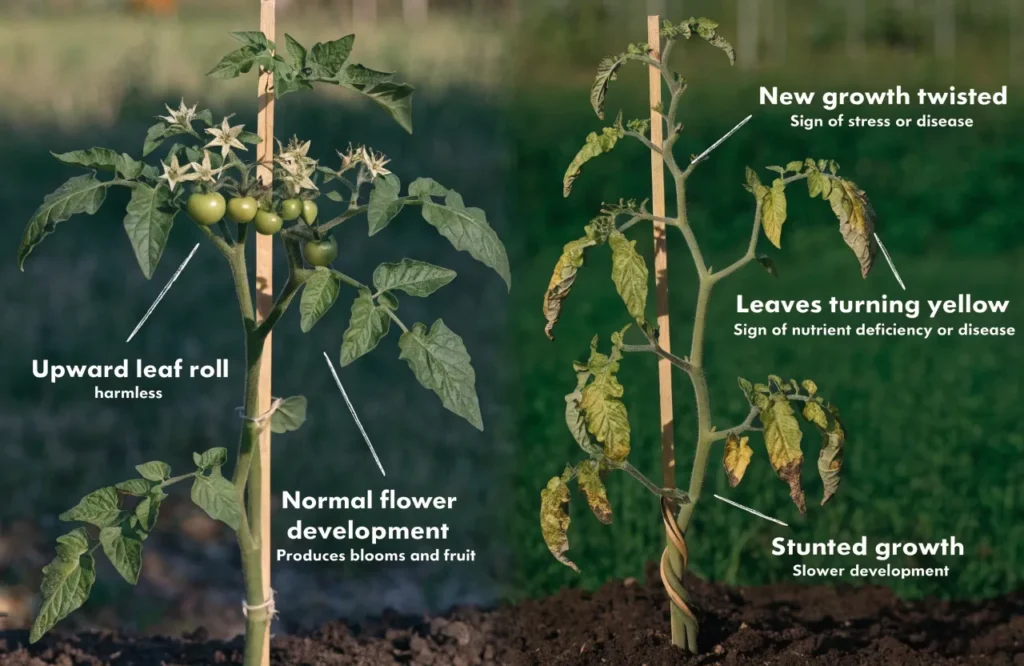
Nearly everything above resolves on its own or with a minor care adjustment. But a small subset of tomato leaves curling cases are genuinely urgent, and it’s worth knowing exactly what separates the two so you don’t either panic over a harmless heat response or ignore something that’s actually spreading.
Treat it as a red flag, and act within a day or two, if you see any of these together:
- New growth is twisted, narrow, or strap-shaped, not just rolled. Simple stress curling keeps a normal leaf shape; herbicide and viral damage distort it.
- The whole plant is affected at once, rather than just the older, lower leaves. Localized curling is almost always environmental; whole-plant curling is the hallmark of TYLCV and severe herbicide exposure.
- Curling is paired with yellowing, purple veining, or visible stunting, not just rolled but otherwise green leaves.
- Damage is one-sided, worse on the side of the plant facing a road, field, or a neighbor’s yard. This pattern points specifically to herbicide drift, not heat or watering.
- You can see whiteflies, a heavy aphid colony, or a bronzed/stippled texture on the undersides of leaves. Insect pressure this visible needs treatment before it spreads to nearby plants.
- The curling hasn’t improved after a week of consistent watering and normal weather. Environmental curling responds to correction within days; if it doesn’t, the cause is probably not environmental.
If two or more of these apply, here’s what to do:
- Photograph the whole plant and close-ups of the affected leaves, top and underside, this helps with diagnosis and gives your local extension office something to work from.
- Don’t fertilize or prune aggressively in response, this can stress the plant further before you know what you’re dealing with.
- Isolate what you can (remove nearby infected plants, control whiteflies) so the problem doesn’t spread to healthy tomatoes nearby.
- Contact your county extension office. Diagnosing TYLCV vs. herbicide injury vs. a bacterial or fungal issue often takes lab confirmation rather than a guess from a photo, though comparing notes against common tomato plant diseases is a reasonable starting point.
- If a virus or severe herbicide damage is confirmed, remove the plant. Don’t compost it, and don’t wait to see if it “grows out of it”, neither cause reverses on its own.
If none of these red flags apply, leaves are green, curling eases as it cools down, and the plant is still flowering and fruiting, you’re almost certainly dealing with one of the harmless causes above, and no emergency action is needed.
Tomato Leaves Curling: Diagnostic Quick-Reference Table
| What You See | Likely Cause |
| Green, curled leaves during a heat wave | Heat stress |
| Curling right after planting | Transplant shock |
| Tight, rolled leaves on an otherwise healthy plant | Physiological leaf roll |
| Twisted, strap-like new growth | Herbicide drift |
| Whole-plant curling, yellowing, stunted growth | Tomato yellow leaf curl virus |
| Dark green leaves, thick stems, few flowers | Excess nitrogen |
| Curling with visible insects on leaf undersides | Aphids, whiteflies, or broad mites |
| Afternoon wilting that recovers by morning | Inconsistent watering |
Should You Remove Curling Tomato Leaves?
Generally, no. Curled leaves are still photosynthesizing, and removing them can add stress rather than relieve it. The exception is leaves that are yellowing, diseased, severely damaged, or touching the soil, those are worth pruning to improve airflow and reduce disease risk, while everything else stays put.
How to Prevent Tomato Leaves From Curling
- Water deeply and consistently, adjusting how often you water to the weather rather than a fixed schedule
- Mulch 2–3 inches deep to regulate soil moisture and temperature
- Fertilize according to growth stage with a proper tomato fertilizer rather than feeding high-nitrogen products all season
- Start with well-draining, nutrient-balanced tomato soil so you’re not fighting deficiencies mid-season
- Avoid heavy pruning during hot weather
- Inspect leaf undersides regularly for early pest activity
- Keep herbicides away from the garden, especially on windy days
- If TYLCV or other viruses are common in your area, lean toward tomato varieties bred for disease resistance next season
Frequently Asked Questions
How do you cure leaf curl in tomatoes?
There’s no single ‘cure’ because leaf curl isn’t one condition—it’s a symptom with several different causes. Identify the cause first (heat, watering, pests, or disease), then apply the specific fix for that cause.
Can tomato plants recover from leaf curl, and will the leaves go back to normal?
In most cases, yes. If your plant is still green, flowering, and setting fruit, the curling is very likely temporary and should ease once the underlying stress is resolved.
Does the direction of the curl, up or down, matter?
Yes. Tomato leaves curling up and down are actually two different problems. Upward curling usually points to heat stress or physiological leaf roll, while downward curling can indicate different issues. Check which direction and where on the plant it’s happening to narrow down the cause.
Does tomato leaf curl affect fruit production?
Usually not, if the plant is still green, flowering, and setting fruit. Physiological leaf roll and heat stress rarely reduce yield. However, if curling is caused by TYLCV or severe herbicide damage, fruit production can be severely affected.
Should you remove curling tomato leaves?
Generally, no. Curled leaves are still photosynthesizing, and removing them can add stress rather than help. Only remove leaves that are severely damaged, and leave healthy-but-curled foliage in place.