15 Best Tomato Companion Plants: What to Plant & What to Avoid for a Healthier Harvest
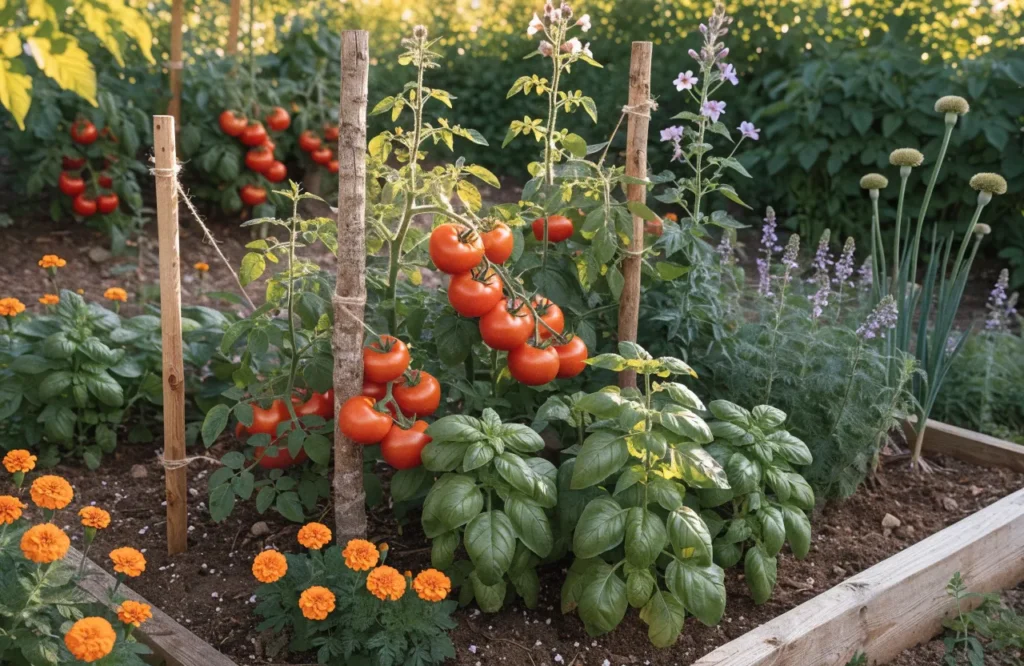
Tomatoes are one of the most rewarding vegetables to grow, but they can also be vulnerable to pests, diseases, and nutrient competition. Choosing the best tomato companion plants is a practical way to build a healthier vegetable garden by growing compatible herbs, flowers, and vegetables alongside tomatoes.
While no companion plant can solve every problem, the right combinations can support beneficial insects, make efficient use of garden space, and contribute to a more balanced growing environment. When paired with healthy soil, proper spacing, consistent watering, and crop rotation, companion planting becomes part of an integrated approach to growing stronger, more productive tomato plants.
Table of Contents
What Are the Best Companion Plants for Tomatoes?
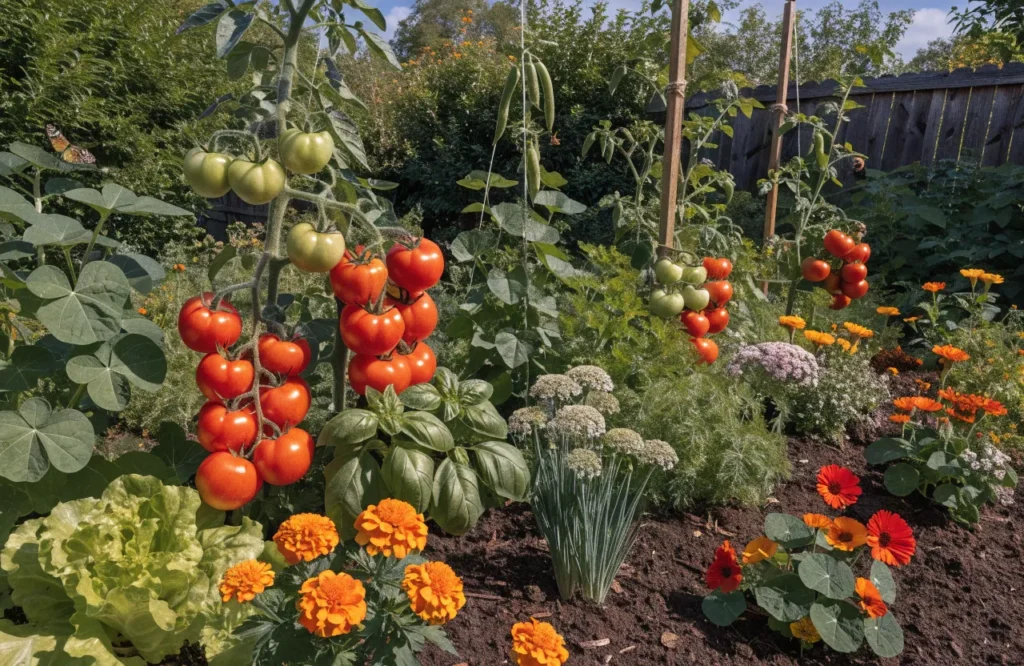
Companion planting is the practice of growing different plants together so they complement one another. Instead of planting tomatoes alone, gardeners combine herbs, flowers, and vegetables that share similar growing conditions and provide ecological benefits.
Some companion plants attract pollinators and beneficial insects, others help make better use of available space, while a few may reduce pest pressure under suitable conditions. Although research supports some companion planting combinations more strongly than others, it works best as part of a broader gardening strategy rather than a guaranteed solution.
Why Companion Planting Works
Companion planting benefits tomatoes in several practical ways. Different plants perform different roles, from attracting pollinators to supporting beneficial insects and improving the overall diversity of your vegetable garden. Together, these natural interactions help create healthier growing conditions throughout the season.
Natural Pest Control
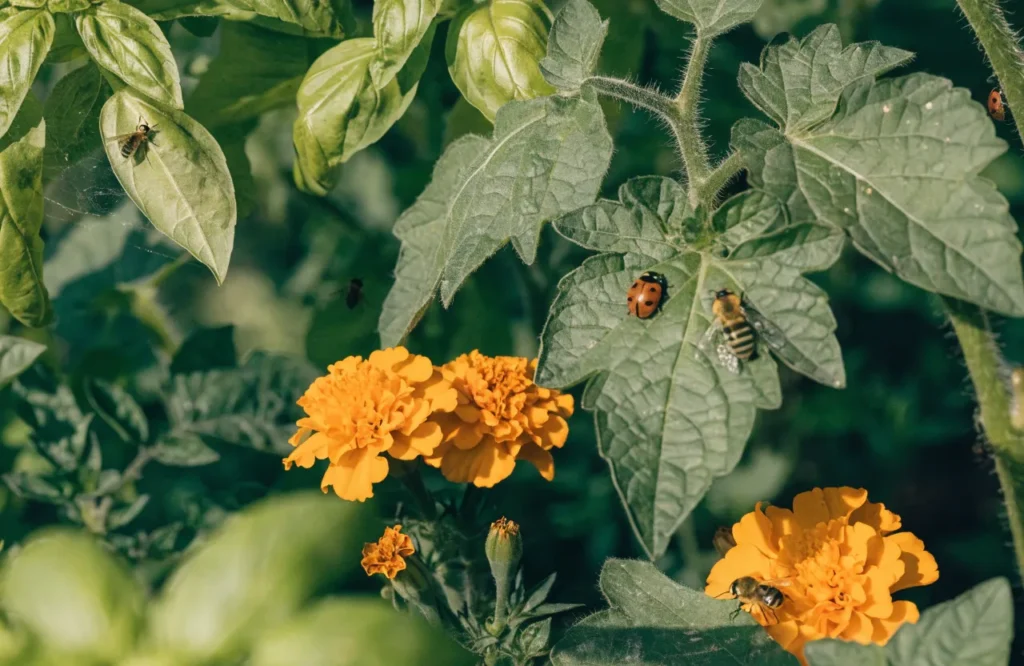
Many herbs and flowers release aromatic compounds that may discourage insect pests or make tomato plants less attractive to them. Others attract beneficial predators like ladybugs, lacewings, hoverflies, and parasitic wasps, which help keep aphids, whiteflies, and tomato hornworms under control.
Better Pollination
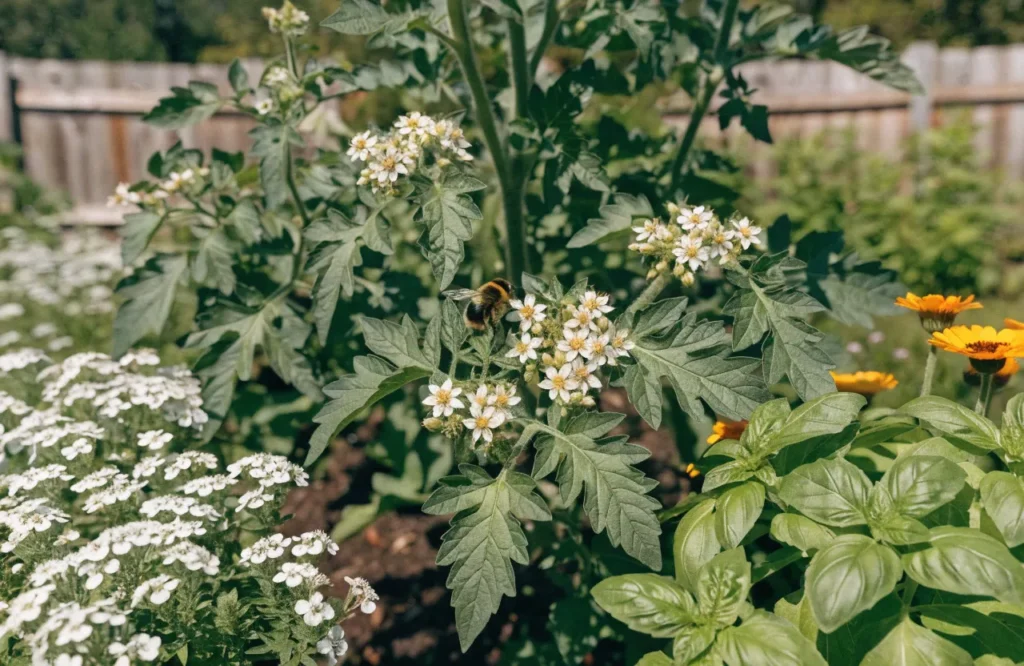
Although tomatoes are largely self-pollinating, bees and bumblebees improve flower pollination through vibration, often leading to more consistent fruit set and higher yields. Flowering companion plants provide a steady source of nectar that keeps these valuable pollinators active throughout the season.
Improved Soil Health
Some companion plants contribute to healthier soil by fixing nitrogen, reducing erosion, or acting as living mulch. Low-growing vegetables and legumes help conserve moisture, suppress weeds, and create a more stable environment around tomato roots. However, healthy soil remains the foundation of successful tomato growth. Learn how to create the ideal growing mix in our guide to best soil for tomatoes.
More Efficient Use of Garden Space
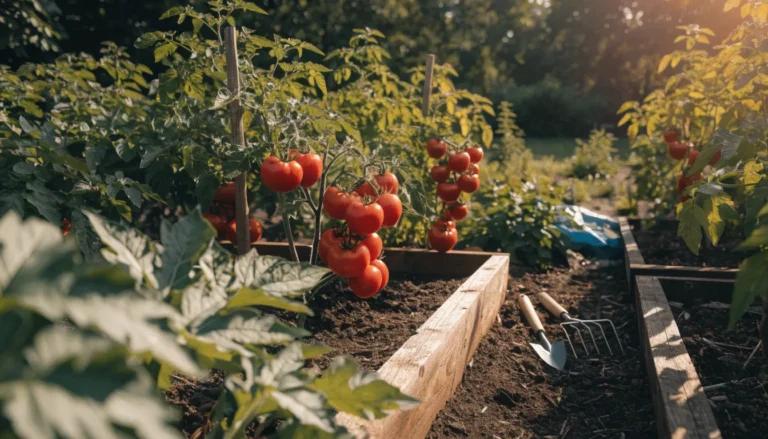
Companion planting allows gardeners to layer crops with different growth habits. Upright tomato plants provide light afternoon shade for cool-season greens, while compact herbs fit neatly around the base of plants without causing excessive competition. This approach is especially useful in raised beds, containers, and small vegetable gardens.
A More Diverse Garden
A garden with a variety of flowers, herbs, and vegetables supports a wider range of pollinators, beneficial insects, birds, and soil organisms. Greater biodiversity helps maintain ecological balance and often reduces the likelihood of severe pest outbreaks over time.
Expert Tip: Companion planting delivers the best results when combined with fertile soil, proper tomato spacing, regular pruning, consistent watering, and crop rotation. Healthy growing conditions remain the foundation of a productive tomato harvest.
Best Tomato Companion Plants (Top Choices)
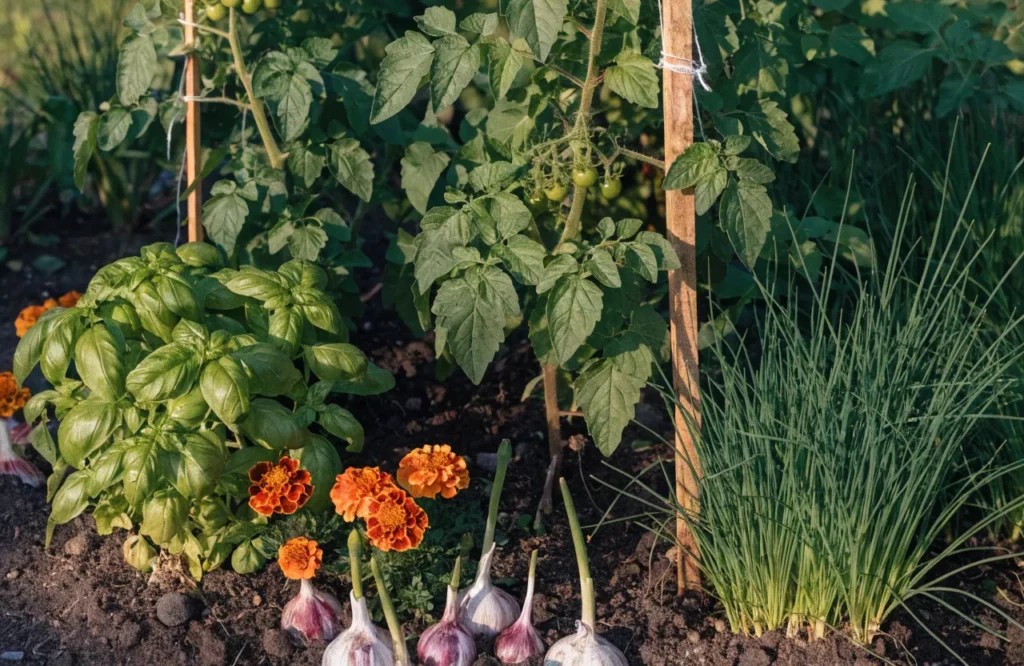
Not every companion plant serves the same purpose. Some primarily attract pollinators, others support beneficial insects, improve biodiversity, or make more efficient use of growing space. Combining several companion plants usually provides better results than relying on just one.
The following four companions are among the most reliable choices for home gardens, raised beds, and containers.
Basil: The Classic Tomato Companion
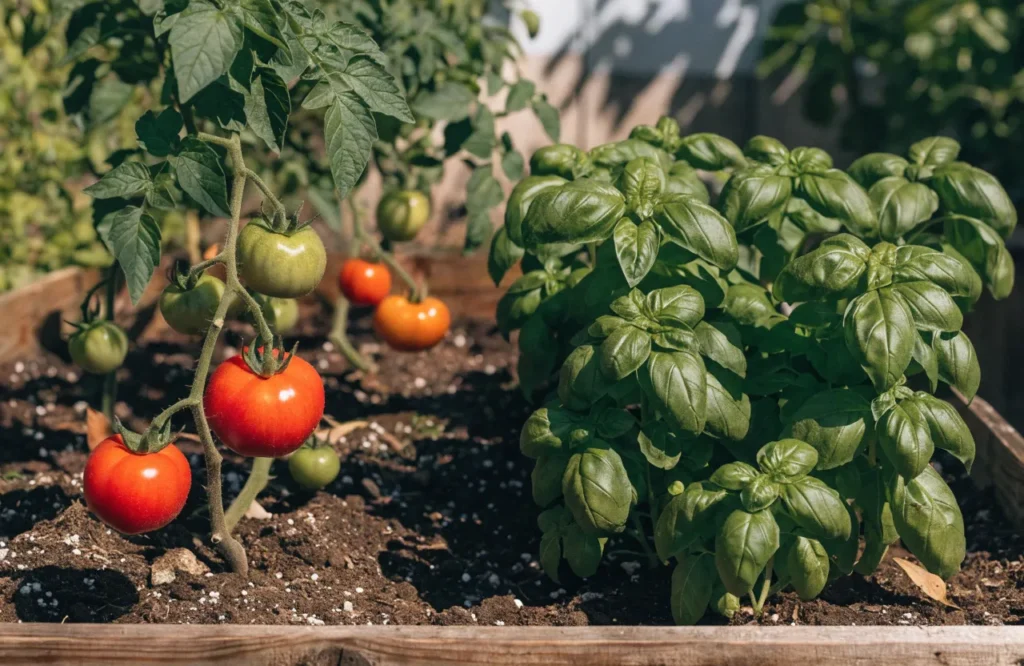
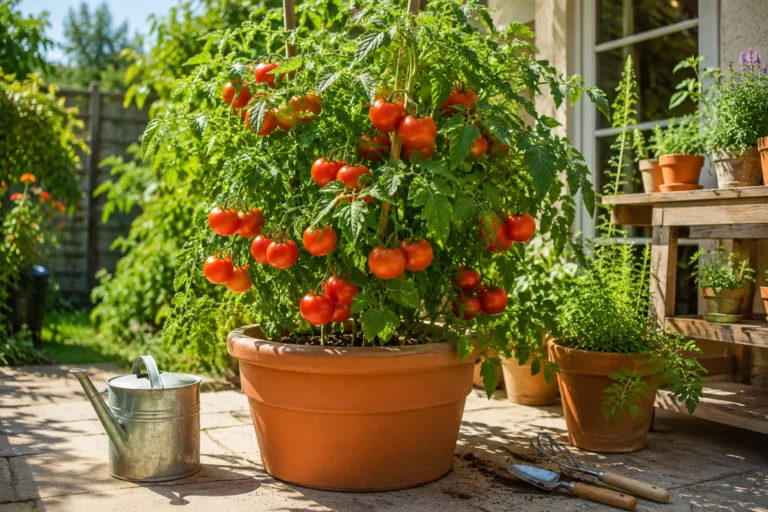
Basil is widely regarded as one of the best plants to grow with tomatoes because both crops thrive under similar growing conditions. They prefer full sun, fertile soil, and consistent moisture, making them easy to cultivate together. Basil is also an excellent choice for container gardeners who want to maximize limited space. If you enjoy growing vegetables in small spaces, explore our guide to best vegetables to grow in pots.
Many gardeners believe basil helps keep insect pests away from tomatoes. While scientific evidence is mixed, research suggests its aromatic foliage may help reduce certain pest activity, and its flowers attract bees and other beneficial insects when allowed to bloom.
Why Plant Basil with Tomatoes?
- May help discourage aphids, whiteflies, and thrips
- Attracts bees and other pollinators
- Fits well in containers and raised beds
- Shares the same watering and sunlight requirements as tomatoes
- Provides fresh herbs for cooking
Best for: Raised beds, containers, kitchen gardens
Basil and tomatoes are especially useful companions for container gardeners. If you are growing tomatoes in limited space, see our guide on how to grow tomatoes in pots.
Planting Distance: 8–12 inches (20–30 cm) from the tomato stem
Growing Tip: Pinch off basil flowers regularly if you’re harvesting leaves. Allow one or two plants to flower later in the season to attract pollinators.
Marigolds: Bright Flowers with Practical Benefits
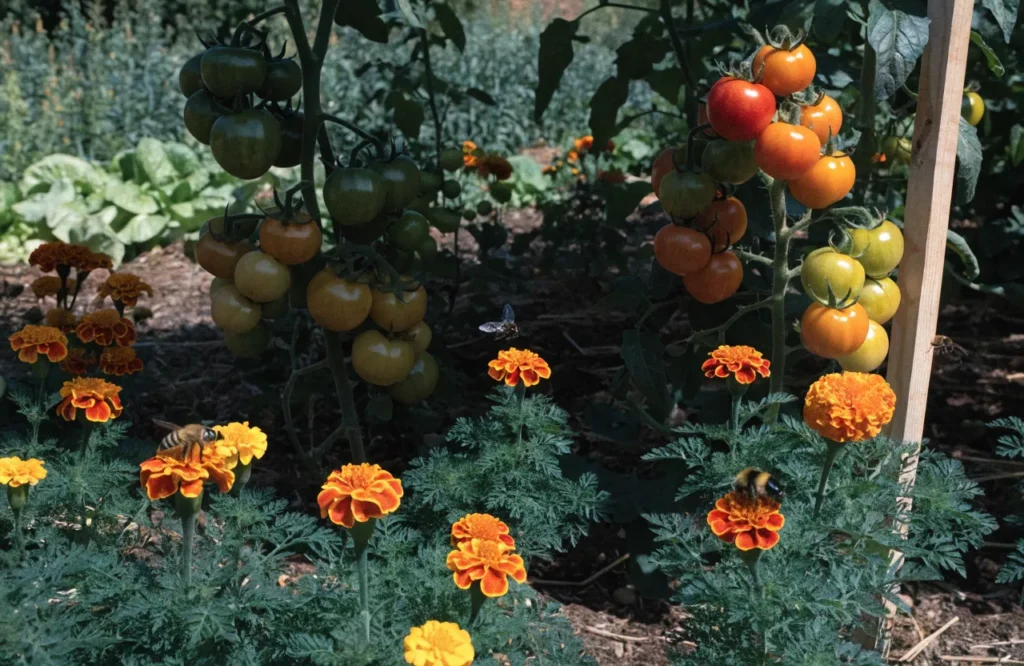
Marigolds add vibrant color to the vegetable garden while supporting a healthier growing environment. French marigolds (Tagetes patula) are particularly valued for their ability to suppress root-knot nematodes under suitable growing conditions. Their long-lasting blooms also attract beneficial insects that help manage common tomato pests.
Although marigolds won’t eliminate every insect problem, they contribute to a more diverse and balanced garden ecosystem.
Why Plant Marigolds with Tomatoes?
- Attract ladybugs, hoverflies, and lacewings
- Support bees and other pollinators
- Help suppress certain soil nematodes
- Increase biodiversity in vegetable gardens
- Bloom throughout most of the growing season
Best for: Garden borders, raised beds, pollinator gardens
Planting Distance: 10–12 inches (25–30 cm) from tomato plants
Expert Note: French marigolds have stronger evidence for nematode suppression than African marigolds, making them the preferred choice for companion planting.
Garlic: A Space-Saving Pest Deterrent
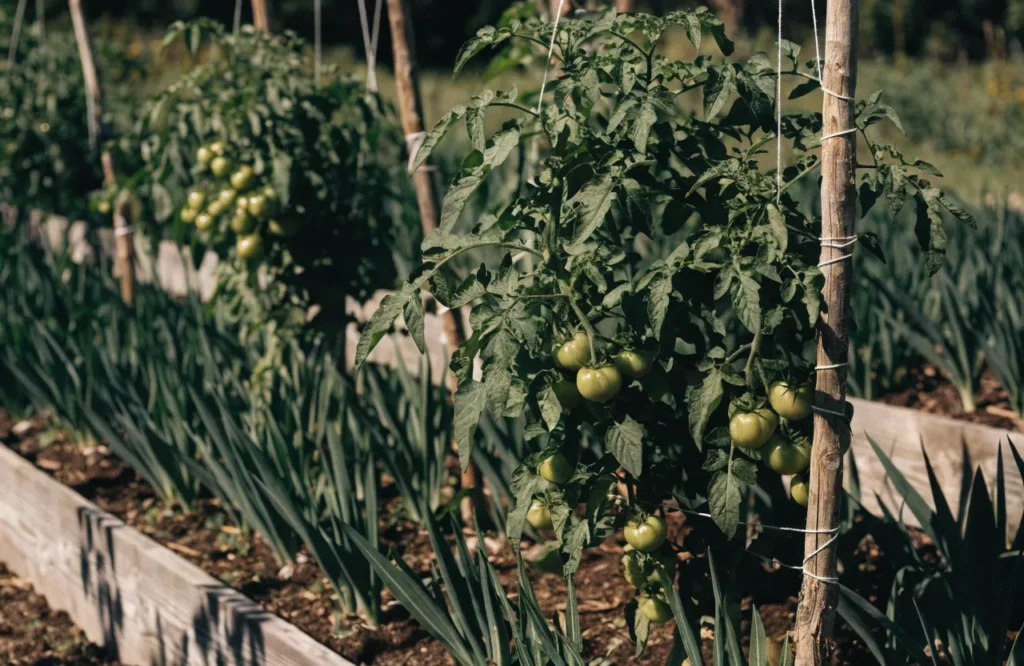
Garlic is an excellent companion plant because it occupies very little space while offering potential pest-control benefits. Its strong scent may help mask nearby tomato plants from insects such as aphids and spider mites, making it a useful addition around the edges of tomato beds.
Garlic also grows well during cooler months, allowing gardeners in many regions to harvest bulbs before tomatoes reach full size.
Why Plant Garlic with Tomatoes?
- May help reduce aphid and spider mite activity
- Takes up minimal garden space
- Ideal for edging raised beds
- Compatible with tomatoes’ growing conditions
- Easy to include in crop rotation plans
Best for: Raised beds, in-ground gardens, border planting
Planting Distance: 4–6 inches (10–15 cm) apart around the perimeter of tomato beds
Growing Tip: Avoid planting garlic directly beneath large tomato plants where dense foliage may reduce airflow around the bulbs.
Chives: Compact Herbs That Support Beneficial Insects
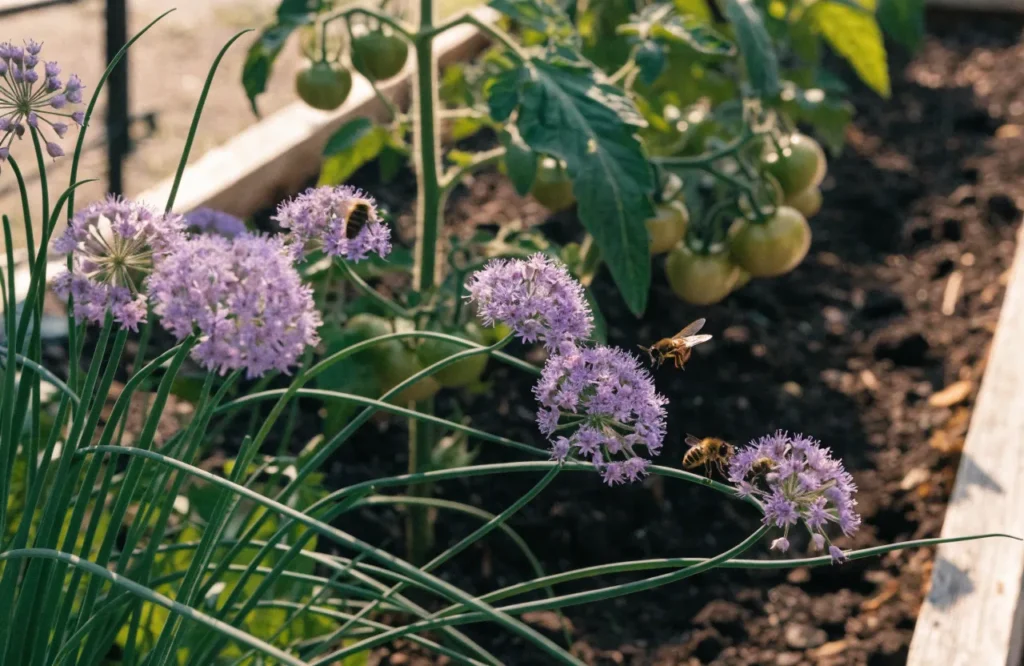
Like garlic, chives belong to the allium family and are valued for their aromatic foliage. Their compact size makes them ideal for small gardens, containers, and raised beds where space is limited.
When chives bloom, their purple flowers attract bees, hoverflies, and other pollinators that contribute to a healthier vegetable garden.
Why Plant Chives with Tomatoes?
- May discourage aphids and spider mites
- Attract bees and beneficial insects when flowering
- Require very little growing space
- Easy to harvest throughout the season
- Suitable for containers and raised beds
Best for: Small gardens, containers, vegetable borders
Planting Distance: 6–8 inches (15–20 cm) from tomato plants
Growing Tip: Divide mature chive clumps every few years to keep plants productive and prevent overcrowding.
This quick comparison highlights the best tomato companion plants for different garden situations.
Quick Comparison: Top Tomato Companion Plants
Chives – Their fragrant foliage and flowers attract pollinators and other helpful insects while taking up very little space, making them perfect for containers and small gardens.
Basil – A versatile companion that may discourage aphids, whiteflies, and thrips while attracting bees and other pollinators. Best suited to raised beds and containers.
French Marigolds – Help attract beneficial insects and may suppress root-knot nematodes. Ideal for garden borders and raised beds.
Garlic – A compact companion whose strong aroma may help reduce aphid and spider mite activity. Works well around the edges of tomato beds.
More of the Best Tomato Companion Plants
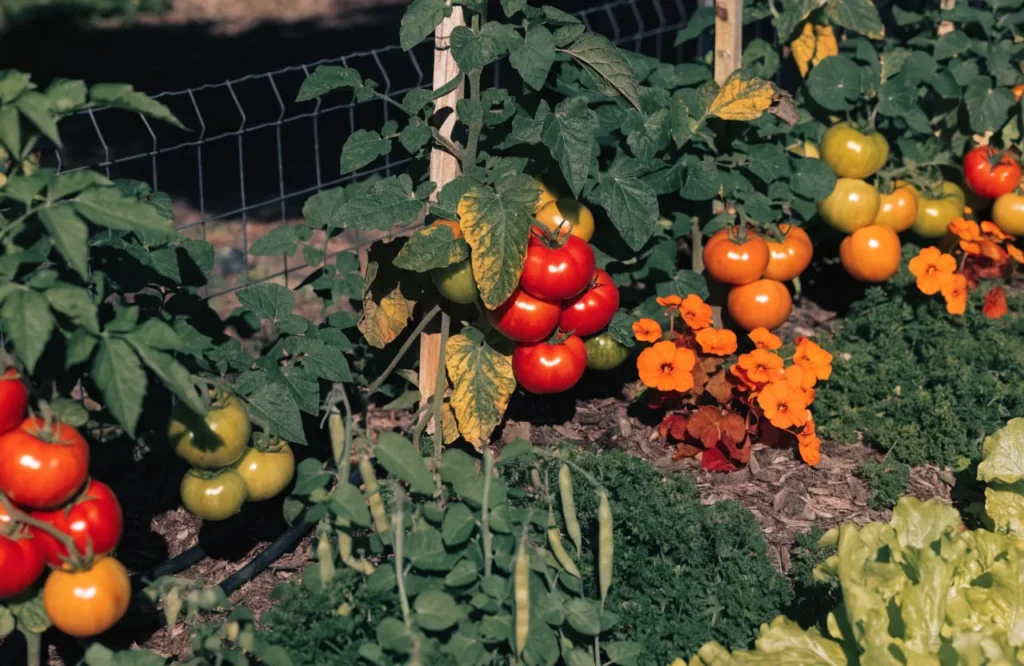
Beyond the most popular choices, several other companion plants can contribute to a productive tomato garden. Each offers different strengths, whether attracting beneficial insects, improving soil, conserving moisture, or making better use of available growing space.
The following companion plants offer unique advantages and work well alongside tomatoes in raised beds, containers, and traditional vegetable gardens.
Nasturtiums: A Natural Trap Crop
Nasturtiums are among the most valuable flowers to grow with tomatoes because they serve multiple purposes. Their bright blooms attract bees and other beneficial insects, while their foliage often repels aphids from tomato plants. This “trap crop” effect can help reduce pest pressure without chemical sprays.
Their trailing growth also shades the soil, helping retain moisture and suppress weeds.
Why Plant Nasturtiums with Tomatoes?
- Act as a trap crop for aphids
- Attract bees, hoverflies, and ladybugs
- Reduce weed growth by covering bare soil
- Help conserve soil moisture
- Produce edible flowers and leaves
Best for: Raised beds, vegetable borders, pollinator gardens
Planting Distance: 12–18 inches (30–45 cm) from tomato plants
Growing Tip: Plant nasturtiums around the edges of tomato beds rather than directly beneath the plants, allowing their vines to spread without restricting airflow.
Parsley: A Magnet for Beneficial Insects
Parsley is more than a culinary herb. When allowed to flower in its second season, it attracts hoverflies and parasitic wasps, whose larvae feed on aphids and other soft-bodied pests.
Its compact growth habit makes parsley an excellent edging plant, especially in smaller gardens.
Why Plant Parsley with Tomatoes?
- Attracts hoverflies and parasitic wasps
- Supports natural aphid control
- Fits easily into raised beds and containers
- Harvest fresh leaves throughout the growing season
Best for: Kitchen gardens, raised beds, containers
Planting Distance: 8–10 inches (20–25 cm) from tomato plants
Expert Tip: Leave one parsley plant to flower if your goal is attracting beneficial insects, while harvesting the rest for the kitchen.
Bush Beans: A Soil-Friendly Companion
Bush beans are one of the few vegetables that can improve soil over time. As legumes, they work with beneficial bacteria to fix atmospheric nitrogen, enriching the soil for future crops.
Unlike pole beans, bush beans stay compact and won’t compete with tomatoes for sunlight or become tangled in supports.
Why Plant Bush Beans with Tomatoes?
- Help improve long-term soil fertility
- Suppress weeds by covering exposed soil
- Make efficient use of garden space
- Require similar sunlight conditions
Best for: Raised beds, traditional vegetable gardens
Planting Distance: 12–18 inches (30–45 cm) from tomatoes
Did You Know? Most of the nitrogen fixed by beans becomes available after plant residues break down, making crop rotation an important part of soil improvement.
Lettuce: A Living Mulch
Lettuce is an excellent companion because it grows quickly beneath taller tomato plants. As tomatoes mature, they provide light afternoon shade that helps slow lettuce from bolting during warm weather. Because lettuce performs well in cooler, lower-light conditions, it is also a great choice for gardens with limited sunlight. Discover more crops that thrive in low-light areas in our guide to vegetables that grow in shade.
The leafy canopy also acts as a natural mulch, reducing evaporation and limiting weed growth.
Why Plant Lettuce with Tomatoes?
- Helps keep soil cool and moist
- Suppresses weeds naturally
- Maximizes space in small gardens
- Benefits from partial shade during summer
Best for: Raised beds, square-foot gardens, containers
Planting Distance: 6–10 inches (15–25 cm) from tomato stems
Growing Tip: Harvest outer leaves regularly to extend the harvest and improve airflow around nearby tomato plants.
Sweet Alyssum: A Pollinator Favorite
Sweet alyssum may be small, but it plays a big role in supporting beneficial insects. Its clusters of tiny flowers provide nectar throughout the growing season, attracting hoverflies, parasitic wasps, lacewings, and native bees.
Because it forms a low-growing carpet, sweet alyssum also helps reduce soil erosion and retain moisture.
Why Plant Sweet Alyssum with Tomatoes?
- Attracts hoverflies, lacewings, and parasitic wasps
- Supports pollinators all season
- Helps conserve soil moisture
- Creates an attractive living ground cover
Best for: Garden borders, raised beds, pollinator-friendly gardens
Planting Distance: 8–12 inches (20–30 cm) from tomato plants
Expert Note: University extension programs widely recommend Sweet alyssum to attract beneficial insects to vegetable gardens.
Calendula: Bright Blooms with Ecological Benefits
Calendula, often called pot marigold, is another excellent flower for tomato gardens. Its long-lasting blooms attract bees, hoverflies, and predatory insects while adding color throughout the growing season.
Unlike French marigolds, calendula is primarily valued for supporting pollinators rather than suppressing soil pests.
Why Plant Calendula with Tomatoes?
- Attracts pollinators and beneficial insects
- Extends flowering throughout the season
- Adds biodiversity to vegetable gardens
- Produces edible petals for salads and garnishes
Best for: Raised beds, cottage gardens, pollinator gardens
Planting Distance: 10–12 inches (25–30 cm) from tomato plants
Growing Tip: Regularly remove spent flowers to encourage continuous blooming and provide a steady nectar source for beneficial insects.
Additional Tomato Companion Plants
Calendula – Supports pollinators and beneficial insects while adding long-lasting color to the vegetable garden.
Nasturtiums – Act as a trap crop for aphids, help suppress weeds, and conserve soil moisture with their trailing growth.
Parsley – Attracts hoverflies and parasitic wasps that naturally help manage aphids.
Bush Beans – Improve long-term soil fertility and make efficient use of garden space without shading tomatoes.
Lettuce – Serves as a living mulch, helping keep the soil cool, retain moisture, and suppress weeds.
Sweet Alyssum – Provides nectar for hoverflies, lacewings, and native bees while forming an attractive ground cover.
Tomato Companion Planting Chart & What to Plant with Tomatoes by Purpose
Choosing the right companion plants becomes much easier when you understand the role each one plays. Some herbs naturally discourage pests, flowering plants attract pollinators and beneficial insects, while low-growing vegetables help conserve moisture and maximize garden space.
Use the chart below as a quick reference when planning your tomato garden.
Tomato Companion Planting Chart
This tomato companion planting chart makes it easier to choose the best tomato companion plants based on your garden goals.
| Companion Plant | Main Benefit | Helps Control | Best Location | Planting Distance |
| Basil | Repels pests, attracts pollinators | Aphids, whiteflies, thrips | Containers, raised beds | 8–12 in |
| Marigolds | Beneficial insects, soil health | Root-knot nematodes, aphids | Garden borders | 10–12 in |
| Garlic | Natural pest deterrent | Aphids, spider mites | Bed edges | 4–6 in |
| Chives | Pollinator support | Aphids, spider mites | Small gardens, containers | 6–8 in |
| Nasturtiums | Trap crop, living mulch | Aphids, whiteflies | Borders, raised beds | 12–18 in |
| Parsley | Attracts beneficial insects | Aphids | Herb gardens | 8–10 in |
| Bush Beans | Improve soil fertility | Supports healthy growth | Vegetable beds | 12–18 in |
| Lettuce | Living mulch | Weed suppression | Under tomato plants | 6–10 in |
| Sweet Alyssum | Attracts hoverflies and bees | Aphids (indirectly) | Garden borders | 8–12 in |
| Calendula | Pollinator attraction | Supports biodiversity | Flower borders | 10–12 in |
Quick Tip: Plant a combination of herbs, flowers, and vegetables instead of relying on a single companion plant. A diverse garden supports more beneficial insects and creates a healthier growing environment.
What to Plant with Tomatoes by Purpose
Not every gardener has the same goal. Some want natural pest control, while others prioritize pollinators or making the most of limited space. Choosing companion plants based on their primary benefit helps you create a garden that meets your needs.
Best Herbs to Plant with Tomatoes
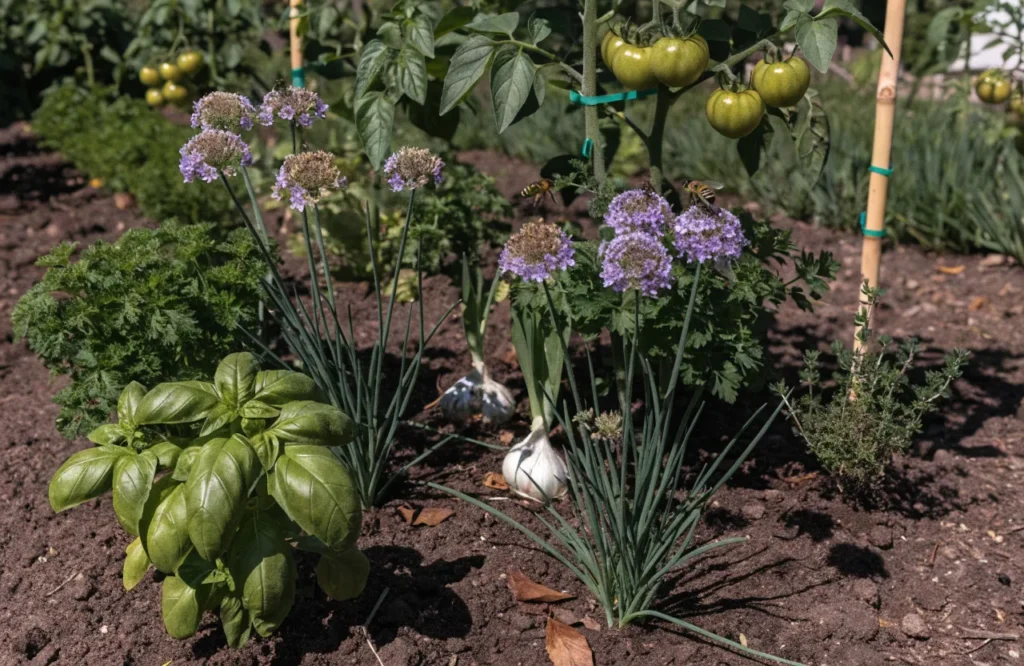
Most culinary herbs grow well alongside tomatoes because they share similar sunlight requirements while offering additional garden benefits.
Recommended Herbs
- Basil – May discourage aphids and whiteflies while attracting bees.
- Garlic – Its strong aroma may help reduce aphid and spider mite activity.
- Chives – Produce flowers that attract pollinators and beneficial insects.
- Parsley – Encourages hoverflies and parasitic wasps that prey on aphids.
- Thyme – A reliable nectar source for bees and other pollinating insects.
- Oregano – Flowers attract a variety of beneficial insects throughout summer.
Best Choice: Basil remains one of the most versatile tomato companions because it combines culinary value with practical garden benefits.
Best Flowers to Grow with Tomatoes
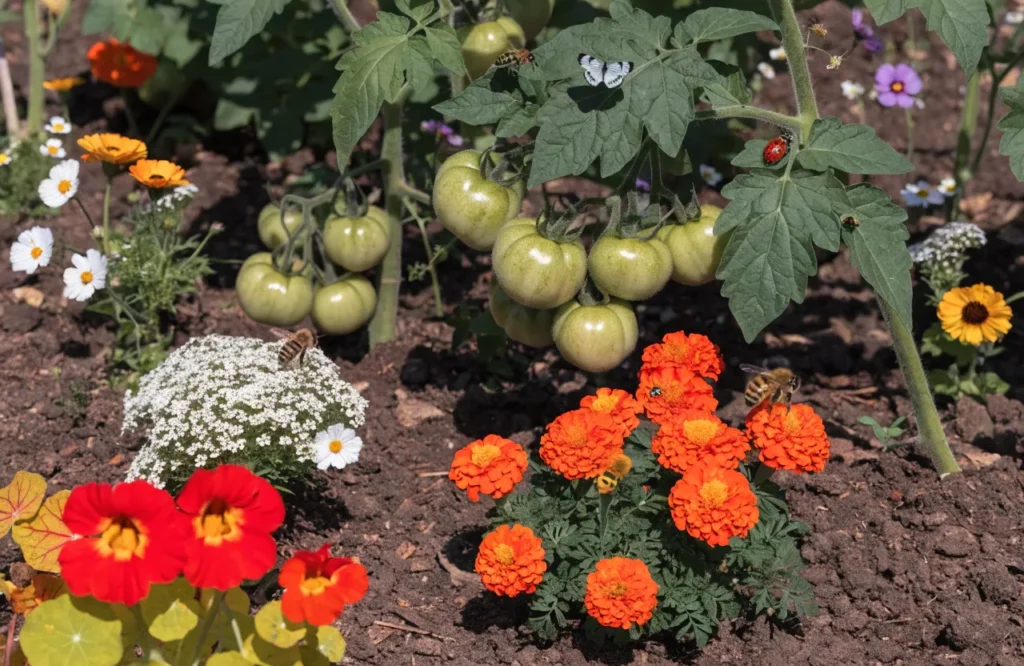
Flowering companions provide nectar for pollinating and predatory insects while adding seasonal color to the garden.
Recommended Flowers
- French Marigolds – Attract beneficial insects and may help suppress root-knot nematodes.
- Nasturtiums – Serve as a trap crop for aphids while acting as a living mulch.
- Sweet Alyssum – Draws hoverflies, lacewings, and native bees throughout the season.
- Calendula – Supports pollinators and adds biodiversity to the garden.
- Cosmos – Produces abundant nectar for bees and other beneficial insects.
Best Choice: If you have room for only one flowering companion, French marigolds offer the broadest range of benefits.
Best Vegetables to Grow with Tomatoes
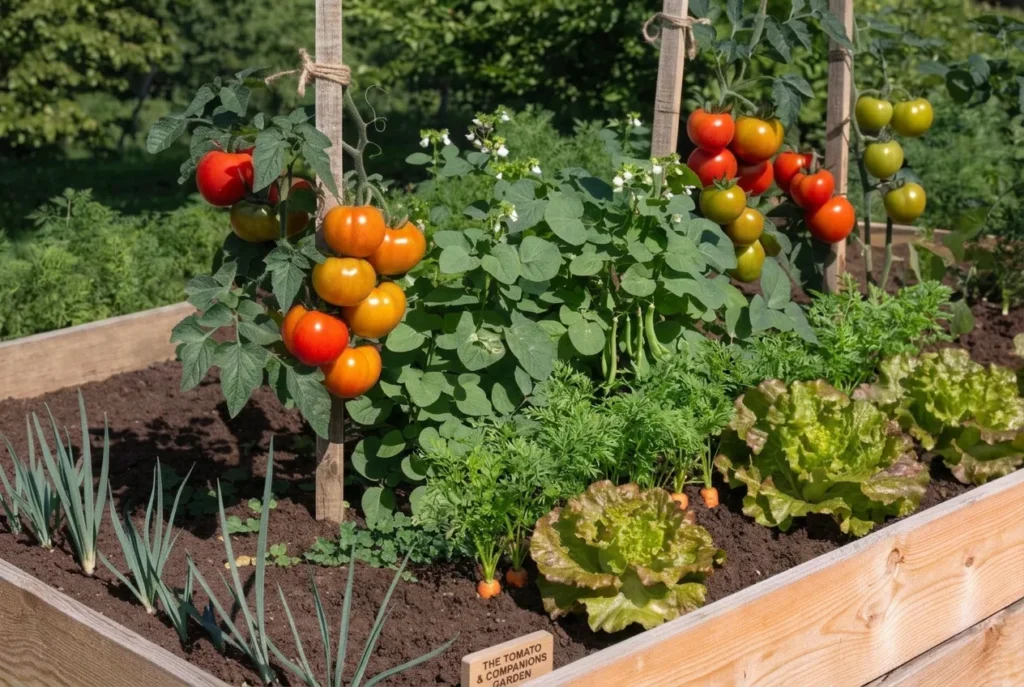
Low-growing vegetables make efficient use of space and can help conserve soil moisture beneath tomato plants.
Recommended Vegetables
- Bush Beans – Improve soil fertility over time through nitrogen fixation.
- Lettuce – Functions as a living mulch beneath tomato plants.
- Carrots – Loosen the soil and make efficient use of space below the tomato canopy.
- Onions – Their aromatic foliage may discourage certain insect pests.
Best Choice: Lettuce is an excellent option for small gardens because it thrives beneath mature tomato plants while helping conserve soil moisture.
Best Companion Plants for Common Gardening Goals
If you’re unsure where to start, choose companion plants based on what you want to achieve.
| Goal | Recommended Companion Plants |
| Natural pest control | Basil, garlic, chives, nasturtiums, marigolds |
| Attract pollinators | Sweet alyssum, calendula, marigolds, cosmos, thyme |
| Improve soil health | Bush beans, lettuce |
| Reduce weeds | Lettuce, nasturtiums |
| Small gardens or containers | Basil, chives, parsley, lettuce |
| Raised beds | Basil, marigolds, bush beans, sweet alyssum |
This approach makes companion planting easier because each plant serves a specific purpose rather than simply filling space.
Expert Tip: Combine the Best Tomato Companion Plants for Better Results
Many gardeners look for the best tomato companion plants, but the healthiest tomato gardens rely on a combination of companions rather than a single “perfect” plant. Mixing herbs, flowers, and vegetables creates a more diverse growing environment that supports pollinators, beneficial insects, and healthy tomato growth.
A simple raised bed might include:
- Basil near tomatoes to attract pollinators and provide fresh herbs.
- French marigolds around the edges to support beneficial insects.
- Sweet alyssum between plants to attract hoverflies and lacewings.
- Lettuce beneath tomatoes as a living mulch that helps retain soil moisture.
- Garlic around the border to make efficient use of space.
Choosing several of the best tomato companion plants instead of relying on just one helps create a healthier, more productive vegetable garden throughout the growing season.
Plants You Shouldn’t Grow with Tomatoes
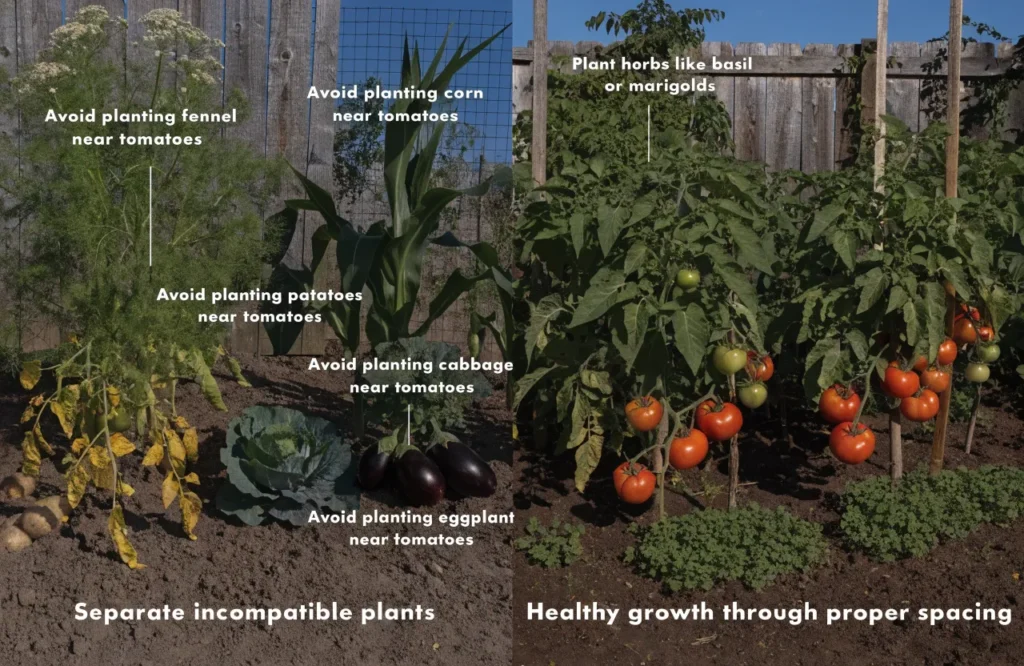
Choosing the best tomato companion plants isn’t just about deciding what to plant with tomatoes, it’s also about knowing which crops are better grown elsewhere. While many companion plants for tomatoes can attract beneficial insects, improve biodiversity, and make better use of garden space, some plants compete for nutrients, share serious pests and diseases, or interfere with healthy tomato growth. Avoiding these poor companions can reduce disease pressure and help your tomato plants thrive.
Fennel: The Worst Companion Plant for Tomatoes
Among all tomato companion plants, fennel is widely considered one of the least compatible. It releases natural compounds into the soil through a process called allelopathy, which may slow the growth of nearby plants. Although the effect varies with soil conditions and climate, fennel is generally best grown in a separate bed.
Why avoid fennel?
- May inhibit tomato growth
- Competes for moisture and nutrients
- Can reduce overall plant vigor
Better alternative: If you’re looking for the best plants to grow with tomatoes, choose basil, parsley, or young dill instead. These herbs are far more compatible and help support beneficial insects.
Potatoes: Shared Diseases and Heavy Nutrient Competition
Potatoes and tomatoes belong to the nightshade (Solanaceae) family, making them vulnerable to many of the same pests and diseases. Growing them together increases the risk of early blight, late blight, Colorado potato beetles, aphids, and other common problems. Since both are heavy feeders, they also compete for water and nutrients throughout the growing season.
Why avoid potatoes?
- Share major fungal diseases
- Attract many of the same insect pests
- Compete heavily for nutrients
Better alternative: Grow potatoes in a separate bed and rotate both crops every 3–4 years.
Corn: Encourages Tomato Fruitworms
Corn is another poor choice when deciding what to plant with tomatoes because both crops are susceptible to the corn earworm, also known as the tomato fruitworm. Corn also grows much taller than tomatoes, reducing sunlight and airflow, which can increase the risk of fungal diseases.
Why avoid corn?
- Shares tomato fruitworms
- May shade tomato plants
- Restricts airflow in dense plantings
Better alternative: Plant sunflowers or pollinator-friendly flowers nearby if your goal is to attract beneficial insects without increasing pest pressure.
Brassicas: Heavy Feeders That Compete with Tomatoes
Broccoli, cabbage, cauliflower, Brussels sprouts, kale, and kohlrabi all require large amounts of nutrients. When planted beside tomatoes, these crops compete for water, fertilizer, and growing space, which may reduce the productivity of both plants.
Why avoid brassicas?
- Heavy nutrient competition
- Require significant growing space
- Can overcrowd tomato beds
Better alternative: Lettuce or spinach are much better companion plants for tomatoes because they require fewer nutrients and can even help conserve soil moisture.
Eggplant: Similar Family, Similar Problems
Like tomatoes, eggplants belong to the nightshade family and share many of the same diseases and insect pests, including blight, wilt, flea beetles, and aphids. Although they can be grown in the same garden, separating them makes crop rotation and disease management much easier.
Why avoid eggplants?
- Share diseases and insect pests
- Increase disease pressure
- Make crop rotation more difficult
Better alternative: Plant eggplants in another section of the garden.
Mature Dill: Helpful Early, Less Helpful Later
Young dill is an excellent companion because its flowers attract hoverflies, ladybugs, and parasitic wasps. As the plant matures, however, it may compete with tomatoes and has been reported to slow root development under certain conditions.
Why avoid mature dill?
- May interfere with tomato root growth
- Competes for nutrients as it matures
Better alternative: Harvest dill while young or allow only one or two plants to flower for beneficial insects.
Pole Beans: Too Vigorous for Tomato Beds
Unlike bush beans, pole beans produce vigorous climbing vines that can quickly overtake tomato supports. Their dense growth reduces sunlight and airflow while increasing humidity around foliage, creating favorable conditions for fungal diseases.
Why avoid pole beans?
- Shade tomato plants
- Restrict airflow
- Compete for growing space
Better alternative: Bush beans remain one of the best plants to grow with tomatoes because they improve soil without overcrowding nearby plants.
Okra: Competes for Light and Space
Okra grows well in warm conditions but becomes much taller than tomatoes. In small gardens and raised beds, its large leaves can cast heavy shade, reducing flowering, fruit production, and airflow around tomato plants.
Why avoid okra?
- Can block sunlight
- Competes for vertical space
- Reduces airflow
Better alternative: Plant okra in a separate row or on the north side of the garden (Northern Hemisphere).
Expert Tip: Choosing the best tomato companion plants means pairing tomatoes with compatible herbs, flowers, and vegetables while keeping incompatible crops in separate beds. This balanced approach improves airflow, reduces pest and disease pressure, and helps create a healthier, more productive vegetable garden.
Quick Reference: Plants to Avoid Growing with Tomatoes
| Plant | Why It’s a Poor Companion | Better Alternative |
|---|---|---|
| Fennel | May inhibit tomato growth | Basil, parsley, or chives |
| Potatoes | Share diseases and pests | Grow in a separate bed |
| Corn | Shares tomato fruitworms and creates shade | Sweet alyssum or sunflowers |
| Broccoli | Heavy nutrient competition | Lettuce |
| Cabbage | Heavy nutrient competition | Spinach |
| Cauliflower | Competes for nutrients | Leaf lettuce |
| Brussels sprouts | Heavy feeder | Swiss chard or lettuce |
| Eggplant | Shares diseases and pests | Plant in another garden bed |
| Mature dill | May slow root growth | Harvest while young |
| Pole beans | Shade and overcrowd tomatoes | Bush beans |
| Okra | Blocks sunlight and airflow | Plant in a separate row |
Can Some of These Plants Still Grow Near Tomatoes?
Companion planting is a helpful gardening strategy, not a strict set of rules. While choosing the best tomato companion plants can improve garden health, success also depends on spacing, soil quality, climate, and regular maintenance.
Some plants that are generally considered poor companions can still grow in the same garden when managed carefully. For example:
- Peppers share similar growing requirements with tomatoes and are often grown nearby when plants are spaced well and crops are rotated each season.
- Young dill is an excellent companion because it attracts beneficial insects, but mature plants may compete with tomatoes.
- Brassicas, such as broccoli and cabbage, can grow in the same garden if they’re planted in separate beds to reduce nutrient competition.
Rather than focusing only on what to plant with tomatoes, aim to create a balanced garden where compatible plants have enough space, sunlight, and nutrients to thrive.
Expert Tip: Even the best companion plants for tomatoes can’t replace good gardening practices. Healthy soil, proper watering, adequate spacing, crop rotation, and regular pest monitoring will have the greatest impact on producing strong, productive tomato plants.
Companion Plants for Natural Pest Control
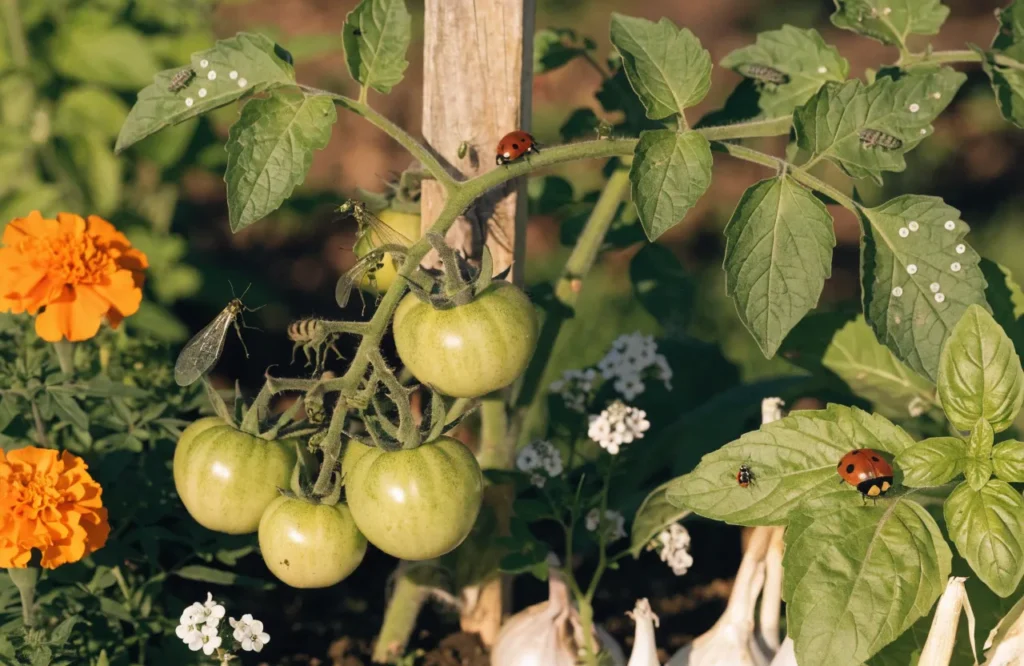
One of the biggest benefits of growing the best tomato companion plants is natural pest management. While companion plants won’t eliminate insects, they attract beneficial predators, improve biodiversity, and help create a healthier garden ecosystem. When combined with proper watering, crop rotation, and regular inspections, companion plants for tomatoes can significantly reduce pest pressure.
Common Tomato Pests and Their Best Companion Plants
Different companion plants support your tomatoes in different ways. Some attract insects that prey on pests, while others produce aromatic foliage that may make tomatoes less attractive to certain insects.
| Tomato Pest | Best Companion Plants | How They Help |
| Aphids | Basil, chives, garlic, nasturtiums, parsley, sweet alyssum | Attract ladybugs, hoverflies, and lacewings that feed on aphids. |
| Tomato Hornworms | Marigolds, basil, parsley, dill (when flowering), sweet alyssum | Encourage parasitic wasps and other natural predators. |
| Whiteflies | Basil, nasturtiums, lavender | Aromatic plants and beneficial insects may help reduce infestations. |
| Spider Mites | Garlic, chives, lavender | Support beneficial predators and increase garden biodiversity. |
| Root-Knot Nematodes | French marigolds | Certain varieties may suppress nematode populations in the soil. |
| Thrips | Basil | May help reduce pest activity while attracting pollinators. |
| General Garden Pests | Marigolds, calendula, sweet alyssum, nasturtiums | Increase biodiversity and support beneficial insects. |
Good to Know: Companion plants don’t kill pests directly. Instead, they help create a balanced ecosystem where beneficial insects naturally keep pest populations under control.
Beneficial Insects Every Tomato Garden Needs
Not all insects are harmful. In fact, some of the most effective pest control comes from insects that naturally hunt and feed on common tomato pests.
Growing flowering companion plants throughout your vegetable garden provides nectar, pollen, and shelter that encourage these helpful species to stay nearby.
Ladybugs
Ladybugs are among the best natural predators in the garden. Both adults and larvae feed on soft-bodied insects, making them valuable allies for tomato growers.
They help control:
- Aphids
- Whiteflies
- Spider mites
- Scale insects
Best companion plants:
- Marigolds
- Sweet alyssum
- Calendula
Hoverflies
Hoverflies are often mistaken for small bees, but they’re harmless pollinators. Their larvae are voracious predators that consume large numbers of aphids before reaching adulthood.
They help control:
- Aphids
- Thrips
- Small caterpillars
Best companion plants:
- Parsley
- Sweet alyssum
- Dill
- Calendula
Green Lacewings
Lacewing larvae, sometimes called “aphid lions,” feed on a wide variety of garden pests.
They help control:
- Aphids
- Mealybugs
- Whiteflies
- Caterpillars
Best companion plants:
- Marigolds
- Sweet alyssum
- Cosmos
Parasitic Wasps
Despite their intimidating name, parasitic wasps are tiny, non-aggressive insects that play an important role in biological pest control.
Some species lay their eggs inside tomato hornworms and other caterpillars, helping keep their populations under control naturally.
Best companion plants:
- Dill
- Parsley
- Sweet alyssum
- Marigolds
Bees and Bumblebees
Tomatoes are self-pollinating, but bees improve pollination through a process known as buzz pollination. As bees vibrate tomato flowers, they release more pollen, often resulting in better fruit set and improved yields.
Best companion plants:
- Basil (when flowering)
- Calendula
- Lavender
- Cosmos
- Sweet alyssum
Organic Pest Control Tips
Avoid broad-spectrum insecticides that can harm beneficial insects.
Inspect tomato plants weekly for aphids, caterpillars, whiteflies, and spider mites. Regular monitoring also helps identify early warning signs such as yellowing leaves or slow growth.
Water at the base of plants to keep foliage dry and reduce fungal diseases.
Remove yellow, damaged, or diseased leaves promptly. If your tomato leaves continue turning yellow, learn about the common causes and solutions in our guide on why tomato leaves are turning yellow.
Grow herbs, flowers, and vegetables together to encourage biodiversity.
Quick Guide: Which Companion Plant Should You Choose?
| Your Goal | Best Companion Plant |
| Reduce aphids | Basil |
| Attract beneficial insects | Sweet alyssum |
| Encourage pollinators | Calendula |
| Suppress soil nematodes | French marigolds |
| Improve biodiversity | Nasturtiums |
| Small-space companion | Chives |
| Living mulch | Lettuce |
| Long-term soil improvement | Bush beans |
Expert Tip: If you’re unsure what to plant with tomatoes, don’t rely on just one companion plant. Combine several best tomato companion plants to support different functions. For example, grow basil beside tomatoes, plant French marigolds around the bed, tuck sweet alyssum between plants, and use lettuce as a living mulch. This combination improves pollination, attracts beneficial insects, makes efficient use of space, and helps create a healthier, more productive vegetable garden.
Tomato Companion Plant Spacing & Common Companion Planting Mistakes
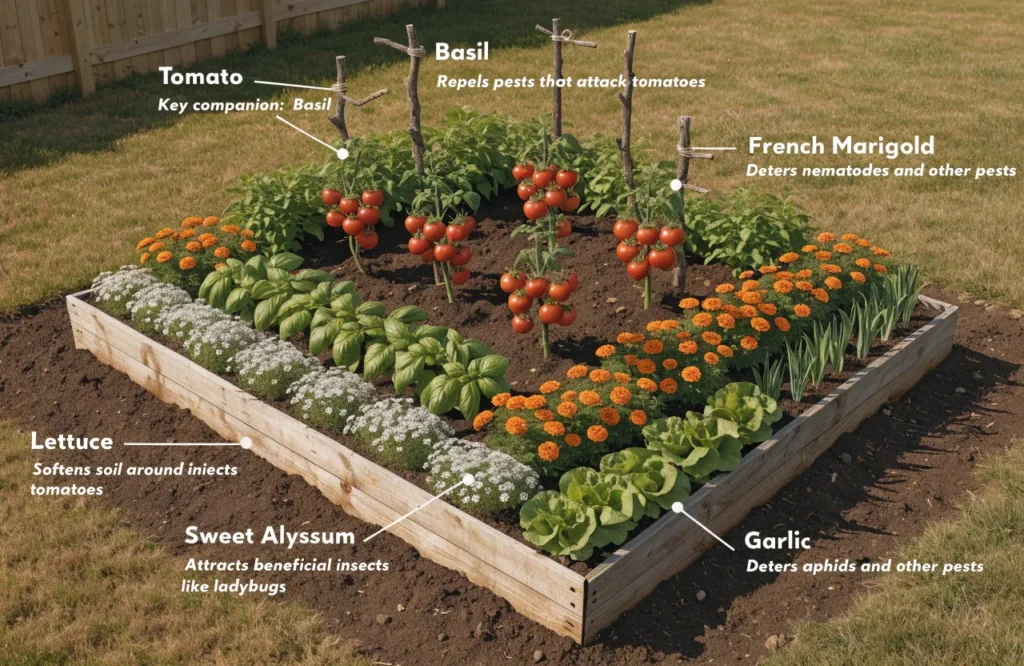
Choosing the best tomato companion plants is only part of successful companion planting. Proper spacing is equally important because it improves airflow, reduces the risk of fungal diseases, and ensures tomatoes and their companions receive enough sunlight, water, and nutrients.
Whether you’re deciding what to plant with tomatoes in raised beds, containers, or traditional garden rows, giving each plant enough room to grow helps create a healthier and more productive vegetable garden.
Tomato Companion Plant Spacing Guide
Use this chart as a quick reference when planning your garden.
| Companion Plant | Distance from Tomato | Why It Works |
| Basil | 8–12 in (20–30 cm) | Shares growing conditions without crowding roots. |
| Marigolds | 10–12 in (25–30 cm) | Easy to plant along borders while attracting beneficial insects. |
| Garlic | 4–6 in (10–15 cm) | Compact bulbs fit neatly around bed edges. |
| Chives | 6–8 in (15–20 cm) | Small clumps won’t compete with tomatoes. |
| Parsley | 8–10 in (20–25 cm) | Leaves enough room for airflow and harvesting. |
| Lettuce | 6–10 in (15–25 cm) | Grows beneath tomatoes as a living mulch. |
| Sweet Alyssum | 8–12 in (20–30 cm) | Creates a flowering ground cover without overcrowding. |
| Bush Beans | 12–18 in (30–45 cm) | Allows both crops to develop healthy root systems. |
| Nasturtiums | 12–18 in (30–45 cm) | Gives trailing vines space to spread naturally. |
| Calendula | 10–12 in (25–30 cm) | Encourages continuous flowering while maintaining airflow. |
Recommended Tomato Spacing
Choosing the best tomato companion plants won’t produce the best results if tomato plants themselves are overcrowded. Proper spacing improves air circulation, reduces disease pressure, and gives both tomatoes and their companion plants for tomatoes enough room to grow.
For healthy tomato plants, follow these general spacing guidelines:
- Determinate tomatoes: Space plants 24–30 inches (60–75 cm) apart.
- Indeterminate tomatoes: Space plants 30–36 inches (75–90 cm) apart.
- Garden rows: Leave 36–48 inches (90–120 cm) between rows to improve airflow and make watering, pruning, and harvesting easier.
- Support plants early: Install cages, stakes, or trellises at planting time to keep vines upright and prevent sprawling growth.
Good spacing is just as important as choosing what to plant with tomatoes. It helps reduce humidity around the foliage, lowering the risk of common diseases such as early blight, Septoria leaf spot, and powdery mildew while making companion planting more effective.
Simple Companion Planting Layout
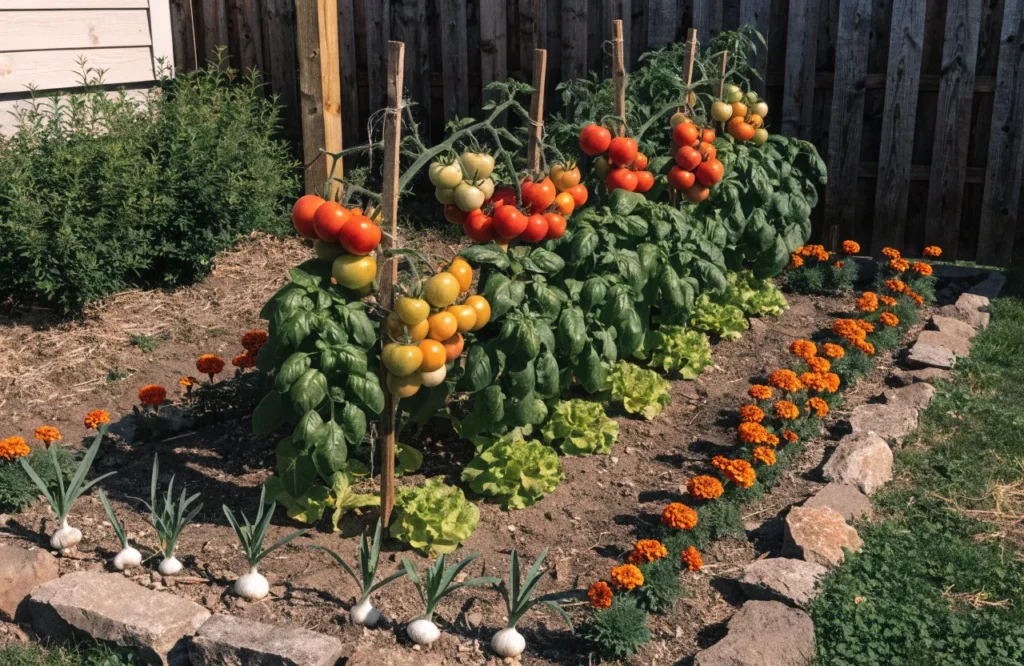
When choosing the best tomato companion plants, spread different types of companions throughout the bed instead of clustering them in one area. This gives tomatoes better access to sunlight, airflow, and beneficial insects.
Example Layout
Marigolds, Tomatoes, Marigolds
Basil, Tomato, Basil
Sweet Alyssum, Lettuce, Sweet Alyssum
Garlic around the outside of the bed
This layout places herbs close to tomatoes, flowering plants around the edges to attract pollinators, lettuce as a living mulch, and garlic along the border to maximize growing space.
Common Tomato Companion Planting Mistakes
Even the best companion plants for tomatoes won’t deliver good results if basic gardening practices are overlooked. Avoid these common mistakes:
1. Overcrowding Plants
Give tomatoes and their companions enough space to improve airflow and reduce fungal diseases.
2. Ignoring Sunlight
Keep taller or spreading plants where they won’t shade tomatoes as they mature.
3. Skipping Crop Rotation
Rotate tomatoes every 3–4 years and avoid planting them after potatoes, peppers, or eggplants to reduce soil-borne pests and diseases.
4. Mixing Plants with Different Water Needs
Mediterranean herbs such as lavender, rosemary, and sage prefer drier soil than tomatoes. Grow them in nearby containers or separate beds if possible.
5. Neglecting Soil Health
Healthy soil remains the foundation of successful companion planting. Before planting, enrich the soil with compost and maintain a slightly acidic pH of 6.0–6.8. For a deeper guide on creating the ideal growing environment, check out our article on best soil for tomatoes.
6. Relying Only on Companion Planting
Knowing what to plant with tomatoes is helpful, but companion planting works best alongside regular watering, pruning, pest monitoring, and good garden maintenance.
Quick Checklist for Successful Companion Planting
Before planting, ask yourself:
✔ Are tomato plants spaced far enough apart?
✔ Have I mixed herbs, flowers, and vegetables instead of relying on one companion plant?
✔ Will every plant receive enough sunlight?
✔ Do nearby plants have similar watering needs?
✔ Is there enough airflow to reduce disease risk?
✔ Am I rotating crops each season?
If you answered yes to these questions, you’ve built a strong foundation for a productive tomato garden.
Expert Tip: The most successful tomato gardens aren’t built around a single “magic” companion plant. Instead, they combine proper spacing, healthy soil, crop rotation, consistent watering, and a diverse mix of companion plants. When these practices work together, tomatoes are more likely to stay healthy, resist pests, and produce abundant harvests throughout the season.
Frequently Asked Questions
Final Thoughts
Companion planting helps create a healthier tomato garden by combining herbs, flowers, and vegetables that attract pollinators, support beneficial insects, and make efficient use of space. Pair these companions with fertile soil, proper spacing, regular watering, and the right nutrients. Choosing the best fertilizer for tomatoes can also help support healthy growth, flowering, and fruit production.
The best tomato companion plants, including basil, French marigolds, garlic, chives, sweet alyssum, nasturtiums, lettuce, parsley, and bush beans, each provide unique benefits. From attracting beneficial insects to improving biodiversity and maximizing garden space, these companion plants work best as part of a complete tomato-growing strategy.
A balanced planting plan won’t eliminate every pest or disease, but it can help tomatoes grow stronger, produce more consistently, and thrive throughout the growing season.