Best Fertilizer for Tomatoes: The Complete Guide to Bigger, Healthier Harvests
Tomatoes are among the heaviest-feeding vegetables in the garden, and choosing the best fertilizer for tomatoes can mean the difference between a handful of fruit and baskets of juicy, flavorful tomatoes all summer long. In this guide, you’ll learn how to choose the right fertilizer, understand NPK ratios, when and how to fertilize, and avoid the common mistakes that can reduce yields. Whether you grow tomatoes in garden beds or containers, you’ll have everything you need to grow healthier plants and enjoy a bigger harvest.
Tomatoes require a steady supply of nutrients throughout the growing season. From developing strong roots after transplanting to producing clusters of flowers and ripening flavorful fruit, each stage demands the right balance of nitrogen, phosphorus, potassium, and essential micronutrients. Without proper feeding, plants may grow slowly, develop yellow leaves, produce fewer flowers, or yield small, less flavorful tomatoes.
The challenge is that there isn’t a single fertilizer that’s perfect for every tomato plant. The best choice depends on your soil, growing method, and the plant’s stage of growth. A fertilizer that works well for young seedlings may not be the best option once fruit begins to develop, and tomatoes grown in containers have different nutritional needs than those planted directly in the ground.
Growing healthy tomatoes requires more than fertilizer alone. Healthy soil, consistent watering, and proper care all play important roles, but a well-planned feeding program helps plants stay vigorous and productive throughout the season. If you’re just getting started, read our guide on How to Grow Tomatoes before choosing a fertilizing program.
By the end of this guide, you’ll know exactly how to feed your tomato plants for stronger growth, higher yields, and better-tasting tomatoes.
Table of Contents
Why Tomatoes Need Fertilizer
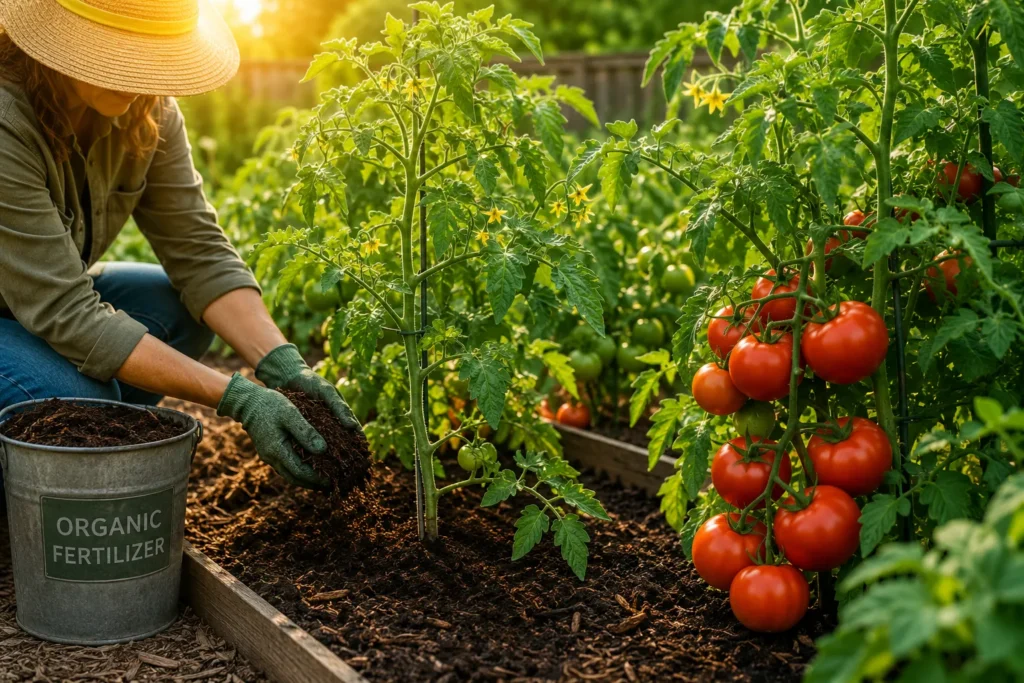
Tomatoes grow quickly and produce a large amount of foliage, flowers, and fruit in just a few months. That rapid growth demands a steady supply of nutrients, many of which are naturally depleted from garden soil over time.
Although healthy soil contains nutrients, it doesn’t always provide enough to support a full growing season, especially if tomatoes or other vegetables have been grown in the same location year after year. Container-grown tomatoes face an even greater challenge because nutrients wash out of the potting mix each time you water.
When nutrient levels become too low, tomato plants begin to show signs of stress. You may notice slower growth, pale or yellow leaves, weak stems, fewer flowers, or fruit that develops slowly and lacks flavor. In some cases, nutrient deficiencies also make plants more vulnerable to pests and diseases.
Fertilizer replenishes these essential nutrients, allowing tomato plants to:
- Develop strong root systems after transplanting
- Produce healthy green foliage for efficient photosynthesis
- Create more flowers that develop into fruit
- Grow larger, firmer tomatoes
- Improve fruit flavor and color
- Increase resistance to common diseases and environmental stress
However, more fertilizer isn’t always better. Overfertilizing can encourage excessive leafy growth while reducing fruit production, and applying the wrong nutrients at the wrong time can do more harm than good. The goal is to provide the right nutrients in the right amounts when the plant needs them most.
Understanding Tomato Nutrition
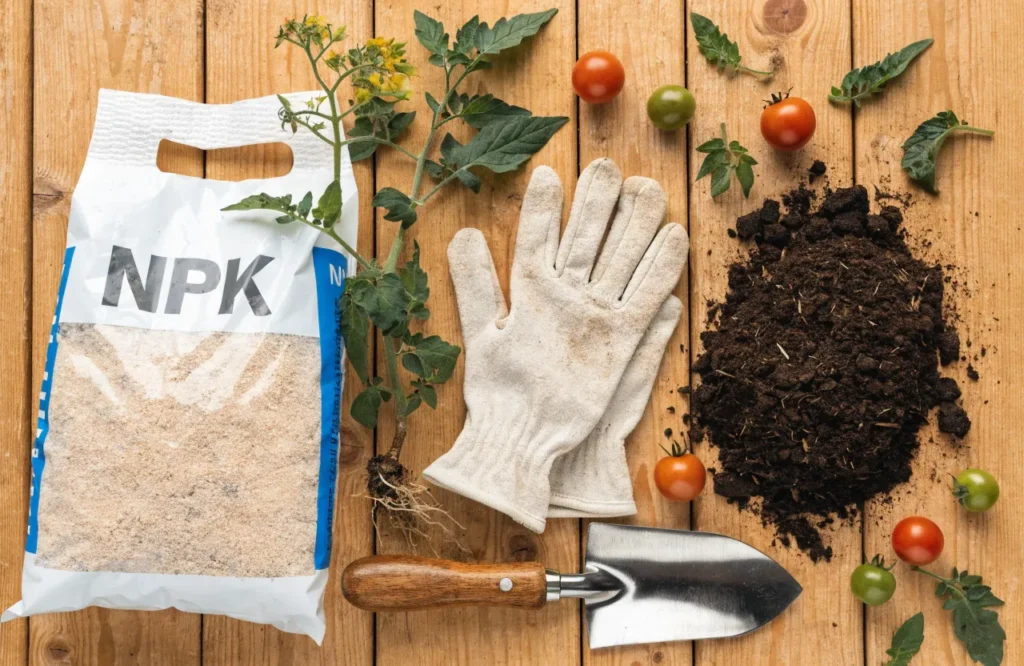
Like all plants, tomatoes require a combination of macronutrients and micronutrients to grow properly. While dozens of nutrients play a role in plant health, three primary nutrients have the greatest impact on tomato growth.
These nutrients appear on every fertilizer label as the NPK ratio.
Nitrogen (N)
Nitrogen promotes vigorous leaf and stem growth. During the early stages of development, tomatoes need enough nitrogen to build a strong framework that supports future flowers and fruit.
Too little nitrogen often causes:
- Yellow older leaves
- Slow growth
- Thin stems
- Small plants
Too much nitrogen can result in:
- Large, dark green plants
- Excessive leaf growth
- Delayed flowering
- Fewer tomatoes
Finding the right balance is essential.
Phosphorus (P)
Phosphorus supports healthy root development, flower production, and fruit formation.
It is especially important during transplanting because it helps young plants establish roots quickly. Later in the season, phosphorus contributes to flowering and successful fruit set.
Symptoms of phosphorus deficiency may include:
- Slow growth
- Purple or reddish leaves
- Poor flowering
- Reduced fruit production
Potassium (K)
Potassium is often overlooked, but it plays a major role in overall plant health.
It helps regulate water movement within the plant, strengthens disease resistance, improves fruit quality, and contributes to sweeter, firmer tomatoes.
A potassium deficiency may cause:
- Brown leaf edges
- Weak stems
- Uneven fruit ripening
- Lower yields
Because tomatoes produce large amounts of fruit, they require a consistent supply of potassium throughout the growing season.
Beyond NPK: The Micronutrients Tomatoes Need
While nitrogen, phosphorus, and potassium receive the most attention, tomatoes also depend on smaller amounts of essential micronutrients.
These include:
- Calcium for strong cell walls and healthy fruit development
- Magnesium for chlorophyll production and photosynthesis
- Sulfur for protein formation
- Iron for healthy green leaves
- Zinc for enzyme activity
- Boron for flower development and pollination
- Manganese, copper, and molybdenum for various metabolic processes
Most quality tomato fertilizers include many of these nutrients. Organic matter such as compost also helps replenish micronutrients naturally while improving soil structure.
Test Your Soil Before You Fertilize
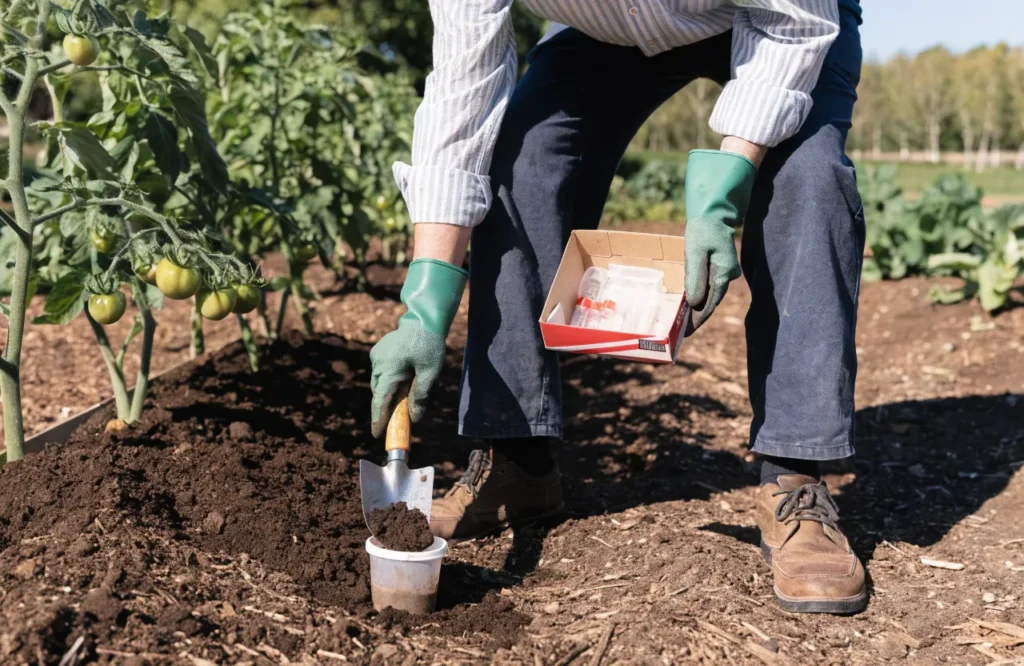
One of the biggest mistakes gardeners make is applying fertilizer without knowing what their soil already contains.
A simple soil test can reveal:
- Existing nutrient levels
- Soil pH
- Organic matter content
- Nutrient deficiencies
- Nutrient excesses
This information allows you to choose a fertilizer that addresses your soil’s specific needs instead of adding nutrients unnecessarily.
For example, if your soil already contains high phosphorus levels, adding more phosphorus won’t improve tomato production and may interfere with the plant’s ability to absorb other important nutrients.
Many local extension offices and commercial soil testing laboratories offer affordable soil testing services, and home soil test kits are also widely available for basic analysis.
Expert Tip: A soil test costs far less than replacing underperforming tomato plants. Knowing your soil’s nutrient levels helps you avoid unnecessary fertilizer applications and ensures you’re giving your tomatoes exactly what they need.
What Is the Ideal Soil pH for Tomatoes?
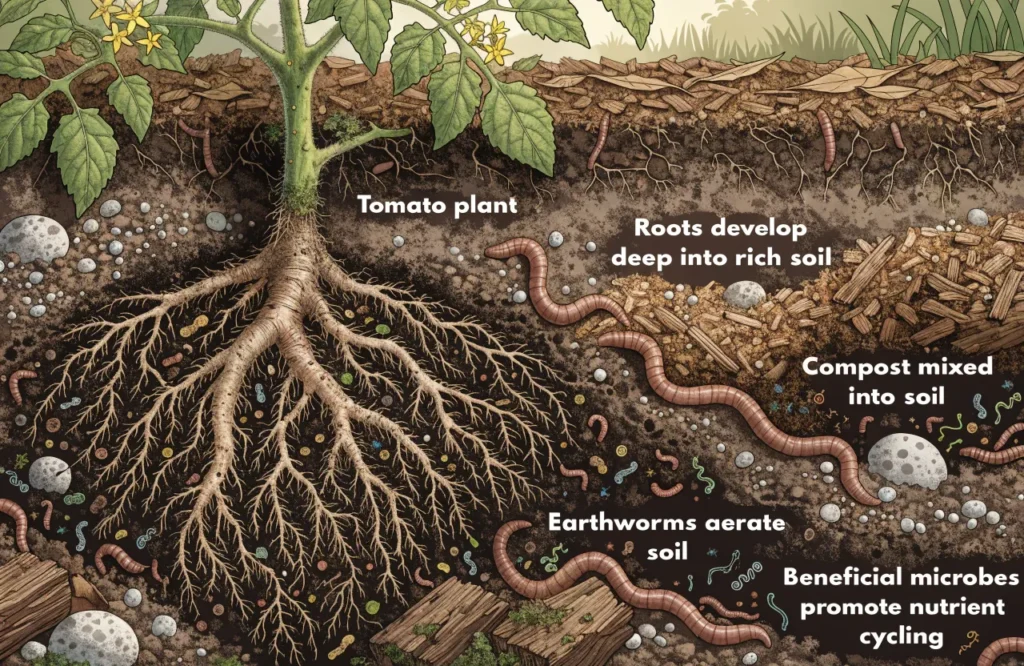
Even if your soil contains plenty of nutrients, tomato plants can’t absorb them efficiently if the pH is outside the ideal range.
Tomatoes grow best in slightly acidic soil with a pH between 6.0 and 6.8.
Within this range, nutrients remain readily available to the roots, supporting healthy growth and consistent fruit production.
If your soil is too acidic or too alkaline, nutrient deficiencies may occur even when fertilizer is applied regularly. A soil test will identify pH issues and recommend appropriate amendments, such as lime to raise pH or elemental sulfur to lower it.
How to Choose the Best Fertilizer for Tomatoes
Walk into any garden center, and you’ll find shelves filled with tomato fertilizers promising bigger harvests, sweeter fruit, and healthier plants. While these products can be effective, the best fertilizer isn’t necessarily the one with the biggest claims on the label, it’s the one that matches your tomato plant’s needs at each stage of growth.
Instead of choosing fertilizer based on brand alone, focus on three factors:
- Nutrient ratio (NPK)
- Fertilizer type (organic or synthetic)
- Application method (liquid or granular)
Understanding these basics will help you choose the right product and avoid common mistakes that can limit fruit production.
Understanding NPK Ratios
Every fertilizer label displays three numbers, such as 10-10-10 or 5-10-10. These numbers represent the percentage of the three primary nutrients:
- Nitrogen (N) – Supports leaf and stem growth.
- Phosphorus (P) – Encourages root development, flowering, and fruit formation.
- Potassium (K) – Improves fruit quality, water regulation, and disease resistance.
Each nutrient serves a different purpose throughout the growing season.
For example, a young tomato plant needs more nitrogen to establish healthy foliage, while a fruiting plant benefits from higher phosphorus and potassium to support blossoms and ripening tomatoes.
Expert Tip: Don’t choose a fertilizer based solely on the highest NPK numbers. A balanced nutrient supply is far more effective than excessive feeding, which can encourage leafy growth at the expense of tomatoes.
Recommended NPK Ratios by Growth Stage
Using the right NPK ratio at the right time helps maximize growth and harvests.
| Growth Stage | Recommended NPK | Purpose |
| Seedlings | 4-3-3 or 5-5-5 | Encourages balanced early growth |
| Transplanting | 5-10-5 | Promotes strong root establishment |
| Vegetative Growth | 10-10-10 or 8-8-8 | Builds healthy stems and foliage |
| Flowering | 5-10-10 | Supports flower production |
| Fruiting | 4-6-8 or 3-4-6 | Improves fruit size, flavor, and ripening |
| Containers | Balanced liquid fertilizer every 1–2 weeks | Replaces nutrients lost through watering |
Expert Tip: If your tomato plants have lush green leaves but very few flowers, they are likely receiving too much nitrogen. Switching to a fertilizer with less nitrogen and more phosphorus and potassium can help redirect energy toward fruit production.
Organic vs. Synthetic Tomato Fertilizers
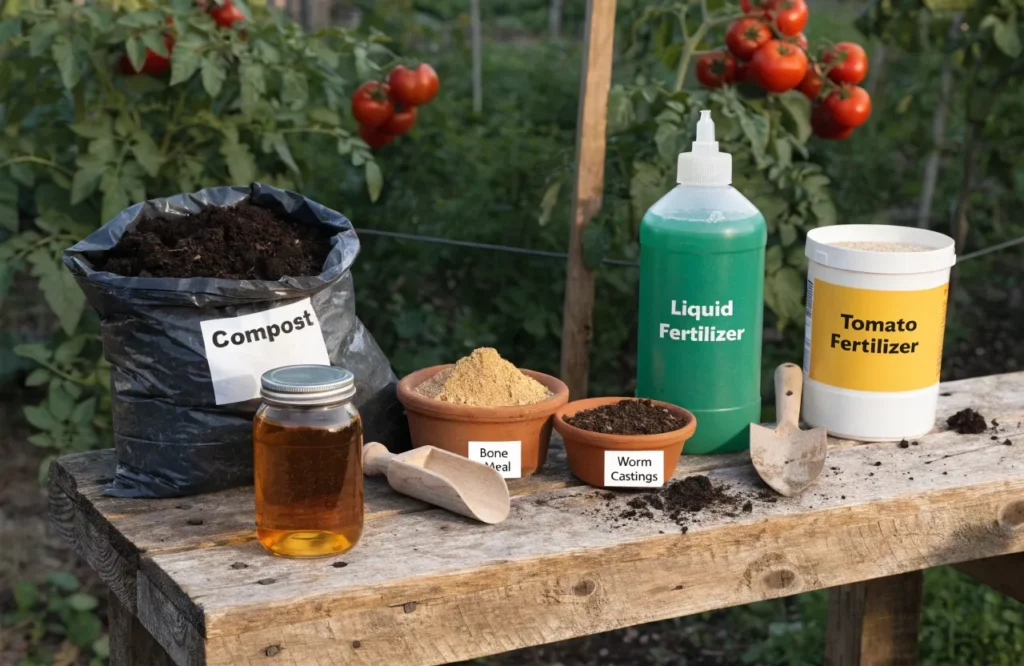
One of the most common questions gardeners ask is whether organic fertilizer is better than synthetic fertilizer. The truth is that both can grow healthy tomato plants when used correctly. The best choice depends on your gardening style, soil condition, and how quickly your plants need nutrients.
Organic Fertilizers
Organic fertilizers come from natural sources such as compost, manure, fish emulsion, kelp, bone meal, blood meal, and plant materials.
Instead of delivering nutrients all at once, they break down gradually as soil microorganisms process the organic matter. This creates a slow, steady nutrient supply while improving soil structure and supporting beneficial microbes.
Advantages
- Improves soil health over time
- Feeds beneficial microorganisms
- Less likely to burn roots
- Releases nutrients gradually
- Adds valuable organic matter
Disadvantages
- Slower results
- Nutrient levels vary by product
- May require more frequent applications
Common organic fertilizers include:
- Compost
- Fish emulsion
- Seaweed or kelp extract
- Bone meal
- Blood meal
- Composted manure
- Worm castings
Synthetic Fertilizers
Synthetic fertilizers contain manufactured nutrients that dissolve quickly in water, making them immediately available to plant roots.
Because nutrients are readily absorbed, synthetic fertilizers are useful when correcting nutrient deficiencies or feeding container-grown tomatoes that require regular fertilization.
Advantages
- Fast nutrient availability
- Precise nutrient ratios
- Easy to apply
- Consistent results
Disadvantages
- Doesn’t improve soil structure
- Doesn’t feed beneficial microbes
- Greater risk of fertilizer burn if overused
- Excess nutrients can leach into the environment
Popular synthetic fertilizers include water-soluble tomato fertilizers and balanced granular blends designed for vegetables.
Organic vs. Synthetic: Which Is the Best Fertilizer for Tomatoes?
| Feature | Organic | Synthetic |
| Nutrient Source | Natural materials | Manufactured nutrients |
| Nutrient Release | Slow and steady | Immediate |
| Improves Soil Health | ✔ Yes | ✘ No |
| Supports Soil Microbes | ✔ Yes | ✘ No |
| Risk of Fertilizer Burn | Low | Moderate to High |
| Best For | Long-term soil health | Fast nutrient correction |
| Cost | Often slightly higher | Usually lower |
Which One Is Better?
If you’re growing tomatoes in rich garden soil and want to improve long-term soil fertility, organic tomato fertilizers are an excellent choice.
If your plants need nutrients quickly, especially in containers, or you’re correcting a deficiency, synthetic fertilizers can provide faster results.
Many experienced gardeners combine both methods by enriching the soil with compost before planting and using a liquid fertilizer during flowering and fruiting.
Expert Tip: Many experienced gardeners combine both approaches, working compost into the soil before planting and using a liquid tomato fertilizer during flowering and fruiting for a steady nutrient supply throughout the season.
Liquid vs. Granular Fertilizer
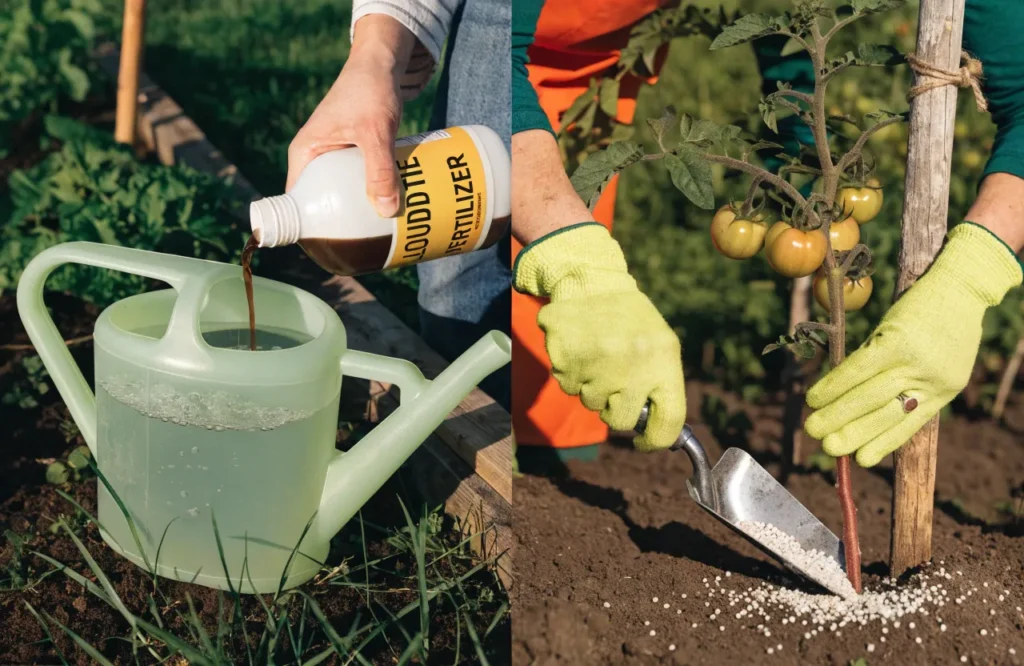
Another important decision is whether to use liquid or granular fertilizer.
Both work well, but they release nutrients differently.
Liquid Fertilizers
Liquid fertilizers dissolve in water and are absorbed almost immediately through the roots.
They’re especially useful during periods of rapid growth or when plants show signs of nutrient deficiency.
Benefits
- Fast nutrient uptake
- Easy to apply
- Ideal for container tomatoes
- Excellent for regular feeding
Drawbacks
- Nutrients don’t last as long
- Requires more frequent applications
Granular Fertilizers
Granular fertilizers are sprinkled around the plant and watered into the soil.
Some dissolve quickly, while slow-release formulas continue feeding plants for several weeks or months.
Benefits
- Long-lasting nutrition
- Less frequent applications
- Convenient for large gardens
Drawbacks
- Slower nutrient availability
- Requires adequate soil moisture
- Can burn roots if placed too close to the stem
Liquid vs. Granular Fertilizer Comparison
| Feature | Liquid | Granular |
| Speed | Fast | Slow to Moderate |
| Feeding Frequency | Every 1–2 weeks | Every 4–8 weeks (varies by product) |
| Best For | Containers, quick feeding | Garden beds, long-term nutrition |
| Ease of Application | Mix with water | Sprinkle and water in |
| Nutrient Availability | Immediate | Gradual |
For many home gardeners, a combination works best: incorporate a granular fertilizer or compost at planting, then supplement with liquid feed during flowering and fruit production.
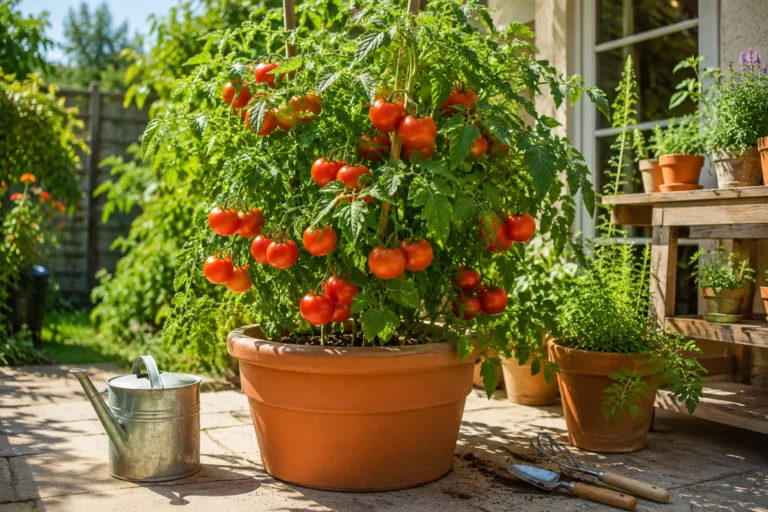
Should You Fertilize Tomatoes in Pots Differently?
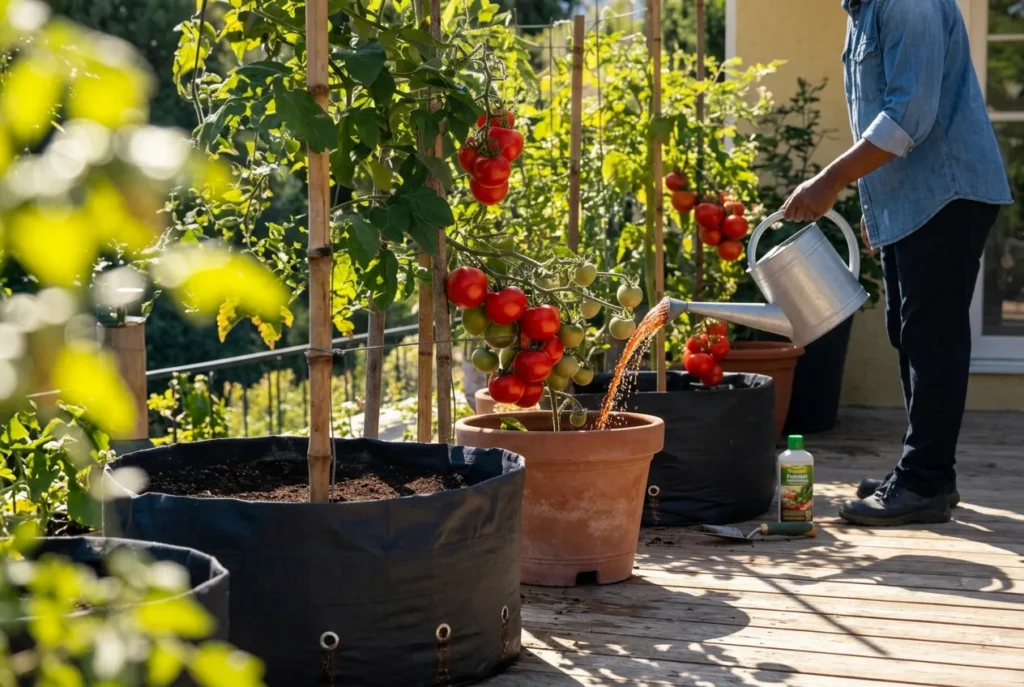
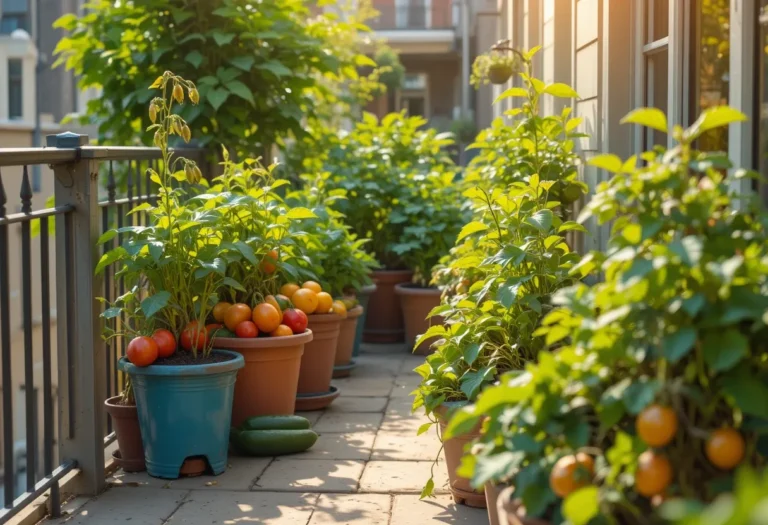
Yes. Tomatoes grown in containers have different nutritional needs than those planted in the ground.
Every time you water a container, some nutrients are washed out through the drainage holes. Over time, this leaves the potting mix less fertile, even if it started with slow-release fertilizer.
To keep container tomatoes productive:
- Use a high-quality potting mix designed for vegetables.
- Begin fertilizing about two weeks after transplanting, unless your potting mix already contains a slow-release fertilizer.
- Apply a balanced liquid fertilizer every 1–2 weeks, following the product label.
- Water consistently to help plants absorb nutrients without stressing the roots.
Because container plants rely entirely on the nutrients you provide, regular feeding is one of the keys to producing healthy, productive tomatoes.
What Is the Best Fertilizer for Tomatoes?
The best fertilizer for tomatoes depends on your soil conditions and the plant’s stage of growth. Use a higher-phosphorus fertilizer when transplanting to encourage strong roots, a balanced fertilizer during vegetative growth, and a lower-nitrogen fertilizer with higher phosphorus and potassium during flowering and fruiting. Container-grown tomatoes also benefit from regular feeding with a balanced liquid fertilizer.
There isn’t a single “best” fertilizer for every garden. The ideal choice depends on your soil, growing conditions, and the stage of plant growth.
In general:
- For new transplants: Choose a fertilizer with higher phosphorus to encourage strong root development.
- For leafy growth: Use a balanced fertilizer that supplies enough nitrogen without encouraging excessive foliage.
- For flowering and fruiting: Select a fertilizer with slightly lower nitrogen and higher phosphorus and potassium to support blossoms and fruit production.
- For container tomatoes: Feed regularly with a balanced liquid fertilizer because nutrients are depleted more quickly.
Rather than chasing the highest NPK numbers, focus on providing the right nutrients at the right time. Combined with healthy soil, proper watering, and full sunlight, a well-planned fertilizing program will help your tomato plants produce abundant, flavorful harvests throughout the season.
When and How to Fertilize Tomatoes
Knowing what fertilizer to use is only half the equation. Applying it at the right time, and in the right way, is what helps tomato plants grow vigorously, produce abundant flowers, and develop flavorful fruit.
Tomatoes have different nutrient needs throughout the growing season. Feeding too early, too late, or too heavily can reduce yields, even if you’re using a high-quality fertilizer.
The following schedule will help you provide nutrients when your plants need them most.
Tomato Fertilizing Schedule
Use this schedule as a general guide. Always follow the application rates listed on your fertilizer label, as nutrient concentrations vary by product.
| Growth Stage | When to Fertilize | Recommended Fertilizer |
| Before Planting | Prepare soil 1–2 weeks before transplanting | Compost or balanced granular fertilizer |
| At Transplanting | Planting day | High-phosphorus starter fertilizer (such as 5-10-5) |
| Early Vegetative Growth | 2–3 weeks after transplanting | Balanced fertilizer (8-8-8 or 10-10-10) |
| Flowering | When first flower clusters appear | Lower nitrogen, higher phosphorus and potassium |
| Fruiting | Every 2–3 weeks during harvest | Tomato fertilizer or balanced liquid fertilizer |
| Late Season | Continue until harvest slows | Light feeding only if plants remain productive |
Pro Tip: It’s better to fertilize lightly and consistently than to apply large amounts at one time. Regular feeding supports steady growth and reduces the risk of nutrient imbalances.
Step 1: Prepare the Soil Before Planting
Healthy tomato plants start with healthy soil.
Before planting, improve the soil by mixing in:
- Compost
- Well-aged manure
- Organic matter
- Slow-release fertilizer (if needed)
Organic matter improves drainage, moisture retention, and soil structure while supplying slow-release nutrients throughout the season.
If you haven’t tested your soil recently, this is the ideal time to do it. A soil test helps identify nutrient deficiencies and prevents unnecessary fertilizer applications.
Step 2: Fertilize at Transplanting
Young tomato plants experience stress when moved into the garden.
A starter fertilizer rich in phosphorus encourages rapid root development, helping plants establish quickly and begin vigorous growth.
To fertilize during transplanting:
- Dig the planting hole.
- Mix fertilizer thoroughly into the surrounding soil according to the label directions.
- Cover the fertilizer with a thin layer of soil before placing the transplant.
- Water deeply after planting.
Avoid placing fertilizer directly against the roots, as concentrated nutrients may cause fertilizer burn.
Step 3: Feed During Vegetative Growth
Once plants begin producing healthy new leaves and stems, they enter the vegetative growth stage.
At this point, tomatoes benefit from balanced nutrition that supports strong stems and healthy foliage.
A balanced fertilizer provides enough nitrogen for continued growth without encouraging excessive leafy growth.
Healthy vegetative growth should produce:
- Thick stems
- Dark green leaves
- Compact branching
- Steady upward growth
If your plants already appear vigorous and dark green, avoid adding excessive nitrogen.
Step 4: Adjust Feeding During Flowering
When flower clusters begin forming, nutrient priorities change.
Instead of encouraging more leaves, the plant shifts energy toward flowering and fruit production.
This is the ideal time to switch to a fertilizer with:
- Lower nitrogen
- Moderate phosphorus
- Higher potassium
Potassium supports flower development, pollination, fruit quality, and disease resistance.
A balanced feeding program during flowering often results in:
- More blossoms
- Better fruit set
- Reduced blossom drop
- Healthier plants
Step 5: Continue Feeding During Fruiting
Producing tomatoes requires significant energy.
As fruits enlarge and ripen, tomato plants continue drawing nutrients from the soil.
Feed every two to three weeks using a fertilizer designed for vegetables or tomatoes, following the product label.
Regular feeding during fruit production helps improve:
- Fruit size
- Flavor
- Color
- Firmness
- Overall yield
Container-grown tomatoes often benefit from weekly feeding with diluted liquid fertilizer because nutrients are depleted more quickly.
Expert Tip: Keep a simple gardening journal to record when you fertilize and which products you use. Tracking your feeding schedule makes it easier to identify what produces the healthiest plants and highest yields each season.
How to Apply Tomato Fertilizer Correctly
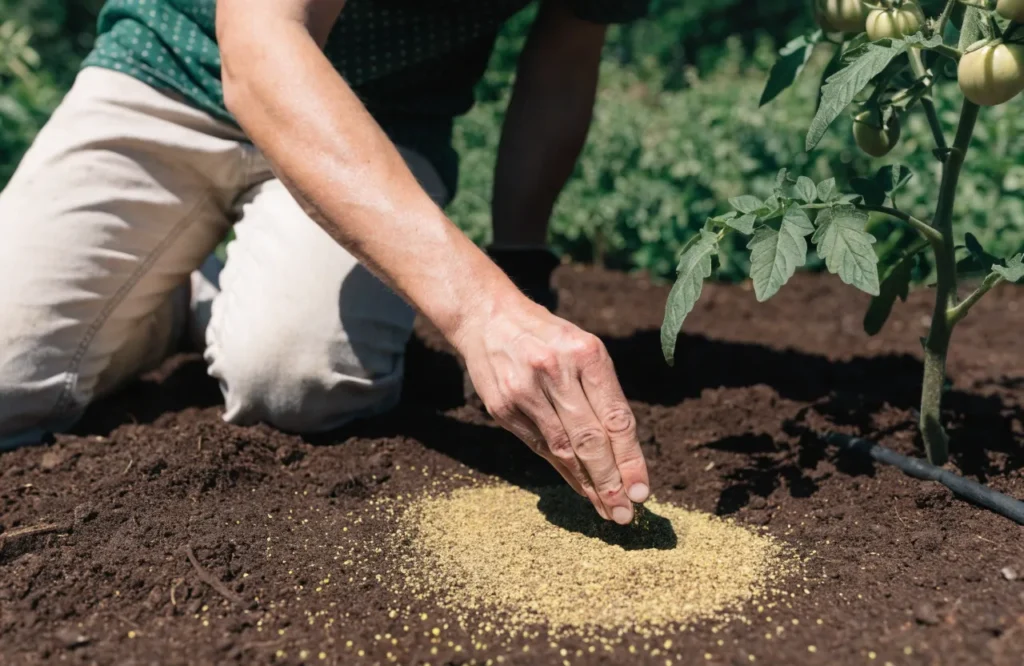
Proper application is just as important as choosing the right fertilizer.
Granular Fertilizer
Apply granular fertilizer around the plant—not directly against the stem.
Leave about 6 inches (15 cm) between the fertilizer and the main stem.
Lightly work it into the top inch of soil, then water thoroughly.
Liquid Fertilizer
Mix liquid fertilizer exactly as directed on the product label.
Water the soil around the base of the plant instead of spraying leaves unless the product specifically recommends foliar feeding.
Liquid fertilizers work quickly because nutrients are immediately available to the roots.
Slow-Relea se Fertilizer
Slow-release fertilizers provide nutrients gradually over several weeks or months.
These products are especially useful for gardeners who prefer fewer fertilizer applications.
Follow the manufacturer’s instructions for reapplication.
Water Before Fertilizing
One of the easiest ways to damage tomato roots is applying fertilizer to dry soil.
If the soil is dry:
- Water first.
- Wait until moisture has soaked into the root zone.
- Apply fertilizer afterward.
Moist soil allows nutrients to spread evenly while reducing the risk of fertilizer burn.
Expert Tip: Fertilize early in the morning or late in the afternoon when temperatures are cooler. This reduces plant stress and allows nutrients to soak into the soil more effectively.
Fertilizing Tomatoes in Containers
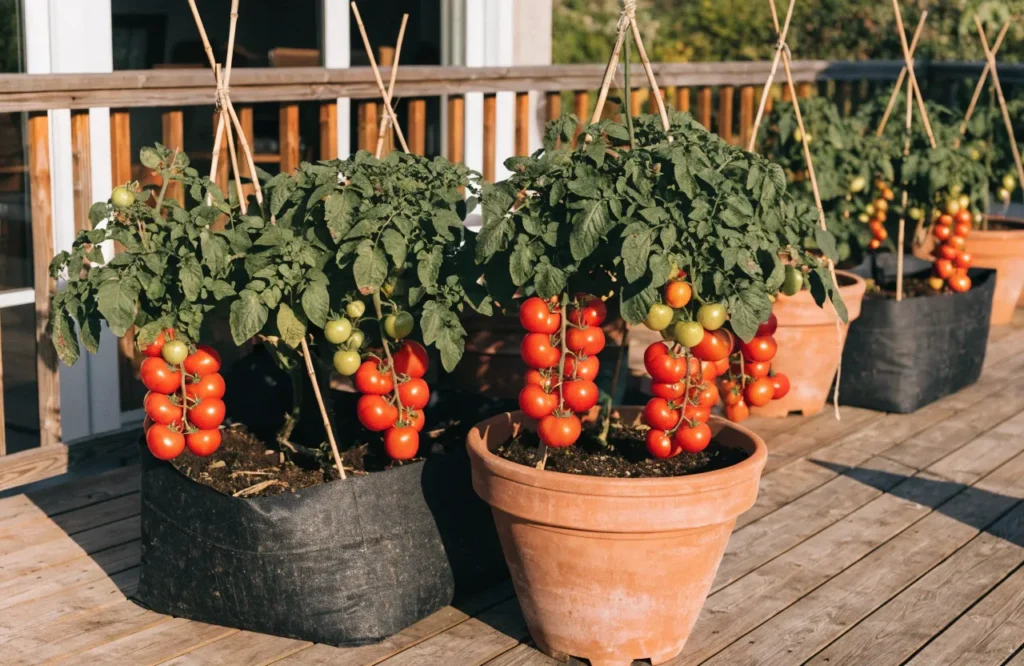
Container-grown tomatoes require a different feeding routine than garden-grown plants.
Because watering washes nutrients out of potting soil, container tomatoes need more frequent fertilizer applications.
For best results:
- Start feeding about two weeks after transplanting.
- Apply a balanced liquid fertilizer every one to two weeks.
- Water consistently to maintain even soil moisture.
- Follow the fertilizer label carefully to avoid salt buildup.
If your potting mix already contains slow-release fertilizer, adjust your schedule according to the product’s recommended feeding duration.
Expert Tip: Because nutrients wash out of containers with frequent watering, it’s better to feed container tomatoes lightly every week or two than to apply a large amount of fertilizer all at once.
Signs Your Tomato Plants Need Fertilizer
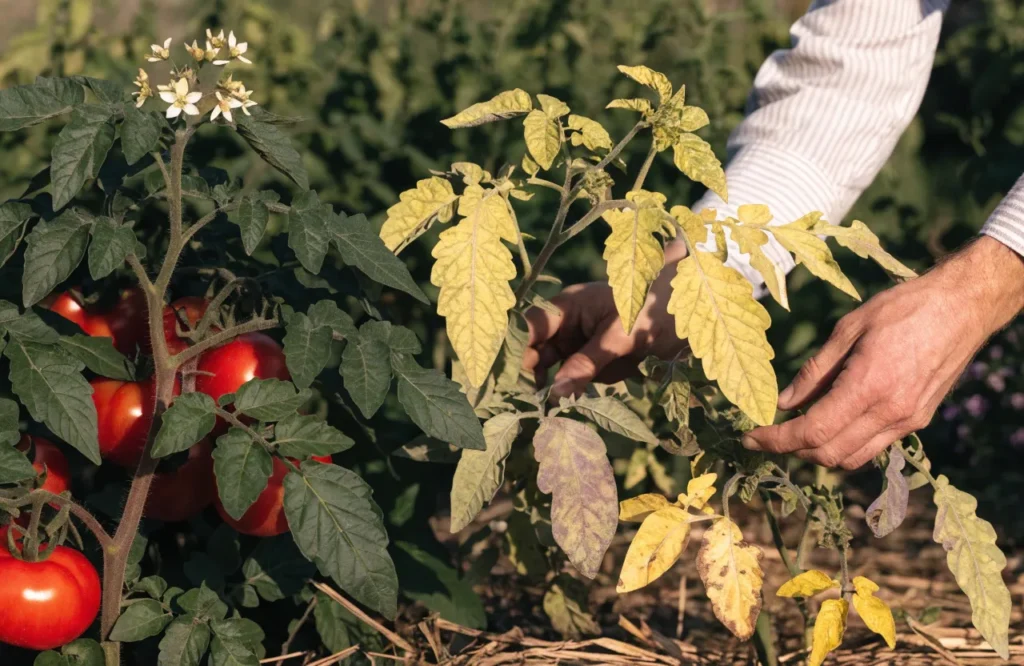
Tomato plants often show visible symptoms when nutrients become limited.
Watch for these common signs:
- Pale or yellow leaves
- Slow or stunted growth
- Thin stems
- Small leaves
- Few flowers
- Poor fruit production
- Small or undersized tomatoes
These symptoms can also result from improper watering, pests, diseases, or unfavorable weather, so inspect plants carefully before assuming fertilizer is the cause.
Expert Tip: Always inspect your plants before reaching for fertilizer. Yellow leaves or slow growth can also be caused by inconsistent watering, pests, diseases, or poor sunlight, so identify the real problem first.
Can You Fertilize Too Much?
Yes. Overfertilizing is one of the most common mistakes gardeners make.
Excess fertilizer can cause:
- Excessive leafy growth
- Delayed flowering
- Fewer tomatoes
- Burned roots
- Leaf scorch
- Salt buildup in container soil
- Increased susceptibility to certain pests and diseases
More fertilizer does not produce more tomatoes. In fact, too much nitrogen often leads to large, healthy-looking plants with very little fruit.
Following the product label and fertilizing consistently, but not excessively, is the safest way to maintain healthy growth.
Expert Tip: If you accidentally overfertilize, water the soil deeply to help flush excess salts from the root zone. Avoid adding more fertilizer until the plants recover and begin growing normally again.
Quick Fertilizing Checklist
✔ Test your soil before planting if possible.
✔ Add compost or organic matter before transplanting.
✔ Use a starter fertilizer to encourage root growth.
✔ Switch to a lower-nitrogen fertilizer once flowering begins.
✔ Feed regularly throughout fruit production.
✔ Water before fertilizing.
✔ Keep fertilizer away from the main stem.
✔ Avoid overfeeding, especially with nitrogen.
✔ Increase feeding frequency for container-grown tomatoes.
By following a consistent feeding schedule and adjusting fertilizer to match each growth stage, you’ll encourage healthier plants, stronger root systems, and a longer harvest season with larger, better-tasting tomatoes.
Common Mistakes When Choosing the Best Fertilizer for Tomatoes
Even the best fertilizer won’t deliver great results if it’s used incorrectly. In fact, many tomato problems are caused by how fertilizer is applied rather than which fertilizer is chosen.
Avoid these common mistakes to keep your plants healthy and productive throughout the growing season.
1. Applying Too Much Nitrogen
Nitrogen is essential for healthy leaves and stems, but too much of it can reduce fruit production.
When tomato plants receive excessive nitrogen, they often produce vigorous green foliage at the expense of flowers and fruit. The plants may look healthy, but harvests are disappointing.
Signs of Excess Nitrogen
- Large, dark green leaves
- Thick stems
- Rapid leafy growth
- Few flowers
- Poor fruit production
How to Fix It
- Stop applying high-nitrogen fertilizers.
- Switch to a fertilizer with more phosphorus and potassium.
- Avoid using lawn fertilizers on vegetable gardens.
2. Fertilizing Without Testing the Soil
Adding fertilizer without knowing your soil’s nutrient levels is like taking medication without a diagnosis.
Many garden soils already contain sufficient phosphorus or potassium. Applying more won’t improve growth and may actually reduce the availability of other nutrients.
Better Approach
- Test your soil every 2–3 years.
- Adjust fertilizer based on the results.
- Add only the nutrients your soil lacks.
3. Applying Fertilizer Too Close to the Stem
Granular fertilizer placed directly against the stem can burn roots and damage young plants.
Correct Method
Spread fertilizer in a circle around the plant, keeping it about 6 inches (15 cm) away from the stem, then water thoroughly.
4. Fertilizing Dry Soil
Dry roots absorb fertilizer rapidly, increasing the risk of fertilizer burn.
Best Practice
Water the soil first if it’s dry, then apply fertilizer according to the product instructions.
5. Feeding Too Often
Tomatoes are heavy feeders, but they don’t need fertilizer every few days.
Overfeeding can cause:
- Salt buildup
- Root damage
- Excessive foliage
- Reduced fruit production
Always follow the application interval recommended on the fertilizer label.
6. Ignoring Container Plants
Tomatoes grown in containers lose nutrients every time they are watered.
Without regular feeding, container plants often develop yellow leaves, slow growth, and poor fruit production much sooner than garden-grown tomatoes.
Feed container tomatoes regularly with a balanced liquid fertilizer according to the manufacturer’s recommendations.
7. Expecting Fertilizer to Solve Every Problem
Not every tomato issue is caused by nutrient deficiencies.
Problems such as:
- Overwatering
- Underwatering
- Poor sunlight
- Diseases
- Insect damage
- Compacted soil
can all produce symptoms similar to nutrient deficiencies.
Before adding more fertilizer, inspect the plant carefully and rule out other causes.
Tomato Nutrient Deficiency Guide
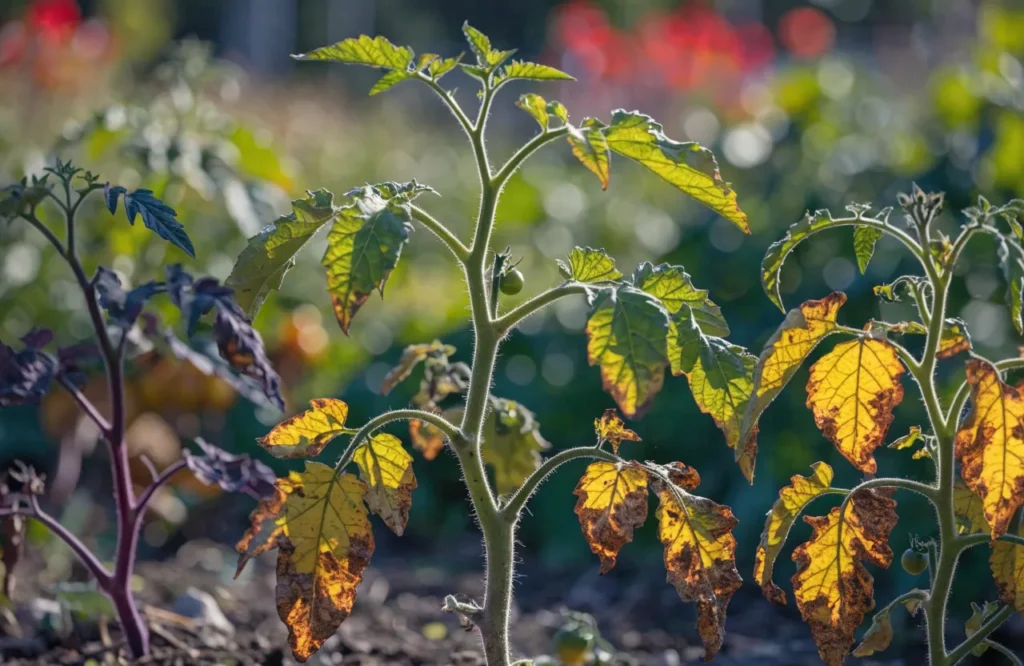
Healthy tomato plants produce lush green leaves, sturdy stems, and abundant fruit. When essential nutrients are lacking, plants often display visible symptoms that can help identify the problem.
Yellow leaves are often one of the first signs that something is wrong, but a nutrient deficiency isn’t always the cause. Overwatering, underwatering, pests, diseases, and natural aging can all cause yellow foliage. If you’re unsure what’s affecting your plants, read our complete guide on Why Are My Tomato Plant Leaves Turning Yellow to identify the problem and choose the right solution.
| Symptom | Possible Cause | Recommended Solution |
| Older leaves turn yellow | Nitrogen deficiency | Apply a balanced fertilizer or fish emulsion |
| Purple or reddish leaves | Phosphorus deficiency | Use a phosphorus-rich fertilizer if a soil test confirms the need |
| Brown or scorched leaf edges | Potassium deficiency | Apply a fertilizer with higher potassium |
| Yellow leaves with green veins | Magnesium deficiency | Apply magnesium if a deficiency is confirmed |
| Distorted new growth | Calcium deficiency or irregular watering | Maintain consistent soil moisture and provide calcium if needed |
| Slow growth | General nutrient deficiency or poor soil | Improve soil with compost and balanced fertilization |
Important: Similar symptoms can result from disease, root damage, or watering issues. Use soil testing and careful observation before diagnosing a nutrient deficiency.
Expert Tip: Nutrient deficiencies often appear first on older or newer leaves, depending on which nutrient is lacking. Taking photos of symptoms over several days can help you spot patterns before making corrections.
Blossom-End Rot: It’s Not Always a Fertilizer Problem
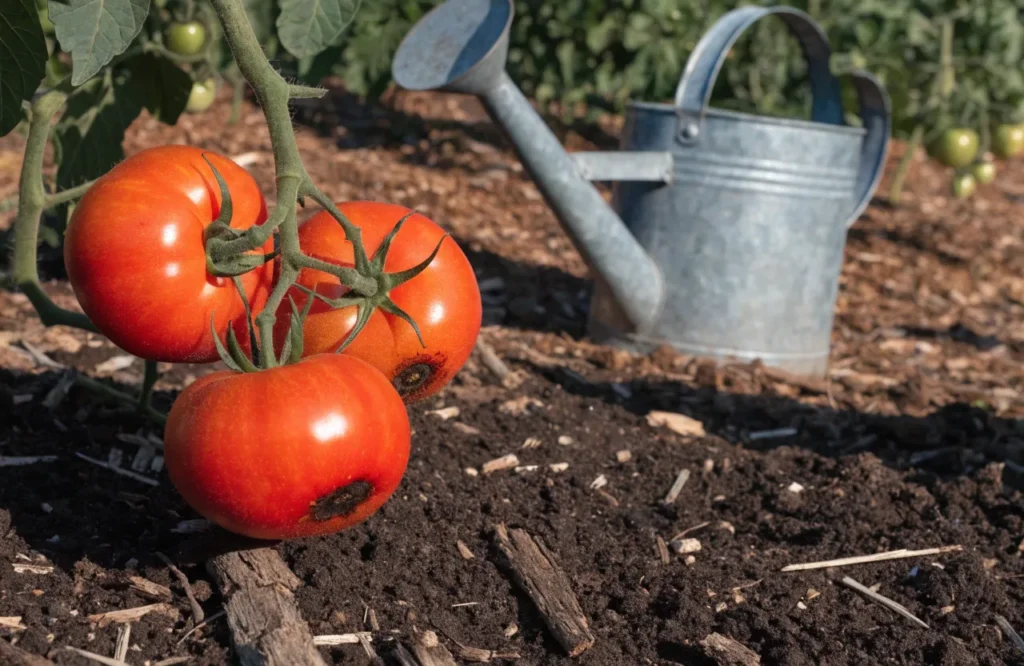
Blossom-end rot is one of the most common tomato disorders. It appears as a dark, sunken patch on the blossom end of the fruit.
Although it is associated with a lack of calcium in the fruit, the soil often contains enough calcium. The more common issue is that inconsistent watering limits the plant’s ability to transport calcium to developing tomatoes.
To Help Prevent Blossom-End Rot
- Keep soil moisture consistent.
- Water deeply rather than lightly.
- Mulch around plants to reduce moisture fluctuations.
- Avoid excessive nitrogen fertilization.
- Correct calcium deficiencies only if confirmed by a soil test.
Maintaining even watering is often more effective than simply adding more calcium.
Homemade Tomato Fertilizers
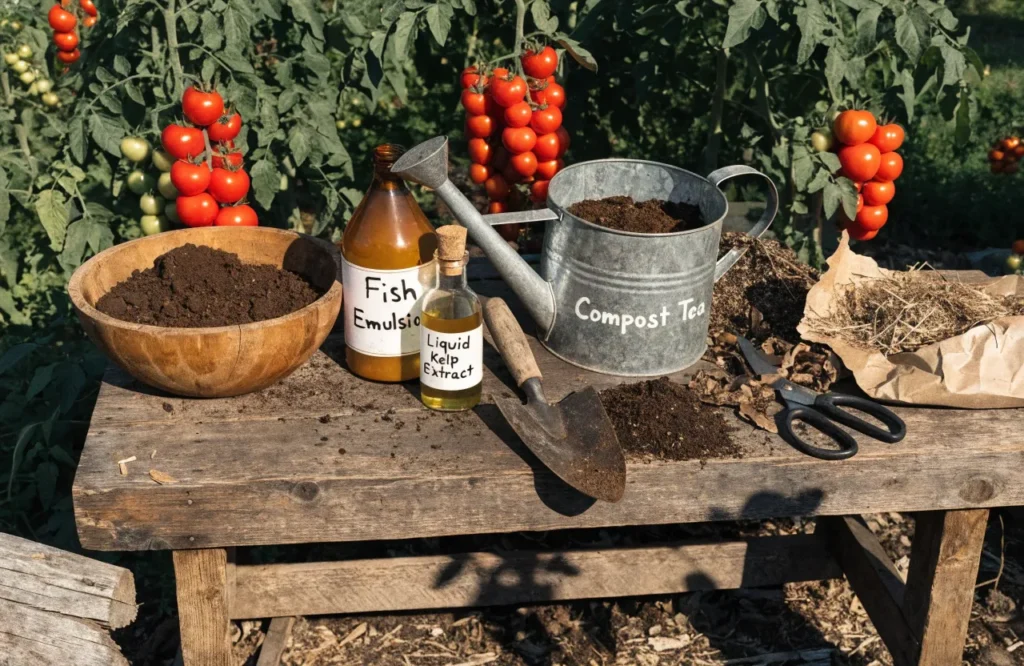
Homemade fertilizers can complement a regular fertilizing program, but they shouldn’t always replace a complete fertilizer. They work best as soil amendments or supplemental nutrient sources.
Compost
Compost improves soil structure, increases water retention, and provides a wide range of nutrients slowly over time.
Apply a 1–2 inch layer around tomato plants or mix it into the soil before planting.
Fish Emulsion
Fish emulsion is a fast-acting organic fertilizer rich in nitrogen and trace minerals.
It’s particularly useful for young plants during early vegetative growth.
Seaweed or Kelp Extract
Seaweed products contain potassium and naturally occurring trace minerals.
Many gardeners use them to support overall plant health during flowering and fruit development.
Worm Castings
Worm castings improve soil biology while supplying gentle, slow-release nutrients.
Mix them into planting holes or use them as a top dressing throughout the growing season.
Compost Tea
Compost tea introduces beneficial microorganisms and provides small amounts of readily available nutrients.
Use it as a soil drench to support healthy root systems.
Frequently Asked Questions
Expert Tip: Healthy soil is the foundation of productive tomato plants. Even the best fertilizer can’t compensate for poor drainage, inconsistent watering, or insufficient sunlight, so focus on the plant’s overall growing conditions as well as its feeding schedule.
Conclusion
Growing healthy, productive tomato plants starts with understanding what they need, and when they need it. Choosing the best fertilizer for tomatoes isn’t about feeding your plants more; it’s about supplying the right nutrients at each stage of growth. Whether you use an organic tomato fertilizer, a balanced tomato fertilizer, or a fast-acting liquid fertilizer for tomatoes, matching the product to your plant’s needs will encourage stronger roots, healthy foliage, abundant flowers, and a bigger harvest.
A successful tomato feeding schedule begins with healthy soil, regular watering, and the right tomato plant fertilizer at the appropriate time. Understanding the ideal tomato fertilizer NPK ratio, testing your soil, and avoiding common fertilizing mistakes can make a noticeable difference in plant health and fruit production. Gardeners growing in containers should also choose a suitable fertilizer for tomatoes in pots, as nutrients are depleted more quickly than in garden beds.
Whether you prefer organic fertilizer, synthetic products, or homemade soil amendments, the goal is the same: provide balanced nutrition throughout the growing season. By following the recommendations in this guide, you’ll know how to fertilize tomatoes, when to fertilize tomatoes, and how often to fertilize tomatoes for healthier plants, higher yields, and delicious homegrown tomatoes year after year.
Happy gardening!