Blossom End Rot: Causes, Symptoms, Treatment, & Prevention (Complete Guide)
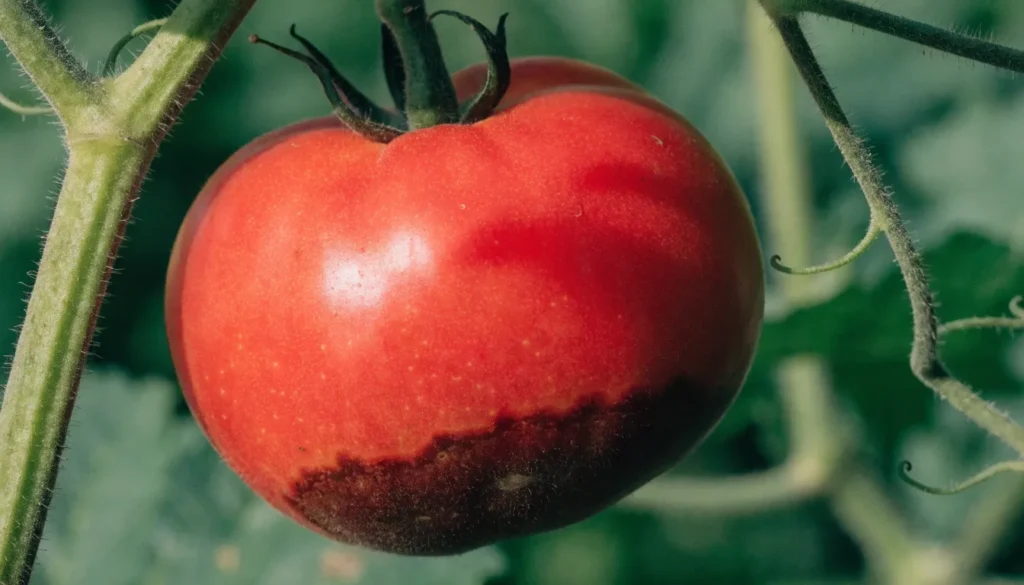
Nothing derails a tomato harvest quite like pulling a fruit off the vine and finding the bottom caved in, dark, and leathery. This guide exists to walk you through exactly what’s happening when that shows up, why it happens even when your soil seems fine, and, most importantly, how to stop it before it spreads to the rest of your crop. Whether you’re growing tomatoes, peppers, squash, cucumbers, or watermelon, the mechanics are the same, and so is the fix.
Table of Contents
Quick answer
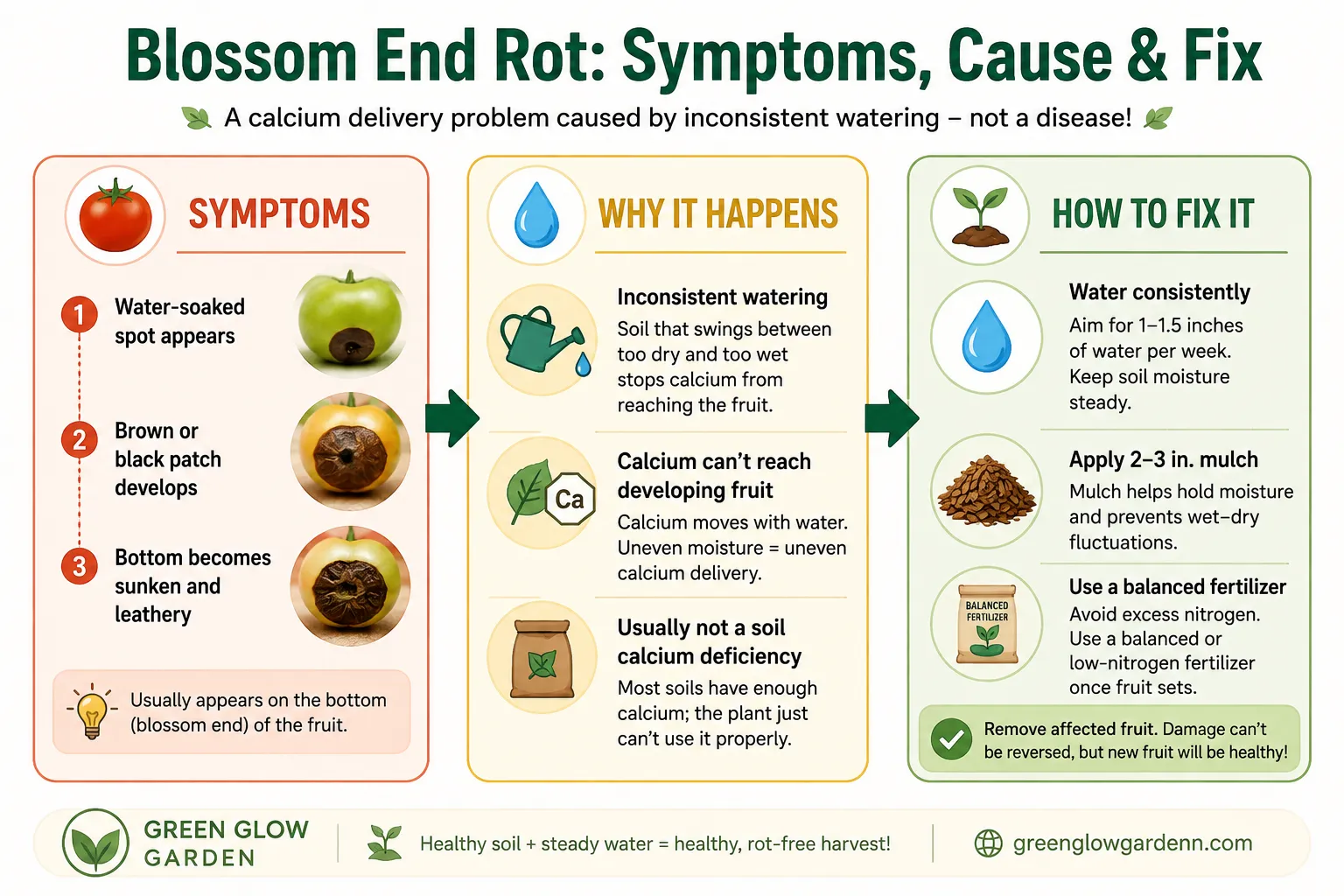
Blossom end rot is a dark, sunken, leathery patch that forms on the bottom of tomatoes, peppers, squash, cucumbers, and watermelon. The underlying culprit is a localized calcium shortage in the developing fruit, usually triggered by inconsistent watering, not a lack of calcium in the soil. This physiological disorder isn’t contagious and won’t spread between plants. The fix: water evenly (about 1–1.5 inches per week), mulch to steady soil moisture, ease up on nitrogen fertilizer, and remove already-affected fruit. Existing damage can’t be reversed, but new fruit typically grows healthy within 1–2 weeks of correcting your routine.
If you’ve pulled a tomato off the vine only to find a sunken, dark, leathery patch on the bottom, you’re dealing with one of the most common and most frustrating garden disorders home growers face. The good news: it’s not a disease, it can’t spread to other plants, and in most cases it’s completely fixable once you understand what’s really going on beneath the soil.
This guide breaks down everything you need to know: what this condition is, what triggers it, how to recognize the early warning signs, and the corrective steps, sprays, and feeding adjustments that actually work, for tomatoes, peppers, cucumbers, squash, zucchini, and watermelon.
What Is Blossom End Rot?
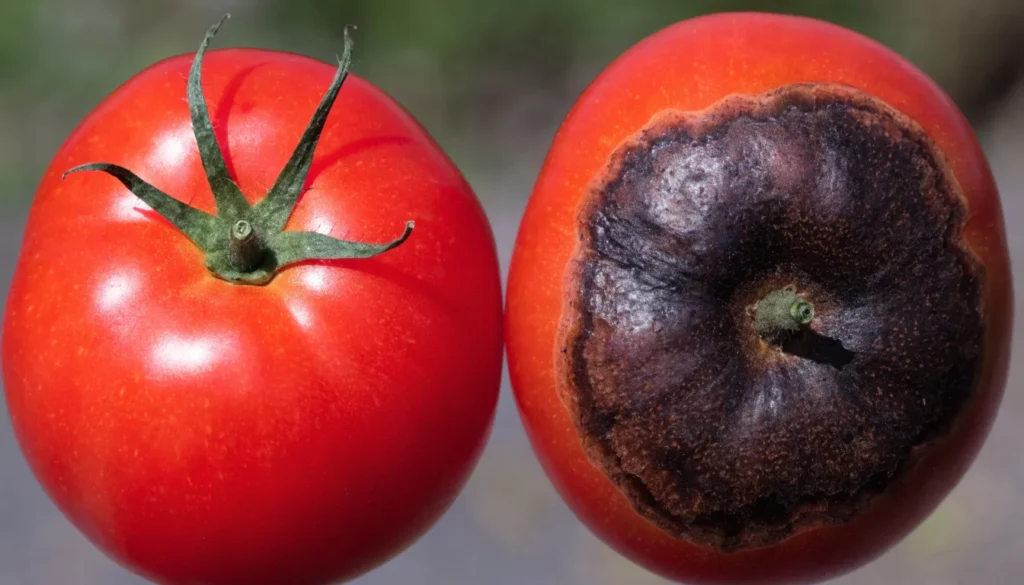
Often abbreviated BER, this disorder affects the fruit of certain vegetable plants, most notably tomatoes. It shows up as a discolored, water-soaked spot on the blossom end, the end opposite the stem, where the flower once was.
Unlike fungal or bacterial infections, this issue is not contagious. It won’t jump from one plant to another, and it isn’t caused by pests or pathogens. It’s a nutritional and watering problem, which is actually good news, because it means you have direct control over fixing it.
Blossom End Rot Symptoms: What to Look For
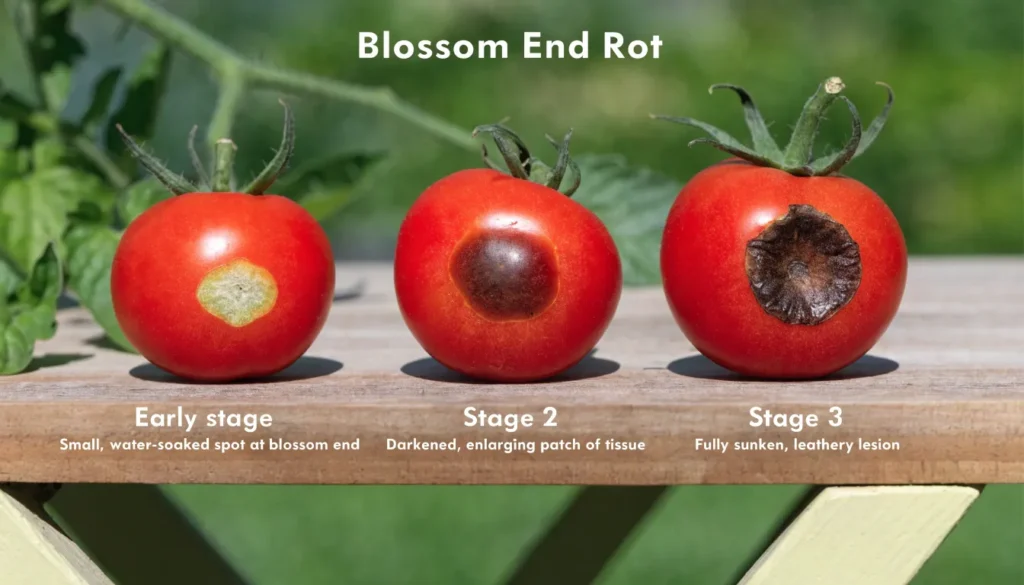
Recognizing the warning signs early can help you save the rest of your harvest. Here’s what the progression typically looks like:
- The earliest indicator is a small, water-soaked, slightly bruised-looking spot on the bottom of the fruit.
- Over the next few days, the spot enlarges and darkens, turning tan, brown, or black.
- The affected area becomes sunken, leathery, and dry, almost like a scar.
- In severe cases, secondary mold or soft rot can move in and cover the damaged patch.
- The rest of the fruit typically stays firm and looks otherwise normal, especially in the earlier stages.
Tomatoes usually show these signs first because they grow quickly and are more sensitive to calcium fluctuations, but the disorder can appear on many other crops as well.
Quick Diagnostic Checklist
If you’re not sure whether you’re dealing with blossom end rot, use this quick checklist:
✅ Dark, sunken patch on the blossom end (bottom) of the fruit, opposite the stem.
✅ Leathery or dry texture as the affected area enlarges and darkens.
✅ Leaves appear mostly healthy, with no widespread spotting or disease symptoms.
✅ First fruits on the plant are affected, while newer fruit may still look normal.
✅ Recent watering fluctuations, such as dry soil followed by heavy watering or rainfall.
✅ Fruit is growing rapidly, especially during hot weather.
If you checked most of these boxes, your plant is very likely suffering from blossom end rot rather than a fungal or bacterial disease. Continue reading below to learn what causes it and how to fix it before more fruit is affected.
What Causes Blossom End Rot?
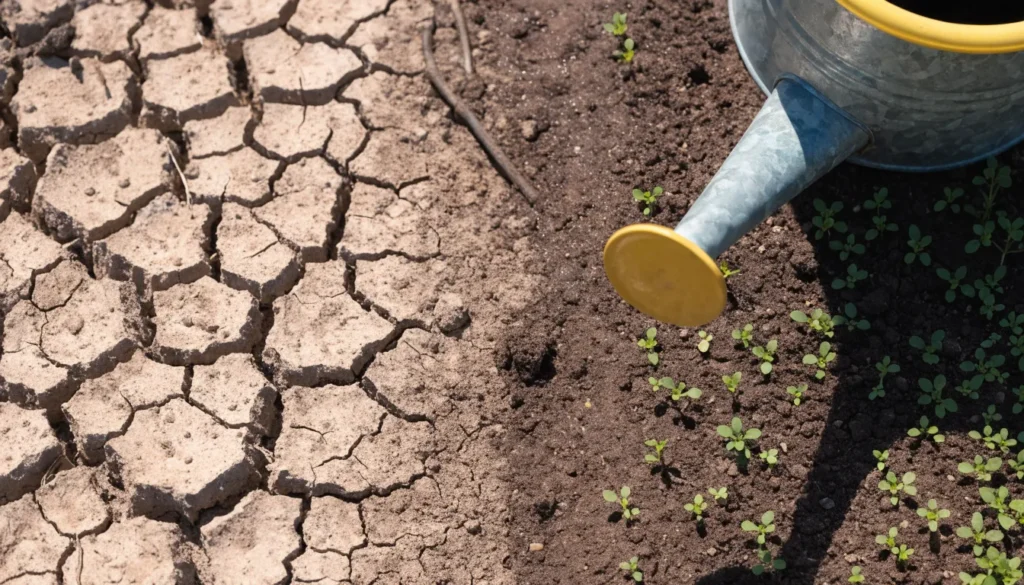
At its core, this condition in tomato fruit is due to a deficiency of calcium in the developing tissue. But here’s the part many gardeners miss: it’s rarely because there isn’t enough calcium in the soil. Most soils actually contain plenty of it. The real issue is that the plant can’t move that calcium to where it’s needed, the fast-growing fruit, quickly enough.
Common underlying triggers include:
- Inconsistent watering – Calcium travels through the plant dissolved in water. When soil moisture swings between bone-dry and soaking wet, the plant can’t maintain a steady supply to the fruit.
- Rapid fruit growth early in the season – Young plants growing quickly (especially the first cluster of fruit) often outpace their own calcium uptake.
- Excess nitrogen fertilizer – Heavy nitrogen pushes lush leafy growth, which competes with fruit for available calcium.
- Root damage – Aggressive cultivating, transplanting stress, or nematode damage can restrict the roots’ ability to absorb calcium and water.
- High salt levels or poor soil pH – Both can interfere with calcium uptake even when calcium itself isn’t lacking.
- Container growing – Pots and raised beds dry out faster than garden soil, making moisture swings more likely.
Pro tip: The first cluster of tomatoes is usually the most susceptible to this problem. Once the plant develops a stronger root system and watering becomes consistent, later fruit often grows normally, so seeing it early in the season isn’t necessarily a sign of things to come.
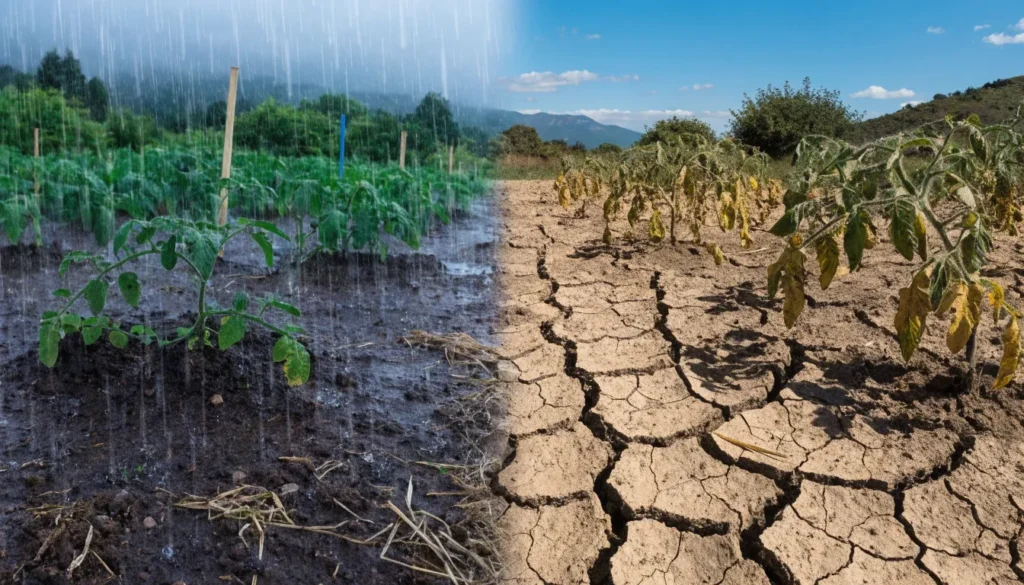
In practice, many gardeners notice the first symptoms after a stretch of heavy rain followed by hot, dry weather. That kind of sudden swing, soil going from saturated to parched in a matter of days, is one of the most common real-world triggers, even in gardens with otherwise healthy soil.
| Cause | Best fix |
|---|---|
| Inconsistent watering | Water evenly on a fixed schedule |
| Excess nitrogen | Switch to a balanced or low-nitrogen fertilizer |
| Poor drainage | Improve soil structure and drainage |
| Root damage | Avoid deep cultivation near the base |
| Container drying out | Water more frequently, check moisture daily |
Which Plants Get Blossom End Rot?
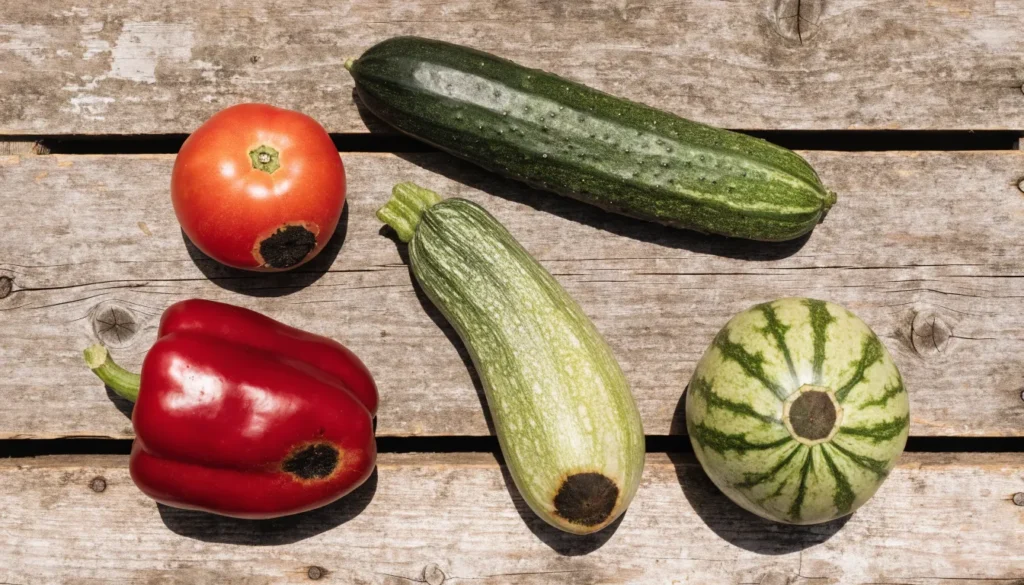
While tomato fruit is the most talked-about case, this disorder shows up across a wide range of fruiting vegetables:
- Peppers – Common in bell and hot varieties, especially during dry spells.
- Squash and zucchini – Frequently appears on the blossom end of summer squash during hot, inconsistent periods of watering.
- Cucumbers – Less common than in tomatoes, but plants grown in containers or sandy soil are vulnerable.
- Watermelon – Watermelons and other melons can develop it, particularly in fast-draining soil.
- Eggplant – Another nightshade relative of tomatoes and peppers that’s commonly affected.
Can You Eat Tomatoes With Blossom End Rot?
Yes, in most cases, fruit with this condition is still safe to eat. Cut away the dark, sunken portion; the rest is typically unaffected and perfectly fine to use in cooking or salads. The exception is if secondary mold, softness, or an off smell has developed in the damaged area, in that case, it’s best to discard the fruit.
How to Fix and Treat Blossom End Rot
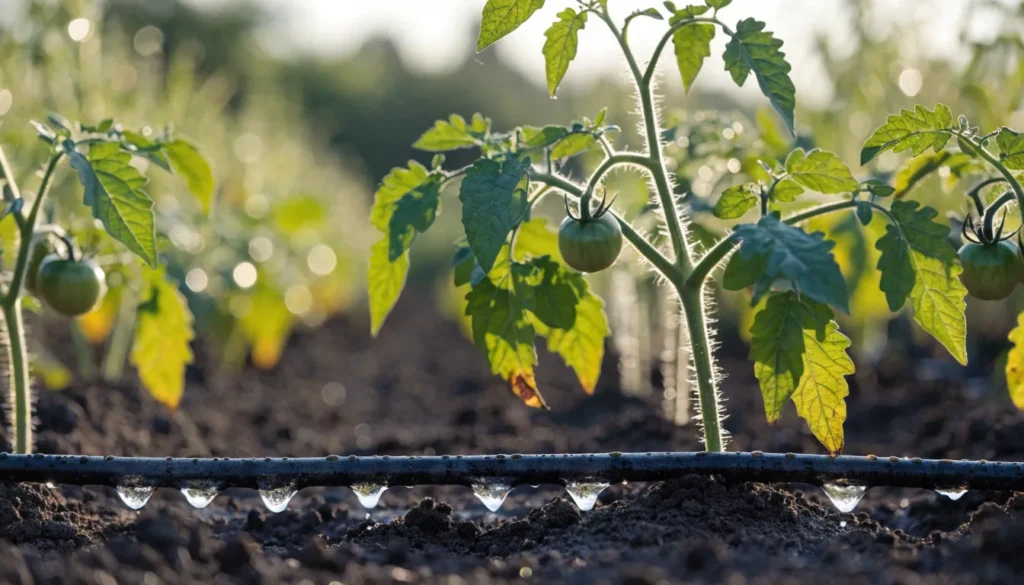
If you’re wondering how to stop the spread on your plants, corrective steps focus on restoring steady water and calcium delivery rather than dumping in more calcium.
1. Even Out Your Watering Schedule
This is the single most effective corrective measure. Aim for roughly 1 to 1.5 inches of water per week, delivered consistently rather than in occasional heavy soakings. Drip irrigation or soaker hoses help keep soil moisture level day to day, if you’re not sure how much or how often that should be, this guide on how often you should water tomato plants breaks down a better approach than a fixed schedule.
2. Mulch the Soil
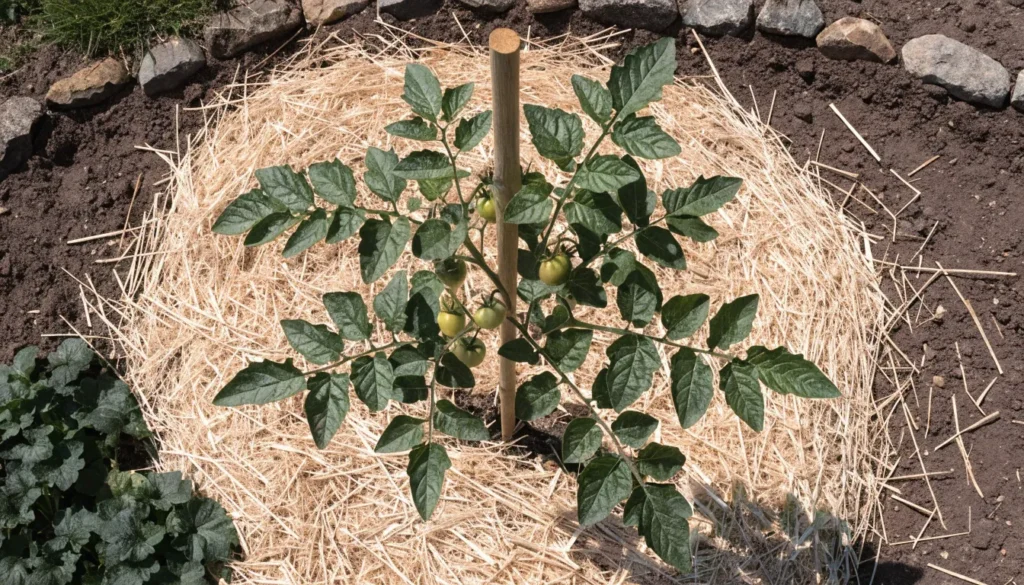
A 2–3 inch layer of straw, shredded leaves, or wood chips around the base of the plant helps the soil retain moisture and reduces the swings between wet and dry that trigger the problem.
3. Remove Already-Affected Fruit
Once fruit has developed the telltale sunken patch, the damage won’t heal. Removing it lets the plant redirect energy into new, healthy fruit rather than trying to repair the rotted one.
4. Ease Up on Nitrogen
Switch to a balanced or lower-nitrogen fertilizer once plants start flowering and setting fruit. A feeding ratio like 5-10-10 or similar (lower first number) supports fruit development without encouraging excess leafy growth, for a full breakdown of what to feed and when, see this guide to the best fertilizer for tomatoes.
5. Test Your Soil
Before adding any amendments, get a soil test to check calcium levels and pH. Tomatoes prefer a pH between 6.2 and 6.8, outside that range, calcium becomes harder for roots to absorb even if it’s present in the soil. Starting with the right growing mix from the outset makes this far less likely; this guide to the best soil for tomatoes covers how to build one.
Common Mistakes That Make Blossom End Rot Worse
Even attentive gardeners can accidentally prolong the problem. Watch out for these common mistakes:
- Dumping in extra calcium right away. Since most soils already have enough calcium, adding more (lime, gypsum, calcium sprays) without fixing the watering issue rarely helps and can throw off soil pH instead.
- Overcorrecting with heavy watering. Soaking the plant after noticing the damage swings moisture from one extreme to another, the same inconsistency that caused the issue in the first place.
- Using Epsom salt as a fix. Epsom salt supplies magnesium, not calcium, and can actually compete with calcium uptake, making the problem more likely.
- Leaving affected fruit on the vine. Damaged fruit won’t heal and can pull energy away from new, healthy growth.
- Piling on nitrogen-heavy fertilizer. Nitrogen encourages fast leafy growth that outpaces the plant’s calcium delivery to fruit, especially early in the season.
- Ignoring container plants. Pots and raised beds dry out much faster than garden soil, so a “normal” watering schedule often isn’t frequent enough, if you’re growing in containers, this complete guide to growing tomatoes in pots covers the watering and drainage adjustments that make the biggest difference.
- Cultivating too close to the stem. Digging or hoeing near the base damages surface roots that the plant relies on for water and calcium uptake. The same care applies above ground, heavy-handed pruning of tomato plants at the wrong time can stress the plant in a similar way, so it’s worth knowing the gentler, more effective way to do it.
How Long Until New Fruit Is Healthy?
Once you’ve corrected the underlying watering or fertilizing issue, most plants recover fairly quickly:
- 1–2 weeks: New flowers and fruit that set after the fix typically develop without the sunken-patch symptom, since they’re forming under steadier conditions from the start.
- Existing affected fruit: These will not heal, the damaged tissue is permanent, but they’re often still edible after cutting away the affected portion (see above).
- Ongoing risk period: Early-season fruit and the first flush of tomatoes are the most vulnerable, since rapid growth outpaces calcium delivery. Risk usually drops once the plant is established and watering is consistent.
- If symptoms continue past 3–4 weeks of consistent watering and mulching, it’s worth checking soil pH and drainage, since a deeper issue (compacted soil, root damage, or salt buildup) may be interfering with calcium uptake.
Blossom End Rot Home Remedy Options
Many gardeners look for a simple home remedy using things already on hand:
- Crushed eggshells worked into the soil around the base of the plant add slow-releasing calcium over time.
- Powdered milk or diluted milk mixed into the soil is a traditional home remedy, though it acts slowly and is best used as a supplement, not a fix for a current watering issue.
- Calcium-rich compost added at planting time helps build a steadier long-term supply.
These home remedies work best as preventive measures added early in the season, they won’t reverse damage that has already formed, and they won’t fix the problem if uneven watering is the real cause.
Blossom End Rot Spray and Chemical Control
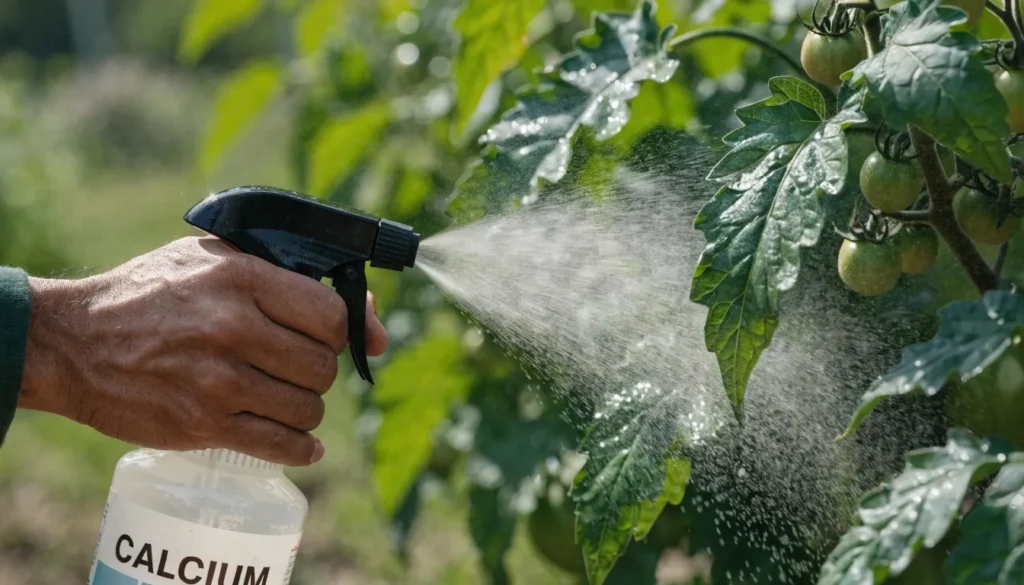
For a faster response, many growers turn to a foliar calcium application applied directly to the leaves and developing fruit:
- Calcium chloride foliar sprays are the most common option, applied every 7–10 days once fruit begins to form.
- Calcium nitrate sprays can also help, though they should be used with caution since they add nitrogen alongside calcium.
- Foliar sprays offer a quick supplement but work best combined with consistent watering, they treat the symptom, not the underlying cause.
When it comes to chemical intervention, it’s worth noting there’s no true “cure” once a fruit is affected. Calcium-based foliar treatments are preventive tools to protect future fruit, not a way to reverse existing damage.
How to Prevent Blossom End Rot
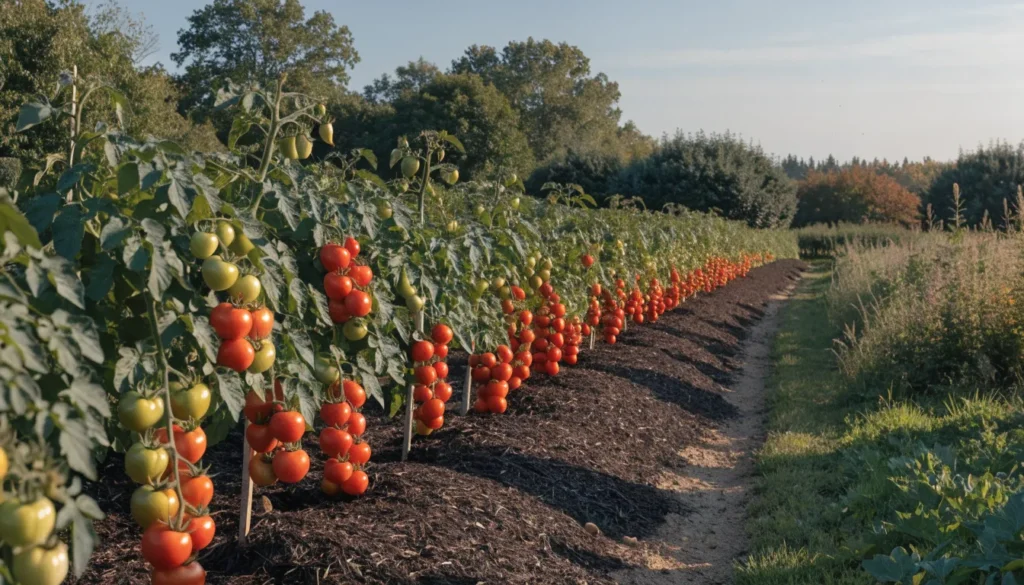
Prevention is far more effective than treatment after the fact. Here’s a simple checklist for keeping tomatoes and other susceptible crops rot-free:
- Water deeply and consistently, aim for the same amount on a regular schedule rather than sporadic heavy watering.
- Mulch generously to buffer soil moisture swings.
- Avoid over-fertilizing with nitrogen, especially once flowering starts.
- Choose well-draining soil, and amend heavy clay or fast-draining sandy soil with organic matter.
- Test soil pH and calcium levels before the growing season begins.
- Avoid deep cultivation near the root zone, which can damage roots and disrupt water uptake.
- For container-grown plants, check soil moisture daily, since pots dry out much faster than in-ground beds.
- Pair tomatoes with the right neighbors, some companion plants for tomatoes help retain soil moisture and improve overall plant health, which indirectly supports steadier calcium uptake.
Blossom End Rot vs. Other Tomato Problems
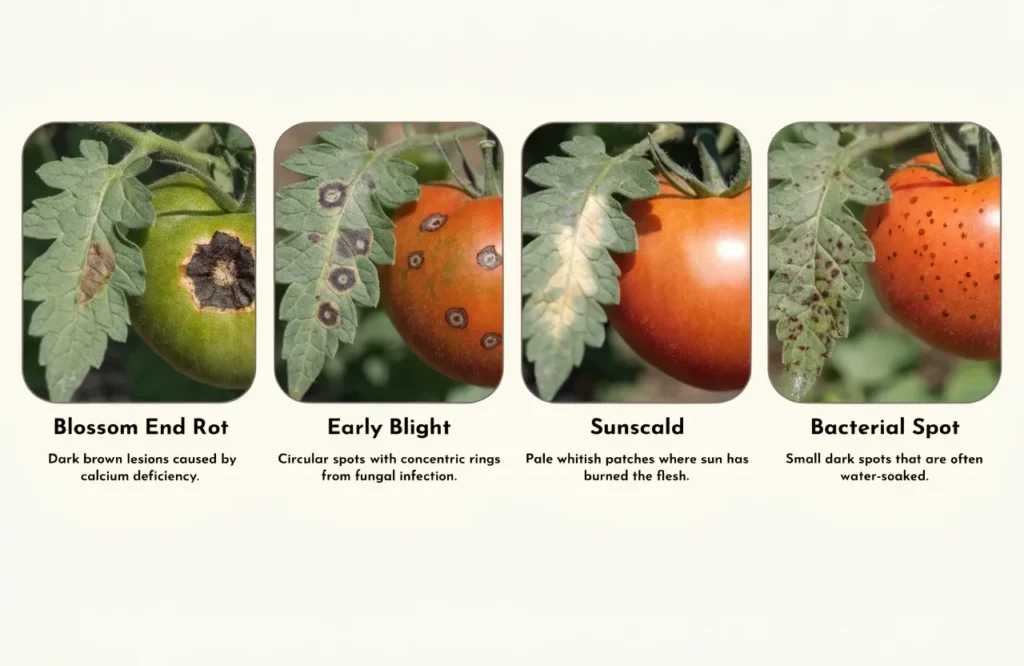
This disorder gets confused with several other common tomato issues, mostly because they all show up as dark or discolored patches on the fruit. Here’s how to tell them apart at a glance:
| Issue | Where it appears | What it looks like | Cause | Spreads to other plants? |
|---|---|---|---|---|
| Blossom end rot | Blossom end (bottom) of fruit only | Water-soaked spot that turns dark, sunken, and leathery | Calcium delivery disrupted by inconsistent watering | No — physiological, not contagious |
| Early blight | Leaves first, then stems and fruit | Dark concentric “target” rings on leaves; fruit spots near the stem end, often with rings | Fungal (Alternaria solani) | Yes — spreads via spores in wet, humid conditions |
| Sunscald | Side of fruit facing the sun | Pale, blistered, papery-white or tan patch | Direct sun exposure after sudden leaf loss | No — environmental, not contagious |
| Anthracnose | Anywhere on ripe or ripening fruit | Small, sunken, circular spots that enlarge with dark rings, often with pinkish spore masses in the center | Fungal (Colletotrichum species) | Yes — spreads via spores, especially in wet weather |
| Bacterial spot | Leaves, stems, and fruit | Small, dark, raised or scabby spots with a greasy or water-soaked look | Bacterial (Xanthomonas species) | Yes — spreads via water splash and contaminated tools |
The quickest way to tell them apart: this disorder is the only one of these that shows up exclusively on the bottom of the fruit and never appears on the leaves. If you’re seeing spots on leaves too, you’re more likely dealing with early blight, anthracnose, or bacterial spot, all of which need fungicide or bactericide treatment and sanitation, unlike a calcium-related disorder, which is fixed through watering and feeding adjustments alone. And if the leaves themselves are turning yellow rather than spotted, that’s a separate issue worth checking against this guide to why tomato plant leaves turn yellow, since the causes and fixes are quite different.
Frequently Asked Questions
Key Takeaways
Before you head back to your garden, remember these essentials:
✅ Most plants recover quickly. Once watering and growing conditions are corrected, new fruit usually develops normally within 1–2 weeks.
✅ This is not contagious. It’s a physiological disorder, not a fungal or bacterial disease.
✅ The real problem is poor calcium delivery to developing fruit, usually caused by inconsistent watering rather than a lack of calcium in the soil.
✅ Maintain even soil moisture by watering consistently and applying 2–3 inches of mulch to reduce moisture fluctuations.
✅ Remove affected fruit since the damaged tissue won’t heal, allowing the plant to focus on producing healthy new fruit.
✅ Avoid overusing nitrogen fertilizer during flowering and fruiting, as excessive leafy growth can worsen the problem.
Final Thoughts
Blossom end rot may look alarming, but it’s one of the easiest tomato problems to prevent. Consistent watering, healthy soil, and balanced fertilization are usually all it takes to keep future harvests healthy and productive.