Tomato Spacing: 7 Proven Ways to Grow Healthier Tomato Plants
Tomatoes are one of the easiest and most rewarding crops to grow, but even the healthiest seedlings will struggle to produce a good harvest if they’re planted too close together. Tomato spacing affects everything from sunlight and airflow to how easily your plants fight off pests and disease. This guide breaks down exactly how far apart to plant tomatoes no matter how or where you’re growing them.
Table of Contents
How Far Apart Should Tomato Plants Be?
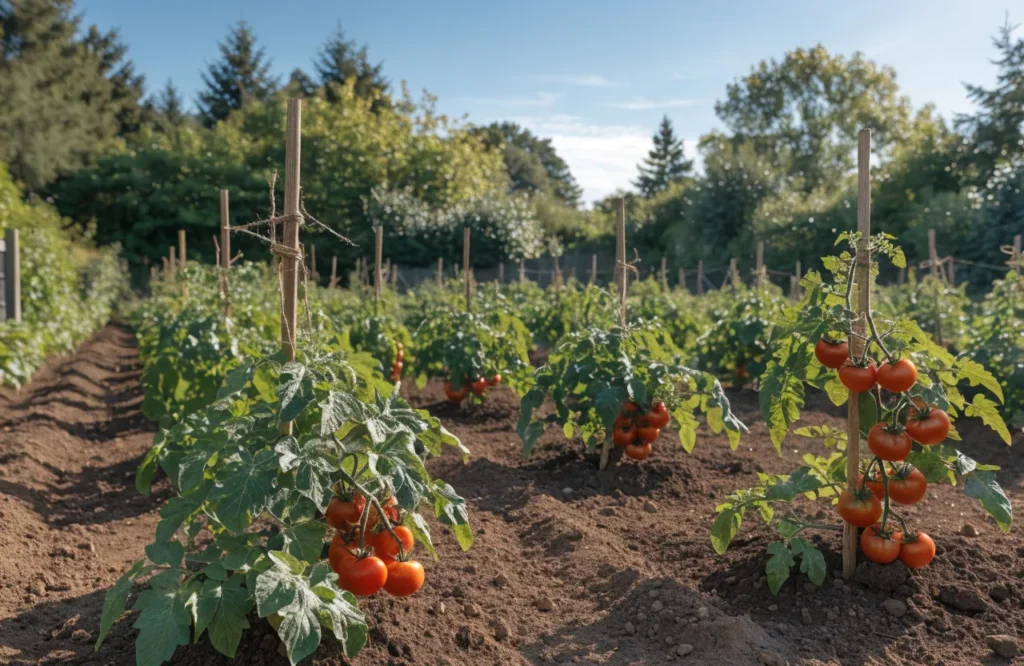
As a general starting point, many tomato plants do well with roughly 18 to 36 inches between plants and 24 to 60 inches between rows. However, the right number for your garden depends on the variety, how the plant is supported, and factors like your climate and soil fertility. Compact determinate varieties can typically be planted closer together, while sprawling indeterminate varieties tend to need more room to spread. The ranges below break this down by plant type and growing method, treat them as a flexible starting point rather than a strict rule, and adjust based on how your plants perform.
Why Tomato Spacing Matters
Proper tomato spacing isn’t just a gardening formality, it directly affects plant health and yield in three key ways:
Sunlight access: Tomatoes need full sun for most of the day. Plants crowded too close together shade one another, forcing stems to stretch and grow tall and spindly as they compete for light. The result is weaker branches, smaller leaves, fewer flowers, and ultimately less fruit.
Nutrient and water competition: Tomato roots spread wide underground in search of moisture and nutrients. When spacing is too tight, neighboring plants compete for the same resources, leading to pale, undersized foliage and smaller harvests, often the same pattern behind yellowing tomato leaves that gardeners spot before they’ve connected it back to spacing.
Airflow and disease prevention: Good spacing keeps air moving between plants, which helps foliage dry quickly after rain or watering. Crowded plants trap moisture, creating ideal conditions for fungal diseases like late blight. Airflow also makes it far easier to spot and hand-pick pests such as caterpillars hiding on the undersides of leaves.
Tomato Spacing by Plant Type
The correct tomato spacing depends heavily on the variety you’re growing and how you plan to support it as it matures.
Determinate Tomatoes
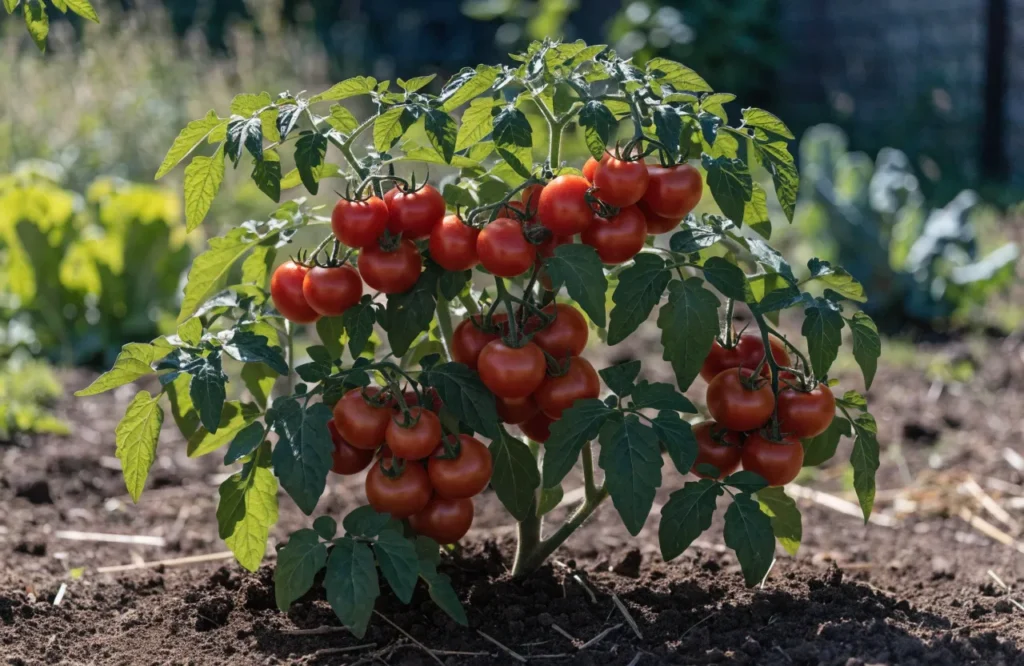
Determinate (bush) varieties grow to a fixed height, then stop, setting most of their fruit in a short window. Because they stay compact, they can generally be planted closer together than indeterminate types, as a starting point:
- Between plants: 18–24 inches
- Between rows: 24–36 inches
This spacing still leaves enough room to cage or stake the plants and harvest comfortably.
Indeterminate Tomatoes
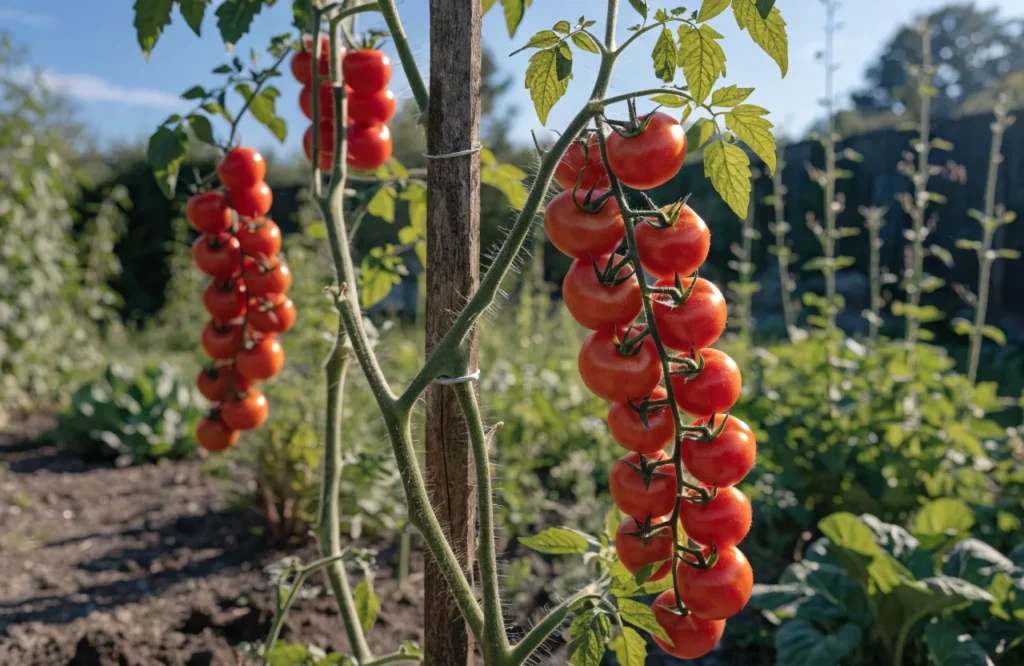
Indeterminate (vining) varieties keep growing, flowering, and fruiting all season, sometimes reaching 8 feet or more. They need more generous tomato spacing overall, and the exact distance depends on the support method you choose, covered in detail below.
Staked Tomatoes
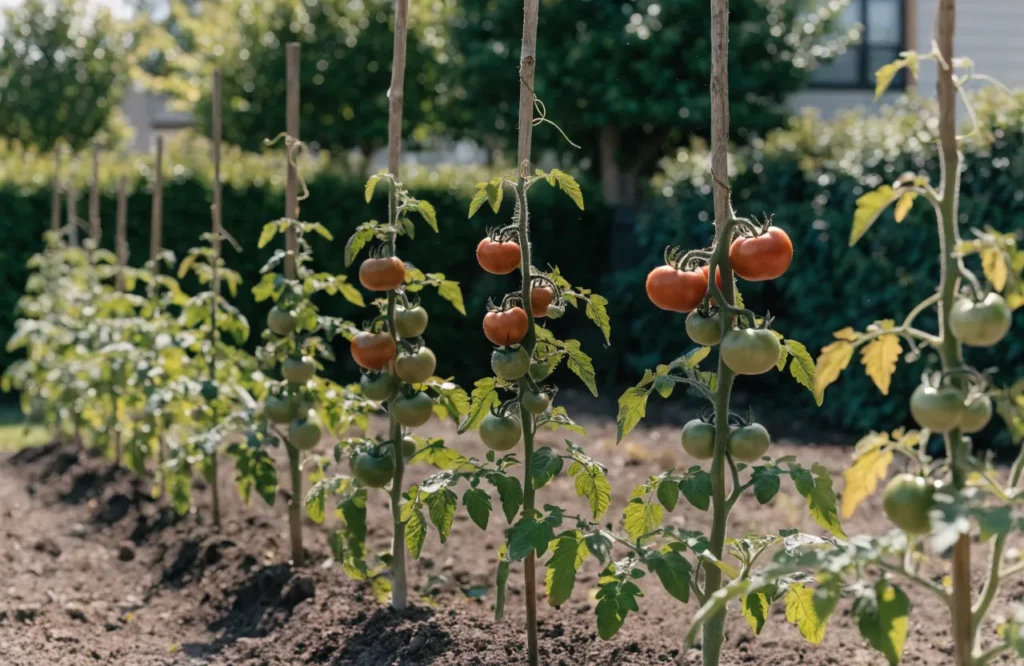
Staking is a classic method for indeterminate varieties and requires tighter, more upright spacing:
- Between plants: 18–24 inches
- Between rows: 24–36 inches
Use sturdy wooden stakes about 6 feet tall and 2 inches wide, driven roughly a foot into the soil, 4–6 inches from the stem. As the plant grows, tie the vine to the stake every few inches with soft twine or cloth strips.
Caged Tomatoes
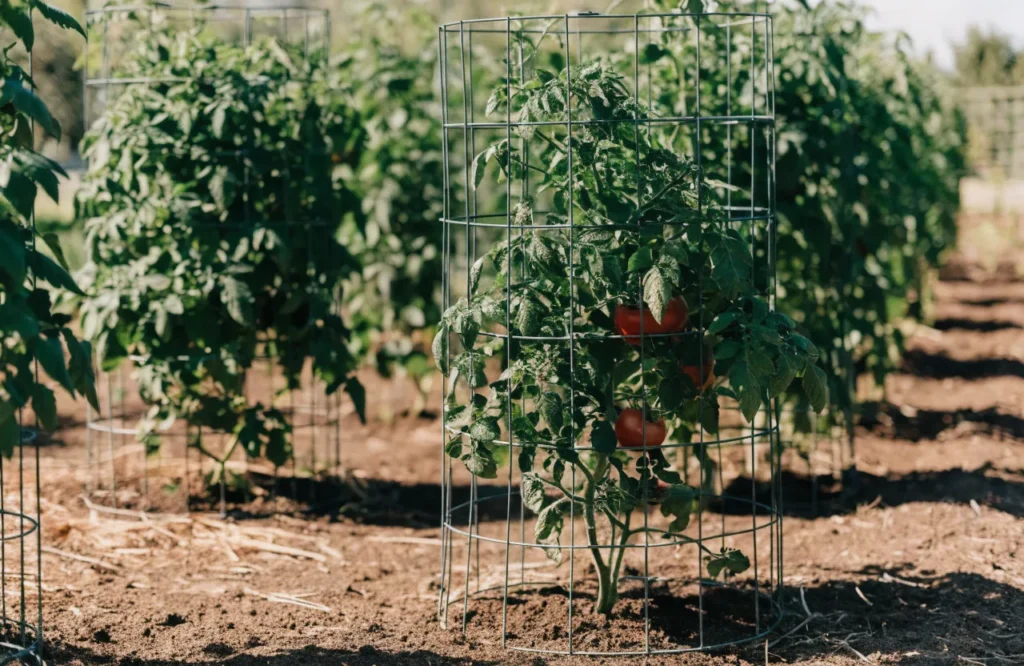
Cages require less ongoing maintenance than staking since the plant grows through the structure without needing to be tied:
- Between plants: 24–36 inches
- Between rows: 48–60 inches
A good tomato cage is 18–36 inches wide and about 6 feet tall. If building your own from wire fencing, leave about 6 inches between wires so you can reach in to harvest without removing the cage.
Sprawling Tomatoes
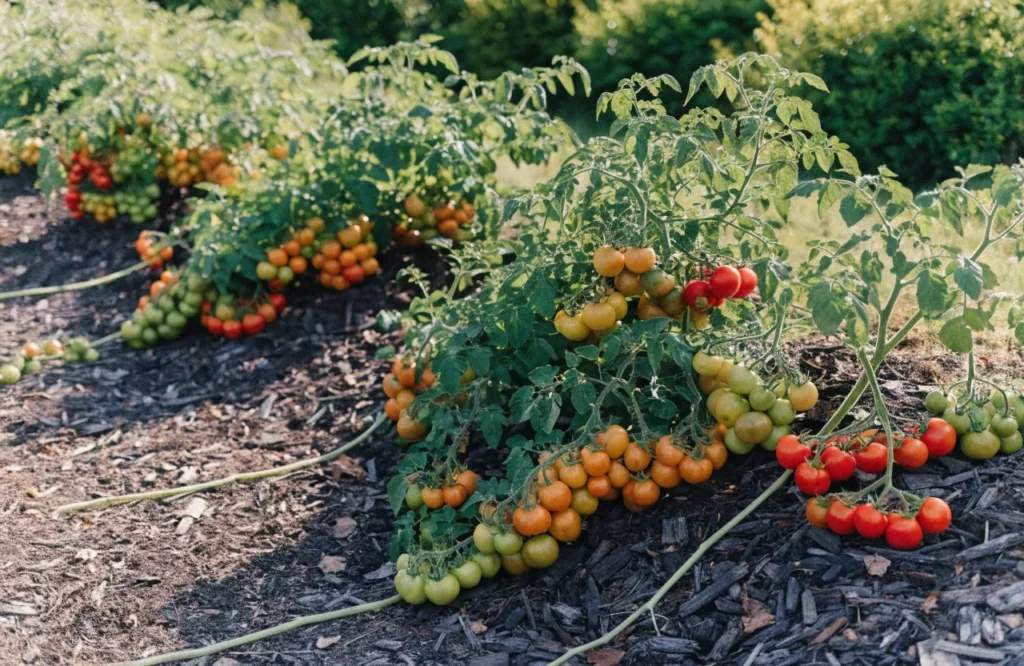
Letting indeterminate plants sprawl without any support is generally not recommended, vines tend to tangle, and fruit sitting on damp soil is more prone to rot. If you do grow this way, use a layer of mulch or landscape fabric underneath and give plants extra room:
- Between plants: 36–48 inches
- Between rows: 48–60 inches
Tomato Spacing in Raised Beds
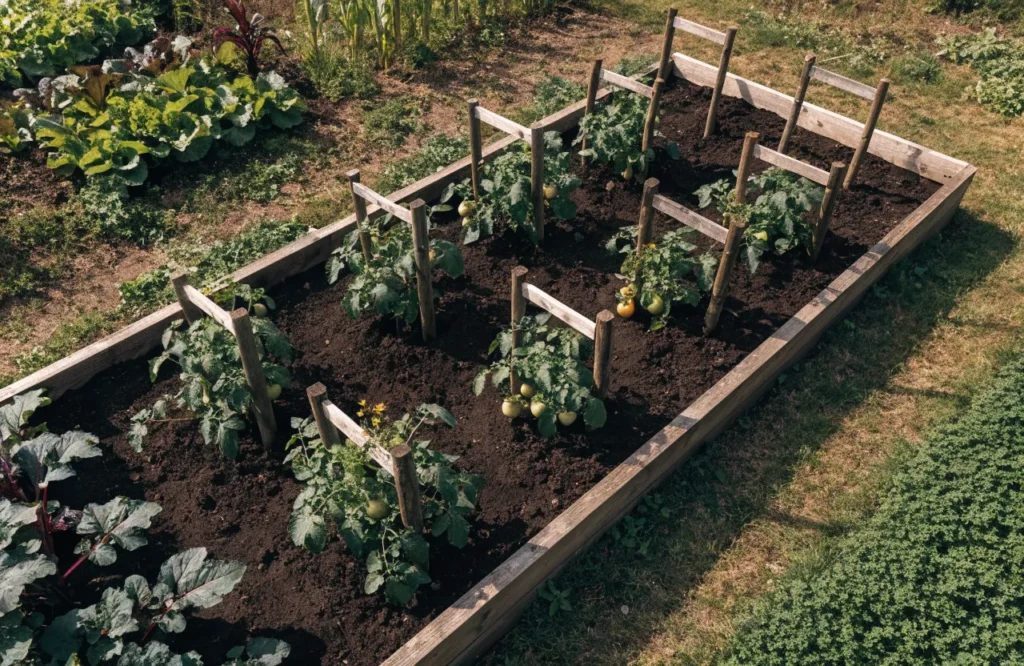
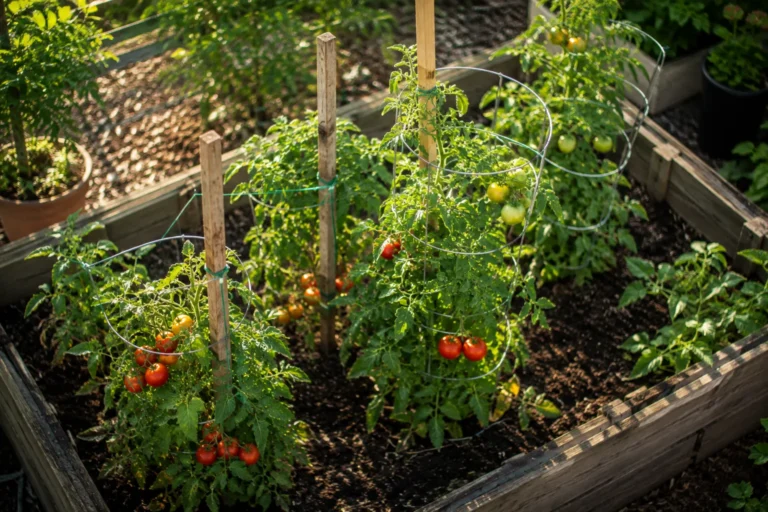
Raised beds offer better drainage and warmer soil than open ground, but the same spacing principles apply, the limited footprint makes it more important to plan carefully. For a standard 4-foot-wide raised bed, plant a single row of determinate tomatoes down the centre, spaced 18–24 inches apart, or stagger two rows of compact varieties in a zigzag pattern to maximize space while still leaving each plant enough room to breathe. Indeterminate varieties are usually better suited to a single row per 4-foot bed, staked or caged, so vines don’t compete for light as they climb. Because raised beds warm up and dry out faster than garden soil, watering consistently becomes even more important when plants are spaced on the tighter end of the range.
Tomato Spacing in Containers
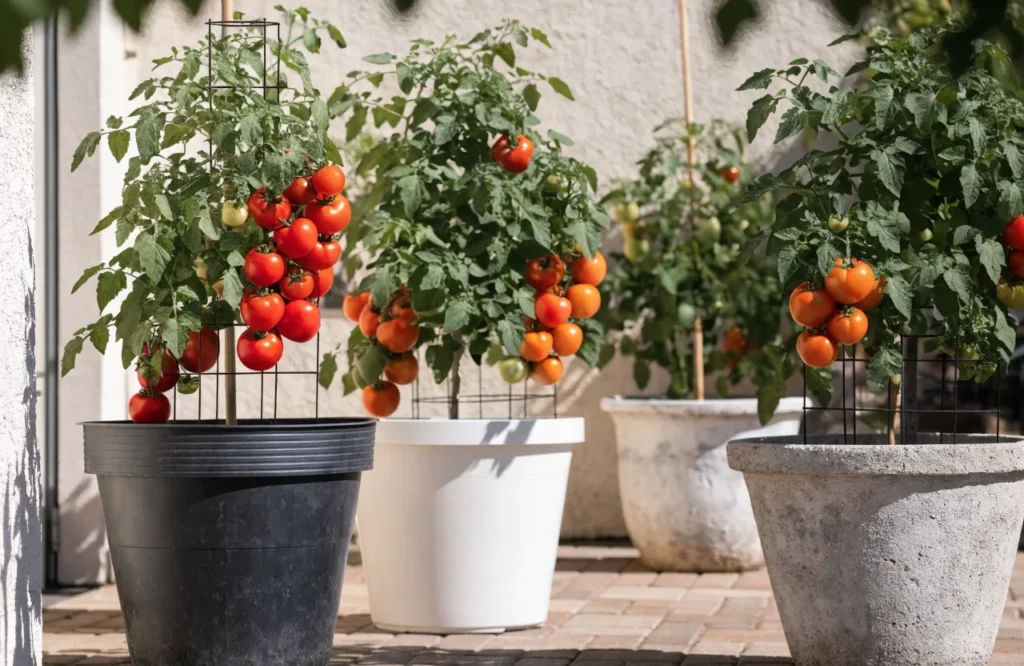
If you’re growing in pots rather than open ground, spacing is really about container size rather than distance between plants. A single tomato plant needs a minimum 14-inch-diameter, 5-gallon pot to survive, but for a plant that can actually thrive, aim for a 17–20-inch pot holding up to 20 gallons of soil. Pairing a large container with a small trellis or stake gives roots and vines the room they need, and growing tomatoes in pots has the bonus of letting you move plants indoors when the weather turns cold.
Tomato Spacing in a Greenhouse
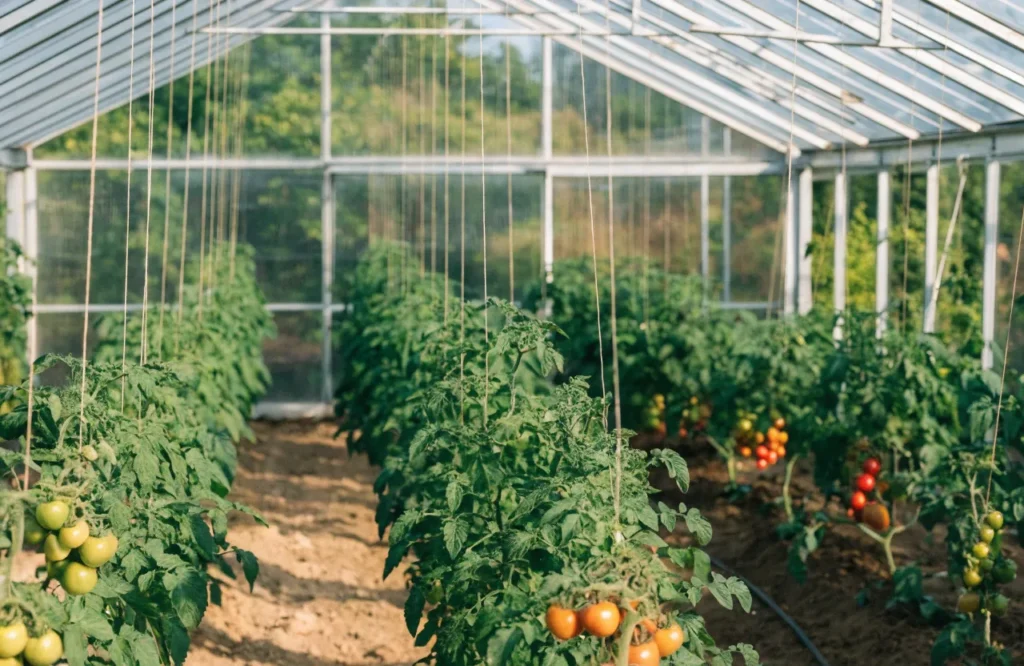
Greenhouse spacing tends to run tighter than open-garden spacing, since growers are working within a fixed footprint and often relying on trellising or string-training rather than traditional staking or cages. Exact numbers vary quite a bit depending on your greenhouse size, the training system you use, and how many stems each plant is allowed to grow, so treat the ranges below as a starting point rather than a fixed rule:
- Single-stem, trellised or staked plants: roughly 12–18 inches apart in-row, with about 18–24 inches between rows.
- Indeterminate varieties on a trellis or string system: generally need more room per plant, often in the 24–32 inch range, with wider aisles (around 36–40 inches) for airflow and access.
- Compact or dwarf varieties along walls or shorter beds: can usually be spaced more tightly, around 12–15 inches apart.
Commercial greenhouse operations sometimes push spacing tighter than these ranges using intensive pruning and support systems, but for a hobby or backyard greenhouse, staying on the roomier end of these numbers will make pruning, watering, and harvesting a lot easier. As always, keep an eye on how your plants respond during the season and adjust from there.
What Can You Plant Between Tomato Plants?
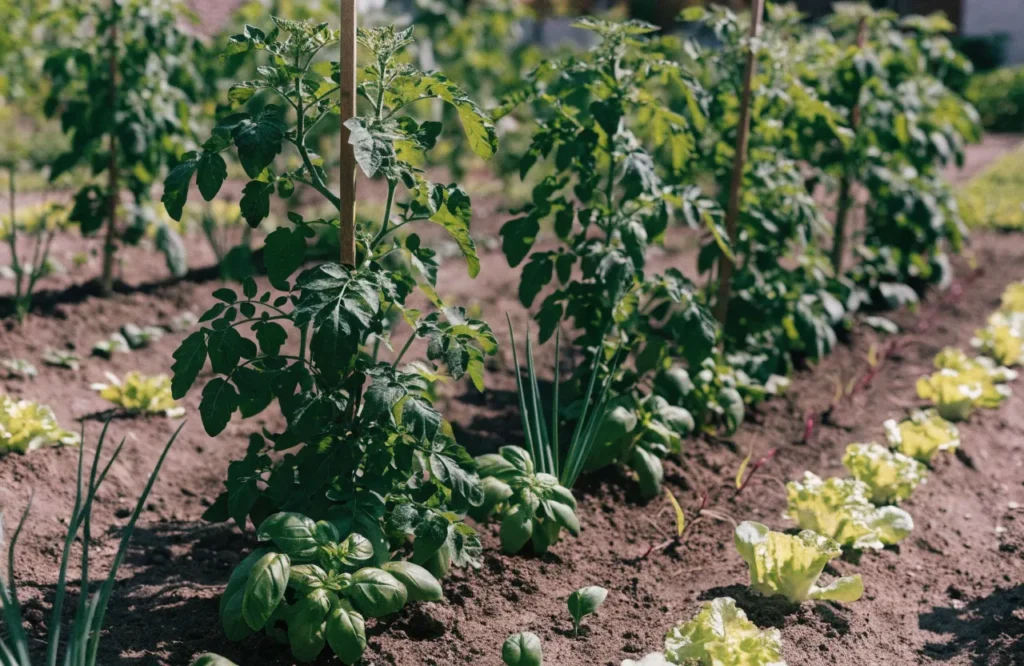
Even with proper tomato spacing, there’s often unused ground between plants early in the season, before the canopy fills in. Fast-growing crops like lettuce and spinach are ideal companions here, they mature and get harvested before the tomatoes need the extra room, so you get a second harvest out of the same bed without compromising your spacing plan. Other good options include radishes, green onions, and basil, all of which grow quickly or stay low enough to avoid competing with tomatoes for light, the right tomato companion plants can even help make tighter spacing work better rather than worse.
What Happens If Tomatoes Are Planted Too Close Together?
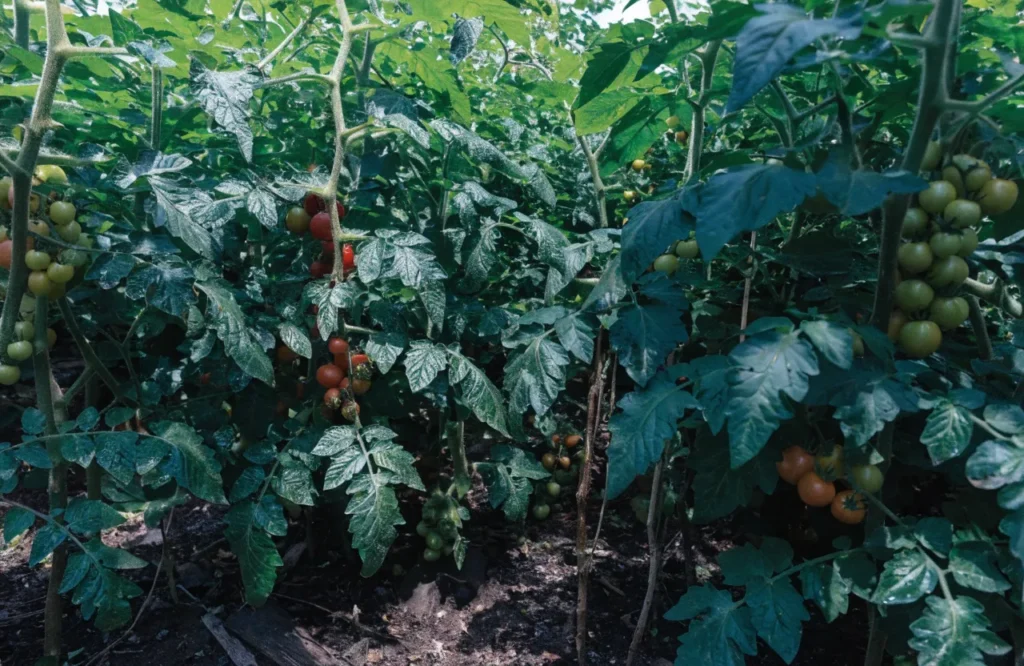
Overcrowded tomato plants run into problems on multiple fronts at once. With less access to sunlight, they stretch upward looking for light, producing tall, weak, spindly stems instead of sturdy growth. Roots competing for the same limited water and nutrients result in smaller, paler leaves and a reduced fruit yield. Poor airflow between crowded plants keeps foliage damp longer after rain or watering, creating ideal conditions for late blight and other tomato plant diseases to take hold and spread quickly from plant to plant. Tight spacing also makes routine maintenance, pruning, staking, and hand-picking pests like caterpillars, much harder, since there’s little room to actually reach the plant.
Tips for Healthy, Well-Spaced Tomato Plants
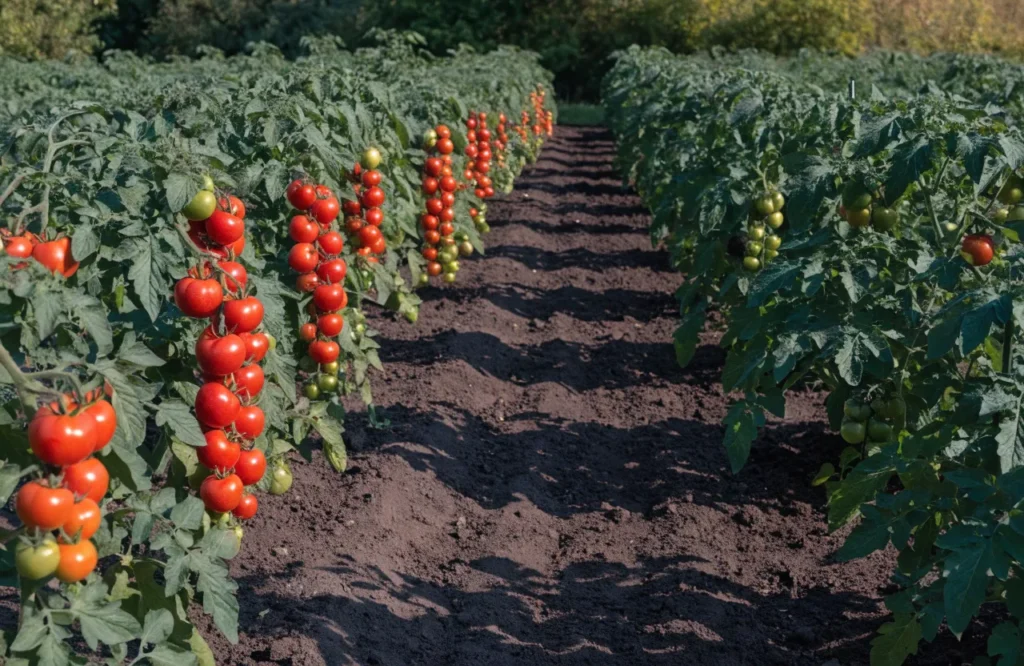
- Start with the right soil. Well-draining, nutrient-rich soil for tomatoes gives roots room to spread even when plants are spaced on the tighter end of the range.
- Support your plants. Whether staked or caged, support keeps plants upright, improves airflow, and makes the most of tighter spacing.
- Water consistently, at the soil level. Watering the base rather than the leaves reduces fruit cracking and disease spread, and consistent moisture also helps prevent blossom end rot, watering based on what the plant actually needs rather than a fixed schedule matters even more in tightly spaced beds where soil dries unevenly.
- Prune with purpose. Pruning suckers and lower leaves keeps airflow strong between closely spaced plants and directs the plant’s energy toward fruit.
- Feed appropriately. Well-fed plants handle tighter spacing better, and choosing the right fertilizer helps them make the most of a smaller footprint.
Tomato Spacing Chart
| Growing Method | Between Plants | Between Rows |
|---|---|---|
| Determinate, garden bed | 18–24 in | 24–36 in |
| Indeterminate, staked | 18–24 in | 24–36 in |
| Indeterminate, caged | 24–36 in | 48–60 in |
| Indeterminate, sprawling | 36–48 in | 48–60 in |
| Raised bed (compact varieties) | 18–24 in | Single or staggered rows |
| Container growing | One plant per 17–20 in pot (up to 20 gal) | — |
| Greenhouse, single-stem trellised | ~12–18 in | ~18–24 in |
| Greenhouse, indeterminate | ~24–32 in | ~36–40 in |
Frequently Asked Questions
How far apart should tomato plants be in a small garden?
For most home gardens, 18–24 inches between plants is a safe starting point for determinate or staked varieties. As a general rule, many tomato plants do well with roughly 18 to 36 inches between plants.
Does tomato spacing differ by variety, or just by determinate vs. indeterminate?
Spacing depends heavily on the variety and how you support it. Determinate (bush) varieties need 18–24 inches between plants, staked indeterminates need 18–24 inches, caged plants need 24–36 inches, and sprawling plants need 36–48 inches.
How many tomato plants fit in a 4×8 raised bed?
With 18–24 inches between plants in single or staggered rows, a 4×8 raised bed can fit about 6–8 tomato plants. Spacing on the tighter end works if you prune regularly and water consistently.
Do container tomatoes need less spacing?
Container spacing is about pot size rather than distance between plants—one plant per 17–20 inch pot (up to 20 gallons). Each plant gets its own container, so there’s no competition for root space.
What happens if tomatoes are planted too close together?
Overcrowded plants get less sunlight, compete for water and nutrients, and have poor airflow, which lets diseases take hold and spread quickly. Tight spacing also makes pruning, staking, and harvesting much harder.
Final Thoughts
There’s no single “correct” tomato spacing, it depends on your variety, your support system, and whether you’re planting in open ground, raised beds, containers, or a greenhouse. But the underlying principle stays the same: give each plant enough room to access sunlight, water, nutrients, and airflow, and you’ll end up with healthier plants and a noticeably bigger harvest. Use the ranges above as your starting point, adjust based on how your plants perform, and don’t be afraid to tuck a few fast-growing greens into the gaps while your tomatoes fill in.