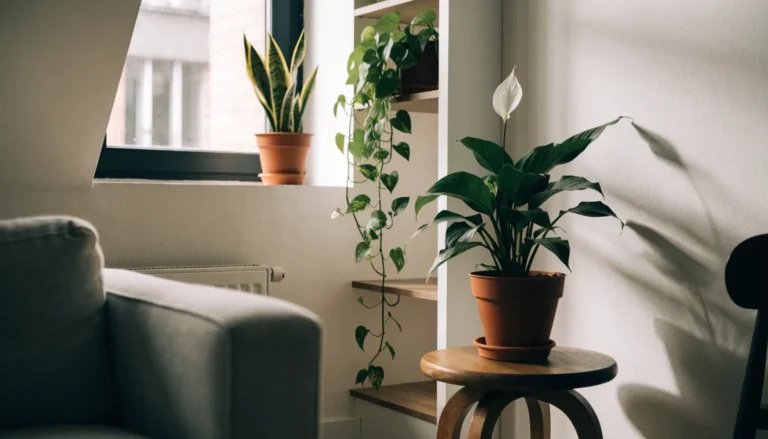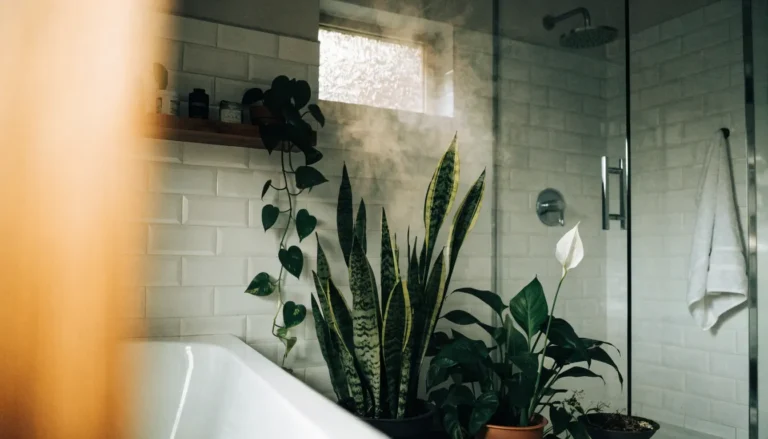
25 Best Low Light Plants for Bedrooms (That Actually Survive)
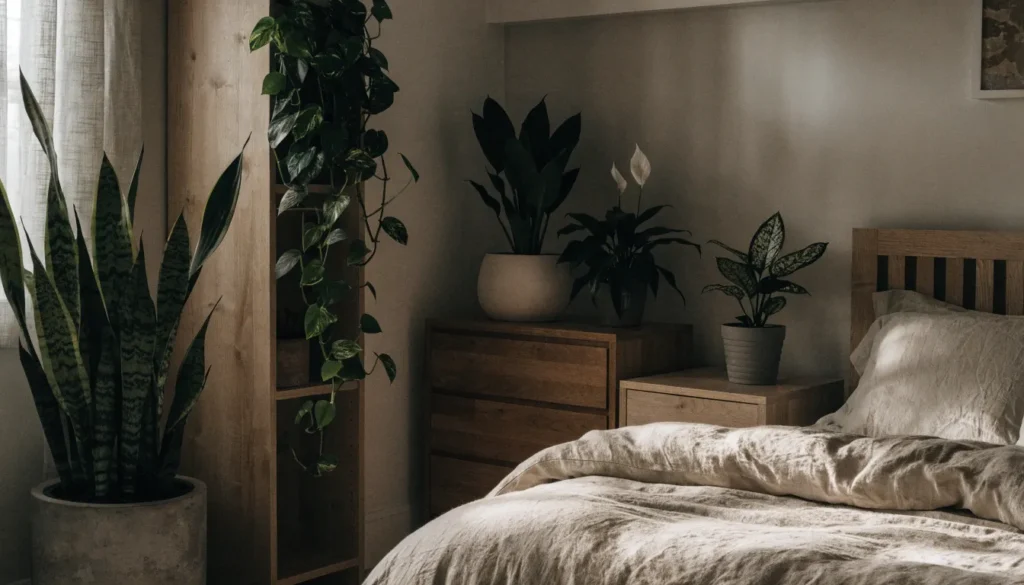
A bedroom with north-facing windows, heavy curtains, or a shady corner doesn’t have to stay bare. The right low light plants for bedrooms can handle dim conditions while still being easy to care for and low maintenance, with no full sun required, and many overlap with the broader world of low light indoor plants that thrive well beyond just the bedroom. Whether you’re dealing with a single dark corner or an entire room that barely sees the sun, this guide covers the plants worth trying, where to put them, and how to keep them alive, along with care tips and pet-safety notes throughout.
Editor’s Note: “Low light” does not mean no light. Even the most shade-tolerant houseplants need some usable natural or artificial light to remain healthy over time. Light tolerance can also vary by plant variety, placement, season, and growing conditions, so the recommendations below are intended as practical guidelines rather than guarantees.
Table of Contents
Quick Answer: Best Low Light Plants for Bedrooms
If you only remember five names, remember these:
- Snake Plant — sturdy and forgiving, tolerates deep shade
- Pothos — fast-growing trailing vine, forgiving of missed waterings
- ZZ Plant — glossy leaves, tolerates very dim rooms
- Peace Lily — tells you when it’s thirsty, occasional white blooms
- Chinese Evergreen — colorful patterned leaves, low maintenance
Now let’s go deeper into why these (and 20 more) work so well in dim bedrooms.
Why Choose Low Light Plants for a Bedroom?
Bedrooms are often the darkest rooms in a home. Smaller windows, blackout curtains, and furniture placement all cut down on natural light, which rules out sun-loving plants but leaves plenty of shade-tolerant options. Houseplants are sometimes credited with air-purifying benefits, though most of that research comes from small, sealed lab environments rather than real homes, so it’s fair to treat any air-quality improvement as a modest bonus rather than the main reason to bring plants in. What a few well-placed plants reliably do add is texture, calm, and a lived-in warmth that bedrooms often lack.
When picking plants for a bedroom specifically, look for varieties that:
- Tolerate indirect or minimal natural light
- Stay compact enough for nightstands, dressers, or floor corners
- Don’t need daily attention
- Are non-toxic, if you share the room with pets or small children
How Much Light Does a “Low-Light” Bedroom Actually Have?
“Low light” gets used loosely, but it doesn’t mean total darkness, and knowing which category your room falls into makes a big difference in which plants will actually survive.
- Bright indirect light: A room with large windows the sun doesn’t shine directly into, or a spot a few feet back from a sunny window. Most “low light tolerant” plants will do best here, not in true shade.
- Medium light: A room with a smaller window, or a spot further from a bright window where you can comfortably read without turning on a lamp during the day.
- Low light: A north-facing window, a heavily curtained room, or a spot several feet from the nearest window. You can see shapes and colors clearly, but it’s dim.
- Very low light: Rooms with only a small or distant window, or light borrowed from an adjoining room. A handful of plants can hold on here, but growth will be slow.
A simple way to check: if you can comfortably read a book without artificial light during the day, most low-light plants will be fine. If you need a lamp on at noon, stick to the toughest options on this list, such as the Snake Plant and ZZ Plant, and consider a small grow light to supplement them. No houseplant can photosynthesize indefinitely with zero light of any kind, so a genuinely windowless room will eventually need at least some artificial light to keep a plant alive long term.
The 25 Best Low Light Plants for Bedrooms
1. Snake Plant (Dracaena trifasciata)
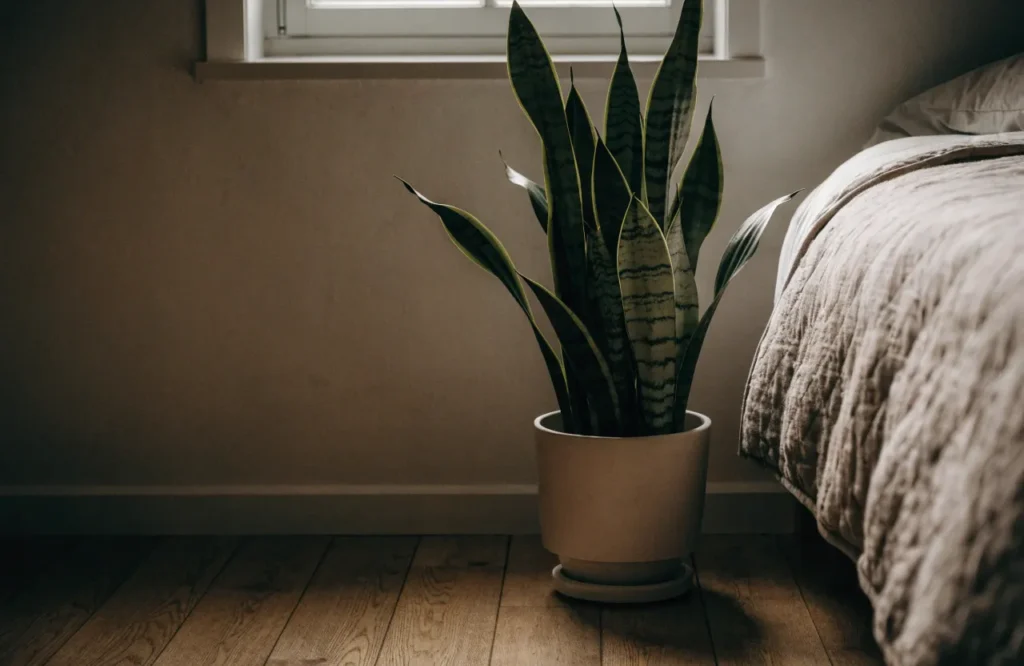
Care level: Beginner | Best for: dark corners, hands-off owners
Tall, sword-shaped leaves add instant height without needing much floor space, and the upright form works well in a floor corner or on a dresser. Snake plants tolerate deep shade better than almost any plant on this list and only need water once the soil has dried out completely, which can mean going three to four weeks between waterings depending on the season. They also handle low humidity well, which suits bedrooms kept warm or air-conditioned. Note that the leaves are toxic to cats and dogs if chewed.
2. Pothos (Epipremnum aureum)
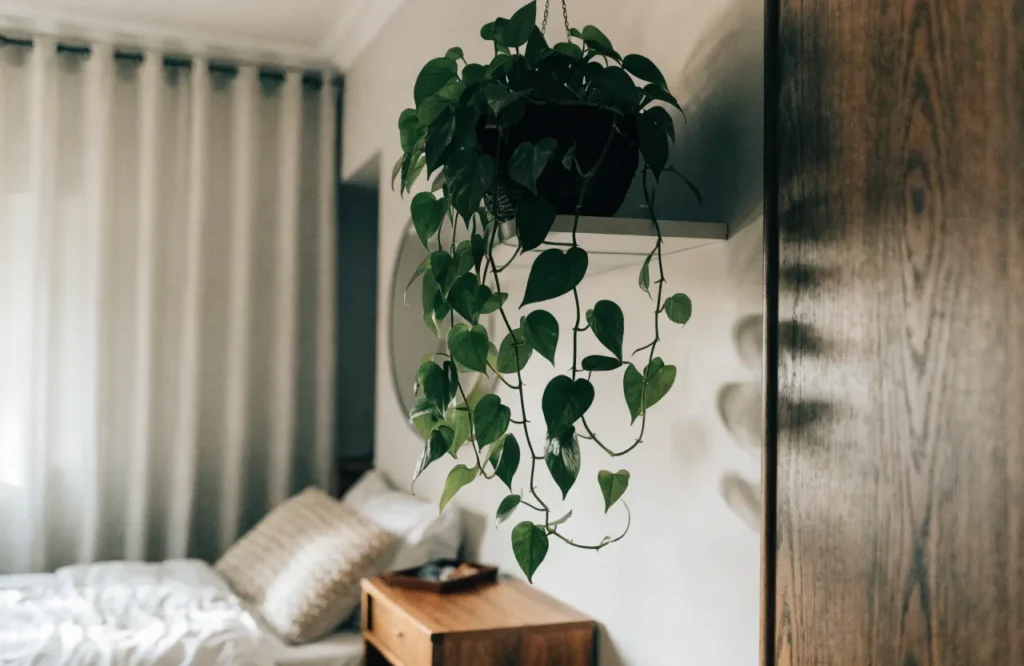
Care level: Beginner | Best for: shelves, hanging baskets, beginners
A trailing vine with heart-shaped leaves that looks great cascading from a shelf or hanging basket. Pothos adapts to almost any light level, grows quickly even in dimmer spots, and bounces back fast after a missed watering. Water it once the top inch or two of soil feels dry, and trim back leggy vines to keep it full. It’s toxic to cats and dogs, so keep trailing vines out of reach if pets like to nibble.
3. ZZ Plant (Zamioculcas zamiifolia)
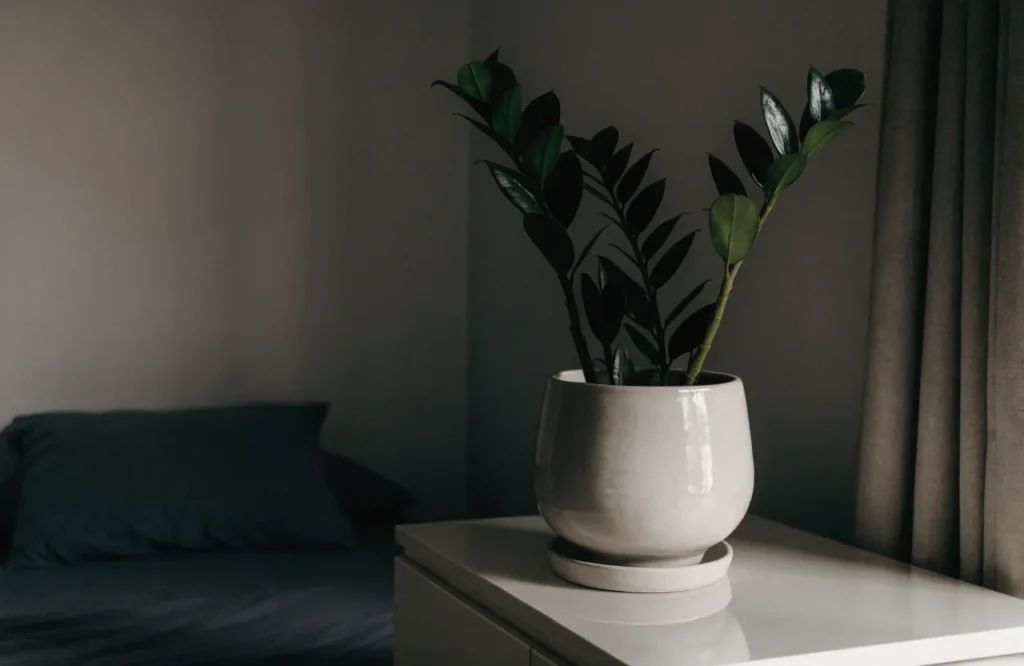
Care level: Beginner | Best for: very dim rooms, low-maintenance owners
Thick, waxy leaves and underground rhizomes that store water let this plant tolerate rooms with very little natural light, though it still needs some ambient or artificial light source to stay healthy over time. Let the soil dry out completely between waterings, since the rhizomes are prone to rot if kept too moist. Growth is slow in dim conditions, which is part of what makes it so low-maintenance. It’s toxic if ingested, so it’s a better fit for pet-free bedrooms.
4. Peace Lily (Spathiphyllum)
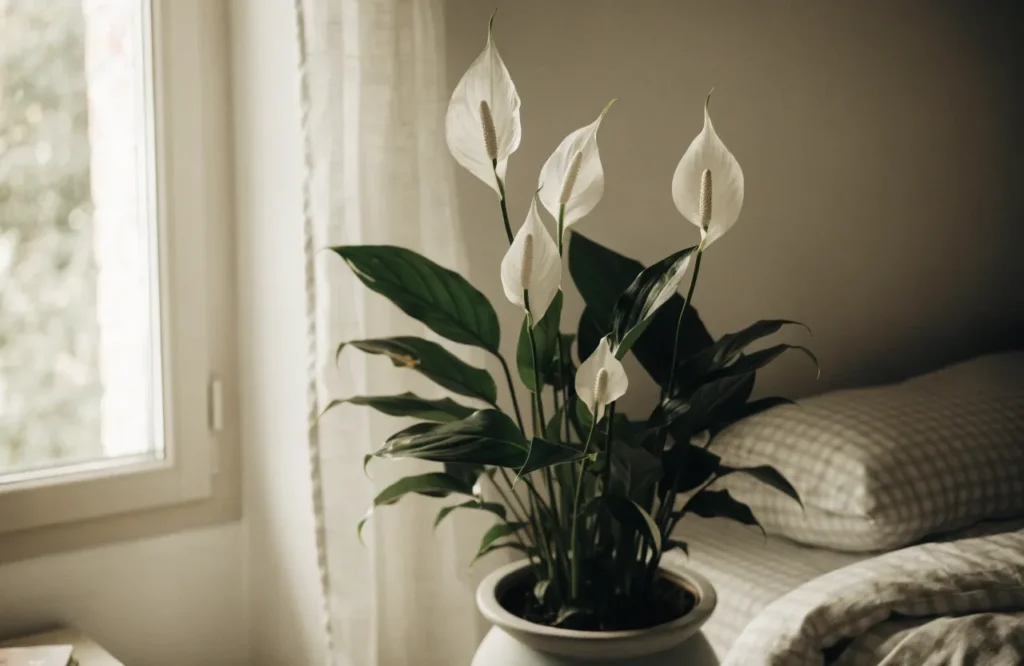
Care level: Easy | Best for: flower lovers, forgetful waterers
Dark green foliage and occasional white blooms bring a calm, spa-like feel to a bedroom. Its leaves droop noticeably when it needs water, which makes it easy to tell when to water rather than guessing on a schedule. It prefers consistently moist (not soggy) soil and appreciates a bit more humidity than some other plants on this list. Peace lilies are toxic to cats and dogs, so they’re best kept in pet-free rooms.
5. Chinese Evergreen (Aglaonema)
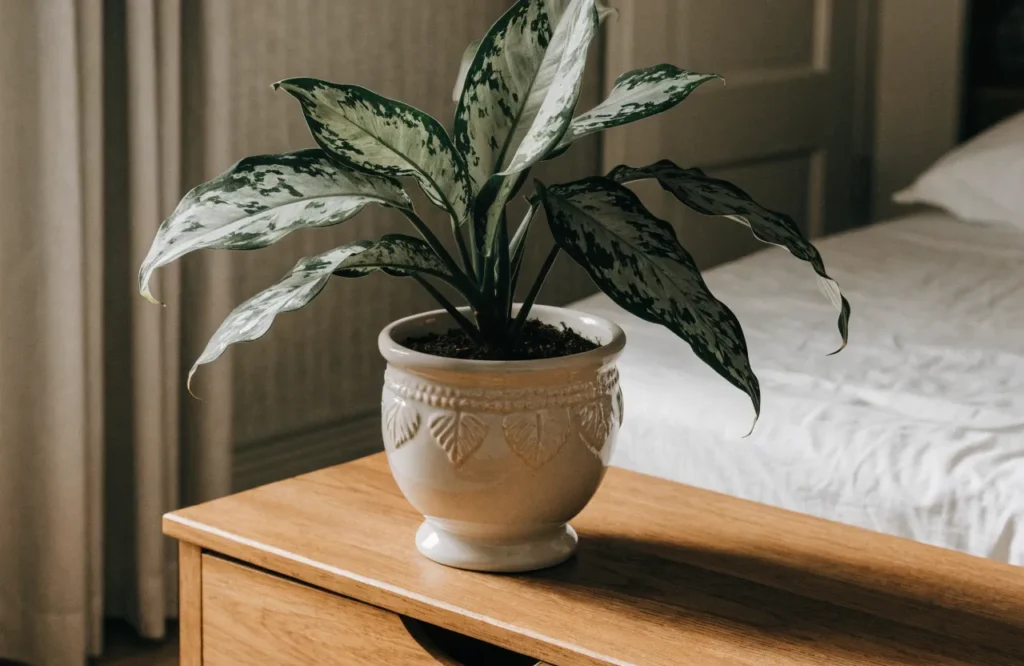
Care level: Easy | Best for: color without direct light
Available in green, silver, red, and cream variegated patterns, Chinese Evergreen brings visual interest to shady corners without needing a flowering plant’s higher light requirements. It grows slowly, rarely flowers indoors, and only needs watering when the top couple inches of soil are dry. Variegated varieties hold their color best with a bit of bright, indirect light now and then. It’s mildly toxic to pets if chewed.
6. Cast Iron Plant (Aspidistra elatior)
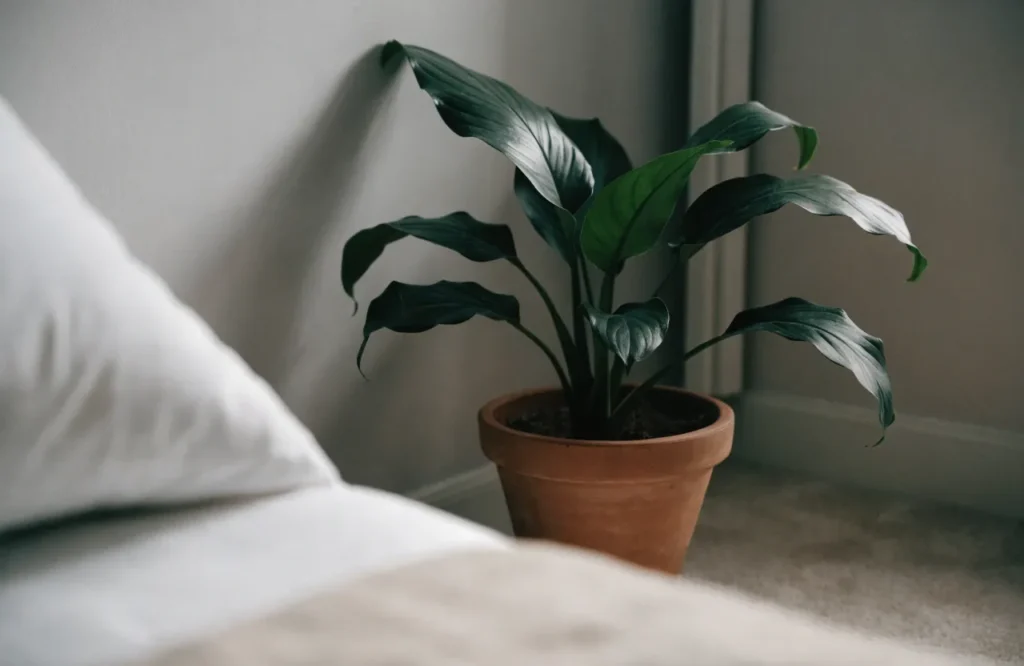
Care level: Beginner | Best for: cooler rooms, near-total neglect
As the name suggests, this is one of the toughest houseplants around, with glossy, arching leaves that tolerate low light, irregular watering, and cooler temperatures better than almost anything else on this list. Water only once the soil is fully dry, and don’t worry if that stretches to once a month. It grows slowly, so it won’t quickly outgrow a corner. It’s considered non-toxic to cats and dogs.
7. Parlor Palm (Chamaedorea elegans)
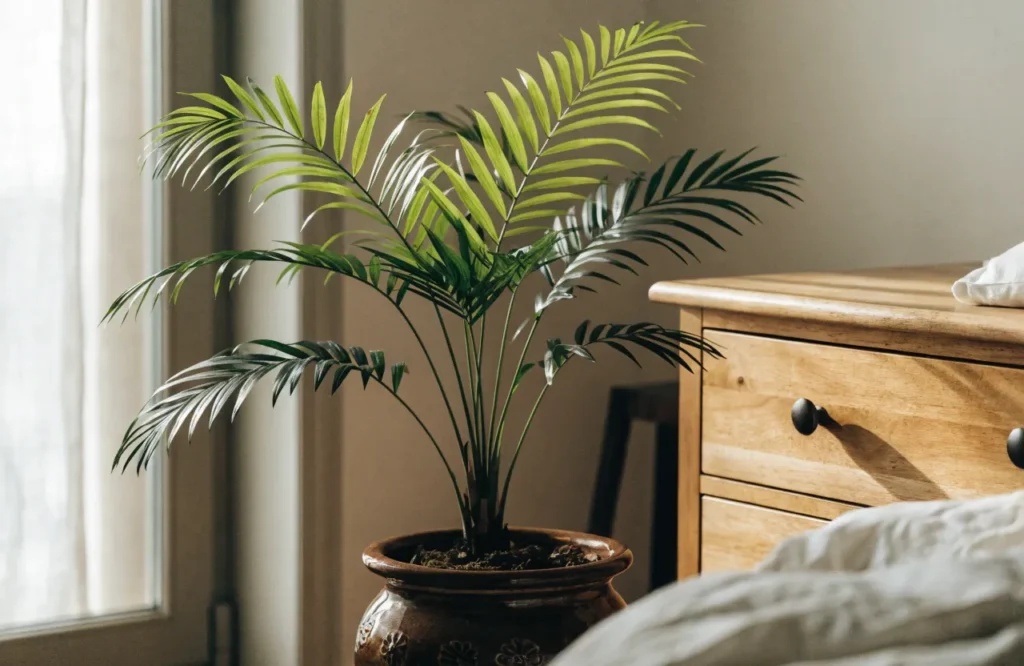
Care level: Easy | Best for: a soft, tropical look on a shelf or desk
Feathery, soft fronds bring a mini-palm look to a desk, shelf, or floor corner, and the plant adapts well to changing light throughout the day. Water when the top inch or two of soil feels dry, and avoid letting it sit in standing water. It’s naturally compact and slow-growing, so it won’t need repotting often. Parlor palms are non-toxic to cats and dogs.
8. Spider Plant (Chlorophytum comosum)
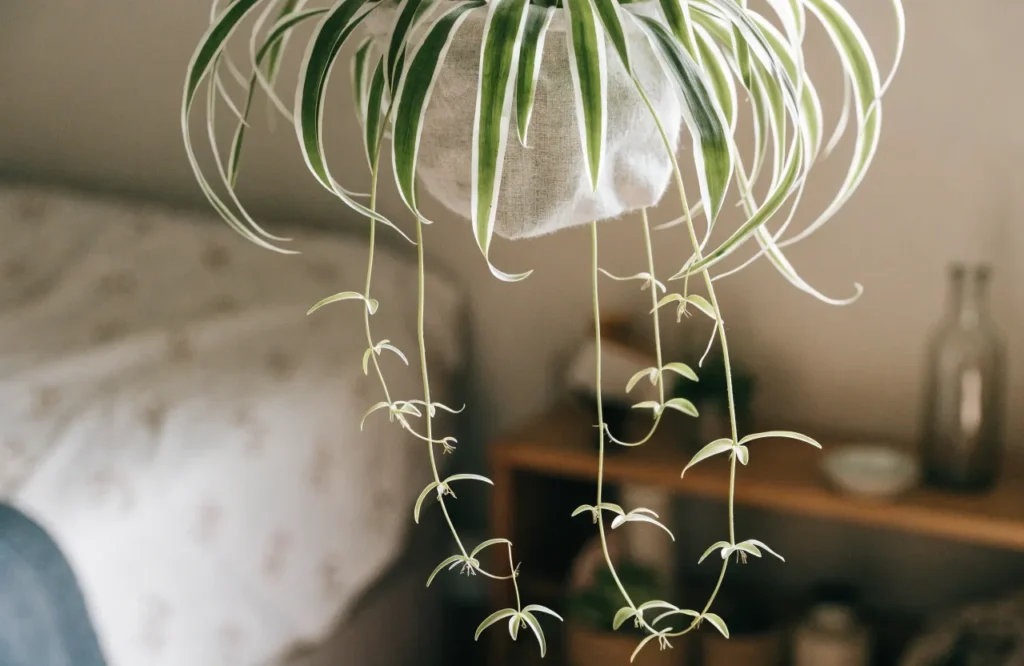
Care level: Easy | Best for: pet owners, hanging displays
Arching, variegated leaves with trailing “spider” offshoots add movement to a shelf or hanging basket. It tolerates a range of light levels, including artificial light, and keeps producing new offshoots with fairly minimal care. Water when the top inch of soil is dry, and trim brown tips if the air is especially dry. It’s one of the few plants on this list that’s fully non-toxic to cats and dogs.
9. Heartleaf Philodendron
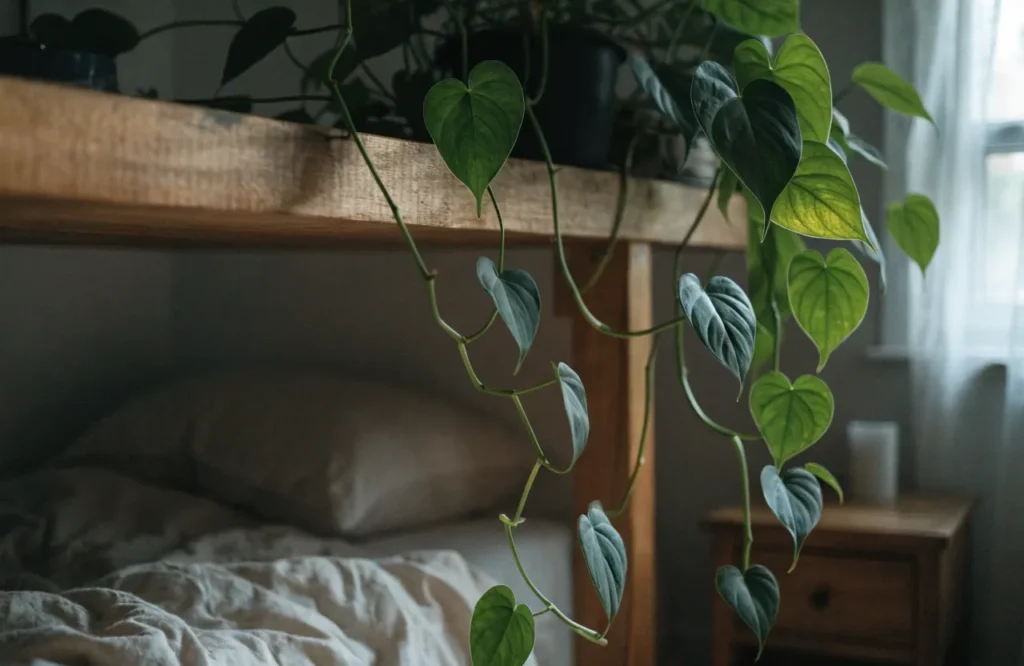
Care level: Intermediate | Best for: a full, jungle-like vine
A vining plant with heart-shaped leaves that brings a lush, jungle-like feel to a shelf or hanging basket. It tolerates low light reasonably well, though very sparse light can cause leggier growth with more space between leaves, so occasional trimming helps keep it full. Water once the top inch or two of soil is dry. It’s toxic to cats and dogs if chewed.
10. Prayer Plant (Maranta)
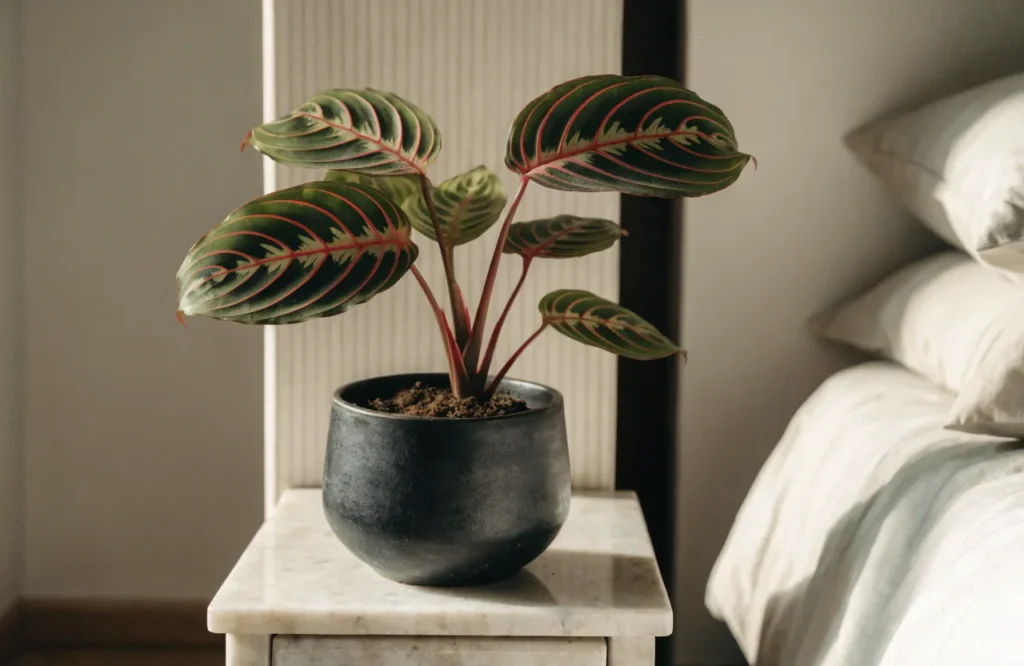
Care level: Intermediate | Best for: patterned foliage, humid bedrooms
Patterned leaves fold up at night as if praying, adding a bit of visual interest beyond just greenery. It prefers warmer, more humid rooms and stays vibrant even without much direct sun, though colors can look a little more muted in very dim spots. Water when the top inch of soil feels dry, and mist occasionally if your bedroom runs dry. It’s considered non-toxic to cats and dogs.
11. Bird’s Nest Fern
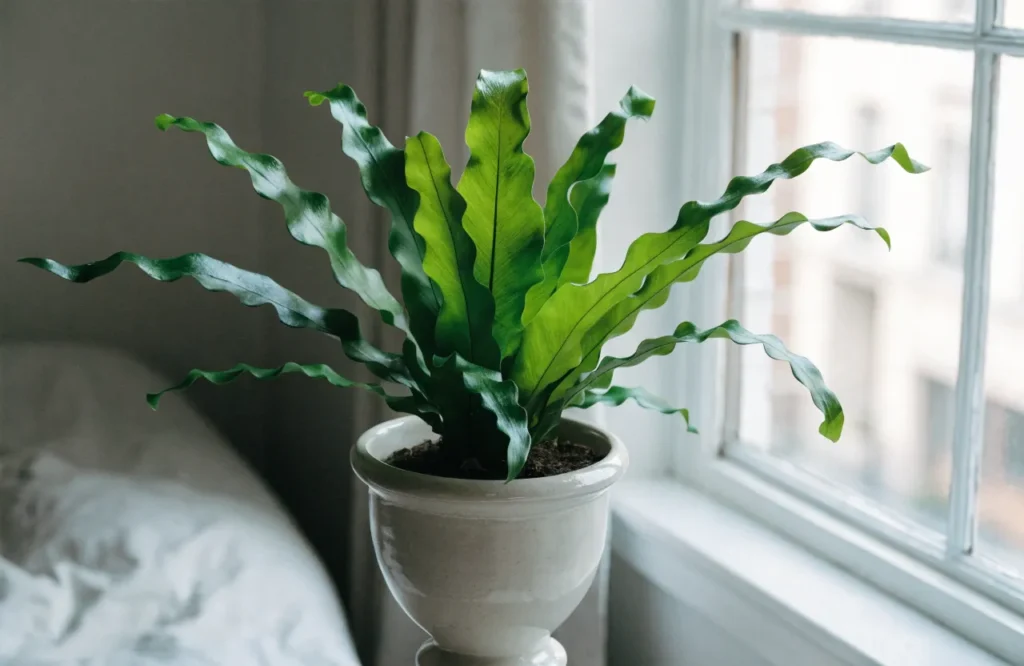
Care level: Intermediate | Best for: pet owners who want a fern
Bright green, ripple-edged fronds emerge from a central rosette, giving this fern a different look than the feathery ferns most people picture. It’s more shade-tolerant than most ferns, provided humidity stays reasonably high, so a bathroom-adjacent bedroom or a humidifier helps. Water when the top inch of soil feels dry, and avoid letting water sit in the central rosette. It’s non-toxic to cats and dogs.
12. English Ivy
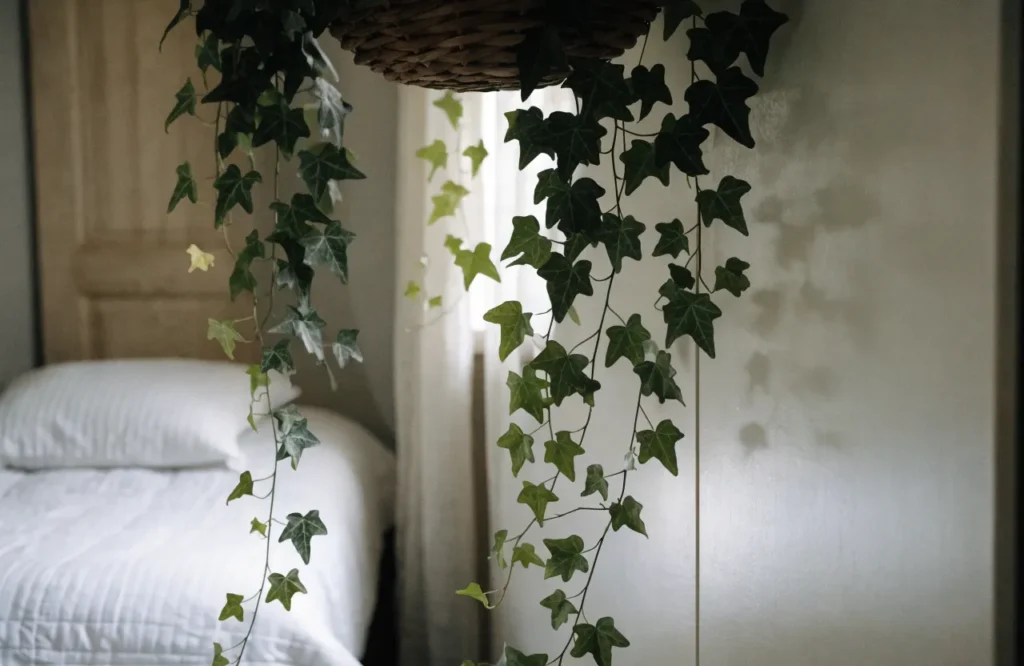
Care level: Intermediate | Best for: cooler bedrooms, trailing displays
A fast-growing trailing plant that works well in hanging baskets or trained along a shelf. It prefers cooler, slightly humid rooms, which makes it a good match for bedrooms kept a bit chilly at night, and it tolerates low light without much complaint. Water once the top inch of soil is dry, and prune regularly since it grows quickly. English ivy is toxic to cats and dogs.
13. Dracaena (Corn Plant / Dragon Tree)
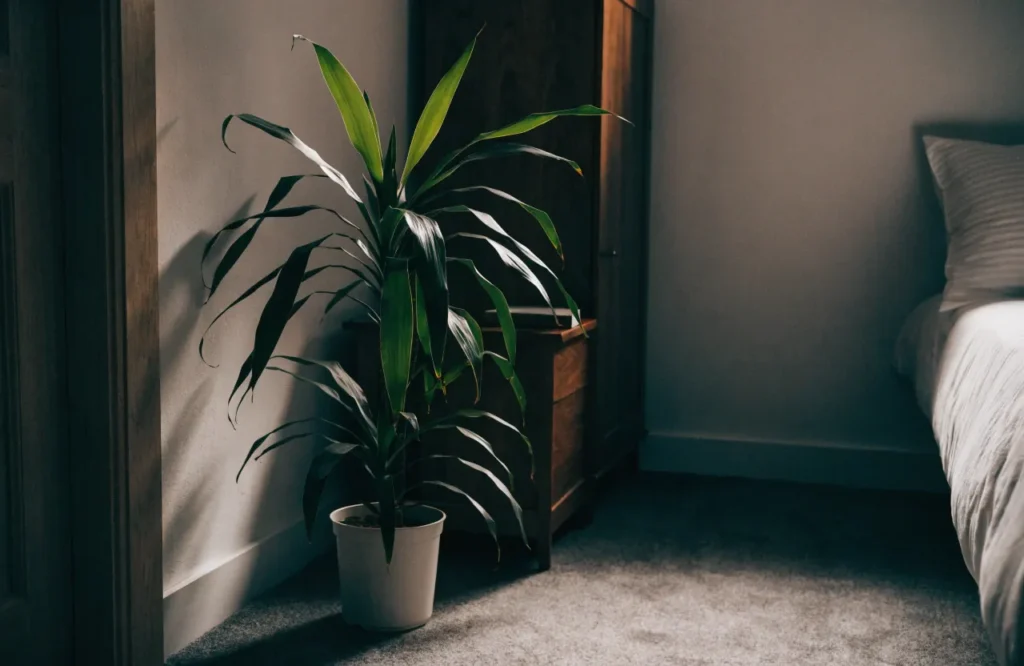
Care level: Easy | Best for: tall floor accents
Tall and architectural, with sword-like leaves on thick stems, Dracaena varieties add height to a corner without needing a sunny spot. They tolerate shadier corners well, though growth slows compared to brighter spots, so don’t expect fast results. Water when the top couple inches of soil are dry, and avoid overwatering, which is the more common problem. Dracaena is toxic to cats and dogs.
14. Arrowhead Vine (Syngonium)
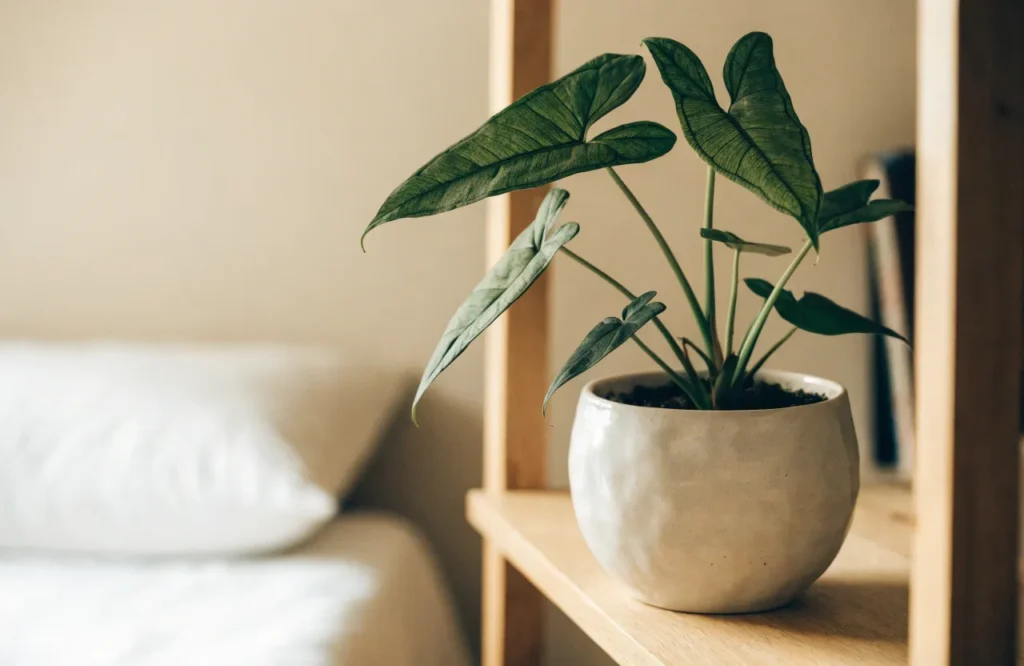
Care level: Easy | Best for: compact color on a shelf or desk
Arrow-shaped leaves come in green, white, or pink variegation, with the deeper green varieties adapting best to dimmer bedrooms. It starts compact and upright before developing a trailing habit as it matures. Water when the top inch or two of soil feels dry. It’s toxic to cats and dogs if ingested.
15. Calathea
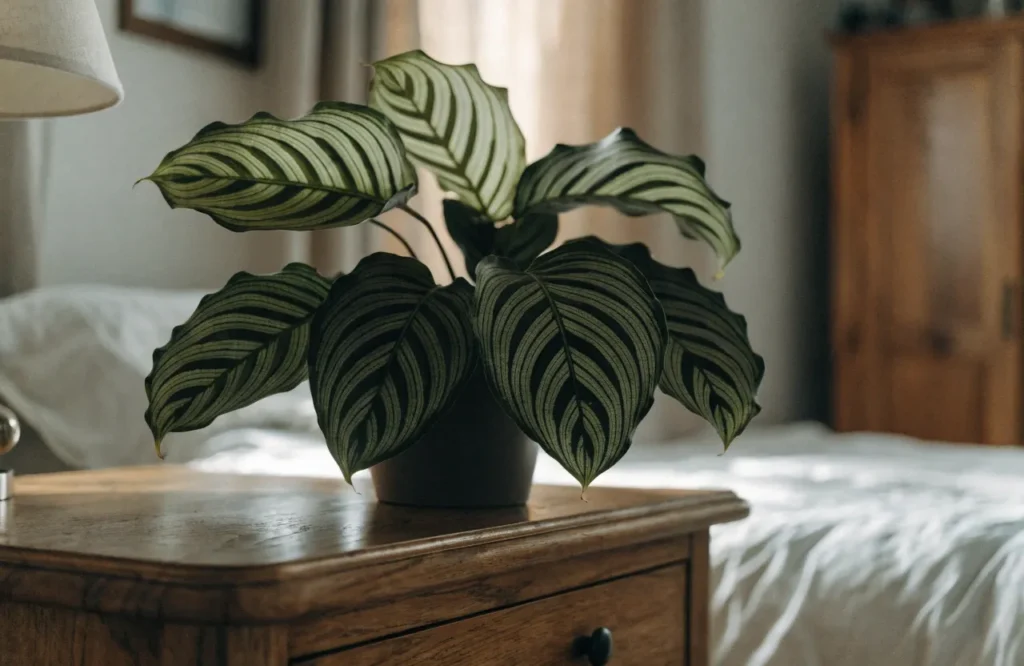
Care level: More involved | Best for: bold patterned foliage
Bold, patterned foliage adds real visual interest to a nightstand or dresser, closer to a piece of decor than a typical houseplant. It prefers consistent humidity and can be a bit fussier about watering than others on this list, reacting to both dry soil and hard tap water with browning leaf edges. Water when the top inch of soil is dry, using filtered water if possible. Calathea is non-toxic to cats and dogs.
16. Rabbit’s Foot Fern
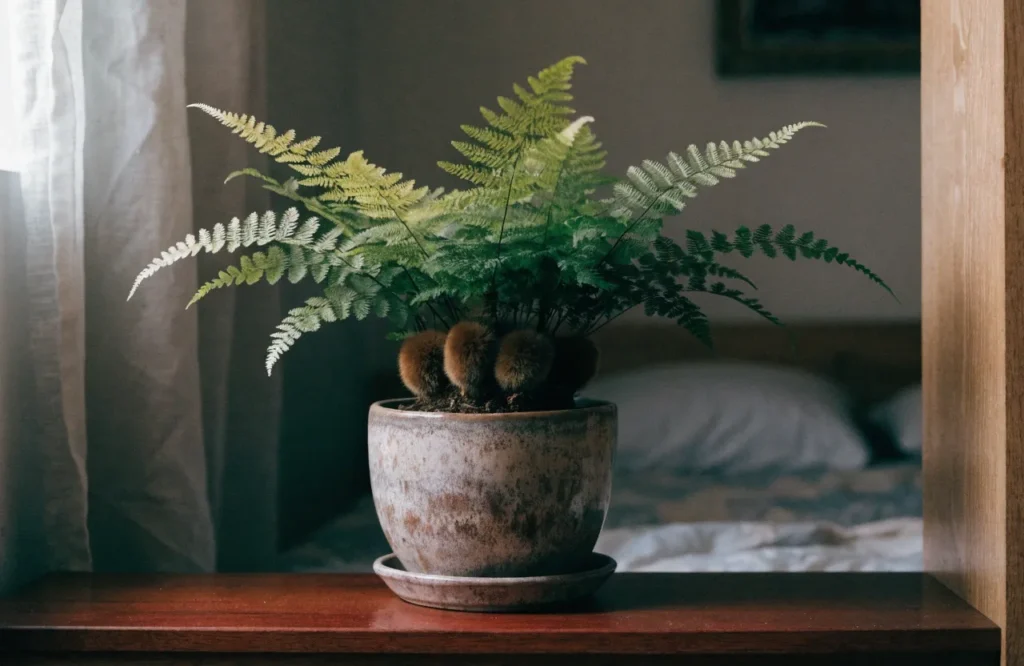
Care level: More involved | Best for: plant lovers who enjoy a challenge
Feathery green fronds and fuzzy, above-soil rhizomes give this fern a distinctive look. It prefers filtered light through a sheer curtain rather than deep shade or direct sun, since too much sun will crisp the leaf tips and too little will leave it droopy. Water when the top inch of soil feels dry, and keep humidity up. It’s non-toxic to cats and dogs.
17. Rubber Plant (Ficus elastica)
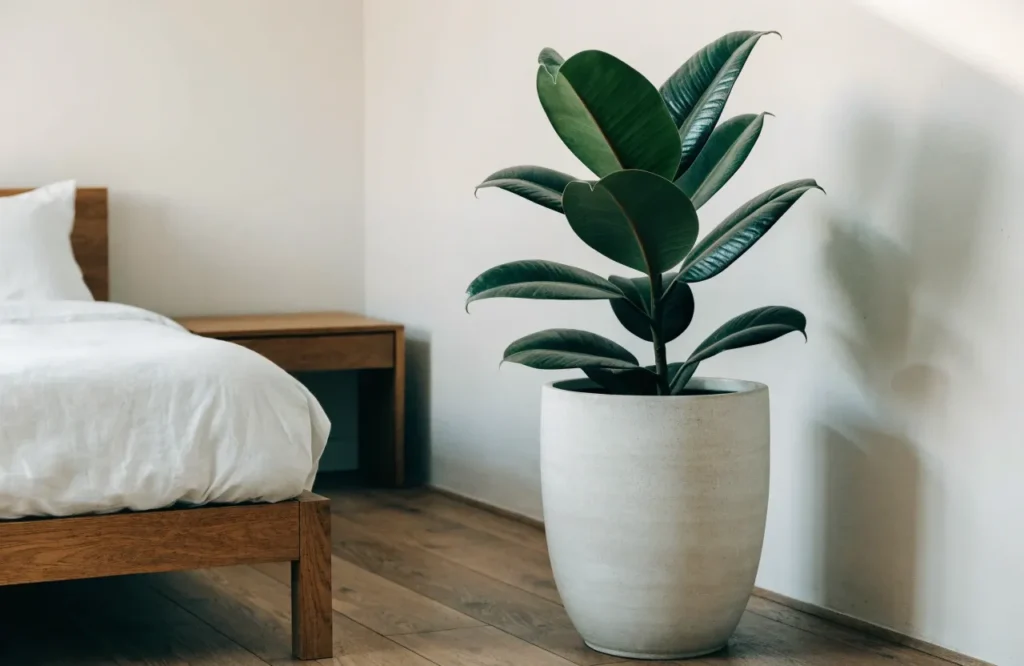
Care level: Intermediate | Best for: a bold floor plant
Thick, glossy leaves on an upright, tree-like form make this a solid bedroom floor plant, and it tolerates medium-to-low light better than most other ficus varieties. Water once the top couple inches of soil are dry, and wipe the large leaves occasionally so they can make the most of available light. It’s toxic to cats and dogs if chewed.
18. Dumb Cane (Dieffenbachia)
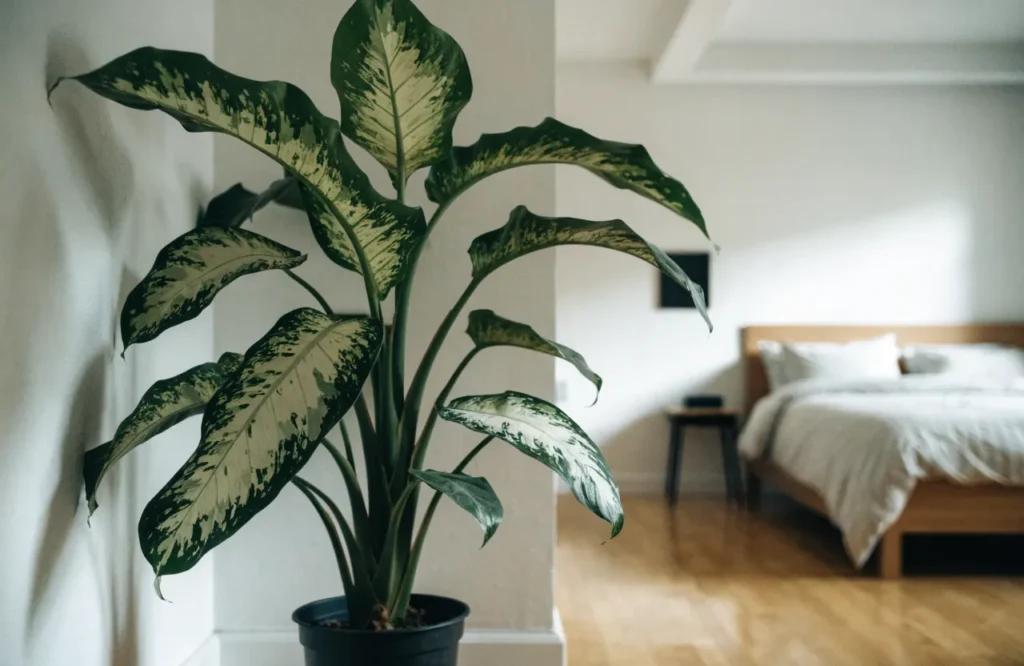
Care level: More involved | Best for: larger bedrooms with some space to spare
Bold, patterned foliage brings a tropical feel to larger bedrooms with a bit more floor space. It prefers brighter indirect light than some plants on this list but still tolerates lower light reasonably well. Water when the top inch or two of soil is dry, and let it dry out a bit between waterings. Keep it well out of reach of pets and small children, since the sap is irritating if chewed.
19. Wax Plant (Hoya)
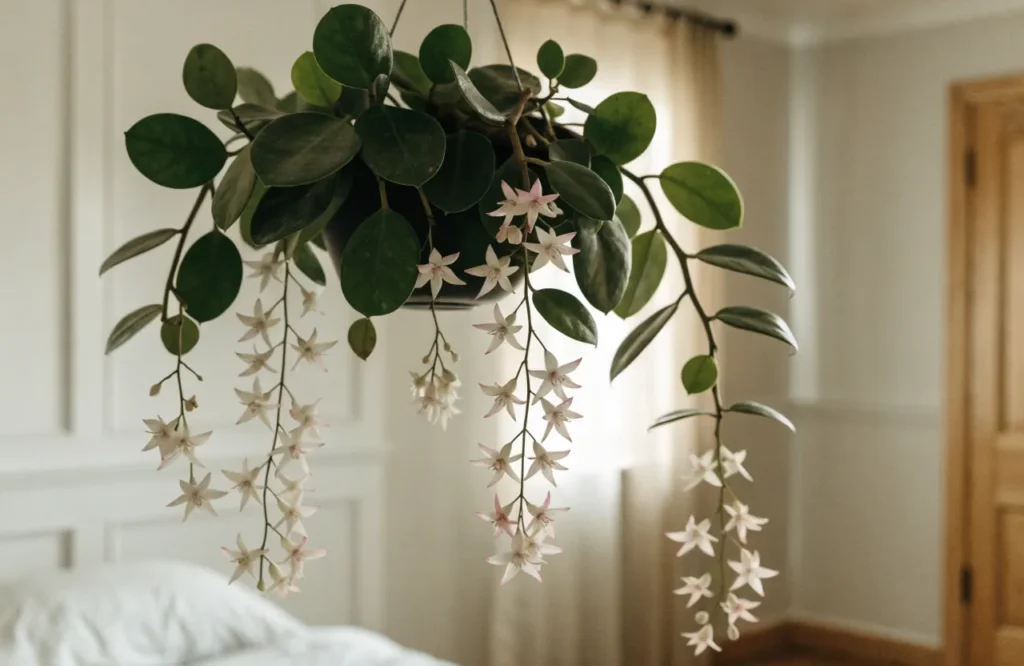
Care level: Intermediate | Best for: trailing plants that also flower
Thick, trailing leaves eventually produce clusters of star-shaped flowers once the plant matures, making it one of the better flowering options for a shadier bedroom. It prioritizes humidity over strong light and tolerates the occasional missed watering well. Water once the soil has mostly dried out. It’s non-toxic to cats and dogs.
20. Peperomia (Radiator Plant)
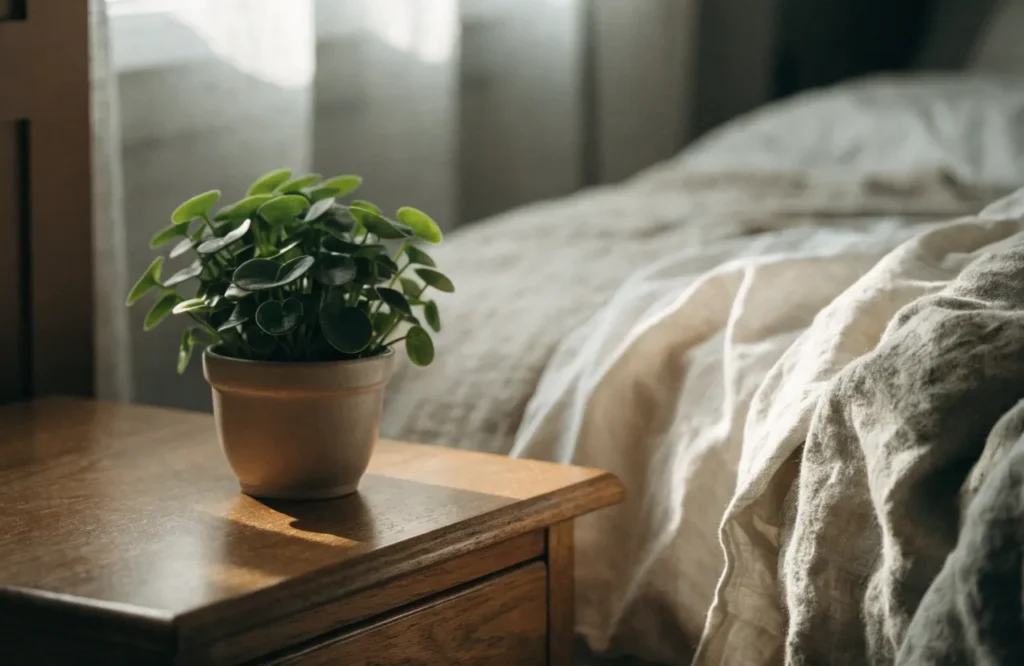
Care level: Easy | Best for: small spaces, nightstands
Compact and low-fuss, with a wide variety of leaf shapes and colors depending on the variety you choose. It fits easily on a nightstand and doesn’t demand much attention beyond basic watering. Water when the top inch or two of soil feels dry, since the thick leaves store some moisture. It’s non-toxic to cats and dogs.
21. Lucky Bamboo (Dracaena sanderiana)
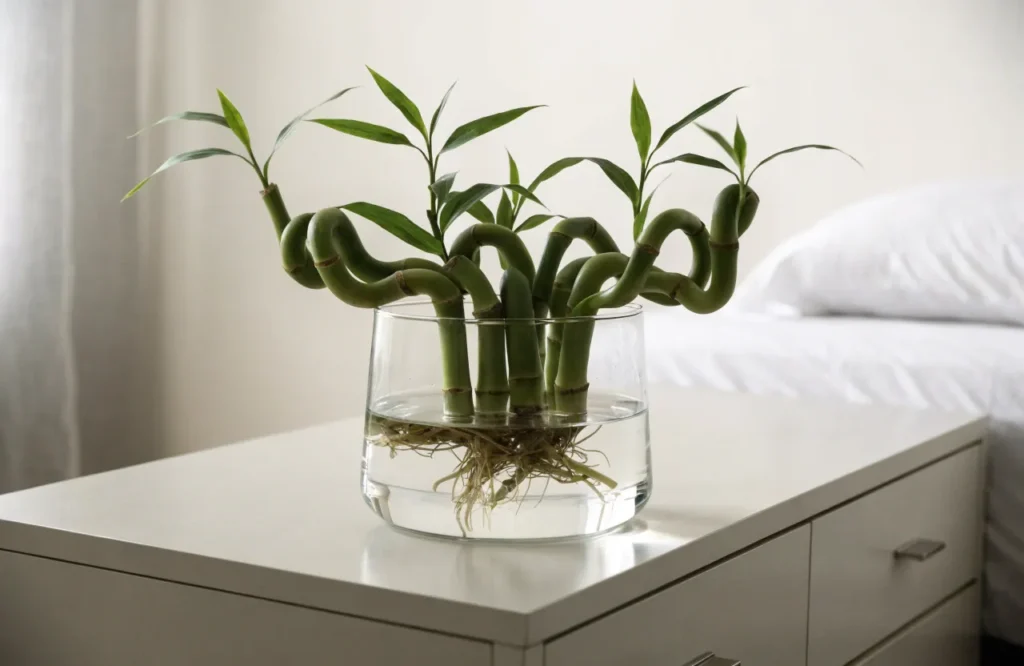
Care level: Beginner | Best for: minimalist dressers, water-grown displays
Sculptural stalks that grow in water or soil add a clean, minimalist look to a bedroom dresser. It tolerates shade well and is genuinely low-maintenance, especially when grown in water, where you just need to top off or change the water every couple of weeks. In soil, water once the top inch is dry. It’s toxic to cats and dogs if chewed.
22. Bromeliad
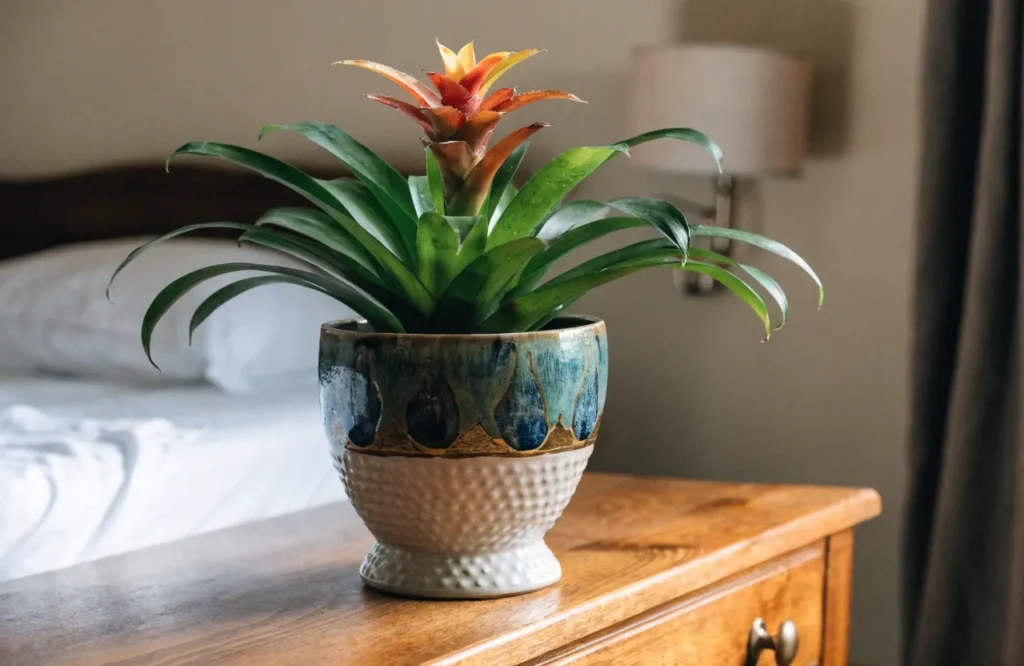
Care level: Intermediate | Best for: color without a sunny window, flower fans
Softer, spineless bromeliad varieties handle lower light better than their more structured cousins, and many produce a long-lasting, colorful bloom once mature. They like their central cup kept lightly filled with water, along with occasional watering of the soil itself. They add unexpected color without needing a sunny window. Bromeliads are non-toxic to cats and dogs.
23. Boston Fern
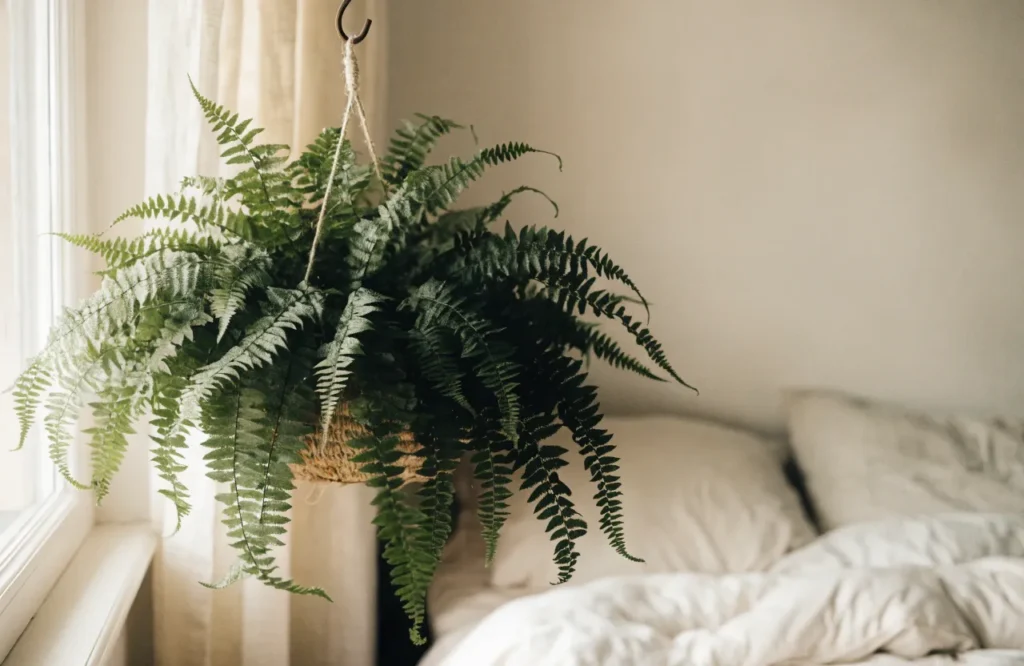
Care level: Intermediate | Best for: hanging baskets, humid bedrooms
Lush, trailing fronds do best with regular misting or a humidity tray to stay full and green. It’s a good pick for a hanging basket near, but not directly in, a window, and it tolerates lower light reasonably well as long as humidity stays up. Water when the top inch of soil feels dry, and don’t let it dry out completely for long. Boston ferns are non-toxic to cats and dogs.
24. Philodendron ‘Birkin’ and similar hybrids
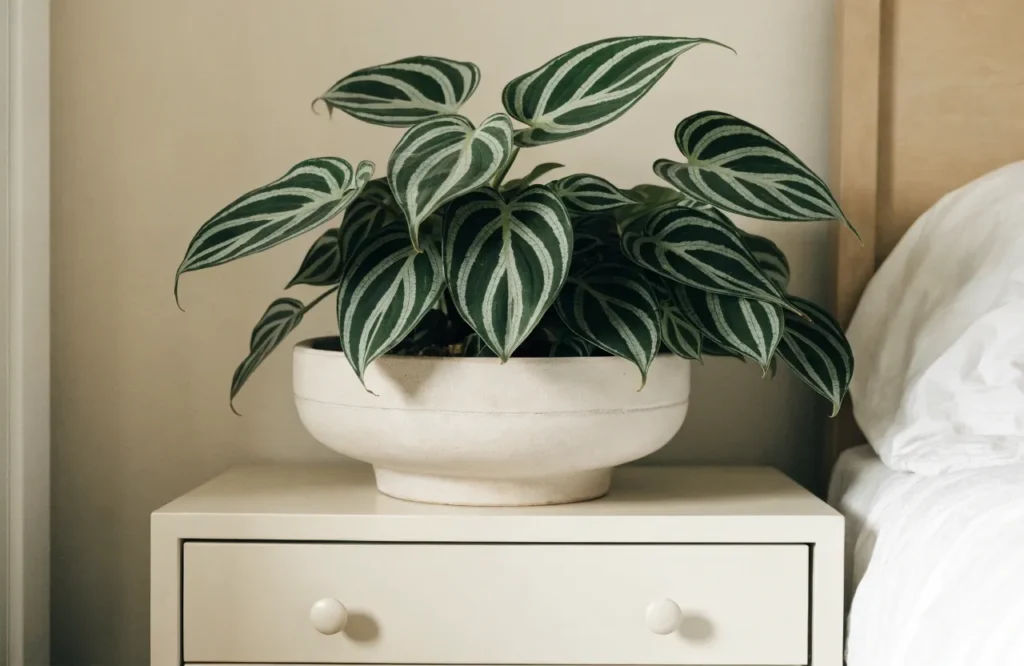
Care level: More involved | Best for: striped or patterned foliage on display
Compact, clumping varieties with striped or patterned foliage stand out more than a plain green philodendron. They tolerate low-to-medium light, though variegation patterns are often more pronounced with a bit more brightness. Water once the top inch or two of soil is dry. These hybrids are toxic to cats and dogs if chewed.
25. Anthurium
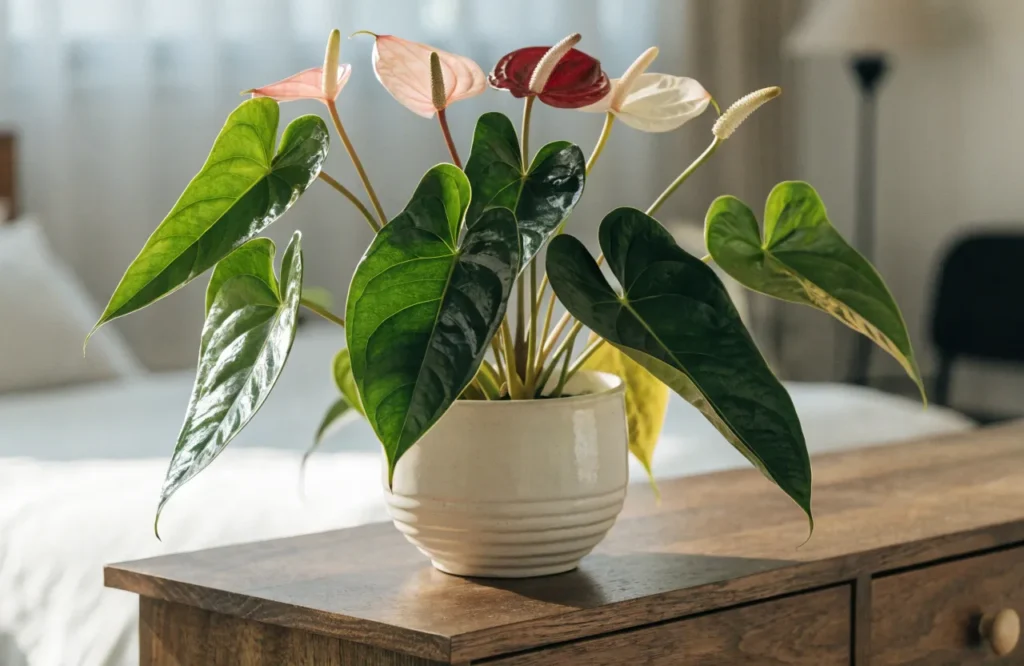
Care level: More involved | Best for: long-lasting blooms
Glossy, heart-shaped leaves and long-lasting red, pink, or white blooms make this one of the more decorative options on this list, with flowers that can last for weeks. It needs a bit more consistent care than most low light plants, including steady moisture and higher humidity, so it rewards a bit more attention. Water when the top inch of soil is dry, and avoid letting it sit in soggy soil. Anthurium is toxic to cats and dogs.
Low Light Plants for Bedrooms: Quick Comparison
| Plant | Light Tolerance | When to Water | Pet-Safe? |
| Snake Plant | Very low | When soil is fully dry | No |
| Pothos | Low to bright | When top inch is dry | No |
| ZZ Plant | Very low | When soil is fully dry | No |
| Peace Lily | Low to medium | When leaves start to droop | No |
| Chinese Evergreen | Low to medium | When top 1–2 inches are dry | No |
| Spider Plant | Medium (tolerates low) | When top inch is dry | Yes |
| Parlor Palm | Low to medium | When top 1–2 inches are dry | Yes |
| Cast Iron Plant | Very low | When soil is fully dry | Yes |
| Bird’s Nest Fern | Low to medium | When top inch is dry | Yes |
| Peperomia | Low to medium | When top 1–2 inches are dry | Yes |
Best Low-Light Bedroom Plants by Care Level
Beginner (very forgiving): Snake Plant, ZZ Plant, Pothos, Cast Iron Plant, Lucky Bamboo. These tolerate missed waterings, inconsistent light, and general neglect better than most, and several also show up on our list of unkillable indoor plants for anyone who wants a truly beginner-friendly start.
Easy (a light routine, not much fuss): Peace Lily, Chinese Evergreen, Parlor Palm, Spider Plant, Peperomia, Arrowhead Vine, Dracaena. These want a fairly regular watering rhythm but won’t punish the occasional slip.
Intermediate (rewards attention): Heartleaf Philodendron, Prayer Plant, Bird’s Nest Fern, English Ivy, Rubber Plant, Wax Plant, Bromeliad, Boston Fern. These do best with attention to humidity and a slightly more consistent schedule.
More involved (best for hands-on plant lovers): Calathea, Rabbit’s Foot Fern, Dumb Cane, Anthurium, Philodendron hybrids. Beautiful payoff, but pickier about humidity, drafts, and watering consistency.
Best Low Light Plants for Bedrooms by Situation
Have pets? Spider Plant, Parlor Palm, Cast Iron Plant, Bird’s Nest Fern, and Peperomia are non-toxic options, and there are plenty more on our roundup of pet-friendly indoor plants if you want a bigger selection to choose from.
Want something very forgiving? Snake Plant, ZZ Plant, and Pothos are among the most tolerant of missed waterings and inconsistent light.
Only have a nightstand or dresser? Peperomia, Prayer Plant, Chinese Evergreen, and small Calathea varieties stay compact.
Bedroom gets very little natural light? ZZ Plant and Snake Plant tolerate the dimmest rooms on this list, but they still need some light source, natural or artificial, to stay healthy over time. If your room has no windows at all, a small grow light is worth adding, for a full rundown of species built specifically for that scenario, see our guide to plants for dark rooms.
Want flowers? Peace Lily, Anthurium, Bromeliad, and Wax Plant (Hoya) are the best low light options that still bloom indoors, even without a sunny window.
Where to Place Low-Light Plants in Your Bedroom
Placement matters almost as much as the plant itself. A few ideas for making the most of limited light and limited space:
- Nightstand or dresser top: Best for compact, slow-growing varieties like Peperomia, Prayer Plant, or small Chinese Evergreen, since they’re close enough to enjoy without cluttering the surface.
- Floor corners: Taller plants like Snake Plant, Dracaena, Cast Iron Plant, or Parlor Palm fill an empty, shadowy corner without needing a table.
- Hanging baskets or high shelves: Trailing plants like Pothos, English Ivy, and Boston Fern look best cascading down and free up floor and surface space. See our hanging indoor plants picks for more trailing varieties worth considering.
- Near, not directly on, a windowsill: A few feet back from the glass gives filtered light without the risk of leaf scorch or cold drafts at night.
- Away from heating and AC vents: Dry blasts of air stress most low-light plants faster than dim light does, so keep pots clear of vents and radiators.
- Out of walking paths: This matters especially for larger floor plants, since a dim bedroom makes a stray pot an easy tripping hazard.
Bedroom Plant Care Tips
- Water based on the soil, not the calendar. Most low light plants use water more slowly than sun-loving ones, so check that the top inch or two of soil is dry before watering again rather than following a fixed weekly schedule. Overwatering is the most common way these plants die.
- “Low light” isn’t “no light.” Every plant on this list still needs some ambient or indirect daylight, or occasional time near a brighter window. Rooms with no windows at all usually need a small grow light for a plant to thrive long term.
- Dust the leaves. A quick wipe with a damp cloth every few weeks helps leaves take in what little light is available.
- Watch for legginess. Stretched, pale, or sparse growth is a sign the plant needs a bit more light, even if it’s technically a “low light” variety.
- Mind humidity. Ferns, prayer plants, and calatheas do better with a light misting or a pebble tray, since bedrooms tend to be drier than bathrooms or kitchens.
💡 Expert Tip: In a low-light room, plants often lean or grow unevenly toward whatever light source they can find, whether that’s a window or a lamp. Give the pot a quarter turn every week or two so all sides get equal exposure. It’s a small habit that keeps growth balanced and stops a plant from ending up lopsided over time.
FAQs: Low Light Plants for Bedrooms
What is the best plant for a low-light bedroom?
Snake Plant and ZZ Plant are generally considered the two most reliable choices, since both tolerate the dimmest rooms on this list. They’re also among the most forgiving of missed waterings and inconsistent light.
Can plants survive in a bedroom with blackout curtains?
‘Low light’ isn’t ‘no light.’ Every plant on this list still needs some ambient or indirect daylight. If you keep blackout curtains closed all day, move the plant near a brighter window or supplement with a grow light.
Which low light bedroom plants are safe for pets?
Spider Plant, Parlor Palm, Cast Iron Plant, Bird’s Nest Fern, and Peperomia are non-toxic options, making them good choices if you share the bedroom with cats or dogs.
How often should I water low light bedroom plants?
Water based on the soil, not the calendar. Most low light plants use water more slowly than sun-loving ones, so check that the top inch or two of soil is dry before watering.
What are the best low-maintenance options for a dark bedroom?
Snake Plant, ZZ Plant, Pothos, Cast Iron Plant, and Lucky Bamboo are very forgiving—they tolerate missed waterings and inconsistent light, making them ideal if you want a plant that thrives on neglect.
Choosing the right low light plant comes down to your bedroom’s exact conditions, your schedule, and whether pets are in the picture. Start with one or two easy varieties like a snake plant or pothos, see how they do, and build your collection from there. For detailed care profiles on hundreds of houseplants, consult the Missouri Botanical Garden’s plant database.