Tomato Sunscald: Symptoms, Causes, Treatment & Prevention Guide
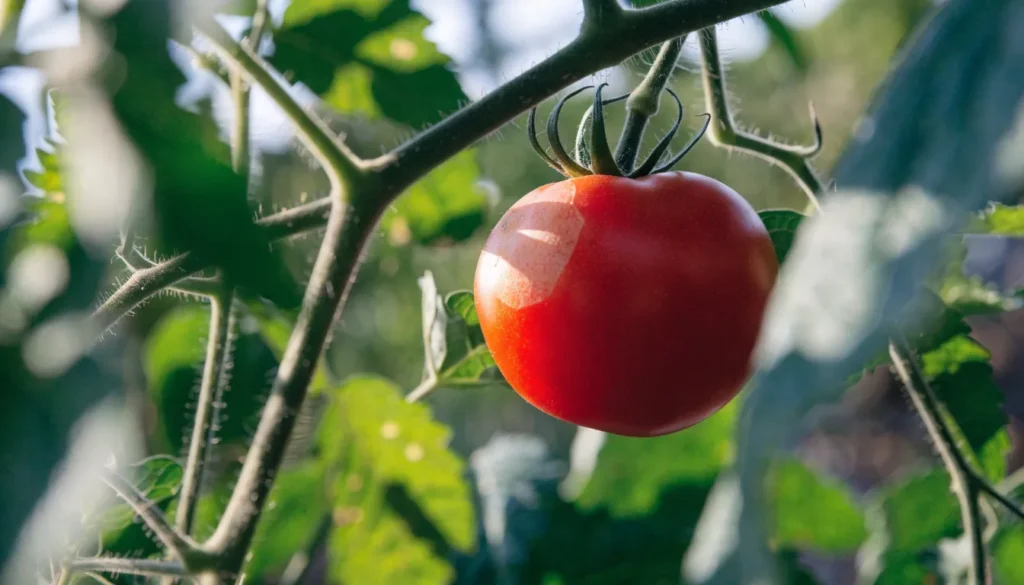
Tomato sunscald is a physiological disorder that causes pale, leathery, or blistered patches to form on the side of a tomato facing the sun. It’s one of the most common fruit disorders home gardeners encounter, and also one of the most preventable once you understand why it happens. This guide covers what sunscald looks like at every stage, what causes it, how to tell it apart from similar problems, what you can (and can’t) do once it appears, and how to stop it from affecting the rest of your harvest.
Table of Contents
Quick Answer
Tomato sunscald is a physiological disorder, not a disease or pest problem, caused when ripening fruit is suddenly exposed to intense direct sunlight and heat, usually after the plant loses protective leaf cover. It shows up as pale yellow, white, or tan patches with a thin, papery texture on the sun-facing side of the fruit. It cannot be cured once it appears, but it’s almost entirely preventable by maintaining healthy foliage, pruning carefully, watering consistently, and shading fruit during heat waves. Mildly affected tomatoes are still safe to eat once the damaged skin is cut away; fruit with mold, rot, or a sour smell should be discarded.
What Causes Sunscald on Tomatoes
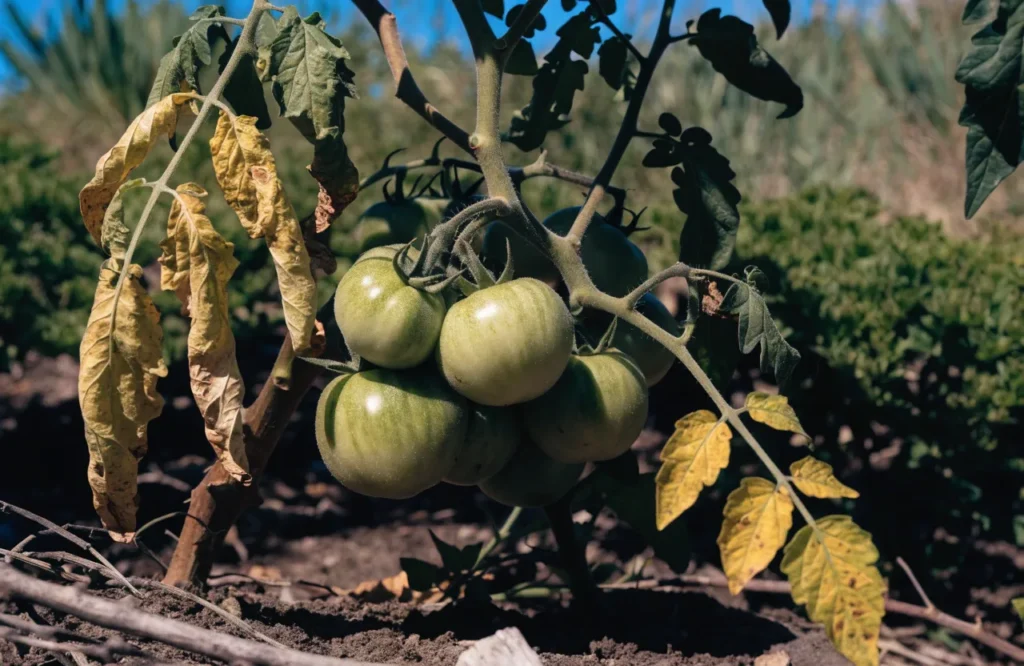
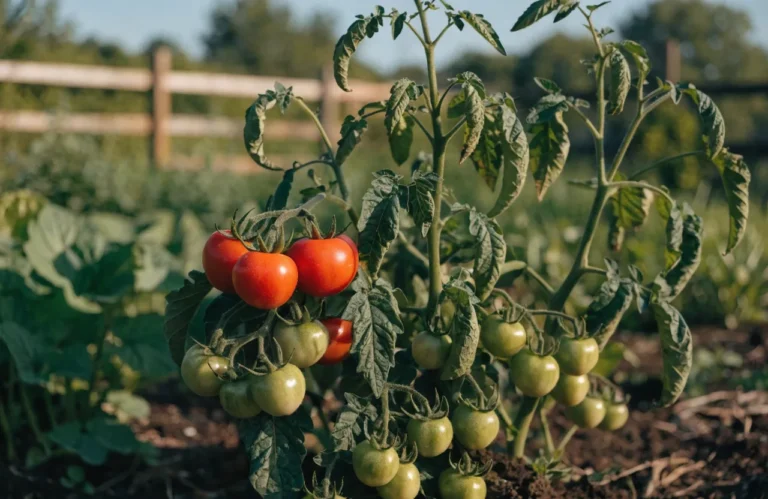
Sunscald develops when tomato fruit, which is naturally adapted to ripen in filtered light beneath a leaf canopy, is abruptly exposed to full sun and high heat. The leaves act as a living sunshade, and once that cover thins out, the fruit’s surface temperature can climb well above the surrounding air temperature, damaging the outer skin cells.
Common triggers include:
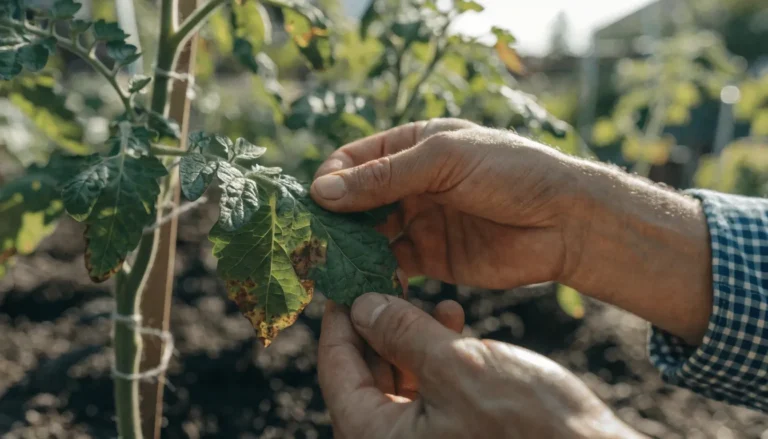
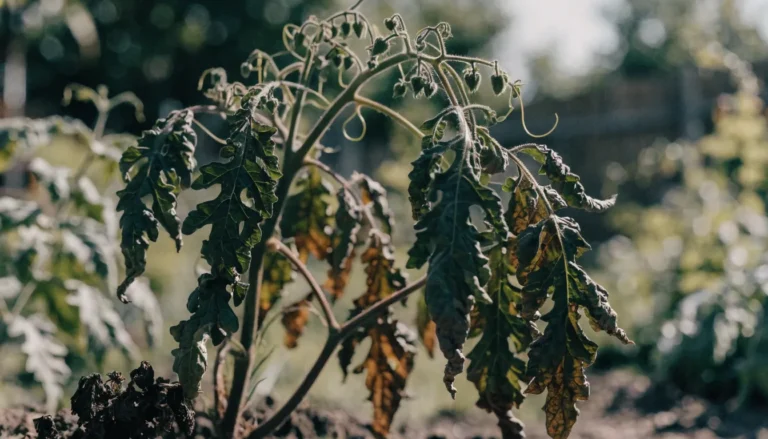
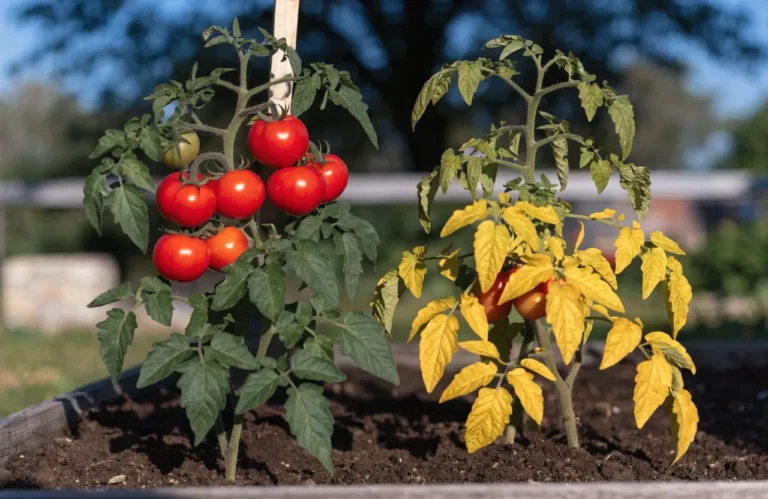
- Loss of foliage from disease. Early blight, septoria leaf spot, and powdery mildew, the main culprits behind most tomato plant diseases , all cause leaves to yellow and drop, stripping away the plant’s natural shade. Yellowing that isn’t disease-related has its own set of causes worth ruling out too.
- Insect and pest damage. Hornworms, flea beetles, and other leaf-feeding pests can defoliate a plant quickly during peak fruiting.
- Over-pruning. Removing too many suckers or leaves, especially the ones directly above a fruit cluster, leaves tomatoes exposed. Pruning with yield in mind rather than tidiness preserves this protection.
- Heat waves and drought stress. Extended periods of intense heat, especially when combined with drought stress, low humidity, and strong direct sunlight, raise the risk of scald even without major leaf loss. The same heat stress that scalds exposed fruit is often behind tomato plants flowering but no fruit earlier in the season, so if you’re seeing both problems, temperature is likely the common thread.
- Wide plant spacing. Rows or containers spaced too far apart get less mutual shading from neighboring plants; ideal spacing varies by variety.
These four factors, disease, pests, over-pruning, and heat/drought stress, are the main drivers behind most cases of sunscald. A secondary, less direct contributor is nutrient stress: a plant that’s short on nitrogen after fruit set can produce thinner, less protective foliage, making it more vulnerable to the primary causes above. Getting fertilizer timing and nitrogen levels right through fruit set helps avoid this.
What Does Tomato Sunscald Look Like?
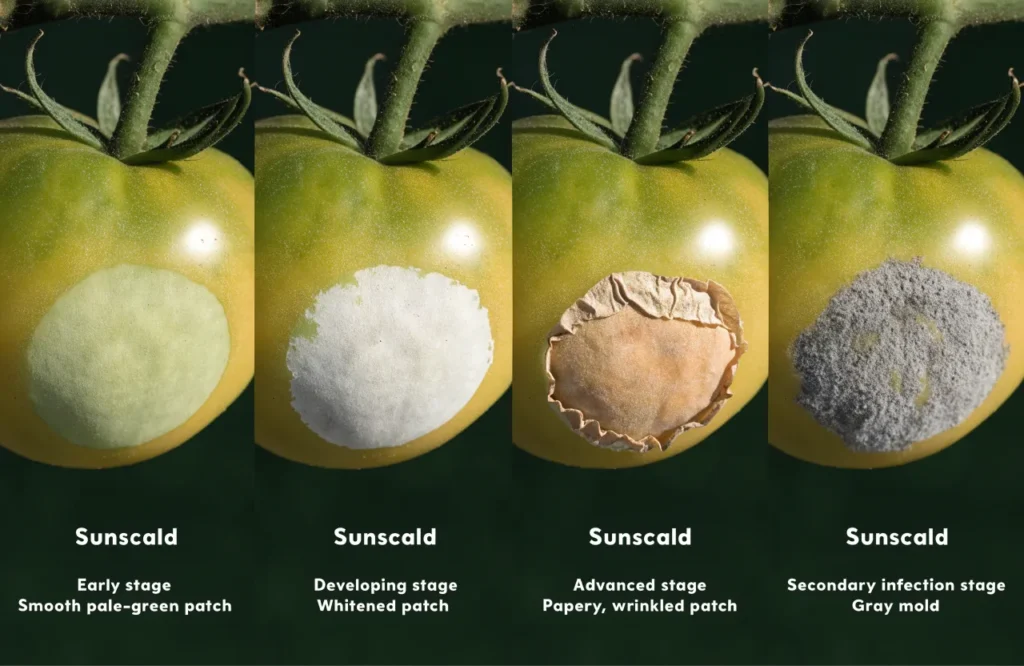
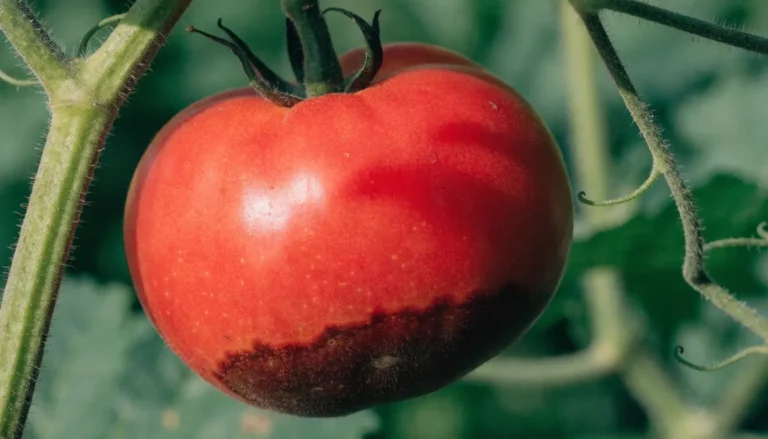
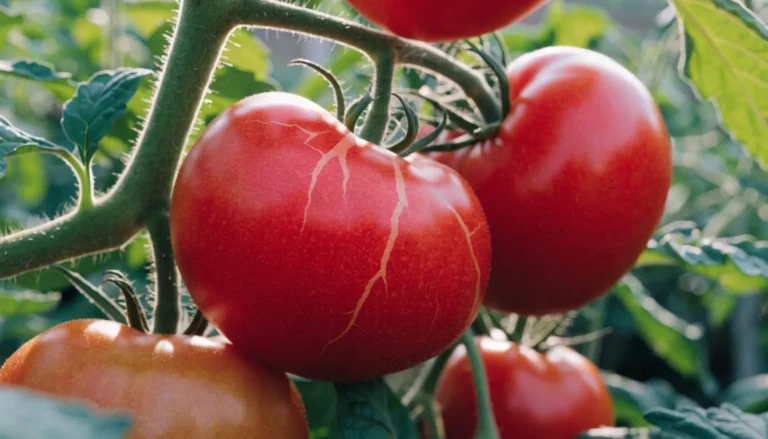
Sunscald has a distinct visual progression, which makes it easier to catch early if you know what to look for. It almost always appears on the shoulder or mid-section of the fruit that faces the sun, not the bottom or shaded side.
| Stage | What You’ll See |
|---|---|
| Early | A smooth, pale green or light-yellow patch on the shoulder of green or breaker-stage fruit |
| Developing | The patch whitens or turns tan, flattens out, and feels thinner and drier than the surrounding skin |
| Advanced | Tissue turns papery, wrinkled, and may crack or sink inward |
| Secondary infection | Gray or black mold, soft rot, or a sour smell where pathogens have entered the damaged skin |
Foliage can show damage too: leaves in direct sun may develop white, yellow, or brown scorched patches, particularly after a sudden change in light exposure.
Why Does Tomato Sunscald Happen?
At its core, sunscald happens because tomato fruit isn’t built to handle direct, unfiltered sun. It develops under a canopy of leaves that act as natural shade, and its skin isn’t adapted to intense UV and heat exposure. When that leaf cover disappears, whether from disease, pests, pruning, or heat stress (see the causes above), the fruit’s surface temperature can spike well above the surrounding air temperature, damaging the outer cell layers.
Sunscald vs. Lookalike Tomato Problems
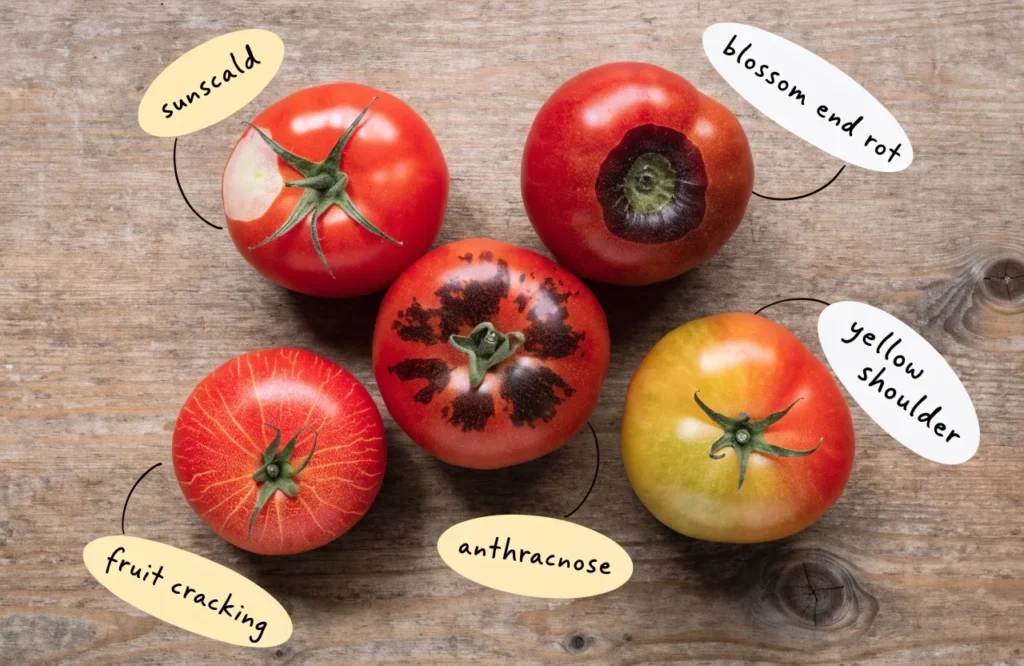
Several tomato issues produce similar discoloration, so correct identification matters before you decide on a fix.
| Condition | Where It Appears | Appearance | Root Cause | Preventable/Treatable |
|---|---|---|---|---|
| Sunscald | Side of fruit facing the sun (shoulder or mid-fruit) | Pale yellow/white/tan patch, papery or leathery texture, may blister | Sudden sun and heat exposure after leaf loss | Preventable; not treatable once present |
| Blossom End Rot | Bottom (blossom end) of fruit only | Dark brown to black, sunken, leathery spot | Calcium transport disruption, uneven watering | Preventable with consistent watering; not reversible on affected fruit |
| Anthracnose | Anywhere on ripe or ripening fruit | Small, sunken, circular lesions, often with concentric rings | Fungal infection, usually spread by splashing water | Preventable with fungicide/sanitation; spreads if untreated |
| Powdery Mildew Damage | Leaves primarily, occasionally fruit | White or gray powdery coating on foliage | Fungal disease favoring humid, still air | Treatable with fungicide and improved airflow |
| Yellow Shoulder Disorder | Top shoulder near stem | Firm, yellow patch that stays even when ripe | Low potassium, excess nitrogen, high heat | Manageable with balanced fertilization |
| Fruit Cracking | Top of fruit, radiating from the stem | Deep splits or fine concentric cracks in the skin | Irregular watering causing rapid internal swelling | Preventable with consistent watering; cracked fruit can still be eaten if harvested promptly |
Watering-related disorders in particular are worth understanding on their own terms, since blossom end rot’s causes and prevention overlap with, but aren’t identical to, sunscald’s.
Can You Eat Sunscalded Tomatoes?
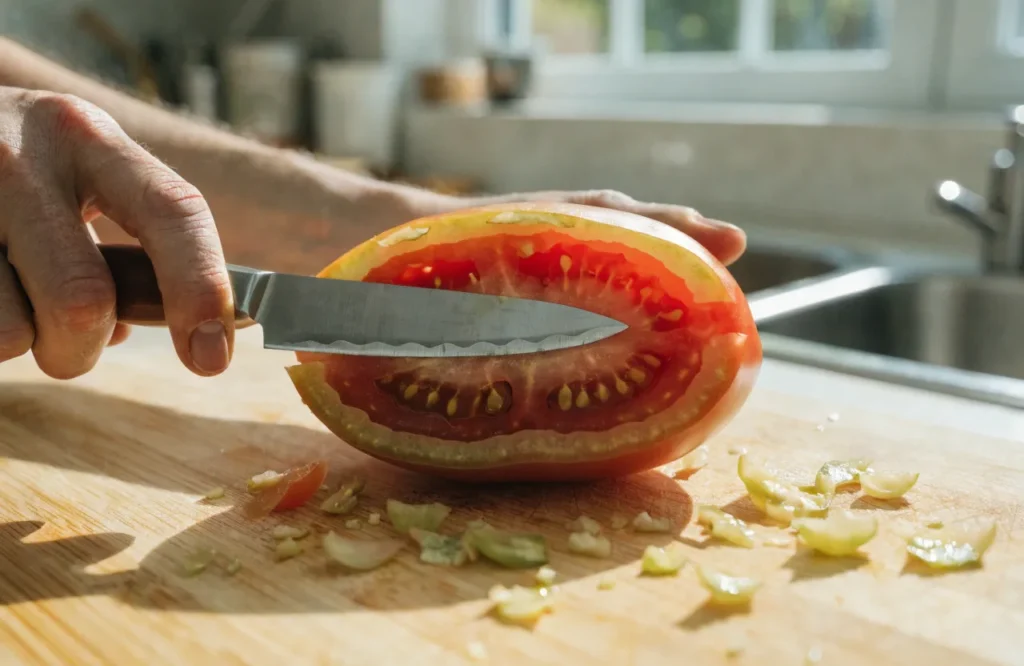
Yes, in most cases. Sunscald itself doesn’t make the fruit toxic, it’s a cosmetic and textural issue. Simply cut away the damaged, papery section and use the rest of the tomato as normal. The only exception is fruit that has developed soft rot, mold, or a foul smell where pathogens have moved in through the damaged skin; that fruit should be discarded.
How to Treat Tomato Sunscald
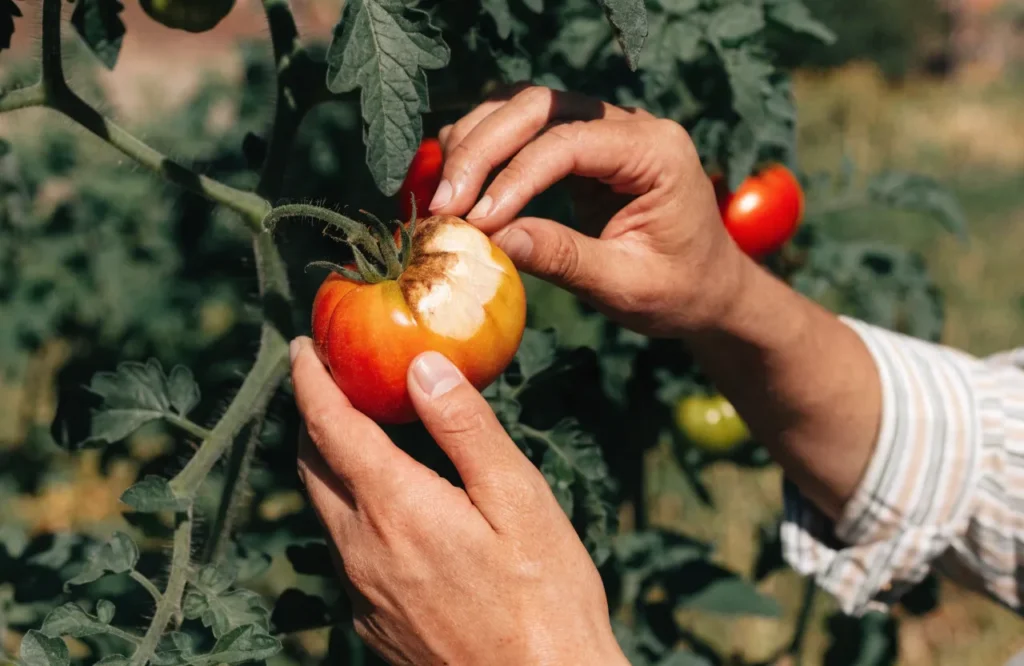
There’s no way to reverse damaged skin once sunscald has set in, the affected tissue is dead and won’t heal. But “treatment” at this point really means managing the fruit you already have and protecting what’s still developing:
- Don’t reflexively pull affected fruit. A tomato with a small, dry, intact sunscald patch is still ripening normally underneath. Leave it on the vine unless it’s rotting.
- Cut away the damaged skin at harvest. The rest of the fruit is unaffected and safe to eat (see “Can You Eat Sunscalded Tomatoes?” above).
- Increase shade for the rest of the plant immediately. If one fruit has scalded, others nearby are likely exposed too. Add shade cloth or reposition foliage right away rather than waiting for more damage to appear.
- Correct the underlying watering or drought stress. Inconsistent watering weakens the plant’s ability to maintain protective foliage, so it helps to check that your watering frequency matches conditions.
- Harvest exposed fruit early. If a tomato is badly scalded but still at the breaker stage, picking it and ripening it indoors avoids further sun damage.
- Remove fruit only if you see rot, mold, or a sour smell. At that point secondary infection has set in and the fruit should be discarded to keep it from affecting nearby tomatoes.
In short: you can’t treat the damaged skin itself, but you can stop the same fruit from getting worse and prevent the rest of your harvest from following the same path, which is where prevention becomes the real fix.
How to Prevent Sunscald: A Practical Action Plan
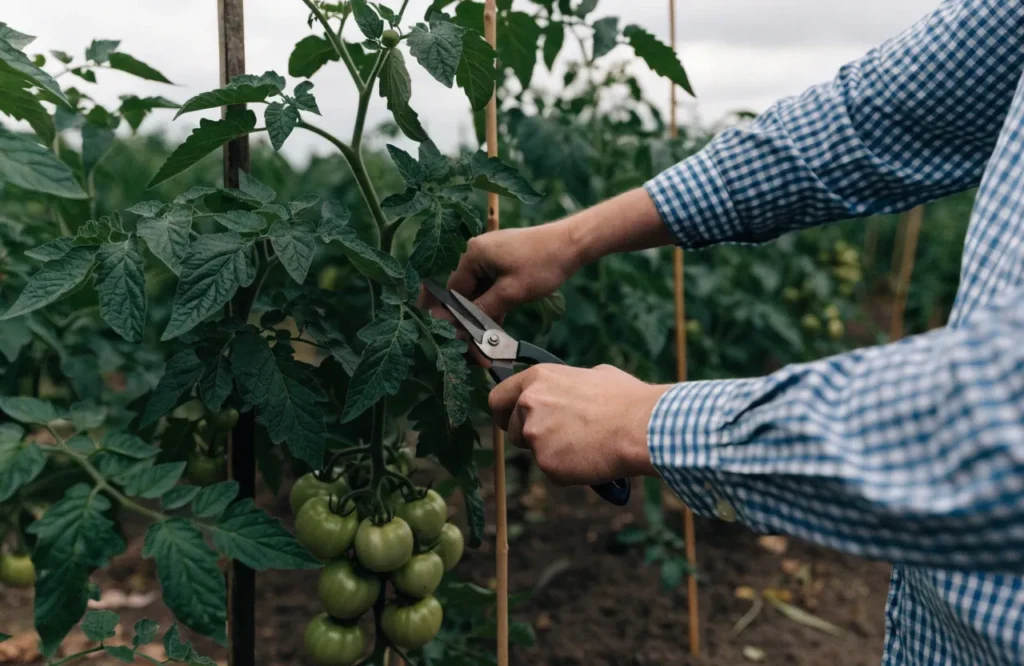
Because sunscald can’t be reversed once it appears, prevention is the only real strategy. Focus on keeping fruit shaded and the plant healthy throughout the season.
Preserve foliage cover. Avoid stripping leaves during hot spells, and keep at least one to two leaves above each fruit cluster. Leaves that are curling or thinning for other reasons may point to additional stress factors worth addressing separately.
Prune conservatively and at the right time. Do major pruning early in the season or on cooler, overcast days rather than during a heat wave, proper pruning timing and technique makes a real difference here.
Choose leafy, disease-resistant varieties. Cultivars with dense natural canopies and resistance codes (V, F, FW, LB, EB) hold onto their foliage longer. Among the best tomato varieties for this, it’s also worth weighing whether a determinate or indeterminate growth habit suits your climate and support system.
Support plants with cages, not bare stakes. A sturdy cage encourages fuller, bushier growth that naturally shades fruit better than a single stake, caging versus staking is worth comparing before you commit.
Water at the base, not overhead, and stay consistent. Drip irrigation and soaker hoses keep foliage drier, which helps reduce fungal disease pressure and supports steadier plant vigor. A consistent watering schedule is the backbone of this.
Build healthy soil and mulch to stabilize moisture. A layer of straw or shredded leaves over well-structured soil reduces drought stress, which helps plants maintain healthy leaf cover, it starts with soil that holds moisture well.
Stay ahead of pests and disease. Treat early blight, leaf spot, and hornworm damage promptly before defoliation becomes severe.
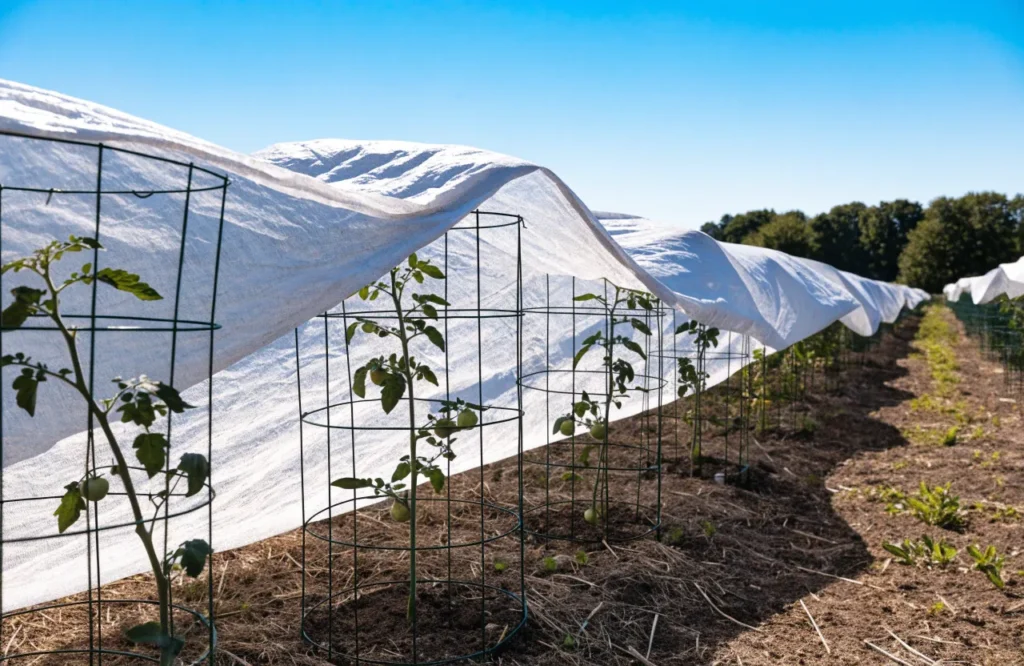
Use shade cloth strategically during extreme heat. A lightweight 30% shade cloth can protect exposed fruit without significantly reducing yield, but how you use it matters:
Deploy it only during the hottest part of the day (roughly 11 a.m.–4 p.m.), not around the clock.
Keep it loose enough to allow airflow around the plant rather than sealing it in.
Avoid fully enclosing the plant, which can trap heat and humidity and encourage disease.
Remove or reduce shading once the heat wave passes so the plant gets normal light again.
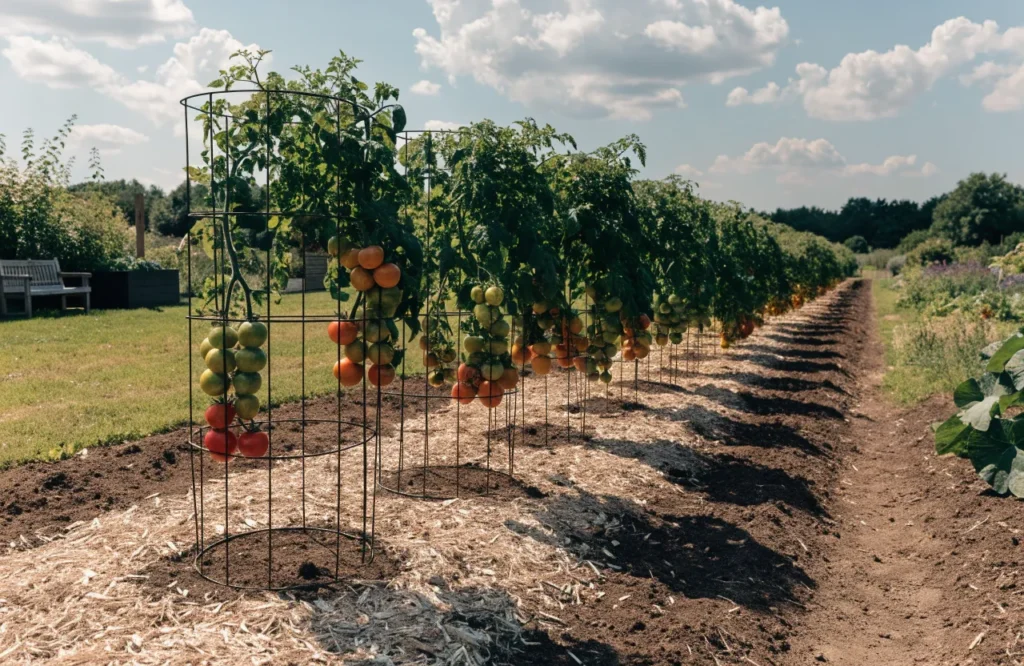
Space plants properly. Adequate spacing between plants allows them to shade each other’s lower fruit naturally, whether you’re growing in rows, raised beds, or containers.
Harvest slightly early during heat waves. Picking fruit at the breaker stage, one of the key tomato growing stages, and ripening it indoors avoids the riskiest final days on the vine. Fruit that seems to stall out instead may be dealing with separate ripening issues.
Interplant with compatible companions. Taller, airy companions can add dappled shade without crowding roots; certain companion plants help more than others.
Expert Tips From Experienced Growers
- Don’t confuse pruning for yield with pruning for looks. Removing too many “extra” leaves for a tidier plant is one of the most common causes of home-garden sunscald.
- Watch the sun’s angle, not just the forecast. Reflected light off fences, walls, or windows can scald fruit even on a mild day, reposition containers or add a temporary barrier if you notice a hot spot.
- Check both sides of the plant. Fruit on the west- or south-facing side of a row typically sunscalds first, inspect there before assuming your whole crop is affected.
- Log what works. Noting when and where sunscald appears each season helps you fine-tune spacing, pruning timing, and variety choice for the next year.
Tomato Sunscald Prevention Checklist
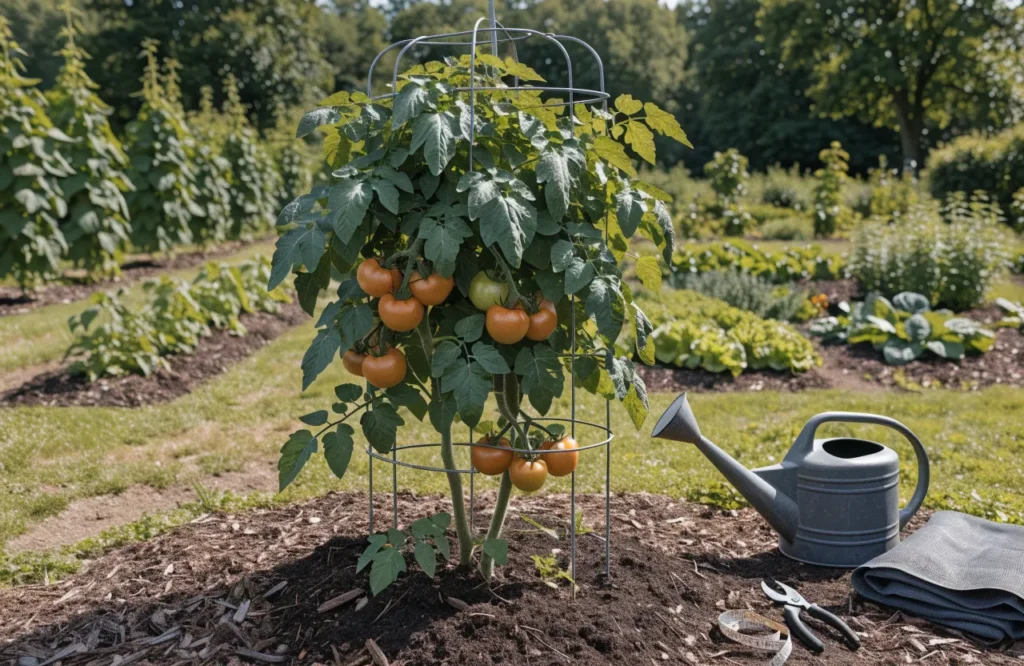
A quick-reference version of everything above:
- Keep leaves intact around fruit clusters
- Avoid aggressive or poorly timed pruning
- Choose leafy, disease-resistant varieties
- Use cages instead of bare single stakes
- Water consistently at the base, not overhead
- Mulch to stabilize soil moisture
- Control pests and disease before they cause defoliation
- Avoid sudden fruit exposure after major leaf loss
- Add shade cloth during peak heat hours only
- Maintain proper plant spacing
- Harvest breaker-stage fruit early during heat waves
Frequently Asked Questions
Does tomato sunscald spread from fruit to fruit?
No. Sunscald is not caused by a pathogen, so it cannot spread on its own. However, the damaged tissue can invite secondary infections like gray mold or soft rot, so badly affected fruit should be removed.
Is sunscald the same as blossom end rot?
No. Sunscald appears as a pale yellow, white, or tan patch on the sun-facing side of the fruit, caused by sudden sun and heat exposure after leaf loss. Blossom end rot is a dark brown to black sunken spot on the bottom of the fruit only, caused by calcium transport disruption from uneven watering.
What does sunscald look like on green tomatoes specifically?
On green or breaker-stage fruit, sunscald starts as a smooth, pale green or light-yellow patch on the shoulder. As it develops, the patch whitens or turns tan, flattens out, and feels thinner and drier than the surrounding skin.
Can shade cloth completely prevent tomato sunscald?
A lightweight 30% shade cloth used during the hottest part of the day (roughly 11 a.m.–4 p.m.) can protect exposed fruit, but it’s one part of a broader strategy. Preserving foliage cover, pruning conservatively, and choosing leafy varieties matter just as much.
Will removing sunscalded tomatoes help the rest of the plant?
No—removing sunscalded fruit doesn’t help the plant. A tomato with a small, dry, intact sunscald patch is still ripening normally underneath, so leave it on the vine. Only remove fruit if you see rot, mold, or a sour smell, which signals secondary infection.
Final Takeaway
Tomato sunscald is a heat- and light-exposure issue, not a disease, which means it responds well to attentive, preventive care rather than sprays or treatments. Keep your plants well-leaved, prune thoughtfully, water consistently at the base, and add temporary shade during extreme heat, and you’ll significantly reduce the chances of finding pale, papery patches on your harvest this season.