Why Is My Tomato Plant Wilting? 11 Causes & Fixes
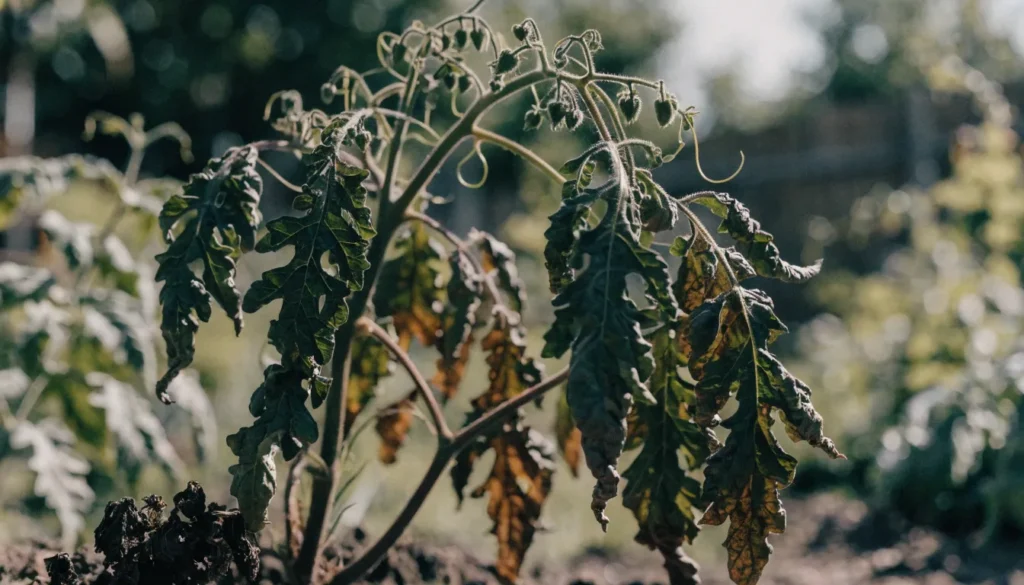
Tomato plant wilting is the loss of firmness in a plant’s leaves, stems, or entire canopy, causing it to droop, sag, or curl rather than remain upright and turgid. It happens when the plant’s cells lose water pressure, either because not enough water reaches the leaves or because it’s being lost faster than the roots can replace it.
Under normal conditions, tomato plants stay upright because their cells are full of water, a state called turgor pressure. When that balance is disrupted, by dry soil, waterlogged roots, extreme heat, transplant stress, or a pathogen physically blocking the plant’s internal water-delivery system, the cells lose pressure, and the plant visibly wilts.
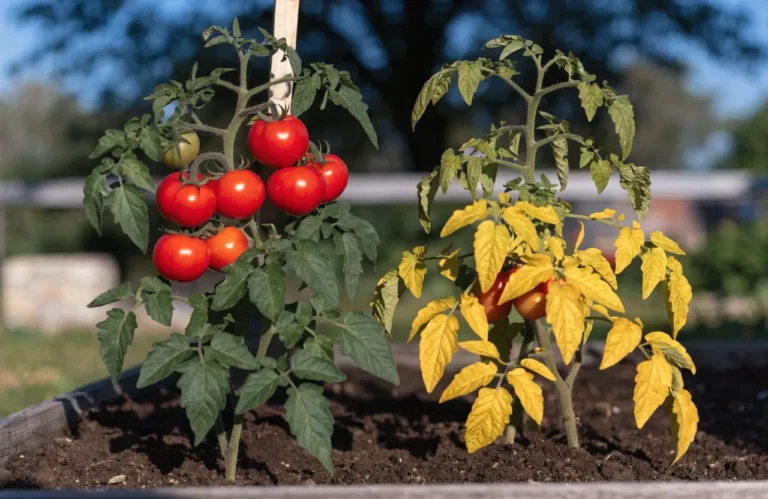
Wilting isn’t a diagnosis on its own; it’s a symptom with many possible causes, ranging from something as simple as a missed watering to a soil-borne disease with no cure. That’s what makes it confusing for gardeners: two tomato plants can look identically droopy while one just needs a drink of water and the other needs to be pulled and destroyed. The pattern of the wilting, how fast it happened, whether it’s paired with yellowing or spots, which part of the plant is affected first, and how the plant responds after watering, is what actually points to the cause. The sections below walk through how to read those clues and match them to the right cause and fix.
Table of Contents
Why Is My Tomato Plant Wilting?
The most common reasons a tomato plant wilts are underwatering, overwatering, heat stress, root damage, transplant shock, and soil-borne wilt diseases like Fusarium or Verticillium wilt. The fastest way to narrow it down is to check whether the soil is dry, wet, or normally moist, then look for supporting clues, yellow leaves, one-sided wilting, dark streaks inside the stem, or whether the plant recovers a few hours after watering.
How to Diagnose Tomato Plant Wilting Step by Step
Work through these checks in order, each one rules out or confirms a group of causes before you move to the next.
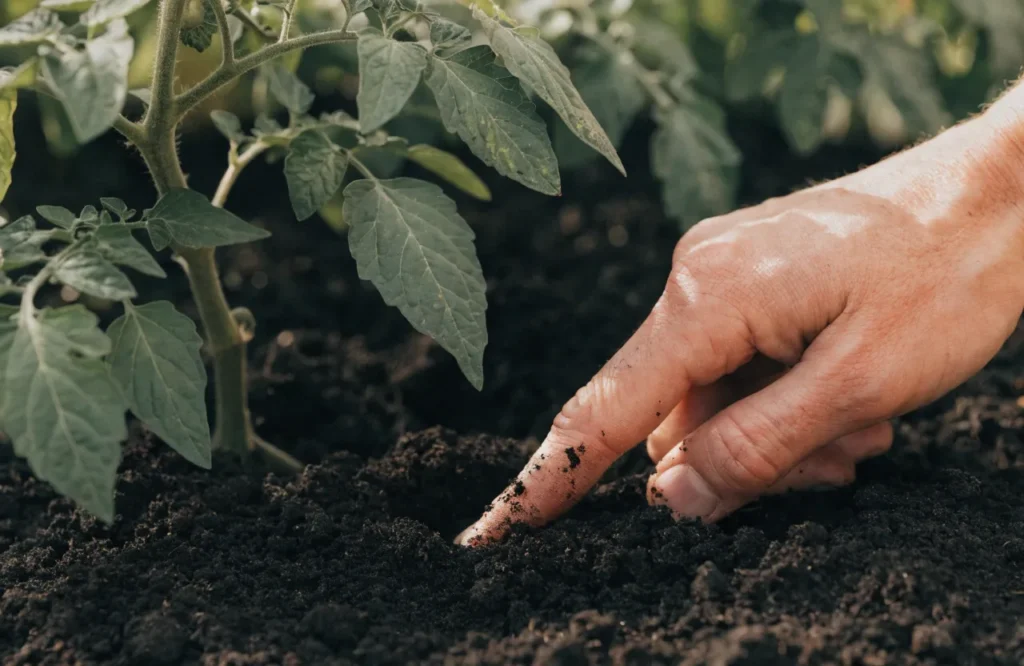
- Check the soil two inches down. Dry soil points toward underwatering. Wet, soggy soil points toward overwatering or root rot.
- Water deeply and check back in a few hours. A plant that visibly perks up is more likely dealing with a watering or heat issue. One that looks unchanged, despite already-moist soil, is more likely facing a root, pest, or disease problem.
- Look at which part of the plant is affected. Bottom-up wilting and yellowing suggests Verticillium wilt; one-sided wilting suggests Fusarium wilt; top-down wilting suggests tomato spotted wilt virus.
- Check for yellowing or spotting patterns. Yellowing paired with wilting is a strong signal of fungal wilt disease rather than a simple watering problem.
- Cut into a wilted stem near the base. Dark, watery, streaked, or hollow tissue inside points to a fungal or bacterial wilt disease, not an environmental cause.
- Inspect the stem and soil for pests. A small entry hole in the stem suggests a stalk borer; dark, mushy roots suggest overwatering or nematode damage.
- Factor in recent conditions. A heat wave in the last day or two, or a transplant within the last week, often explains wilting on its own without any disease involved.
Quick Answer + Diagnostic Table
If your tomato plant is wilting, check the soil first. Dry soil two inches down usually means simple underwatering, water deeply and the plant should perk up within hours. Wet, soggy soil points to overwatering or root rot. If the soil moisture is normal but the plant still droops, look for yellowing, one-sided wilt, or dark streaks inside the stem, these are signs of a fungal or bacterial wilt disease, which has no cure and requires removing the plant. Sudden droop right after transplanting is usually just transplant shock and resolves on its own within a few days.
| What You See | Most Likely Cause | What to Check | What to Do |
| Whole plant droops, soil dry | Underwatering | Soil moisture 2 inches down | Water deeply at the soil line |
| Droopy leaves, soil wet or soggy | Overwatering or root rot | Root color and drainage | Cut back watering; improve drainage |
| Wilts fast, yellowing on one side | Fusarium wilt | Stem cross-section, leaf pattern | Remove and destroy the plant |
| Bottom leaves yellow and drop in a V-pattern | Verticillium wilt | Lower stem discoloration | Remove and destroy the plant |
| Sudden total collapse, hollow/dark stem | Bacterial wilt | Cut stem near base | Remove and destroy the plant |
| Wilting top-down, ring-spotted fruit | Tomato spotted wilt virus | Fruit and upper foliage | Remove and destroy the plant |
| Droopy right after transplanting | Transplant shock / sun stress | Timing since planting | Shade and keep evenly moist |
| Wilts only in afternoon sun, recovers at night | Heat stress | Evening recovery | Shade cloth and mulch |
| Sudden collapse near a walnut tree | Walnut (juglone) toxicity | Distance to tree dripline | Relocate or use containers |
| Small hole in stem, wilted section above it | Stalk borer | Stem for entry holes | Remove damaged section or plant |
| Seedling collapses at soil line | Damping off | Stem color at soil line | Discard seedling; use sterile mix |
11 Common Causes of Tomato Plant Wilting (And How to Fix Each One)
A wilting tomato plant is one of the most common, and most alarming, problems gardeners run into, especially since tomato plant wilting can happen almost overnight. The good news is that most causes fall into two buckets: things you can fix (water, heat, transplant stress) and things you can’t (soil-borne fungi, bacteria, and viruses). Here’s how to tell them apart.
1. Underwatering
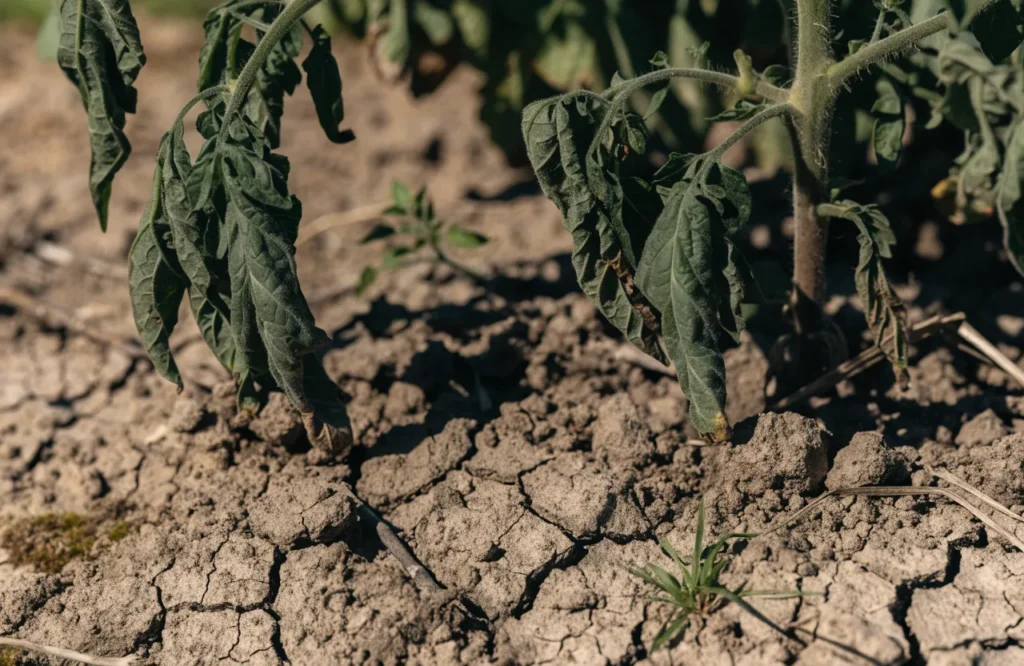
This is by far the most common and easiest cause to fix. Tomatoes often need around 1–2 inches of water per week, but actual needs vary with weather, soil type, plant size, and whether they’re grown in containers, so it’s better to check soil moisture than to water on a fixed schedule. When the plant can’t pull enough moisture from the soil, the leaves and stems droop to reduce water loss.
How to check: Push a finger into the soil near the base of the plant. If it’s dry two inches down, that’s your answer.
Fix: Water deeply and slowly at the soil line so moisture reaches the root zone, rather than a light surface sprinkle. Mulching around the base helps the soil hold moisture longer, and watering based on soil condition rather than a fixed calendar, as outlined in how often you should water tomato plants, prevents this from becoming a recurring issue.
2. Overwatering and Root Rot
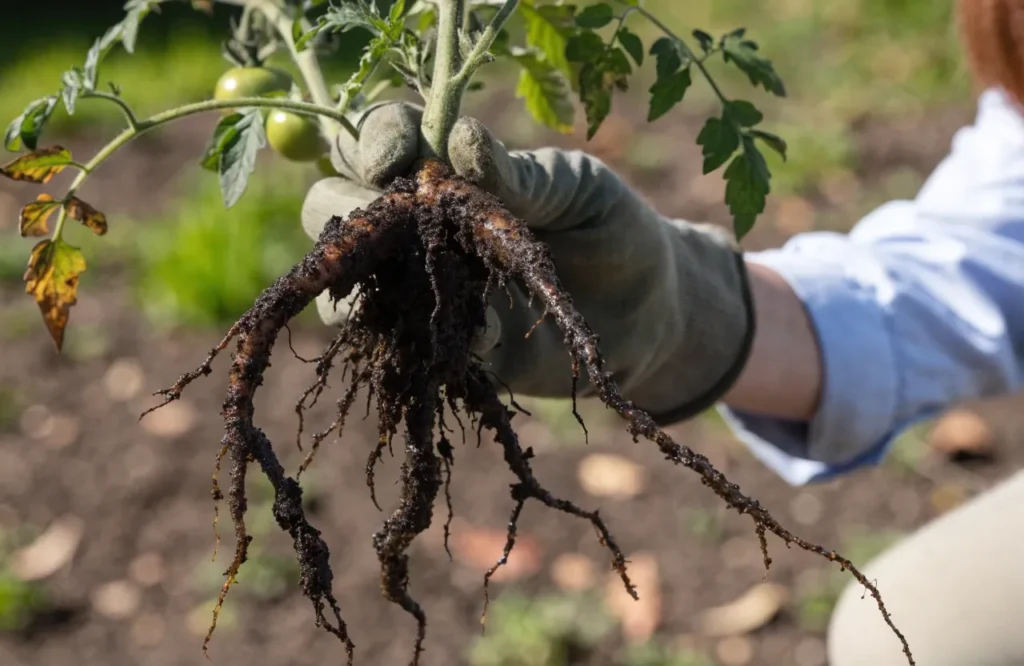
Too much water is just as damaging as too little. Waterlogged soil pushes oxygen out of the root zone, and roots start to suffocate and rot, which ironically causes the same drooping symptoms as underwatering, plus yellowing leaves.
How to check: If the soil is soggy to the touch and the roots (when dug up gently) look dark, mushy, or slimy instead of pale and firm, overwatering is the culprit.
Fix: Cut back on watering frequency and let the soil dry out. In severe cases, lift the plant into a container with fresh, well-draining soil and let the roots recover before replanting. Poor drainage is often the root cause here, and switching to a properly draining soil mix for tomatoes usually stops the cycle from repeating.
3. Fusarium Wilt
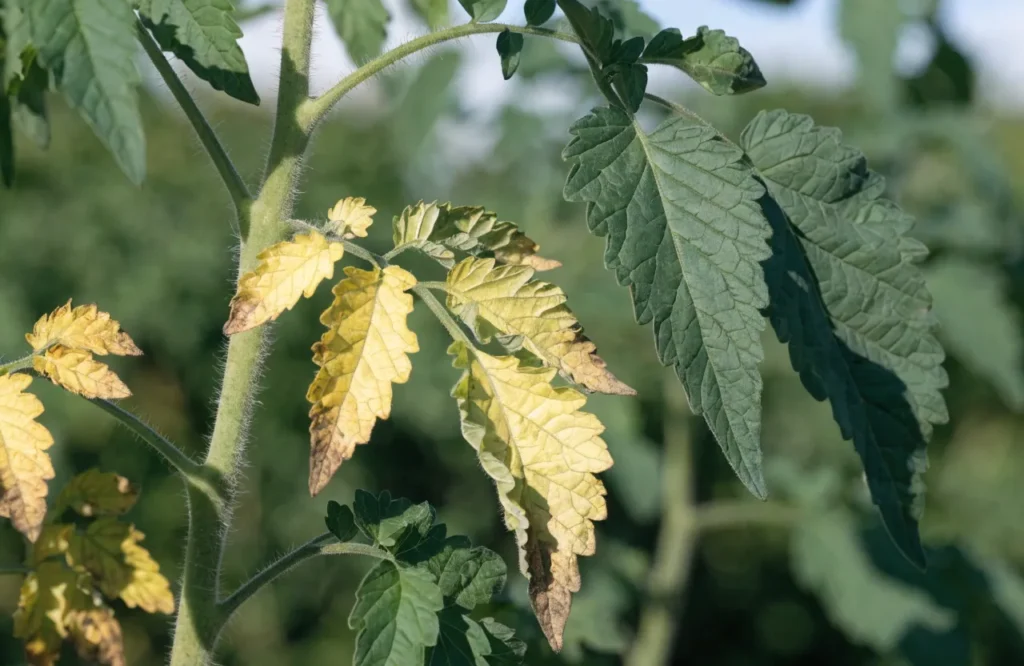
A soil-borne fungus that clogs the plant’s water-conducting tissue. It typically causes yellowing and wilting on one side or one branch first, spreading upward as the infection progresses, and it’s one of the more destructive tomato plant diseases a home garden can face because it lingers in soil for years.
Fix: There is no chemical cure. Remove and destroy the plant, avoid composting it, and rotate crops for at least one to two years. Look for tomato varieties labeled “F” (Fusarium-resistant) next season, several of the best tomato varieties to grow were bred specifically with this kind of resistance in mind.
4. Verticillium Wilt
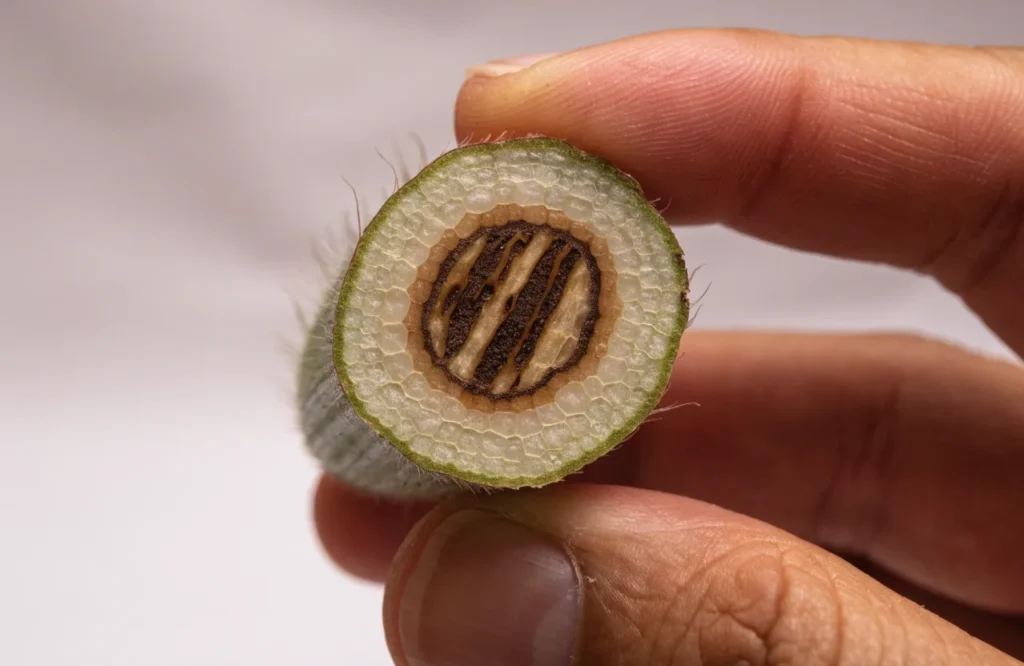
Another fungal disease, often confused with Fusarium wilt. It tends to move more slowly, thrives in cooler soil, and classically causes lower leaves to yellow and drop in a V-shaped pattern while the plant may droop by day and look fine at night.
Fix: Same as Fusarium, remove the plant, don’t replant nightshades (tomatoes, peppers, eggplants) in that spot for a year or two, and choose resistant varieties labeled “V” going forward.
5. Bacterial Wilt
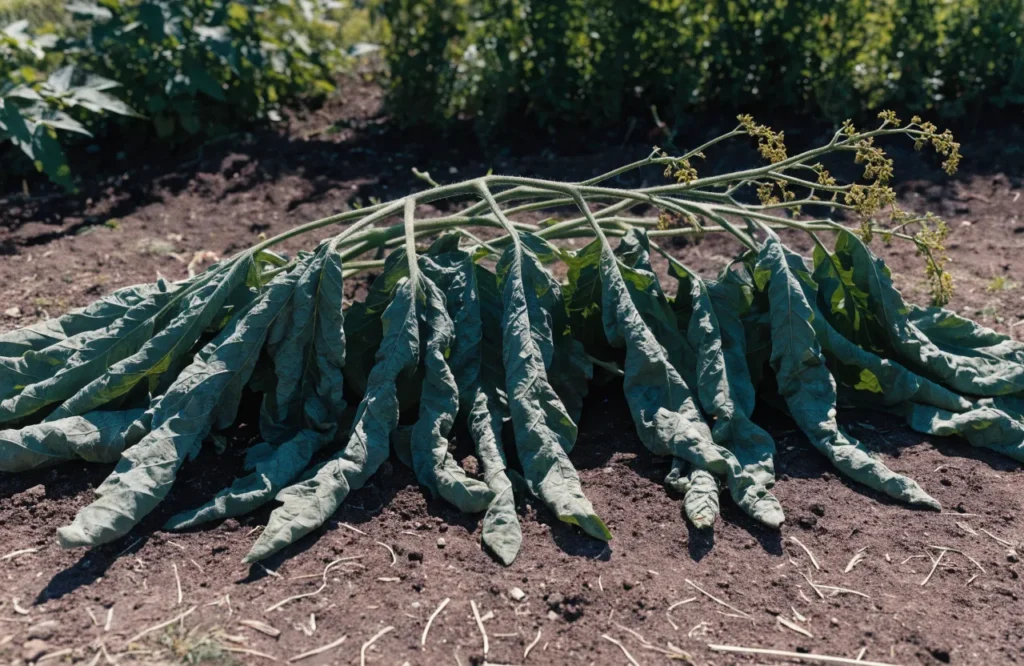
Caused by soil bacteria that enter through wounds in the roots or stem and block the plant’s internal plumbing. Symptoms progress fast, a healthy-looking plant can collapse within days, and a cut stem will often look dark, watery, or hollow inside.
Fix: No treatment exists. Remove the plant immediately, and be extra cautious in warm, wet conditions and high-pH soil, which favor this bacteria.
6. Tomato Spotted Wilt Virus (TSWV)
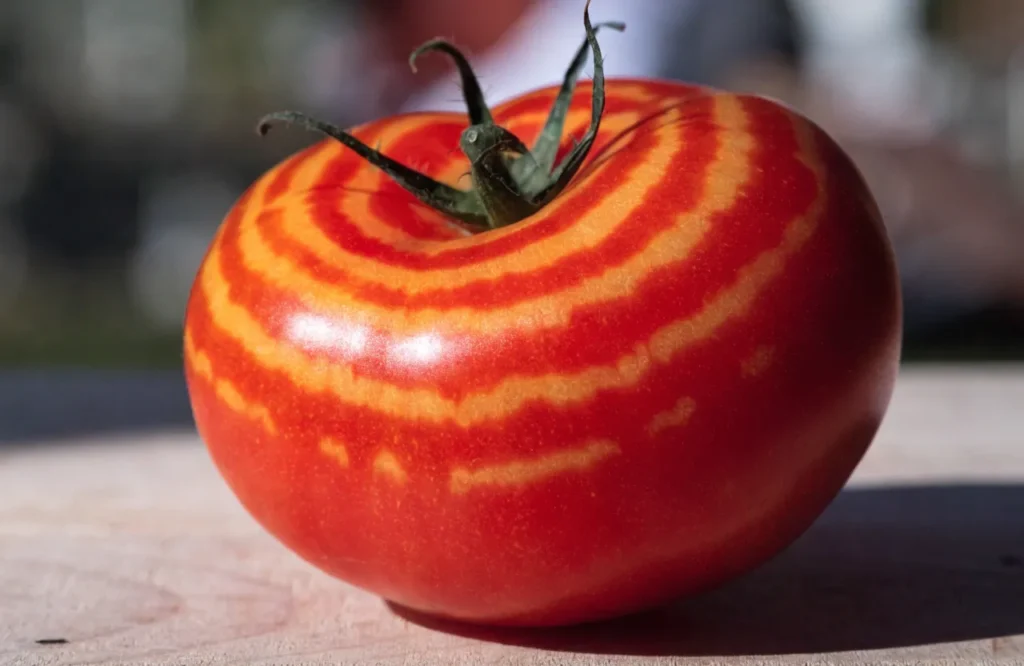
A virus spread mainly by thrips, causing top-down wilting along with stunted growth, bronzed or spotted leaves, and fruit marked with odd concentric rings.
Fix: No cure, pull and destroy infected plants. Prevention means controlling weeds (which harbor thrips) and planting TSWV-resistant hybrid varieties.
7. Walnut (Juglone) Toxicity
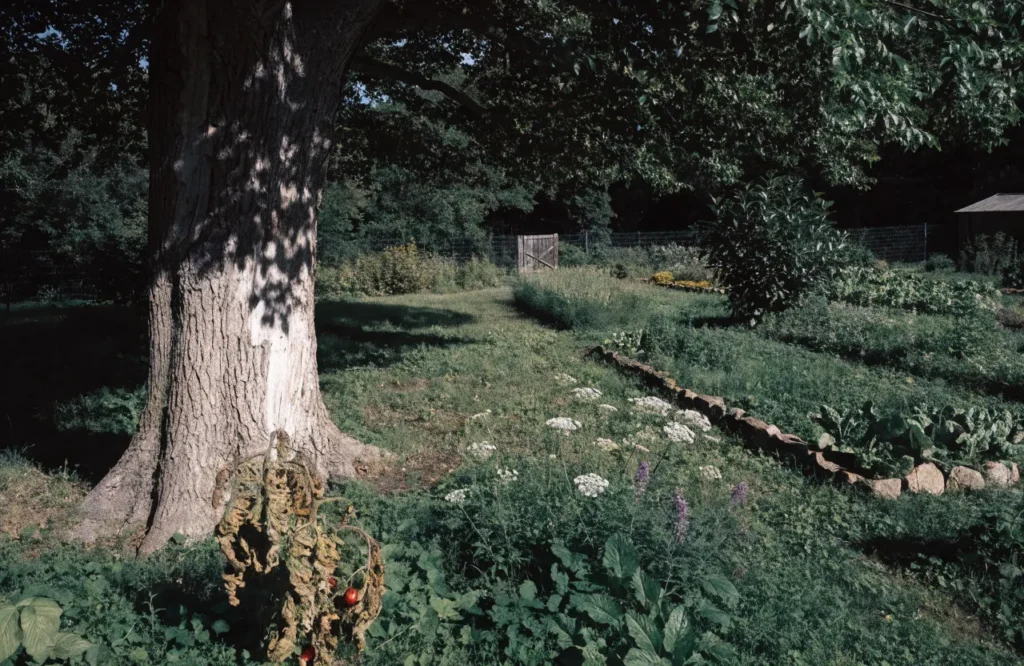
Black walnut trees release a compound called juglone that’s toxic to tomatoes. Plants growing within the tree’s root zone can wilt and die abruptly, while those a bit farther out may just look stunted and weak.
Fix: Keep tomatoes at least 20–25 feet from a black walnut’s dripline, and use containers with fresh soil if space is tight, juglone lingers in soil even after a tree is removed. Thinking through tomato companion plants at planting time helps avoid this and other bad-neighbor problems altogether.
8. Transplant Shock and Sun Stress
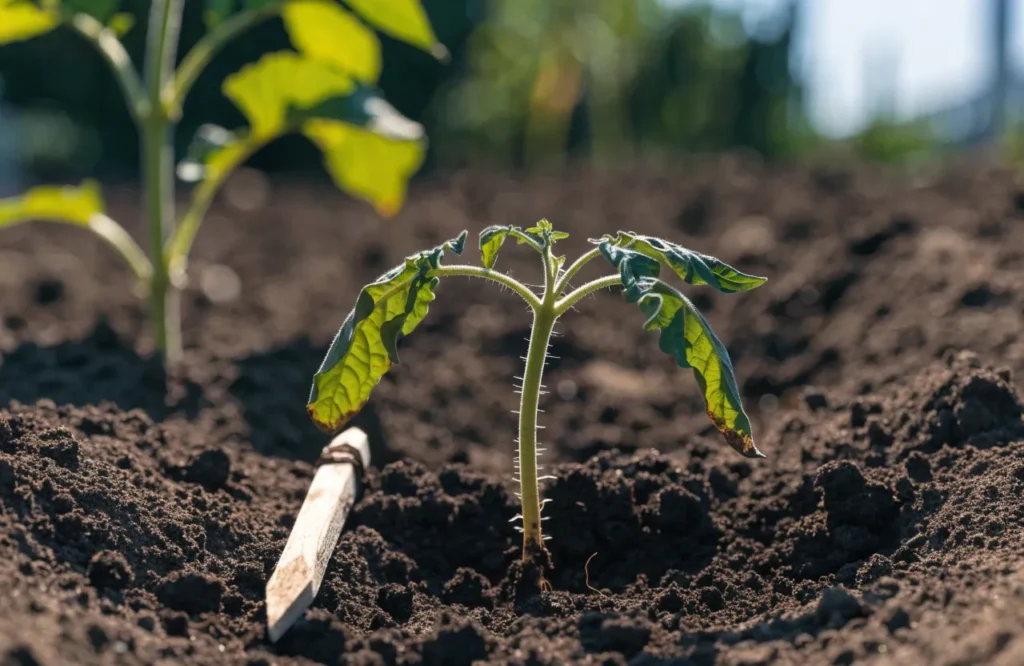
It’s completely normal for tomato plants to wilt shortly after being moved outdoors or repotted, the root system needs a few days to re-establish, and plants that weren’t gradually “hardened off” to direct sun often droop on their first day outside.
Fix: Keep the plant shaded and consistently moist for a few days. This usually resolves on its own without intervention, and it tends to be less severe when the plant was properly hardened off during the earlier tomato growing stages before it ever went into the ground.
9. Heat Stress
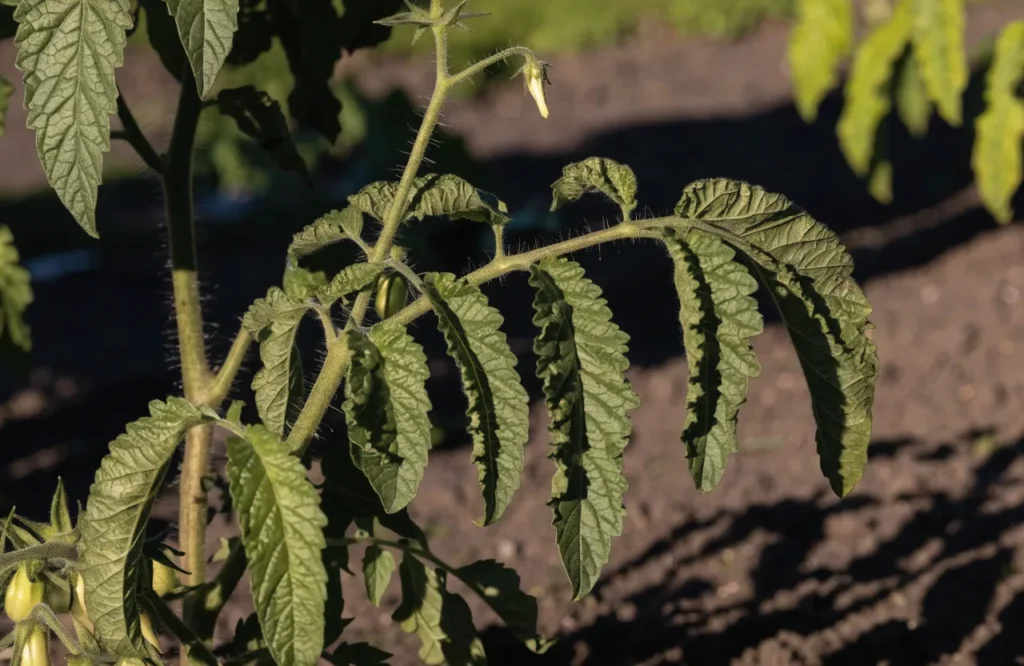
On very hot afternoons, tomato leaves curl and droop to cut down on water loss through the foliage, a defense mechanism, not necessarily a sign of a bigger problem, though it overlaps with several other triggers behind tomato leaves curling that are worth ruling out if curling is more pronounced than the wilting itself.
Fix: Resist the urge to overwater. Use shade cloth during heat waves and mulch to keep soil temperatures down; the plant typically bounces back once temperatures drop.
10. Root Damage, Pests, and Nematodes
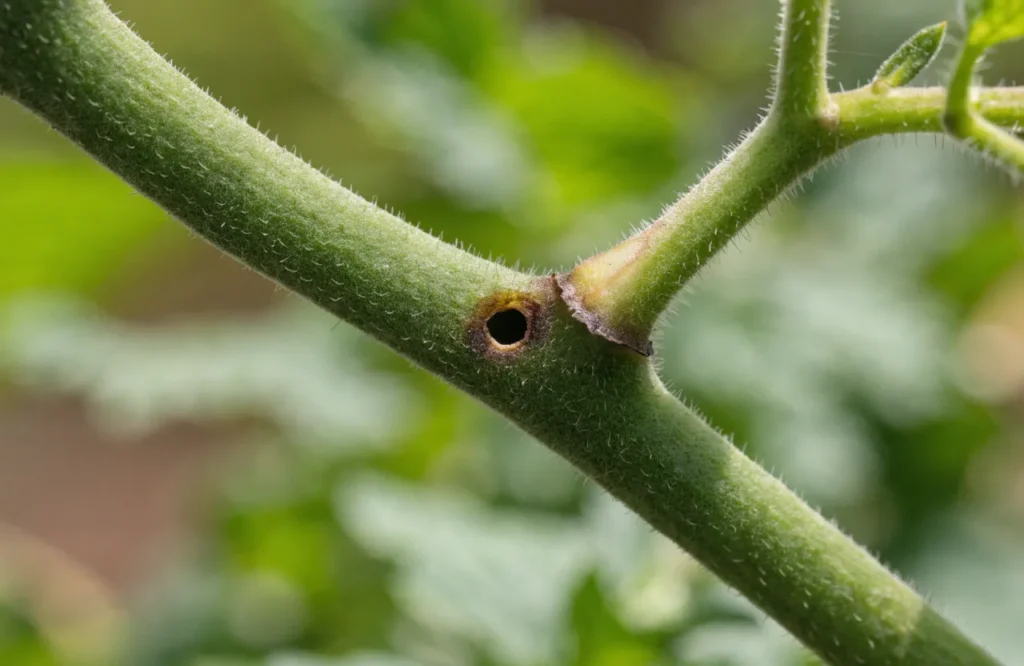
Aphids, root-knot nematodes, and especially the stalk borer (a caterpillar that tunnels into the stem) can all cause localized or whole-plant wilting by damaging the tissue that moves water through the plant.
Fix: Inspect the stem for a small entry hole if borers are suspected, no insecticide reliably reaches larvae once inside, so affected plants usually need to be removed. Keep weedy areas mowed to reduce pest pressure, and staking or caging plants keeps foliage up off the ground, which makes stem damage much easier to spot early.
11. Damping Off (Seedlings Only)
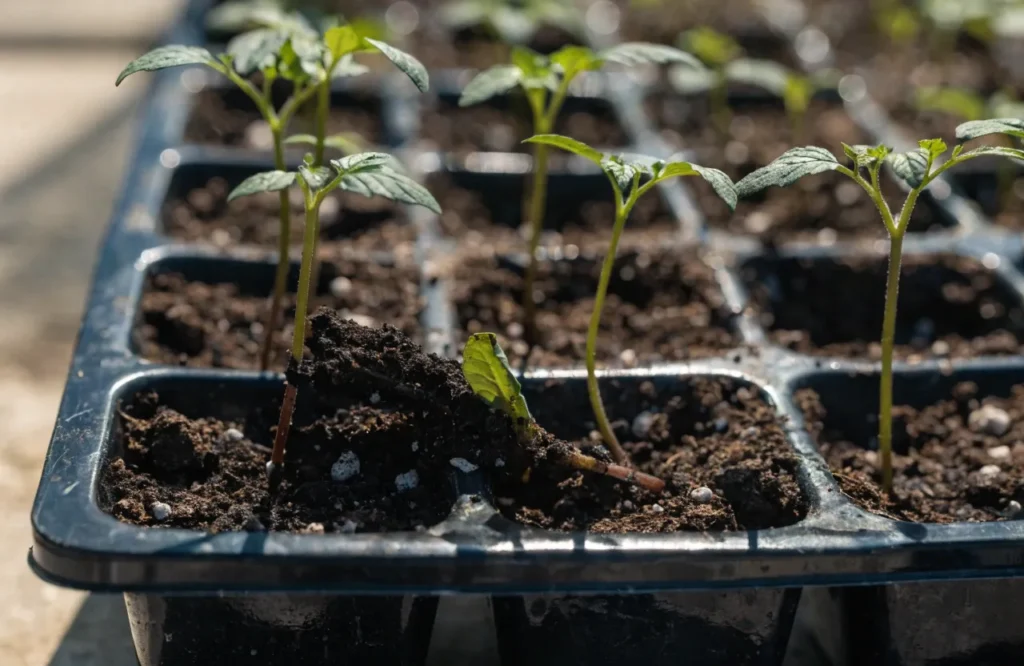
Young tomato seedlings that curl, wilt, and collapse right at the soil line, with a stem that turns water-soaked and gray or black, are affected by damping off, a fungal seedling disease.
Fix: Unfortunately, seedlings with damping off cannot be revived. Prevent it in future by using sterile seed-starting mix and avoiding overly wet, poorly ventilated conditions.
Expert Editorial Tip
From the garden editor’s desk: The single fastest way to narrow down a wilting tomato plant is the “recovery test.” Water the plant deeply, then check back in 2–4 hours. If it visibly recovers, underwatering or temporary heat stress becomes the more likely explanation. If it doesn’t recover and the soil was already adequately moist beforehand, that’s your cue to stop watering and start looking for disease signs instead, yellowing patterns, stem discoloration, one-sided wilt. Overwatering an already-diseased plant only accelerates root rot on top of the original problem.
How to Prevent Tomato Plants From Wilting
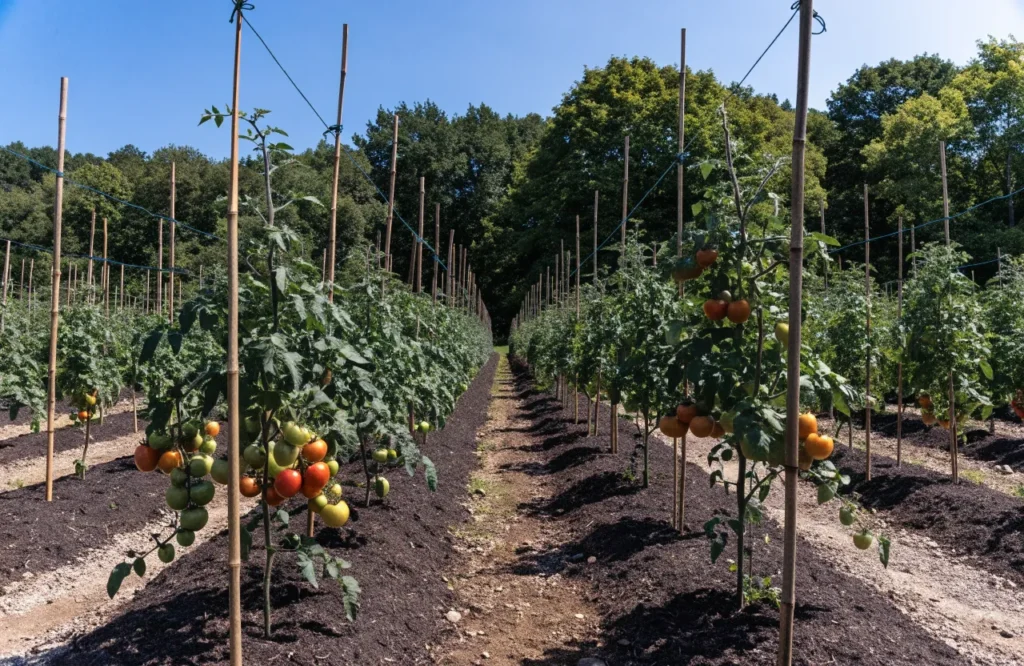
- Water consistently at the soil line rather than overhead, ideally in the morning so foliage dries before evening.
- Space plants properly with correct tomato spacing so air circulates freely and foliage dries quickly after rain or watering.
- Prune thoughtfully, pruning tomato plants the right way improves airflow without overexposing the plant to sun.
- Rotate crops each year, don’t plant tomatoes, peppers, eggplants, or potatoes in the same soil annually.
- Choose resistant varieties, look for “V,” “F,” or “TSWV” on plant tags, which indicate resistance to Verticillium, Fusarium, and spotted wilt virus.
- Feed appropriately, since both under- and over-fertilizing with the wrong tomato fertilizer can weaken a plant’s overall resilience.
- Mulch the base to regulate soil moisture and temperature.
- Keep the garden weed-free to reduce the insects (like thrips) that spread wilt viruses.
When to Remove the Plant
Not every wilting tomato plant is worth trying to save, and pulling a plant early is sometimes the better move for the rest of your garden. Remove the plant immediately, roots and all, if you see any of the following:
- Wilting paired with yellowing that starts on one side or one branch, a strong sign of Fusarium or Verticillium wilt, both incurable.
- A stem that’s dark, watery, streaked, or hollow when cut near the base, indicates bacterial wilt, which spreads fast through the rest of the plant.
- Wilting that starts at the top of the plant, along with ring-spotted or distorted fruit, points to tomato spotted wilt virus.
- White, fuzzy mold at the soil line, a sign of Southern blight, another untreatable soil fungus.
- No recovery at all several hours after a deep watering, despite the soil already being adequately moist beforehand, rules out a simple watering problem and points toward disease or serious root damage.
- A seedling that’s collapsed and blackened at the soil line, damping off is unrecoverable at that stage.
Don’t compost a removed plant, the fungi, bacteria, and viruses behind most incurable wilts can survive in compost and reinfect your garden later. Bag and discard it in household trash instead, then avoid planting tomatoes, peppers, eggplants, or potatoes in that same spot for at least one to two years to let any lingering pathogens die off.
If you’re unsure whether a plant has crossed the point of no return, the recovery test described earlier, water deeply and check back in a few hours, is the fastest way to find out before you commit to pulling it.
Frequently Asked Questions
Why is my tomato plant wilting even after watering?
If watering doesn’t bring quick relief, the cause is likely something water can’t fix—overwatering and root rot, or a disease like Fusarium wilt. Use the recovery test: water deeply and check back in a few hours; a plant that perks up was thirsty, while no recovery points to disease.
Why is my tomato plant wilting and turning yellow?
Wilting paired with yellowing is a strong signal of fungal wilt disease. Yellowing on one side or one branch points to Fusarium wilt, while bottom-up yellowing in a V-pattern suggests Verticillium wilt. Both require removing and destroying the plant.
Can wilted tomato plants recover?
It depends on the cause. Plants wilted from underwatering, heat stress, or transplant shock usually recover within hours of deep watering or shade. But wilting from Fusarium wilt, bacterial wilt, or TSWV is incurable—the plant must be removed and destroyed.
Tomato plant wilting after transplant—is that normal?
Yes, it’s completely normal for tomato plants to wilt shortly after being moved outdoors or repotted. Keep the plant shaded and consistently moist for a few days; this usually resolves on its own without intervention.
How do I know if my tomato plant has Fusarium wilt or just needs water?
Use the recovery test: water deeply and check back in a few hours. If the plant perks up, it was underwatering. If not, look for Fusarium signs—yellowing that starts on one side or one branch, and dark streaks inside the stem when cut near the base.
Other Tomato Problems Gardeners Often Confuse With Wilting
Not every tomato problem shows up as drooping foliage. Blossom end rot affects the fruit itself rather than the leaves, but it’s often triggered by the same inconsistent watering that causes wilting, so the two frequently show up together. Yellowing is another symptom worth separating on its own, wilting is only one of 18 possible reasons tomato leaves turn yellow, and most of the others have nothing to do with drooping at all. Heat stress in particular can cause more than wilting, the same high temperatures behind afternoon droop are also a leading reason behind tomato plants flowering but no fruit, so a plant that’s wilting through a heat wave is often struggling with fruit set at the same time. Container growing adds its own wrinkle, too: cherry tomatoes and other pot-grown plants dry out much faster than in-ground ones, which is covered in more depth in this guide to growing tomatoes in pots. Growth habit plays a role as well, determinate and indeterminate tomatoes respond differently to heat and transplant stress, with sprawling indeterminate varieties generally more prone to visible drooping under pressure. And once a plant has recovered and started producing again, knowing when to harvest tomatoes at the right ripening stage makes up for the stress it went through earlier in the season.
Have a wilting tomato plant right now? Start with the soil test in the diagnostic table above, it narrows the diagnosis in under a minute.