Tomato Plants Flowering But No Fruit? 7 Common Causes and How to Fix Them
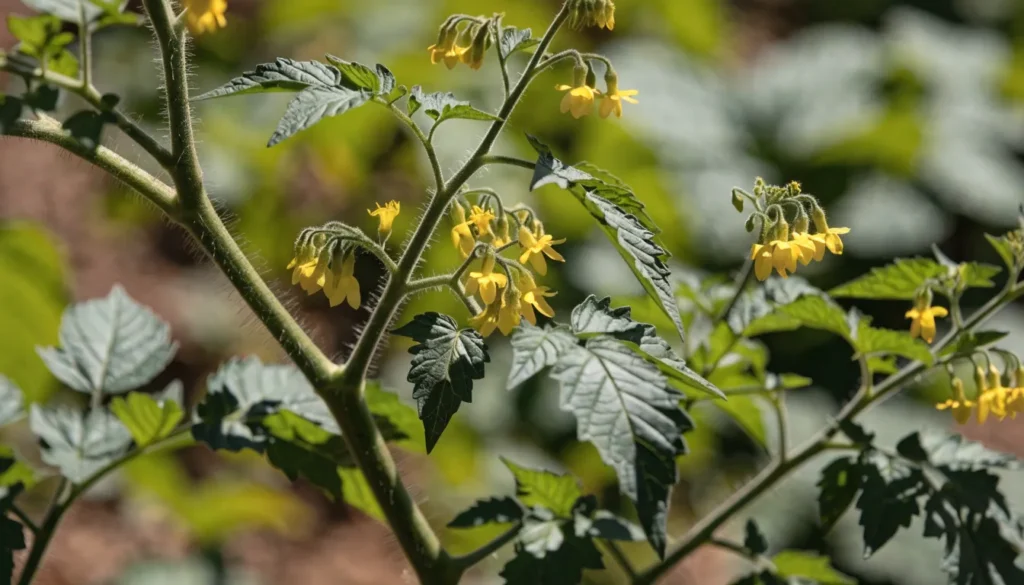
Quick answer: Tomato plants that flower but don’t fruit are usually dealing with one of a few things: poor pollination, temperature or humidity extremes, an imbalance of nutrients, inconsistent watering, too little light, or pest and disease pressure. Most of these are fixable within one to two weeks once you identify which one is affecting your plants.
If your tomato plants are flowering but no fruit is forming, you’re dealing with one of the most common, and most fixable, problems in the vegetable garden. Tomato plants flowering but no fruit can result from poor pollination, extreme temperatures, humidity problems, nutrient imbalance, inconsistent watering, insufficient sunlight, or pest and disease pressure. This guide explains exactly why it happens, how to identify the cause, and what you can do to help your plants start setting fruit.
Table of Contents
How Long Does It Take for Tomatoes to Form After Flowering?
After a flower is successfully pollinated and fertilized, the ovary at its base typically begins swelling within just a few days, and you can usually spot a tiny green tomato within about 5 to 10 days. Full-size ripe fruit takes much longer, often 20 to 60-plus days from that point, depending on the variety and growing conditions, which you can track more closely through the different tomato growing stages from seed to harvest.
If a flower has been open for well over a week with no swelling at the base, fruit set has failed. That’s usually where the diagnosis needs to start.
How to Tell Whether a Tomato Flower Actually Set Fruit
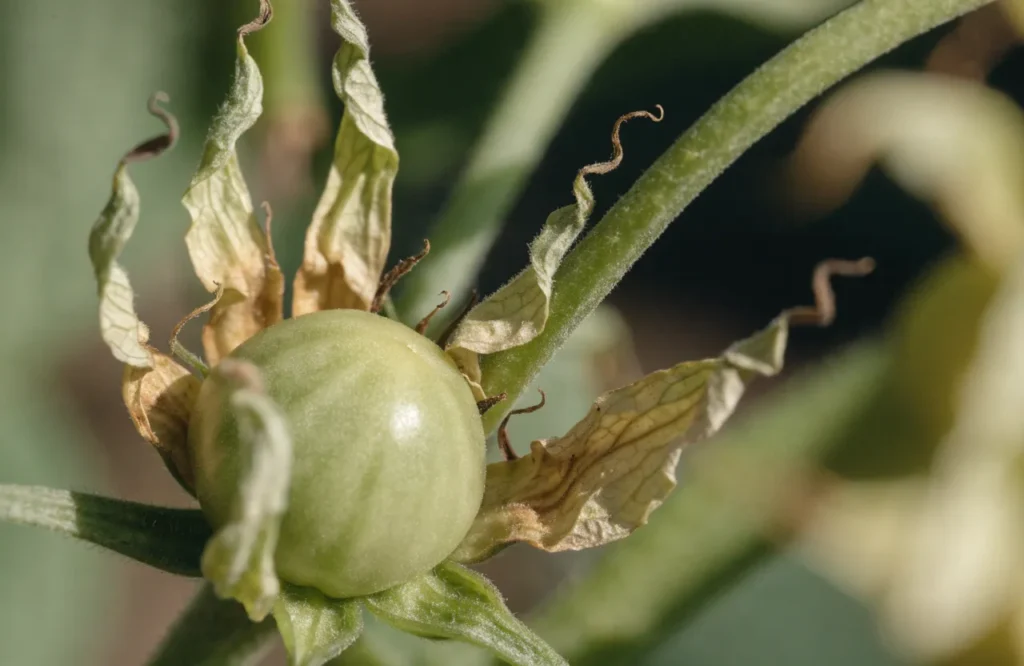
Petals drying up and falling off isn’t automatically bad news, that’s the normal next step after successful pollination. The key is what’s happening underneath them. Look at the base of the flower, just behind the petals:
- Swelling, thickening base: Fruit set succeeded, a tomato is forming.
- Flat, unchanged base, then the whole flower drops: Fruit set failed. Poor pollination is one likely cause, but temperature stress, nutrient stress, or disease can prevent fruit development even when pollen was transferred.
- Flower stays open far longer than usual with no change: Pollination likely hasn’t happened yet, check pollinator activity and weather conditions.
Why Are Tomato Plants Flowering But No Fruit Is Forming?
If you’ve been asking yourself why won’t my tomato flowers set fruit even though the plant looks otherwise healthy, the explanation usually falls into one of the categories below.
1. Poor Pollination
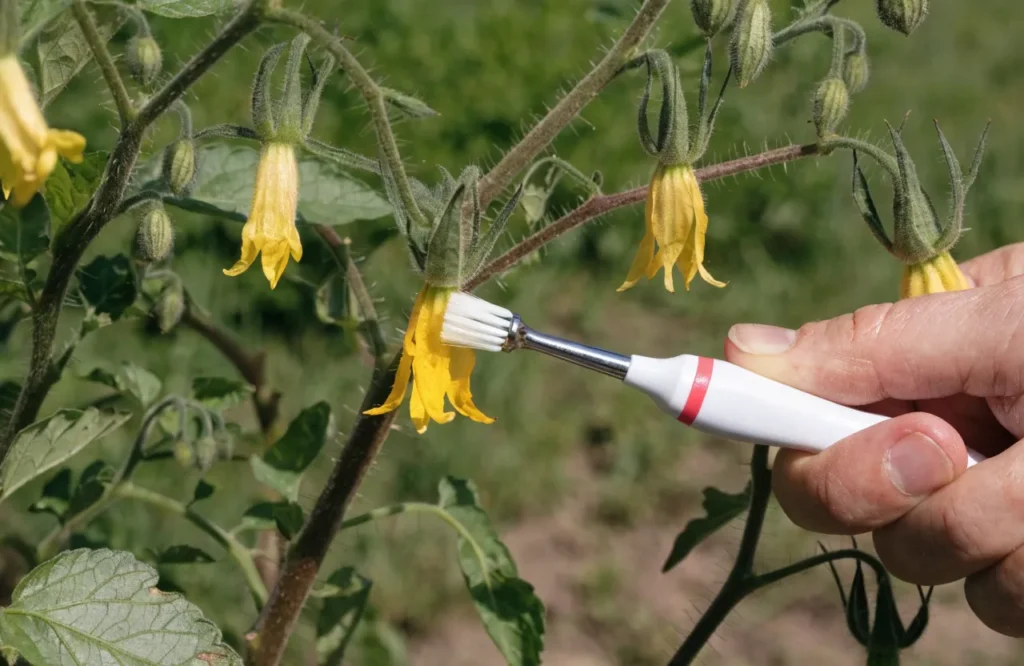
Tomatoes are generally self-fertile, a single flower contains both the pollen-producing anthers and the female stigma. But that pollen still has to be released and moved within the flower, which typically happens through vibration. Buzz-pollinating bees are especially effective at this, and wind or a gentle shake can help too.
It’s worth noting that a lack of bees isn’t always the main culprit, especially outdoors. Temperature and humidity extremes can prevent pollen from being released or from functioning properly even when pollinators are present and active.
If your tomato plants are flowering but no fruit is setting, start by checking pollination and temperature.
2. Extreme Temperatures
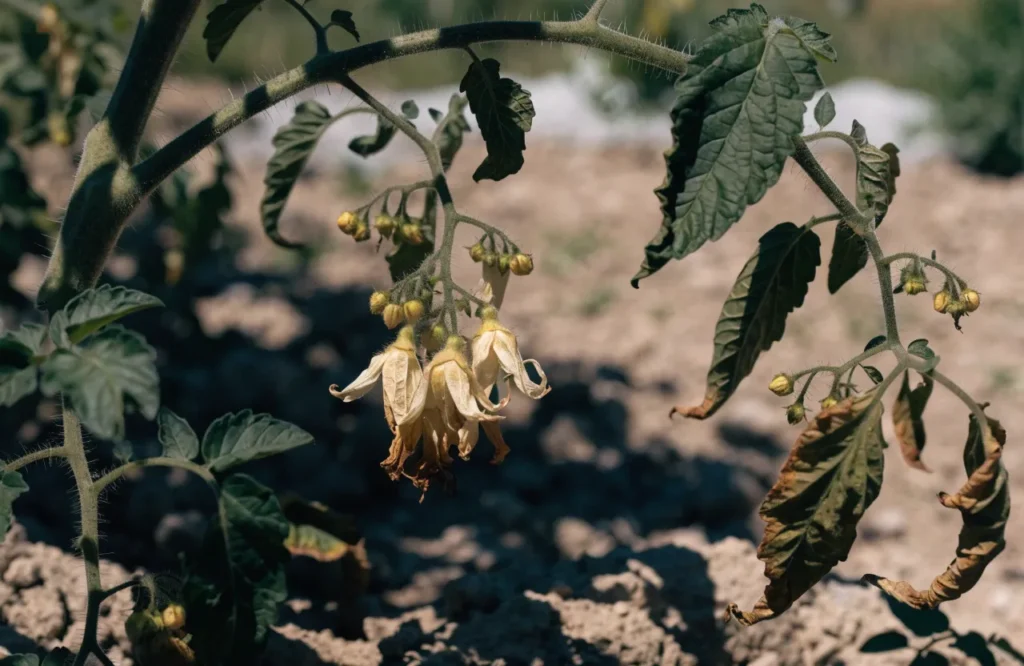
Tomato plants set fruit most reliably in daytime temperatures between roughly 70°F and 85°F (21–29°C). Once things get too hot, too cold, or nights stay unusually warm, pollen viability and release both suffer:
| Condition | Likely effect on fruit set |
|---|---|
| Daytime consistently above ~90°F (32°C) | Reduced pollen viability |
| Nighttime temperatures above ~75°F (24°C) | Poor fruit set even with mild days |
| Nighttime temperatures below ~55°F (13°C) | Slow or failed fruit set |
| Prolonged cool, overcast weather | Reduced pollination and pollen release |
Heirloom varieties tend to be more sensitive to these swings than modern hybrids, so the same weather can affect neighboring plants differently.
3. Humidity Problems
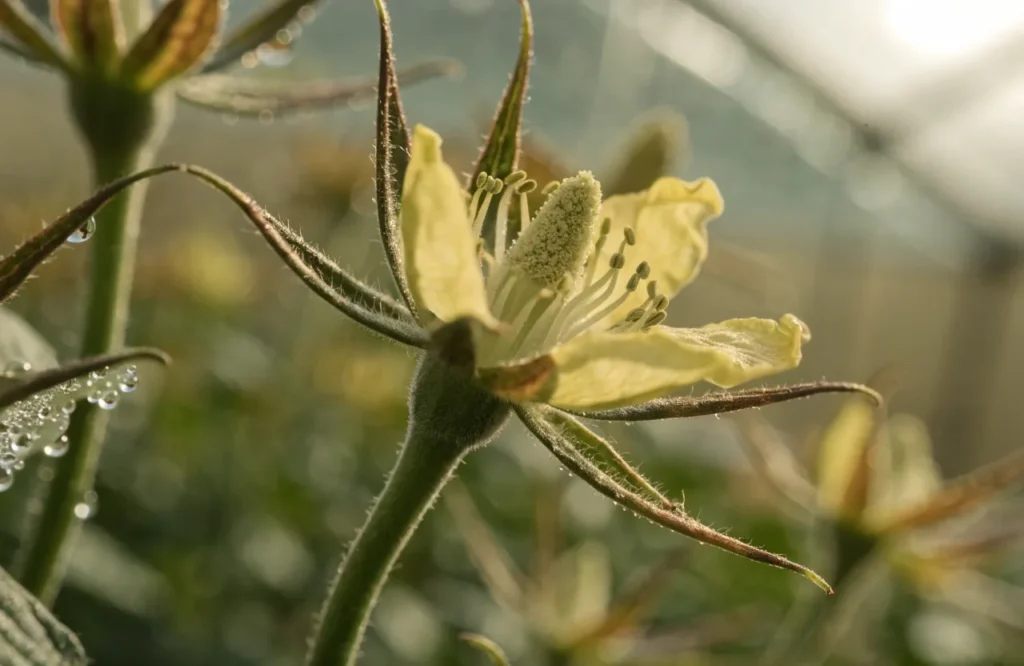
Relative humidity between about 40% and 70% tends to work best for tomato pollination. Above that range, pollen can become sticky and clump together instead of transferring cleanly. Below it, pollen dries out and often won’t stick to the stigma at all, either extreme can leave a healthy-looking plant with flowers but no fruit.
4. Nutrient Imbalance (Especially Excess Nitrogen)
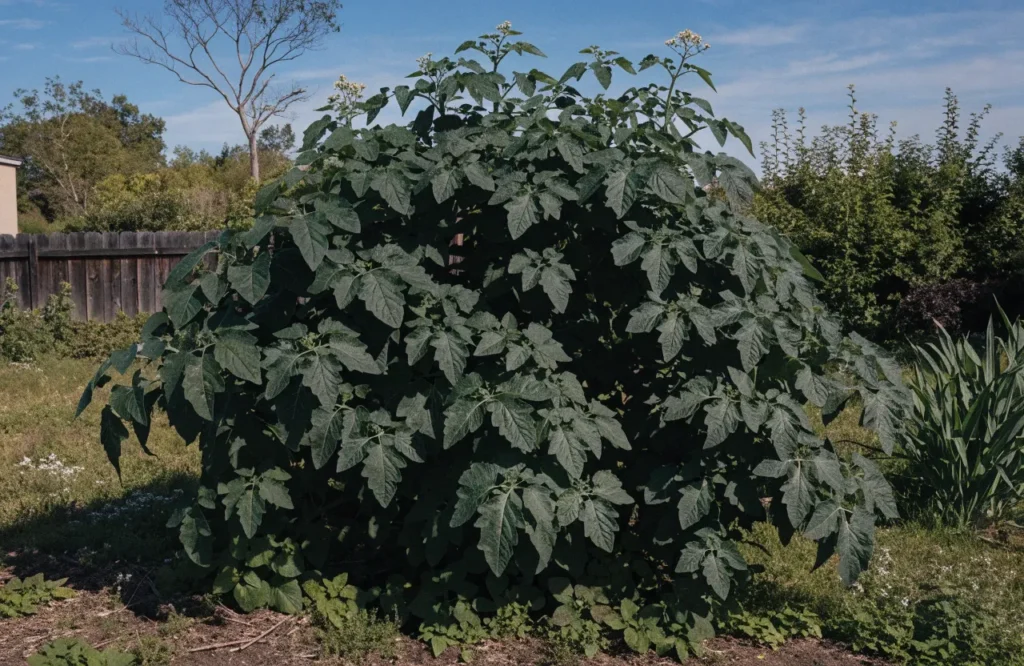
A fertilizer that’s too heavy in nitrogen tends to push a tomato plant toward lush leafy growth at the expense of flowering and fruiting, one reason plants with nitrogen-related issues often show unrelated symptoms too, including yellowing leaves from an out-of-balance root zone.
That said, more phosphorus isn’t an automatic fix, and dumping on a “bloom booster” without knowing what’s actually missing can create new problems. If you’ve been feeding heavily with a high-nitrogen product, pause or scale it back and avoid adding more until you’ve identified the real issue. A balanced, tomato-appropriate fertilizer is genuinely useful when nutrients are lacking, but excess fertilizer of any kind is not a reliable cure for poor fruit set on its own, starting with healthy soil for tomatoes and adjusting from there, guided by an actual soil test where possible, gives more reliable results than guessing at a ratio. For a fuller breakdown of what tomatoes actually need at each stage, see this guide to fertilizing tomatoes.
5. Inconsistent Watering
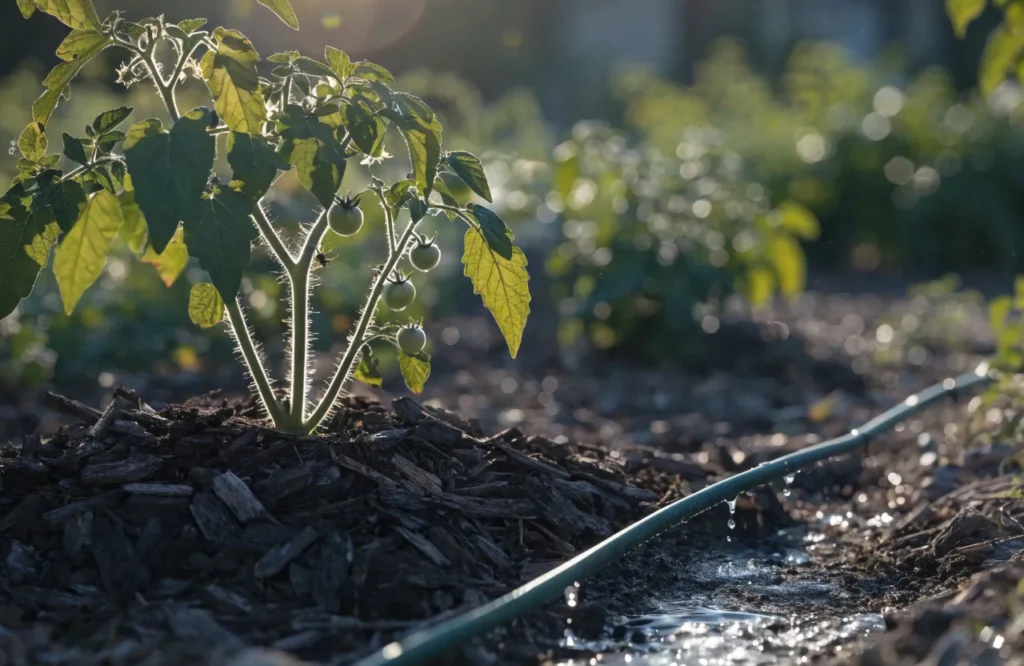
Both overwatering and underwatering stress tomato plants enough to trigger blossom drop, and irregular watering is also a leading contributor to blossom end rot once fruit does form, since swings in soil moisture interfere with calcium uptake. Fixed watering schedules don’t work equally well for every setup, which is worth keeping in mind when deciding how often to water tomato plants rather than watering on autopilot.
6. Insufficient Sunlight
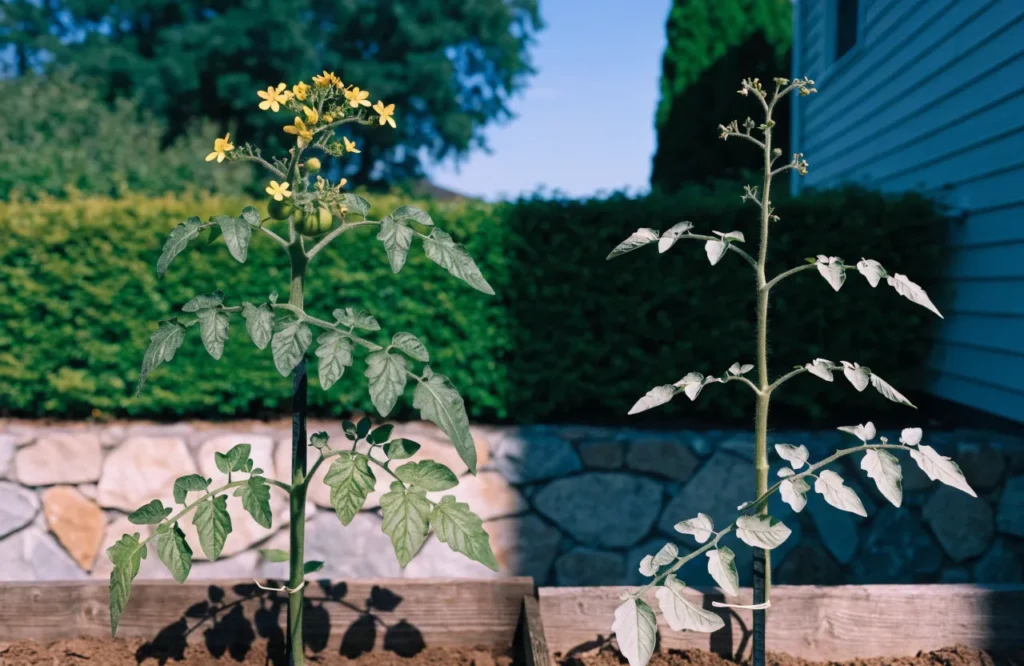
Tomatoes generally need at least 6 to 8 hours of direct sun a day to fuel fruit development. Plants in partial shade may still flower, but they often lack the energy reserves to carry those blooms through to fruit. Overcrowded plantings compound the problem by blocking light between neighbors, proper tomato spacing helps both light penetration and airflow.
7. Pests and Disease
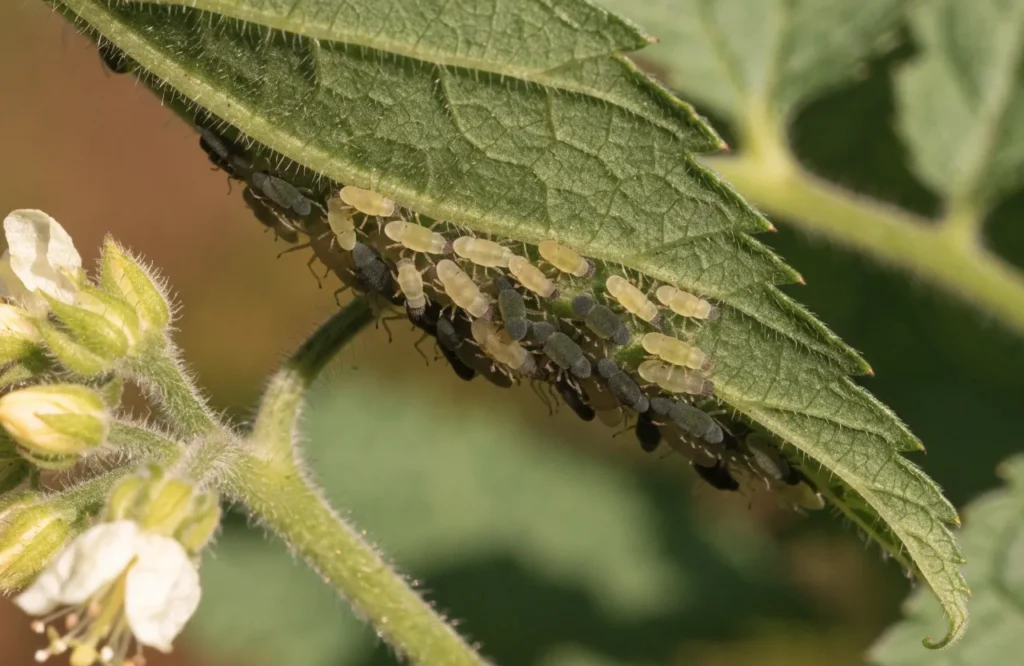
Pest and disease pressure on tomato plants isn’t one uniform problem, it helps to separate what’s actually being affected. Aphids and similar pests damaging leaves reduce the plant’s overall energy reserves; pests or disease affecting the flowers directly can cause blossom drop before pollination even has a chance; and fungal issues can cause outright flower blight in humid conditions. A broader look at tomato plant diseases can help narrow down what you’re seeing. Inspect flowers, stems, and leaf undersides regularly, identify the specific problem before treating it, and avoid spraying open flowers during peak pollinator activity if treatment is needed.
Quick Diagnosis: What Your Tomato Flowers Are Telling You
Healthy-looking tomato plants flowering but no fruit often point to a fruit-set problem, so the appearance of the flowers can help narrow down the underlying cause.
| What you see | Most likely problem |
|---|---|
| Healthy flowers, no swelling at the base | Pollination or environmental stress |
| Flowers drop suddenly, plant otherwise looks fine | Heat, cold, or watering stress |
| Large, leafy plant with relatively few flowers | Excess nitrogen |
| Flowers are damaged, spotted, or discolored | Pest damage or disease |
| Flowers open normally but shrivel without swelling | Failed fruit set |
| Tiny fruit starts forming, then drops | Severe stress or limited resources |
How to Fix Tomato Plants Flowering But No Fruit
- Hand-pollinate during pollinator lulls. Gently tap or shake each flower truss to loosen pollen, or hold a small vibrating electric toothbrush just behind an open flower for a second or two, this mimics buzz pollination and is usually the most reliable manual method. Repeat every day or two while conditions are poor. Planting flowers nearby to draw in more bees can also help outdoor plants over the rest of the season, and a few tomato companion plants are specifically useful for attracting pollinators.
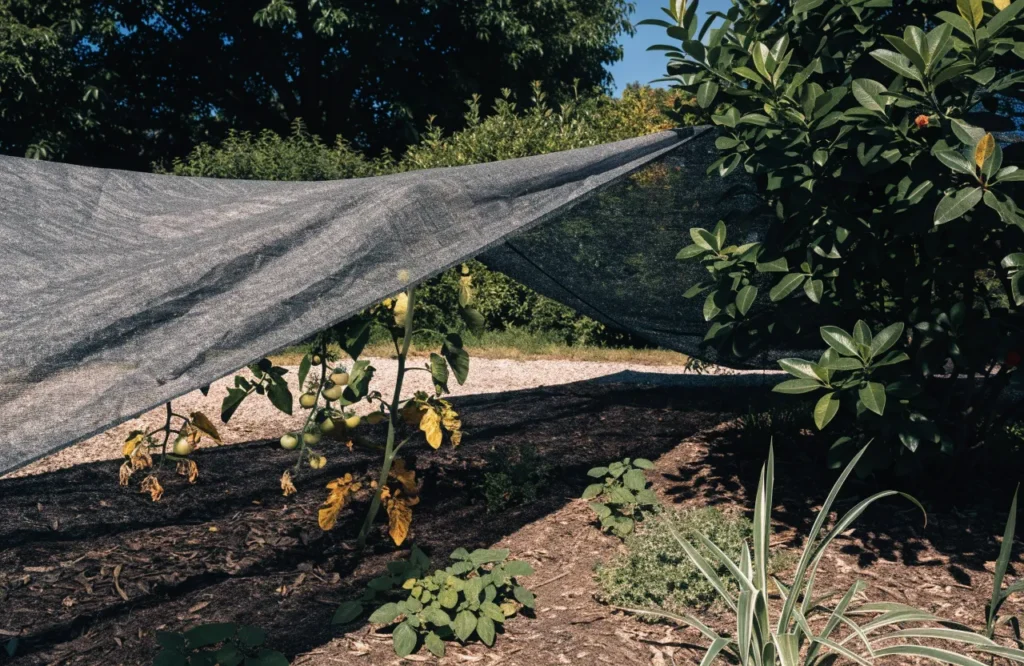
- Buffer against temperature extremes. During a heat wave, a shade cloth or light row cover over the hottest side of the planting can knock several degrees off the ambient temperature. During cold snaps, cover plants overnight or bring containers in if that’s an option.
- Rebalance feeding rather than adding more. Reduce or pause nitrogen-heavy feeding, and only add phosphorus or potassium if a soil test or clear deficiency symptoms point that way.
- Water based on your setup, not a fixed rule. In-ground plants generally do best with deep watering once the soil has begun drying several inches down, rather than frequent shallow watering. Container plants dry out much faster and may need checking daily in hot weather, worth keeping in mind for anyone growing tomatoes in pots, since the same schedule that works in a raised bed can easily underwater a container. Mulching the base of the plant helps either way by evening out soil temperature and moisture.
- Maximize light without over-pruning. Position container plants in full sun and avoid overcrowding in-ground plantings. Remove only excessive, diseased, or clearly non-productive growth, stripping large amounts of healthy foliage can stress the plant and expose developing fruit to sunscald. If you do prune, these tomato pruning steps outline how to do it without overdoing it, and it’s worth knowing the signs of tomato sunscald so newly exposed fruit doesn’t get damaged in the process.
- Address pests and disease early. Check plants weekly, identify what you’re actually dealing with before treating, and follow product labels carefully rather than spraying broadly.
- Give it time. Even after conditions improve, it often takes one to two weeks for a stressed plant to resume normal flowering and fruit set, so avoid making further changes too quickly.
When Will Tomatoes Start Forming After You Fix the Problem?
Once the underlying issue is resolved, most plants resume setting fruit within one to two flowering cycles, often visible within a week or two. From there, expect the usual 20-to-60-plus day path to a ripe tomato, so patience matters as much as the fix itself. If fruit is forming but staying green far longer than expected, that’s a separate issue worth looking into on its own, see this guide on tomatoes not ripening.
Frequently Asked Questions
Final Thoughts
Dealing with tomato plants flowering but no fruit can feel discouraging in the moment, but it isn’t a lost cause, it’s a plant signaling that one specific condition needs adjusting. Whether that’s pollination, temperature, humidity, nutrients, watering, light, or pests, each cause has a clear, practical fix. Work through the diagnosis above, make one change at a time, and give the plant a week or two to respond before you conclude it hasn’t worked, most tomato plants that flower reliably will fruit reliably once the underlying stress is removed.