When to Harvest Tomatoes: 6 Ripening Stages & Perfect Picking Guide
There’s a moment every tomato grower faces dozens of times a season: standing over the plant, tomato in hand, wondering, is this one ready? If you’re unsure when to harvest tomatoes, picking too soon can leave you with a mealy, flavorless fruit. Wait too long, and you’re racing birds, splitting skins, and hornworms to the harvest. The good news is that “ripe” isn’t a single moment, it’s a window, and once you understand how tomatoes actually ripen, knowing when to harvest tomatoes becomes much easier.
Quick Answer: If you’re wondering when to harvest tomatoes, most gardeners get the best balance of flavor and undamaged fruit by picking once a tomato reaches the breaker stage (its first blush of color) through the pink stage (roughly half-colored). Color is the main sign of readiness; a slight give when you squeeze the fruit is a helpful secondary check. Tomatoes picked in this window will finish ripening to full color and flavor off the vine within a few days to two weeks at room temperature.
🌱 Expert Tip: Don’t rely on a calendar alone to decide when to harvest tomatoes. Start checking your plants daily once the first fruit begins showing its mature color. A tomato can move from nearly ripe to overripe surprisingly quickly in hot weather, so frequent checks help you catch the ideal picking window before splitting, pests, or soft spots become a problem.
Table of Contents
How Tomatoes Ripen: The Six Stages
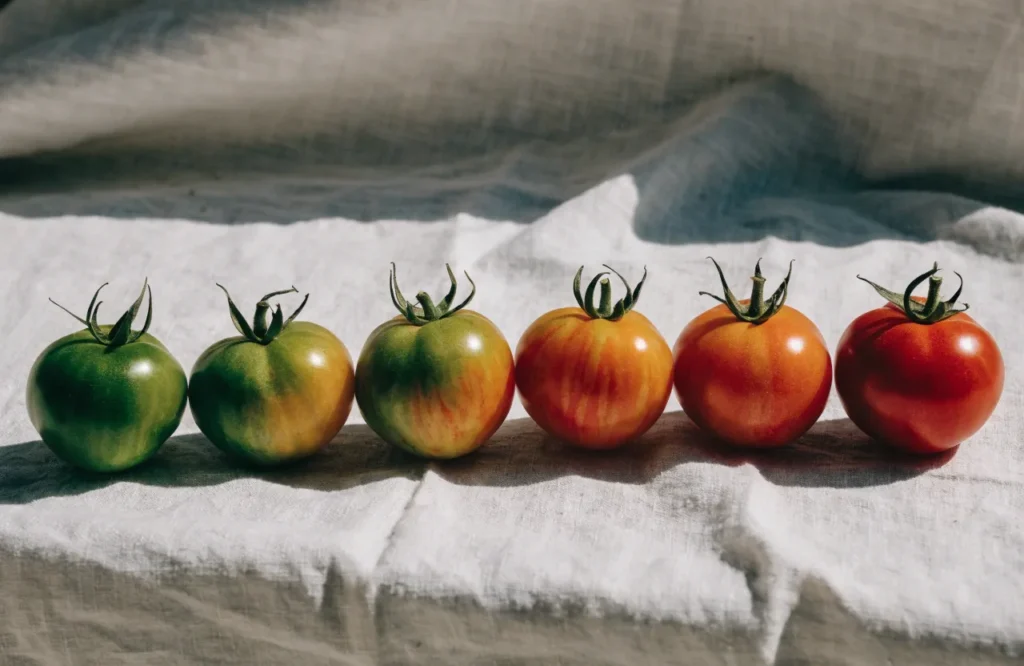
Tomatoes don’t just “turn red.” They move through a predictable color sequence driven by ethylene, a natural plant hormone that breaks down chlorophyll and unlocks the pigments (and sugars) that give tomatoes their flavor. For the fruit itself, commercial growers and horticulturists classify ripening into six recognized stages:
| Stage | What You’ll See |
| Green | Full-sized fruit, entirely green skin |
| Breaker | A blush of yellow, pink, or red appears at the blossom end, under 10% of the surface |
| Turning | 10–30% of the skin has changed color |
| Pink | 30–60% of the surface shows pink or red |
| Light Red | 60–90% colored |
| Red (Fully Ripe) | 90%+ of the skin has reached its final color |
Cherry tomatoes don’t follow this exact pattern, instead of coloring from the blossom end outward, they tend to shift color across the whole fruit at once, and they do it fast, sometimes within a day or two once they start.
When to Harvest Tomatoes for the Best Flavor
Here’s the debate every gardening forum has had a thousand times: full vine-ripened flavor versus a clean, undamaged harvest. The truth is you can have almost all of both.
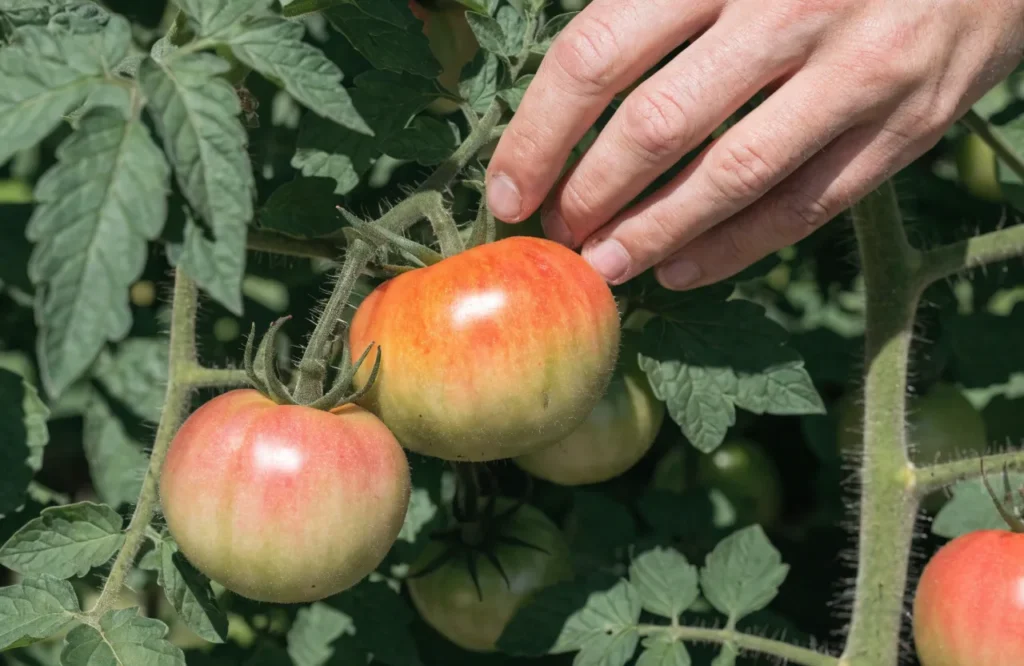
For the best balance of flavor and reliability, harvest at the breaker-to-pink stage, anywhere from the first blush of color up through about 60% coverage. By the breaker stage, nutrient and sugar flow from the vine into the fruit has already slowed considerably (though it hasn’t fully stopped), and much of what’s left to happen is the pigment conversion itself, which continues just as well on a counter as it does on the plant. Many experienced growers report that tomatoes picked at breaker stage and ripened indoors taste very close to vine-ripened fruit, though this comes down to personal palate rather than a settled scientific consensus, if peak flavor matters more to you than avoiding losses, letting fruit color fully on the vine is still the safer bet for taste.
Picking in this window also solves the three biggest late-season headaches:
- Splitting — a heavy rain after a dry spell sends water into the fruit faster than the skin can stretch, and a tomato left too long on the vine is the one that cracks. Watering consistently rather than on a fixed schedule goes a long way toward preventing this.
- Pest damage — hornworms, earworms, birds, and squirrels all target the reddest, ripest fruit first. The right tomato companion plants can help keep some of these pests away in the first place.
- Sunscald and overripening — hot late-summer stretches can cook fruit left exposed on the vine, which tends to happen on plants that are over-pruned or too crowded. Good pruning habits and correct plant spacing both help keep enough leaf cover over the fruit without choking off airflow.
If you’re growing purely for snacking flavor and don’t mind the risk, leaving fruit to the red stage on the vine is still the gold standard for peak taste. Just check your plants daily once fruit starts coloring, since ripening accelerates quickly in peak season.
Best Time of Day to Harvest
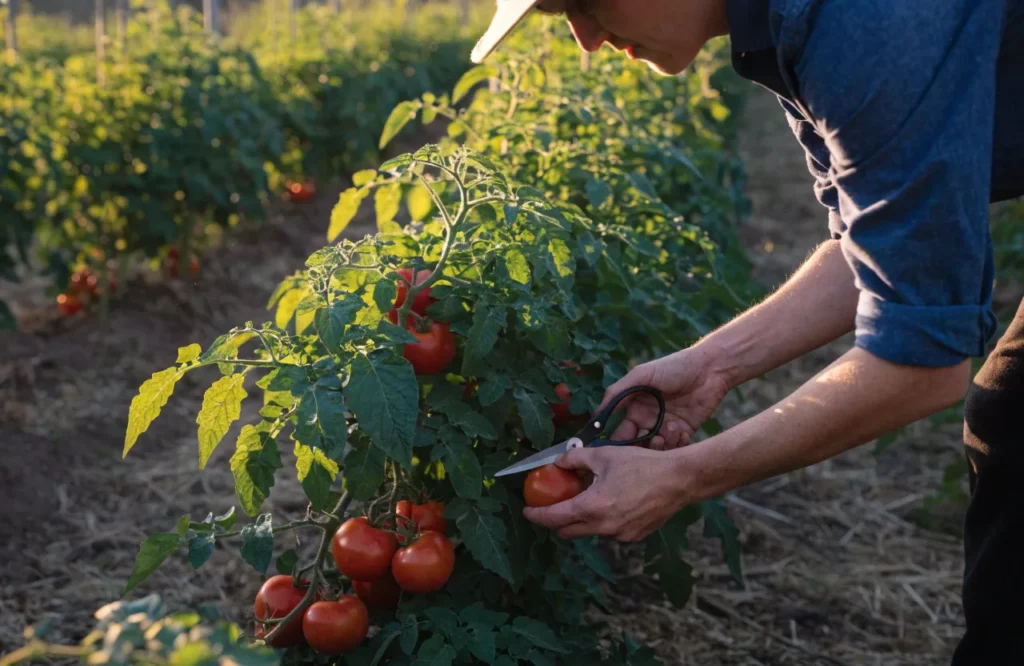
Knowing when to harvest tomatoes also means choosing the right time of day. Pick tomatoes in the morning after the dew has dried or in the late afternoon, and avoid harvesting during the hottest part of the day. Morning-picked fruit tends to be firmer and holds up better, since tomatoes lose moisture and soften as daytime heat rises. Always harvest before a forecasted heavy rain if fruit is already showing 50% color or more, since that’s when splitting risk spikes.
How Long Does It Take Tomatoes to Ripen?
Most tomato varieties take 60 to 100 days from transplant to first harvest, depending on the type:
- Cherry tomatoes: 55–70 days, the fastest to fruit and ripen
- Slicing/salad tomatoes: 65–80 days
- Beefsteak varieties: 80–100 days
- Paste/plum tomatoes: 70–90 days
Check your seed packet or plant tag for the specific “days to maturity,” which is counted from transplanting outdoors, not from seed germination.
That timeline also depends on how the plant itself grows. Determinate varieties tend to ripen most of their fruit in one concentrated window, while indeterminate types keep flowering and producing right up until frost, worth knowing before you plan around a single “harvest day.” If you’re still deciding what to plant, our roundup of the best tomato varieties to grow breaks down options by days-to-maturity and flavor, and our tomato growing stages guide walks through the full seven-stage journey from seed to harvest in more detail. Growing in containers instead of the ground? Our guide to growing tomatoes in pots covers how that setup can shift timing.
Signs a Tomato Is Ready to Pick
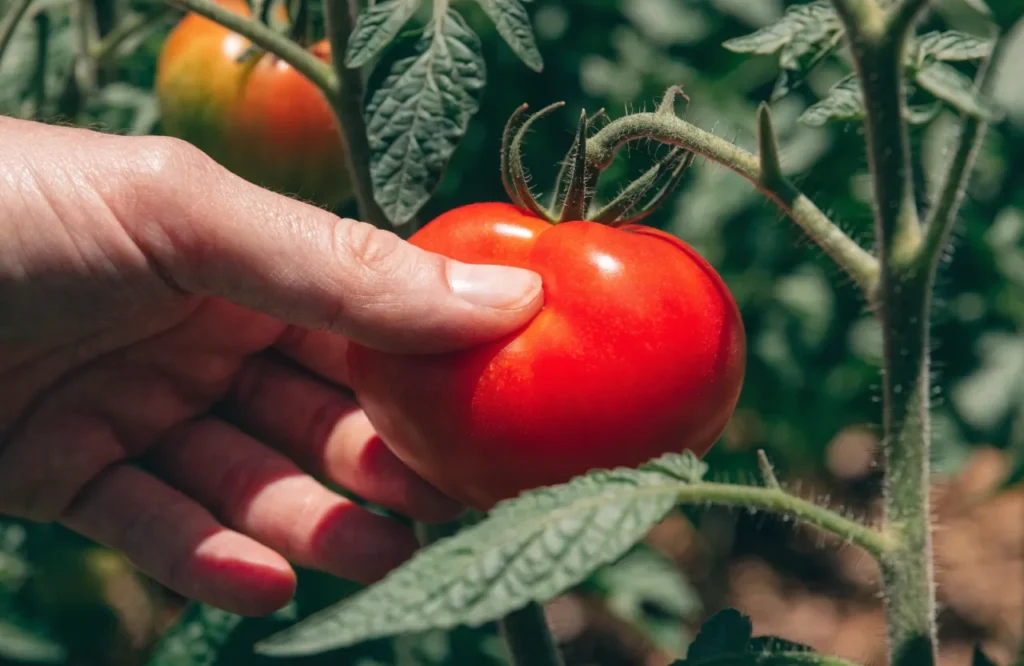
Color is the main clue when deciding when to harvest tomatoes. Use the ripening-stage chart above to judge how far along a fruit is. Two physical checks can back up that visual read, though neither should override it on its own:
- The squeeze test. A ripe tomato gives slightly under gentle pressure, firm but with a little spring, similar to a ripe peach. Rock-hard means it needs more time; mushy means it’s past due and best used immediately.
- The snap test (secondary indicator). Many ripe tomatoes separate easily from the vine, releasing cleanly at the knuckle joint just above the fruit when tilted upward. This can be a useful confirmation, but it’s not reliable on its own, some fully ripe tomatoes still resist a light tug, and some underripe ones let go easily, especially in windy or wet conditions. Lean on color first, and treat resistance (or lack of it) as a tiebreaker rather than the deciding factor.
When to Harvest Green Tomatoes
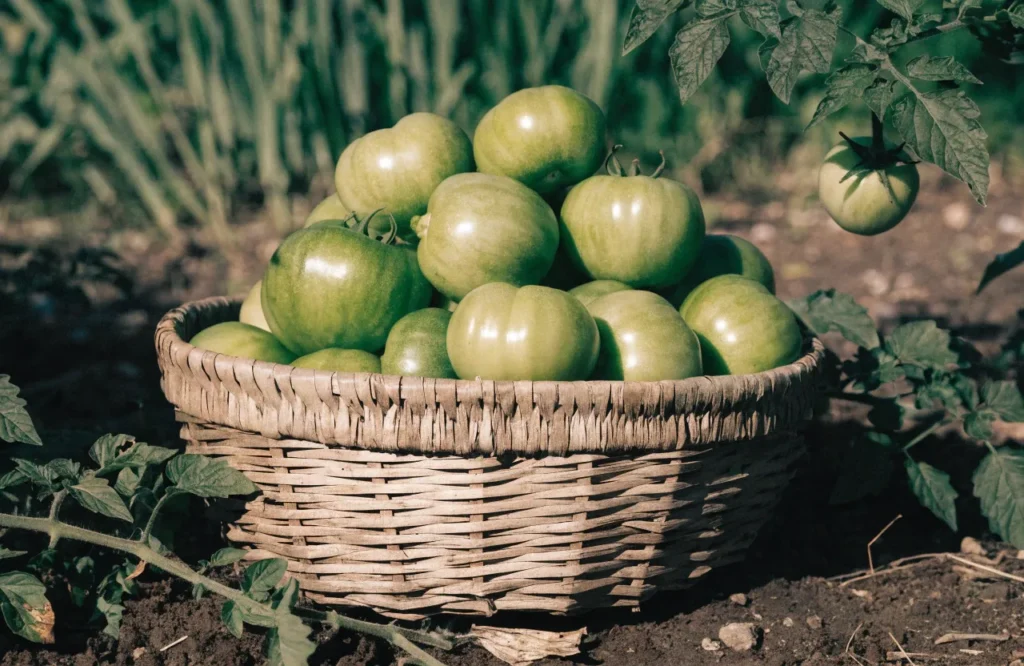
Harvesting green isn’t always a mistake, it’s sometimes the smarter move. But it only works if the tomato is mature green, not immature green, so it’s worth knowing the difference:
- Mature green fruit has reached full size for its variety, the skin has a slight waxy sheen, and if you cut one open, the interior gel around the seeds has fully formed and the flesh has turned from white to pale green. A mature green tomato will ripen normally off the vine.
- Immature green fruit is still growing, smaller, duller, with underdeveloped seed gel inside. These won’t ripen properly if picked; they tend to shrivel or rot instead of coloring up, since the internal processes that trigger ripening haven’t started yet.
With that distinction in mind, here’s when picking green makes sense:
- Before a frost. Once nighttime temperatures threaten freezing, pick every mature green tomato you can find rather than lose the whole crop.
- Before a big storm. Mature green, firm fruit is far less likely to split than color-changed fruit.
- For fried green tomatoes. Mature green tomatoes are prized for their firm, tart bite in Southern cooking, pick them at this stage, before any blush of color appears.
How to Ripen Green Tomatoes Indoors
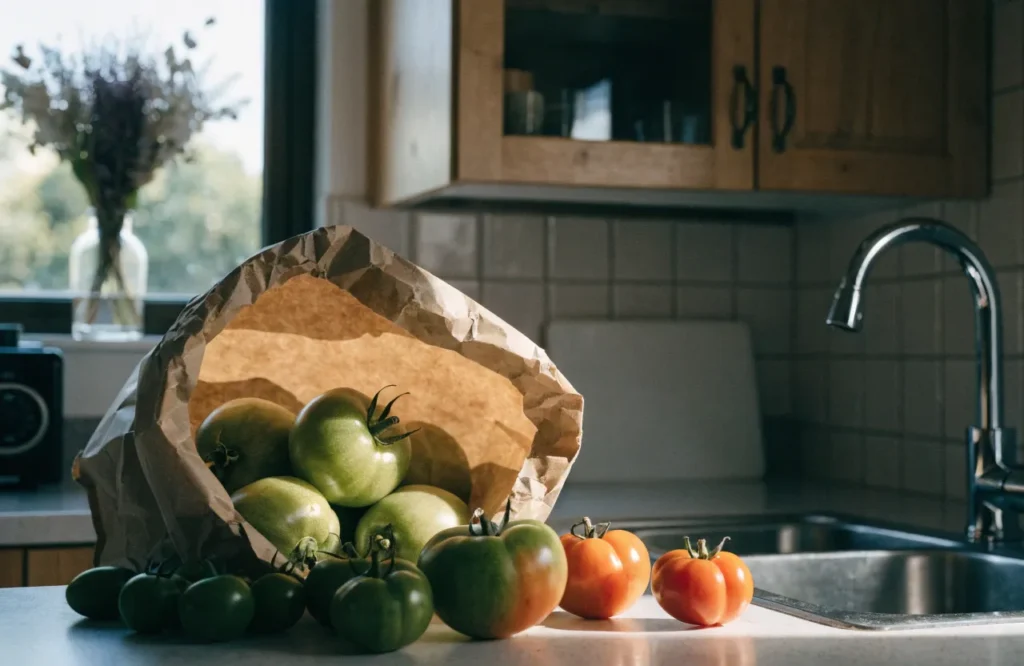
To finish ripening tomatoes off the vine, recreate what they’d get outdoors: warmth and ethylene. Knowing when to harvest tomatoes also means knowing how to properly finish ripening fruit you’ve picked early.
- Bag them. A paper bag traps the ethylene gas the fruit naturally produces, speeding up ripening.
- Add a banana or apple. Both release extra ethylene, which accelerates color change in whatever’s nearby.
- Keep them around 68–77°F. This is the ideal temperature range for ripening; cooler temperatures slow the process (useful if you want to stagger a large harvest), while temperatures below 50°F can halt ripening and dull the flavor permanently.
- Check daily. Pull ripened fruit out promptly so it doesn’t over-soften next to its neighbors.
Some growers pull entire vines and hang them upside down in a garage or basement, the fruit continues ripening slowly using the sugars already stored in the plant.
How to Harvest Without Damaging the Plant or Fruit
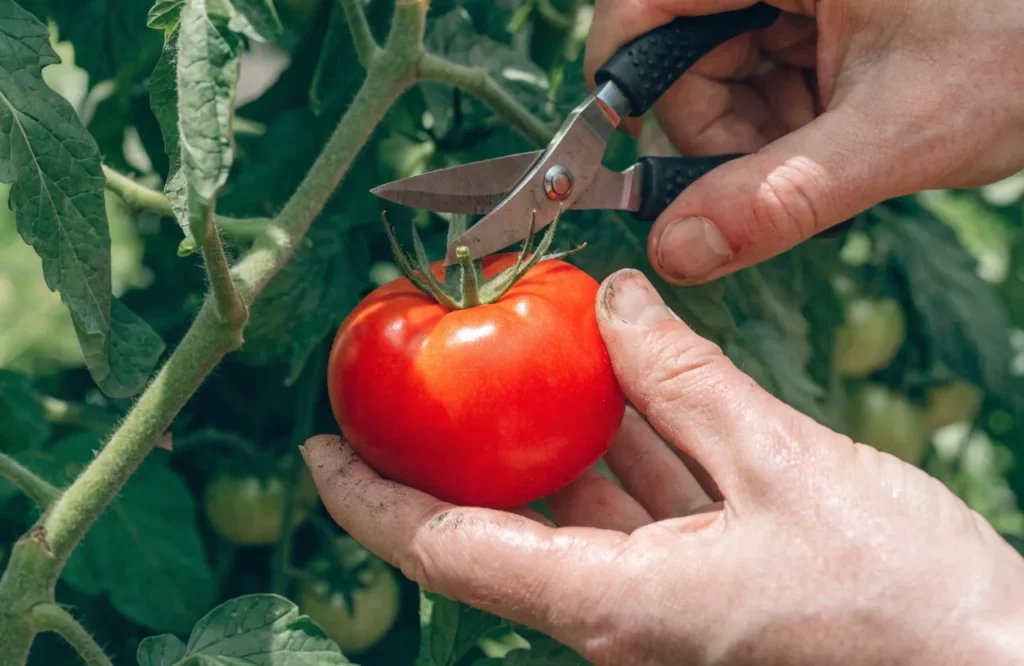
Use clean garden snips or scissors to cut the stem just above the calyx (the little green cap) rather than yanking the fruit off, which can tear the vine or bruise the tomato. If a tomato is fully red and you’re eating it immediately, a gentle twist works fine. Handle picked fruit gently and lay it in a single layer in a tray or shallow basket, tomatoes bruise and split easily when piled or tossed into a bucket. Plants that are properly staked or caged also make harvest easier and cleaner, since the fruit hangs clear of the soil and tangled foliage instead of hiding underneath it.
Storing Your Harvest
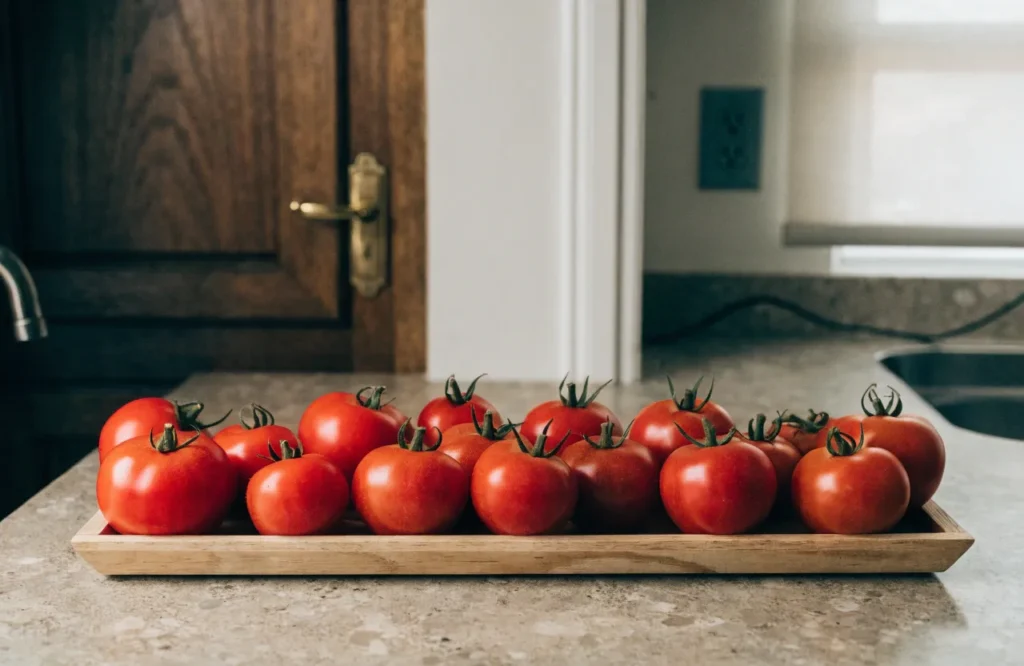
Keep fresh tomatoes at room temperature, out of direct sunlight. Refrigeration is one of the most common tomato mistakes: temperatures below about 50–55°F damage the enzymes responsible for flavor, leaving tomatoes mealy and bland. If you need to slow down a large ripe haul, a cool spot on the counter, not the fridge, is the better choice. For longer storage, canning, dehydrating, or freezing tomato sauce preserves flavor far better than cold storage ever will.
Frequently Asked Questions
Can tomatoes ripen after being picked?
Yes, as long as they were picked at the mature green stage or later. To finish ripening off the vine, keep them around 68–77°F. A paper bag traps ethylene gas to speed ripening, and adding a banana or apple releases extra ethylene.
When should I harvest tomatoes for the best flavor?
For the best balance of flavor and reliability, harvest at the breaker-to-pink stage. If you’re growing purely for snacking flavor and don’t mind the risk, leaving fruit to the red stage gives the fullest flavor.
Should I pick my tomatoes green?
Harvesting green isn’t always a mistake—it’s sometimes the smarter move. Pick mature green tomatoes before a frost, before a big storm (firm fruit is far less likely to split), or for fried green tomatoes. Only mature green fruit will ripen properly off the vine.
What’s the difference between mature green and immature green tomatoes?
Mature green fruit has reached full size for its variety with a slight waxy sheen, and will ripen off the vine. Immature green fruit is still growing, smaller, duller, with underdeveloped seed gel inside, and won’t ripen properly.
Is it better to harvest tomatoes in the morning or evening?
Pick tomatoes in the morning, after the dew has dried.
When to Harvest Tomatoes: Final Tips for a Better Harvest
If your harvest problems seem to trace back further than picking timing, a few earlier-season culprits are worth ruling out. Dark, sunken spots on the fruit itself usually point to blossom end rot rather than a ripening issue. Inconsistent soil quality or the wrong fertilizer routine can also throw off fruit development and slow ripening, while yellowing leaves are often an early warning sign worth catching before it affects your harvest. And if you’re seeing spotting, wilting, or damage beyond normal pest activity, it’s worth checking your plants against our guide to common tomato plant diseases to rule out something more serious. Ultimately, knowing when to harvest tomatoes is about watching the fruit rather than following a rigid calendar. Look for the right color stage, use firmness as a secondary check, and harvest before weather, pests, or overripening turn a good tomato into a lost one.