7 Key Differences: Determinate Vs Indeterminate Tomatoes (And How to Pick the Right One)
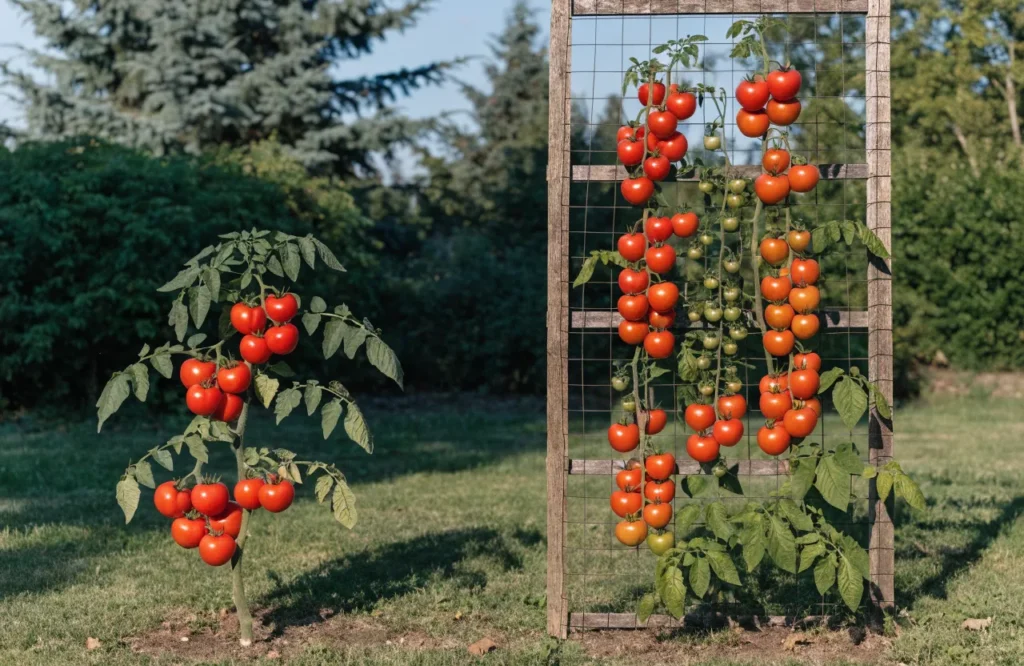
If you’ve ever stood in a nursery aisle squinting at seed packets, you’ve probably run into the terms “determinate” and “indeterminate” tomatoes without much explanation. So, what’s the difference? Determinate tomatoes are compact plants that ripen most of their crop in a short window, while indeterminate tomatoes are sprawling vines that keep growing and fruiting until frost stops them. Understanding determinate vs indeterminate tomatoes can help you choose the right variety for your garden, especially when it comes to growing space, staking, pruning, harvest timing, and even what you’ll cook with them.
Quick Answer
Determinate tomatoes are compact, bushy plants that stop growing once they reach their genetically determined size and produce most of their crop within a relatively short period. Indeterminate tomatoes keep growing and producing new flowers and fruit throughout the season until frost or another limiting factor stops them.
Choose determinate tomatoes if you have limited space, grow in containers, want a concentrated harvest for canning or sauce, or prefer lower-maintenance plants. Choose indeterminate tomatoes if you want a steady supply of fresh tomatoes throughout a long growing season and have enough space for staking or trellising.
🌱 Expert Tip
Don’t choose a tomato variety based on “determinate” or “indeterminate” alone. Check the seed packet or plant tag for the variety’s days to maturity, mature size, disease resistance, and recommended growing conditions. Growth habit tells you how the plant grows and fruits, but it doesn’t necessarily tell you which variety will mature first or produce the highest yield.
If you’re short on space, look for dwarf or patio varieties. If you have plenty of vertical space and want tomatoes throughout the season, an indeterminate variety with sturdy support may be a better fit.
1. The Core Difference
The two terms describe growth habit, and most varieties lean clearly one way or the other:
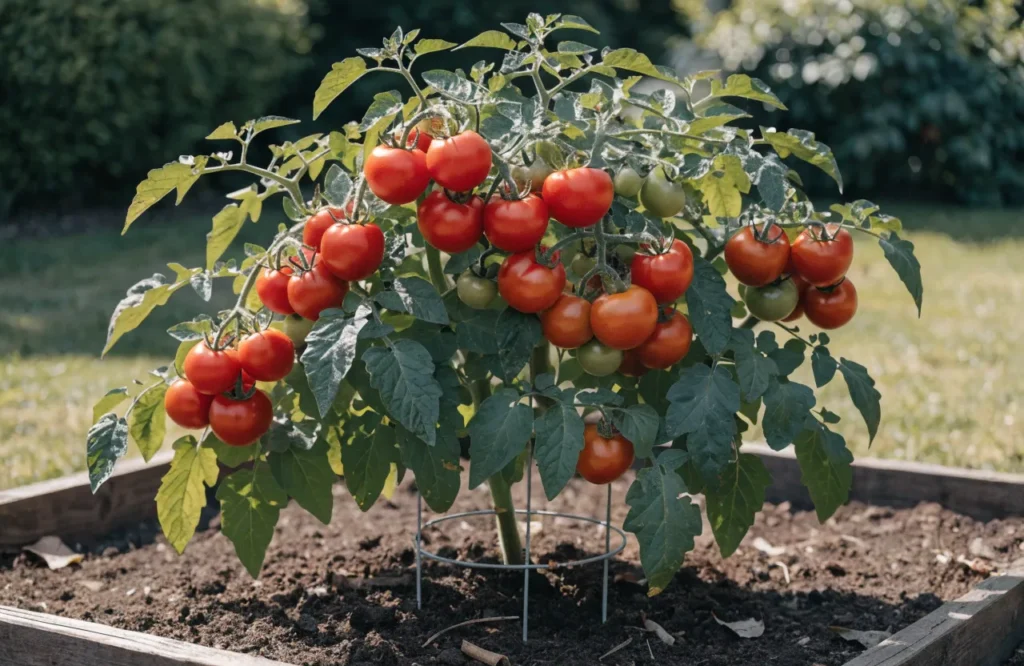
- Determinate (“bush”) tomatoes grow to a genetically capped height, usually 3 to 4 feet, then stop extending. Once they reach full size, they set most of their flowers and fruit within a relatively short window and ripen it over a few weeks before the plant’s vigor declines. There’s little to no second wave of growth.
- Indeterminate (“vining”) tomatoes keep growing. The main stem continues extending, producing new flower clusters and leaves right up until a hard frost kills the plant. Left unsupported, vines can sprawl 6 to 12 feet or more.
That said, it’s not a strict binary. Some varieties are described as “semi-determinate,” growing larger and fruiting longer than a typical bush type without becoming a true sprawling vine. Exactly which varieties get that label isn’t fully standardized, different seed companies sometimes classify the same variety differently, so when it matters for your planning, check the specific seed packet or catalog description rather than relying on a general list.
2. Days to Maturity Isn’t the Same as Growth Habit
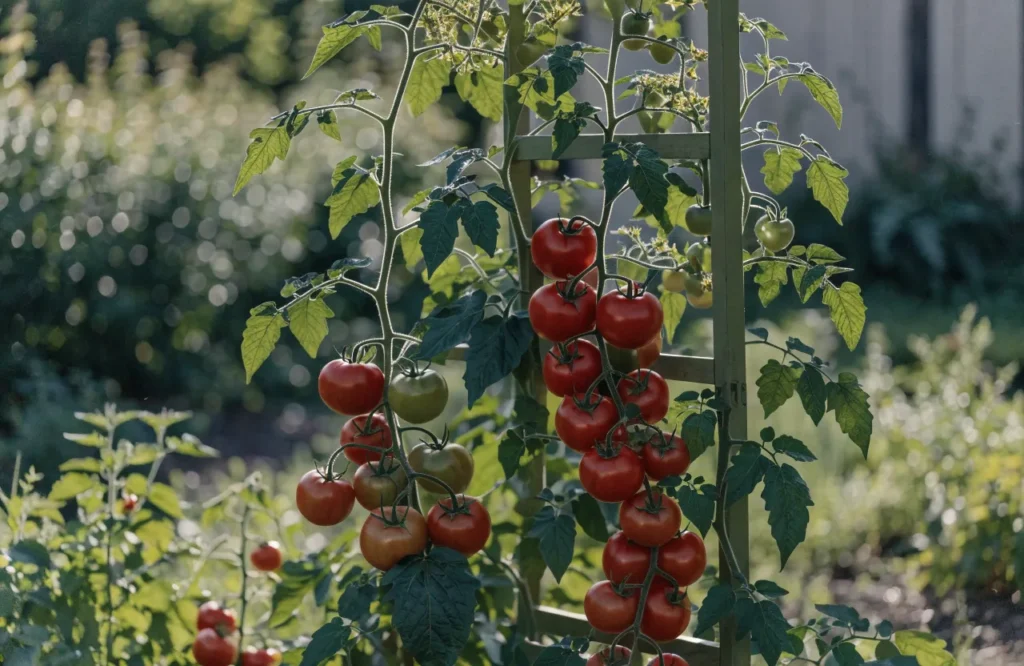
It’s tempting to assume determinate tomatoes are simply “faster” than indeterminate ones, but maturity time and growth habit are two separate traits. Plenty of determinate varieties do mature quickly (many in 65–75 days), which is part of why they’re popular for short seasons, but there are also fast-maturing indeterminate varieties (like Early Girl or many cherry tomatoes), and some determinate paste tomatoes take just as long as a mid-season vining type. If speed matters for your climate, check the specific variety’s “days to maturity” rather than assuming based on growth habit alone.
3. Support and Staking
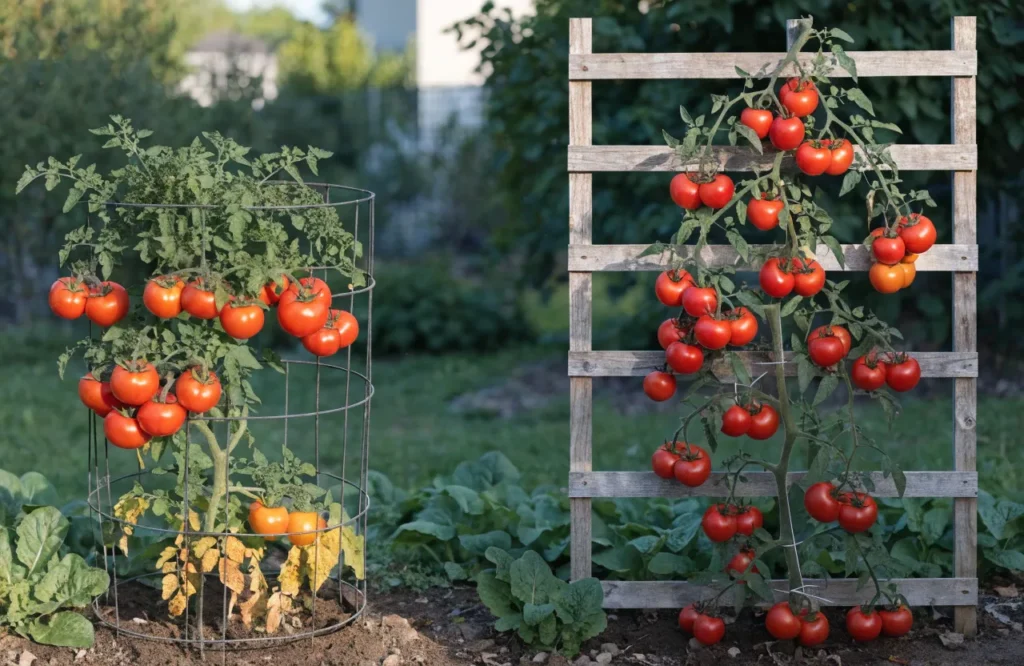
Because determinate plants stay compact and stop growing on their own, a single stake or a standard tomato cage set up at planting time is usually enough for the whole season.
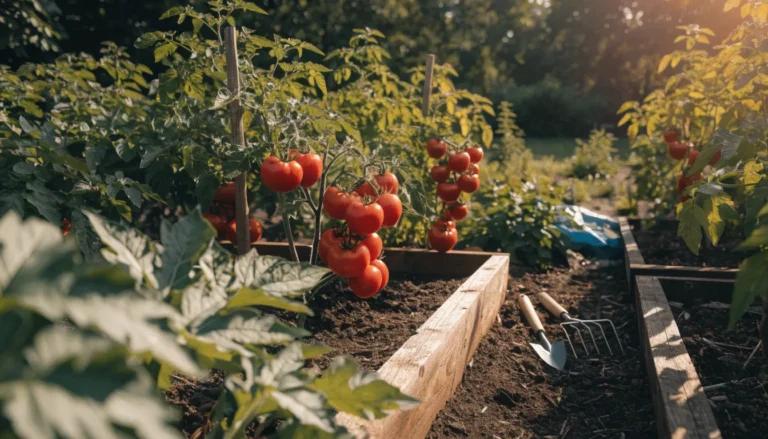
Indeterminate vines generally need taller, sturdier support, a cage at least 4 feet tall reinforced with stakes, or a trellis, since the plant keeps climbing all season. Tying and training the vine periodically helps keep it off the ground, which matters for disease prevention as much as tidiness. It’s easiest to install supports at planting time; adding them later, once the vine is already sprawling, risks damaging the plant. For a closer look at your options, how to stake tomato plants walks through cages, stakes, and trellis setups for both growth habits.
4. Pruning: More Nuanced Than “Always” or “Never”
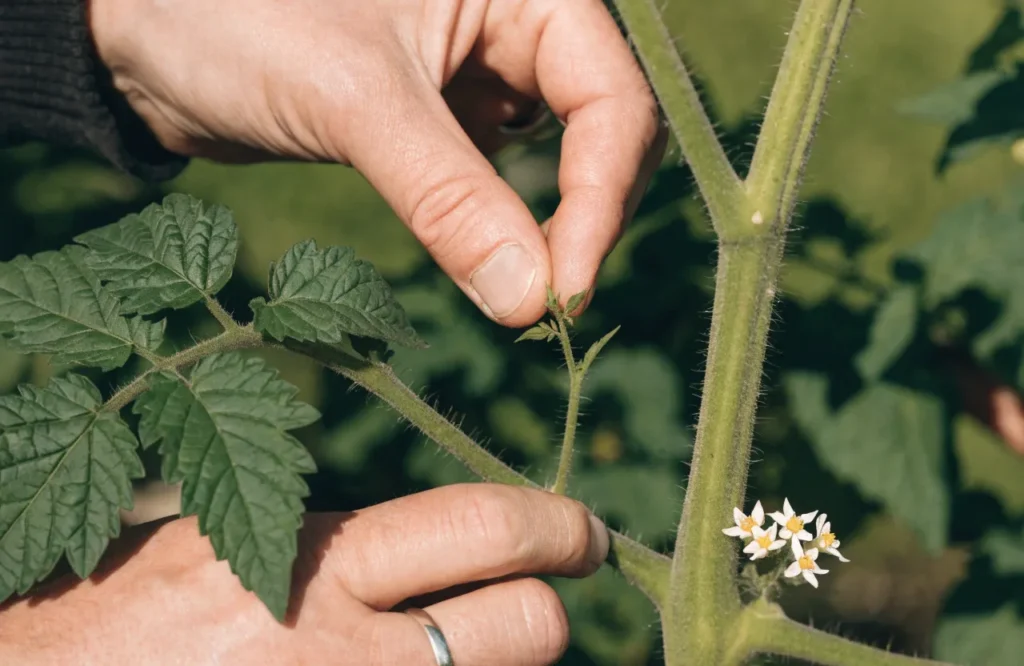
Pruning advice for tomatoes gets repeated as a hard rule more often than it deserves, in reality, it depends on your goals, climate, and variety.
- Determinate tomatoes generally need less pruning. Because their size and fruit set are already capped by genetics, heavy pruning doesn’t add much benefit and can sometimes reduce yield. Many gardeners limit themselves to removing dead, diseased, or low-hanging foliage near the soil line to help with airflow and disease prevention.
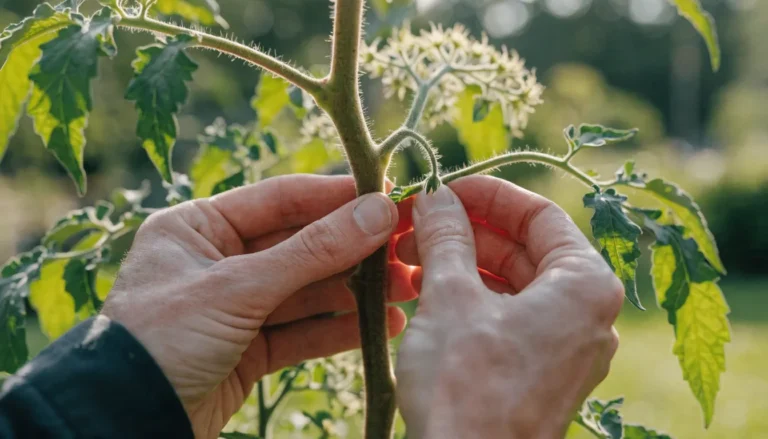
- Indeterminate tomatoes often benefit from some pruning, removing a portion of suckers (the shoots between the main stem and branches) can improve airflow and direct more energy toward fruit rather than foliage. But pruning every sucker on a strict weekly schedule isn’t required for a healthy plant, and some gardeners prefer a lighter touch to get a bushier plant with more total fruit, just smaller. If you do prune, avoid pinching a sucker growing directly below a flower cluster, since that can disrupt fruiting on that branch.
There’s no single “correct” pruning routine, treat it as a tool for managing size and airflow, not an obligation. If you’d like a step-by-step walkthrough, how to prune tomato plants covers the process in simple steps for whichever approach you choose.
5. Harvest Timing and Yield
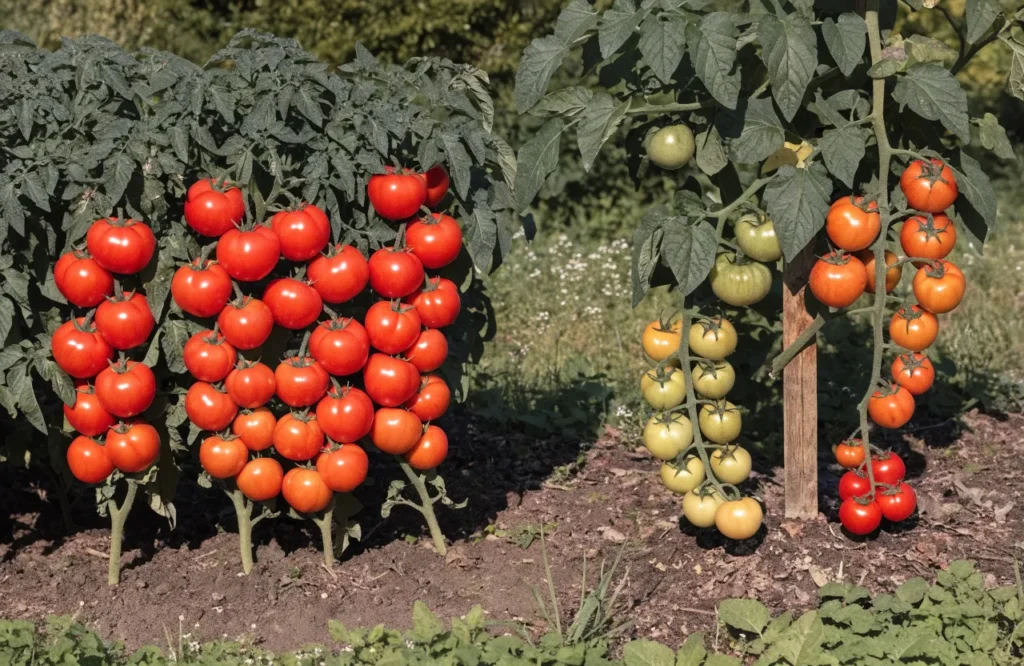
Determinate varieties tend to ripen in more of a concentrated flush, often within a two-to-three-week window, which makes them convenient for anyone canning, freezing, or making sauce in bulk, since you get a large batch of ripe tomatoes at once rather than a trickle.
Indeterminate varieties typically spread their harvest out, offering a slow, steady supply of fresh fruit from midsummer through the first frost. If you want tomatoes for slicing and snacking all season rather than one big harvest event, this is generally the type to lean toward. Toward the end of the season, keep an eye on nighttime temperatures, if frost threatens, pick everything, including green tomatoes, and let them finish ripening indoors on a windowsill or in a paper bag. For a fuller picture of what to expect between planting and harvest, this breakdown of tomato growing stages covers the whole timeline from seed to harvest.
Whichever type you grow, consistent care makes the biggest difference in your total yield. Tomatoes are heavy feeders, so the mix you plant them in and how you fertilize through the season matter more than growth habit does. If your soil needs work, building the right soil mix for tomatoes is a good place to start, and pairing it with a fertilizing routine timed to the plant’s growth stages will do more for your harvest size than choosing determinate over indeterminate.
Watering matters just as much, and it’s easy to get wrong by sticking to a rigid schedule instead of responding to the plant and the weather, this approach to watering tomatoes covers what to look for. Inconsistent watering is also one of the leading causes of blossom end rot, a common problem that affects determinate and indeterminate plants equally.
6. Space and Garden Fit, Including Containers
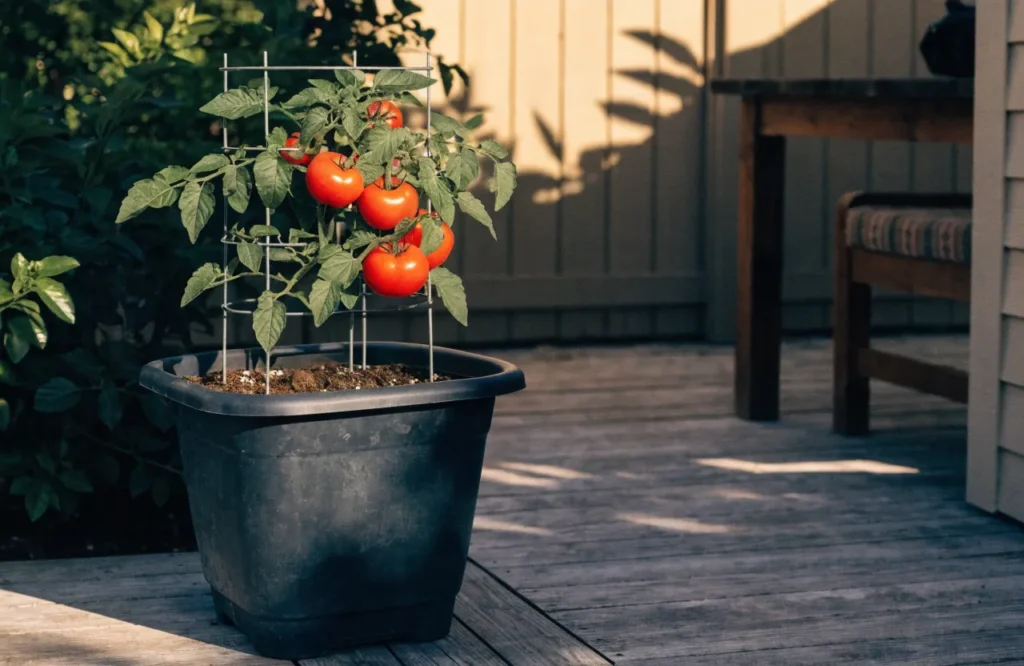
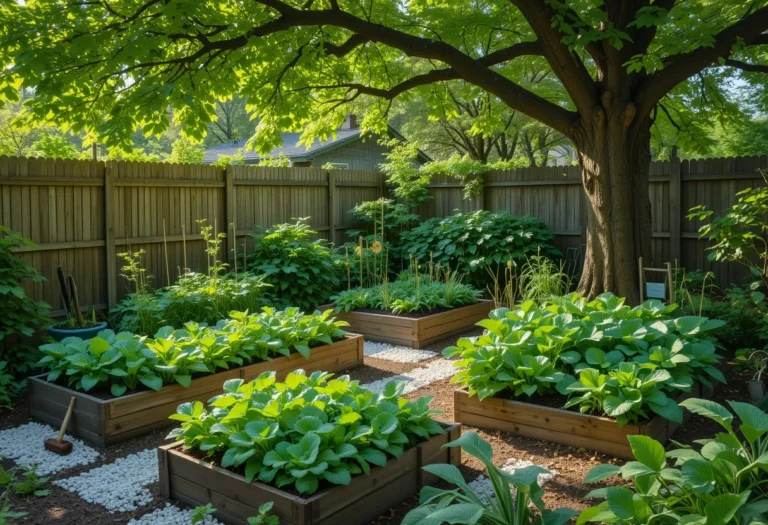
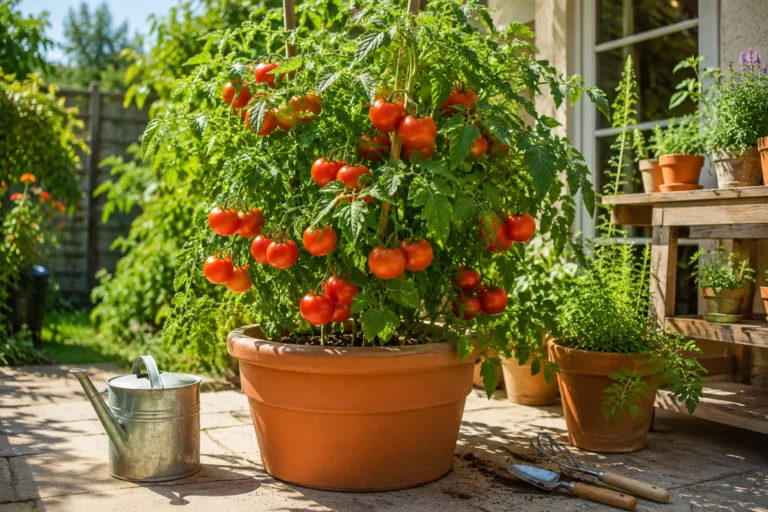
Determinate plants’ compact, bushy shape makes them a natural fit for containers, raised beds, and small gardens, and their lower profile tends to hold up better against wind and, in storm-prone regions, hail.
If container growing is your main goal, look specifically for dwarf or “patio” varieties, which are bred to stay especially small, often under 2–3 feet, and are suited to pots as small as 5–10 gallons. Most patio and dwarf tomatoes are determinate or semi-determinate, though a handful of dwarf indeterminate varieties do exist for gardeners who want a small footprint with a longer harvest window; these still need staking, just on a smaller scale. Pot sizing, drainage, and container-specific soil tips are covered in how to grow tomatoes in pots.
Indeterminate vines, by contrast, need real vertical space. Without training, they’ll sprawl across the bed and shade out neighboring plants, so growing them upward on a trellis or tall cage isn’t just about saving space, it also improves air circulation, which helps prevent fungal diseases like early blight and other common tomato plant diseases, especially in humid or storm-prone climates. Good airflow also helps guard against issues like yellowing leaves, which can stem from fungal problems as easily as nutrient or watering issues.
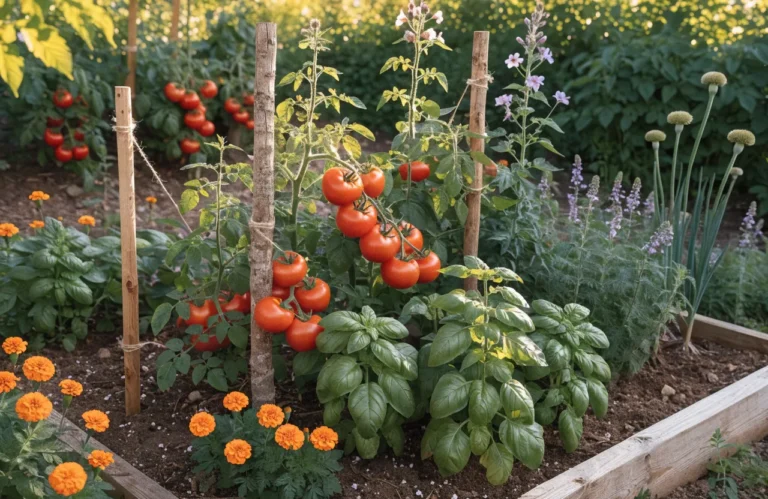
Whatever type or setup you choose, pairing tomatoes with the right neighbors can also support healthier growth, this list of tomato companion plants covers what to plant nearby and what to avoid.
7. Which Is Better: Determinate vs. Indeterminate Tomatoes?
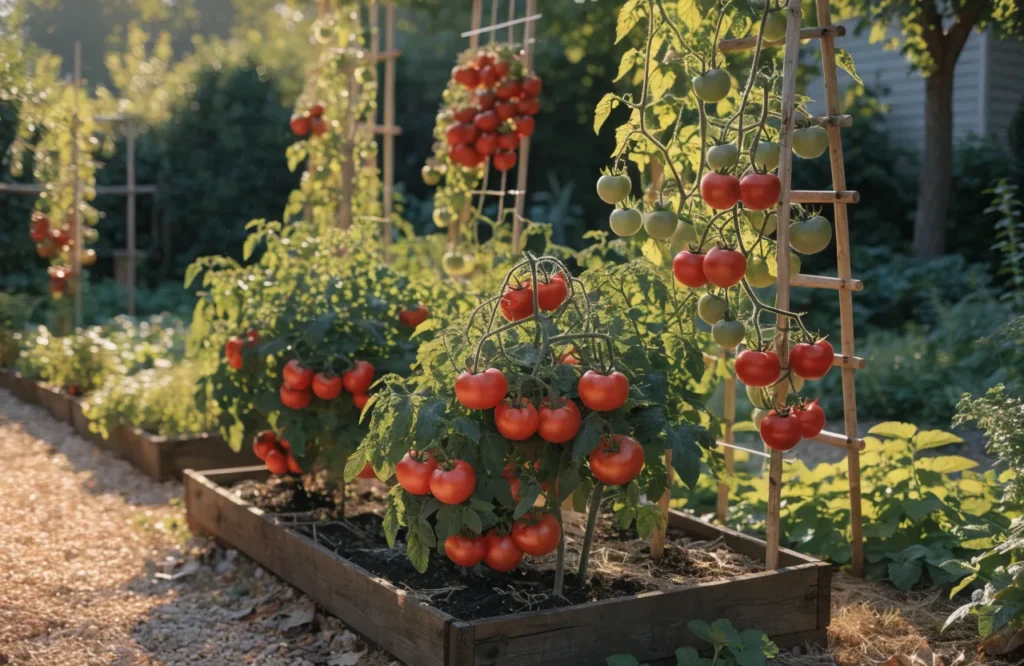
There’s no universally “better” option, it comes down to what you want out of your harvest and how much space and maintenance you’re up for.
Determinate tomatoes tend to fit well if you:
- Have limited space (containers, small beds, patios)
- Want to can, freeze, or make sauce in large batches
- Prefer lower-maintenance plants
- Are working with a short growing season
Indeterminate tomatoes tend to fit well if you:
- Want a continuous supply of fresh tomatoes all summer
- Have the space and don’t mind staking, training, and occasional pruning
- Have a longer frost-free growing season
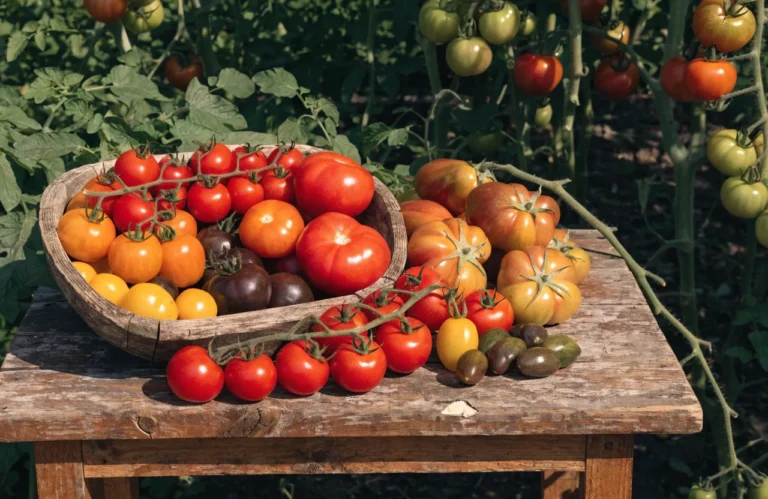
- Enjoy heirloom and specialty varieties, which skew indeterminate
Many experienced gardeners simply grow both, a few determinate or dwarf plants for an early, concentrated harvest, paired with a couple of well-supported indeterminate vines for fresh eating deep into fall.
Recommended Varieties
Growth habit can vary by cultivar even within a well-known variety name, so treat the list below as a starting point, always confirm with the seed packet or catalog description before you buy or plant.
Determinate:
- Celebrity: reliable, disease-resistant, compact bush habit
- Roma: paste tomato commonly grown for sauce and canning
- Rutgers: early, disease-resistant, with a strong first flush
- Patio Princess: compact container option
- Bush Early Girl: compact option, faster-maturing than standard Early Girl
Indeterminate:
- Brandywine: large, rich-flavored heirloom
- Cherokee Purple: beloved slicing tomato
- Amish Paste: meaty heirloom paste tomato, good for cooking and canning despite being a vining type
- Sungold / Sweet Million: prolific, sweet cherry types
- Better Boy / Big Beef: vigorous, high-yield beefsteak hybrids
- Early Girl: an early-maturing indeterminate
Check before you plant:
- San Marzano: classic Italian paste tomato; growth habit varies by seed source, so check the specific cultivar (some, like San Marzano Nano, are bred as compact determinate types)
Quick Reference
| Determinate | Indeterminate | |
| Growth habit | Bush, capped height (~3–4 ft) | Vining, keeps growing (6–12+ ft) |
| Fruiting pattern | Concentrated, over a few weeks | Spread out until frost |
| Days to maturity | Varies by variety, often shorter | Varies by variety, often longer |
| Pruning | Usually minimal | Optional, more common |
| Support | Light stake or cage | Tall cage, stakes, or trellis |
| Good for containers | Yes, especially dwarf/patio types | Less common, but dwarf indeterminates exist |
| Best for | Canning, small spaces, short seasons | Fresh eating, long seasons, larger gardens |
Frequently Asked Questions
Is one type better than the other?
No, they’re suited to different goals. Determinate types are convenient for small spaces and bulk harvests, while indeterminate types give you a continuous supply of fresh tomatoes all summer. It comes down to what you want from your harvest.
Can I grow indeterminate tomatoes in containers?
It’s less common, but dwarf indeterminate varieties exist that work in containers. For the easiest container experience, choose determinate dwarf or ‘patio’ varieties, which are naturally compact.
Do I have to prune my tomatoes?
No. Determinate tomatoes generally need less pruning since their size and fruit set are already capped. Indeterminate tomatoes often benefit from removing some suckers, but there’s no single correct routine—treat pruning as a tool for managing size and airflow.
Which type ripens first?
Determinate varieties tend to ripen in a concentrated flush, often within a two-to-three-week window, which is why they’re popular for canning. Indeterminate varieties spread their harvest out, offering a slow, steady supply until frost.
How do I know if a variety is determinate or indeterminate?
Don’t choose based on the name alone—check the seed packet or plant tag, which should list the growth habit. Growth habit can vary by cultivar even within a well-known variety name.
Both types are easy to grow well once you understand what they need, the real key is matching the plant’s habit to your space, climate, and goals before you plant.