Tomato Fruit Cracking: Causes, Prevention, and Treatment (Complete Guide)
If you’ve ever walked out to the garden expecting a perfect harvest and found your tomatoes split open instead, you’re dealing with one of the most common, and most misunderstood, tomato problems. The good news: cracking isn’t a disease, it isn’t caused by pests, and in most cases it’s preventable once you understand what’s actually happening inside the fruit.
This guide covers every type of tomato fruit cracking, exactly why it happens, whether cracked fruit is safe to eat, which varieties resist it, and a step-by-step plan to stop it from ruining next season’s harvest.
Table of Contents
Quick Answer
Tomato fruit cracking is a physiological disorder, not a disease. It happens when the fruit takes in water and grows faster than its skin can stretch to keep up, usually after a dry spell is followed by heavy rain or deep watering. Consistent soil moisture, mulching, correct feeding, and choosing crack-resistant varieties are the most effective ways to prevent it.
What Exactly Is Tomato Fruit Cracking?
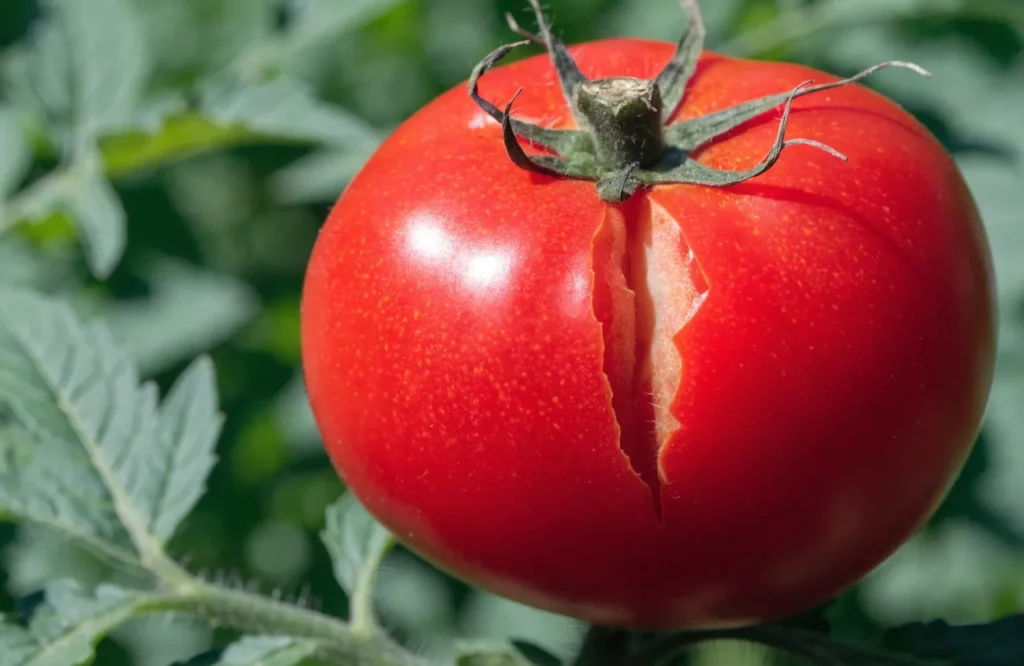
Cracking is a tear in the tomato’s outer skin (epidermis), most often near where the fruit attaches to the stem. As a tomato ripens, its skin becomes thinner and more elastic while pressure builds inside the fruit from rapid growth. When that internal pressure rises faster than the skin can expand, the skin gives way and splits.
There are three distinct patterns gardeners and growers should be able to recognize:
1. Radial Cracking
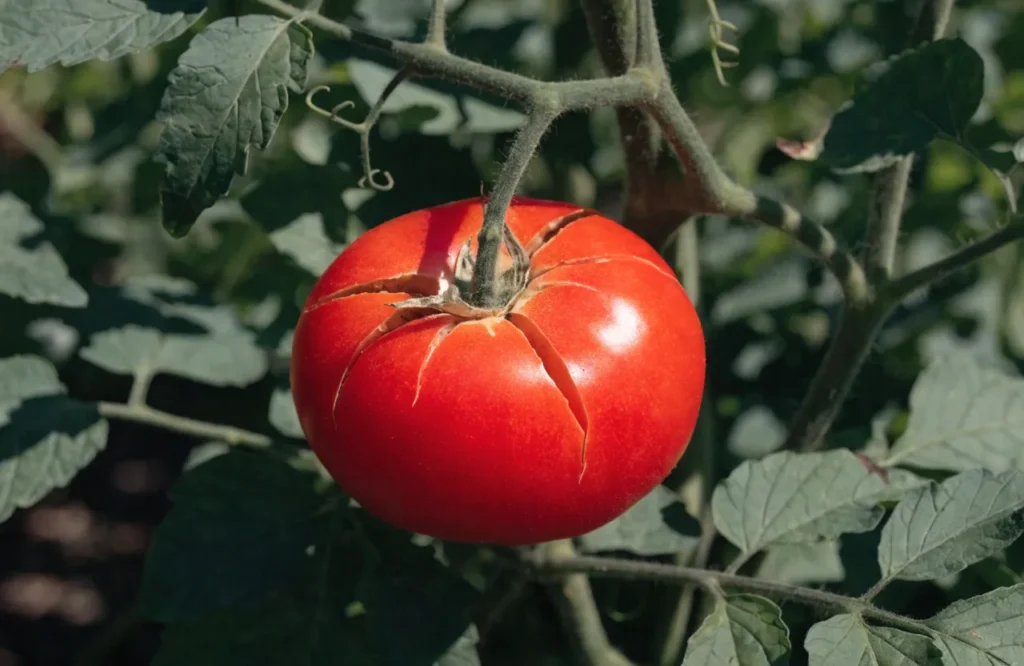
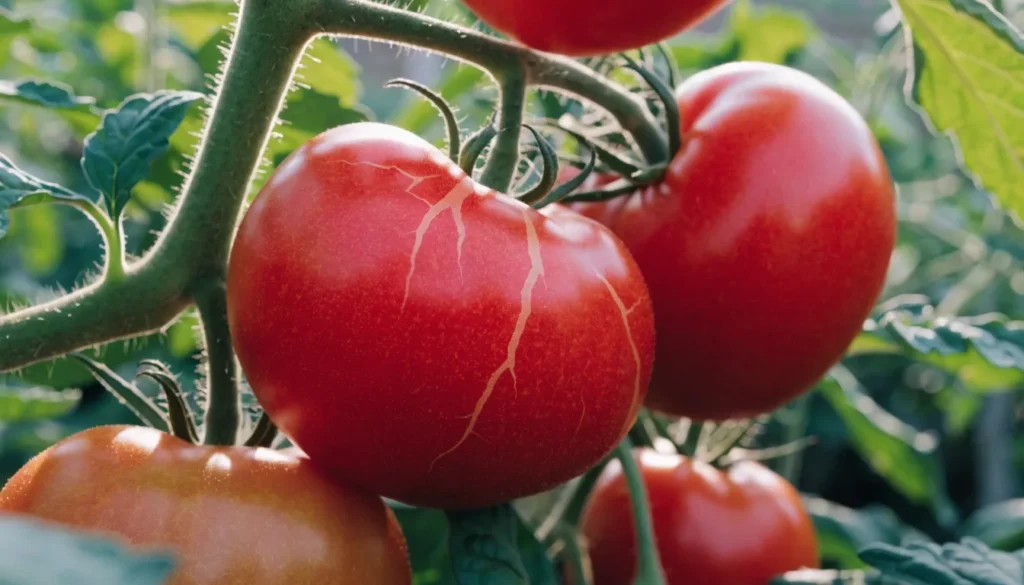
Cracks that run vertically, spreading outward from the stem scar down toward the blossom end, like sunburst lines. This is the most severe type, it tends to run deep and often occurs during hot, humid weather. Radial cracks are also the ones most likely to let in rot-causing organisms, so affected fruit should be harvested promptly.
2. Concentric Cracking
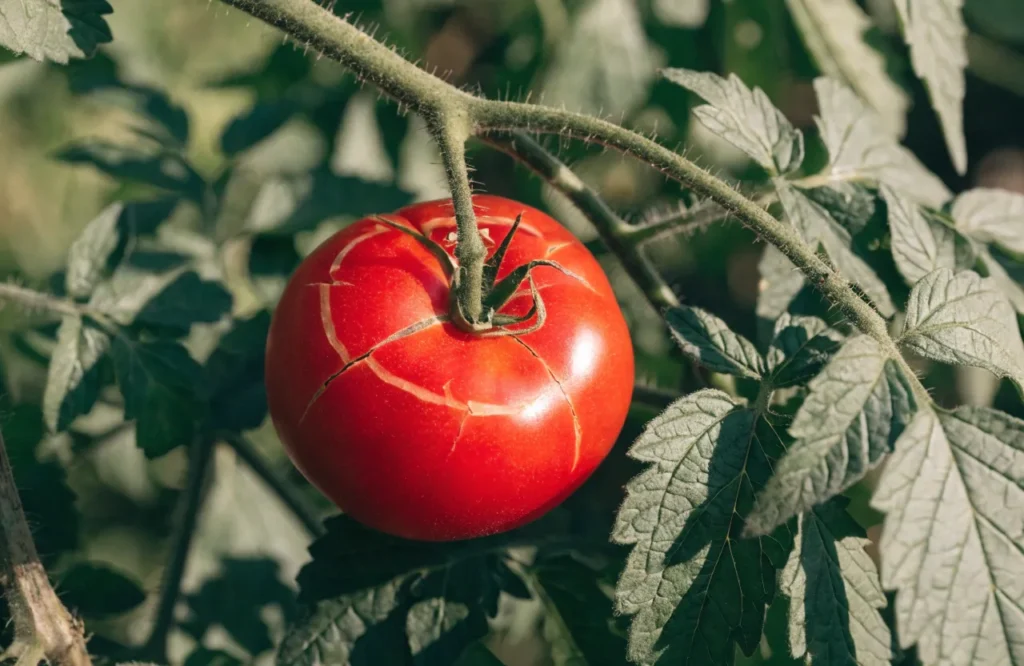
Circular cracks that ring the top of the fruit around the stem scar, rather than radiating outward. These are usually shallower than radial cracks and triggered by a sudden jump in soil moisture, a heavy rain after a dry stretch is the classic cause.
3. Cuticle Cracking (Russeting)
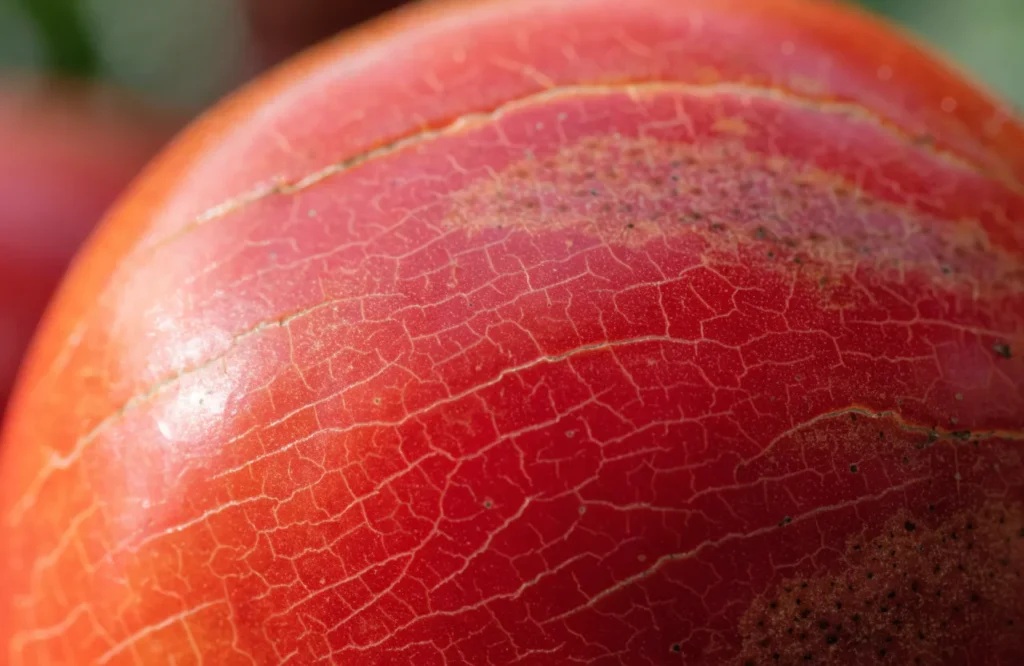
The mildest form: fine, hairline cracks or a rough, corky texture across the skin’s surface rather than a deep split. It’s mostly cosmetic but can still create entry points for disease.
What Causes Tomatoes to Crack?
Cracking is rarely caused by a single factor, it’s usually a combination of stresses hitting the plant at once. The main drivers are:
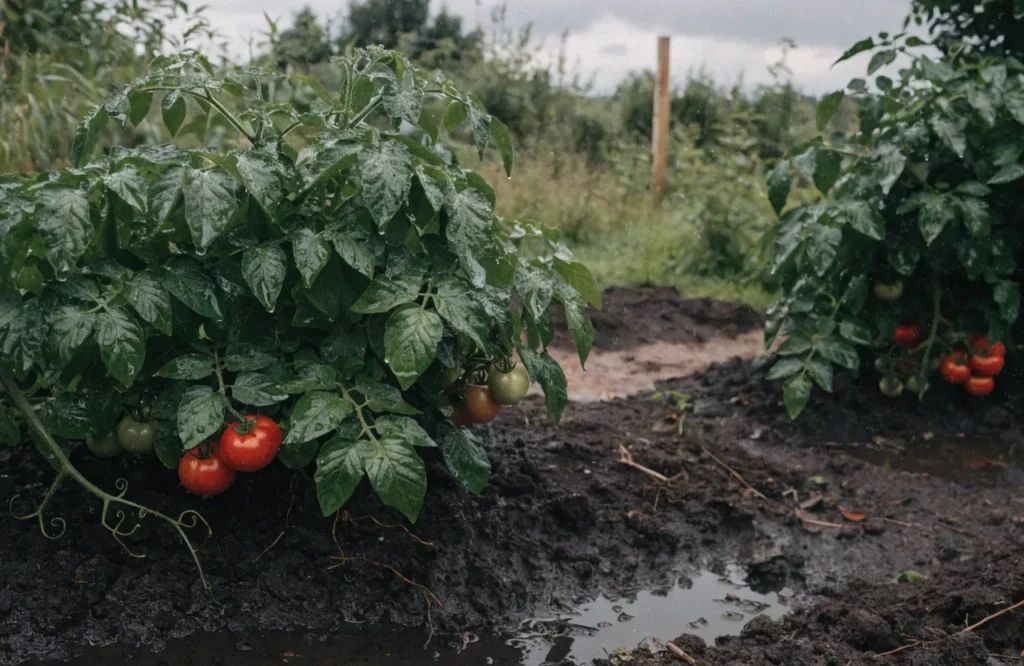
Inconsistent soil moisture. This is one of the most common causes of tomato fruit cracking. When soil dries out and then is suddenly saturated (a downpour, a missed watering followed by a deep soak, or an inconsistent drip system), roots pull in water rapidly. The fruit swells faster than the skin can grow to accommodate it, and the skin tears.
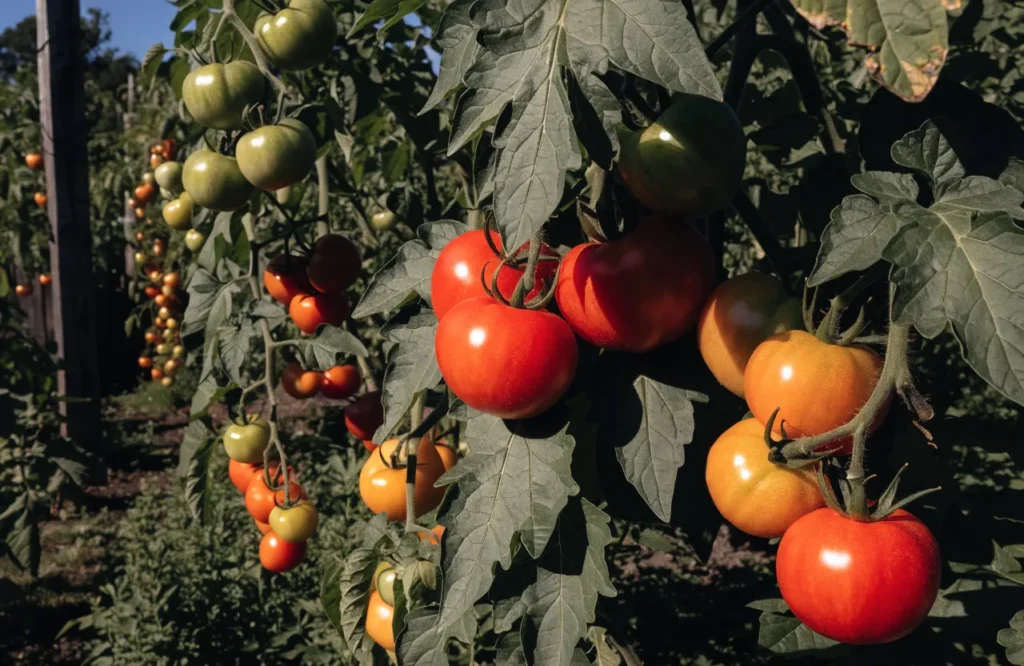
Temperature swings. High temperatures and a large gap between daytime highs and nighttime lows can increase cracking risk by raising internal fruit pressure while the skin stays firmer and less flexible. As a rough example, some sources point to sustained fruit temperatures above about 86°F (30°C) as a contributing threshold, though the exact tipping point varies by variety and growing region.
Direct sun exposure. Fruit that isn’t shaded by foliage tends to run hotter and experience wider temperature swings than shaded fruit, which can increase crack risk — the same loss of leaf cover is also the leading cause of tomato sunscald. Over-pruning leaves that would otherwise shade developing tomatoes can backfire for this reason.
Excess nitrogen. Heavy, frequent nitrogen fertilization can encourage lush, fast vegetative growth. Combined with rapid moisture uptake, this may contribute to softer, more crack-prone fruit, though nitrogen alone rarely causes cracking without a moisture trigger as well.
Fruit load. Some evidence suggests that plants carrying fewer tomatoes may direct more sugars and water into each remaining fruit, which could be a minor contributing factor to cracking. This often traces back to earlier-season stress, a plant dealing with tomato plants flowering but no fruit for part of the season ends up carrying a lighter overall fruit load once it does start producing, concentrating this effect on the tomatoes that do develop. This is one possible reason indeterminate varieties, which set fruit continuously and often carry fewer ripe tomatoes at any one time, are sometimes reported as more crack-prone than determinate varieties that ripen a full flush at once, though this tendency isn’t universal and varies by cultivar.
Variety and genetics. Some tomato varieties are simply bred with thicker, more elastic skin and are far less likely to crack under the same conditions. Large-fruited varieties, in particular, tend to have thinner skin relative to their size and fewer fruit per plant, both of which raise cracking risk.
Ripening stage. The later a fruit is left on the vine, the softer and more crack-prone its skin becomes. Fruit picked at the breaker (first blush of color) or pink stage, one of the key tomato growing stages is far less likely to split than fruit left to fully vine-ripen, especially right before rain.
Is It Safe to Eat Cracked Tomatoes?
Generally, yes, if you catch it early. A cracked tomato is still edible and can even be brought indoors to finish ripening. The real risk isn’t the crack itself, it’s what grows in it afterward: cracks are open wounds that let in fungi and bacteria, so cracked fruit spoils faster than intact fruit. Discard any tomato that has gone soft, developed a sour smell, or started oozing, and eat or process cracked ones promptly rather than storing them.
What to Do With Already Cracked Tomatoes
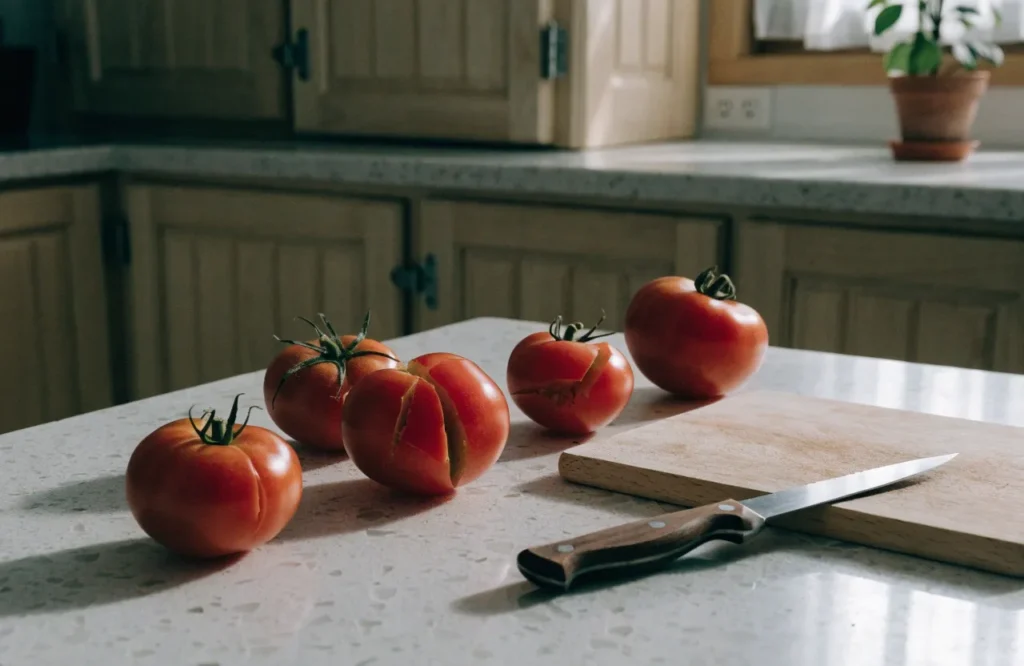
Once tomato fruit cracking has already happened, a few simple steps limit the damage and salvage as much of the harvest as possible:
- Harvest cracked fruit promptly rather than leaving it on the vine, where it’s most exposed to rot organisms and pests.
- Cut away the damaged area generously, well past where the crack ends, before using the rest.
- Use sound portions right away, cracked tomatoes don’t keep as long as intact ones, even refrigerated.
- Skip long-term storage for anything more than lightly cracked; plan to eat or cook it within a day or two.
- Process usable fruit into sauce, salsa, or canning batches if you have more cracked tomatoes than you can eat fresh, cooking neutralizes most of the cosmetic issue.
- Compost anything that’s gone soft, moldy, or foul-smelling rather than trying to salvage it.
How to Prevent Tomato Cracking
Keep Soil Moisture Consistent
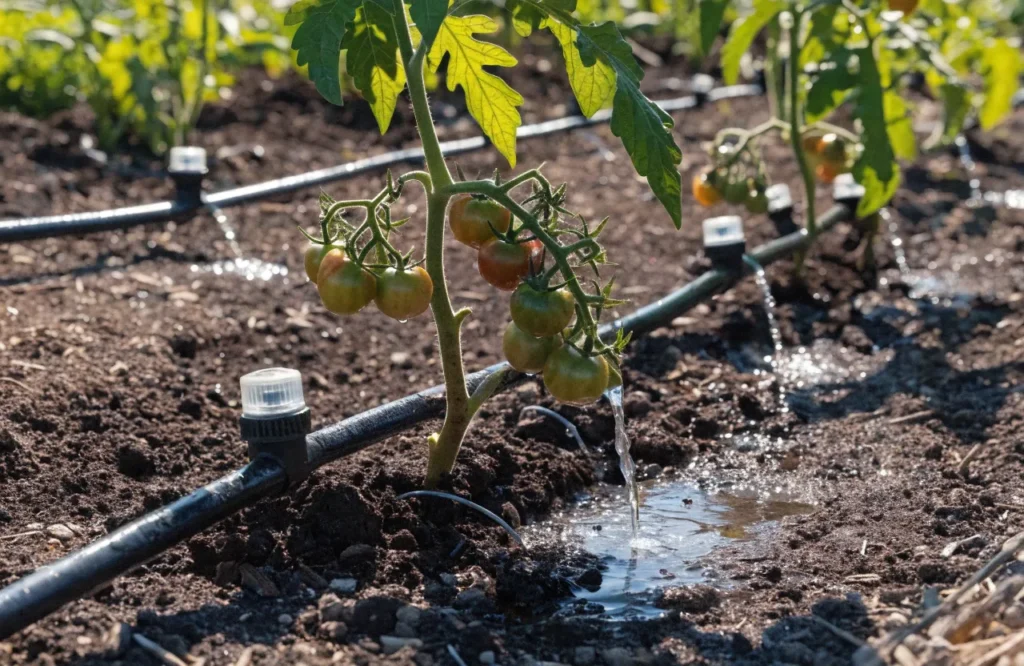
This is the single highest-impact change you can make. Rather than sticking to a fixed daily or weekly schedule, water based on what the soil and plant actually need, see how often you should really be watering tomato plants for a better approach. Drip irrigation or a soaker hose is ideal because it delivers water slowly and directly to the root zone, avoiding the moisture spikes that trigger cracking, and it also keeps foliage dry, which helps prevent fungal leaf diseases as a bonus. If you’re growing in containers, pair this with guidance on growing tomatoes in pots, since limited soil volume dries out and rehydrates far more quickly than in-ground plantings.
Start With the Right Soil
Well-structured, moisture-retentive soil for tomatoes buffers against the rapid moisture swings that cause cracking in the first place, it’s much easier to keep an amended, organic-rich bed evenly moist than compacted or fast-draining soil.
Mulch Heavily
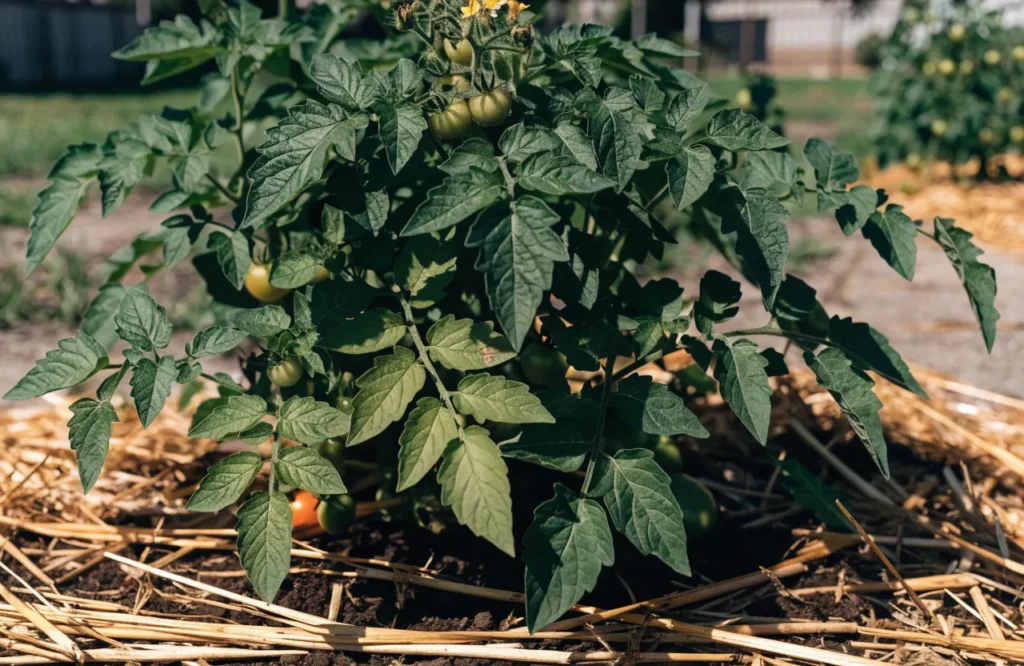
A 2–3 inch layer of straw, wood chips, or shredded leaves around the base of each plant slows evaporation, buffers soil temperature swings, and keeps moisture levels far more stable between waterings, especially valuable during unpredictable rain patterns.
Choose Crack-Resistant Varieties
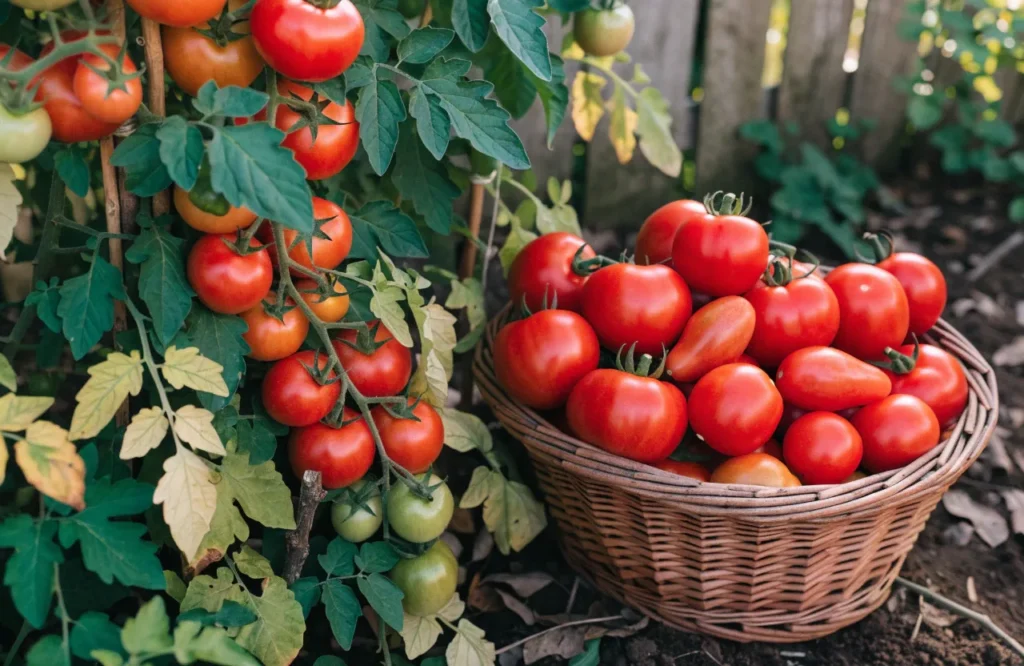
If cracking is a recurring problem in your garden, plant genetics can solve a large part of it. University extension trials and seed breeders consistently point to a handful of cultivars as reliably crack-tolerant:
| Variety | Growth Type | Crack Resistance | Best Use |
| Jet Star | Indeterminate | High, often cited as one of the most crack-resistant varieties in extension trials | Slicing, canning |
| Celebrity | Determinate/semi-determinate | High | Slicing, all-purpose |
| Mountain Fresh | Determinate | Good | Fresh eating, market growing |
| Mountain Spring | Determinate | Good | Fresh eating |
| Mountain Merit | Determinate | High (AAS winner) | Slicing, disease-prone regions |
| Iron Lady | Determinate | Good | Slicing, disease-prone regions |
Availability and performance can vary by region and season, so it’s worth checking with your local extension office or a trusted seed supplier to confirm which of these (or similar regional cultivars) perform best where you garden. For a broader list beyond crack resistance alone, see our guide to the best tomato varieties to grow.
Balance Your Fertilizer
Avoid heavy, frequent doses of high-nitrogen fertilizer once plants are fruiting. Choosing the right fertilizer for tomatoes, one with a higher potassium ratio at fruiting time, supports firmer fruit and stronger skin development rather than lush, watery foliage growth.
Manage Sun Exposure Through Pruning
Prune with restraint. Removing too many leaves exposes fruit directly to intense sun and heat, raising both fruit temperature and the day-to-night temperature swing, both cracking triggers. Following a proper tomato pruning method helps you remove the right growth while still leaving enough canopy to lightly shade developing fruit.
Harvest Early, Especially Before Rain
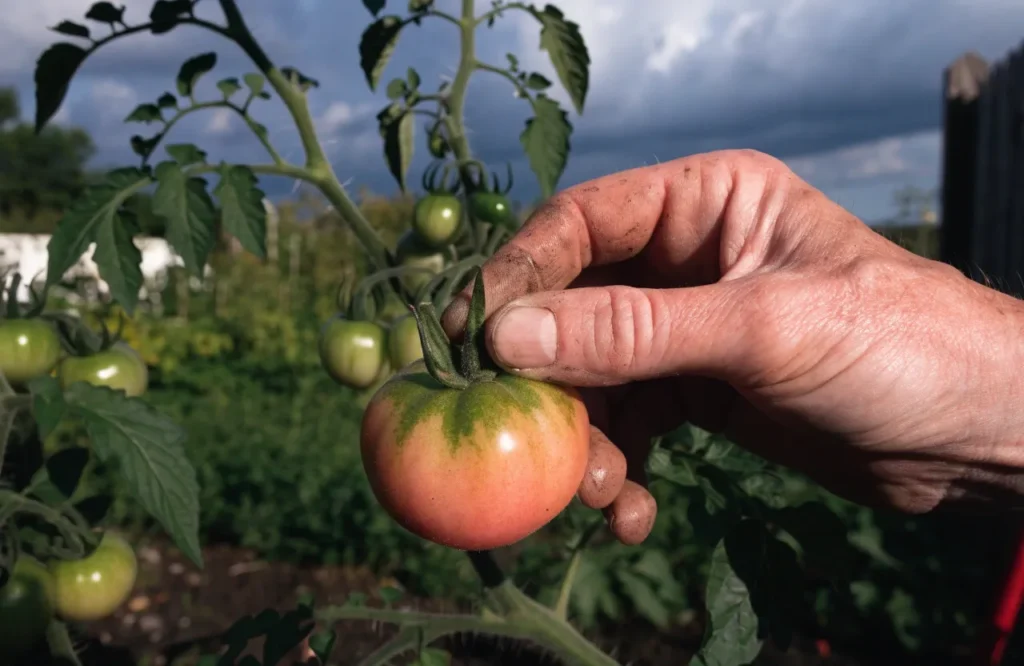
Once fruit reaches the breaker or pink stage, its skin is already firm enough to finish ripening safely indoors, and it’s far less prone to splitting than a fully vine-ripened tomato. Knowing when to harvest tomatoes, and picking anything showing color before a forecasted downpour, is a simple, reliable way to protect your crop, trading a small amount of vine-ripened flavor for a much higher percentage of intact fruit.
For Greenhouse and High-Tunnel Growers
Because outdoor rainfall isn’t a factor under cover, cracking here is driven almost entirely by irrigation consistency and temperature control. Use a max-min thermometer to track swings, ventilate to avoid heat spikes, and keep irrigation on a fixed, even schedule rather than adjusting reactively.
Tomato Cracking at a Glance
| Crack Type | Appearance | Primary Trigger | Severity |
| Radial | Vertical lines from stem toward blossom end | Heat + humidity, rapid moisture uptake | High, deep, rots quickly |
| Concentric | Rings around the stem scar | Sudden rain after dry spell | Moderate |
| Cuticle (Russeting) | Fine hairline cracks / rough skin | Ongoing minor moisture/temperature stress | Low, mostly cosmetic |
Frequently Asked Questions
What nutrient deficiency causes tomato cracking?
Cracking itself isn’t caused by a nutrient deficiency—it’s a water and skin-elasticity problem. However, excess nitrogen can encourage fast, lush growth that makes fruit more crack-prone, while balanced fertilizer with higher potassium at fruiting time supports firmer fruit.
Why do tomatoes crack after heavy rain?
When soil dries out and is suddenly saturated by heavy rain, the fruit takes in water faster than its skin can stretch, causing it to split. This is why inconsistent soil moisture is the most common cause of cracking.
Which tomato varieties resist cracking best?
Jet Star is often cited as one of the most crack-resistant varieties in extension trials, along with Celebrity, Mountain Merit, and Iron Lady. These are bred with thicker, more elastic skin that withstands moisture swings better.
Should I remove cracked tomatoes from the plant?
Yes, harvest cracked fruit promptly rather than leaving it on the vine, where it’s most exposed to rot organisms and pests. Cut away the damaged area generously and use the sound portions right away, as cracked tomatoes don’t keep as long.
Can you prevent tomatoes from cracking when it rains?
You can’t control the rain, but you can reduce the risk. Harvest any fruit at the breaker or pink stage before a forecasted downpour, since picked fruit won’t split. Keeping soil moisture consistent with mulch and drip irrigation also minimizes the shock of sudden rain.
Related Tomato Disorders to Watch For
Cracking often shows up alongside two other moisture-related issues:
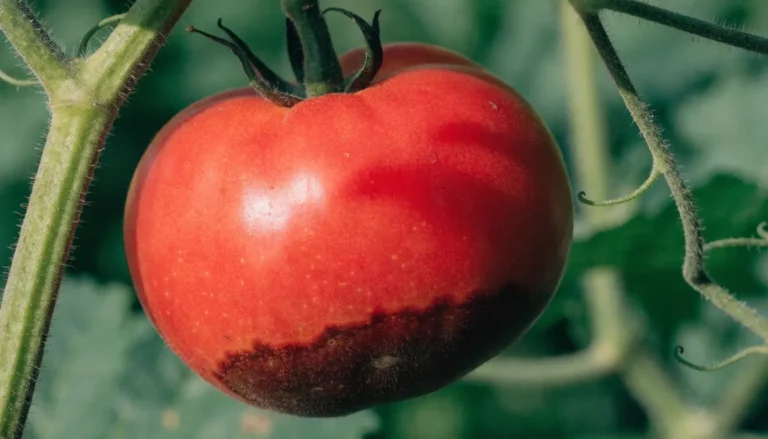
- Blossom end rot — a sunken, dark patch on the bottom of the fruit caused by inconsistent calcium uptake, often from the same erratic watering that causes cracking.
- Catfacing — puckered scarring and irregular concavities near the blossom end, usually from temperature swings during early flowering rather than fruit-stage moisture stress.
If you’re seeing more than one of these on the same plant, irrigation consistency is almost always the root fix to start with. It’s also worth ruling out other stress signals, if fruit problems are showing up alongside foliage issues, check our guide to 22 common tomato plant diseases or, if the whole plant looks stressed rather than just the fruit, why your tomato plant might be wilting.
The Bottom Line
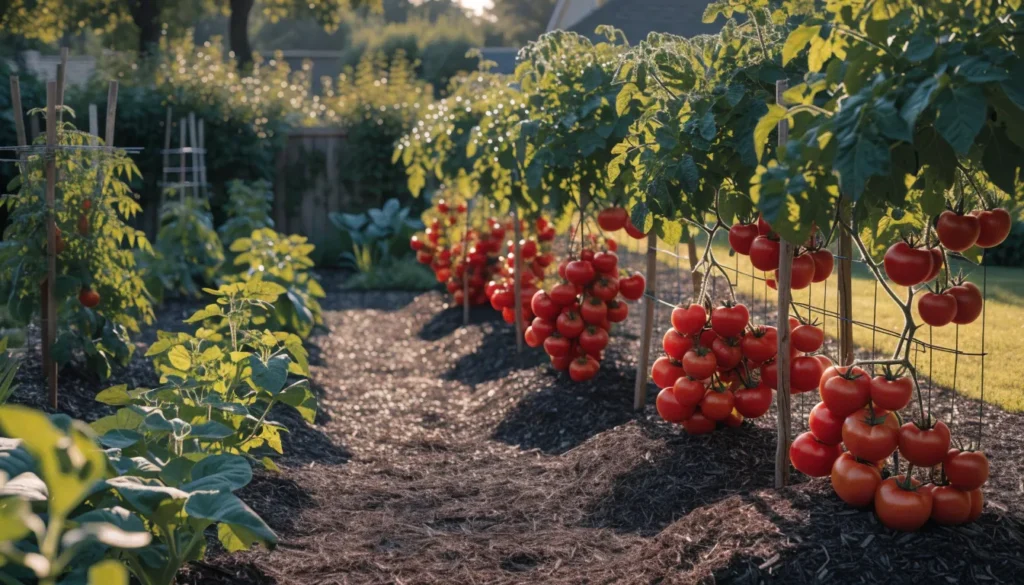
Tomato cracking comes down to one core imbalance: the fruit growing faster than its skin can stretch. Every effective fix, mulching, steady irrigation, balanced fertilizer, smart pruning, timely harvesting, and resistant varieties, works by smoothing out the swings in moisture and temperature that cause that imbalance in the first place. Tackle even two or three of these changes and most gardens see a dramatic drop in cracked fruit by the next harvest.