24 Best Plants for Dark Rooms With Little to No Natural Light
Basements, windowless offices, north-facing bedrooms, interior bathrooms, every home has at least one room that natural light never quite reaches. Most “low light plant” lists lump these spaces in with rooms that still get a decent amount of indirect daylight, which sets you up to buy a plant that quietly struggles for light and fails within a few months. This guide is narrower on purpose: these are 24 genuine plants for dark rooms, chosen specifically because they tolerate very low natural light, plus how to care for each one so it stays healthy rather than just hanging on.
Important: No plant on this list can live in complete, permanent darkness. All plants need light for photosynthesis. What these 12 share is an unusually high tolerance for very low natural light, often supported by ordinary indoor lighting rather than sunlight. If your room has no windows at all, pair any of these with a basic LED grow light, don’t rely on toughness alone.
Table of Contents
Quick Answer: Best Plants for Dark Rooms
| Need | Best Choice |
|---|---|
| Best overall | ZZ Plant |
| Best for a windowless office | ZZ Plant |
| Best for beginners | Snake Plant |
| Best pet-safe option | Cast Iron Plant |
| Best trailing plant | Pothos |
| Best for a humid bathroom | Bird’s Nest Fern |
| Best flowering plant | Peace Lily |
| Best compact desk plant | Peperomia |
| Best palm | Parlor Palm |
| Best for a basement | Chinese Evergreen |
Dark Room vs. Low Light: Why This List Is Narrower Than Most
It’s worth separating two terms that get used interchangeably but aren’t the same thing. A low-light room still gets some natural daylight, a few feet back from a window, or a north-facing room that never gets direct sun. A dark room often means very little natural light: a windowless powder room, a basement with no exterior wall, or an interior hallway lit only by a lamp. That distinction matters because true plants for dark rooms need to tolerate conditions most “low-light” houseplants were never really tested against.
Plenty of popular houseplants get labeled “low light tolerant” when what that really means is “doesn’t need direct sun.” That’s a real category, but it’s a different, and longer, list than the genuine plants for dark rooms this article is answering for.
Plants That Are Great for Low Light, But Not for Almost No Light
Calathea, prayer plant, Chinese money plant, spider plant, bromeliad, and variegated trailing philodendrons all tolerate low light reasonably well, but they aren’t reliable plants for dark rooms, in a space with very little natural light, they tend to fade, stretch, or stall out faster than the 12 plants below. If your space gets even a little ambient daylight, not direct sun, but enough to comfortably see without turning on a light, those plants are worth exploring as part of a broader low-light indoor plant lineup. This guide focuses specifically on rooms that don’t clear that bar.
Expert Tips for Keeping Plants Alive in a Dark Room
Caring for plants for dark rooms is a little different from ordinary houseplant care, since light, not water, is usually the limiting factor. Here’s what actually makes a difference:
- Add artificial light where you can. A basic LED grow bulb screwed into an existing lamp fixture, on a timer for 10–12 hours a day, makes a bigger difference than any “shade-loving” plant label.
- Water according to the plant, not a fixed calendar. In a dark room, soil dries far more slowly than it would in a sunny spot, so treat any watering interval as a guideline and check soil moisture before watering rather than sticking to a schedule. The right frequency also depends on pot size, soil mix, humidity, and drainage, not light level alone.
- Rotate plants between rooms if you can. Giving a dark-room plant a “vacation” near a brighter window once every few weeks helps it recover and produce new growth.
- Skip variegated varieties in the darkest spots. Variegated (multi-colored) leaves have less chlorophyll than solid green ones, so they need more light to thrive. Choose the solid-green version of a plant over its fancier variegated cousin.
- Dust the leaves monthly. In dim rooms, every bit of available light matters, a layer of dust on the foliage blocks what little light reaches the plant.
- Cut fertilizer frequency in half. Growth slows dramatically in low light, so feeding a dark-room plant as often as you would a sunny-window plant does more harm than good.
- Accept slower growth as normal, not a warning sign. A snake plant that puts out one new leaf in six months in a dark room isn’t struggling, it’s behaving exactly as expected.
Comparison Table: The 12 Most Dark-Tolerant Plants
The table below compares all 12 plants for dark rooms side by side, so you can quickly match a plant to your room, your watering habits, and your pets.
| Plant | Dark-Room Tolerance | Artificial Light | Watering | Pet Safety* | Growth Habit | Best For |
|---|---|---|---|---|---|---|
| ZZ Plant | Excellent | Strongly recommended | Let soil dry fully; often every 3–6 weeks | No | Upright, clumping | Offices |
| Snake Plant | Excellent | Strongly recommended | Let soil dry fully; often every 3–6 weeks | No | Upright | Bedrooms |
| Cast Iron Plant | Excellent | Recommended | Let soil dry somewhat; often every 2–3 weeks | Yes | Upright, arching | Pet owners |
| Chinese Evergreen | Very good | Recommended | Every 1–2 weeks, soil lightly moist | No | Upright, clumping | Basements |
| Pothos | Very good | Recommended | Every 1–2 weeks, soil lightly moist | No | Trailing/vining | Hallways |
| Dracaena ‘Janet Craig’ | Good | Recommended | Every 1–2 weeks, soil lightly moist | No | Upright | Corners |
| Heartleaf Philodendron | Good | Recommended | Weekly, soil lightly moist | No | Trailing/vining | Shelves |
| Lucky Bamboo | Good | Recommended | Change water weekly (if hydroponic) | Yes | Upright stalks | Desks |
| Parlor Palm | Good, with humidity | Helpful | Weekly, soil lightly moist | Yes | Upright, feathery | Living rooms |
| Peperomia | Good | Helpful | Every 1–2 weeks, soil lightly moist | Yes | Compact, rosette | Desks |
| Peace Lily | Moderate | Helpful | Weekly, keep evenly moist | No | Upright, clumping | Bedrooms |
| Bird’s Nest Fern | Moderate, needs humidity | Helpful | Weekly, moist not soggy | Yes | Rosette | Bathrooms |
“Pet Safety: Yes” means generally considered non-toxic to cats and dogs. Any plant can still cause stomach upset if chewed or eaten in quantity, so keep new plants out of reach until you know your pet’s habits.
Best for Very Low Natural Light vs. Best With Artificial Light Support
Not all 12 plants for dark rooms on this list have the same tolerance for very low natural light. The first five are the most tolerant of very low natural light; the remaining seven do best in a dark room when paired with a grow light, a nearby lamp, or at least some borrowed daylight from an adjoining room.
Tier 1 — Most tolerant of very low natural light: ZZ Plant, Snake Plant, Cast Iron Plant, Chinese Evergreen, Dracaena ‘Janet Craig’
Tier 2 — Better with consistent artificial-light support: Pothos, Heartleaf Philodendron, Lucky Bamboo, Parlor Palm, Peperomia, Peace Lily, Bird’s Nest Fern
The 12 Best Plants for Dark Rooms
Here’s a closer look at each of these plants for dark rooms, what makes it work, how to care for it, and the one mistake most likely to kill it.
Tier 1: Most Tolerant of Very Low Natural Light
1. ZZ Plant (Zamioculcas zamiifolia)
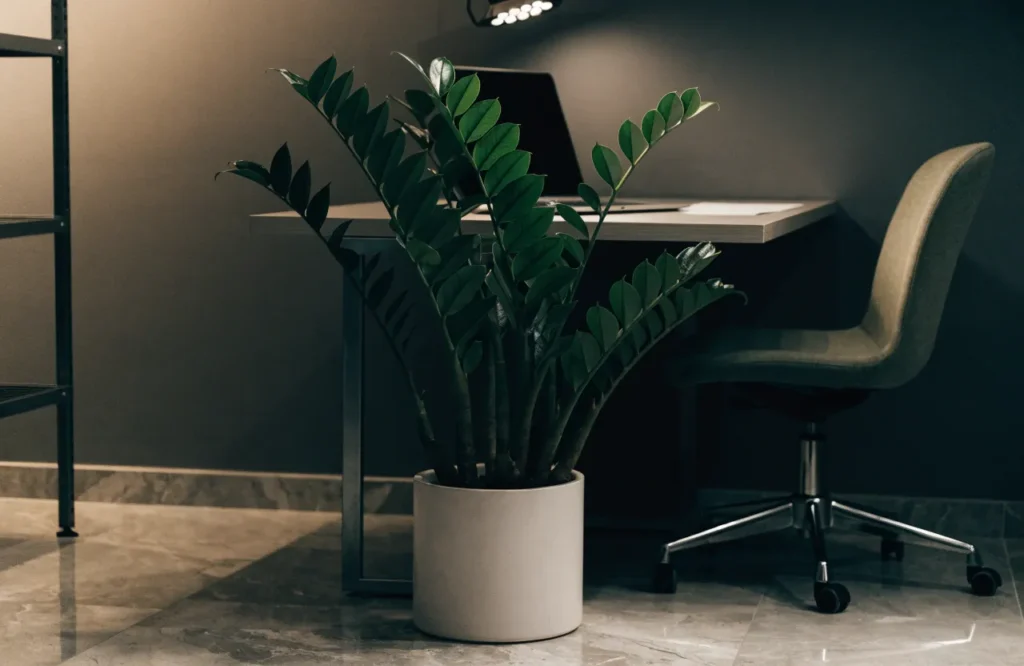
- Best for: Windowless offices and dark corners
- Light: Very low to bright indirect
- Water: Let soil dry out fully between waterings, often every 3–6 weeks in very low light
- Growth habit: Upright, clumping
- Size: 2–4 ft indoors
- Pet safe: No
- Difficulty: Very easy
- Why it tolerates very low light: In its native East African habitat, the ZZ plant grows in the shade of forest floors and semi-arid ground, storing water and energy in thick underground rhizomes. Those reserves let it get by on very little light for extended periods, with growth slowing to nearly a stop during the darkest stretches.
- Temperature: Comfortable at normal room temperature (65–85°F); avoid cold drafts below 55°F.
- Signs it needs more light: New stems growing noticeably thinner and paler than older ones, or new growth stopping for an extended period.
- Common mistake: Watering on a fixed weekly schedule regardless of soil moisture, this is the most common way people kill an otherwise resilient plant.
2. Snake Plant (Dracaena trifasciata)
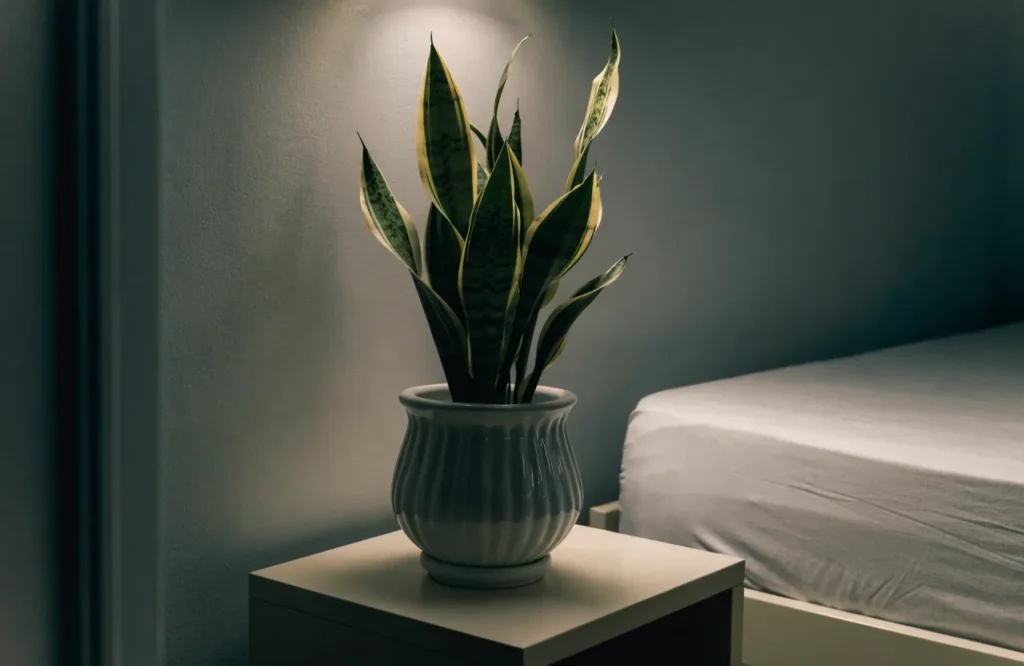
- Best for: Dark bedrooms and stairwells
- Light: Very low to bright indirect
- Water: Let soil dry out fully, often every 3–6 weeks
- Growth habit: Upright
- Size: 1–4 ft
- Pet safe: No
- Difficulty: Very easy
- Why it tolerates very low light: Native to dry regions of West Africa, snake plants use CAM (Crassulacean Acid Metabolism) photosynthesis, which mainly improves water-use efficiency by letting the plant exchange gases at night rather than during the heat of the day. That water efficiency contributes to its ability to tolerate dry conditions, irregular watering, and long stretches of dim light.
- Temperature: Tolerates a wide range, roughly 55–85°F.
- Signs it needs more light: Leaves losing their firm, upright posture and starting to flop or curl.
- Common mistake: Planting in a container without drainage holes, in a dark room, trapped water at the base causes rot far faster than it would in a bright one.
3. Cast Iron Plant (Aspidistra elatior)
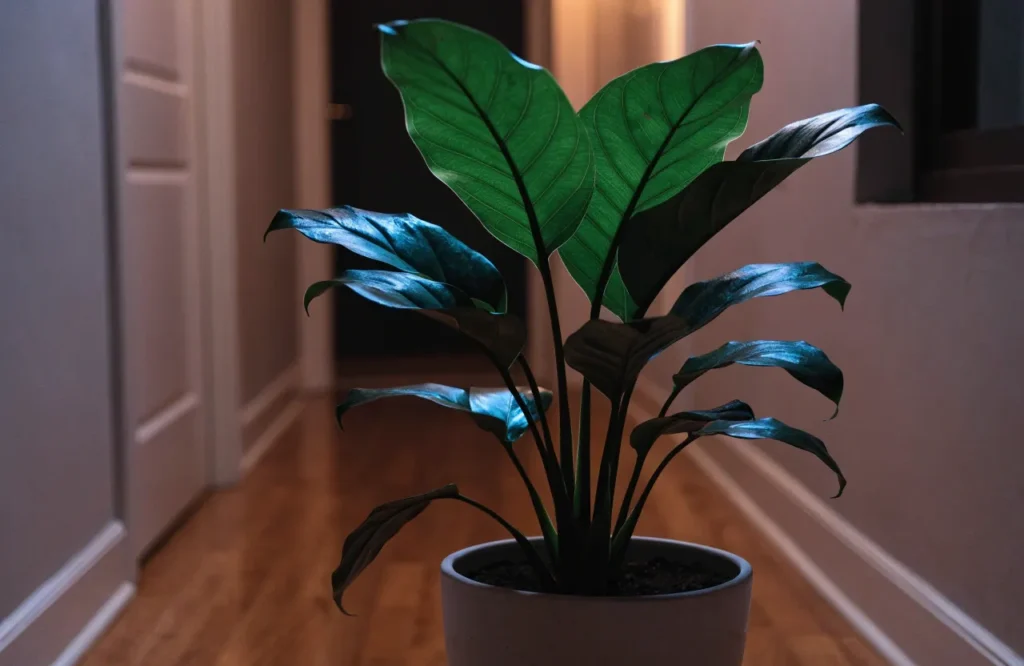
- Best for: Pet-friendly dark entryways and hallways
- Light: Low to very low
- Water: Let soil dry somewhat between waterings, often every 2–3 weeks
- Growth habit: Upright, arching
- Size: 1–3 ft
- Pet safe: Yes
- Difficulty: Very easy
- Why it tolerates very low light: Native to the shaded forest floors of East Asia, this plant earned its common name from its Victorian-era reputation for surviving homes lit by coal fires and gas lamps. Its natural adaptation to deeply shaded forest-floor conditions helps explain its exceptional tolerance of low indoor light.
- Temperature: Prefers cooler rooms, roughly 45–70°F, and tolerates temperature swings better than most plants on this list.
- Signs it needs more light: New leaves emerging noticeably smaller than the ones around them, though this plant is so slow-growing that patience is usually the better response than moving it.
- Common mistake: Overwatering out of impatience, this is the slowest grower on the list, and more water won’t speed it up.
4. Chinese Evergreen (Aglaonema, solid-green varieties)
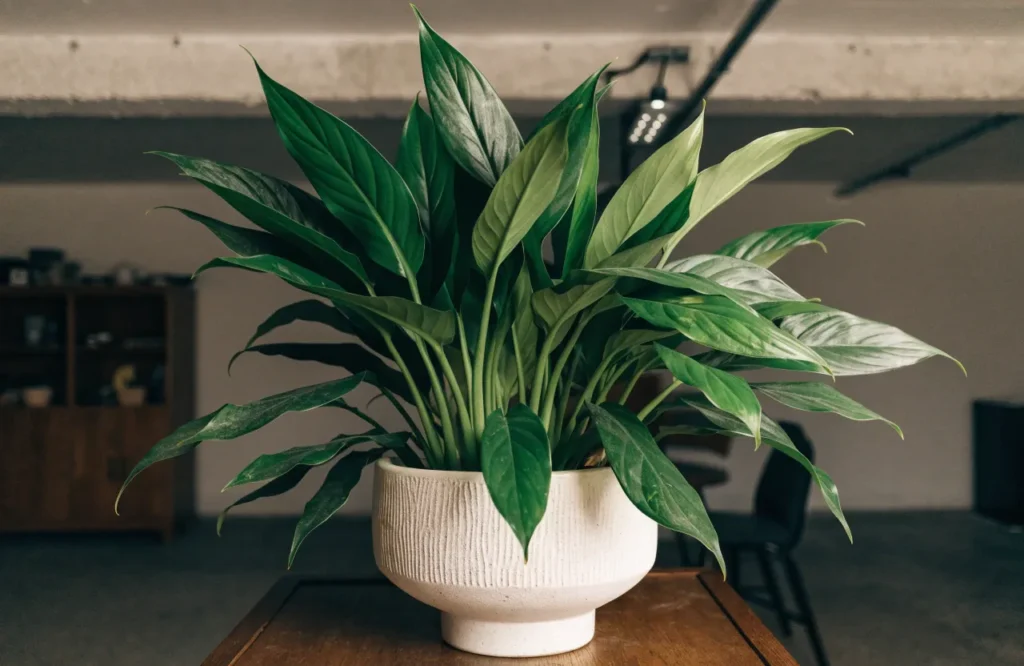
- Best for: Dry, dim basements
- Light: Low to medium indirect
- Water: Every 1–2 weeks, keeping soil lightly moist
- Growth habit: Upright, clumping
- Size: 1–3 ft
- Pet safe: No
- Difficulty: Easy
- Why it tolerates very low light: A tropical Southeast Asian understory plant, solid-green Chinese evergreen varieties evolved beneath a dense forest canopy and tolerate both low light and the drier air typical of an unfinished basement better than most tropical foliage plants.
- Temperature: Prefers warmth, ideally above 60°F; dislikes cold basements below 55°F.
- Signs it needs more light: Leaves turning a duller, more uniform green, and growth becoming very slow or stopping for extended periods.
- Common mistake: Choosing a variegated (silver, pink, or red-patterned) cultivar for a truly dark room, those need noticeably more light than the plain green forms to keep their coloring.
5. Dracaena ‘Janet Craig’
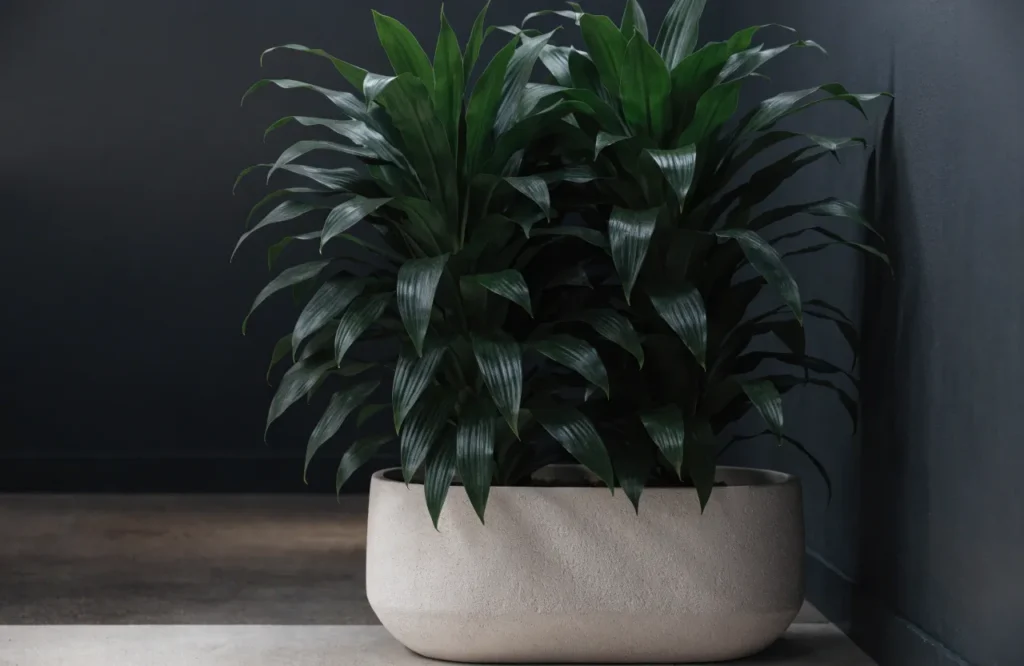
- Best for: Filling a tall, dim corner
- Light: Low to medium indirect
- Water: Every 1–2 weeks, keeping soil lightly moist
- Growth habit: Upright
- Size: 3–6 ft
- Pet safe: No
- Difficulty: Easy
- Why it tolerates very low light: One of the most shade-tolerant cultivars in the Dracaena genus, with deep, solid green foliage (rather than variegated) built to make efficient use of minimal light.
- Temperature: Prefers warmth, 65–80°F; sensitive to cold drafts.
- Signs it needs more light: Lower leaves yellowing and dropping faster than new ones emerge at the top.
- Common mistake: Watering with fluoride-treated tap water, this plant is notably sensitive to it, and brown leaf tips show up faster in a slow-drying, low-light pot.
Tier 2: Better With Artificial Light Support
6. Pothos (Epipremnum aureum)
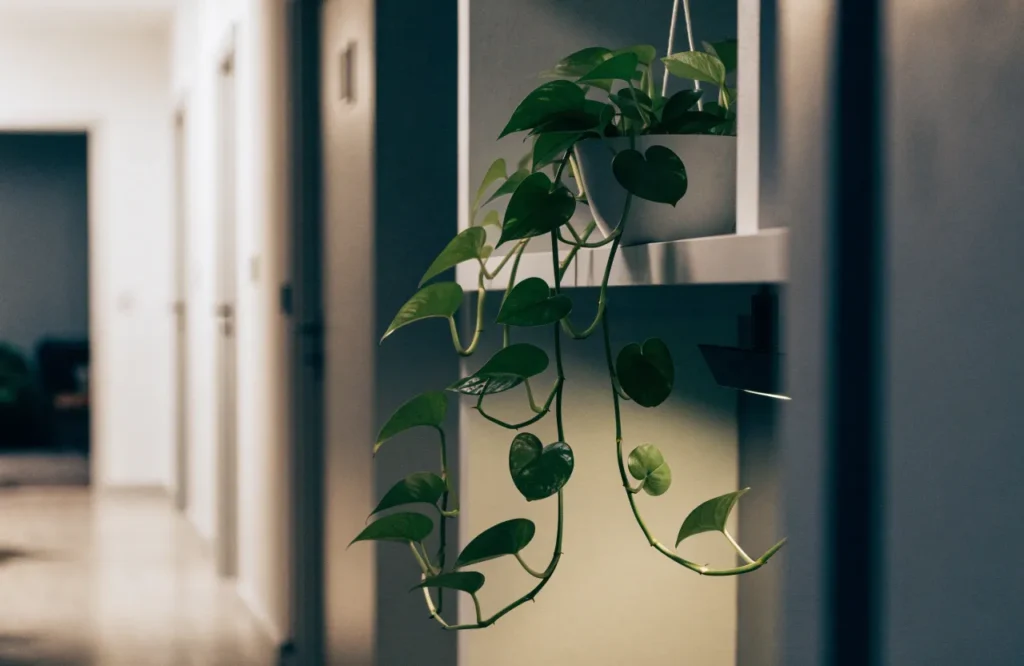
- Best for: Dark hallways and trailing shelf displays
- Light: Low to bright indirect
- Water: Every 1–2 weeks, keeping soil lightly moist
- Growth habit: Trailing/vining
- Size: Trailing, 6–10 ft
- Pet safe: No
- Difficulty: Very easy
- Why it tolerates very low light: A forest-floor vine in its native range, pothos naturally grows toward whatever dappled light filters through a jungle canopy, which makes it a very low-light-tolerant plant. That said, growth becomes noticeably sparser, slower, and stem gaps widen as available light drops toward the bottom of its range, a nearby lamp or grow light keeps it fuller in a truly dark room.
- Temperature: Comfortable at normal room temperature, 65–85°F.
- Signs it needs more light: Long gaps of bare stem between leaves (“legginess”) and variegation fading to solid green.
- Common mistake: Letting the vines tangle without occasional trimming, a leggy, overgrown pothos in a dark room grows unevenly and looks sparse fast.
7. Heartleaf Philodendron (Philodendron hederaceum)
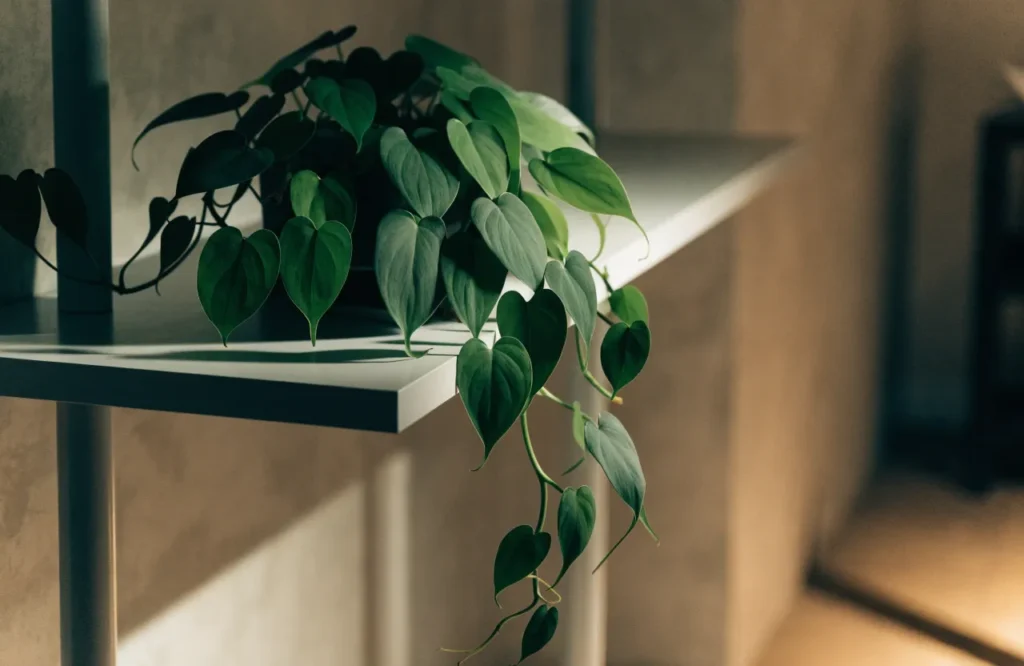
- Best for: Trailing displays on dark shelves
- Light: Low to medium indirect
- Water: Weekly, keeping soil lightly moist
- Growth habit: Trailing/vining
- Size: Trailing, 4–6 ft
- Pet safe: No
- Difficulty: Very easy
- Why it tolerates very low light: Like pothos, this is a climbing understory vine adapted to filtered, dim tropical light. It can continue producing new growth under low indoor light, although that growth becomes slower and leggier as light decreases, a nearby lamp or grow light noticeably improves its fullness.
- Temperature: Prefers warmth, ideally 65–80°F.
- Signs it needs more light: Sparse, stretched-out stems with small, widely spaced leaves.
- Common mistake: Treating it exactly like pothos, philodendron generally prefers slightly more consistent soil moisture.
8. Lucky Bamboo (Dracaena sanderiana)
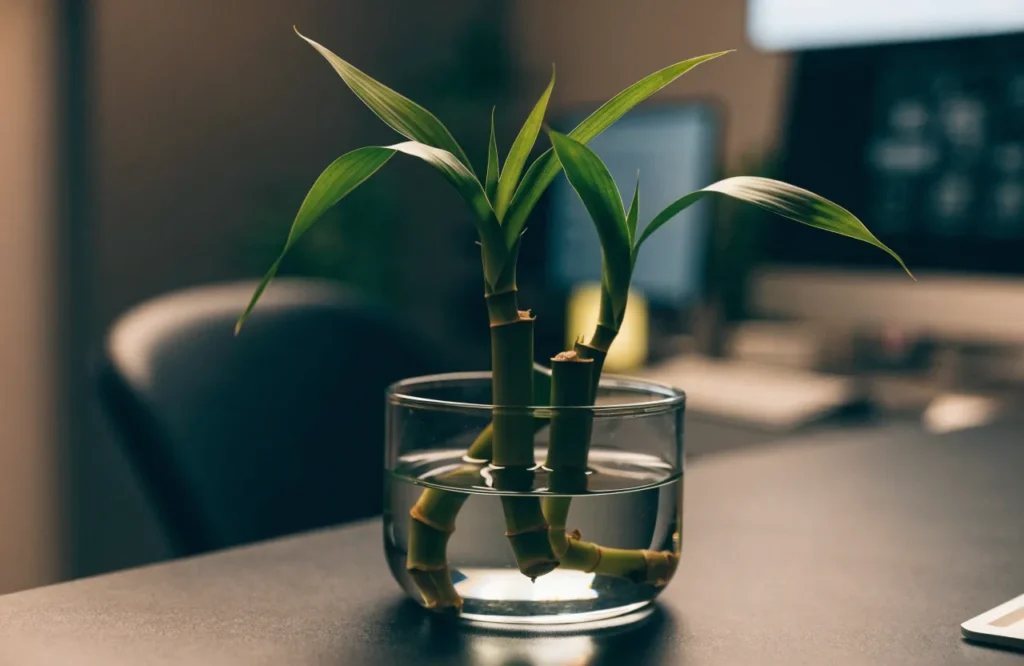
- Best for: Dark desks and minimalist office corners
- Light: Low to medium indirect
- Water: Change water weekly if grown hydroponically; keep soil lightly moist if potted
- Growth habit: Upright stalks
- Size: 1–3 ft
- Pet safe: Yes
- Difficulty: Very easy
- Why it tolerates very low light: Despite the name, this is a true Dracaena, a genus generally adapted to shaded tropical understories, and it holds up well under dim artificial office lighting when grown in water with occasional fresh changes.
- Temperature: Comfortable at normal room temperature, 65–90°F; dislikes drafts.
- Signs it needs more light: Yellowing lower stalks combined with little to no new growth over several months.
- Common mistake: Using untreated tap water, chlorine and fluoride cause yellowing stalks faster in low light, where the plant has less energy available to compensate.
9. Parlor Palm (Chamaedorea elegans)
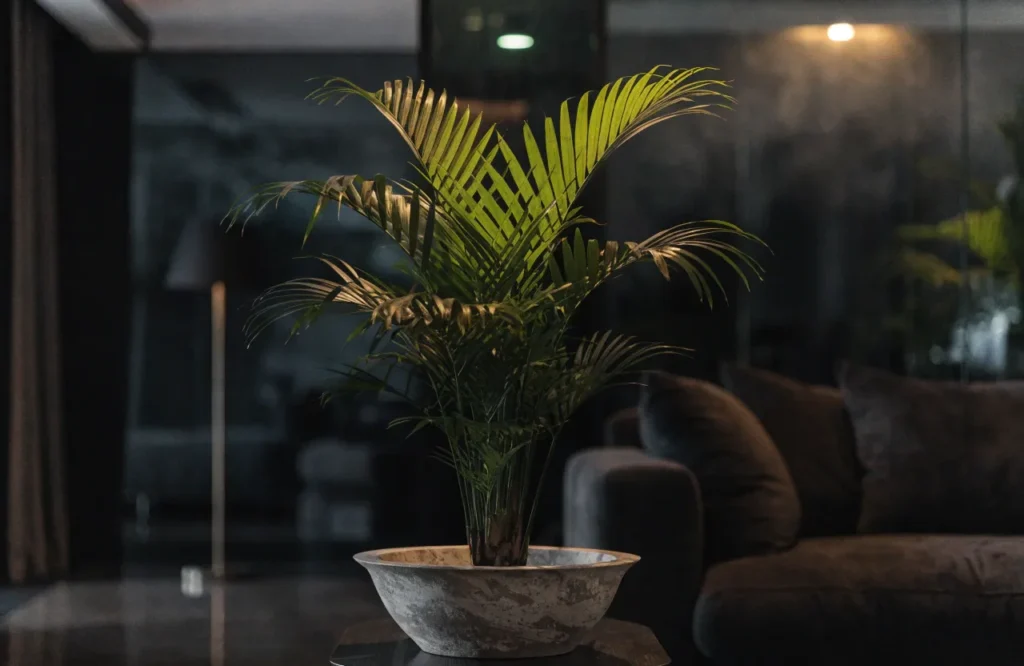
- Best for: Dark living rooms and offices
- Light: Low to medium indirect
- Water: Weekly, keeping soil lightly moist
- Growth habit: Upright, feathery
- Size: 2–4 ft
- Pet safe: Yes
- Difficulty: Easy
- Why it tolerates very low light: A genuinely shade-adapted plant that evolved as an understory palm beneath the dense rainforest canopy of Central America, so dim indoor light is closer to its natural habitat than a compromise, though consistent humidity matters as much as light level here.
- Temperature: Prefers warmth and humidity, ideally 65–80°F.
- Signs it needs more light: Fronds turning pale yellow-green rather than deep green, and new fronds emerging noticeably smaller.
- Common mistake: Placing it in a very dry, low-humidity room, this palm tolerates dim light better than it tolerates dry air, and spider mites often move in when both are present.
10. Peperomia
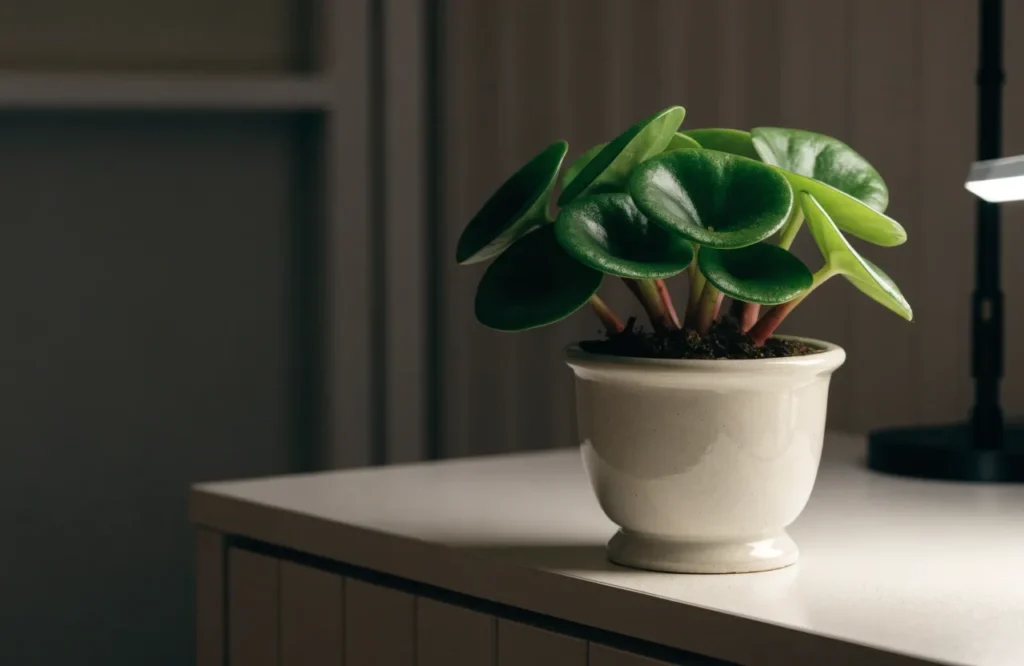
- Best for: Compact desks and small basement plant stands
- Light: Low to medium indirect
- Water: Every 1–2 weeks, letting soil dry somewhat between waterings
- Growth habit: Compact, rosette or trailing depending on variety
- Size: 6–12 in
- Pet safe: Yes
- Difficulty: Easy
- Why it tolerates very low light: Naturally an epiphyte or forest-floor plant in parts of Central and South America, peperomia avoids direct sun in the wild, and its thick, fleshy leaves store enough moisture to tolerate longer stretches between waterings in a dim room.
- Temperature: Comfortable at normal room temperature, 65–80°F.
- Signs it needs more light: Leaves becoming noticeably smaller than usual and stems stretching thin between them.
- Common mistake: Overwatering, more peperomias are lost to soggy soil in a slow-drying dark room than to insufficient light.
11. Peace Lily (Spathiphyllum)
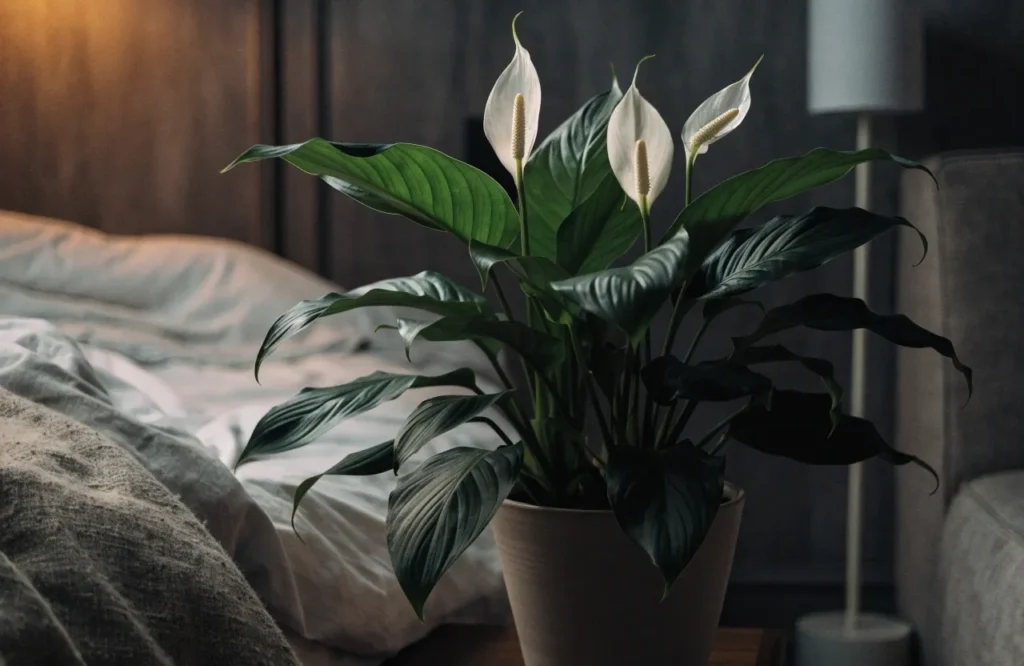
- Best for: Dim bedrooms that get at least a little ambient light
- Light: Low to medium indirect
- Water: Weekly, keep evenly moist
- Growth habit: Upright, clumping
- Size: 1–4 ft
- Pet safe: No
- Difficulty: Easy
- Why it tolerates very low light: One of the few flowering plants that tolerates dim conditions at all, since it naturally grows in the shade of tropical forest floors in the Americas, though it typically won’t bloom as reliably in the darkest rooms as it would with a bit more light or a grow light.
- Temperature: Prefers warmth and humidity, 65–80°F.
- Signs it needs more light: Fewer or no blooms over an extended period, combined with generally dull, less glossy leaves.
- Common mistake: Waiting too long to water, this plant droops dramatically when thirsty, which is actually a helpful, hard-to-miss warning sign rather than a cause for alarm.
12. Bird’s Nest Fern (Asplenium nidus)
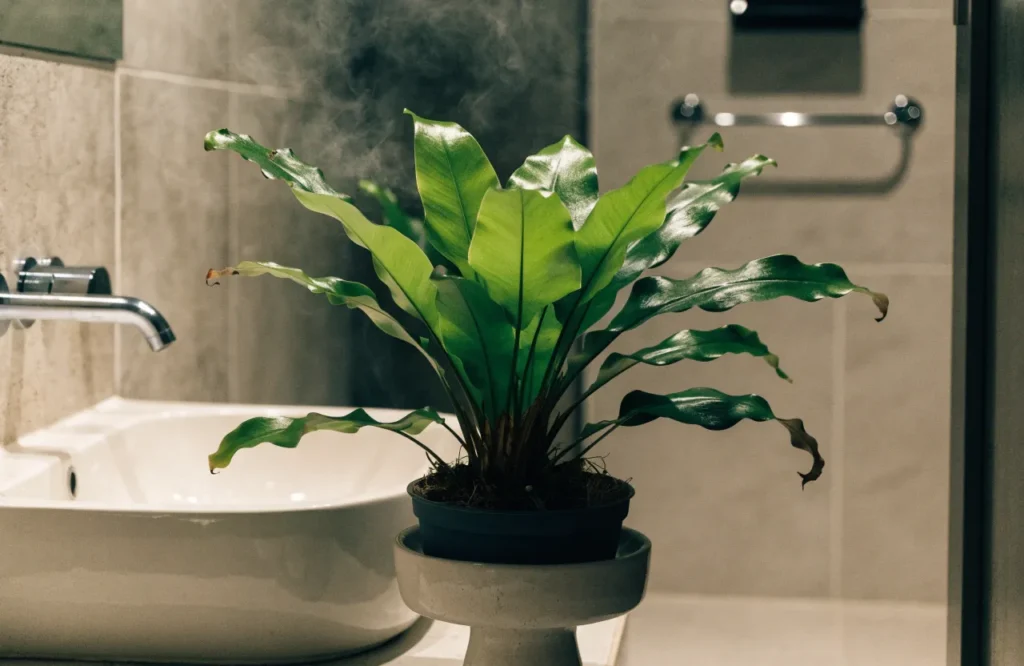
- Best for: Humid, windowless bathrooms
- Light: Low, plus consistent humidity
- Water: Weekly, moist but not soggy
- Growth habit: Rosette
- Size: 1–2 ft
- Pet safe: Yes
- Difficulty: Moderate
- Why it tolerates very low light: A rainforest floor native adapted to filtered, dim light paired with consistently high humidity, a bathroom’s natural conditions closely replicate its native environment, arguably more than any other room in a typical home. Humidity matters here as much as light level.
- Temperature: Prefers warmth, ideally 65–80°F; dislikes cold drafts.
- Signs it needs more light: Fronds staying small and pale rather than developing their typical broad, glossy green shape.
- Common mistake: Placing it in a dark room without adequate humidity, without both conditions together, this fern struggles more than the other plants on this list.
More Plants for Low-Light Rooms — These Ones Need a Little Indirect Light
The 12 plants above are the ones that cope best with a genuinely dark room. The next 12 are close runners-up: they handle low light well, but they won’t thrive in a truly dark room with almost no natural light. Place each one a few feet from a window, where it can catch some soft, indirect light, or give it grow-light support, and it will do beautifully.
13. Corn Plant (Dracaena fragrans)
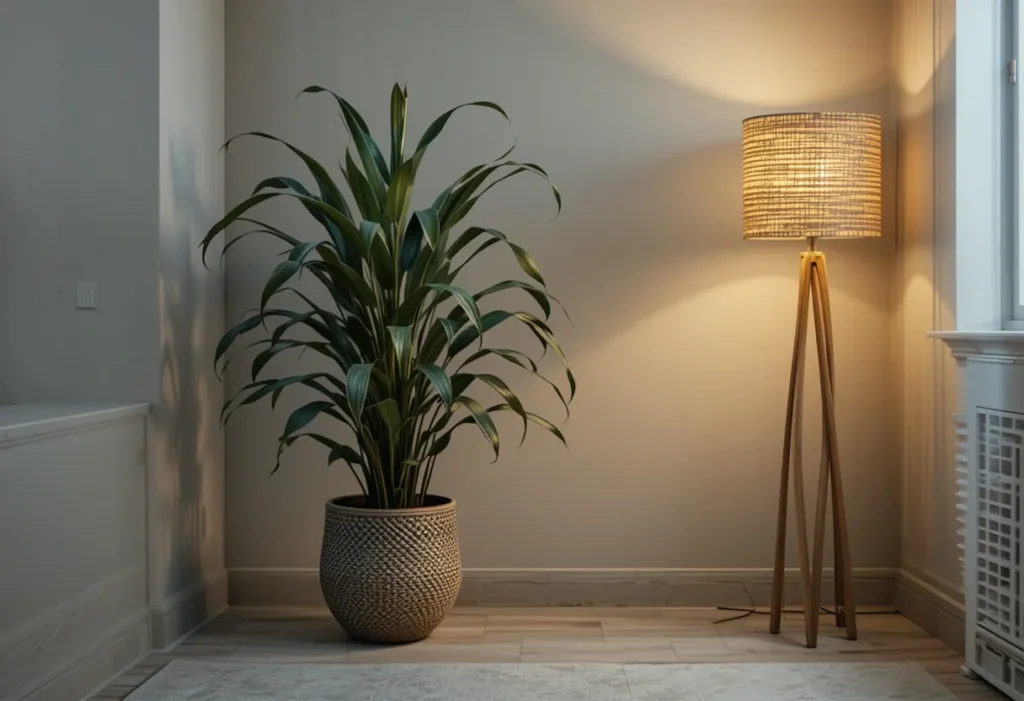
Dracaena adds height, texture, and architectural beauty to indoor spaces while remaining surprisingly easy to care for. Its upright growth habit makes it an excellent houseplant for homes with less sunlight, filling empty corners or adding greenery beside furniture without taking up much floor space. The long, sword-like leaves create a clean, modern look that complements almost any decorating style.
Many Dracaena varieties tolerate soft, filtered light exceptionally well and require only moderate watering, making them perfect for beginners. Their bold foliage pairs beautifully with minimalist interiors, home offices, and contemporary living rooms, adding lasting greenery with minimal effort.
Popular Varieties
- Janet Craig – Deep green foliage that thrives in low-light rooms.
- Lemon Lime – Bright green leaves with striking yellow stripes.
14. English Ivy (Hedera helix, indoor)
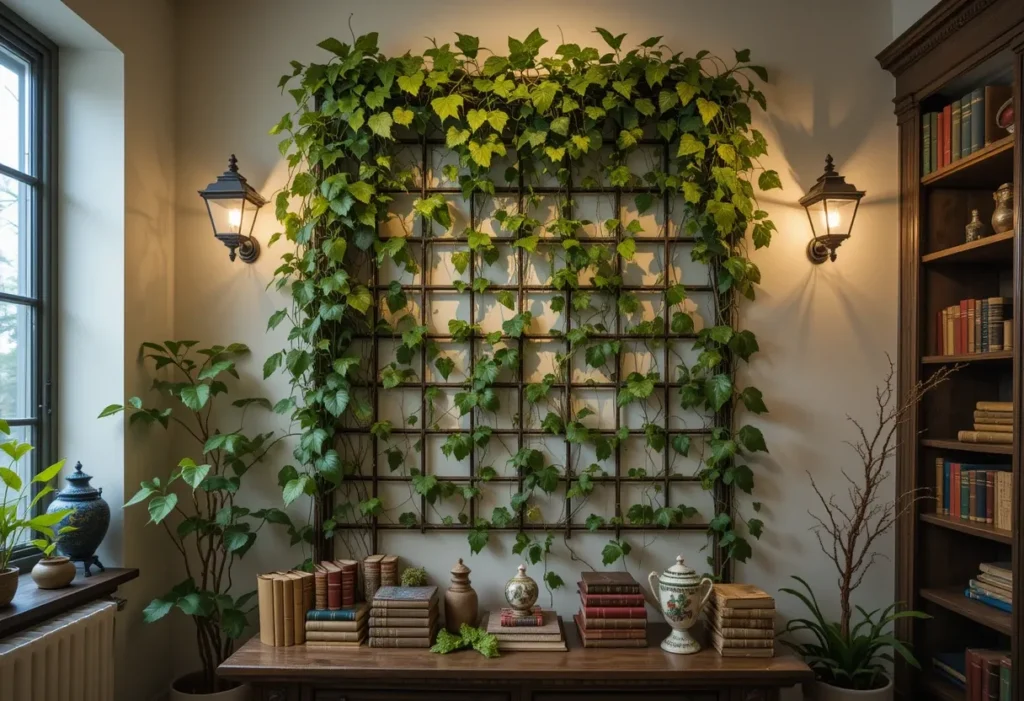
English Ivy creates a soft, cascading effect that instantly adds life to bookshelves, hanging baskets, and plant stands. Its trailing vines naturally spill over containers, making it one of the most beautiful plants for north-facing rooms when you want vertical greenery without much effort.
Keep the soil evenly moist and prune occasionally to encourage fuller growth. Whether trained along a trellis or allowed to trail naturally, English Ivy brings a relaxed, garden-inspired charm to any room while adapting well to rooms with limited daylight
Popular Varieties
- Glacier – Small gray-green leaves with creamy white edges.
- Gold Child – Bright green foliage edged with golden-yellow variegation.
15. Dumb Cane (Dieffenbachia seguine)
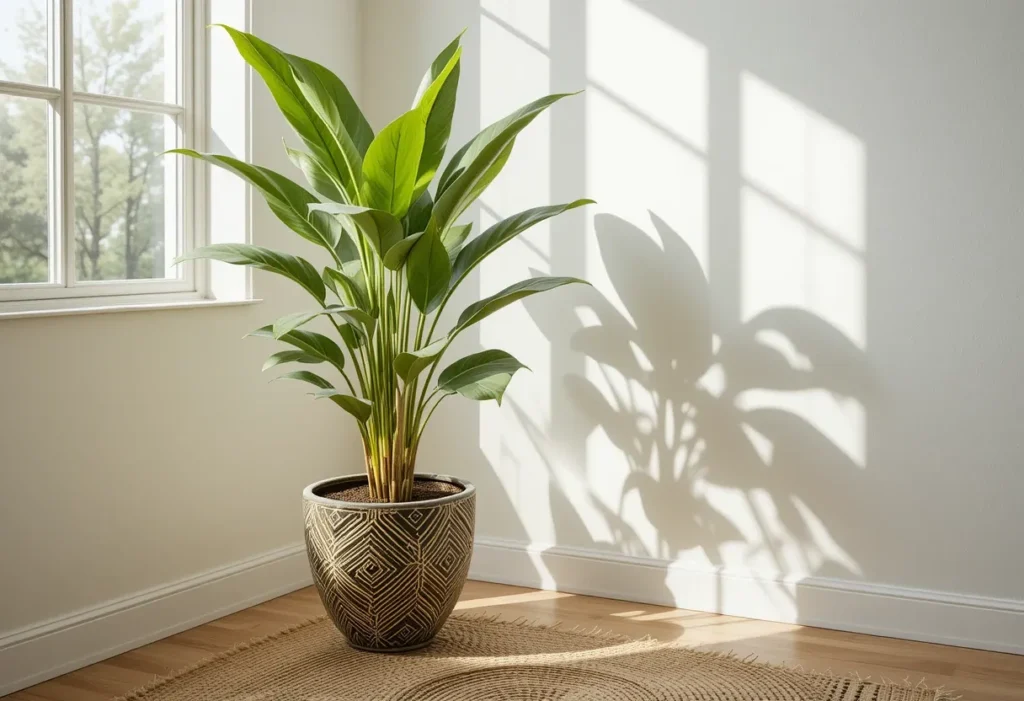
Dieffenbachia is admired for its large, beautifully patterned leaves that instantly brighten darker rooms. The attractive blend of green, cream, and white markings reflects available light, helping small indoor spaces feel fresher and more inviting. Its bold tropical foliage makes it a standout choice for indoor areas that don’t receive much sunlight.
Keep it away from direct afternoon sun, which may scorch the leaves, and water only when the top inch of soil becomes dry. Its upright growth makes it ideal beside sofas, desks, or in empty corners where a larger plant can add height and visual interest.
Popular Varieties
- Camille – Cream-colored centers surrounded by rich green edges.
- Tropic Snow – Large leaves with striking white variegation.
16. Boston Fern (Nephrolepis exaltata)
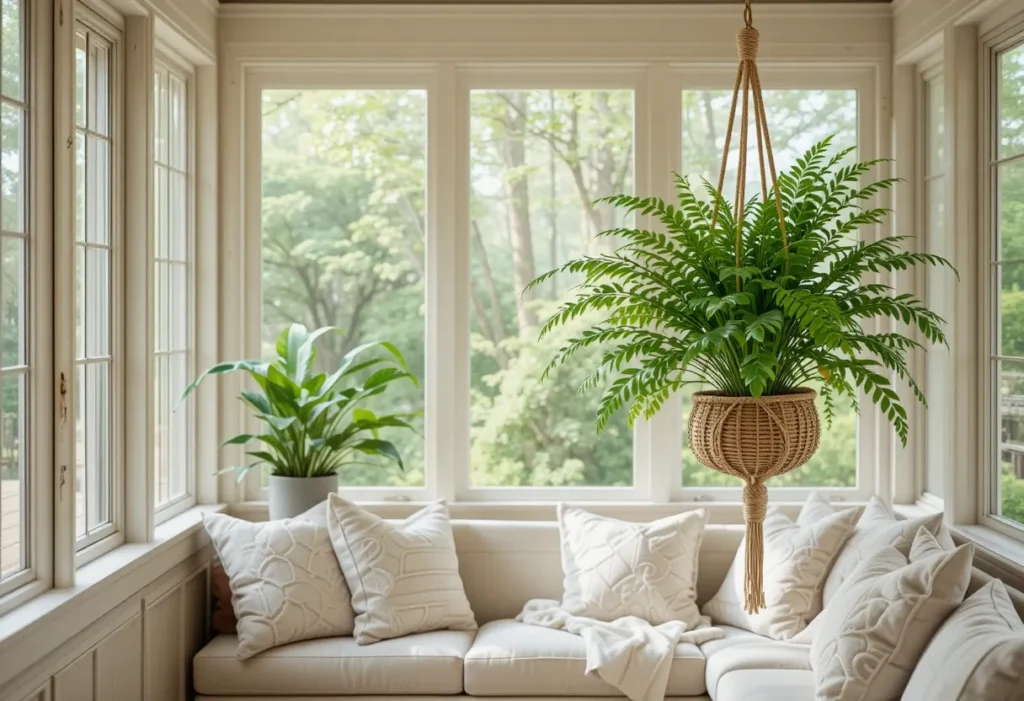
With its graceful, arching fronds and vibrant green foliage, the Boston Fern is a beautiful choice for anyone who loves lush indoor greenery. It thrives in filtered daylight and adapts well to dimmer rooms, making it perfect for bedrooms, bathrooms, hallways, or other areas that receive very little direct sun. Its cascading fronds instantly bring a fresh, calming feel to any space.
This classic fern prefers evenly moist soil and higher humidity to keep its fronds full and healthy. Occasional misting or placing the pot on a pebble tray helps prevent the leaf tips from drying out. With regular trimming of older fronds, it will continue producing fresh, vibrant growth throughout the year.
Popular Varieties
- Fluffy Ruffles – A compact variety with finely divided, feathery fronds that’s perfect for hanging baskets or tabletops.
- Dallas Fern – A fuller, more heat-tolerant variety with dense foliage that adapts well to typical indoor conditions.
17. Spider Plant (Chlorophytum comosum)
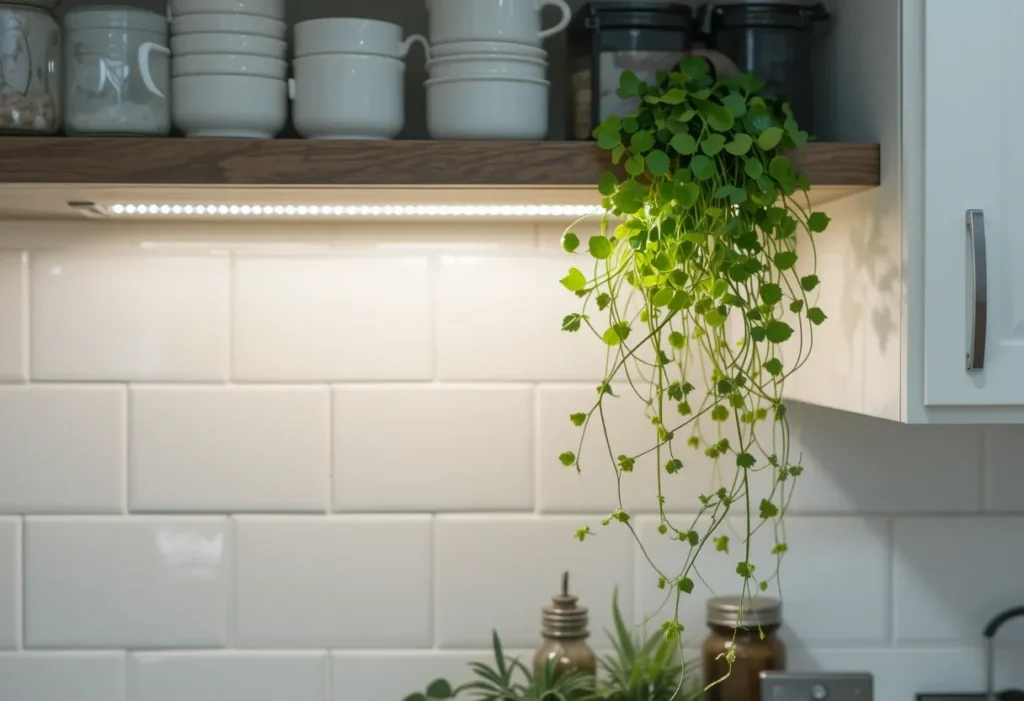
Spider Plants are loved for their cheerful, arching leaves and adorable baby plantlets that dangle from long stems. They are among the most adaptable houseplants for spaces with softer light, making them a great choice for apartments, offices, and rooms that don’t receive much direct sunshine. Although they grow faster with filtered daylight, they continue to thrive even when light is less abundant.
Their cascading shape looks especially beautiful in hanging baskets or elevated shelves, where the baby plantlets can spill over naturally. Regular watering and occasional trimming are all that’s needed to keep this easy-care favorite looking fresh and healthy throughout the year.
Popular Varieties
- Vittatum – Green leaves with a bright white center stripe.
- Bonnie – Curly leaves that create a playful, compact appearance.
18. Prayer Plant (Maranta leuconeura)
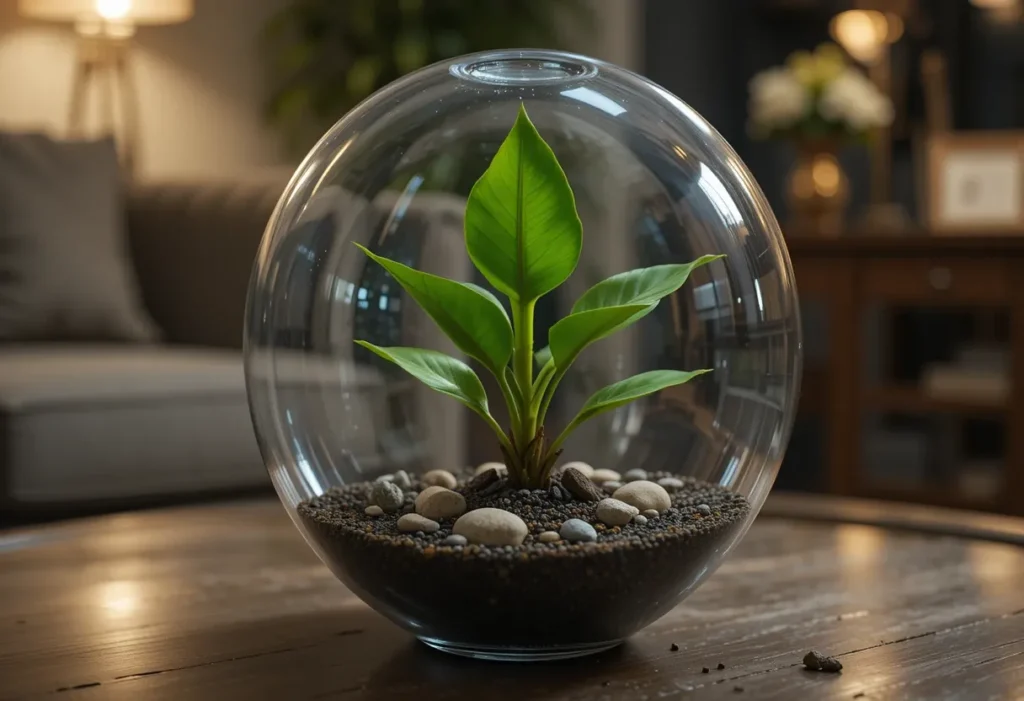
The Prayer Plant is one of the most fascinating houseplants thanks to its decorative leaves, which gently fold upward each evening, resembling hands in prayer. Its striking red veins and beautifully patterned foliage create plenty of visual interest, making it a stunning addition to tabletops, shelves, or plant stands.
Prayer Plants enjoy warm temperatures, evenly moist soil, and moderate humidity. Their colorful leaves remain the main attraction even without flowers, bringing a vibrant tropical touch to bedrooms, offices, or cozy reading corners that receive soft, diffused daylight.
Popular Varieties
- Red Prayer Plant – Deep green leaves with bold crimson veins.
- Lemon Lime Prayer Plant – Bright green foliage with vivid lime-colored markings.
19. Calathea (Goeppertia spp.)
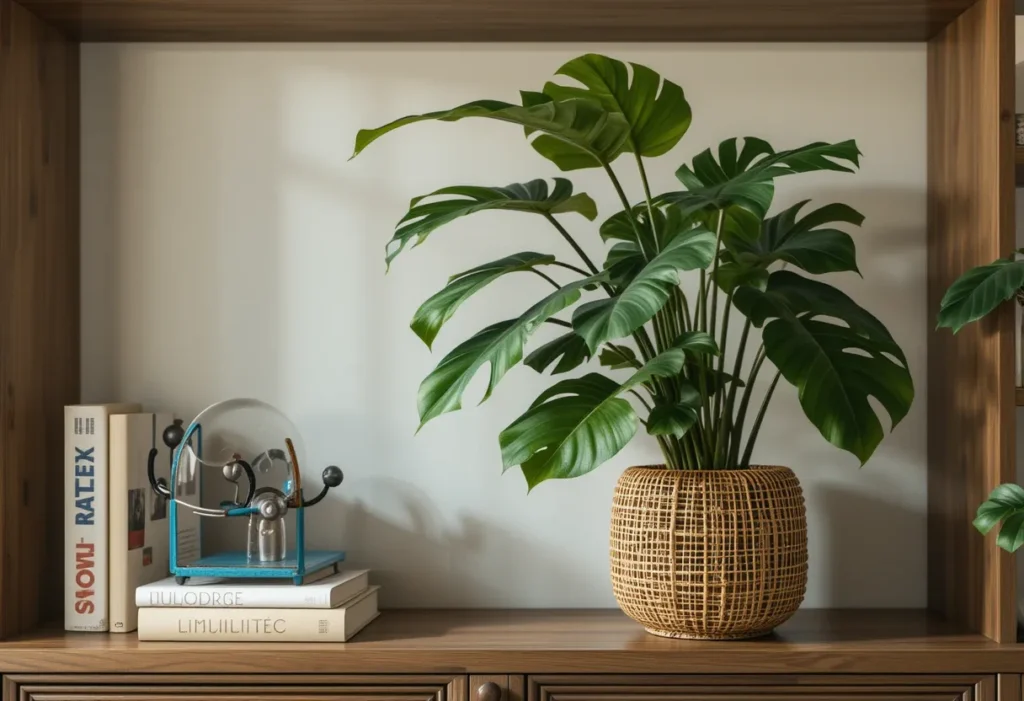
Calatheas are admired for their beautifully patterned leaves that almost look hand-painted. From bold stripes to delicate feather-like markings, every variety adds unique color and texture to indoor spaces. Since these tropical plants naturally grow beneath rainforest canopies, they adapt exceptionally well to areas with softer natural lighting, especially humid rooms like bathrooms.
Keep the soil lightly moist and provide moderate humidity to help the foliage stay vibrant. Their decorative leaves gently move throughout the day in response to changing light, earning them the nickname “prayer plants” among houseplant enthusiasts.
Popular Varieties
- Medallion – Large round leaves with dramatic green and purple patterns.
- Rattlesnake Plant – Long wavy leaves with distinctive dark markings.
20. Friendship Plant (Pilea involucrata)
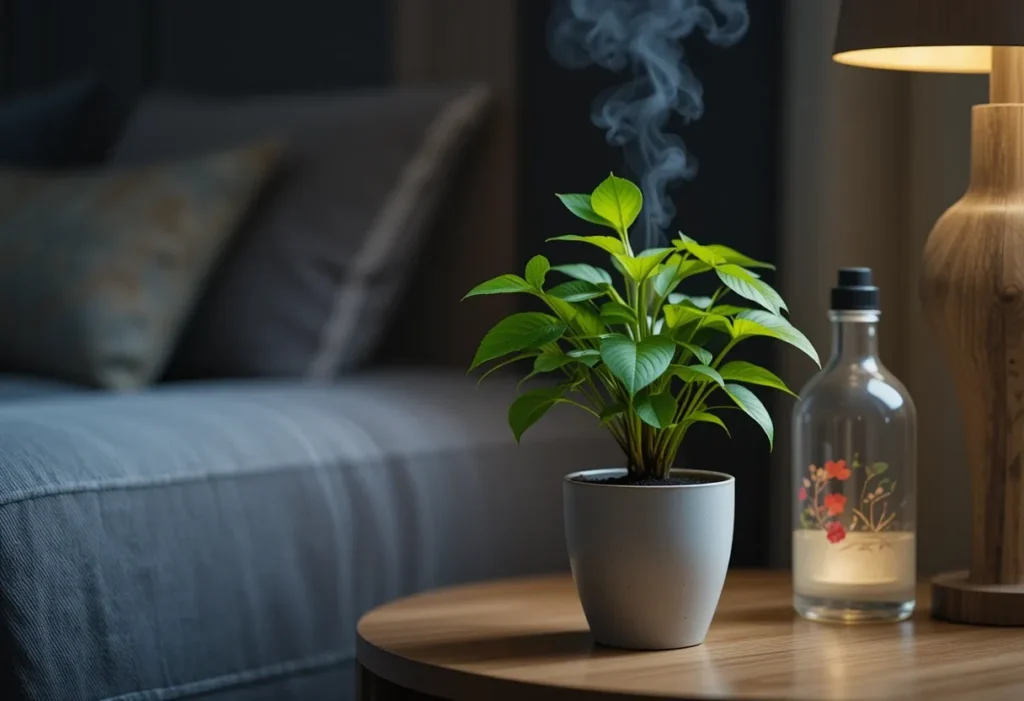
The Friendship Plant is a compact tropical houseplant admired for its deeply textured, quilted leaves in rich shades of green and bronze. Its colorful foliage adds depth and character to shelves, desks, terrariums, and decorative pots, making it a delightful addition to small indoor spaces with gentle lighting. Although it prefers bright, filtered daylight, it also adapts well when growing conditions are a little dimmer.
This easy-growing plant enjoys evenly moist soil and moderate humidity, rewarding you with lush new growth throughout the year. One of its most appealing features is how easily it propagates from stem cuttings, making it a wonderful choice for sharing with family and friends or expanding your own indoor plant collection.
Popular Varieties
- Moon Valley – Deeply quilted leaves with bright lime-green veins that become even more vibrant in gentle, indirect light.
- Norfolk – Compact variety featuring velvety green foliage, perfect for desktops, shelves, and small indoor spaces.
21. Aluminum Plant (Pilea cadierei)
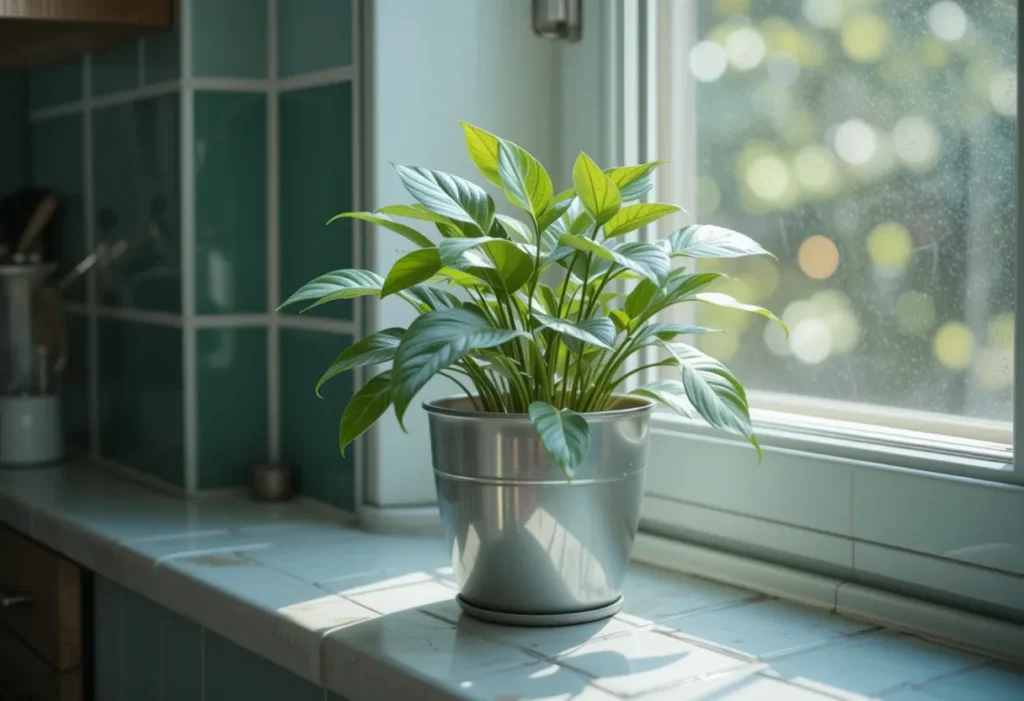
The Aluminum Plant is admired for its eye-catching silver markings that shimmer against deep green leaves, giving the foliage a metallic appearance. Its compact size and distinctive coloring make it a beautiful accent for shelves, coffee tables, and office desks, especially in rooms with subdued daylight. While it prefers bright, filtered sunshine, it continues to grow well even in spaces with less intense light.
This fast-growing houseplant benefits from occasional pinching to encourage a fuller, bushier shape. Water it when the top inch of soil feels dry, and enjoy its fresh, vibrant foliage year-round. If you’re looking for a compact plant that adds instant texture and brightness, the Aluminum Plant is an excellent choice.
Popular Varieties
- Standard – Classic deep green leaves decorated with shimmering silver patches that stand out beautifully in soft, indirect light.
- Mini – A compact variety with smaller foliage, ideal for terrariums, desktops, and other small indoor displays while offering the same attractive silver pattern.
22. Silver Satin Pothos (Scindapsus pictus)
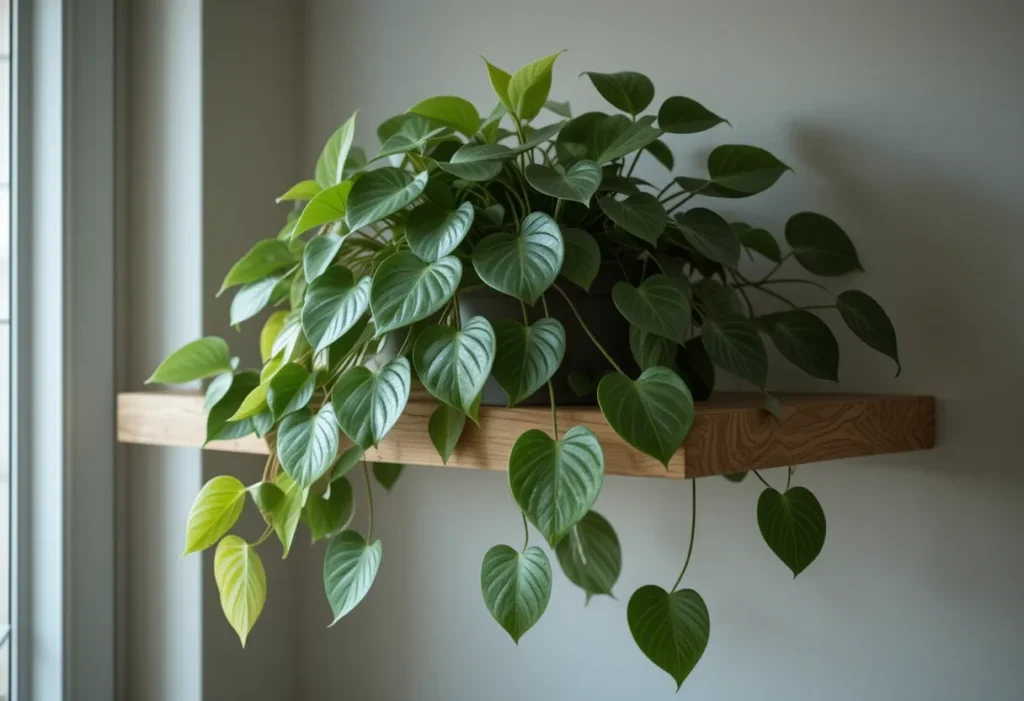
The Silver Satin Pothos is a stunning trailing houseplant known for its velvety green leaves accented with shimmering silver markings. Its elegant cascading vines add a soft, sophisticated touch to shelves, hanging baskets, and plant stands, making it a perfect choice for interiors with reduced daylight. Although it grows more quickly in soft, filtered sunshine, it continues to flourish even when light is more subdued, allowing its unique foliage to remain the center of attention.
This easy-care plant prefers watering only after the top inch of soil has dried and benefits from occasional pruning to encourage fuller, bushier vines. Its slow, steady growth makes it an excellent choice for small apartments and cozy living spaces where you can enjoy long-lasting greenery with very little upkeep.
Popular Varieties
- Argyraeus – Narrow, velvety leaves sprinkled with delicate silver spots, making it a perfect choice for hanging baskets and macramé planters.
- Exotica – Larger heart-shaped leaves with bold silver splashes that create a dramatic tropical display while remaining just as easy to care for.
23. Arrowhead Vine (Syngonium podophyllum)
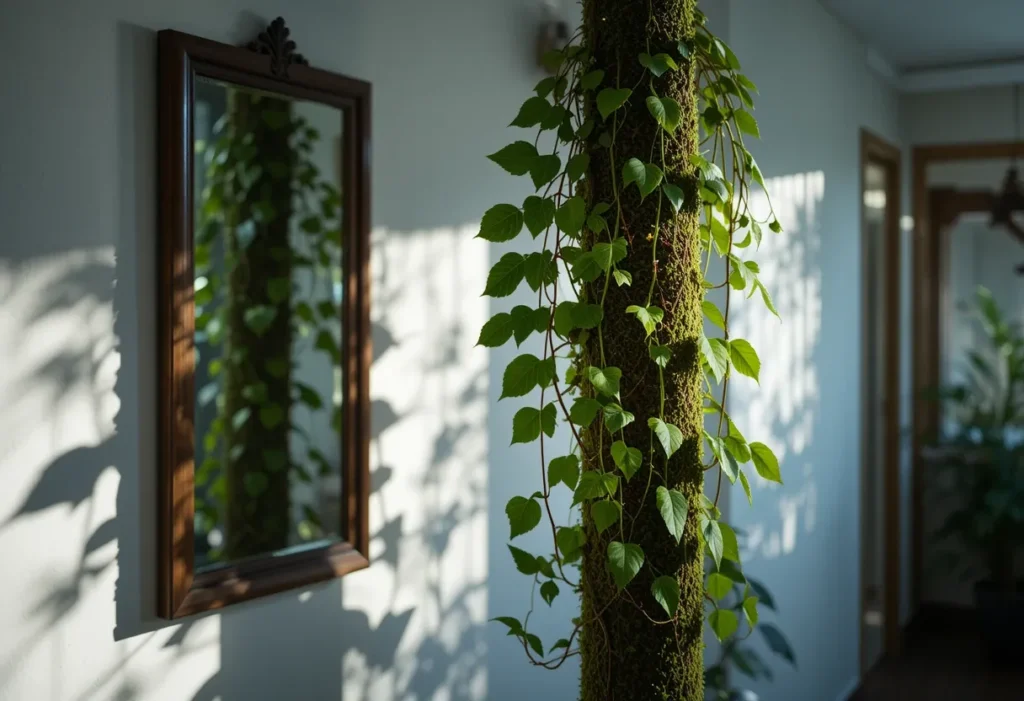
The Arrowhead Vine is a versatile tropical houseplant loved for its attractive arrow-shaped leaves that gradually develop into graceful climbing or trailing vines as the plant matures. Its lush foliage adapts beautifully to gentle, filtered daylight, making it a wonderful addition to bedrooms, living rooms, and offices that receive only a small amount of natural sun. Whether displayed in a hanging basket or trained to climb a moss pole, it brings a fresh, tropical touch to any interior.
Keep the soil lightly moist and rotate the pot every few weeks to encourage even growth. As the vines lengthen, provide a moss pole or trellis for support if you prefer an upright display. Its easy-going nature and colorful foliage make it a great choice for both beginners and experienced plant enthusiasts.
Popular Varieties
- Green Gold – Rich green leaves highlighted with soft lime-green speckles that remain vibrant even in gentle, indirect light.
- Neon Robusta – Beautiful blush-pink foliage that adds a subtle pop of color to shaded indoor spaces as it matures.
24. Money Tree (Pachira aquatica)
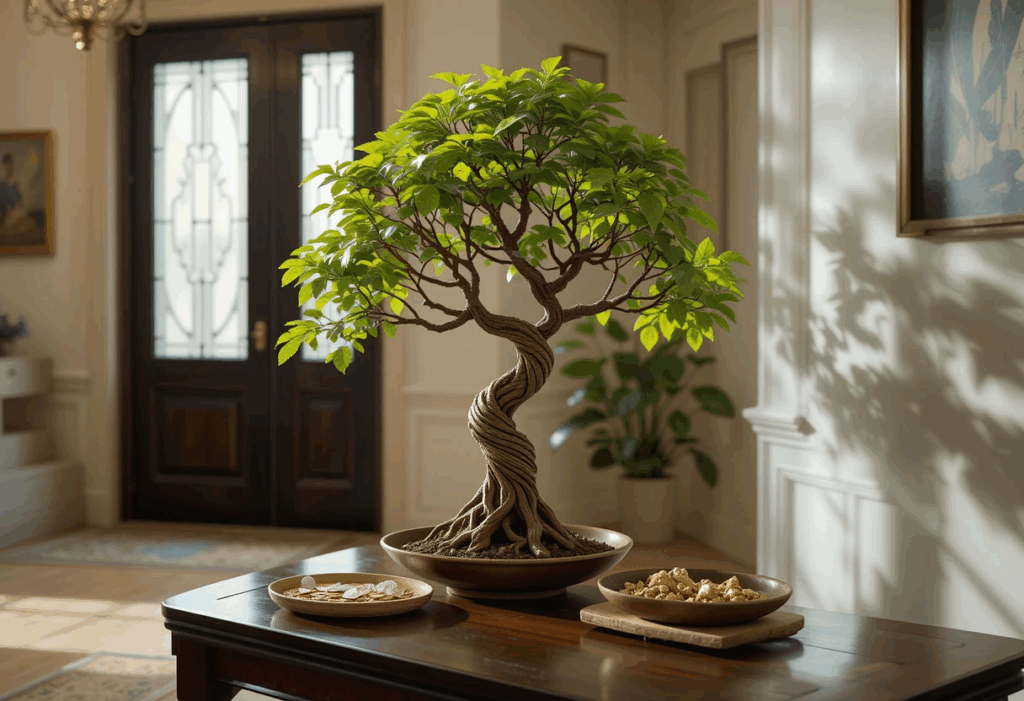
The Money Tree is a popular indoor plant admired for its braided trunk and lush, hand-shaped green leaves. Often associated with good luck and prosperity, it brings both natural beauty and a calming presence to homes and offices. While it prefers bright, filtered daylight, it also adapts well when placed in locations with softer natural illumination, making it a stylish addition to modern interiors.
Water the plant when the top few inches of soil feel dry, and rotate it regularly to encourage balanced growth. Its elegant form looks stunning in decorative ceramic pots or woven baskets, creating an eye-catching focal point in living rooms, entryways, or workspaces that receive gentle natural brightness.
Popular Varieties
- Braided Money Tree – The classic variety featuring a beautifully woven trunk and glossy green leaves, perfect for adding a sophisticated touch to indoor spaces.
- Compact Money Tree – A smaller, space-saving variety with dense foliage, ideal for desks, shelves, apartments, and cozy indoor corners.
Best Plants for Every Dark Room in Your Home
Not every dark room has the same needs, the right plants for dark rooms in a humid bathroom aren’t the same ones you’d pick for a dry, drafty basement. Here’s how the 12 break down by room.
Best plants for a dark bedroom
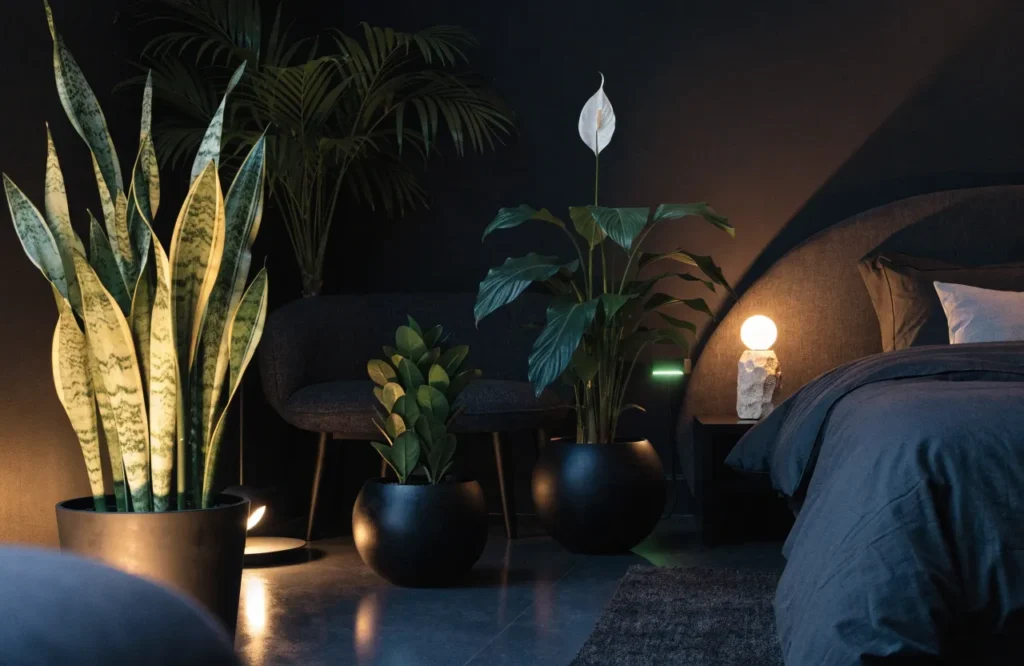
Peace Lily, Snake Plant, ZZ Plant, and Parlor Palm all hold up well in a truly dim bedroom, and they sit alongside a wider set of low light plants for bedrooms for a room that gets a touch more ambient light.
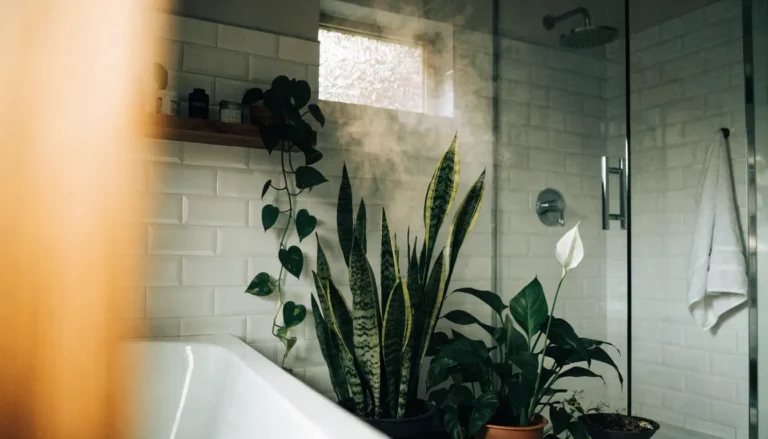
Best plants for a windowless bathroom
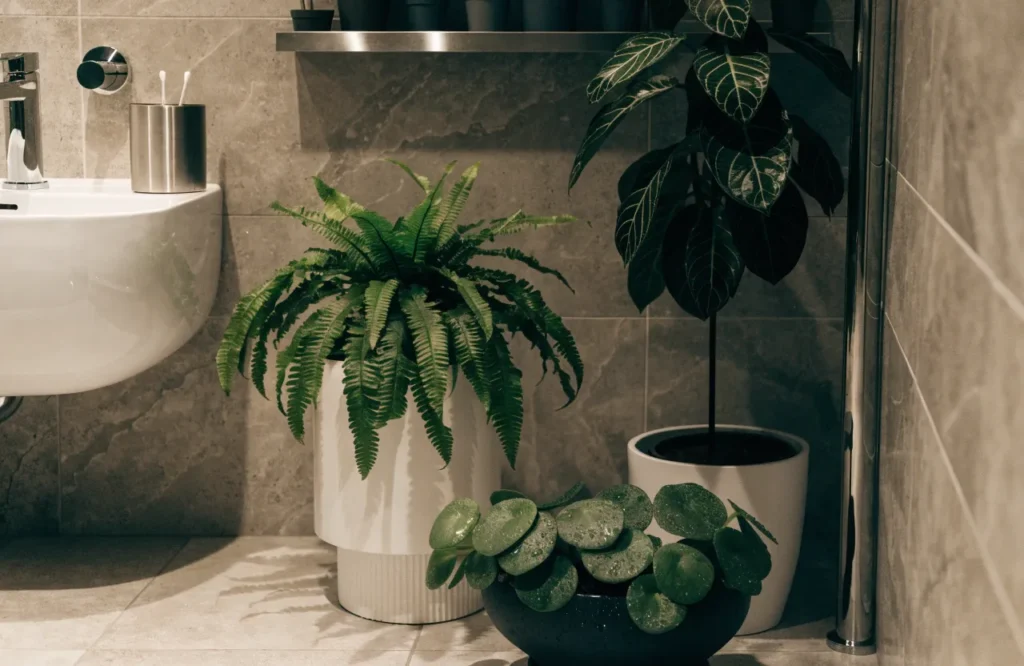
Bird’s Nest Fern, Cast Iron Plant, and Peperomia lean into the humidity a windowless bathroom naturally provides. For more picks built around that same warm, steamy environment, a dedicated set of low light bathroom plants rounds out the options.
Best plants for a dark basement
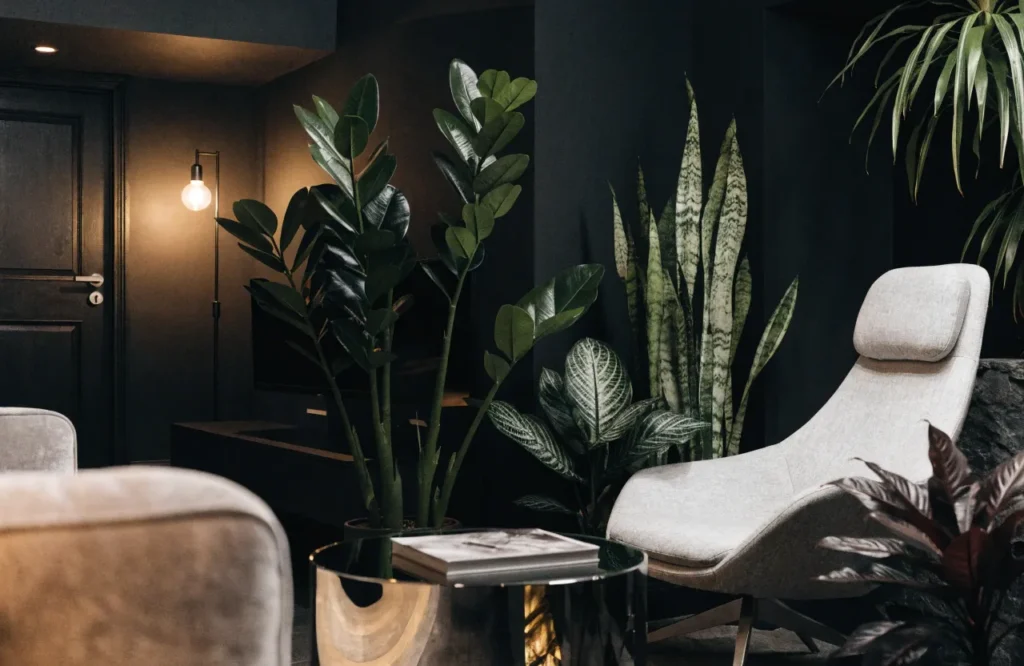
ZZ Plant, Snake Plant, Chinese Evergreen, Cast Iron Plant, Dracaena ‘Janet Craig’
Best plants for a windowless office
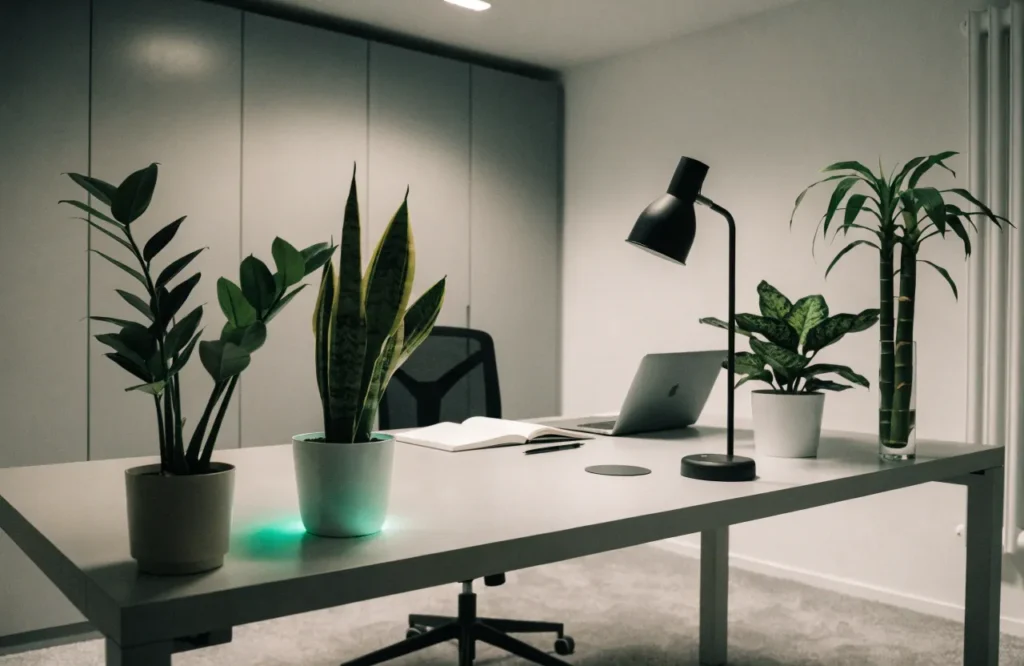
ZZ Plant, Chinese Evergreen, Snake Plant, and Lucky Bamboo are the most forgiving under fluorescent lighting, and a broader lineup of low-light office plants is worth a look if your desk gets a little more daylight than a fully interior room.
Best plants for a dark hallway
Pothos, Heartleaf Philodendron, Snake Plant
Best Plants by Need
Best for beginners: ZZ Plant, Snake Plant, Cast Iron Plant, these three also show up near the top of most unkillable indoor plant lists for good reason.
Best for low maintenance overall: ZZ Plant, Snake Plant, Cast Iron Plant
Best for people who forget to water: ZZ Plant, Snake Plant, Cast Iron Plant
Best for artificial office lighting: ZZ Plant, Snake Plant, Chinese Evergreen, Lucky Bamboo
Best pet-friendly options: Cast Iron Plant, Parlor Palm, Peperomia, Lucky Bamboo, Bird’s Nest Fern, for a fuller rundown, browse the complete list of pet-friendly indoor plants safe for cats and dogs.
Best trailing plants: Pothos, Heartleaf Philodendron, both also work beautifully as hanging indoor plants if you’d rather get them up off a shelf entirely.
Best tall/statement plants: Snake Plant, ZZ Plant, Chinese Evergreen, Dracaena ‘Janet Craig’
Best compact plants: Peperomia, Lucky Bamboo
Best flowering plant: Peace Lily, once a room gets a bit more light, a much wider range of indoor flowering plants opens up beyond this single dark-room-friendly option.
Plants to Avoid in a Truly Dark Room
Don’t confuse low light with no light, none of the plants below qualify as genuine plants for dark rooms, despite frequently showing up on generic “low light” lists. Skip these if your room has very little natural light:
- Fiddle leaf fig — needs bright, consistent light and will drop leaves quickly in a dark room
- Succulents and most cacti — evolved for intense sun and will stretch, weaken, and rot in low light
- Variegated monstera or variegated pothos — the white or cream sections of the leaf can’t photosynthesize, so these varieties need more light than their solid-green counterparts, not less
- Most flowering plants aside from peace lily, blooming requires more light energy than foliage growth alone
Do Dark-Room Plants Need Grow Lights?
If a room gets very little or no natural light, yes, a basic LED grow light meaningfully improves the health and growth rate of even the hardiest species on this list, especially the Tier 2 plants above. For genuine plants for dark rooms, a grow light is often the difference between merely surviving and actually growing. Look for a bulb labeled “full spectrum” or “grow light,” screw it into an existing lamp fixture, and run it on a timer for 10 to 12 hours a day to roughly mimic a natural daylight cycle. Position the light according to the manufacturer’s recommended distance, weaker bulbs can generally sit closer to the foliage than high-output fixtures, so check the packaging rather than assuming a universal distance. Regular room lighting can help, but it usually isn’t equivalent to a dedicated grow light placed close enough to the foliage, an overhead ceiling fixture a few feet away provides far less usable light for a plant than a small grow bulb positioned directly above it. Standard household LED or fluorescent bulbs aren’t a full substitute for a dedicated grow light, but they do provide some usable light and are far better than nothing for plants like the ZZ plant and Chinese evergreen sitting in an interior office.
Light is only part of the picture, though. For the watering, feeding, and troubleshooting that keep these plants going long term, see how to care for low light plants.
Common Low Light Plant Problems (And How to Fix Them)
Even hardy low-light plants run into a few recurring issues. Here’s how to recognize and fix the most common ones.
Yellowing leaves Usually a sign of overwatering rather than too little light. In low-light spaces, soil dries much more slowly, so a watering schedule that worked in a sunny room can drown roots in a dim one. Let the top inch or two of soil dry out fully before watering again, and check that pots have drainage holes.
Leggy, stretched-out growth When a plant reaches or leans dramatically toward the nearest light source, with long gaps between leaves, it’s stretching to find more light than it’s getting. This is common with Pothos and Philodendron in particular. Move the plant a little closer to a window, rotate it weekly, or trim back leggy growth to encourage fuller new growth.
Slow or no new growth Low-light plants naturally grow slower than plants in bright light, this alone isn’t a problem. But if a plant hasn’t produced any new leaves in several months during spring or summer (its active growing season), check that it’s getting fed every four to six weeks and that it isn’t rootbound in too small a pot.
Brown, crispy leaf tips Often caused by low humidity or a buildup of minerals from tap water. This is especially common with ferns and Calatheas. Try filtered or distilled water, and group plants together or use a pebble tray to raise humidity.
Small or no growth at all in the darkest corners If a plant placed in a very dim spot stalls out completely rather than just slowing down, it likely isn’t getting enough light to sustain itself, even by low-light standards. Move it closer to a window or introduce a small grow light rather than continuing to fight the space.
Frequently Asked Questions
Can any plant survive in a room with absolutely no windows?
A few plants—most notably the ZZ plant, snake plant, and cast iron plant—can hold up for extended periods in very low light, but no plant can live in complete, permanent darkness. All plants need light for photosynthesis, so a grow light is essential in a truly windowless room.
What is the best plant for a room with no natural light?
The ZZ plant is the best overall choice for a room with almost no natural light, thanks to its excellent dark-room tolerance and very easy care. Snake plant and cast iron plant are close runners-up, and all three need watering only every few weeks.
How many hours should a grow light be on for a dark-room plant?
A basic LED grow bulb on a timer for 10–12 hours a day makes a meaningful difference for dark-room plants. Position it in an existing lamp fixture near the plant to supplement the minimal natural light.
How often should I water plants in a dark room?
Water according to the plant, not a fixed calendar—in a dark room, soil dries far more slowly than in a sunny spot. ZZ plants and snake plants often need water only every 3–6 weeks, while most others do fine every 1–2 weeks once the soil has dried appropriately.
Can succulents survive in a dark room?
No. Succulents and most cacti evolved for intense sun and will stretch, weaken, and rot in low light. They’re specifically listed among the plants to avoid in a truly dark room.
What are the best low light indoor plants for beginners?
Some of the best beginner-friendly choices include Snake Plant, ZZ Plant, Pothos, Spider Plant, and Cast-Iron Plant. They tolerate low light and occasional missed waterings, making them ideal for new plant owners.
What is the easiest indoor plant to grow in low light?
The Snake Plant is widely considered the easiest, thanks to its tolerance of low light, drought, and neglect. ZZ Plant and Golden Pothos are close runners-up for beginners.
Do low light indoor plants need fertilizer?
Yes, but lightly. Feed with a balanced, diluted houseplant fertilizer every four to six weeks during spring and summer, and skip feeding in fall and winter when growth slows.
Can indoor plants survive without direct sunlight?
Yes. Many indoor plants naturally grow beneath forest canopies, so they thrive in bright, indirect or low light. A spot near a north- or east-facing window is usually enough.
Final Takeaway
The plants for dark rooms that actually hold up aren’t a long list, start with the forgiving Tier 1 options (ZZ plant, snake plant, or cast iron plant) if you’re new to growing in a dark space, then add Tier 2 plants once you’ve got a bit of artificial light in place to support them. Pair your choice with even a small amount of supplemental lighting, and a genuinely dark room can still become one of the greenest corners of your home. For detailed care profiles on each species, consult the Missouri Botanical Garden’s plant database.