25 Best Indoor Flowering Plants: Easy Houseplants That Bloom Beautifully
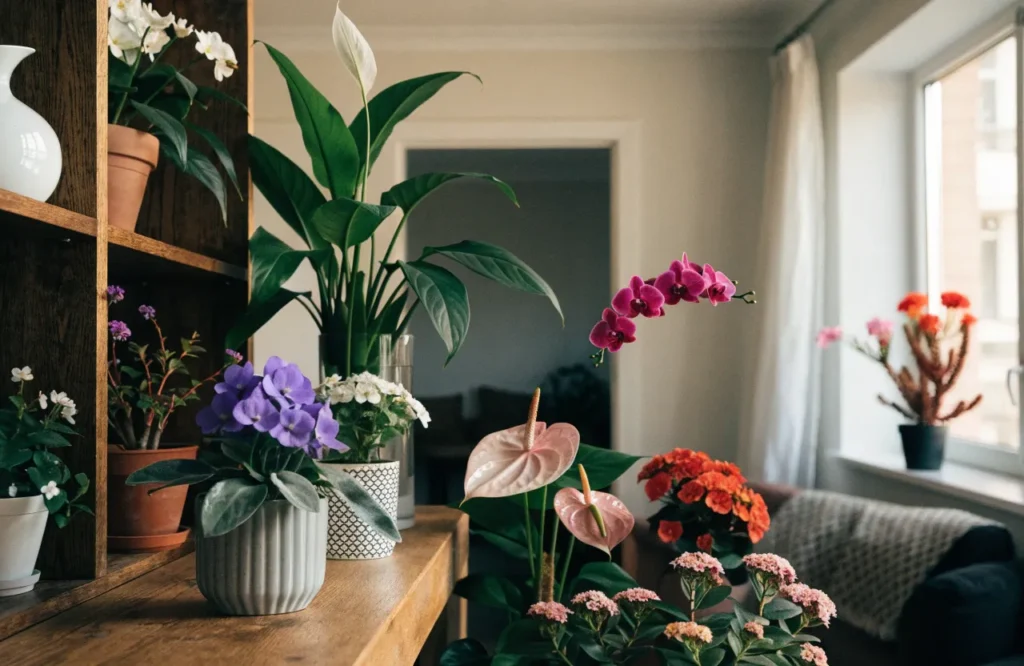
A leafy houseplant brings the outdoors in, but a flowering houseplant does something a cut bouquet never can: it keeps blooming, week after week, without a trip back to the store. Whether you’re working with a sunny south-facing window or a dim hallway corner, there’s a flowering plant suited to your space and your schedule.
This guide covers 25 of the most reliable indoor flowering plants, with the exact light, water, and care conditions each one needs to actually bloom, plus dedicated picks for beginners, low-light rooms, and pet-safe homes.
Quick Picks
- Best overall for most indoor growers: African Violet
- Best for beginners: Peace Lily
- Best low-light tolerance: Peace Lily
- Best for sunny windows: Kalanchoe
- Best pet-friendly option: African Violet
- Best for long-lasting blooms: Moth Orchid
- Best fragrant flower: Jasmine
- Best succulent: Kalanchoe
- Best hanging plant: Lipstick Plant
Quick Comparison of the Best Indoor Flowering Plants
| Plant | Care Level | Light | Watering | Pet Safe? |
| African Violet | Easy | Bright, indirect | When surface begins to dry | Yes |
| Peace Lily | Easy | Low to bright, indirect | Keep lightly moist | No |
| Moth Orchid (Phalaenopsis) | Easy–Medium | Bright, indirect | When roots/mix are dry | Yes |
| Anthurium | Easy | Bright, indirect | When partly dry | No |
| Kalanchoe | Easy | Bright, indirect to full sun | When fully dry | No |
| Christmas/Holiday Cactus | Easy–Medium | Bright, indirect | When top inch is dry | Yes |
| Bromeliad | Easy–Medium | Bright, indirect | Fill central cup; let soil dry between | Yes |
| Hoya | Easy | Bright, indirect | When top few inches are dry | Yes |
| Jasmine | Easy | Bright to full sun | When surface starts to dry | Yes |
| Crown of Thorns | Easy | Full sun | When top 2 inches are dry | No |
| Cyclamen | Easy | Bright, indirect | Keep moist, then rest dormant | No |
| Gloxinia | Easy | Bright, filtered | Keep evenly moist | Yes |
| Cape Primrose | Easy | Bright, indirect | Keep evenly moist | Yes |
| Purple Oxalis (Shamrock) | Easy | Bright, indirect | Keep lightly moist, then rest dormant | No |
| Lipstick Plant (Aeschynanthus) | Medium | Bright, indirect | When partly dry | Yes |
| Regal Geranium | Easy | Bright, indirect, cooler temps | When surface is dry | No |
| Zebra Plant | Difficult | Bright, indirect (precise) | Keep consistently moist | Yes |
| Desert Rose | Medium | Full sun | When soil is dry several inches down | No |
| Calamondin Orange | Medium | Bright, direct or grow light | When slightly dry | No |
| Ixora | Medium | Bright, direct | Keep evenly moist, high humidity | Yes |
| Amaryllis | Easy | Bright, direct morning sun | Keep moist, not soggy | No |
| Paperwhites | Easy | Bright, indirect | Keep bulb base moist | No |
| Poinsettia | Easy | Bright, indirect | When surface is dry | No |
| Chrysanthemum | Easy | Bright, direct | Keep soil moist | No |
| Pansies | Easy | Indirect | Keep evenly moist | No |
25 Indoor Flowering Plants to Brighten Your Home
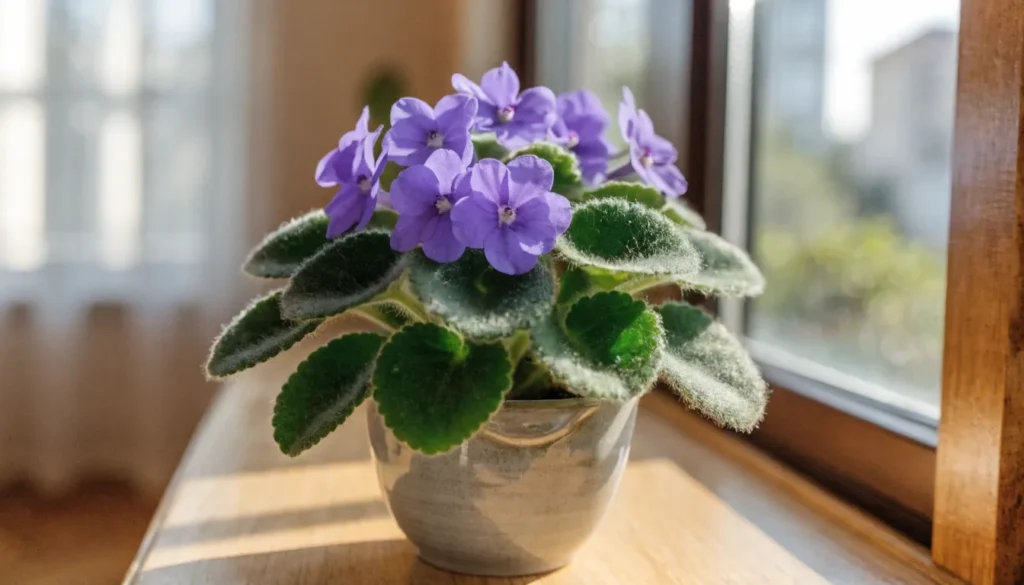
1. African Violet
- Light: Bright, indirect
- Water: When the soil surface begins to dry; water from the base to avoid leaf spotting
- Blooming: Nearly year-round in good conditions
- Best for: Beginners
- Pet safety: Generally considered non-toxic, confirm with the ASPCA list
A classic for a reason: with the right light, African violets flower almost continuously. They’re forgiving of the occasional missed watering but resent wet leaves, which can trigger crown rot, set the pot in a saucer of water for 20–30 minutes rather than pouring water over the foliage.
2. Peace Lily
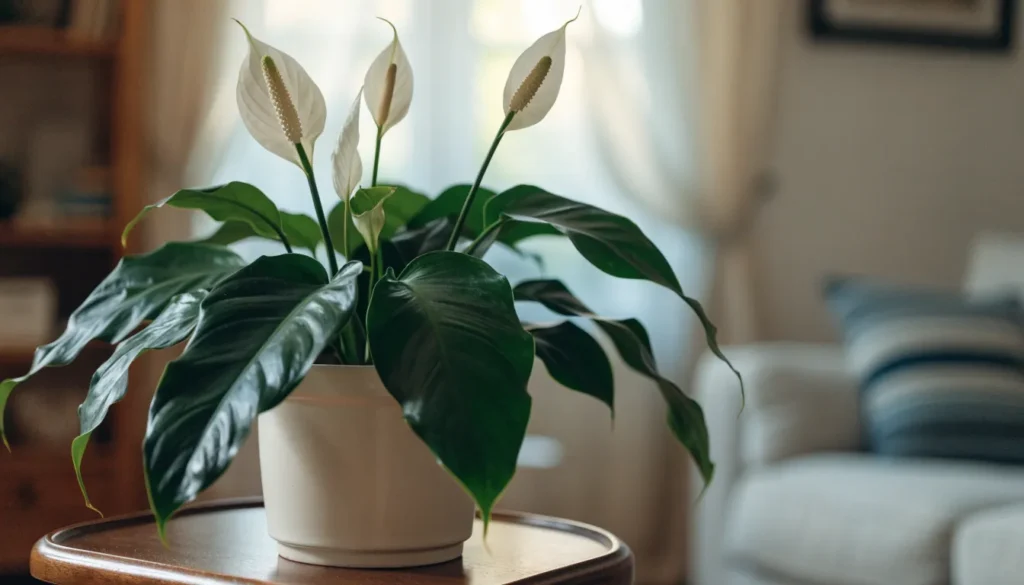
- Light: Tolerates low light; blooms best in bright, indirect light
- Water: Keep soil lightly moist; more forgiving of underwatering than overwatering
- Blooming: Depends on light, more light means more flowers
- Best for: Beginners, low-light rooms
- Pet safety: Toxic to pets, keep out of reach
Prized for elegant white spathes, the peace lily is often the first flowering plant recommended to new plant owners because it survives in dimmer rooms, even if it flowers less there.
3. Moth Orchid (Phalaenopsis)
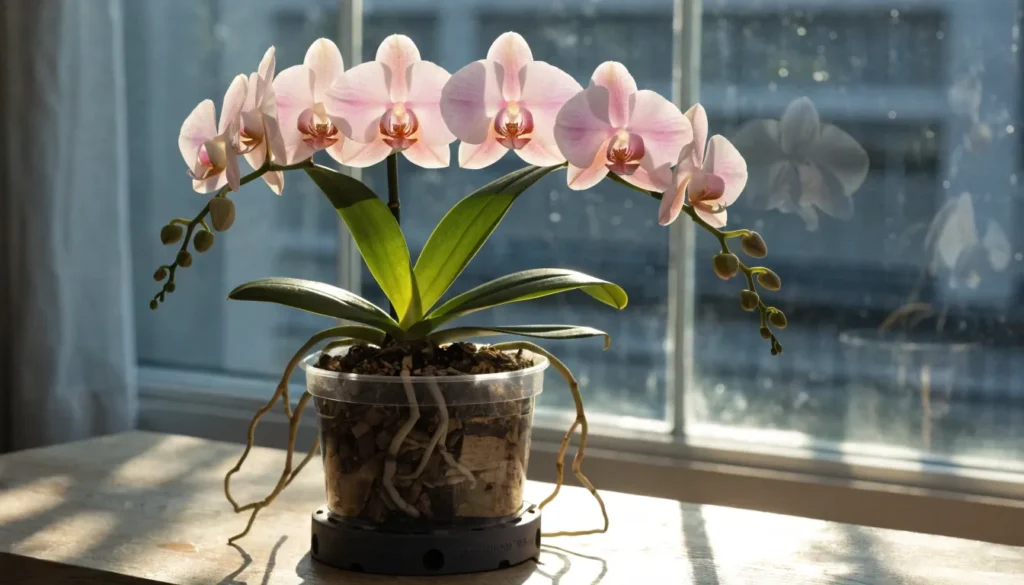
- Light: Bright, indirect
- Water: When roots and potting mix have dried out, roughly weekly
- Blooming: Can hold flowers 3+ months per cycle
- Best for: Beginners
- Pet safety: Generally considered non-toxic, confirm with the ASPCA list
Once a luxury item found only in wealthy European households, this orchid is now a grocery-store staple, and one of the longest-blooming houseplants around. With steady bright, indirect light, the same plant can rebloom once or twice a year.
4. Anthurium
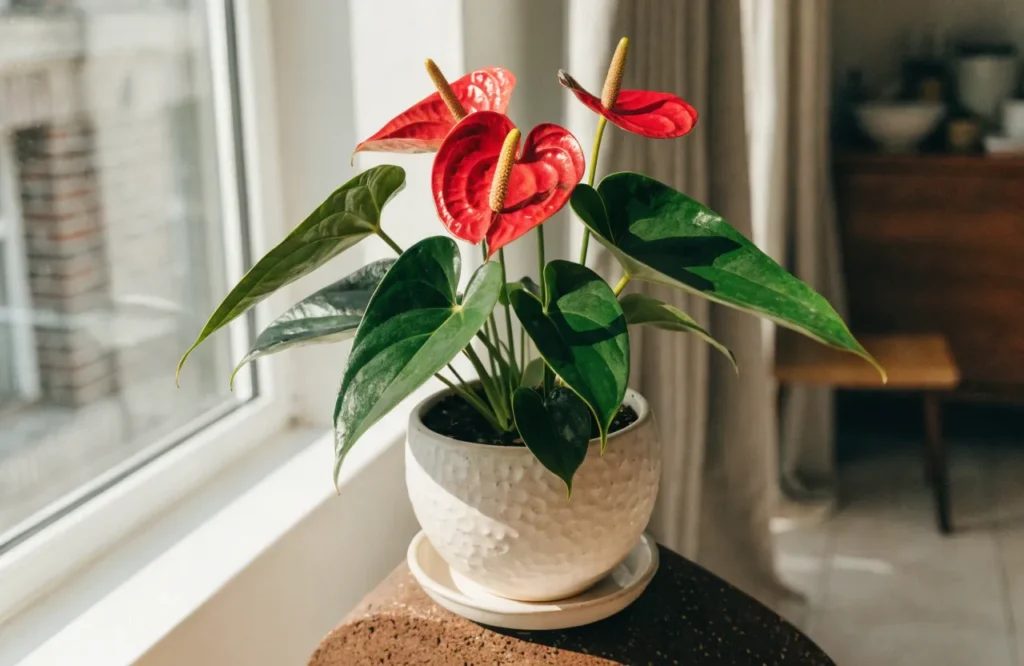
- Light: Bright, indirect
- Water: When partly dry; avoid cold drafts and heating vents
- Blooming: Can flower nearly year-round with enough light and humidity
- Best for: Intermediate growers wanting long-lasting color
- Pet safety: Toxic to pets
The glossy red, pink, or white “flower” is technically a modified leaf called a spathe; the true flowers are the tiny blooms on the small spike at its center.
5. Kalanchoe
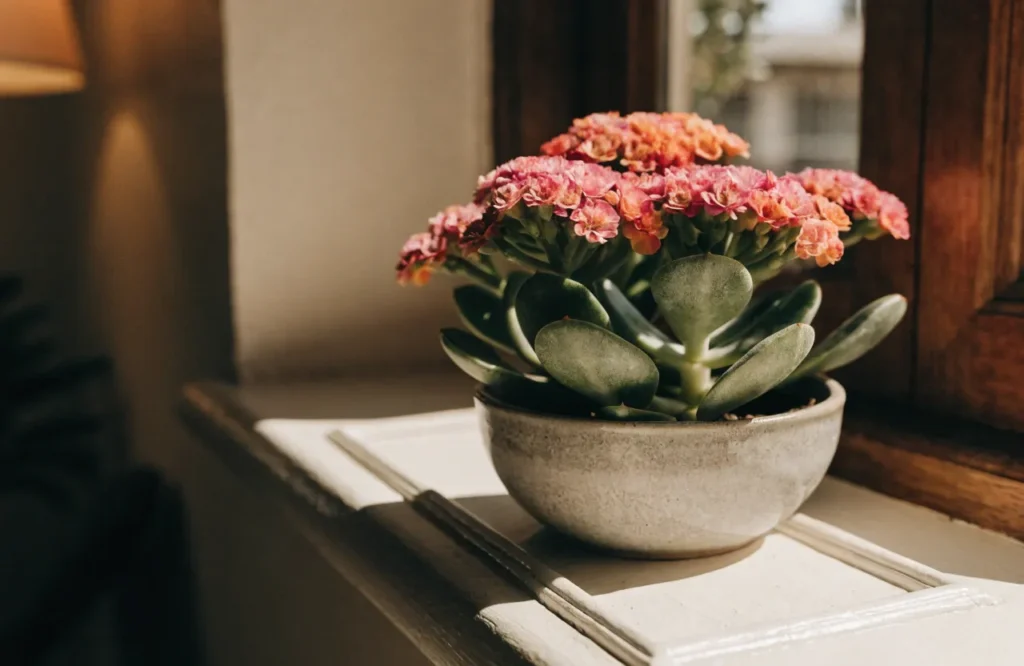
- Light: Bright, indirect to full sun
- Water: Only once soil is fully dry
- Blooming: Weeks at a time, several times a year with deadheading
- Best for: Beginners, frequent travelers
- Pet safety: Toxic to pets
A flowering succulent that tolerates neglect better than almost anything on this list, with clustered blooms in red, yellow, pink, or orange.
6. Christmas / Holiday Cactus
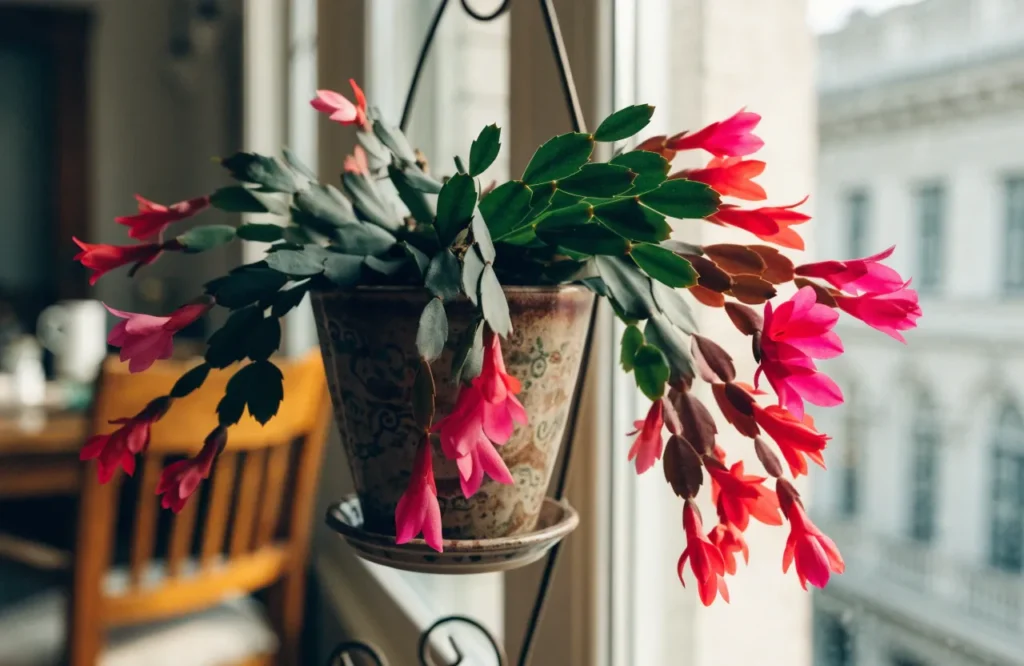
- Light: Bright, indirect
- Water: When the top inch of soil is dry
- Blooming: Triggered by shorter days and uninterrupted dark nights
- Best for: Beginners, pet owners
- Pet safety: Generally considered non-toxic, confirm with the ASPCA list
Despite the name, this is a humidity-loving tropical cactus, not a desert one. Different species bloom around Thanksgiving, Christmas, or Easter.
7. Bromeliad
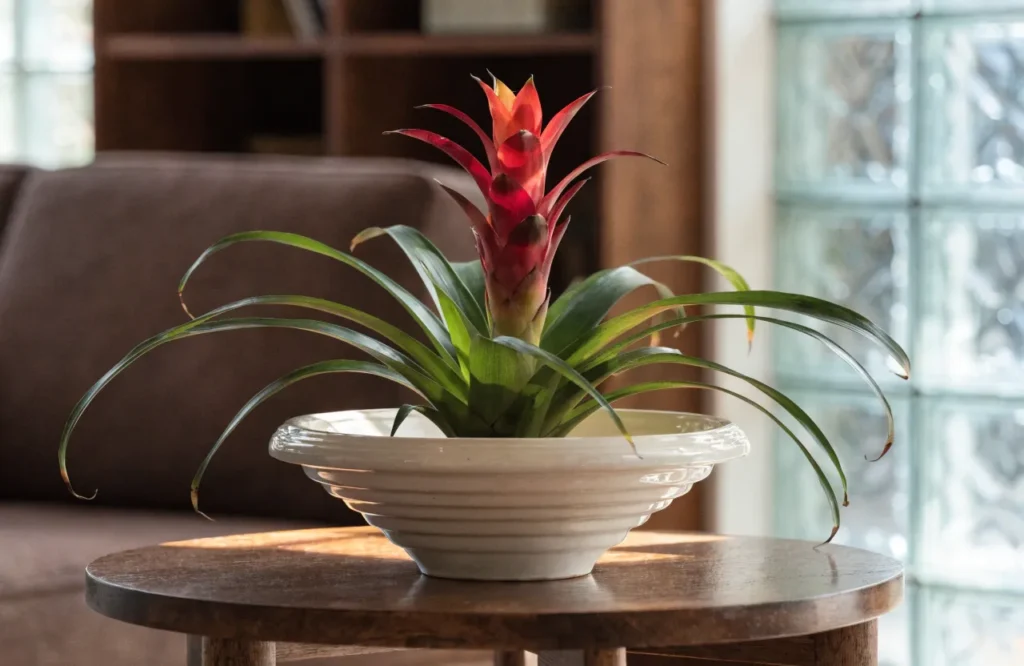
- Light: Bright, indirect
- Water: Fill the central “cup” formed by the leaves rather than soaking the soil
- Blooming: Bract color can last 2–6 months
- Best for: Beginners, pet owners
- Pet safety: Generally considered non-toxic, confirm with the ASPCA list
A pineapple relative with shallow roots that are prone to rot in wet soil, the cup-watering method sidesteps that risk entirely.
8. Hoya
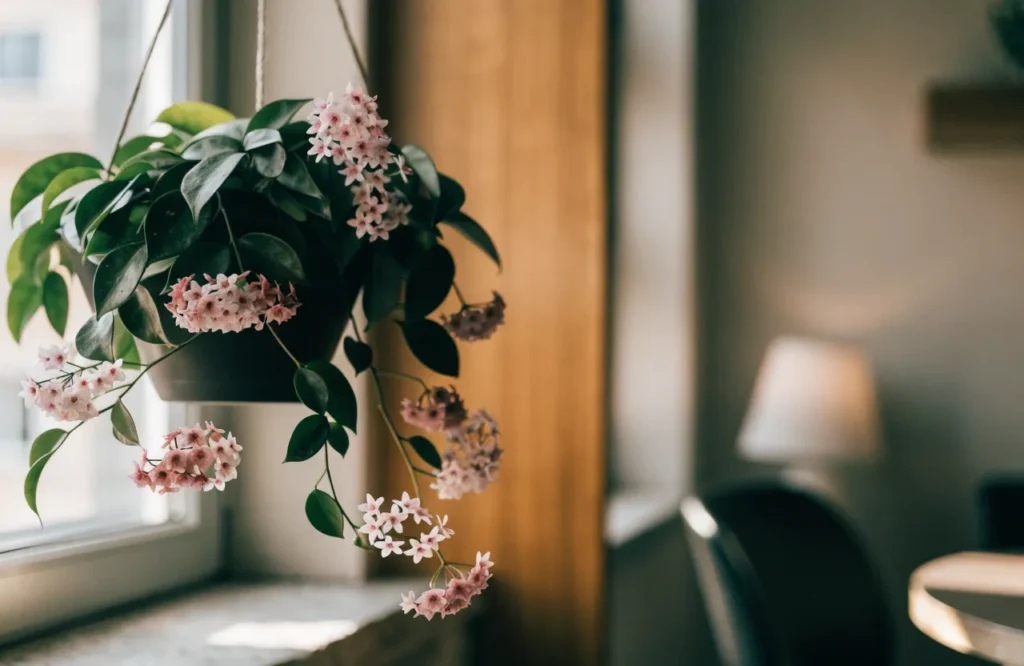
- Light: Bright, indirect
- Water: When the top few inches of soil are dry
- Blooming: Star-shaped clusters, heaviest with strong light
- Best for: Beginners, pet owners
- Pet safety: Generally considered non-toxic, confirm with the ASPCA list
Some variegated types stay colorful even between bloom cycles. Feed with a balanced houseplant fertilizer during active growth, following the label rate, to support flowering.
9. Jasmine (Sambac or Polyanthum)
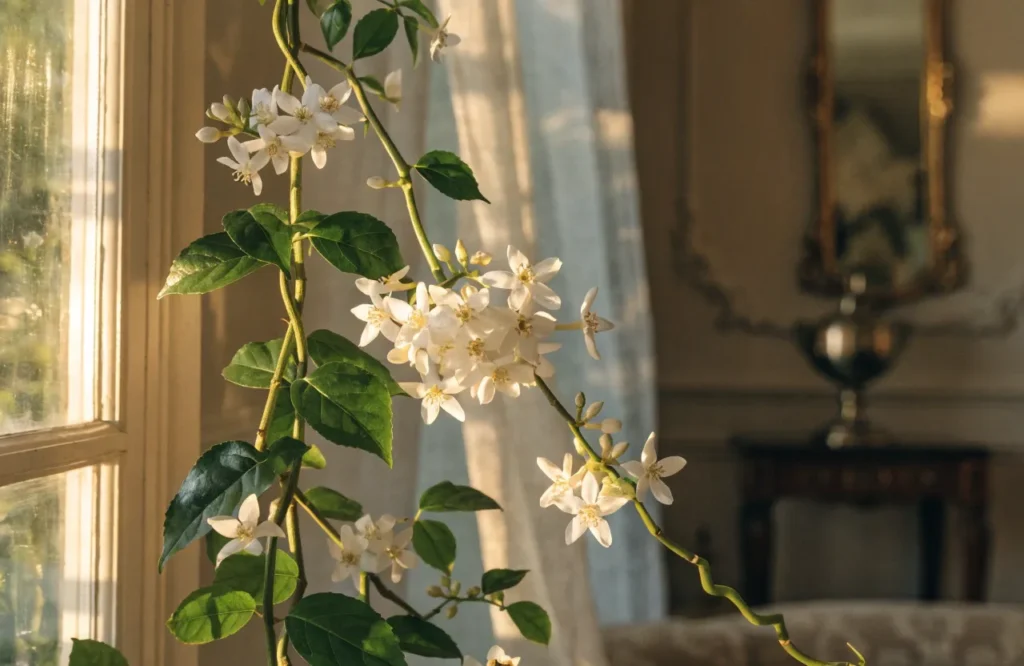
- Light: Bright to full sun
- Water: When the surface starts to dry
- Blooming: Seasonal, sometimes needs a cool dormancy period to trigger flowering
- Best for: Fragrance lovers with a sunny window
- Pet safety: Generally considered non-toxic, confirm with the ASPCA list
Grown as much for fragrance as for its white blossoms; some varieties need cool, dark nights in fall to set next season’s buds.
10. Crown of Thorns
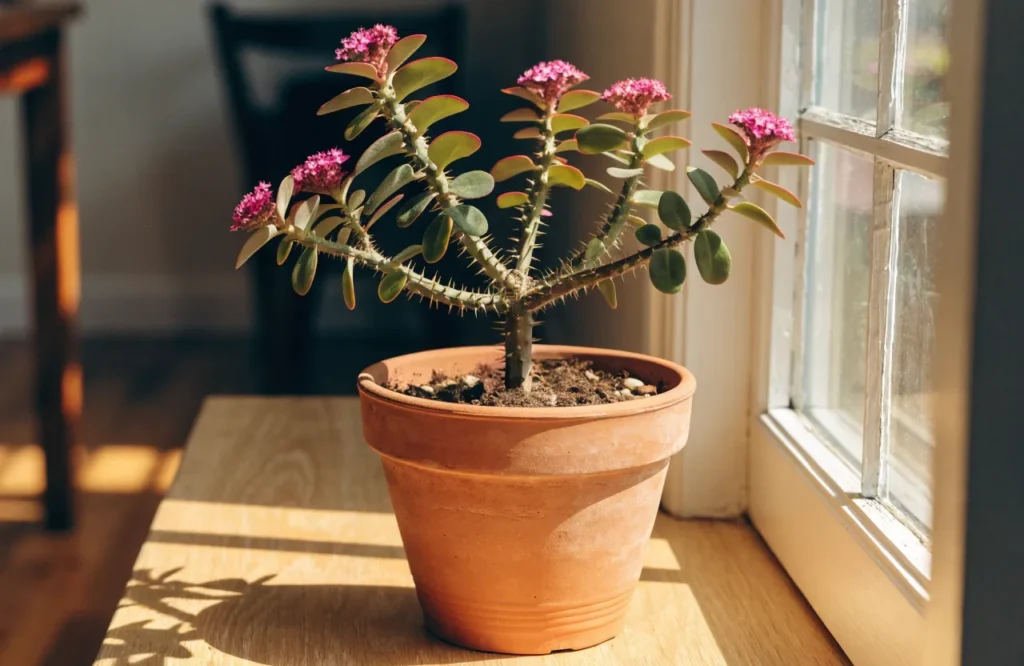
- Light: Full sun (a few hours of direct light daily)
- Water: When the top 1–2 inches of soil are dry
- Blooming: Can flower nearly year-round outdoors in the right light
- Best for: Low-maintenance growers
- Pet safety: Toxic, sap can irritate skin and is harmful if ingested
A tough, spiny succulent shrub with pink, white, yellow, or orange flowers.
11. Cyclamen
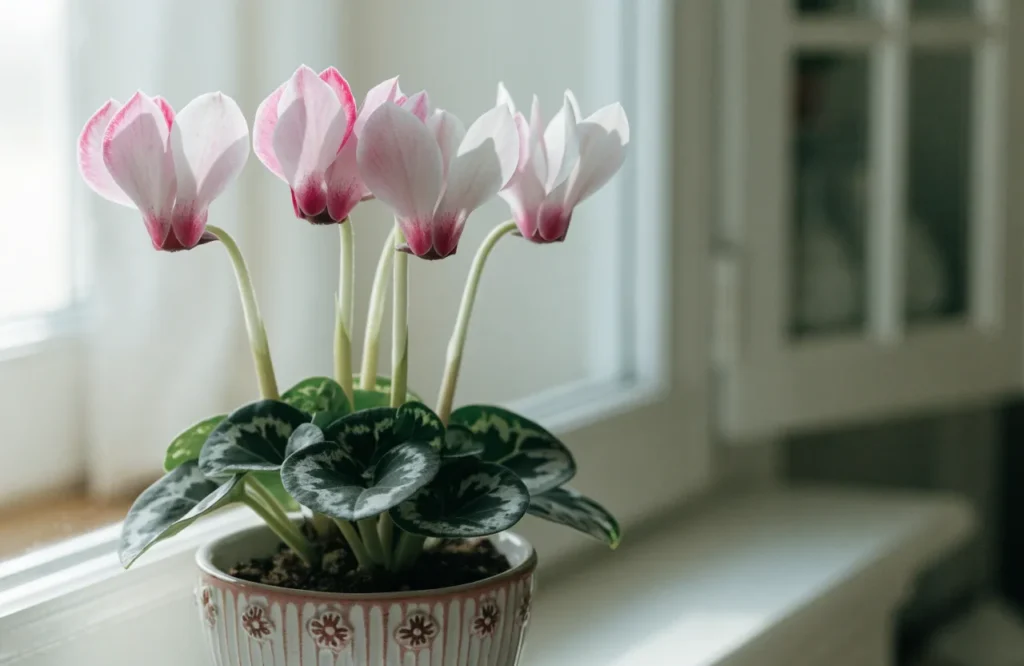
- Light: Bright, indirect
- Water: Keep moist while blooming, then withhold water during dormancy
- Blooming: Fall through winter, then a dormant rest period
- Best for: Seasonal color, cooler rooms
- Pet safety: Toxic to pets
After flowering, move it somewhere cool and dark for about two months without water, then resume watering to encourage a rebloom.
12. Gloxinia
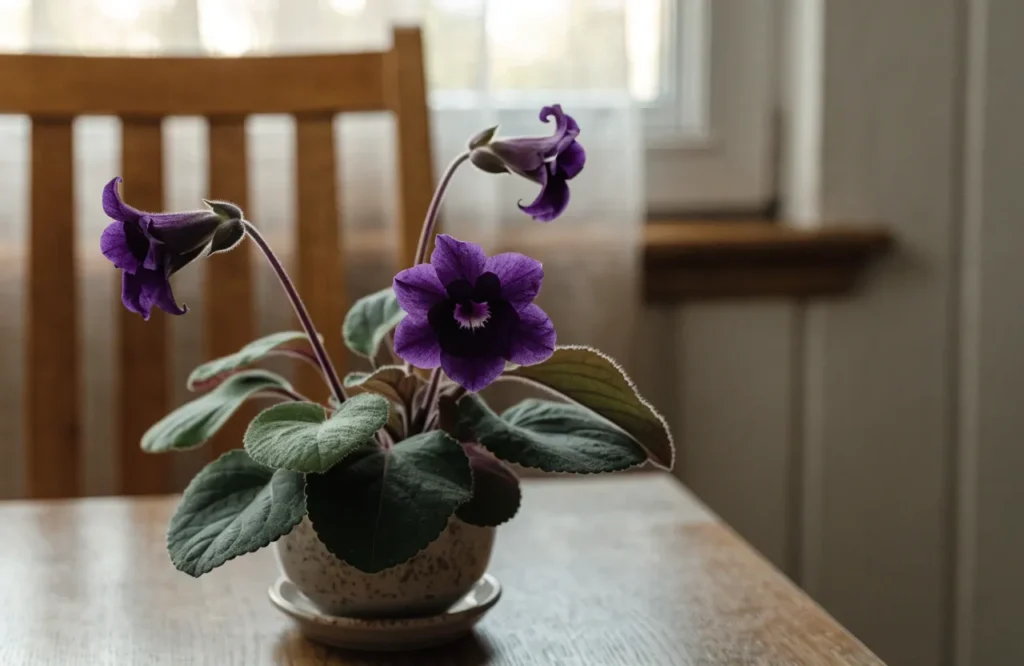
- Light: Bright, filtered light
- Water: Keep evenly moist, never soggy
- Blooming: Roughly two months per cycle
- Best for: Low-light rooms, pet owners
- Pet safety: Generally considered non-toxic, confirm with the ASPCA list
A velvety-leaved relative of the African violet with large, richly colored blooms.
13. Cape Primrose (Streptocarpus)
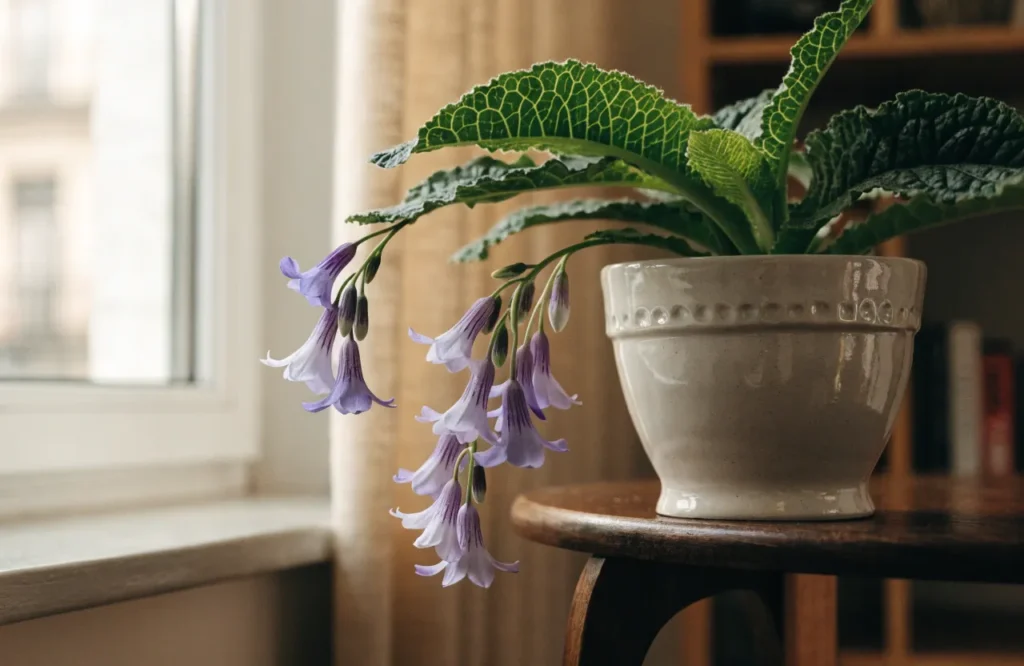
- Light: Bright, indirect
- Water: Keep evenly moist with good drainage
- Blooming: Can flower for months at a stretch
- Best for: Low-light rooms, pet owners
- Pet safety: Generally considered non-toxic, confirm with the ASPCA list
A lesser-known African violet relative with cascading, trumpet-shaped lavender blooms, one of the most reliably pet-safe long bloomers on this list.
14. Purple Oxalis (Shamrock Plant)
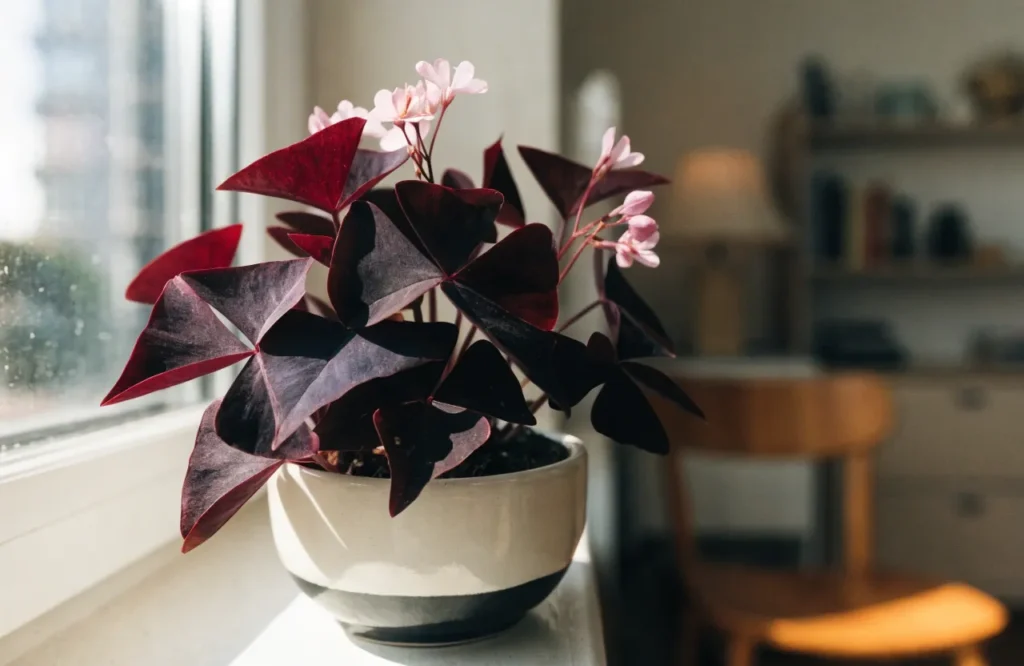
- Light: Bright, indirect
- Water: Keep lightly moist, then withhold water during dormancy
- Blooming: Small star-shaped flowers, cycles with dormancy
- Best for: Growers who enjoy watching seasonal cycles
- Pet safety: Toxic to pets
Grown as much for its burgundy or green shamrock-shaped foliage as for its flowers. Like cyclamen, it needs a cool, dark rest period between bloom cycles.
15. Lipstick Plant (Aeschynanthus)
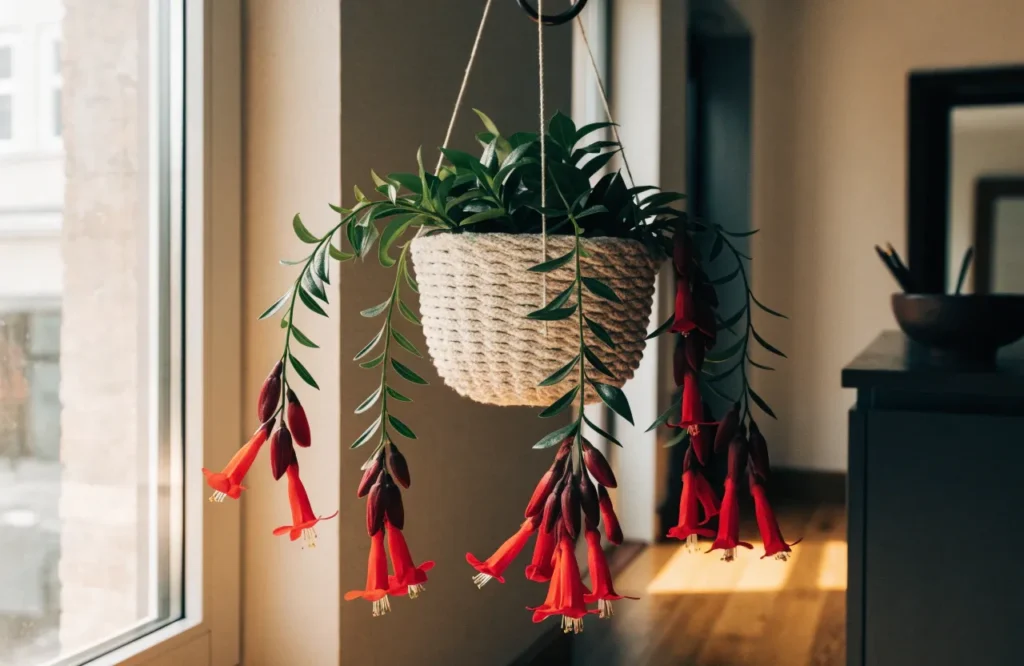
- Light: Bright, filtered light
- Water: When partly dry; needs well-draining soil
- Blooming: Heaviest in spring and summer
- Best for: Hanging baskets, pet owners
- Pet safety: Generally considered non-toxic, confirm with the ASPCA list
Named for its tubular red blooms, which emerge from dark buds that resemble tubes of lipstick. Its trailing growth habit also makes it one of the better flowering picks among beautiful hanging indoor plants.
16. Regal Geranium (Pelargonium)
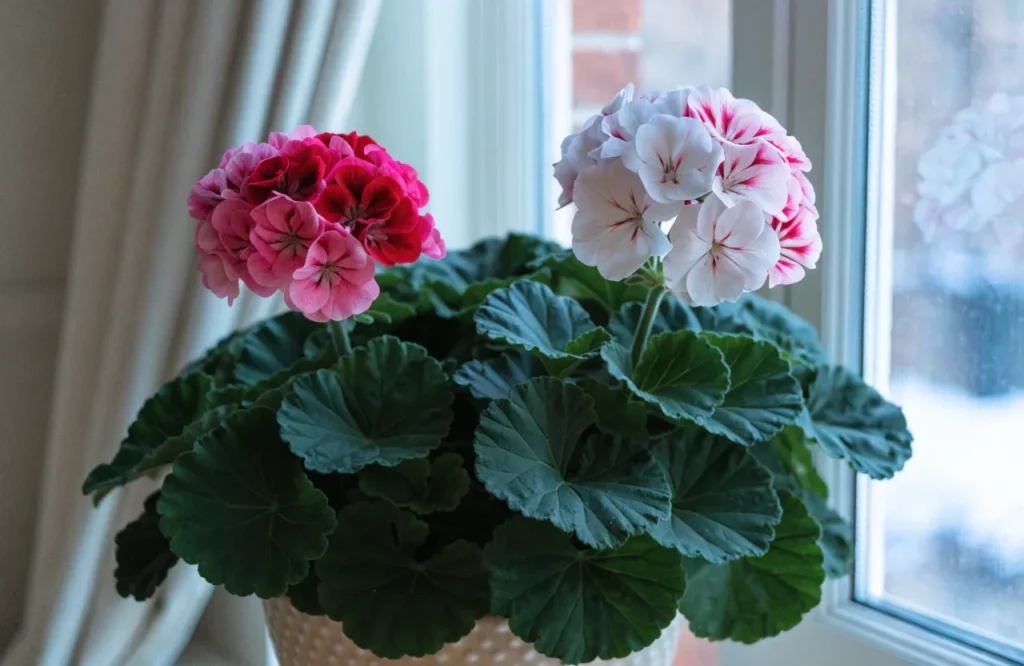
- Light: Bright, indirect; prefers cooler temperatures
- Water: When the surface is dry
- Blooming: Large, vividly colored clusters
- Best for: Cooler rooms
- Pet safety: Toxic to pets
Unlike many flowering plants on this list, regal geraniums actually do better away from intense heat.
17. Zebra Plant
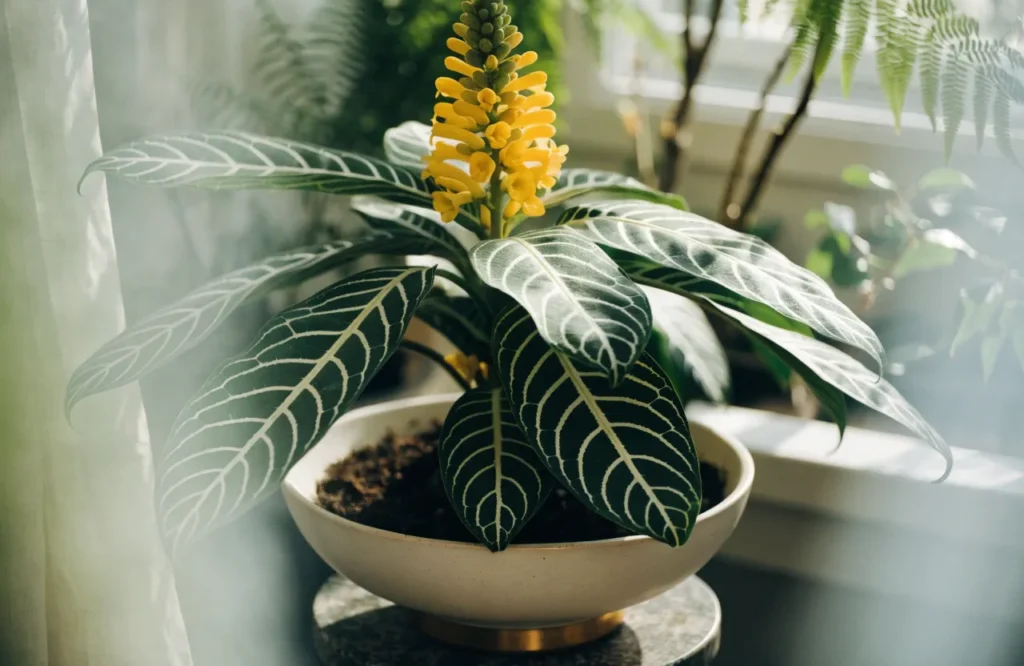
- Light: Bright, indirect, needs a precise amount
- Water: Keep consistently moist without overwatering
- Blooming: Bright yellow flowers in late summer or early fall
- Best for: Experienced growers
- Pet safety: Generally considered non-toxic, confirm with the ASPCA list
Grown mainly for its white-striped green foliage; it’s a bit finicky and can wilt from either too much or too little water.
18. Desert Rose
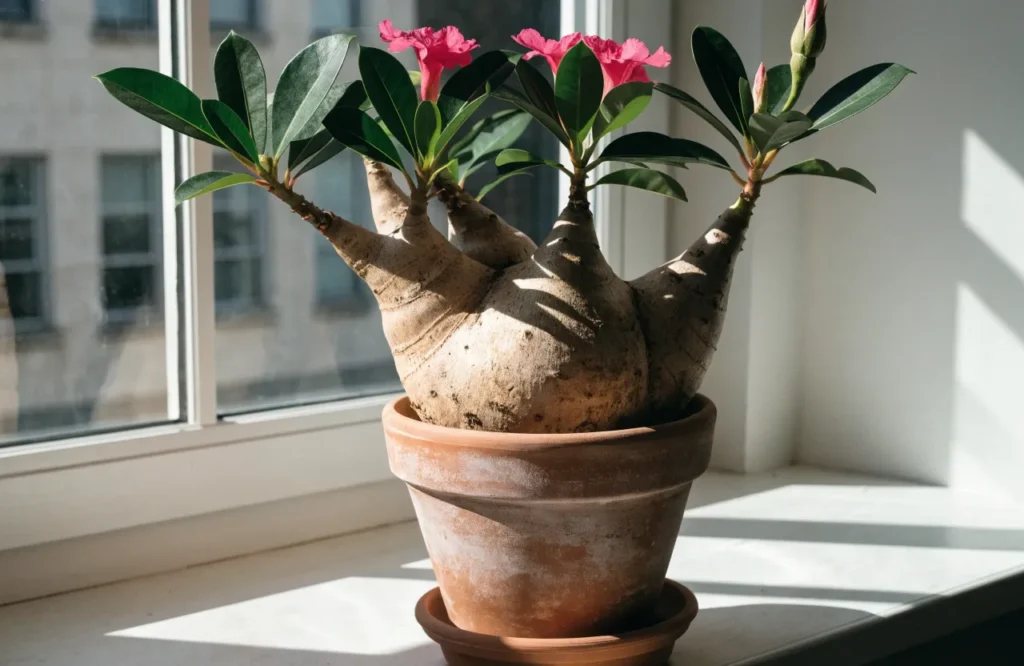
- Light: Full sun, at least 6 hours daily (or a grow light)
- Water: Sparingly, only when soil is dry several inches down
- Blooming: Large, trumpet-shaped flowers
- Best for: Sunny windows
- Pet safety: Toxic, sap is poisonous
A striking succulent that needs more direct light than most plants on this list to flower well.
19. Calamondin Orange
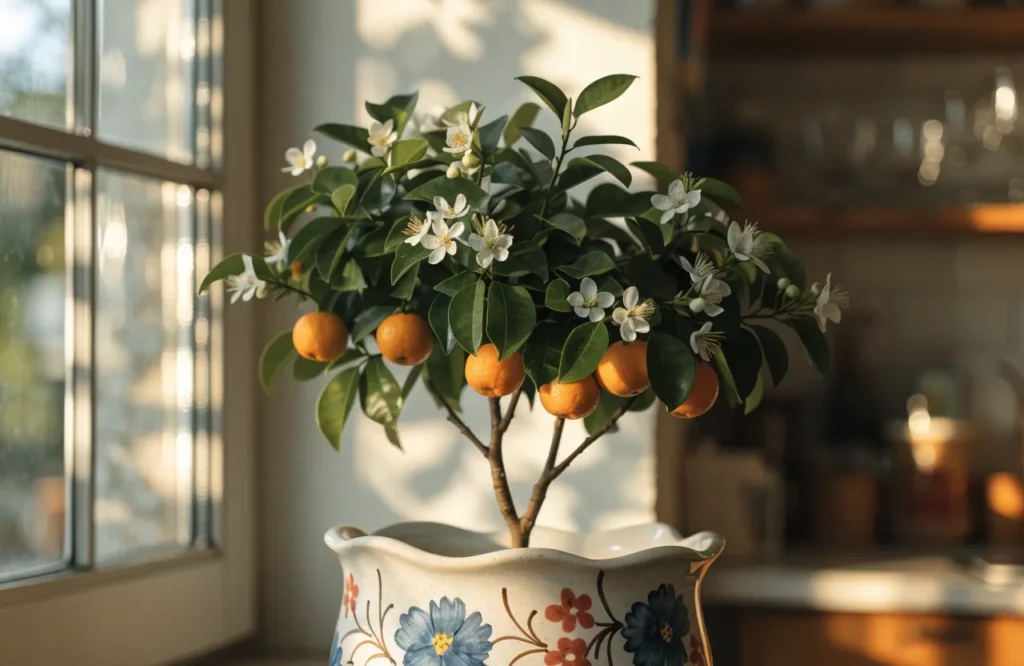
- Light: Bright, direct light or a grow light
- Water: When slightly dry between waterings
- Blooming: Fragrant blossoms year-round, followed by small edible oranges
- Best for: Sunny kitchens
- Pet safety: Toxic to pets, the ASPCA lists citrus essential oils and psoralens as toxic principles, causing vomiting, diarrhea, and potential skin irritation; the fruit itself is fine for people, but keep the plant out of reach of pets
A cross between a kumquat and a mandarin, one of the few plants on this list that flowers and fruits at the same time.
20. Ixora
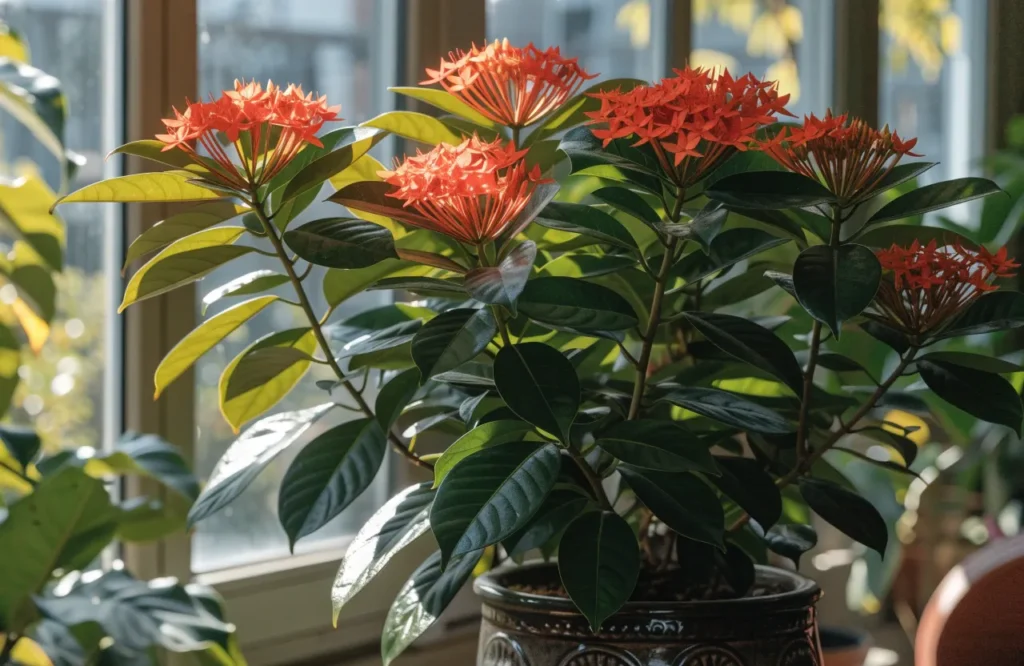
- Light: Bright, direct light; high humidity
- Water: Keep evenly moist
- Blooming: Can flower in any season with enough warmth and humidity
- Best for: Sunny bathrooms, sunrooms, greenhouses
- Pet safety: Generally considered non-toxic per the ASPCA, confirm with your vet for individual sensitivities
A humidity-loving tropical, sometimes called West Indian jasmine or Flame of the Woods, that thrives in naturally steamy rooms.
21. Amaryllis
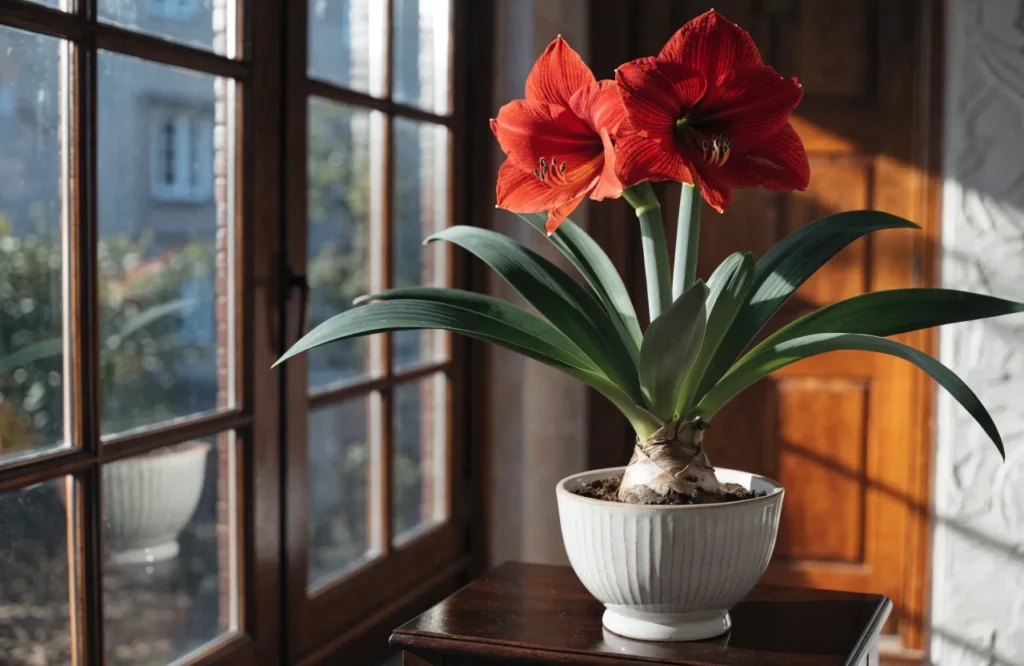
- Light: Bright, direct morning sun
- Water: Keep moist, not soggy
- Blooming: Enormous winter blooms from a bulb
- Best for: Holiday displays
- Pet safety: Toxic to pets
The showstopping bulb behind many holiday centerpieces, producing trumpet-shaped flowers in red, white, pink, or orange.
22. Paperwhites
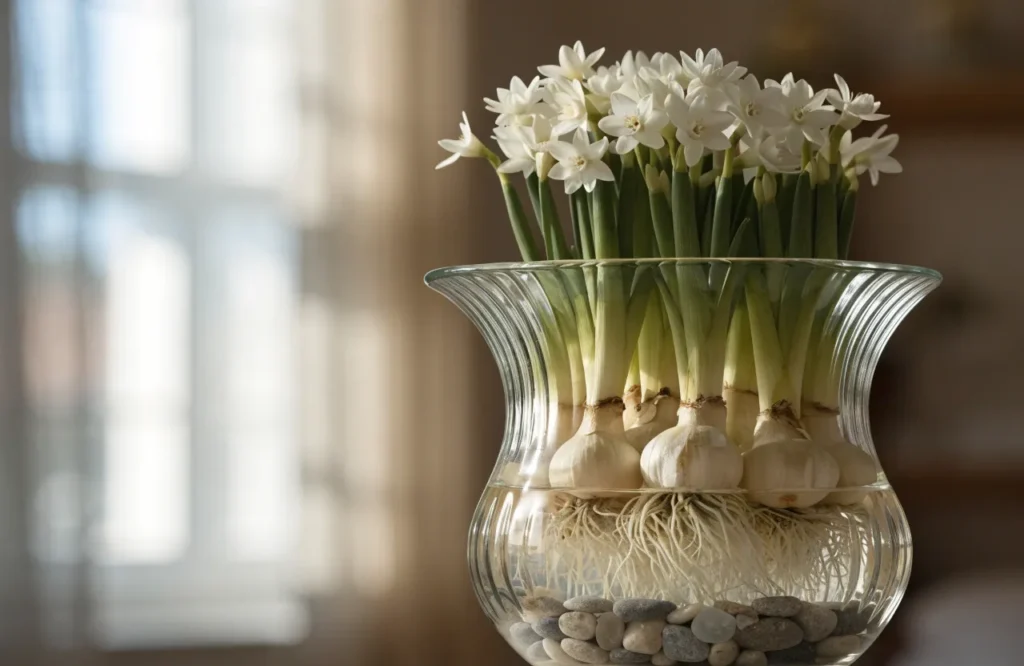
- Light: Bright, indirect
- Water: Keep the bulb base consistently moist
- Blooming: Weeks after planting, fragrant white clusters
- Best for: Fast, fragrant holiday color
- Pet safety: Toxic to pets
Can be grown in soil or nestled in pebbles with water at the base. Rotate the pot every few days so stems grow straight rather than leaning toward the light.
23. Poinsettia
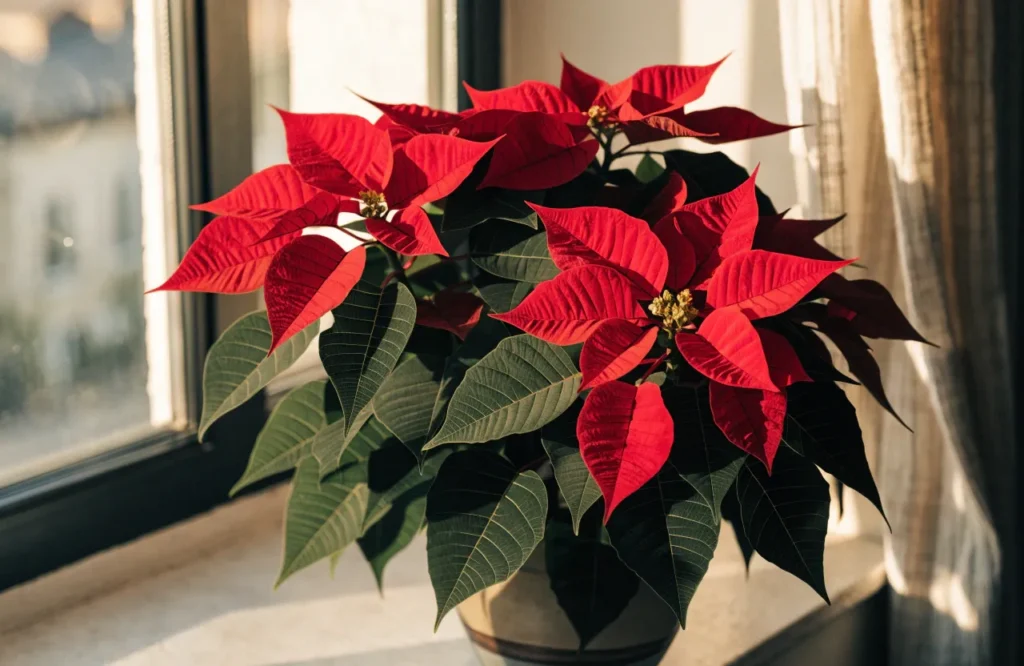
- Light: Bright, indirect
- Water: When the surface is dry
- Blooming: Colorful bracts hold through the holiday season and beyond
- Best for: Holiday decor
- Pet safety: Mildly toxic (irritant, rarely serious), confirm with the ASPCA list
The red “petals” are actually colored bracts, the true flowers are the small yellow clusters at the center.
24. Chrysanthemum (Mums)
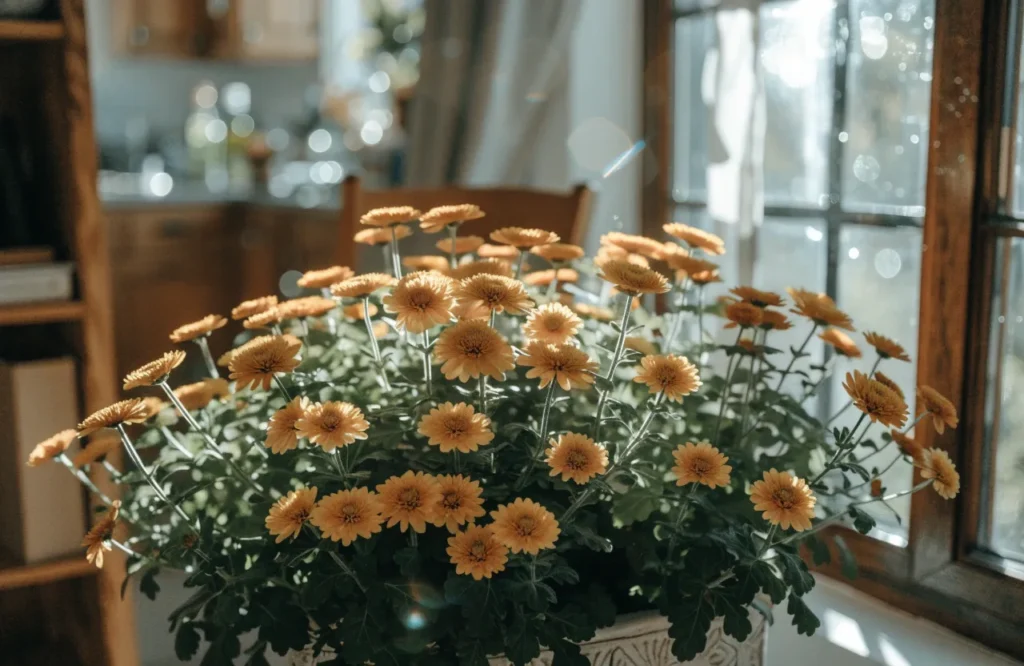
- Light: Bright, direct light and good airflow
- Water: Keep soil moist
- Blooming: Fall color; reblooming indoors is uncommon
- Best for: Seasonal fall displays
- Pet safety: Toxic to pets
Popular in jewel-toned fall varieties, though most indoor mums are best treated as seasonal rather than long-term houseplants.
25. Pansies
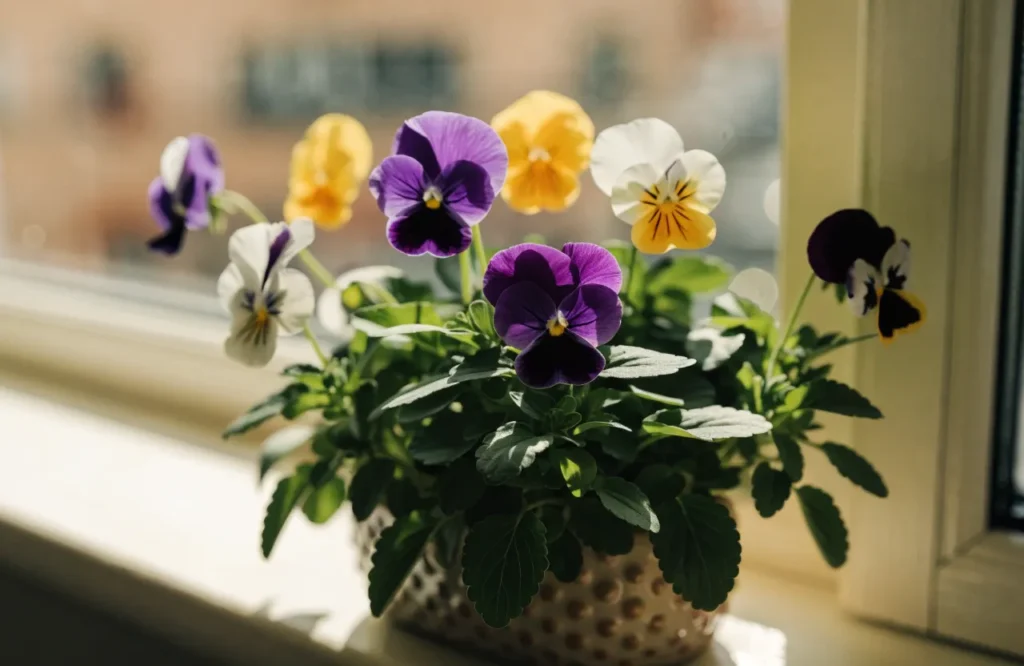
- Light: Indirect light
- Water: Keep evenly moist in nutrient-rich soil
- Blooming: Short-lived indoors; better known as a garden or window-box flower
- Best for: Short-term seasonal color
- Pet safety: Generally considered non-toxic, confirm with the ASPCA list
Pansies can be grown indoors in containers, though they tend to perform best as temporary seasonal color rather than a permanent houseplant.
Best Flowering Houseplants for Low-Light Rooms
- Peace Lily
- Cape Primrose
- Gloxinia
Most flowering houseplants need moderate to bright light to actually produce flowers, “low-light tolerant” means a plant can survive and stay healthy in a dimmer room, not that it will bloom as freely there. The three plants above are simply the most forgiving of reduced light while still flowering. If you’re prioritizing foliage over blooms, Low Light Indoor Plants covers dozens of additional options, including a room-by-room breakdown for spaces like bedrooms and bathrooms. In a genuinely dark room with little to no natural light, expect fewer blooms from any of these, at that point, your energy is better spent on the foliage-focused picks in our guide to plants for dark rooms, or on adding a grow light to support blooming here.
For bright, indirect light
- African Violet
- Moth Orchid
- Anthurium
- Hoya
- Bromeliad
- Lipstick Plant
For sunny windows / full sun
- Kalanchoe
- Crown of Thorns
- Desert Rose
- Jasmine
- Amaryllis
- Calamondin Orange
- Ixora
Looking for a specific room instead? Low Light Plants for Bedrooms and Low Light Bathroom Plants break things down by space, and Low-Light Office Plants covers desks and workspaces specifically.
Best Indoor Flowering Plants for Beginners
- Peace Lily
- African Violet
- Moth Orchid
- Kalanchoe
- Christmas Cactus
These five tolerate a missed watering or two, adapt to a range of indoor light levels, and give clear visual cues (wilting, dry soil) when something’s off. If low maintenance matters more to you than blooms specifically, Unkillable Indoor Plants are a good next stop.
Best Pet-Safe Flowering Houseplants
- African Violet
- Moth Orchid
- Bromeliad
- Christmas Cactus
- Hoya
- Cape Primrose
- Gloxinia
These are generally considered non-toxic, but always double-check against the ASPCA’s toxic and non-toxic plant list and confirm with your vet, since sensitivities can vary by animal. For a broader mix that goes beyond flowering varieties, Pet-Friendly Indoor Plants rounds out the options.
Which Indoor Flowering Plant Is Right for You?
| If you want… | Choose… |
| Easy care | Peace Lily |
| Lots of flowers | African Violet |
| Low-light tolerance | Peace Lily |
| Fragrance | Jasmine |
| Pet-friendly | African Violet |
| Sunny window | Kalanchoe |
| Hanging basket | Lipstick Plant |
| Holiday flowers | Amaryllis |
| Long-lasting blooms | Moth Orchid |
| Colorful foliage + flowers | Anthurium |
How to Get Indoor Flowering Plants to Bloom
Light
Most flowering houseplants are tropical natives that want bright, indirect light from an east-, west-, or south-facing window, a north-facing window rarely provides enough. If your space is genuinely low-light, a simple grow light can make the difference between foliage-only and an actual bloom cycle.
Water
Overwatering, not underwatering, is the most common reason flowering houseplants fail to bloom or begin to rot. Make sure pots have drainage holes, let excess water escape completely, and check soil moisture with a finger before watering rather than following a fixed calendar.
Soil
Different flowering plants need different mixes: orchids and anthuriums want a chunky, fast-draining orchid or aroid mix; African violets and gloxinia prefer a light, well-aerated potting mix; succulents like kalanchoe and crown of thorns need a gritty, fast-draining cactus mix. Using the wrong mix is a common, easy-to-fix cause of poor flowering.
Fertilizer
Flowering depends on overall plant health, not just phosphorus. Feed according to the plant’s specific needs and the fertilizer label’s dilution rate, typically during active growth in spring and summer, over-fertilizing can burn roots and suppress blooms just as easily as under-feeding.
Temperature
Sudden temperature swings and cold drafts stress flowering plants and can cause buds to drop before they open. This is especially important for orchids, jasmine, anthuriums, and cyclamen, all of which prefer stable, moderate indoor temperatures away from doors, vents, and radiators.
Humidity
Tropical bloomers like anthurium, ixora, and Christmas cactus flower better with extra humidity. If your indoor air is very dry, common during winter heating season, a humidifier or a naturally humid room like a bathroom is a more reliable fix than misting alone.
Deadheading
Removing spent, faded flowers redirects the plant’s energy into producing new buds instead of seed. Note that deadheading needs vary: some plants (like African violets) benefit from simply plucking off individual spent blooms, while others (like kalanchoe) do better with a light prune of the whole flower stalk once it’s finished.
Dormancy
Some plants, cyclamen and shamrock plants (oxalis) in particular, need a rest period of reduced water and lower light before they’ll flower again. Skipping this dormant phase is a common reason these specific plants stop reblooming.
Why Isn’t My Indoor Flowering Plant Blooming?
If your plant has healthy leaves but no flowers, work through these in order:
- Check the light first. This is the single most common cause, flowering takes more energy than foliage growth, and most flowering houseplants simply won’t bud in low light no matter how well they’re otherwise cared for.
- Look at the plant’s age and size. Some plants (citrus, certain orchids) need to reach a minimum size or maturity before they’ll flower at all.
- Review your watering. Both extremes, bone-dry and constantly soggy soil, suppress blooming.
- Consider the season. Seasonal bloomers like Christmas cactus, poinsettia, and jasmine simply won’t flower outside their natural bloom window, regardless of care.
- Check for a missed dormancy period. If the plant is a cyclamen, shamrock, or similar dormancy-dependent species, it may be waiting on a rest period it didn’t get.
- Rule out over-fertilizing. Too much nitrogen in particular encourages leafy growth at the expense of flowers.
Frequently Asked Questions
What indoor plants flower year-round?
African violets, Cape primrose, and crown of thorns are among the few that can flower nearly continuously indoors. With the right light, African violets in particular flower almost year-round, making them the best overall choice for most indoor growers.
What’s the longest-blooming indoor flowering plant?
The moth orchid (Phalaenopsis) holds its flowers for 3+ months per bloom cycle, making it the best choice for long-lasting blooms. Bromeliad bract color can also last 2–6 months.
What are good low-light flowering houseplants?
Peace lily is the best low-light tolerant flowering plant, blooming best in bright indirect light but tolerating lower levels. Cape primrose and gloxinia are also good choices for low-light rooms.
Which indoor flowering plants are safe for pets?
African violet is the best pet-friendly option, along with moth orchid, bromeliad, Christmas cactus, hoya, Cape primrose, and gloxinia. These are generally considered non-toxic, but always confirm with the ASPCA list.
Why is my indoor flowering plant not blooming?
Check the light first—this is the single most common cause, since flowering takes more energy than foliage growth. Also review watering (both extremes suppress blooming), consider the season, and rule out over-fertilizing, as too much nitrogen encourages leaves at the expense of flowers.
Final Thoughts
There’s a flowering houseplant suited to nearly every room and every skill level, the key is matching the plant to your actual light conditions rather than choosing on looks alone. Start with one or two beginner-friendly picks like a peace lily or African violet, get a feel for their rhythm, and expand from there. For detailed care profiles on hundreds of houseplants, consult the Missouri Botanical Garden’s plant database.