15 Beautiful Hanging Indoor Plants That Instantly Make Your Home Feel Fresh and Cozy
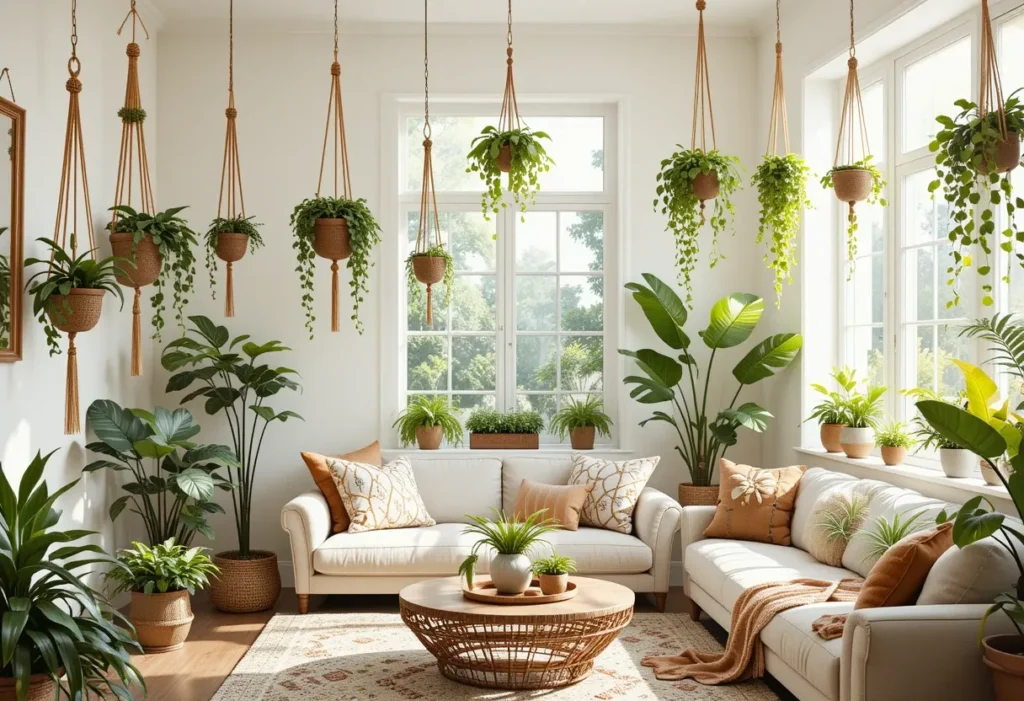
Nothing transforms a room quite like hanging indoor plants. Suspended from the ceiling, displayed in macramé hangers, or cascading from floating shelves, these trailing houseplants bring texture, color, and life into spaces without taking up valuable floor space. Whether you’re decorating a compact apartment, brightening a home office, or creating a relaxing indoor jungle, hanging plants offer an easy way to add natural beauty to every corner of your home.
Beyond their decorative appeal, many hanging houseplants are surprisingly easy to grow. Several varieties tolerate lower light, require minimal maintenance, and even help improve indoor air quality. Others reward you with colorful foliage, cascading vines, or delicate flowers that become eye-catching focal points throughout the year.
In this guide, you’ll discover 15 of the best hanging indoor plants, along with practical care tips, ideal growing conditions, and expert advice to help every plant thrive. Whether you’re a beginner or an experienced indoor gardener, there’s a beautiful trailing plant here for every home and lifestyle.
Table of Contents
Quick Comparison: Best Hanging Indoor Plants
| Plant | Scientific Name | Light | Care | Best Feature |
|---|---|---|---|---|
| Boston Fern | Nephrolepis exaltata | Bright, indirect | Moderate | Lush feathery fronds |
| Spider Plant | Chlorophytum comosum | Bright, indirect | Easy | Produces baby plantlets |
| Golden Pothos | Epipremnum aureum | Low–Bright, indirect | Easy | Fast-growing vines |
| English Ivy | Hedera helix | Bright, indirect | Moderate | Classic trailing vines |
| String of Pearls | Senecio rowleyanus | Bright, indirect | Moderate | Bead-like succulent leaves |
| Hoya | Hoya spp. | Bright, indirect | Easy | Fragrant star-shaped flowers |
| Maidenhair Fern | Adiantum spp. | Bright, indirect | Moderate–Difficult | Delicate fan-shaped foliage |
| String of Hearts | Ceropegia woodii | Bright, indirect | Easy | Heart-shaped trailing leaves |
| Tradescantia | Tradescantia zebrina | Bright, indirect | Easy | Purple-striped foliage |
| Asparagus Fern | Asparagus densiflorus | Bright, indirect | Easy–Moderate | Soft airy foliage |
| Lipstick Plant | Aeschynanthus radicans | Bright, indirect | Moderate | Bright tubular flowers |
| Burro’s Tail | Sedum morganianum | Bright, indirect | Easy | Cascading succulent stems |
| String of Dolphins | Curio × peregrinus | Bright, indirect | Easy | Dolphin-shaped leaves |
| Orchid | Phalaenopsis spp. | Bright, indirect | Moderate | Long-lasting blooms |
| Dischidia | Dischidia spp. | Bright, indirect | Easy–Moderate | Compact tropical vines |
Why Choose Hanging Indoor Plants?
Hanging plants offer much more than attractive greenery. Because they grow vertically rather than spreading across tables or floors, they’re perfect for maximising small spaces while creating a softer, more inviting atmosphere.
Some of the biggest benefits include:
- Save valuable floor and shelf space
- Add height and visual interest to your décor
- Create a lush indoor jungle feel
- Help soften empty corners and bare walls
- Many varieties are beginner-friendly
- Several species tolerate lower light conditions
- Certain plants help improve indoor air quality
- Easy to display in baskets, shelves, or wall planters
Whether your decorating style is modern, bohemian, Scandinavian, or farmhouse, there’s a hanging houseplant that complements your home beautifully.
How to Choose the Right Hanging Indoor Plant
Not every trailing houseplant grows well in the same conditions. Before buying a plant, consider these important factors.
Lighting
Light is the biggest factor affecting indoor plant health.
- Bright, indirect light suits most hanging plants.
- Low-light rooms are ideal for Pothos and Heartleaf Philodendron.
- Sunny windows are better for succulents like String of Pearls and Burro’s Tail.
Choosing a plant that matches your home’s natural light will make care much easier.
Available Space
Some hanging plants produce vines that stay under two feet long, while others can trail more than ten feet with proper care.
For small apartments, compact plants like String of Hearts or Peperomia work well.
For large living rooms, fast-growing Pothos, English Ivy, or Hoya create dramatic displays.
Care Requirements
If you’re new to houseplants, start with forgiving varieties.
Excellent beginner plants include:
- Spider Plant
- Pothos
- Heartleaf Philodendron
- Hoya
- Tradescantia
These plants recover well from occasional missed watering and adapt to typical indoor conditions.
Pet Safety
If you share your home with curious cats or playful dogs, always check whether a plant is safe before bringing it indoors.
Some popular hanging plants, including Spider Plant, are considered pet-friendly, while others such as Pothos, English Ivy, and Heartleaf Philodendron can be toxic if chewed. When in doubt, place potentially harmful plants well out of reach and consult trusted resources like the ASPCA Plant Database before purchasing.
1. Boston Fern (Nephrolepis exaltata)
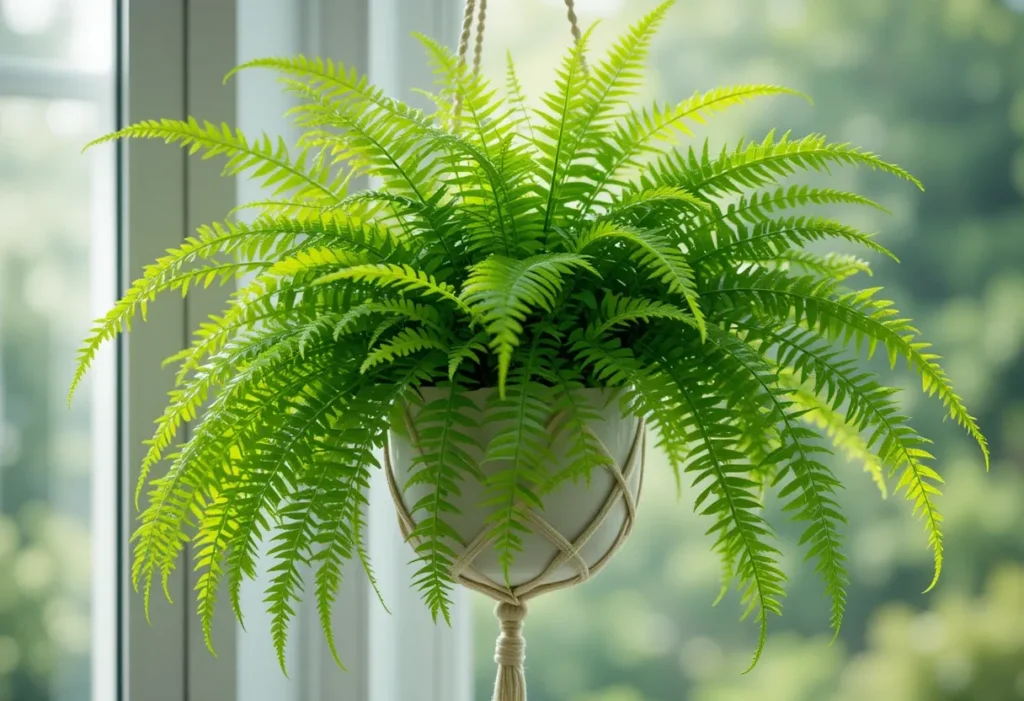
If you want a hanging plant that instantly makes your home feel lush and inviting, the Boston Fern is an excellent choice. Its long, feathery fronds arch gracefully over the sides of baskets, creating a soft, cascading display that suits everything from cozy reading corners to bright bathrooms.
Boston Fern naturally grows beneath forest canopies, so it appreciates bright, indirect light and consistently moist soil. It also enjoys higher humidity than many other houseplants, making it perfect for kitchens, bathrooms, or rooms with a humidifier. While it requires a little more attention than drought-tolerant plants, its elegant appearance is well worth the effort.
Unlike many popular hanging plants, Boston Fern is non-toxic to cats and dogs, making it a favorite among pet owners.
Quick Facts
- Light: Bright, indirect light
- Water: Keep the soil consistently moist but not soggy.
- Humidity: High
- Care Level: Moderate
- Pet Friendly: ✅ Yes
- Best For: Bathrooms, living rooms, hanging baskets, and humid spaces
Popular Varieties
- Tiger Fern
- Fluffy Ruffles
- Dallas Fern
2. Spider Plant (Chlorophytum comosum)
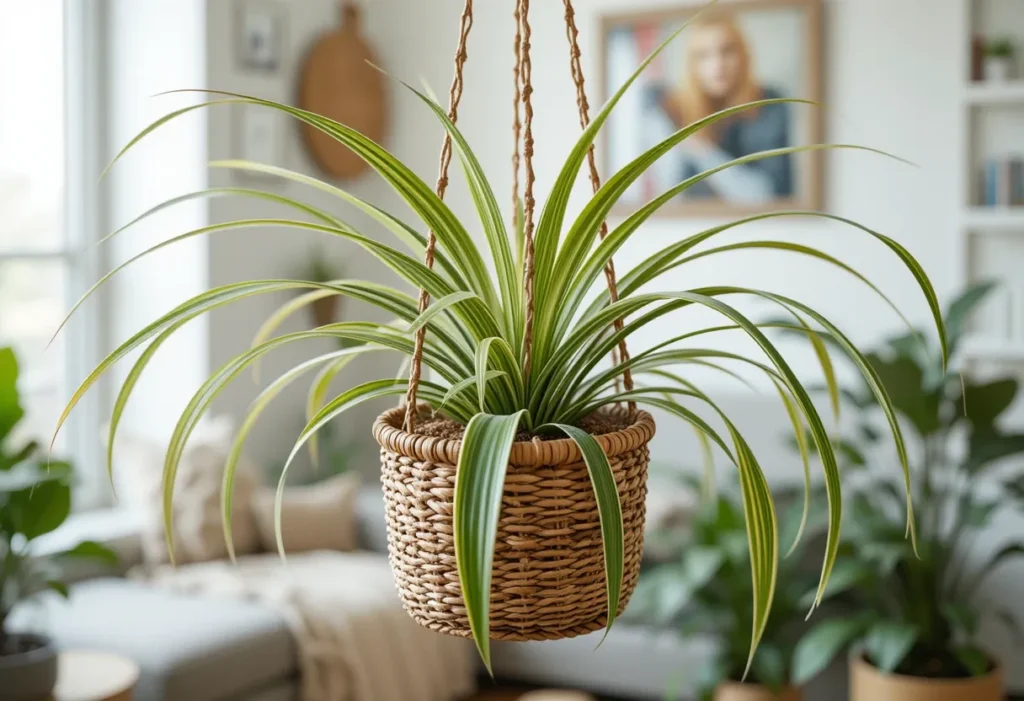
Imagine a plant that practically decorates itself. The Spider Plant produces graceful arching leaves and tiny baby plantlets that spill beautifully over the edges of hanging baskets, creating a lush waterfall of greenery. Its adaptability and forgiving nature have made it one of the most popular hanging indoor plants for decades.
This easy-going houseplant tolerates occasional neglect and thrives in bright, indirect light, although it also performs surprisingly well in medium-light rooms. Regular watering and well-draining soil keep the foliage vibrant, while mature plants reward you with dozens of dangling “spiderettes” that can easily be propagated into new plants.
One of its biggest advantages is that it’s considered non-toxic to cats and dogs, making it an excellent choice for pet-friendly homes.
Quick Facts
- Best For: Bedrooms, living rooms, offices, and hanging baskets
- Light: Bright, indirect light
- Water: Water when the top inch of soil becomes dry
- Care Level: Easy
- Pet Friendly: ✅ Yes
Popular Varieties
- Hawaiian Spider Plant
- Variegatum
- Bonnie
3. Golden Pothos (Epipremnum aureum)
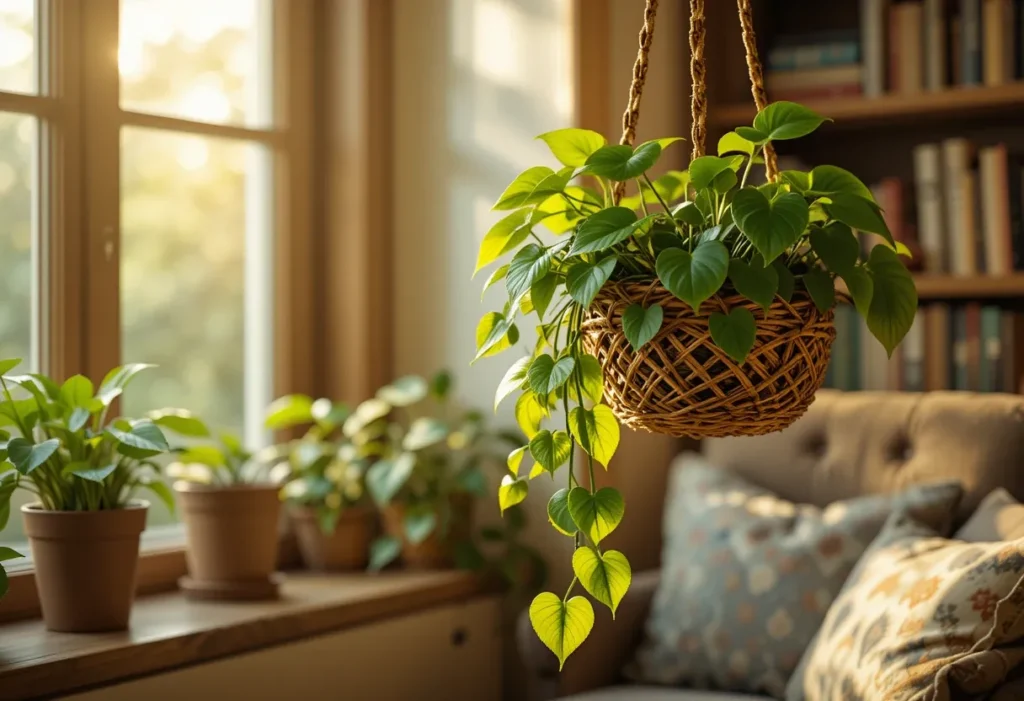
Few houseplants have earned a reputation quite like Golden Pothos. Often called the “carefree climber,” this fast-growing trailing vine is loved for its heart-shaped green leaves splashed with golden-yellow variegation. Whether cascading from a hanging basket, draping over a bookshelf, or climbing a moss pole, Pothos instantly adds lush greenery to any indoor space with very little effort.
One of the biggest reasons Golden Pothos remains a favorite among plant lovers is its remarkable adaptability. It thrives in a wide range of indoor conditions, from bright, indirect light to lower-light rooms, making it an excellent choice for beginners and busy homeowners alike. Its vigorous vines can grow several feet long, creating a beautiful cascading display that enhances living rooms, bedrooms, home offices, and apartments.
Although it’s incredibly low maintenance, a little routine care goes a long way. Water the plant only after the top couple of inches of soil have dried, and use a well-draining potting mix to prevent root rot. Regular pruning encourages fuller growth, while stem cuttings root easily in water, allowing you to propagate new plants with minimal effort. Keep in mind that Golden Pothos is toxic to cats and dogs, so it’s best displayed where curious pets can’t reach it.
Quick Facts
- Light: Low to bright, indirect light
- Water: Water when the top 2 inches of soil feel dry
- Humidity: Average household humidity
- Care Level: Easy
- Pet Friendly: ❌ No
- Best For: Hanging baskets, shelves, home offices, apartments, and beginner plant collections
Popular Varieties
- Neon Pothos
- Golden Pothos
- Marble Queen Pothos
4. English Ivy (Hedera helix)
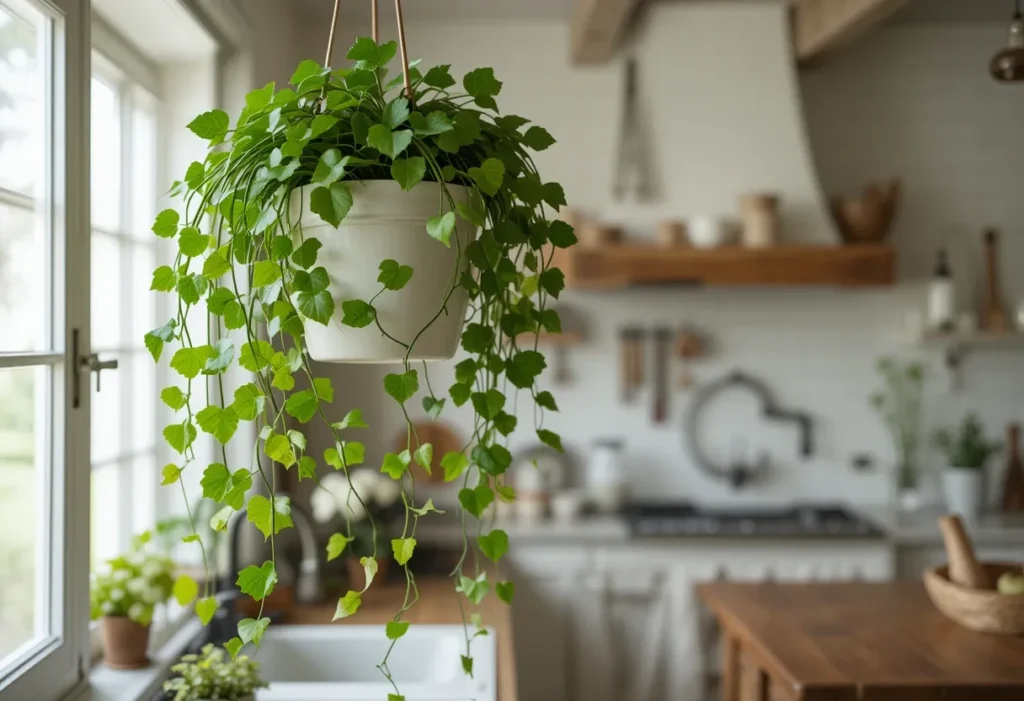
With its elegant trailing vines and timeless appearance, English Ivy has decorated homes for generations. Its dense foliage spills beautifully over hanging baskets, window boxes, and elevated shelves, making it one of the best hanging indoor plants for creating a classic indoor garden.
English Ivy grows best in bright, indirect light with evenly moist soil and good air circulation. Regular trimming keeps vines full and prevents legginess. Because it naturally climbs, it also works beautifully on trellises and moss poles when grown indoors.
Although beautiful, English Ivy is considered toxic to both cats and dogs, so it’s best displayed in locations where pets cannot reach it.
Quick Facts
- Light: Bright, indirect light
- Water: Keep soil lightly moist
- Water: Keep soil lightly moist
- Humidity: Moderate
- Care Level: Moderate
- Pet Friendly: ❌ No
- Best For: Hanging baskets, shelves, trellises
Popular Varieties
- Glacier
- Needlepoint
- Gold Child
5. String of Pearls (Senecio rowleyanus)
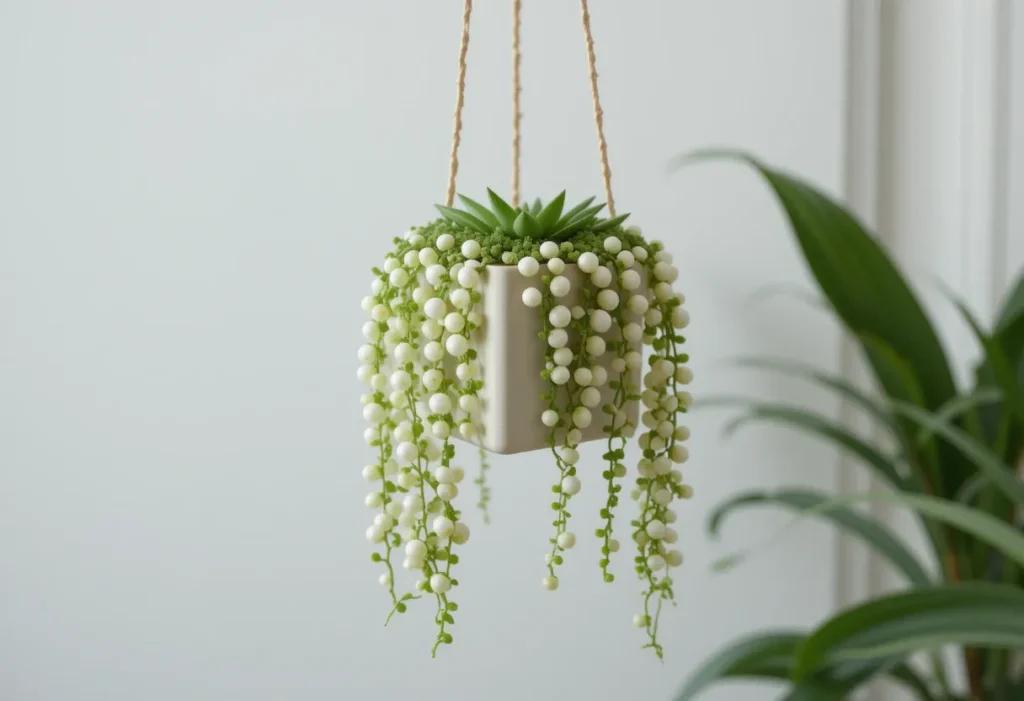
Few hanging indoor plants are as eye-catching as String of Pearls. Its long, cascading stems are lined with perfectly round, bead-like leaves that resemble strands of green pearls, making it a standout addition to shelves, hanging baskets, and sunny windows. This unusual succulent brings a modern, sculptural look to indoor spaces and is perfect for anyone who wants a unique plant that sparks conversation.
Despite its delicate appearance, String of Pearls is surprisingly easy to care for. Because its plump leaves store water, it tolerates dry conditions much better than most tropical houseplants. Place it in bright, indirect light with a few hours of gentle morning sun, and allow the soil to dry out completely before watering. With proper care, its trailing vines can grow several feet long, creating a stunning waterfall of greenery. Keep in mind that String of Pearls is toxic to cats and dogs, so it should be displayed safely out of reach of pets.
Quick Facts
- Light: Bright, indirect light
- Water: Water only when the soil has completely dried
- Humidity: Low to average
- Care Level: Easy
- Pet Friendly: ❌ No
- Best For: Hanging baskets, sunny windows, shelves, and modern interiors
Popular Varieties
- String of Pearls
- Variegated String of Pearls
- Curio ‘Hippogriff’ (hybrid variety)
6. Hoya (Hoya spp.)
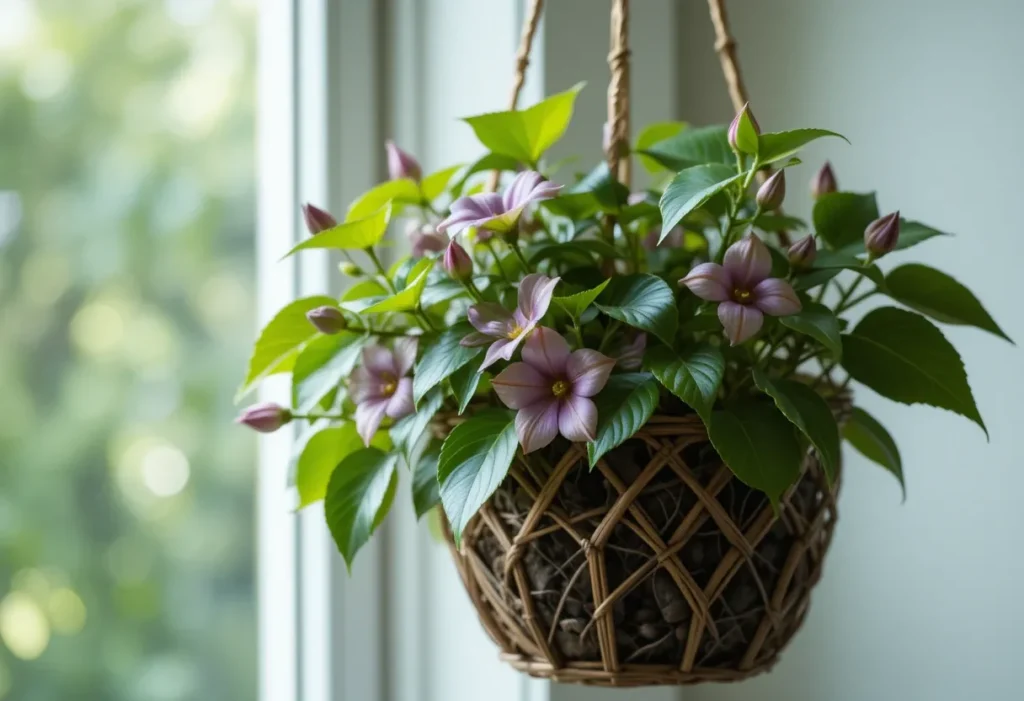
If you’re looking for a hanging indoor plant that offers both beautiful foliage and fragrant flowers, Hoya deserves a place at the top of your list. Commonly known as the Wax Plant, Hoya develops long trailing vines covered with thick, glossy leaves that remain attractive throughout the year.
Given enough bright, indirect light and a little patience, mature plants reward you with clusters of waxy, star-shaped flowers that fill the room with a sweet fragrance. Their succulent-like leaves also make Hoyas more drought tolerant than many tropical houseplants, making them an excellent choice for busy plant owners.
Because Hoyas grow steadily and live for many years, they often become treasured heirloom houseplants passed from one generation to the next.
Most Hoya species are also considered safe for cats and dogs, making them an excellent addition to pet-friendly homes.
Quick Facts
- Light: Bright, indirect light
- Water: Water when the top half of the soil becomes dry
- Humidity: Average to moderate
- Care Level: Easy
- Pet Friendly: ✅ Yes
- Best For: Hanging baskets, shelves, bright rooms, office
Popular Varieties
- Hoya carnosa
- Hoya pubicalyx
- Hoya krimson queen
- Hoya compacta (Hindu Rope)
7. Maidenhair Fern (Adiantum spp.)
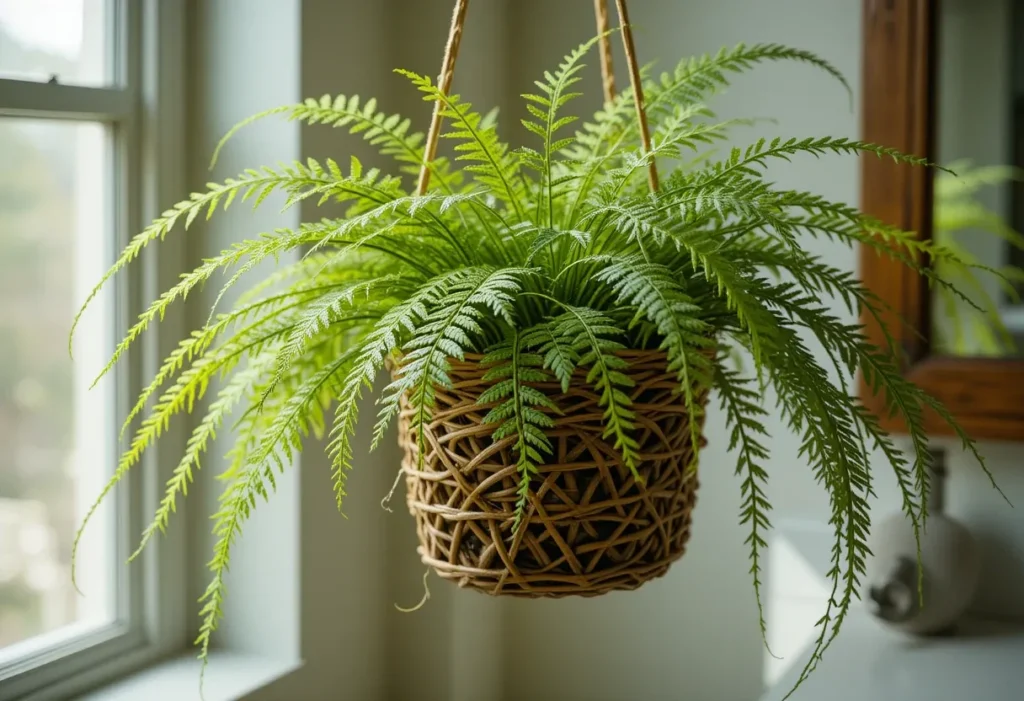
With its soft, fan-shaped leaflets and delicate black stems, Maidenhair Fern brings an elegant, airy feel to any indoor space. Its graceful foliage creates a light, cascading display that looks especially beautiful in hanging baskets, where the fine fronds can arch naturally. This timeless fern is perfect for adding a touch of freshness and sophistication to bathrooms, kitchens, or other humid rooms.
Although Maidenhair Fern has a reputation for being a little fussy, it thrives when its natural needs are met. It prefers bright, indirect light, consistently moist soil, and high humidity, making it an excellent choice for homes with naturally humid environments or a humidifier. Avoid letting the soil dry out completely, as the delicate fronds can quickly turn brown. The good news is that Maidenhair Fern is non-toxic to cats and dogs, making it a safe and beautiful option for pet-friendly homes.
Quick Facts
- Light: Bright, indirect light
- Water: Keep the soil consistently moist but not waterlogged
- Humidity: High
- Care Level: Moderate to Difficult
- Pet Friendly: ✅ Yes
- Best For: Bathrooms, kitchens, hanging baskets, and humid indoor spaces
Popular Varieties
- Rosy Maidenhair Fern
- Southern Maidenhair Fern (Adiantum capillus-veneris)
- Delta Maidenhair Fern (Adiantum raddianum)
8. String of Hearts (Ceropegia woodii)
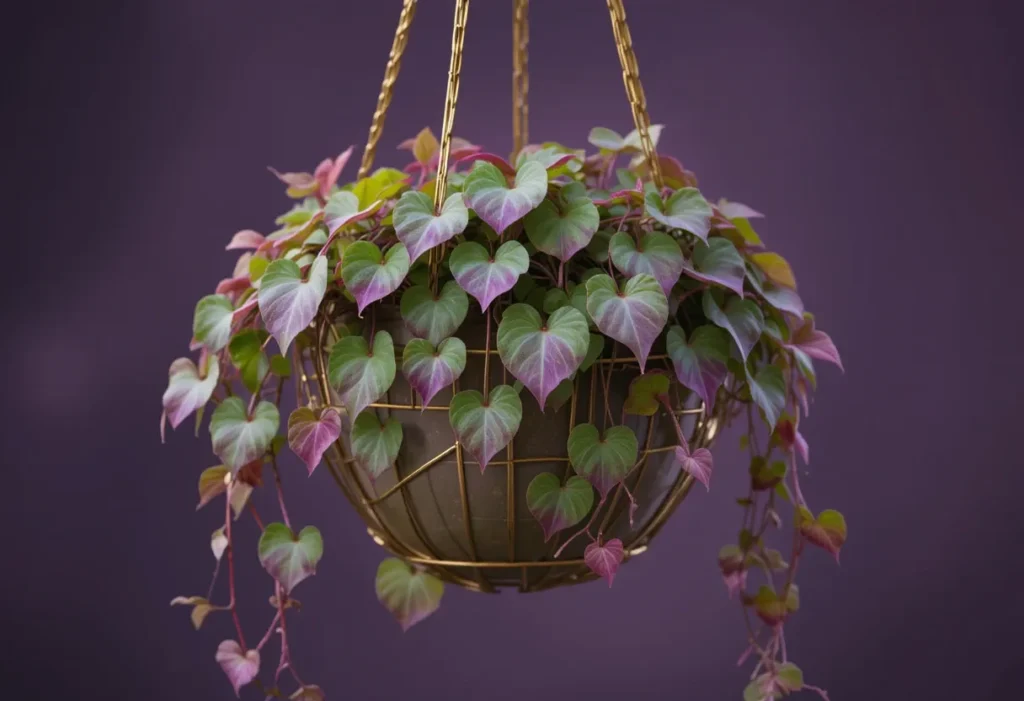
Few trailing houseplants look as delicate as the String of Hearts. Its slender vines are lined with tiny, heart-shaped leaves patterned in shades of green and silver, creating an elegant curtain of foliage that can grow several feet long. Whether displayed on a floating shelf or suspended in a hanging planter, this charming plant adds a soft, romantic touch to any room.
Despite its delicate appearance, String of Hearts is surprisingly easy to grow. As a semi-succulent, it stores water in its leaves and tubers, allowing it to tolerate occasional missed waterings. It grows best in bright, indirect light, although a little morning sun helps encourage faster growth and stronger leaf color.
This beautiful trailing plant is also considered safe for cats and dogs, making it an excellent option for pet-friendly homes.
Quick Facts
- Light: Bright, indirect light
- Water: Allow the soil to dry before watering
- Humidity: Average
- Care Level: Easy
- Pet Friendly: ✅ Yes
- Best For: Shelves, hanging baskets, bedrooms, apartments
Popular Varieties
- Standard String of Hearts
- Variegated String of Hearts
- Silver Glory
9. Tradescantia (Tradescantia zebrina)
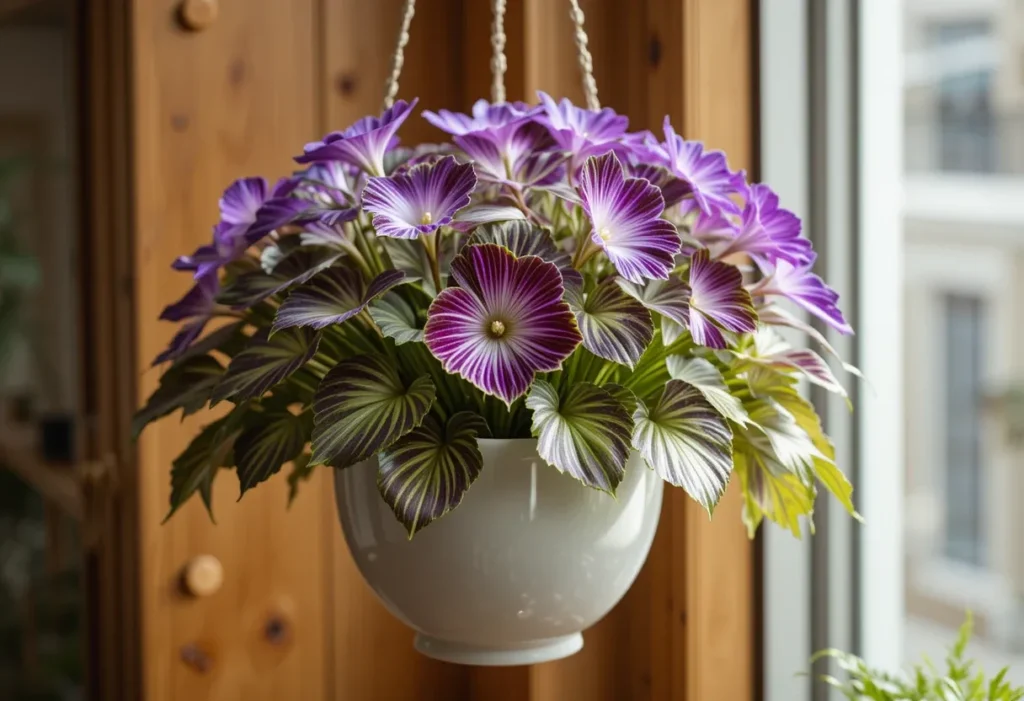
If you’re looking to add bold color to your indoor garden, Tradescantia is an excellent choice. Its trailing vines feature striking purple and green striped leaves with shimmering silver accents, making it one of the most eye-catching hanging indoor plants. Whether displayed in a hanging basket or allowed to spill gracefully from a shelf, Tradescantia brings vibrant texture and a lively tropical feel to any room.
This fast-growing houseplant is also wonderfully easy to care for, making it ideal for beginners. It thrives in bright, indirect light, which helps maintain its vivid foliage, while regular watering keeps the leaves lush and healthy. Pinching back the stems encourages fuller growth, and the cuttings root quickly in water or soil, making propagation effortless. Although Tradescantia is easy to grow, its sap may cause mild skin irritation, and the plant can be mildly toxic to cats and dogs if ingested, so it’s best kept out of reach of pets.
Quick Facts
- Light: Bright, indirect light
- Water: Water when the top inch of soil feels dry
- Humidity: Average to moderate
- Care Level: Easy
- Pet Friendly: ❌ No (may cause mild irritation to pets)
- Best For: Hanging baskets, shelves, bright rooms, and beginner plant collections
Popular Varieties
- Tradescantia zebrina
- Tradescantia Nanouk
- Purple Heart (Tradescantia pallida)
10. Asparagus Fern (Asparagus densiflorus)
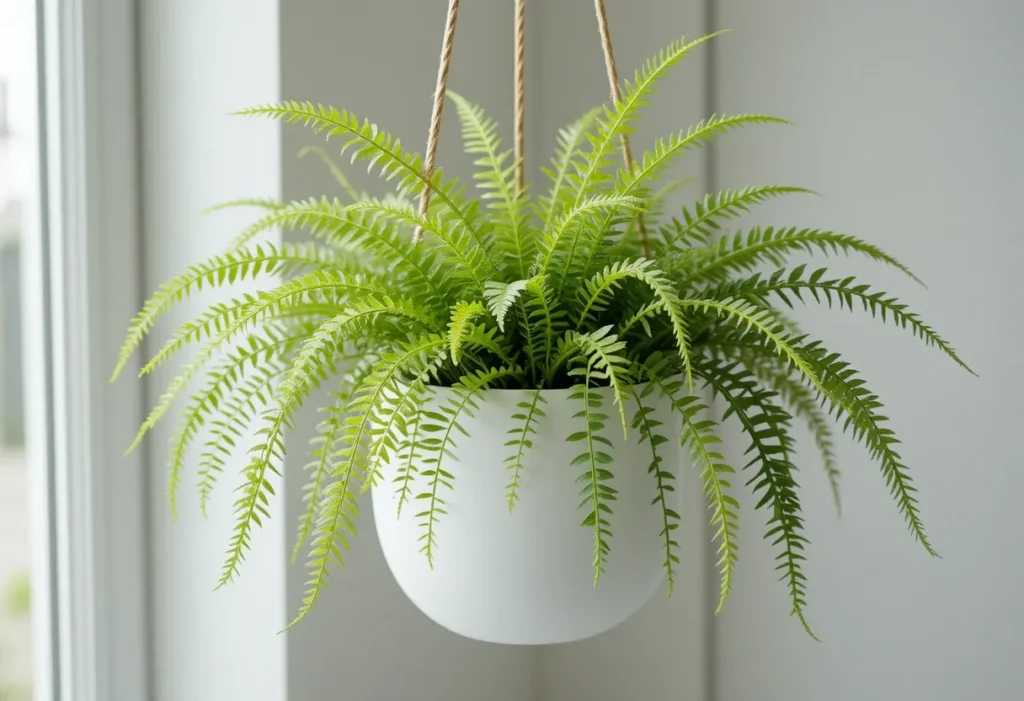
Don’t let the name fool you, Asparagus Fern isn’t a true fern, but its soft, feathery foliage gives it the same delicate charm. Its arching stems spill gracefully over the edges of suspended planters and elevated shelves, creating a light, airy display that instantly brightens indoor spaces. Whether you’re designing a cozy reading nook or building an indoor jungle, this cascading houseplant adds texture and lush greenery without overwhelming your décor.
Although it looks delicate, Asparagus Fern is surprisingly resilient when grown in the right conditions. It thrives in bright, indirect light and appreciates evenly moist soil along with moderate to high humidity. Regular watering and occasional trimming help maintain its full, fluffy appearance, while its fast-growing stems make it a beautiful choice for hanging baskets and decorative containers. Keep in mind that Asparagus Fern is toxic to cats and dogs if ingested, so it’s best placed where pets cannot reach it.
Quick Facts
- Light: Bright, indirect light
- Water: Keep the soil evenly moist, allowing the surface to dry slightly between waterings
- Humidity: Moderate to high
- Care Level: Easy to Moderate
- Pet Friendly: ❌ No
- Best For: Hanging baskets, suspended planters, shelves, bathrooms, and tropical-inspired interiors
Popular Varieties
- Ming Fern
- Sprengeri Asparagus Fern
- Foxtail Fern
11. Lipstick Plant (Aeschynanthus radicans)
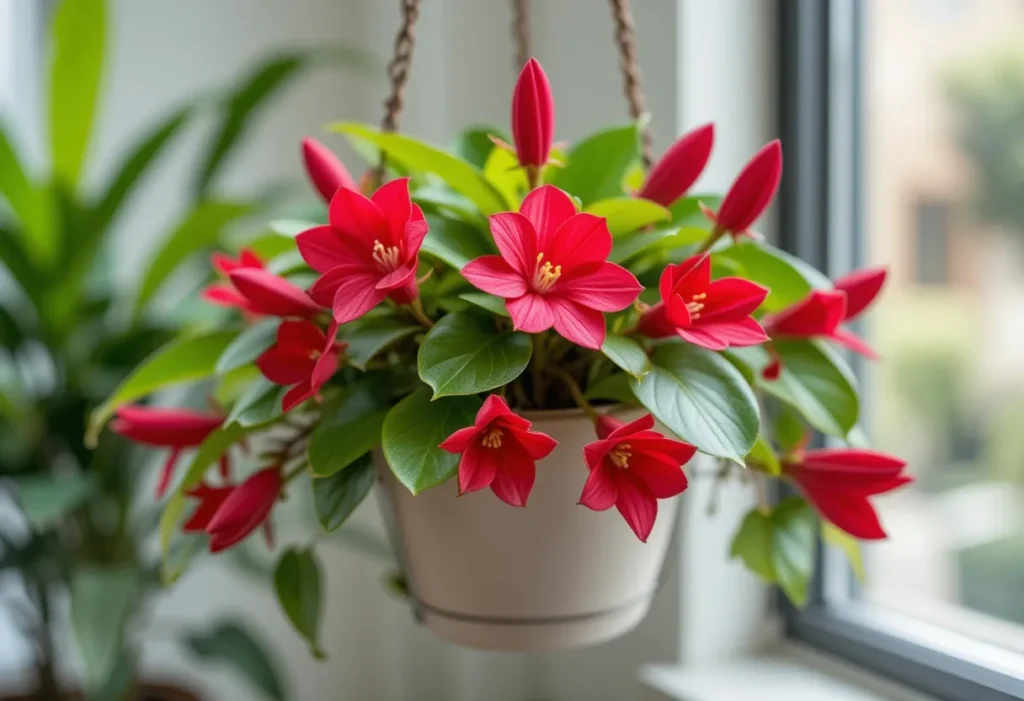
Want a hanging plant that flowers as beautifully as it trails? The Lipstick Plant is hard to beat. Its glossy green vines produce vibrant tubular blooms that emerge from dark buds, resembling a tube of lipstick—giving this tropical favorite its memorable name.
Unlike many flowering houseplants, the Lipstick Plant blooms repeatedly under the right conditions. Bright, indirect light, moderate humidity, and regular watering during the growing season encourage abundant flowers that add bold splashes of red, orange, or coral to your indoor space.
Because of its cascading stems and colorful flowers, it’s especially attractive in hanging baskets near bright windows.
Quick Facts
- Light: Bright, indirect light
- Water: Water when the top inch of soil feels dry
- Humidity: Moderate to high
- Care Level: Moderate
- Pet Friendly: ✅ Generally considered non-toxic
- Best For: Hanging baskets, bright living rooms, home offices
Popular Varieties
- Black Pagoda
- Mona Lisa
- Curly Lipstick Plant
12. Burro’s Tail (Sedum morganianum)
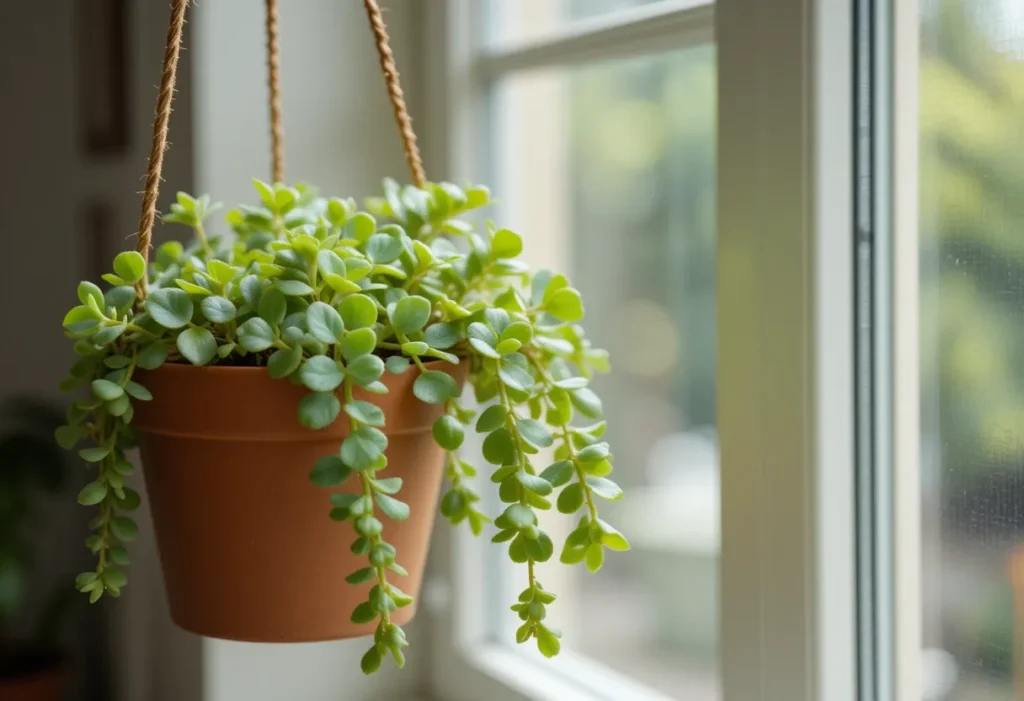
With its long, cascading stems covered in plump blue-green leaves, Burro’s Tail is one of the most striking trailing indoor plants you can grow. The thick, bead-like foliage drapes beautifully over the sides of hanging baskets and elevated planters, creating a dramatic waterfall effect. Its sculptural appearance makes it a favorite for modern, minimalist, and bohemian interiors, adding texture and visual interest to any room.
As a drought-tolerant succulent, Burro’s Tail is an excellent choice for gardeners who prefer low-maintenance houseplants. It thrives in bright, indirect light with a few hours of gentle morning sun and grows best in a fast-draining cactus or succulent potting mix. Allow the soil to dry completely before watering, and avoid handling the stems too often, as the delicate leaves can fall off easily. Burro’s Tail is generally considered non-toxic to cats and dogs, making it a safer option for many pet-friendly homes.
Quick Facts
- Light: Bright, indirect light with a few hours of morning sun
- Water: Water only when the soil has completely dried
- Humidity: Low to average
- Care Level: Easy
- Pet Friendly: ✅ Yes
- Best For: Hanging baskets, sunny windows, succulent collections, and modern interiors
Popular Varieties
- Burro’s Tail (Sedum morganianum)
- Giant Burro’s Tail
- Burrito (Sedum burrito)
13. String of Dolphins (Curio × peregrinus)
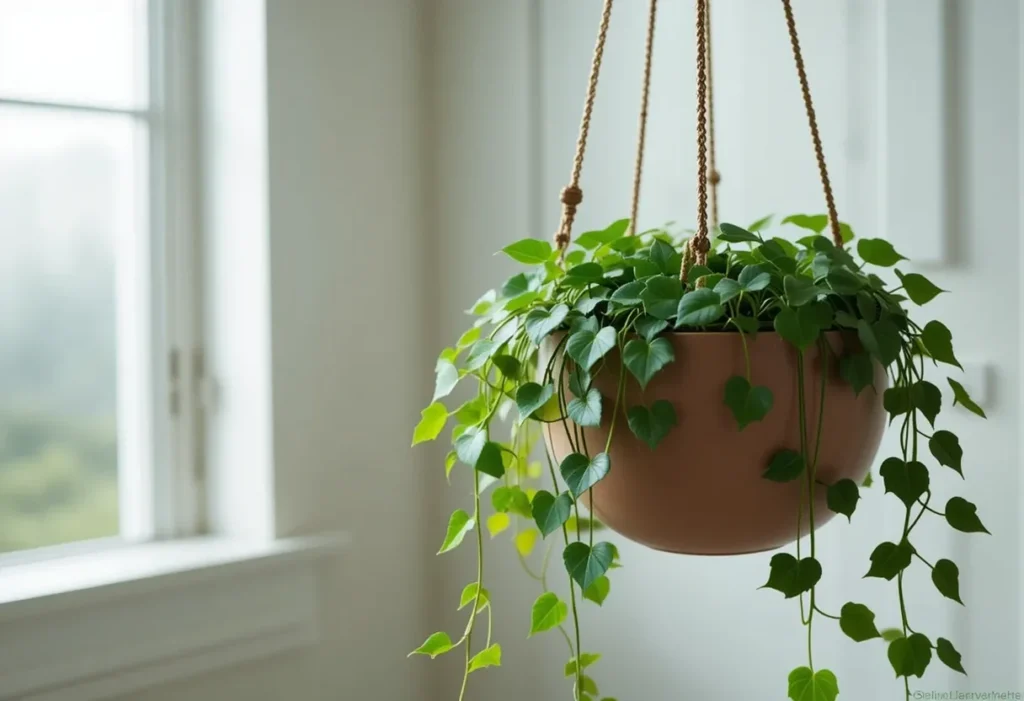
If you’re looking for a conversation-starting hanging houseplant, String of Dolphins is hard to beat. This charming succulent gets its name from its unique leaves, which resemble tiny leaping dolphins attached to slender trailing vines. Its playful appearance makes it a standout choice for hanging baskets, floating shelves, and sunny windows, where the cascading stems can be admired from every angle.
Although it looks exotic, String of Dolphins is surprisingly easy to grow when given the right conditions. It thrives in bright, indirect light with a few hours of gentle morning sun and prefers a well-draining succulent potting mix. Allow the soil to dry completely between waterings, as overwatering is the most common cause of problems. With proper care, its vines can grow several feet long, creating a beautiful cascading display. Like many succulents in the Curio genus, String of Dolphins can be toxic to cats and dogs if ingested, so it’s best displayed safely out of reach of pets.
Quick Facts
- Light: Bright, indirect light with a few hours of morning sun
- Water: Water only when the soil has completely dried
- Humidity: Low to average
- Care Level: Easy
- Pet Friendly: ❌ No
- Best For: Hanging baskets, sunny windows, shelves, and succulent collections
Popular Varieties
- String of Dolphins (Curio × peregrinus)
- Variegated String of Dolphins (rare)
- String of Bananas (Curio radicans)
14. Orchid (Phalaenopsis spp.)
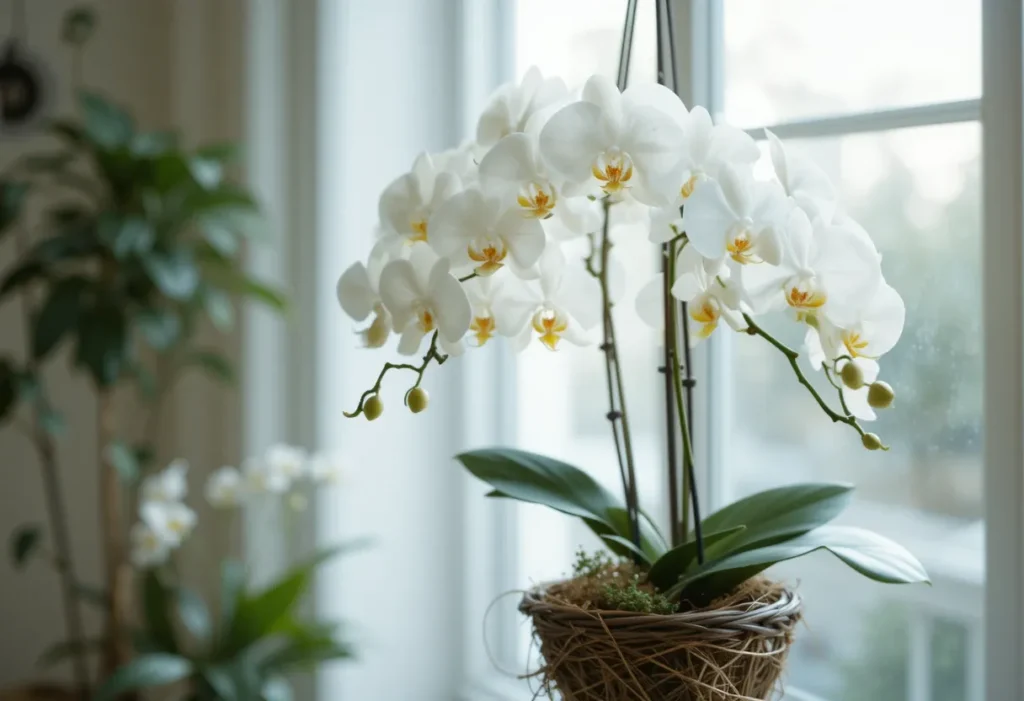
Few hanging indoor plants bring the same elegance and sophistication as Orchids. Their graceful arching stems and long-lasting blooms create a stunning display when placed in hanging baskets or elevated planters. Available in shades of white, pink, purple, yellow, and speckled patterns, these tropical beauties instantly brighten living rooms, bedrooms, and home offices while adding a luxurious touch to your indoor décor.
Although Orchids have a reputation for being difficult to grow, Phalaenopsis, commonly known as the Moth Orchid, is surprisingly beginner-friendly. It thrives in bright, indirect light, prefers a chunky orchid bark mix, and only needs watering when the growing medium begins to dry. With proper care, an Orchid can bloom for several months and often flowers again each year, making it one of the most rewarding flowering houseplants to grow indoors. Most Phalaenopsis Orchids are considered non-toxic to cats and dogs, making them an excellent choice for pet-friendly homes.
Quick Facts
- Light: Bright, indirect light
- Water: Water when the orchid bark begins to dry
- Humidity: Moderate to high
- Care Level: Moderate
- Pet Friendly: ✅ Yes
- Best For: Hanging baskets, bright rooms, bedrooms, and elegant indoor décor
Popular Varieties
- Moth Orchid (Phalaenopsis)
- Dendrobium Orchid
- Cattleya Orchid
15. Dischidia (Dischidia spp.)
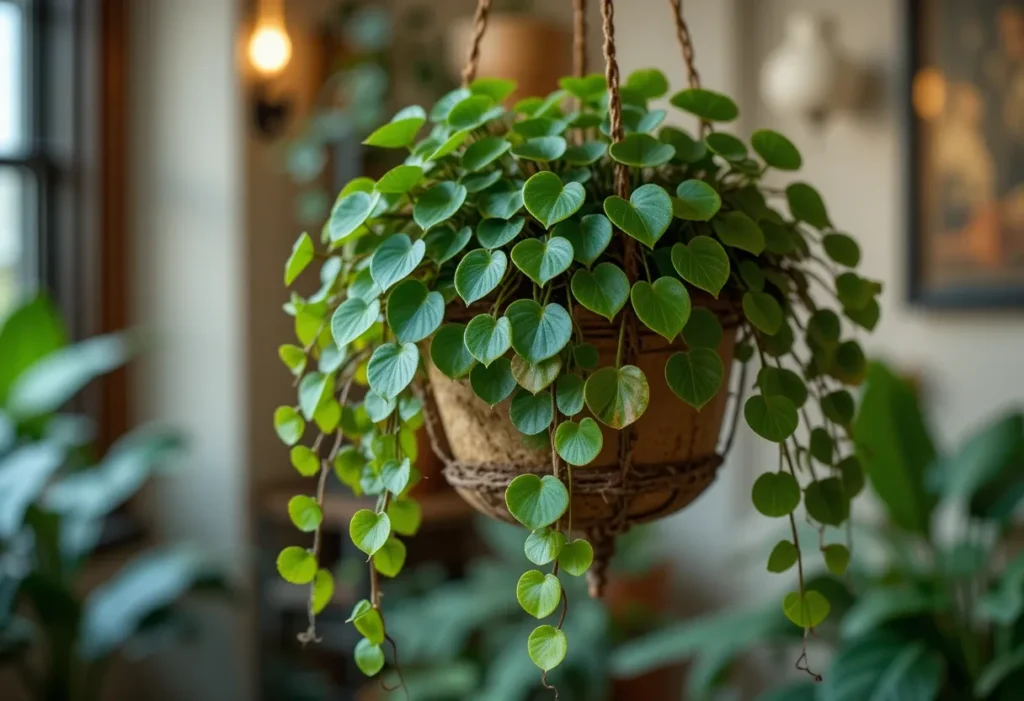
For a hanging plant that’s a little different from the usual trailing vines, Dischidia is a hidden gem. This tropical cascading houseplant produces slender stems covered with small, fleshy leaves that spill gracefully from hanging baskets and wall planters. Native to the rainforests of Southeast Asia, many Dischidia species naturally grow on tree branches, giving them a unique, airy appearance that’s perfect for creating a lush indoor jungle.
Despite its exotic look, Dischidia is relatively low maintenance. It thrives in bright, indirect light, enjoys moderate to high humidity, and grows best in a loose, well-draining potting mix. Water only when the growing medium begins to dry, as excessive moisture can damage the roots. With proper care, its elegant vines continue to trail beautifully, making Dischidia an excellent choice for shelves, suspended planters, and compact indoor spaces. Most Dischidia species are considered non-toxic to cats and dogs, making them a pet-friendly option for many homes.
Quick Facts
- Light: Bright, indirect light
- Water: Water when the growing medium begins to dry
- Humidity: Moderate to high
- Care Level: Easy to Moderate
- Pet Friendly: ✅ Yes
- Best For: Hanging baskets, suspended planters, shelves, and tropical-inspired interiors
Popular Varieties
- String of Nickels (Dischidia nummularia)
- Watermelon Dischidia (Dischidia ovata)
- Million Hearts (Dischidia ruscifolia)
Best Hanging Indoor Plants by Category
Finding the perfect hanging plant becomes easier when you match it to your lifestyle and growing conditions.
Best Hanging Plants for Beginners
These forgiving plants are ideal if you’re starting your indoor gardening journey.
- Spider Plant
- Golden Pothos
- Heartleaf Philodendron
- Hoya
- Tradescantia
Best Pet-Friendly Hanging Indoor Plants
If you have curious cats or playful dogs, consider these safer options.
- Spider Plant
- Boston Fern
- String of Hearts
- Hoya
- Bird’s Nest Fern
Note: Even non-toxic plants can cause mild digestive upset if eaten in large amounts. It’s still a good idea to keep plants out of reach whenever possible.
Best Low-Light Hanging Plants
Rooms without abundant sunlight can still support beautiful greenery.
- Golden Pothos
- Heartleaf Philodendron
- Bird’s Nest Fern
- Boston Fern
If your room gets little to no natural light at all rather than just filtered daylight, Pothos and Heartleaf Philodendron are also among the top picks in our guide to plants for dark rooms, which covers the grow-light setup and care adjustments that matter most in that more extreme situation.
Best Flowering Hanging Plants
Add colorful blooms to your indoor space with these beautiful flowering varieties.
- Lipstick Plant
- Hoya
- Chenille Plant
Best Fast-Growing Hanging Plants
If you want quick results, these vigorous growers won’t disappoint.
- Golden Pothos
- Tradescantia
- Spider Plant
- Heartleaf Philodendron
🌿 Expert Tip
Water based on the plant, not the calendar. One of the biggest mistakes indoor gardeners make is watering every plant on the same schedule. Instead, check the soil first. Tropical plants like Boston Fern and Maidenhair Fern prefer consistently moist soil, while succulents such as String of Pearls, Burro’s Tail, and String of Dolphins should dry out completely between waterings. Matching your watering routine to each plant’s natural needs leads to healthier growth, fewer pest problems, and a much lower risk of root rot.
Common Mistakes When Growing Hanging Indoor Plants
Even easy-care houseplants can struggle if their basic needs aren’t met. Avoid these common mistakes to keep your hanging plants healthy year-round.
Overwatering
The most common cause of indoor plant problems is watering too often. Always check the soil before watering instead of following a strict schedule.
Ignoring Light Requirements
A plant placed in the wrong location may become leggy, lose its color, or stop growing. Match each plant to its preferred light conditions for the best results.
Forgetting to Rotate Plants
Hanging plants naturally lean toward the light source. Rotate the pot every two to three weeks to encourage balanced, even growth.
Using Poorly Draining Soil
Dense soil traps excess moisture around the roots, increasing the risk of root rot. Choose a well-draining potting mix suited to your plant type.
Skipping Regular Pruning
Removing damaged leaves and trimming long vines encourages healthier growth and helps maintain a fuller appearance.
Expert Tips for Healthy Hanging Indoor Plants
- Water thoroughly until excess drains from the pot.
- Always use containers with drainage holes.
- Feed plants every four to six weeks during spring and summer.
- Clean dusty leaves regularly to improve photosynthesis.
- Increase humidity for tropical plants using a pebble tray or humidifier.
- Inspect plants often for pests like spider mites and mealybugs.
- Repot root-bound plants every two to three years.
- Trim vines regularly to encourage branching and fuller growth.
Toxic Hanging Indoor Plants to Keep Away from Pets
While many hanging plants are beautiful, some can be harmful if chewed by cats or dogs.
Avoid placing these within reach of pets:
- Golden Pothos
- Heartleaf Philodendron
- English Ivy
- Swiss Cheese Vine (Monstera adansonii)
- Tradescantia (may cause skin irritation)
Before bringing home a new plant, verify its safety using a trusted source such as the ASPCA Plant Database, especially if you have pets that like to nibble on leaves.
Frequently Asked Questions
Conclusion
Hanging indoor plants are one of the easiest ways to add natural beauty, texture, and personality to your home. Whether you prefer cascading vines, lush tropical foliage, colorful flowers, or sculptural succulents, there’s a hanging plant to suit every room and every level of gardening experience.
The key to success is choosing plants that match your home’s lighting conditions and your lifestyle. Start with beginner-friendly favorites like Spider Plant or Hoya, or create a dramatic indoor jungle with lush Boston Ferns, Swiss Cheese Vines, and trailing Philodendrons. With proper care, these beautiful houseplants will reward you with healthy growth and year-round greenery.
If you’re expanding your indoor garden, you may also enjoy these related guides:
- 22 Best Low-Light Indoor Plants That Thrive Without Direct Sunlight
- 25 Pet-Friendly Indoor Plants That Are Safe for Cats and Dogs
Whether you’re decorating a cozy apartment or refreshing a spacious living room, the right hanging indoor plants can transform your home into a greener, more relaxing space.