How to Care for Low Light Plants: The Complete Growing Guide
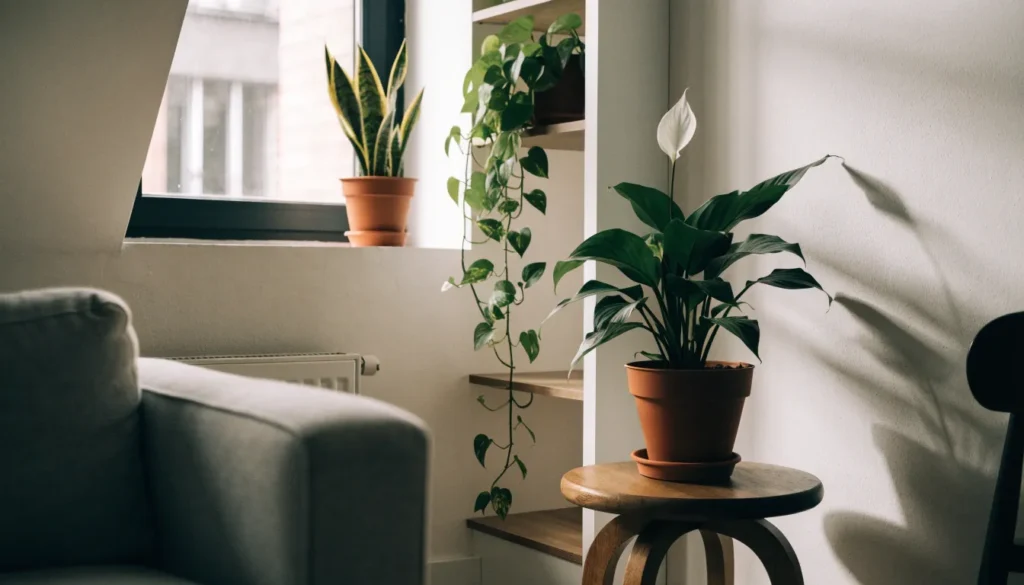
If your apartment gets more shadow than sunshine, you don’t have to give up on greenery. A surprising number of species have adapted to survive, and even flourish, with minimal natural light, which is why low light plants have become the go-to choice for renters, office workers, and anyone stuck with north-facing windows. The trick isn’t luck; it’s understanding what “low light” really means and matching that condition to the right foliage.
This guide to how to care for low light plants breaks down everything you need to know, from reading your room’s actual light levels to watering, soil, feeding, and troubleshooting the most common problems. Whether you’re filling a dim hallway or trying to keep a peace lily alive on a bookshelf, you’ll find a practical answer here.
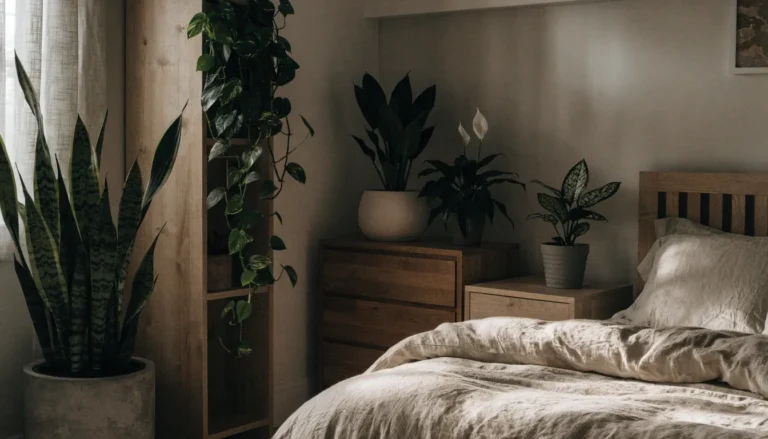
Placement matters just as much as care: begin with the best plants for a dark bedroom, add bathroom plants that handle steam and low light for humid washrooms, and finish with office plants that survive neglect for the workspace.
Table of Contents
Quick Answer
If you’re wondering how to care for low light plants, the short version is this: they need less frequent watering, well-draining soil, and stable indoor temperatures between 65–80°F. Let the top 1–2 inches of soil dry out before watering again, keep them out of cold drafts, dust their leaves monthly so they can absorb what little light is available, and fertilize sparingly, once every one to two months during spring and summer only. Skip fertilizer entirely in fall and winter, since slower growth means less demand for nutrients.
What Does “Low Light” Actually Mean?
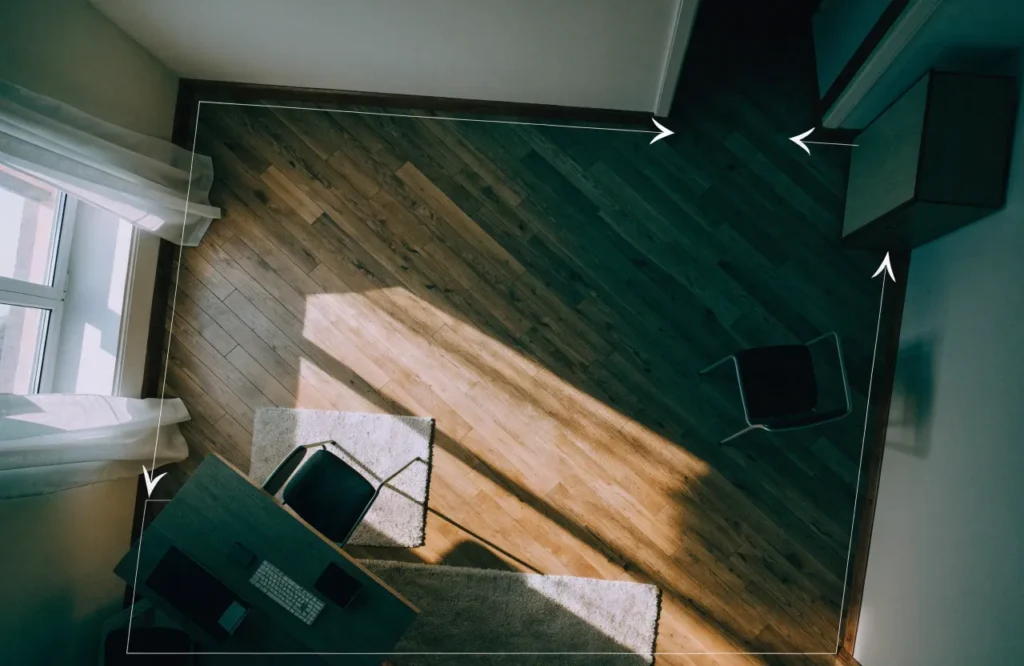
Learning how to care for low light plants starts here: not every dim corner qualifies as suitable, and not every “low light tolerant” plant can survive total darkness. Understanding the difference matters more than most beginners realize.
- Bright indirect light sits around 100–250 foot-candles, think a spot near a sheer curtain or a few feet back from an east-facing window. This is what most flowering houseplants, like orchids, actually want.
- Low light typically falls between 25 and 100 foot-candles. It’s common in north-facing rooms, corners away from windows, and spaces lit mainly by fluorescent bulbs.
- No light means zero illumination, and no houseplant, no matter how “low light tolerant” its label, can survive there long-term.
A simple way to judge your space is the reading test: if you can comfortably read a book in that spot during the day without switching on a lamp, it’s bright enough to support most shade-tolerant houseplants. Window direction matters too, north-facing windows give the softest, most consistent glow, while south-facing rooms stay bright most of the day, and west-facing spots pick up strong, hot afternoon sun that few low light plants enjoy.
Best Low Light Plants Compared
Before choosing what to bring home, it helps to compare how to care for low light plants across the most popular species, side by side.
| Plant | Light Needs | Watering | Growth Speed | Pet Safety |
|---|---|---|---|---|
| Snake Plant | Very low to bright indirect | Let soil dry fully | Slow | Toxic to cats & dogs |
| Pothos | Low to medium indirect | Let top 2 inches dry | Fast | Toxic to cats & dogs |
| ZZ Plant | Very low to bright indirect | Let soil dry fully | Slow | Toxic if ingested |
| Peace Lily | Low to medium indirect | Keep lightly moist | Moderate | Toxic to cats & dogs |
| Spider Plant | Low to bright indirect | Let top inch dry | Fast | Pet-safe |
| Cast Iron Plant | Very low to medium indirect | Let soil dry fully | Slow | Pet-safe |
If your household includes curious cats or dogs, it’s worth cross-checking any new addition against a full list of pet-friendly indoor plants before you bring it home, since several popular low light varieties are mildly to moderately toxic.
Light Requirements for Low Light Plants
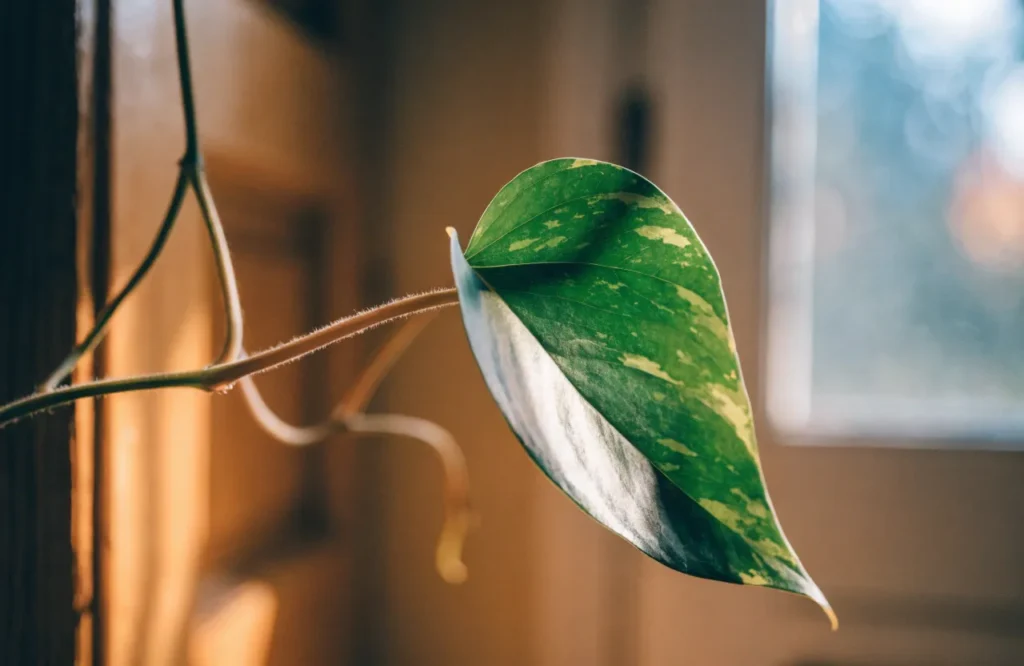
A key part of how to care for low light plants is remembering that low light doesn’t mean no light, every plant still needs some illumination to photosynthesize. Plants with solid, deep green leaves generally cope better in dim rooms than variegated varieties, because the extra chlorophyll in solid foliage helps them absorb energy more efficiently from limited light. Variegated pothos or snake plants, for example, often start reverting to plain green as a survival response when light is too low.
Watch for these warning signs that a plant isn’t getting enough light:
- Leggy, stretched-out stems reaching toward a window
- Smaller-than-normal new leaves
- Pale, yellowish, or faded foliage
- Variegated leaves turning solid green
- Slow or completely stalled growth
If you spot these symptoms, move the plant a few feet closer to a light source, or supplement with an LED grow light. Rotating pots a quarter turn every couple of weeks also helps low light plants grow evenly instead of leaning permanently toward one side.
How to Care for Low Light Plants: Watering the Right Way
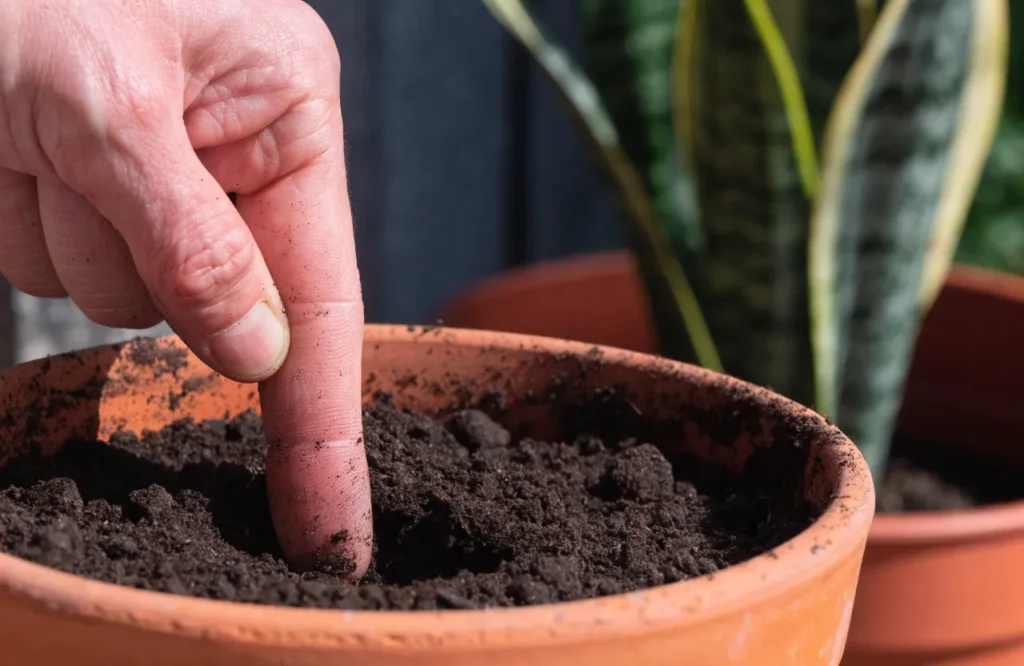
Because low light slows photosynthesis and transpiration, these plants pull less moisture from the soil and are far more prone to overwatering than underwatering. Rather than sticking to a fixed schedule, check the soil itself, poke a finger an inch or two down, or lift the pot to gauge weight, since dry soil feels noticeably lighter.
Watering needs actually vary quite a bit within the low light plant category, so it helps to separate them into three rough groups:
- Let soil dry out almost completely: Snake plant, ZZ plant, cast iron plant
- Let the top 1–2 inches dry: Pothos, spider plant
- Keep lightly, consistently moist: Peace lily
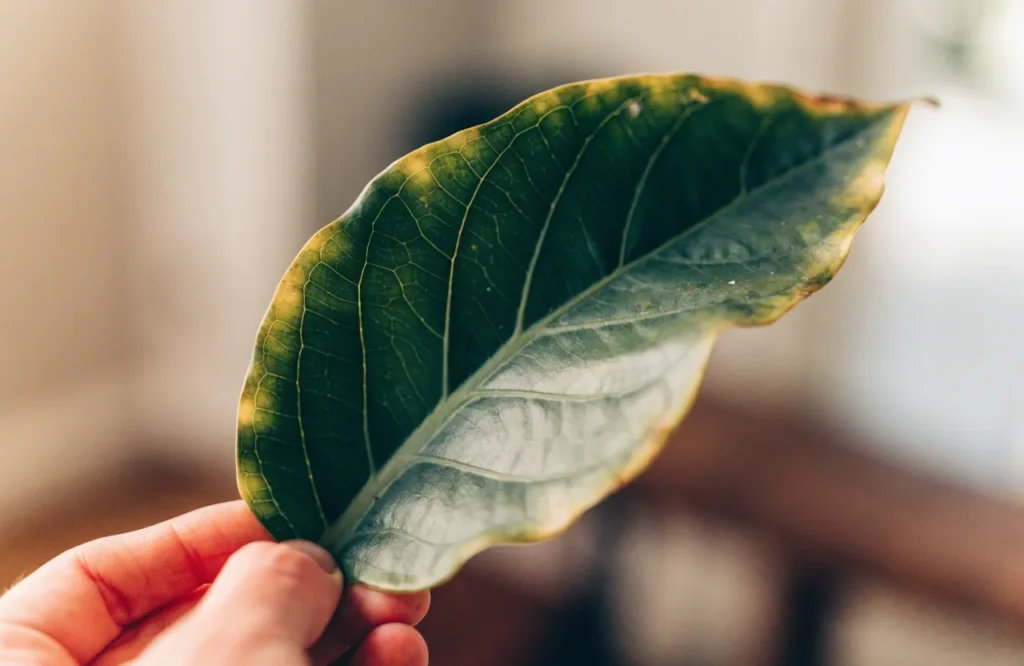
Yellowing leaves, especially older, lower ones, usually point to overwatering and possible root rot. Wrinkled or curling leaves paired with bone-dry soil signal the opposite problem. When in doubt, it’s safer to underwater slightly, since adding moisture is always easier than reversing root damage.
Soil and Containers
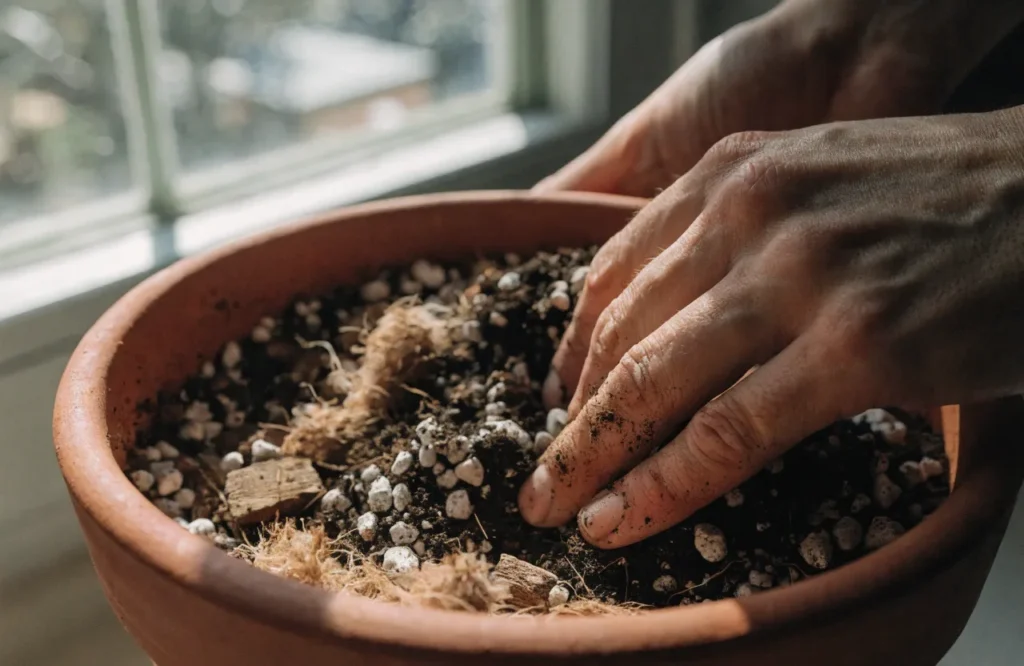
Well-draining potting mix is a non-negotiable part of how to care for low light plants, since slower water uptake means soggy soil sticks around far longer than it would under bright light. A blend of peat moss or coconut coir, perlite, and a bit of coarse bark drains well while still holding enough moisture between waterings. If you’d rather buy a premade mix, look for one labeled lightweight and well-draining, ideally with a touch of slow-release fertilizer already in it.
Containers matter too. Always choose pots with drainage holes, and consider breathable materials over solid plastic, which tends to trap excess moisture against the roots, a real risk for slow-drying, low light plants.
Temperature and Humidity
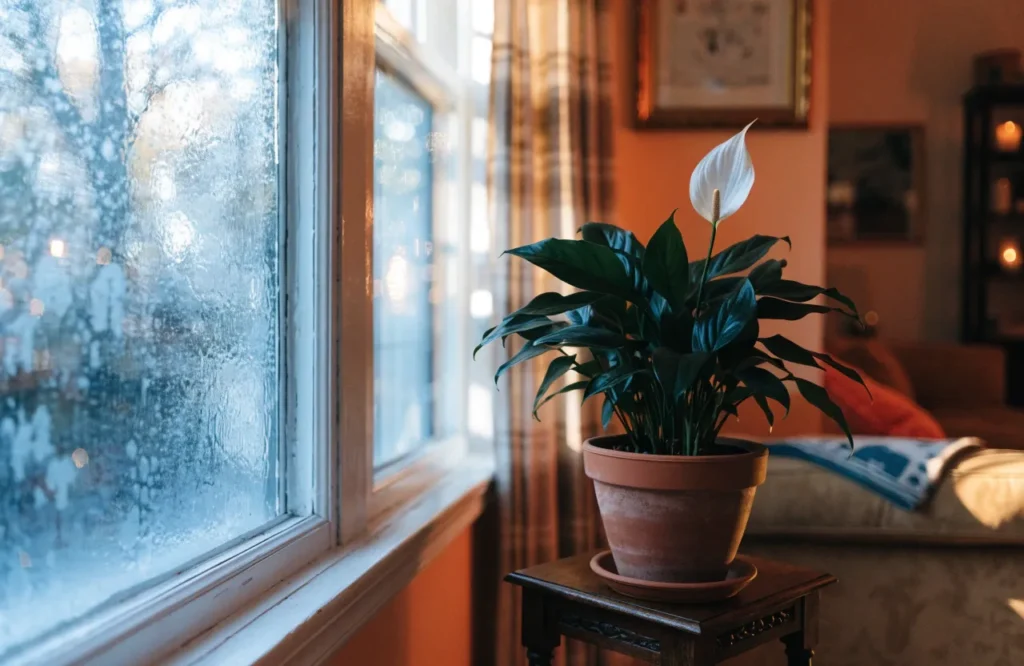
Most low light houseplants are tropical or subtropical natives and prefer daytime temperatures around 70–80°F, dropping to roughly 65–70°F at night. Sudden swings, a blast of cold air from a door, or a windowsill that frosts over in winter, can trigger leaf drop even in otherwise healthy plants. Keep low light plants a few feet from drafty windows and away from heating vents that dry the air excessively.
Fertilizing Low Light Plants
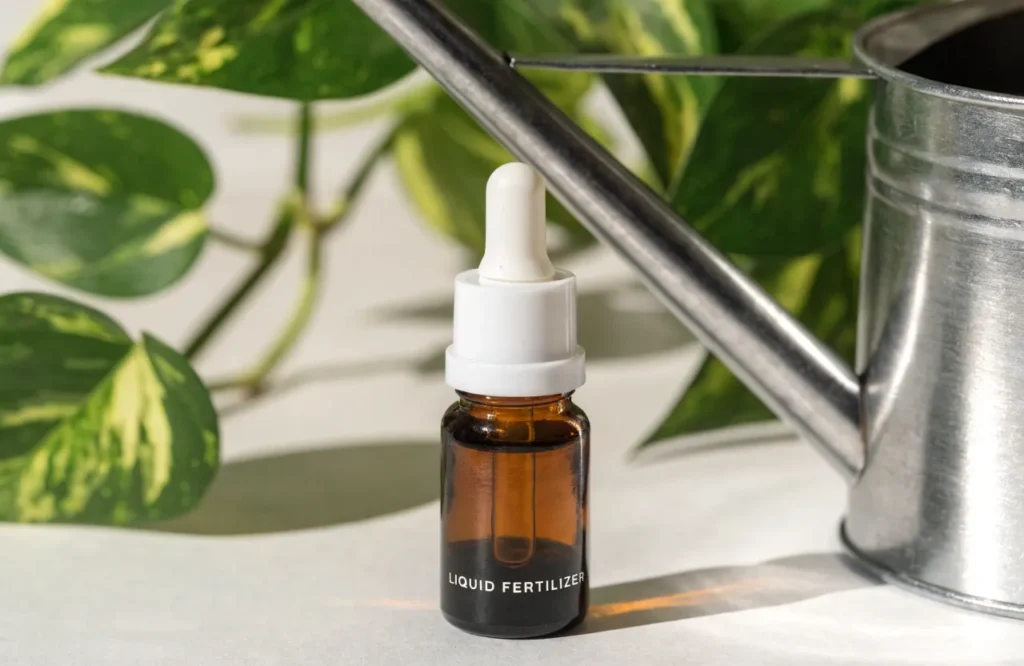
Slower growth means slower nutrient use, which is why how to care for low light plants includes far less feeding than their sun-loving counterparts. Fertilize sparingly, once every four to eight weeks during spring and summer, and hold off completely in fall and winter when growth naturally stalls. Over-fertilizing is a common beginner mistake that leads to salt buildup and burned roots, and no amount of feeding will make up for inadequate light, since fertilizer supplies nutrients, not energy.
How to Care for Low Light Plants Through the Seasons
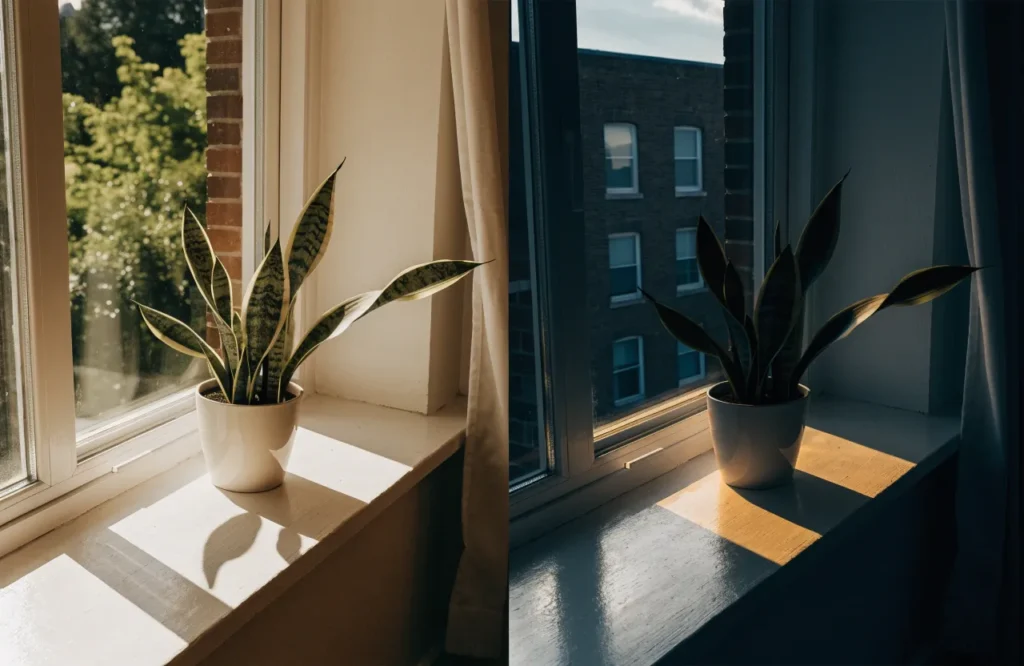
Light levels shift dramatically between seasons, even in the same spot. A corner that qualifies as bright indirect light in summer can drop into true low light territory once the sun sits lower in the sky during winter. A few seasonal adjustments help:
- Winter: Move plants slightly closer to windows if possible, wipe dust off leaves more often since indoor heating tends to increase it, and cut back watering and fertilizing further as growth slows.
- Summer: Watch for faster soil drying if air conditioning is running, and resume light monthly feeding during active growth.
- Year-round: Reassess placement every few months, what worked last season may not work now.
Common Problems and How to Fix Them
| Problem | Likely Cause | What to Do |
|---|---|---|
| Yellow leaves (lower/older) | Overwatering | Let soil dry fully, check drainage holes |
| Yellow leaves (new growth) | Too little light | Move closer to a window or add a grow light |
| Leggy, stretched stems | Insufficient light | Relocate to a brighter spot; rotate regularly |
| Brown, crispy tips | Low humidity or inconsistent watering | Group plants together or use a pebble tray |
| Sticky or shiny residue | Pest infestation (mealybugs, scale, aphids) | Wipe leaves with diluted soap water, isolate plant |
| Small flying insects | Fungus gnats from overly wet soil | Let soil dry between waterings, use sticky traps |
| Dropping leaves | Environmental shock or drafts | Keep away from vents, doors, and temperature swings |
The Best Low Light Plant for Every Situation
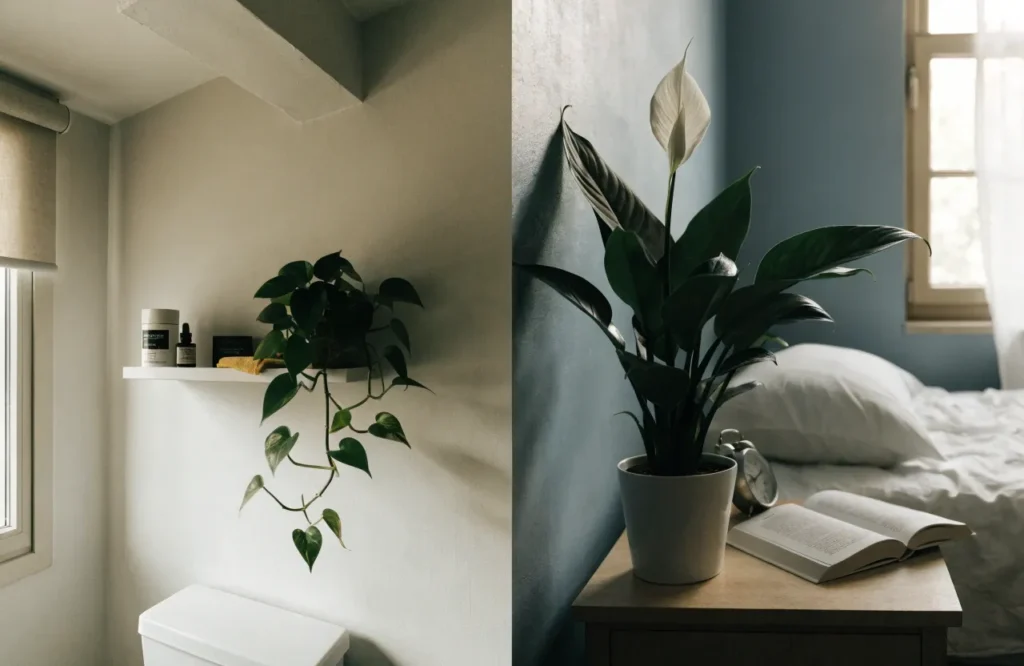
Different rooms come with different challenges, and matching the plant to the space makes a bigger difference than any care routine.
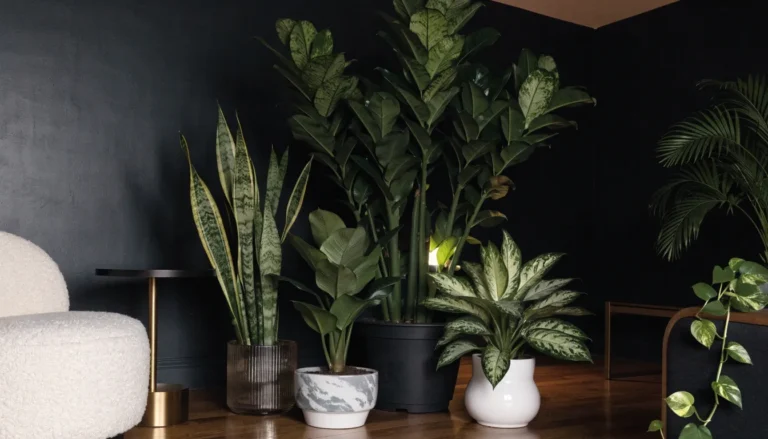
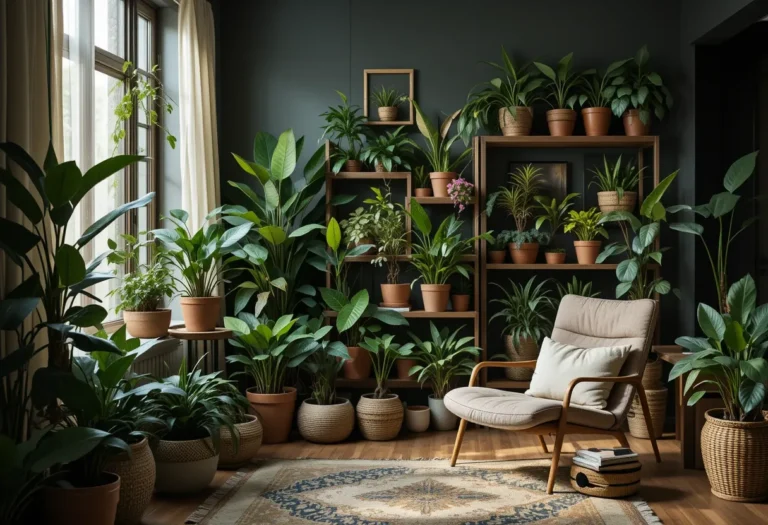
- Darkest room in the house: ZZ plants and cast iron plants tolerate the dimmest corners better than almost anything else, and they’re a solid pick if you’re furnishing plants for dark rooms with little to no natural light.
- Bedroom: Peace lilies and pothos strike a nice balance of easy care and visual softness, both are frequently recommended among low light plants for bedrooms.
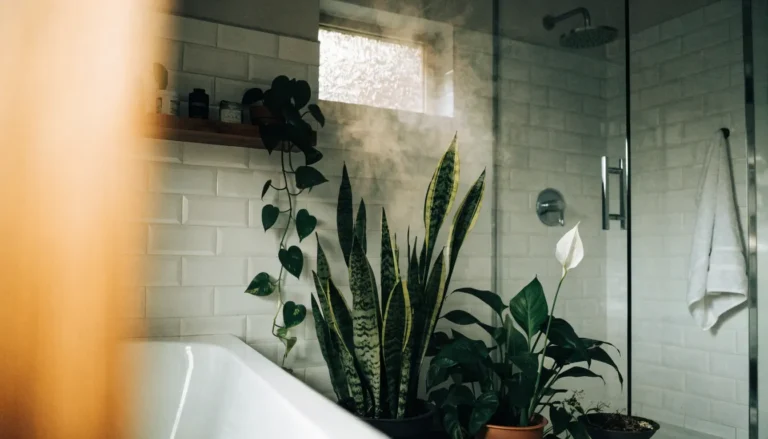
- Bathroom: Steamy, low-window bathrooms actually suit humidity-loving low light plants well; snake plants and pothos are common starting points among low light bathroom plants.
- Home office or desk: Compact, forgiving varieties work best next to a monitor or under fluorescent lighting, which is why they show up so often on lists of low-light office plants.
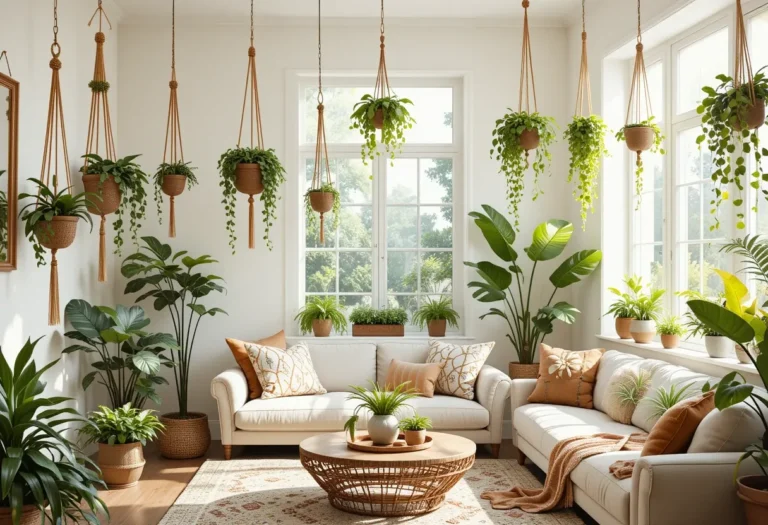
- Shelves and awkward corners: Trailing pothos or philodendron fill vertical space beautifully, a good reason to look into hanging indoor plants if floor space is tight.
- Absolute beginners: If you’ve killed a plant before, start with something genuinely hard to kill. Several entries on this list overlap with guides to unkillable indoor plants for exactly that reason.
- Households with pets: Spider plants and cast iron plants are non-toxic options worth prioritizing if you’re building a pet-friendly indoor plant collection.
- Anyone wanting more variety: For a longer roundup beyond the core five or six classics, a list of low light indoor plants covers dozens of additional species worth exploring.
Expert Tips on How to Care for Low Light Plants for Long-Term Success
- Match, don’t force. Choose species genuinely suited to your light level rather than hoping a sun-loving plant will adjust, most won’t.
- Rotate every couple of weeks. Even shade-tolerant plants benefit from even light exposure on all sides.
- Clean leaves monthly. Dust blocks what little light reaches the plant, quietly reducing photosynthesis over time.
- Water by touch, not by calendar. Soil moisture varies with season, humidity, and pot size, a fixed schedule almost always leads to overwatering eventually.
- Start with one plant. Learning how a single low light plant responds to your specific space teaches you more than buying five at once.
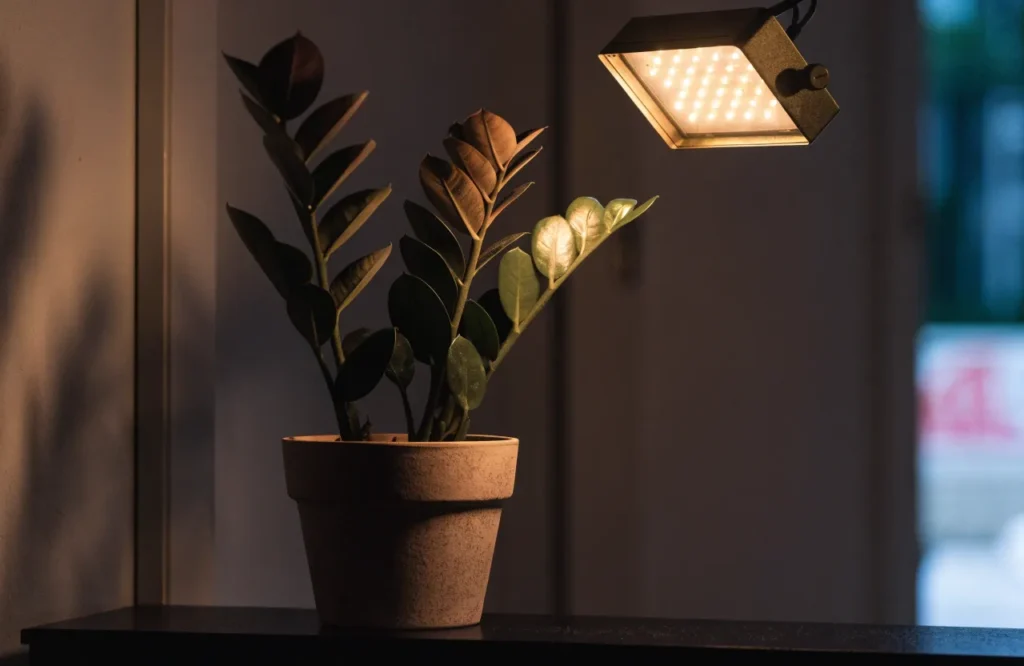
- Use grow lights strategically. A full-spectrum LED grow light, positioned 6–12 inches above the plant and run for 12–16 hours a day, can turn a genuinely dark room into a viable growing space.
Grow Lights for Dark Rooms: When Low Light Is Not Enough
Low light tolerance has a limit, and it is worth being honest about it. Some rooms are simply too dark for any plant to stay healthy — a windowless bathroom, a hallway far from any window, or a corner that never sees daylight. In spots like these, even the toughest low light plant is only surviving, using up its stored energy each week. A grow light is what makes the difference between a plant that is slowly declining and one that is genuinely growing.
You do not need specialist equipment. A full-spectrum white LED — sold as a bulb that fits a lamp, a flat panel, or a slim bar you can mount under a shelf — gives plants the range of light they need while looking like ordinary household light. Unlike the purple-pink grow lights of a few years ago, a white LED will not turn your living room into a greenhouse, so it suits the rooms you spend time in.
For low light plants, run the light for 12 to 14 hours a day, and put it on a timer so the routine never slips. Consistency matters more than intensity — a modest light that switches on reliably every morning beats a powerful one you keep forgetting. Hang or stand a small LED roughly 12 to 24 inches above the plants. If a plant starts leaning toward the light, treat that as the sign to move the light a little closer or run it a little longer.
The signs that a plant is asking for a grow light are easy to spot once you know them: leggy, stretched-out growth with long gaps between leaves; new leaves coming in smaller than the ones before; a plant leaning hard toward the only window; and no new growth for months on end. Catch two or more of these together and the plant is not being fussy — it is running short on light.
And this is not just rescue equipment for struggling plants — even the toughest dark-room plants grow better with a few hours of LED support each day.
Frequently Asked Questions
What are the easiest low light plants for beginners?
Snake plants, pothos, ZZ plants, and cast iron plants are widely considered the most forgiving low light plants for beginners. They tolerate infrequent watering and dim conditions better than most houseplants.
How often should I water low light plants?
It depends on the plant: let soil dry out almost completely for snake plants, ZZ plants, and cast iron plants; let the top 1–2 inches dry for pothos and spider plants; and keep peace lilies lightly, consistently moist. Because low light slows growth, these plants need less frequent watering than sun-loving varieties.
Can low light plants survive in a windowless room?
No—low light doesn’t mean no light. Low light typically means 25–100 foot-candles, but zero illumination will kill any houseplant. In a windowless room, use a full-spectrum LED grow light run 12–16 hours a day.
Why are my low light plant’s leaves turning yellow?
Yellowing lower or older leaves usually points to overwatering and possible root rot—let the soil dry fully and check drainage holes. Yellow new growth, however, often means too little light, so move the plant closer to a window or add a grow light.
Are low light plants safe for cats and dogs?
It depends on the species. Spider plants and cast iron plants are pet-safe and non-toxic, making them the best choices for households with cats or dogs. Snake plants, pothos, ZZ plants, and peace lilies are toxic to pets if ingested.