10 Best Low-Light Office Plants That Thrive in Dim Workspaces
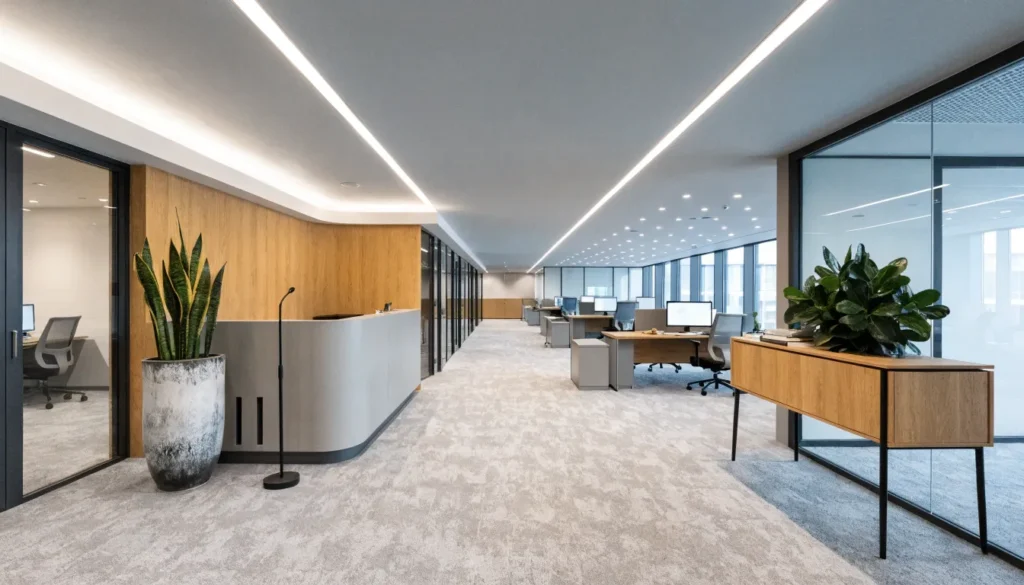
The best low-light office plants for dim and windowless workspaces are the Snake Plant and ZZ Plant, since both tolerate low light and irregular watering exceptionally well. For more texture or height, Dracaena (Janet Craig or Compacta), Chinese Evergreen, and Cast Iron Plant are the next-most-reliable picks for offices lit mainly by fluorescents.
A windowless conference room, a desk tucked far from the nearest window, a reception area lit mostly by overhead fixtures, none of that has to mean bare walls and empty corners.The right low-light office plants can soften a space, filter the visual noise of screens and cubicles, and make an office feel considerably less sterile. The trick is picking plants that were built for exactly this kind of environment, rather than ones that get marketed that way.
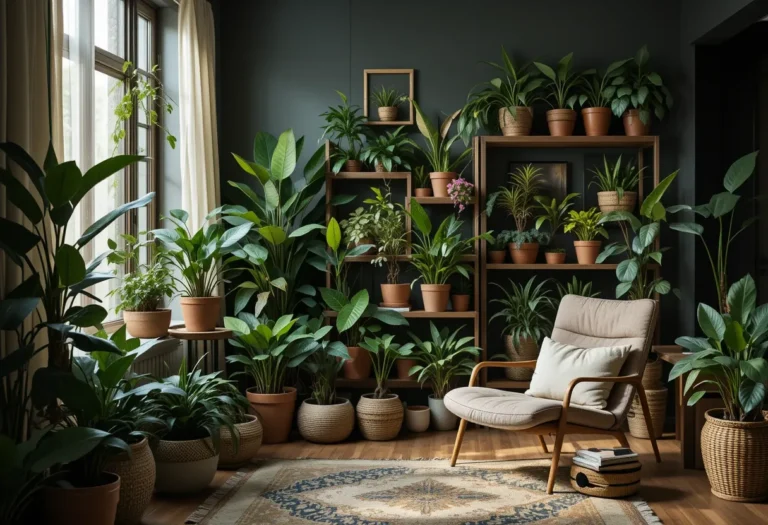
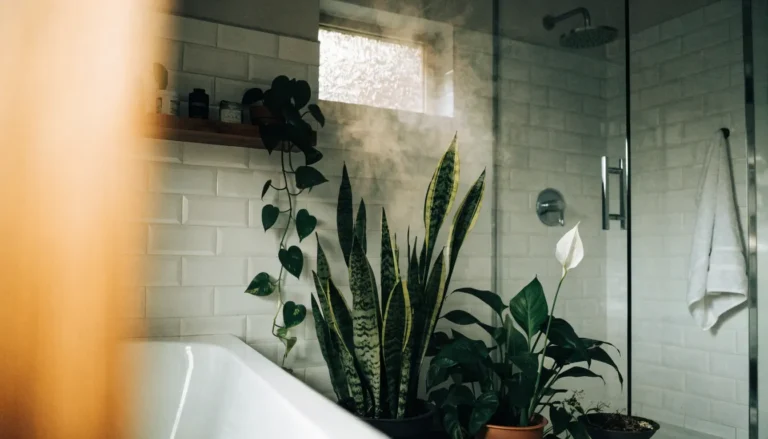
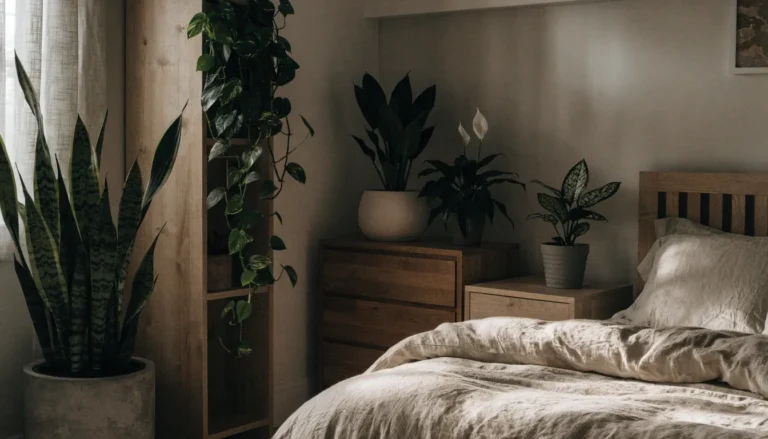
The same fundamentals apply well beyond the office. If you’re furnishing other dim corners of a home or building, the tolerance principles here overlap heavily with 22 Best Low Light Indoor Plants That Thrive Without Direct Sunlight, and with room-specific picks like low light bathroom plants and low light plants for bedrooms, where humidity and privacy add their own constraints.
Table of Contents
There’s No Such Thing as a “No-Light” Plant
Every plant needs light to photosynthesize, that part is non-negotiable. What separates a good low-light office plant from a poor one isn’t whether it needs light, but how little it can get away with before it starts to decline. “Low light” really means “light-tolerant,” not “light-optional.”
That distinction matters more in a modern office than it might in a home. Many buildings now rely on LED fixtures and energy-efficient, low-emissivity glass, which can make a room look perfectly bright to the eye while actually delivering very little of the light spectrum plants need to grow. A space can look sunny and still be a poor environment for anything but the toughest species. So even if your office feels reasonably well-lit, it’s safest to shop specifically for low-light office plants unless you know you have strong, direct daylight
It’s also worth remembering that “low light” isn’t “no light.” Most low-light plants still need several hours of consistent, ambient illumination every day to stay healthy long-term. Offices with aggressive motion-sensor lighting, common in conference rooms and private offices, can leave plants sitting in the dark for long stretches, which will eventually cause decline no matter how tolerant the species. If your space genuinely gets little to no natural light rather than just dim daylight, it’s worth choosing from a shorter list of plants for dark rooms built specifically for that scenario, rather than a general low-light roundup.
Office plant tip: If a room is too dark to comfortably read in without extra lighting, don’t assume it provides enough usable light for healthy long-term plant growth. Judge a space by its darkest hours, not its best-lit moment, that’s what actually determines whether a plant holds up over months rather than weeks.
The Best Low-Light Office Plants
1. Snake Plant (Sansevieria)
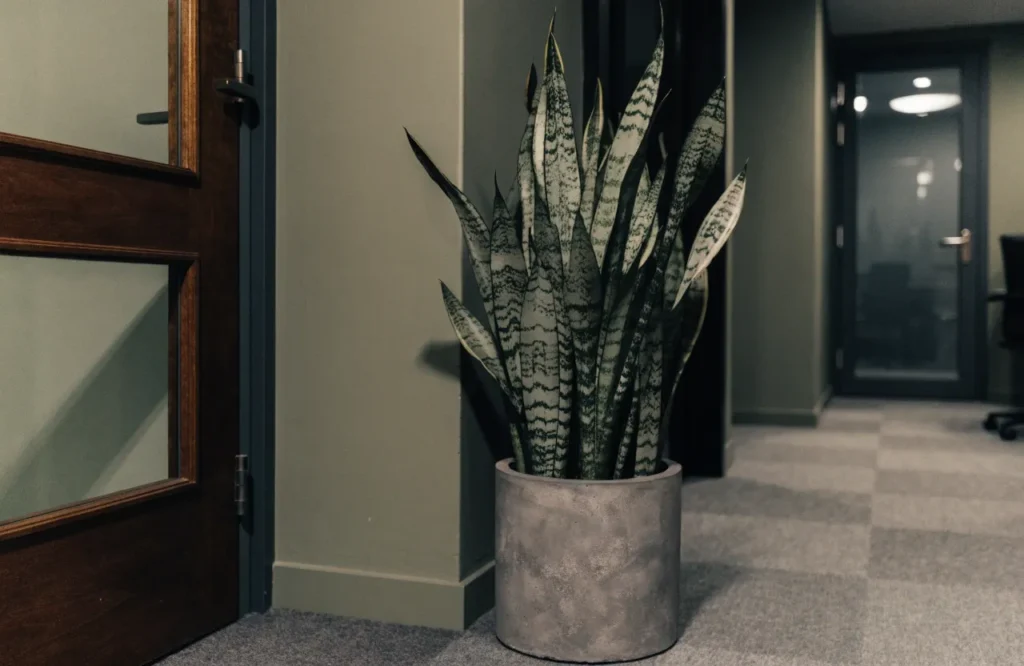
Snake plants are about as close to indestructible as houseplants get. Their stiff, upright leaves, often striped in silver, green, or gold, give a room a clean, architectural look, and they tolerate irregular watering and dim corners better than almost anything else on this list. Standard varieties work well as floor plants near entryways or seldom-used boardrooms; dwarf “bird’s nest” types are a good fit for desks and tabletops. The main way to kill one is to overwater it, so let the soil dry out fully between drinks, it’s this kind of resilience that regularly earns the snake plant a spot among unkillable indoor plants more broadly, not just in office settings.
2. ZZ Plant (Zamioculcas zamiifolia)
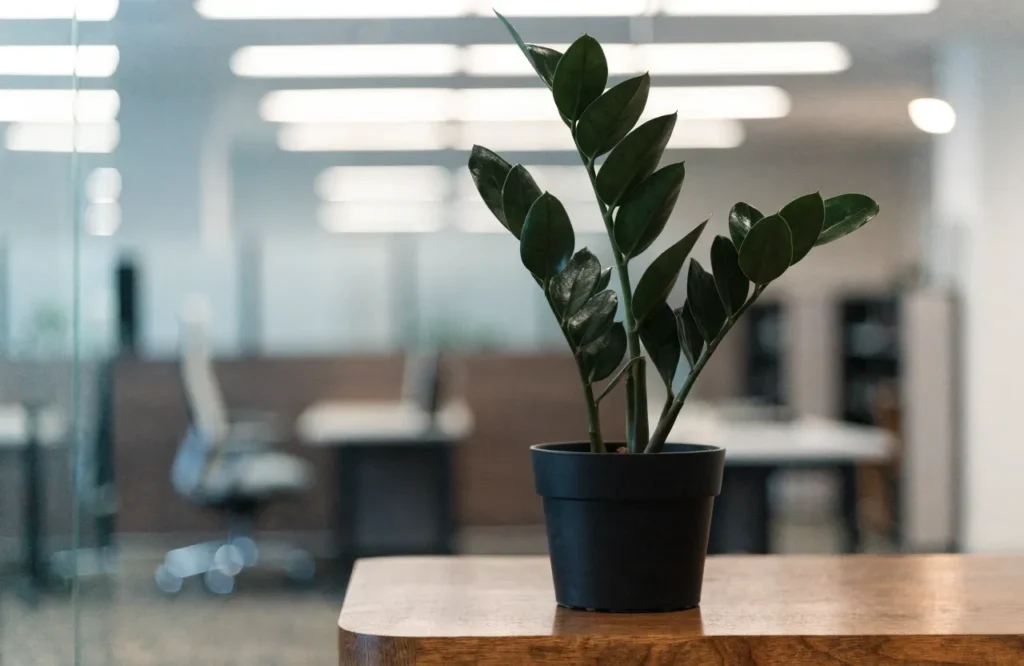
The ZZ plant stores water in thick, potato-like rhizomes beneath the soil, which lets it shrug off inconsistent watering and genuinely dim rooms, even ones lit only by fluorescents. Its glossy, dark green leaves have a polished, modern look that suits reception areas and executive offices alike. Left unpruned, ZZ plants can stretch and get leggy as they reach for light, so an occasional trim and rotation keeps the shape tidy.
3. Dracaena
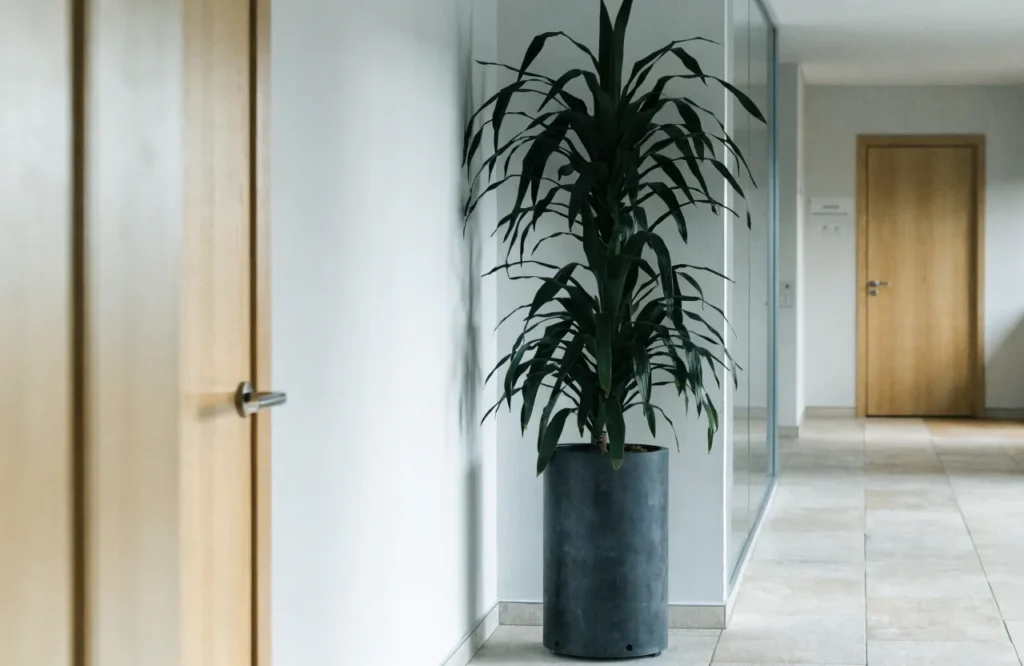
Dracaena is one of the most versatile genera for office interiors, but light tolerance varies a lot by variety, so the species matters. Solid, dark-green cultivars, Janet Craig, Compacta, Warneckii, and Fragrans Cane, handle low light and irregular care extremely well and come in sizes from tabletop to full floor specimens. Lighter, variegated types like Dracaena marginata or ‘Tarzan’ actually need medium-to-bright light and will thin out or lose color in a dim room, so they’re better suited to well-lit spaces. When in doubt, stick to the solid green varieties for anything but a bright office.
4. Chinese Evergreen (Aglaonema)
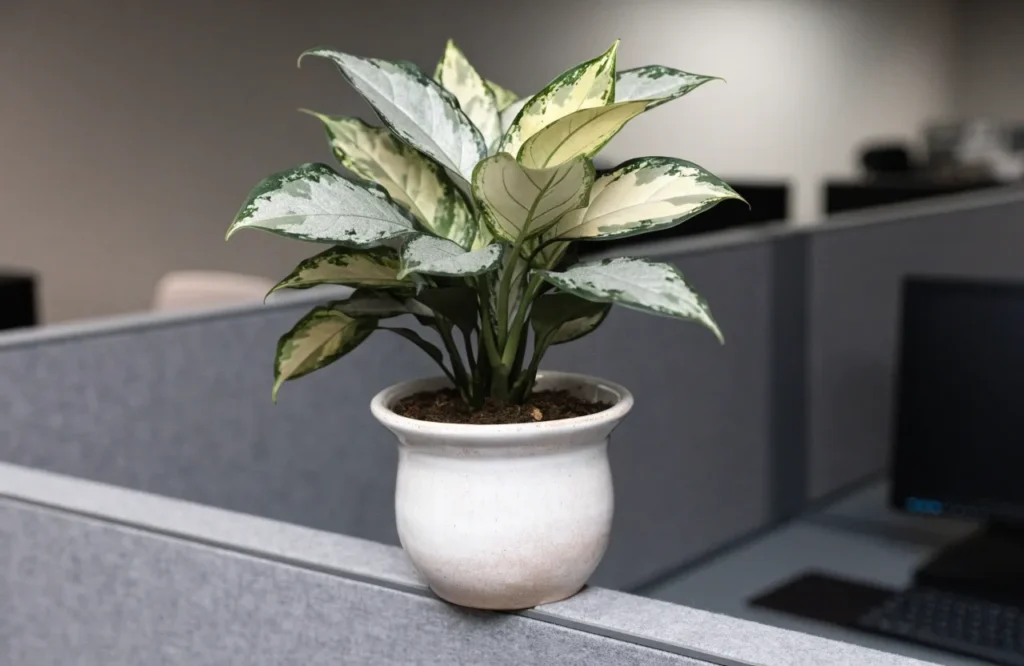
Chinese evergreens bring texture and pattern to a space without needing flowers or bright light to do it, their broad leaves come marked in silver, cream, or soft pink depending on the cultivar. As with dracaena, the darker green varieties are the more reliable low-light performers; the highly variegated or colorful cultivars generally want more light to hold their patterning. Keep the soil evenly moist rather than soggy, and keep the plant away from cold AC drafts, which tend to brown the leaf edges.
5. Cast Iron Plant (Aspidistra)
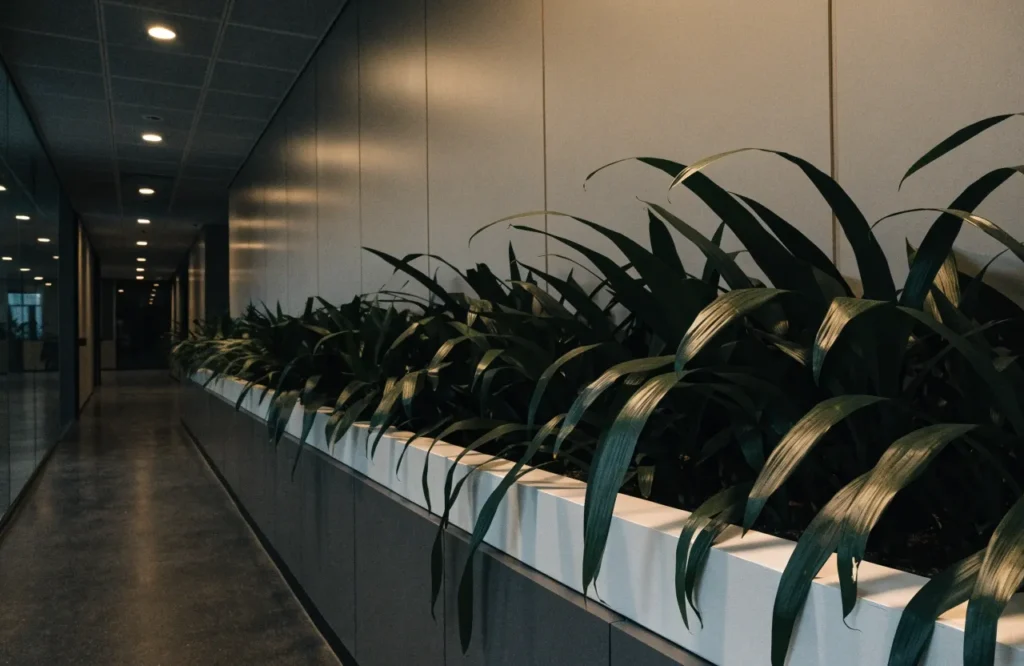
True to its name, this is one of the toughest plants available for deep shade, and it’s often found growing under walkways or in permanently shaded interior beds. Its long, dark, softly arching leaves read a bit less architectural than a snake plant. A single cast iron plant in a small pot can look sparse, so it tends to work best massed together in a trough or built-in planter rather than as a lone specimen.
6. Parlor Palm
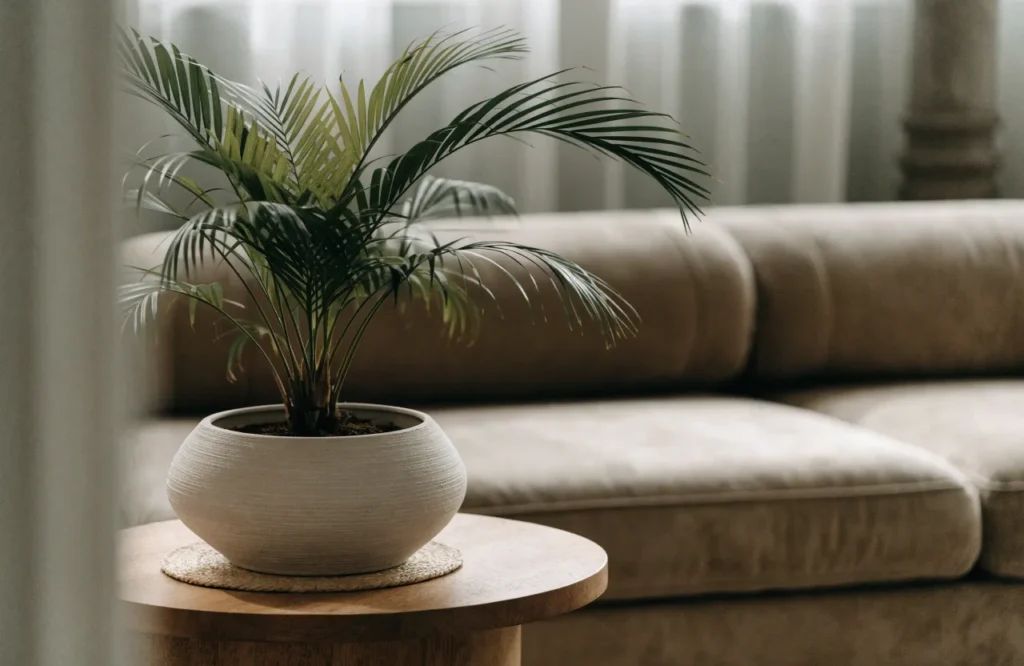
For a softer, more textured look than the strappy or broad-leaved options above, the parlor palm’s feathery fronds add warmth to lounge areas, client-facing spaces, and breakout rooms. It tolerates low light reasonably well but does appreciate a bit more humidity and consistency than a ZZ or snake plant, so it suits offices where someone can check on plants regularly. Keep it out of the direct line of an air vent.
7. Pothos
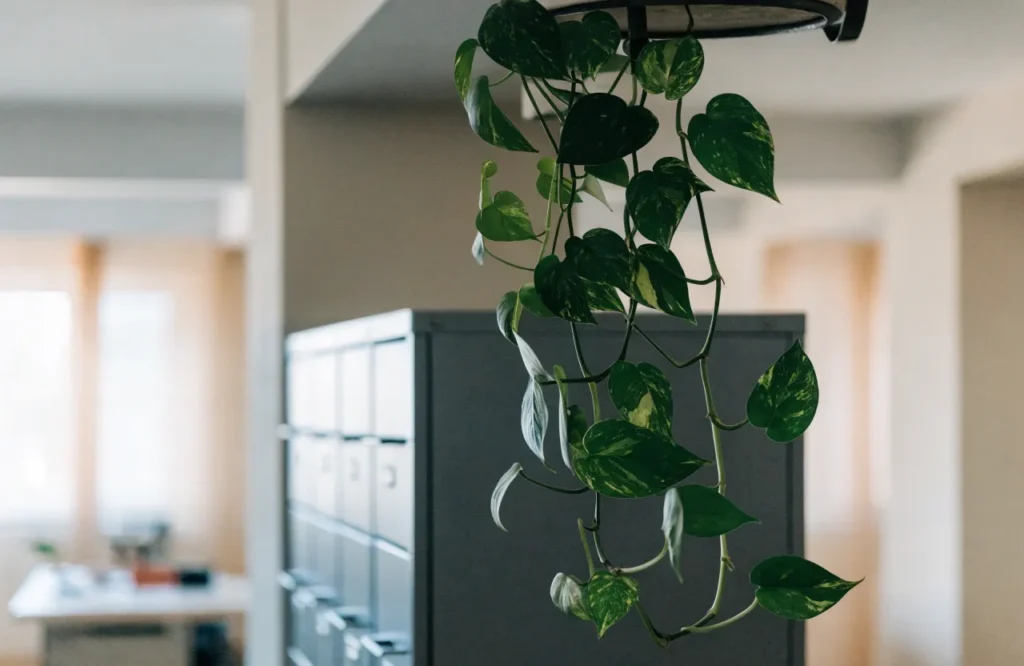
Pothos is one of the easiest trailing plants to keep alive, cascading nicely from a high shelf, filing cabinet, or hanging planter without competing for desk space, the same cascading habit that makes it a staple in hanging indoor plant displays at home. Solid green varieties tolerate low light best; the more heavily variegated forms need brighter indirect light to keep their cream or yellow patterning and will often revert to plain green in a dim room. Note that some commercial interior designers steer away from pothos in low-light offices specifically because it needs more frequent watering than tougher options, it’s a better fit for spaces with regular attention than for a rarely visited corner.
8. Heartleaf Philodendron
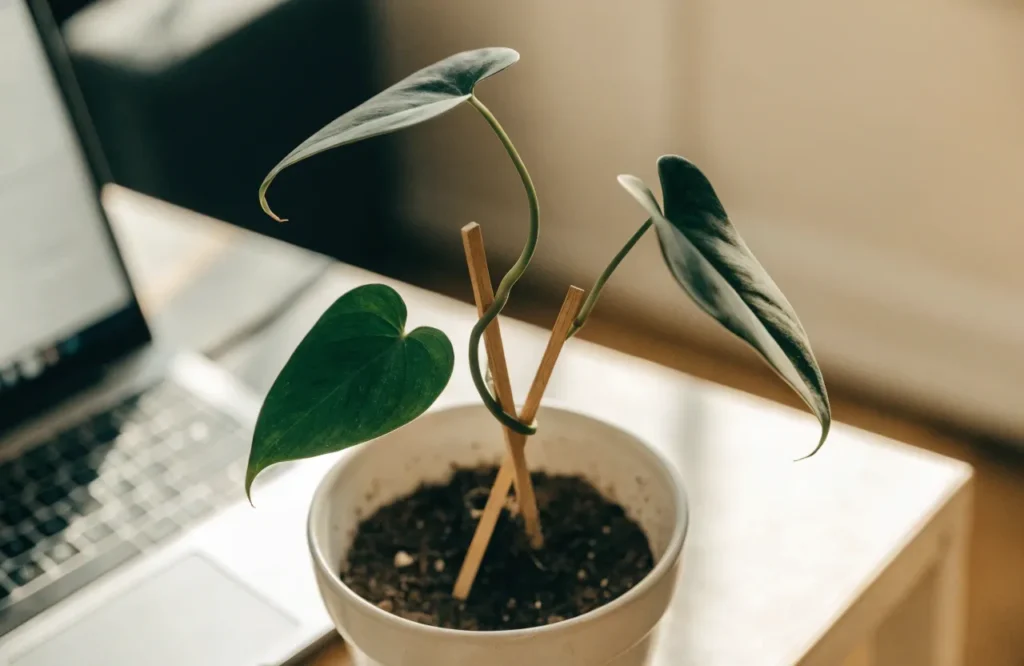
Philodendron’s smooth, heart-shaped leaves and relaxed, trailing habit make it a good match for shelves, tabletop pots, or a small support to train it upward. It’s forgiving of an occasional missed watering and adapts to low-to-medium indirect light, though growth will slow and leaves may shrink in very dim spots, if that happens, just move it a bit closer to whatever light is available.
9. Peace Lily
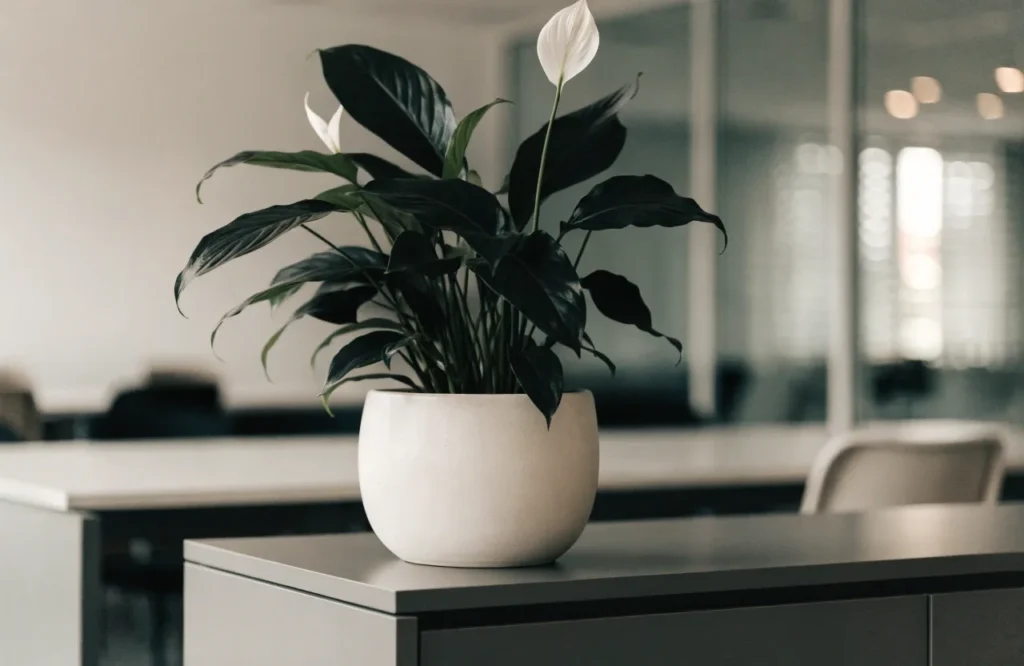
Peace lilies add a softer, glossier look and the occasional white bloom, which makes them popular for credenzas and meeting rooms. They tolerate lower light, though they’ll flower less in a dim room, and they’re refreshingly communicative about their needs, the leaves droop noticeably when thirsty and perk back up shortly after watering. That also means they need more consistent moisture than snake plants or ZZ plants, so they’re best suited to offices where someone is checking on plants weekly, not a rarely visited back office.
10. Spider Plant
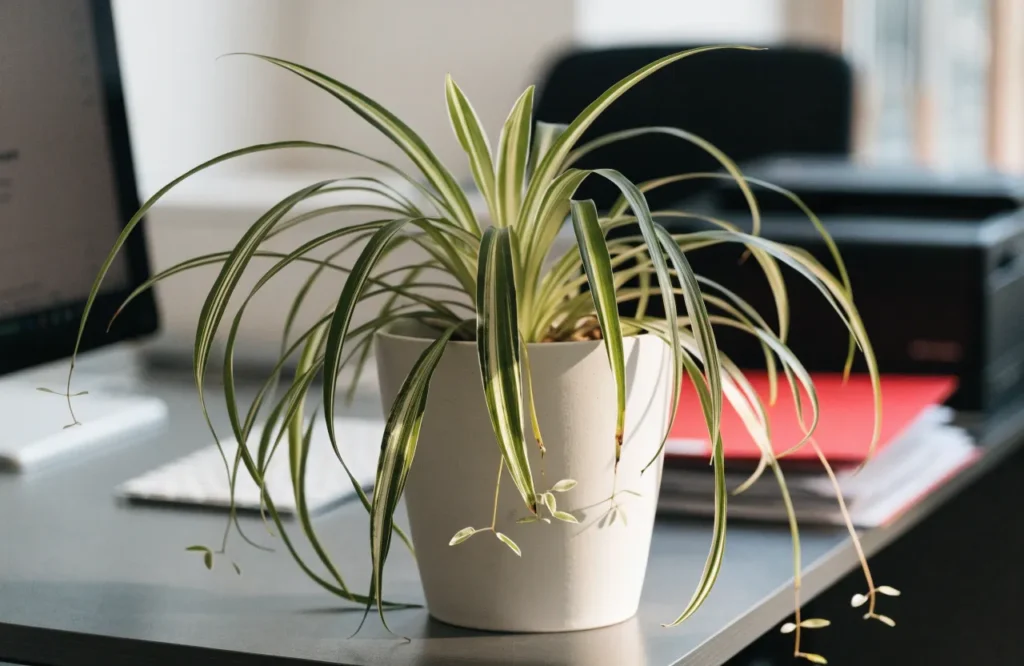
Spider plants tolerate low light well and are one of the few genuinely pet-safe options on this list, which makes them a good fit for shared workspaces or offices where a coworker’s dog occasionally comes in. Their arching, variegated leaves work well on desks and shelves, and mature plants send out small plantlets (“pups”) that are easy to snip off and root in a new pot if you want to multiply your office greenery for free. Water roughly once a week, letting the soil dry slightly in between.
Choose Your Plant
Choose a Snake Plant if:
- Your office gets very little attention or foot traffic
- You often forget to water plants
- You need a tall, architectural floor plant
Choose a ZZ Plant if:
- Your workspace is genuinely dim or fluorescent-only
- You want glossy, modern-looking foliage
- You need something low-maintenance for a reception area or desk
Choose a Cast Iron Plant if:
- Your space is permanently shaded with no natural light
- You want a plant for a trough, corridor, or built-in planter
- You’re prioritizing toughness over a polished, architectural look
Choose a Peace Lily if:
- Someone can check on the plant weekly
- You want the occasional bloom
- You’d rather the plant “tell you” when it’s thirsty
Choose a Spider Plant if:
- You need a pet-safe choice
- You have desk or shelf space rather than floor space
- Someone can water it on a fairly regular basis
Quick Comparison
The table below lines up all ten low-light office plants by light tolerance, watering needs, pet safety, and where they work best, so you can compare options at a glance before scrolling back for detail.
| Plant | Light Tolerance | Typical Watering Needs | Pet-Safe | Best For |
| Snake Plant | Very low | Every 2–4 weeks | No | Rarely visited rooms, entryways |
| ZZ Plant | Very low | Every 2–3 weeks | No | Reception areas, executive offices |
| Dracaena (Janet Craig/Compacta) | Low | Every 1–2 weeks | No | Corners, hallways, floor displays |
| Chinese Evergreen | Low | Every 1–2 weeks | No | Desks, shared workspaces |
| Cast Iron Plant | Very low | Every 2–3 weeks | Yes | Shaded troughs, mass plantings |
| Parlor Palm | Low–medium | Weekly | Yes | Lounges, client-facing spaces |
| Pothos | Low–medium | Weekly | No | Shelves, filing cabinets |
| Heartleaf Philodendron | Low–medium | Weekly | No | Tabletop pots, hanging displays |
| Peace Lily | Low–medium | Weekly | No | Meeting rooms, staffed desks |
| Spider Plant | Low | Weekly | Yes | Shared desks, pet-friendly office |
Watering needs vary by pot size, temperature, soil, and available light, check the soil before watering instead of following a strict calendar.
Choosing the Right Plant for Your Space
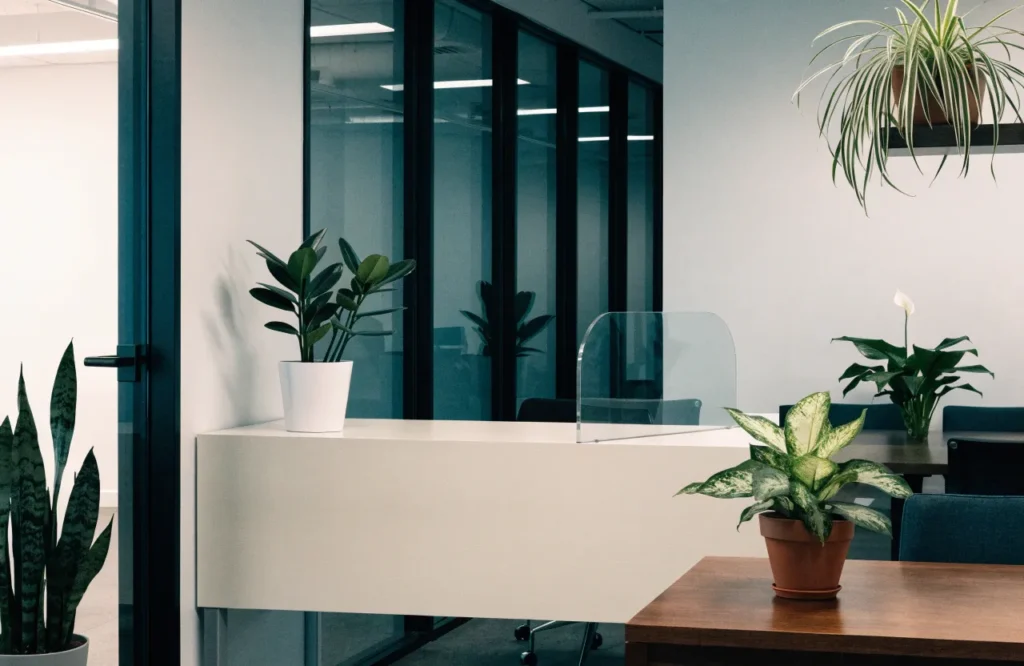
Picking well between different low-light office plants comes down to a few practical factors rather than a single “best” answer for every room. Start with the actual light, not the room’s general vibe. A space can look bright without offering plants much usable light, especially under LED fixtures or through low-emissivity glass. If there’s no reliable natural light and no supplemental grow lighting, lean toward the most tolerant options, snake plant, ZZ plant, cast iron plant, and the solid-green dracaena and aglaonema varieties.
Match the plant to how much attention it will realistically get. A rarely visited boardroom is a better home for a snake plant or ZZ plant than a peace lily, which will show visible stress if it’s forgotten for a couple of weeks. A staffed reception desk, on the other hand, can support a plant with slightly higher care needs since someone will notice a change and water accordingly.
Think about scale and placement. Small pots suit desks and shelves, while a single large floor plant can transform an empty lobby corner more effectively than several small ones scattered around. Mixing sizes generally reads as more intentional than lining up identical pots.
Check for pets before you commit. ZZ plants, snake plants, pothos, philodendron, peace lilies, and dracaena are all toxic if chewed, so a pet-friendly office is generally better served by a parlor palm or spider plant instead, both also show up consistently on broader pet-friendly indoor plants lists for exactly that reason.
Best Plants for Windowless Offices With Artificial Light
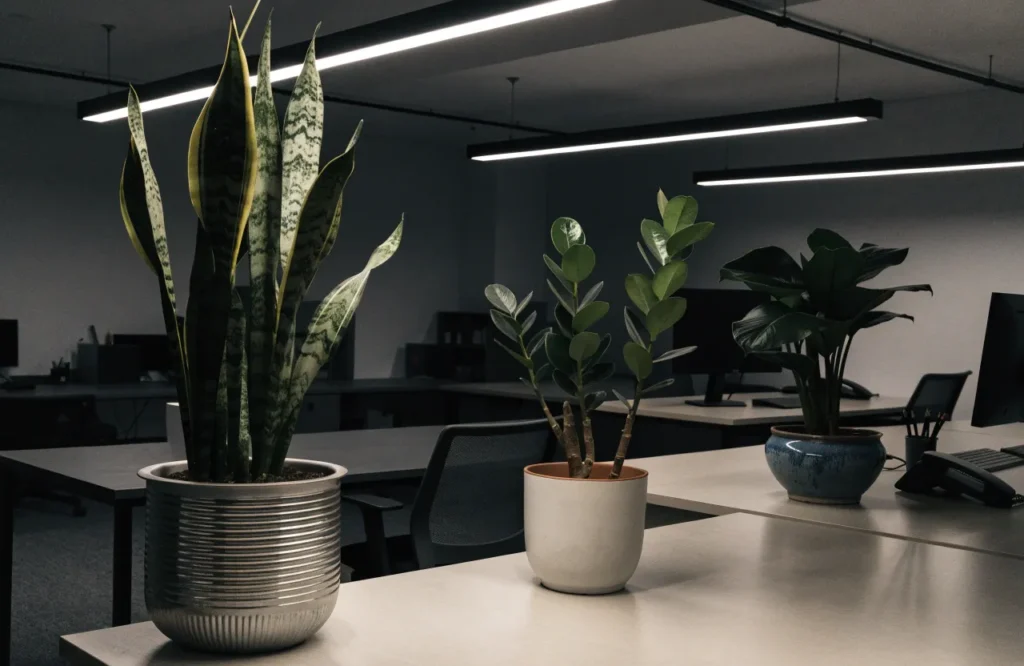
Windowless rooms are the toughest environment for office plants, because the amount and quality of artificial light can vary widely between fixtures, bulb types, and room layouts, some fluorescent or LED setups come reasonably close to a modest window, while others fall well short. The safest approach is to choose tolerant plants and make sure the space gets consistent lighting for a solid stretch of the day, ideally in the range of 8–10 hours:
- Snake Plant: the single most forgiving option for a windowless room
- ZZ Plant: tolerates the dimmest fluorescent-only spaces without complaint
- Cast Iron Plant: built for permanently shaded interiors
- Dracaena (Janet Craig or Compacta): adds height without needing supplemental light
- Chinese Evergreen: a good option if you also want color or pattern
Avoid flowering or heavily variegated varieties in a true windowless space, they’ll survive on artificial light alone for a while, but they typically lose color, stop blooming, or thin out over time.
Simple Care That Keeps Office Plants Looking Good
Once you’ve settled on the right low-light office plants for your space, keeping them looking sharp comes down to a handful of consistent habits rather than constant attention. Most office plant problems trace back to too much water, not too little, check the soil before watering rather than sticking to a fixed schedule, and use pots with drainage (or a nursery pot nested inside a decorative cover) so excess water doesn’t sit at the roots. Because photosynthesis slows down in lower light, these plants generally need watering less often than their sun-loving counterparts, so err on the side of letting the soil dry out between waterings.
A few other habits go a long way:
- Wipe broad leaves with a damp cloth every few weeks, dust blocks what little light is already available.
- Rotate pots periodically so growth doesn’t lean toward one light source.
- Keep plants away from air-conditioning vents and cold drafts, which commonly cause browning leaf tips.
- Remove yellowing leaves promptly to keep the plant looking tidy and reduce the risk of pests.
- If a fixture-lit room is on a motion sensor, make sure it isn’t leaving the plant in the dark for long stretches during the day, that alone can cause slow decline over time.
Frequently Asked Questions
What is the single easiest low-light office plant?
Snake plant and ZZ plant are the two most forgiving choices—both tolerate infrequent watering, dim light, and general neglect. They’re the best picks for rarely visited rooms or anyone who forgets to water.
Do office plants need sunlight?
Every plant needs light to photosynthesize—that part is non-negotiable. But low light isn’t no light; most low-light plants still need several hours of ambient or fluorescent light, and there’s no such thing as a true no-light plant.
What are the best plants for a windowless office?
Snake plant is the single most forgiving option for a windowless room, followed by ZZ plant, cast iron plant, Dracaena, and Chinese evergreen. Avoid flowering or heavily variegated varieties in a true windowless space—they’ll struggle even on artificial light.
Are low-light office plants safe around pets?
It depends on the species. Spider plant, cast iron plant, and parlor palm are pet-safe choices. But ZZ plants, snake plants, pothos, philodendron, peace lilies, and dracaena are toxic to pets, so check before you commit.
How often do low-light office plants need watering?
Snake plants need water only every 2–4 weeks, while ZZ plants and cast iron plants do fine every 2–3 weeks. Most others—dracaena, Chinese evergreen, pothos, philodendron, peace lily, and spider plant—need weekly watering, but always check the soil first.
The Bottom Line
There’s no single “best” plant for every office, a rarely visited boardroom and a staffed reception desk call for different choices. But across the board, the most reliable low-light office plants share a few traits: tolerance for irregular watering, the ability to hold up under artificial light alone, and slow, predictable growth that doesn’t demand constant attention. Start with one of the picks above in the space your team sees most, and let the results guide whatever you add next. For detailed care profiles on each species, consult the Missouri Botanical Garden’s plant database.