Low Light Bathroom Plants: 12 Best Picks + Complete Care Guide
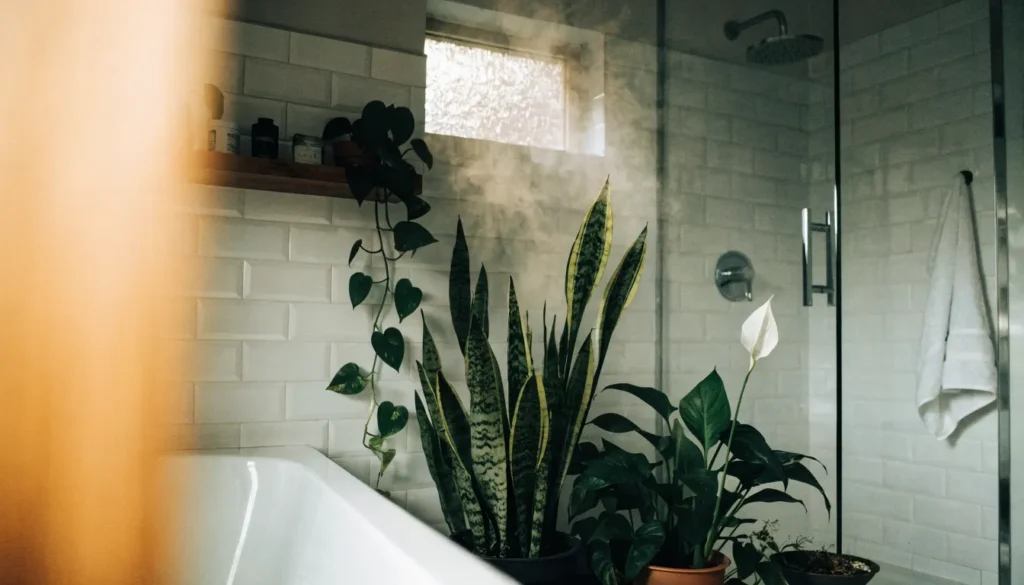
The bathroom is one of the most overlooked rooms in the house when it comes to houseplants, and often one of the most misunderstood. It’s warm, it’s humid, and after every shower it fills with the kind of steam tropical plants naturally love. But it’s also frequently the dimmest room in a home, sometimes with no window at all. That combination leaves a lot of people wondering whether low light bathroom plants are even worth attempting, or whether any plant is destined to wilt within a few weeks in a room like this.
The good news is that a specific group of low light bathroom plants has evolved to handle exactly this kind of environment: dim rooms, high humidity, and inconsistent airflow. This guide breaks down the 12 species that genuinely hold up in these conditions, how to match a plant to your bathroom’s actual light level, and the care habits, especially watering, that make the biggest difference between a plant that merely survives and one that thrives. If your bathroom has no window at all rather than just dim, indirect light, it’s worth cross-checking your pick against our guide to plants for dark rooms, since a handful of species there, like bird’s nest fern and cast iron plant, are built specifically for that more extreme case.
Table of Contents
Quick Answer
Yes, low light bathroom plants are real, and several species genuinely thrive in dim, steamy bathrooms. The most reliable choices are the ZZ plant, snake plant, golden pothos, peace lily, cast iron plant, and spider plant, all of which tolerate shade, while some also benefit from the extra humidity a bathroom naturally provides. The one rule that matters more than any other: low light is not no light. A windowless bathroom with zero natural or artificial brightness will not sustain a living plant long-term, no matter how “tough” the label claims it is.
Editor’s note: Light tolerance varies by species, and sometimes by cultivar within the same species, a variegated pothos, for example, generally needs more light than an all-green one. “Low light” describes a plant’s ability to get by on less brightness than most houseplants require, not an ability to thrive in darkness.
Why Bathrooms Are Tricky (But Not Impossible) for Plants
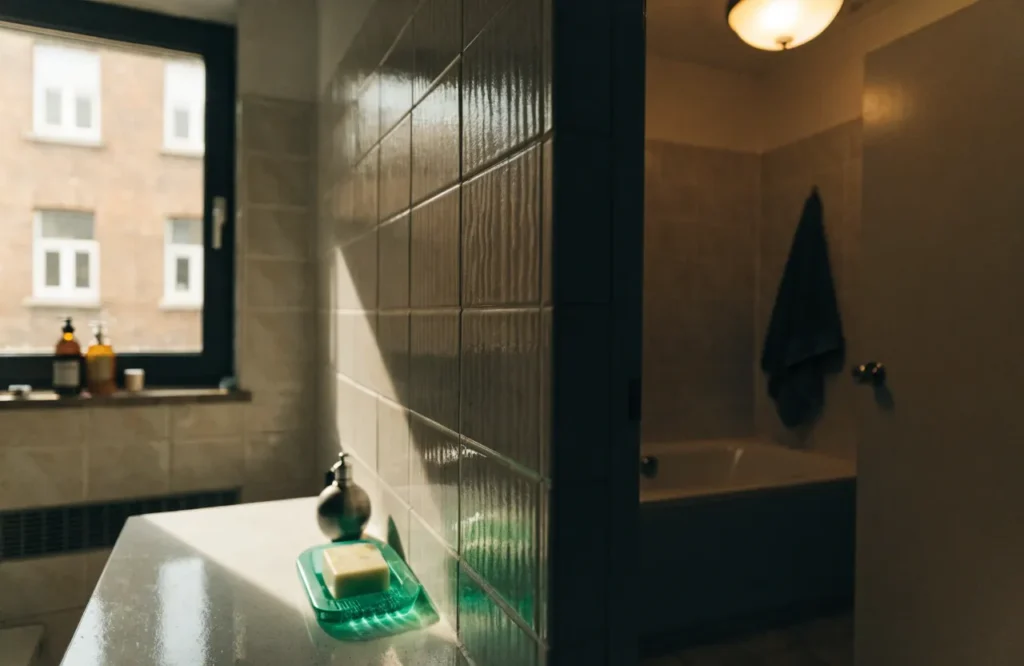
Bathrooms present an unusual mix of conditions. On one hand, the humidity from daily showers creates a warm, moist microclimate that many tropical plants love. On the other hand, most bathrooms are small, windowless, or lit only by a single overhead fixture, a combination that starves plants of the light they need for photosynthesis.
The trick to choosing the right low light bathroom plants is separating two things people often lump together: humidity tolerance and light tolerance. A plant can love moist air and still fail in a bathroom if the light level is too low. That’s why the plants on this list were chosen specifically because they handle both conditions at once, not just one, a slightly different challenge from picking low light plants for bedrooms, where humidity usually isn’t a factor at all.
Low Light vs. Windowless vs. No Light: What’s the Real Difference?
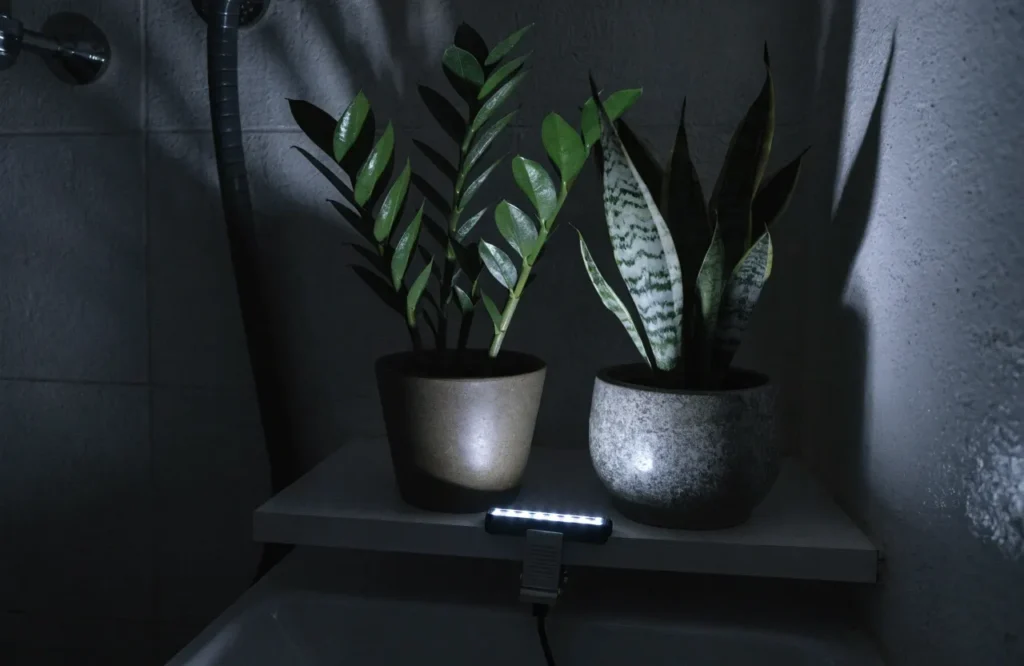
These terms get used interchangeably online, but they describe very different situations, and the plant you can keep alive changes depending on which one actually describes your bathroom.
- Low light: Some natural daylight reaches the room, even if it’s indirect or filtered through a small or frosted window.
- Windowless: There’s no window at all, and the only light source is artificial, an overhead fixture or vanity light.
- No light / very low light: The room stays essentially dark for most of the day, with only brief or minimal artificial lighting.
Shade-tolerant plants like the ZZ plant or snake plant can persist for a surprisingly long time in the “low light” and “windowless” categories, especially with a modest LED grow light on a timer. Both also show up regularly among low light indoor plants recommended for dim rooms elsewhere in the house, which is a good sign of how adaptable they really are. It’s worth noting that an ordinary bathroom vanity light or overhead fixture is not the same as a grow light, standard bulbs are usually too dim and the wrong color spectrum to support real photosynthesis, even though they make the room feel bright enough to the human eye. But in a true “no light” bathroom, plant life becomes very difficult to sustain long-term, a small grow light isn’t optional in that scenario, it’s the only thing standing between the plant and slow decline.
The Best Low Light Bathroom Plants (Comparison Table)
| Plant | Light Needs | Watering Rule | Humidity Preference | Care Difficulty |
| ZZ Plant | Low to medium indirect; tolerates dim corners but still needs some regular light | Let soil dry out fully before watering again | Low to average, humidity is a bonus, not a requirement | Very easy |
| Snake Plant | Low to bright indirect | Let soil dry out fully before watering again | Low to high | Very easy |
| Golden Pothos | Low to medium indirect | Water when the top 2 in. of soil feels dry | Medium to high | Easy |
| Peace Lily | Low to medium indirect | Water when the top of the soil starts to dry; avoid constantly soggy soil | High | Easy–moderate |
| Boston Fern | Medium indirect, brighter than ZZ, snake, or cast iron | Keep soil consistently moist but not waterlogged; check frequently, since it dries out faster than most plants on this list | High | Moderate |
| Cast Iron Plant | Very low to low | Let soil dry out fully before watering again | Low to medium, humidity is a bonus, not a requirement | Very easy |
| Spider Plant | Low to bright indirect | Water when the top inch of soil feels dry | Medium to high | Easy |
| Philodendron ‘Brasil’ | Low to medium indirect | Water when the top of the soil feels dry | Medium | Easy |
| Chinese Evergreen | Low to medium indirect | Water when the top of the soil feels dry | Medium to high | Easy |
| Bird’s Nest Fern | Low to medium indirect | Keep soil lightly moist; never let it fully dry | High | Moderate |
| Parlor Palm | Low to medium indirect | Water when the top inch of soil feels dry | Medium to high | Easy |
| Calathea | Low to medium indirect | Keep soil lightly and evenly moist | High | Moderate–difficult |
Best Plants by Bathroom Type
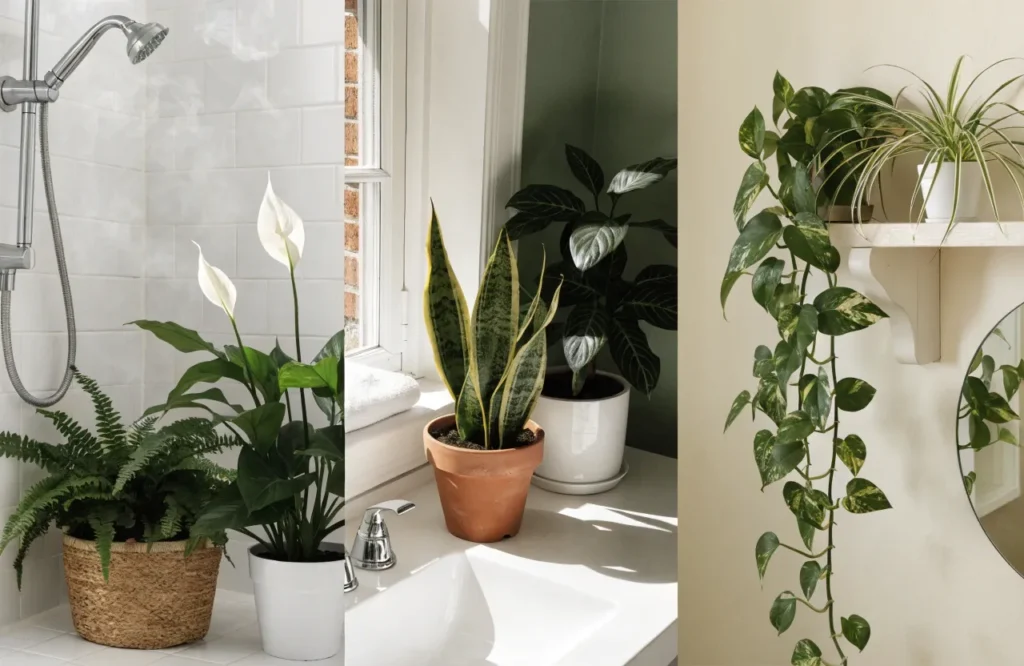
Rather than treating every bathroom the same, it helps to match the plant to the specific conditions you actually have:
- Best for humid, steamy bathrooms: Boston fern, bird’s nest fern, peace lily, and Calathea.
- Best for drier or variable-humidity bathrooms: ZZ plant, snake plant, and cast iron plant.
- Best trailing or hanging picks: Golden pothos, spider plant, and Philodendron ‘Brasil’, all three also make regular appearances on lists of hanging indoor plants for shelves and macramé holders outside the bathroom.
Best Small Bathroom Plants
For a tight vanity, ledge, or small shelf, the most space-friendly picks are the ZZ plant, snake plant, spider plant, parlor palm, and a small pothos cutting, all of which stay manageable in size while still tolerating shade and humidity.
12 Low Light Bathroom Plants Worth Growing
1. ZZ Plant (Zamioculcas zamiifolia)
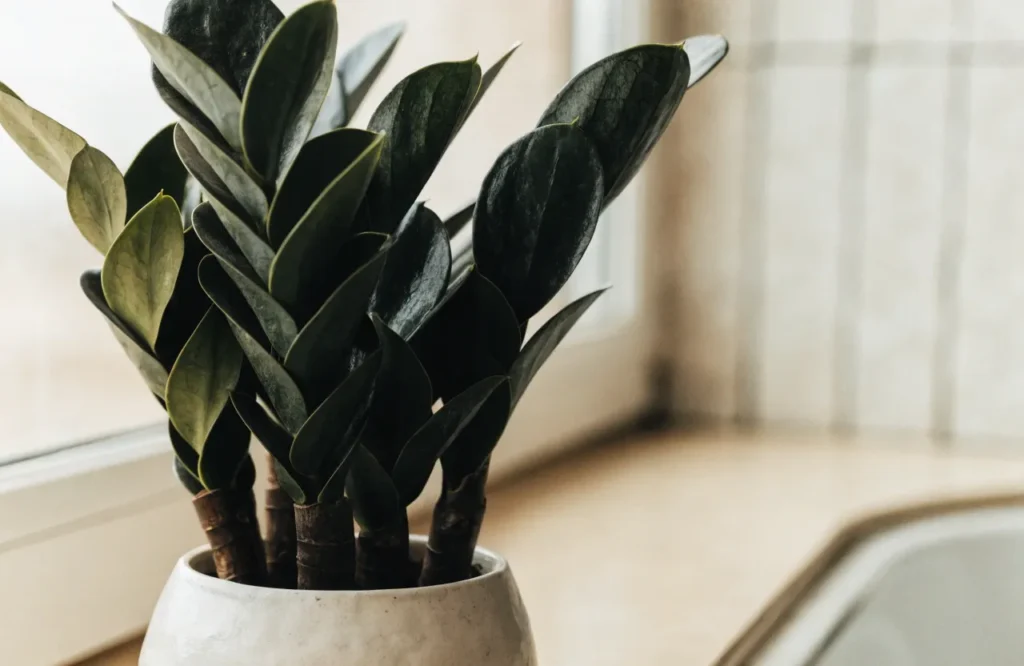
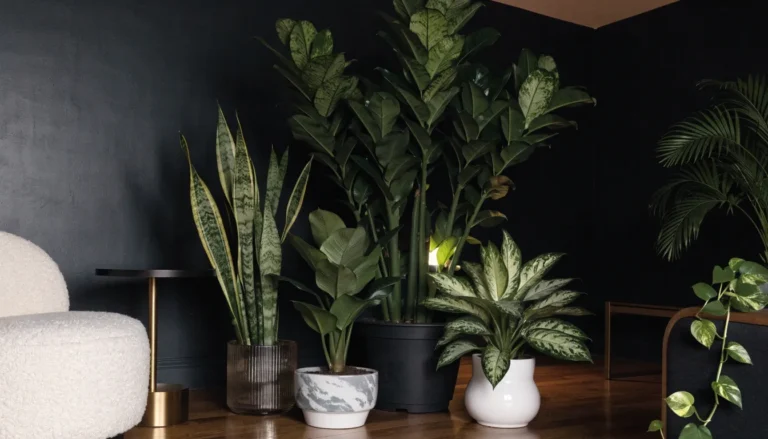
The ZZ plant is often the first recommendation for a windowless bathroom, and for good reason: its thick rhizomes store water, letting it go for extended stretches between waterings while its glossy leaves keep their shine in near-shade. It doesn’t depend on the bathroom’s steam to stay healthy, and it tolerates low humidity better than most plants on this list, but it still needs some regular light source to keep growing rather than merely surviving.
2. Snake Plant (Sansevieria trifasciata)
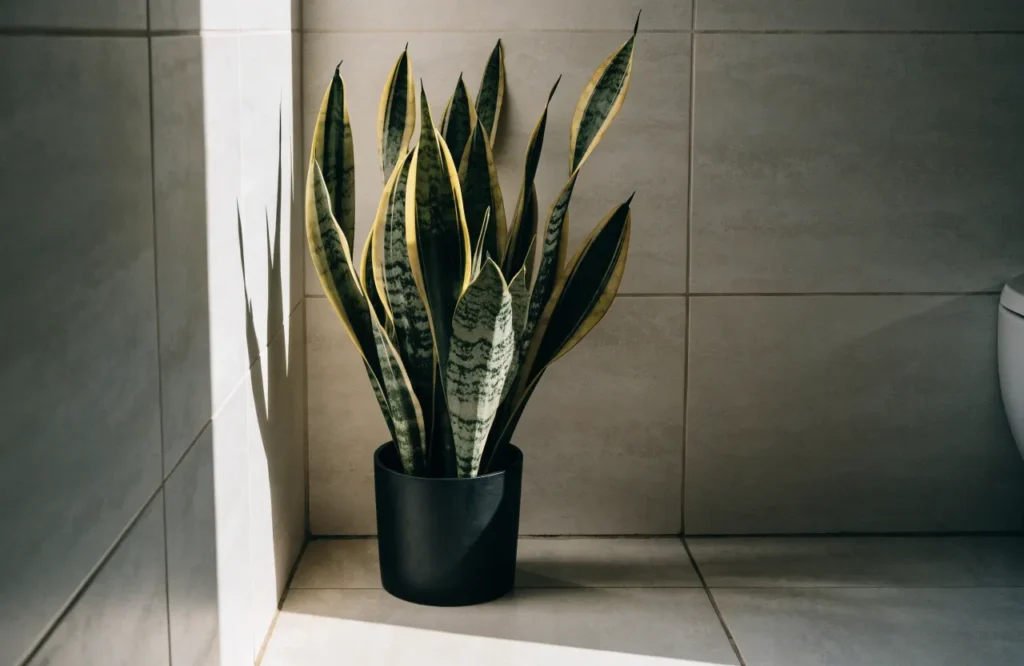
Sturdy, upright, and famously forgiving, the snake plant tolerates low light and inconsistent watering. Its structural leaves suit narrow bathroom counters or corners, making it one of the most dependable low light bathroom plants for beginners.
3. Golden Pothos (Epipremnum aureum)
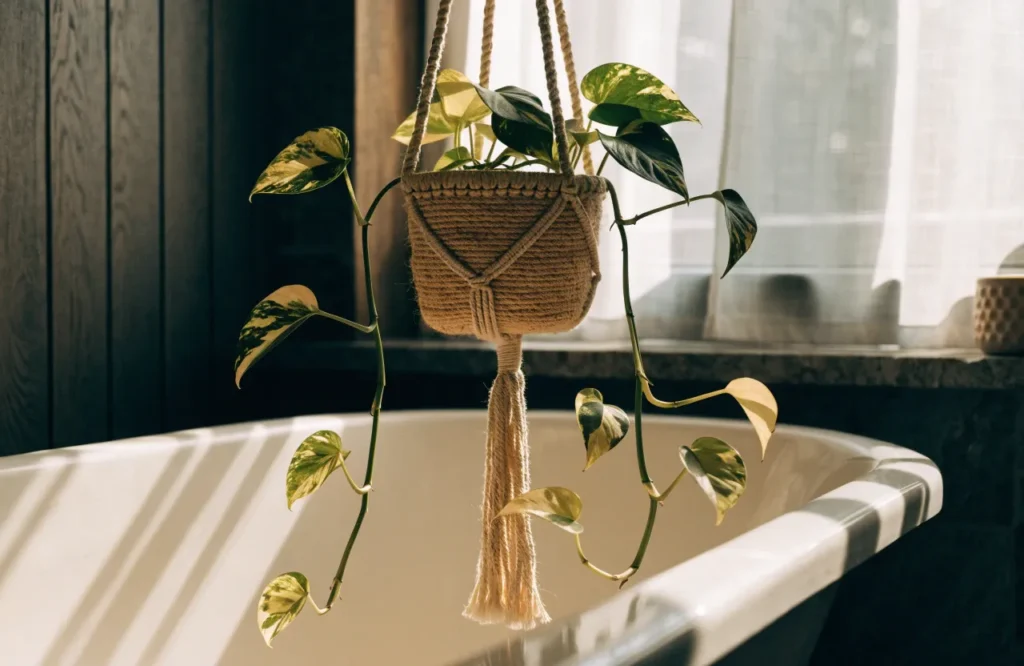
Pothos is the classic trailing choice for hanging planters or high shelves, cascading nicely in a dim, humid bathroom. It adapts to a wide light range, though very low light will slow its growth and mute its variegation.
4. Peace Lily (Spathiphyllum wallisii)
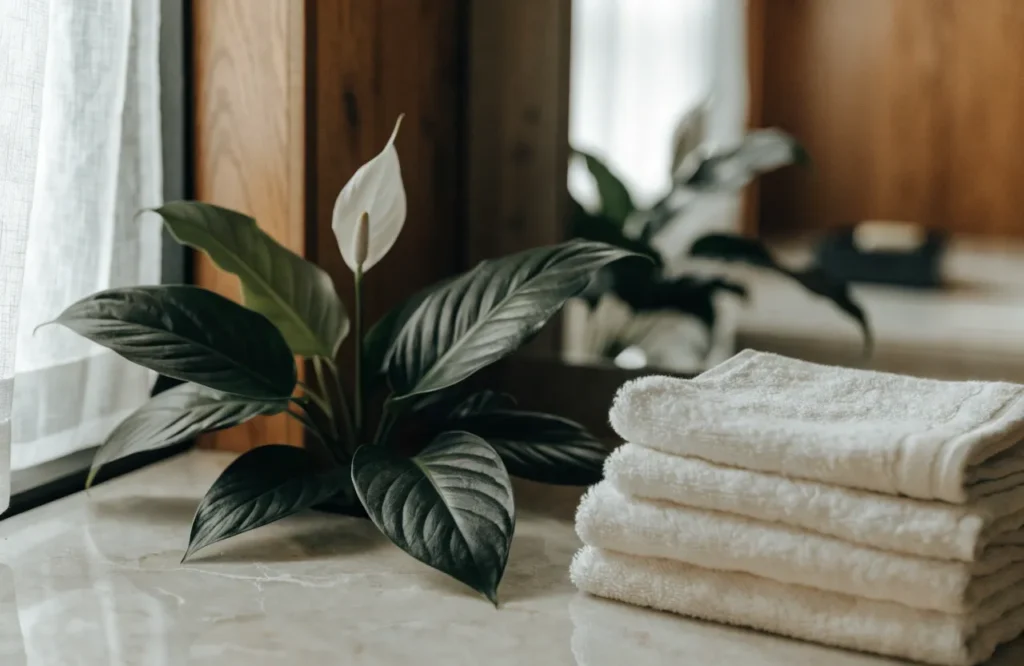
Valued for its white blooms as much as its shade tolerance, the peace lily is one of the few flowering plants that tolerates dim rooms. It prefers consistent, not soggy, moisture and high humidity, so a steamy, frequently used bathroom plays to its strengths.
5. Boston Fern (Nephrolepis exaltata)
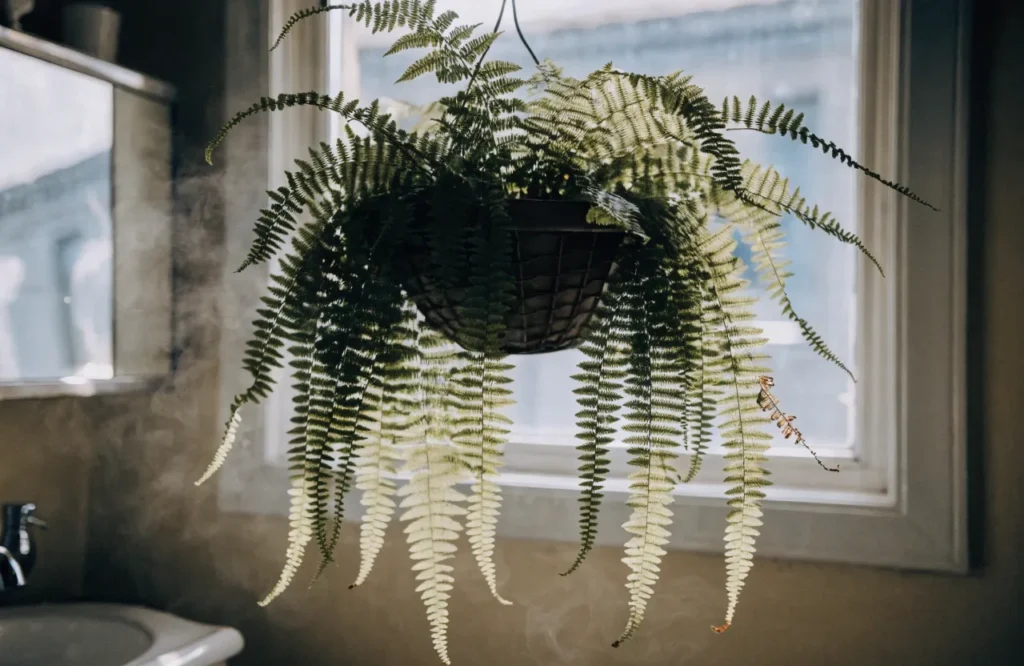
With feathery, cascading fronds, the Boston fern brings a lush look to humid rooms, but it’s worth knowing it wants brighter indirect light than the ZZ plant, snake plant, or cast iron plant. It does best in a bathroom that gets some daylight rather than one relying purely on artificial light, and it’s less forgiving of dry air or missed waterings.
6. Cast Iron Plant (Aspidistra elatior)
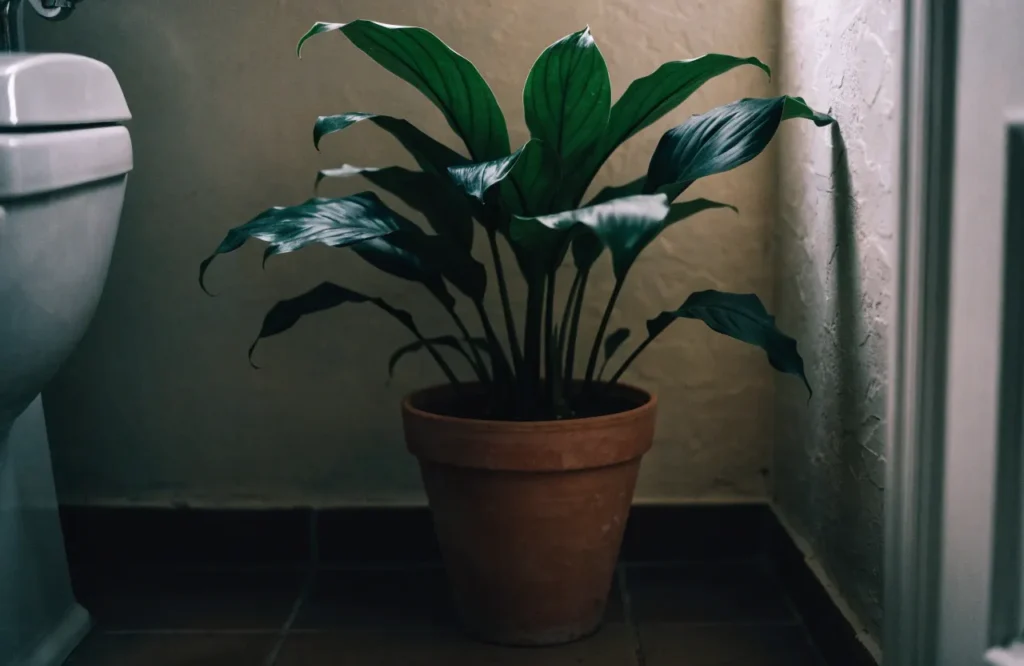
As the name suggests, this is one of the toughest houseplants available, tolerating deep shade, inconsistent watering, and temperature swings better than almost any other species on this list, it’s a fixture on most unkillable indoor plants roundups for exactly that reason.
7. Spider Plant (Chlorophytum comosum)
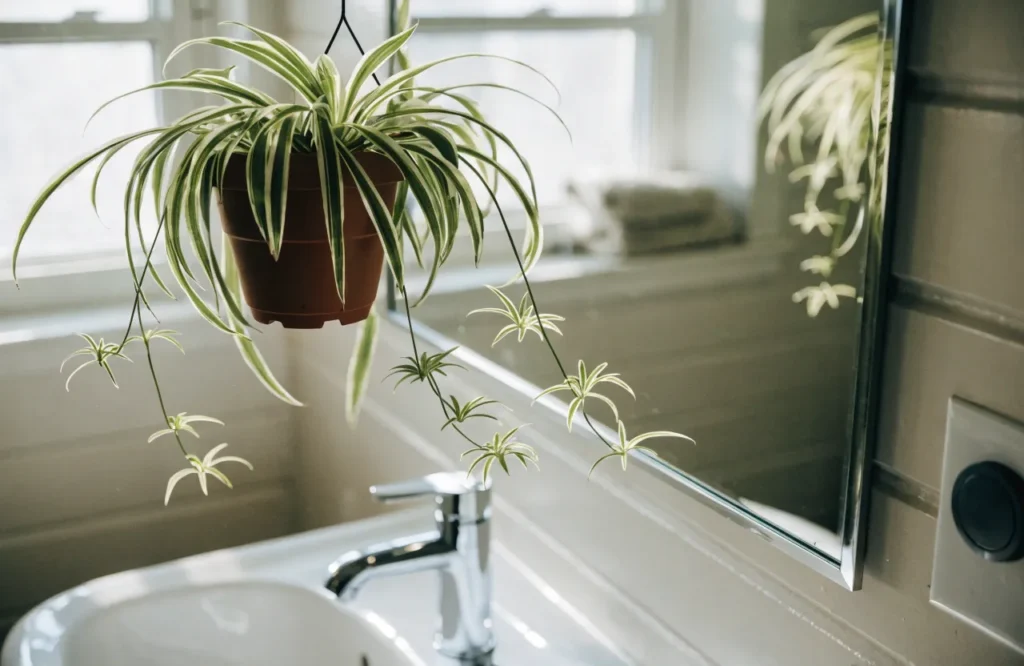
Fast-growing and forgiving, the spider plant produces trailing “babies” that make it easy to propagate. It handles both low light and cooler bathroom temperatures with ease.
8. Philodendron ‘Brasil’
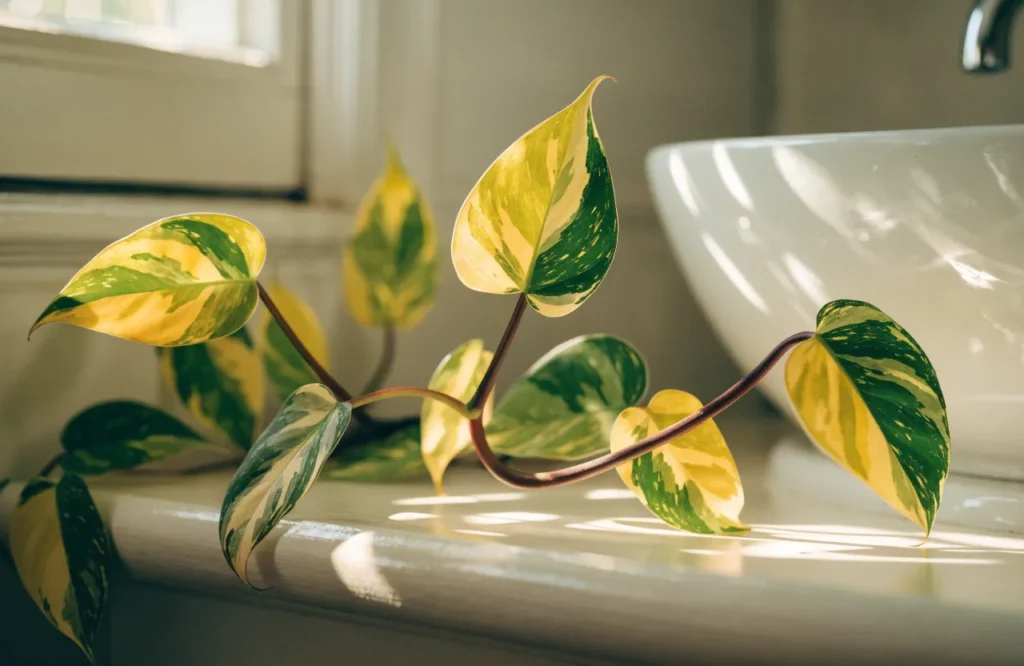
This trailing philodendron brings color with lime-and-green variegated leaves and tolerates shade reasonably well, provided it isn’t kept in complete darkness for long stretches.
9. Chinese Evergreen (Aglaonema)
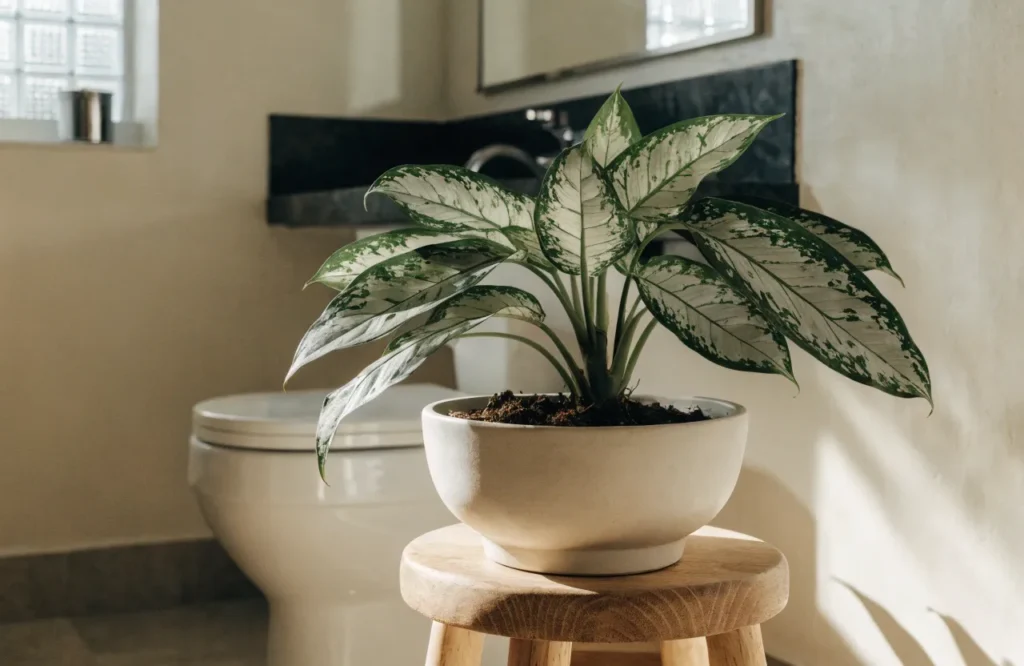
A patterned, low-maintenance option that adapts well to dim corners and steady humidity, though it’s worth protecting it from cold drafts and sudden temperature changes.
10. Bird’s Nest Fern (Asplenium nidus)
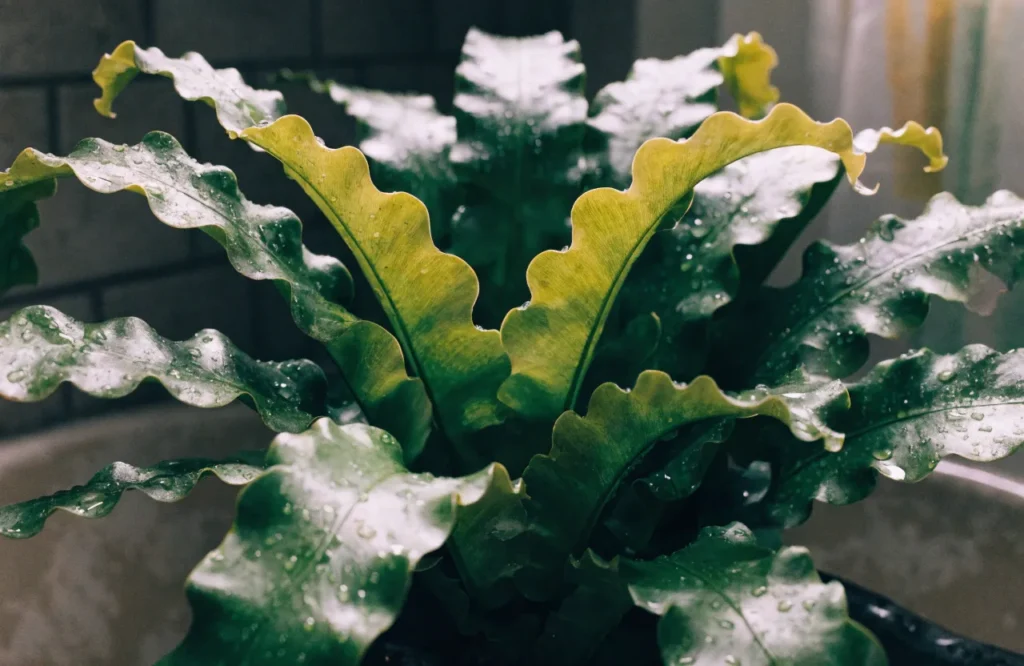
With wavy, glossy fronds radiating from a central rosette, this fern benefits from the higher humidity a bathroom can provide and handles shade better than most true ferns, though, like the Boston fern, it still prefers a bit more brightness than the toughest low-light species.
11. Parlor Palm (Chamaedorea elegans)
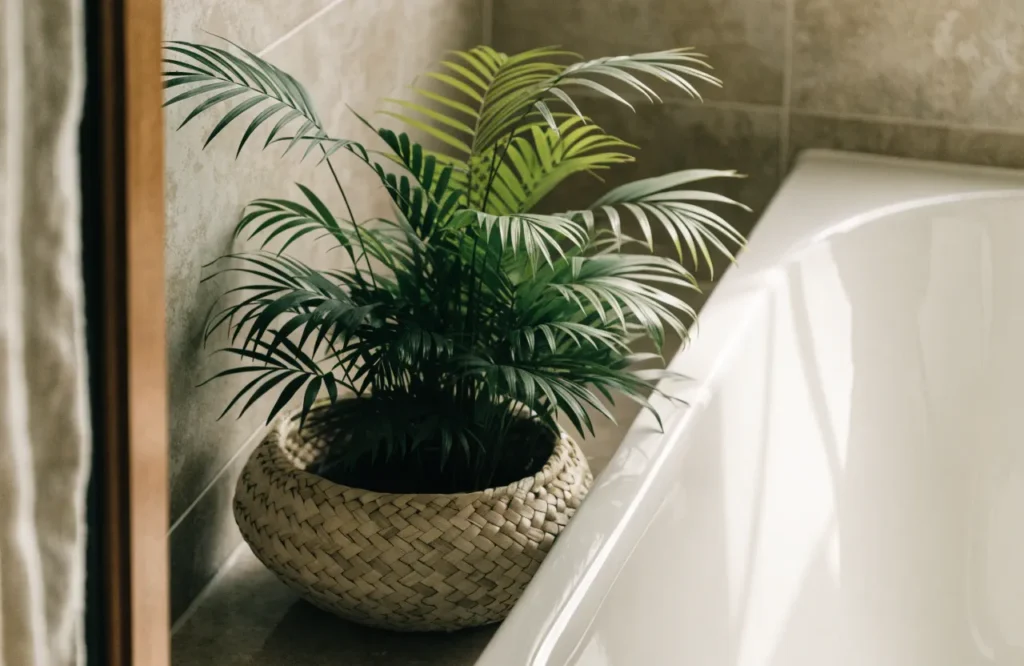
A slow-growing, compact palm that tolerates low light better than most palm varieties, the parlor palm adds height and texture without demanding a bright window. It appreciates the humidity a bathroom provides but isn’t dependent on it.
12. Calathea
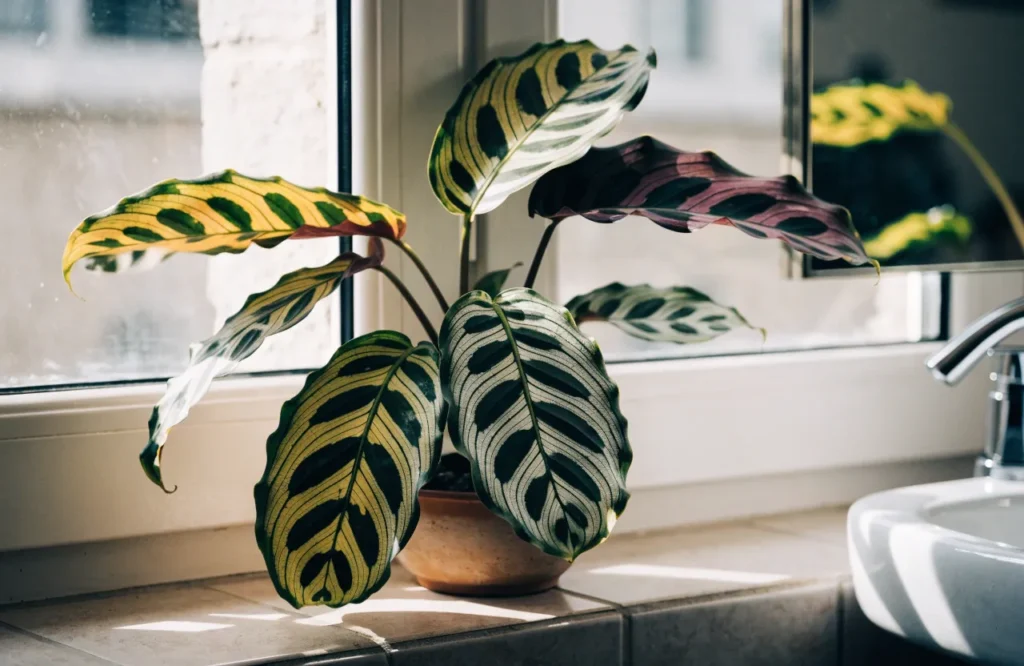
Grown mainly for its patterned, sometimes striped foliage, Calathea can tolerate lower light than many houseplants, although it generally does best in medium to bright indirect light rather than deep shade. The trade-off is that it’s fussier about consistent humidity and water quality than the other plants on this list, so it suits an experienced plant owner more than an absolute beginner.
Expert Editorial Tip
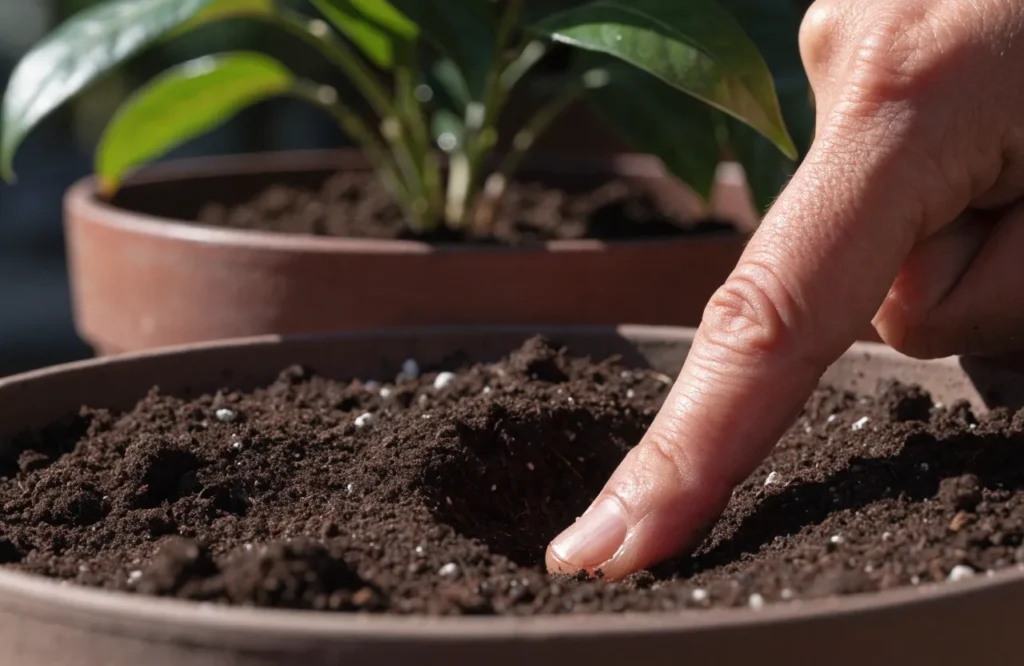
From the editorial desk: One of the biggest reasons low light bathroom plants fail isn’t insufficient light, it’s overwatering. In a humid bathroom, soil dries far more slowly than it would in a living room, so a “weekly watering” habit that works elsewhere often drowns roots here. Always check soil moisture with a finger test before watering rather than following a fixed calendar, and choose pots with drainage holes rather than sealed decorative planters. If your bathroom truly has no window, treat a small grow light as a basic tool, not an optional upgrade, it’s the difference between a plant that merely survives and one that actually grows. For detailed, species-specific care profiles, consult the Missouri Botanical Garden’s plant database.
Common Mistakes to Avoid
Even experienced plant owners run into the same few habits that quietly work against low light bathroom plants:
- Ignoring drainage. Decorative pots without holes trap water and encourage root rot in already humid air.
- Assuming “low light” means “no light.” Every plant on this list still needs some source of brightness, natural or artificial.
- Watering on a fixed schedule. Bathroom humidity slows evaporation, check the soil first rather than watering by the calendar.
- Skipping ventilation. Plants are not a substitute for airflow. An exhaust fan or cracked window after showers is what actually keeps moisture, mildew, and mold in check, a houseplant in the corner won’t do that job for you.
- Placing pots directly on cold tile. Elevate plants on a stand or shelf to avoid shocking tropical roots.
Frequently Asked Questions
What are the best low light bathroom plants?
The most reliable choices are the ZZ plant, snake plant, golden pothos, peace lily, cast iron plant, spider plant, and philodendron. These tolerate dim, humid conditions and are specifically suited to bathroom environments.
Can any plant survive in a bathroom with no natural light at all?
No. A windowless bathroom with zero natural or artificial brightness will not sustain a living plant. Every plant on this list still needs some source of brightness—if there’s truly no light, add an LED grow light or choose a very bright artificial fixture.
What’s the easiest, most low-maintenance option for a dim bathroom?
The ZZ plant and snake plant are the easiest, most low-maintenance options—both are rated ‘very easy’ and tolerate dim corners, inconsistent watering, and variable humidity. Cast iron plant is another nearly indestructible choice.
Do plants actually prevent bathroom mold or musty smells?
No. Plants are not a substitute for airflow—an exhaust fan or cracked window after showers is what actually prevents mold. In fact, overwatering in already humid air can encourage root rot, so good drainage and ventilation matter more than the plant itself.
What’s the biggest mistake people make with bathroom plants?
Overwatering—not insufficient light—is the biggest reason low light bathroom plants fail. Bathroom humidity slows evaporation, so always check the soil before watering rather than watering on a fixed schedule, and make sure pots have drainage holes.