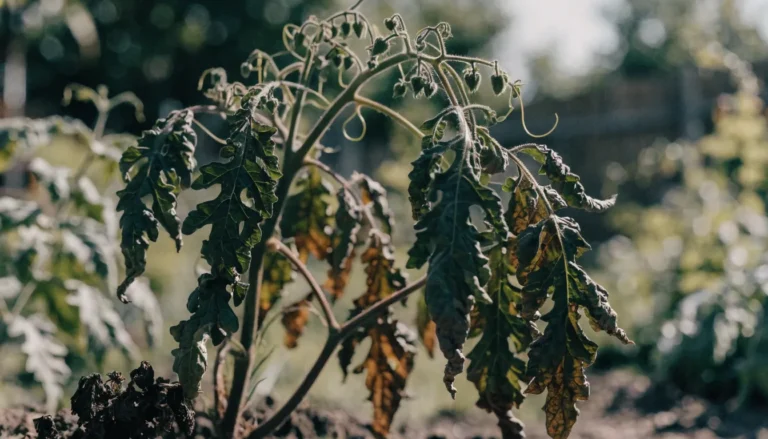
Why Are My Tomato Plant Leaves Turning Yellow? 18 Causes & Easy Fixes
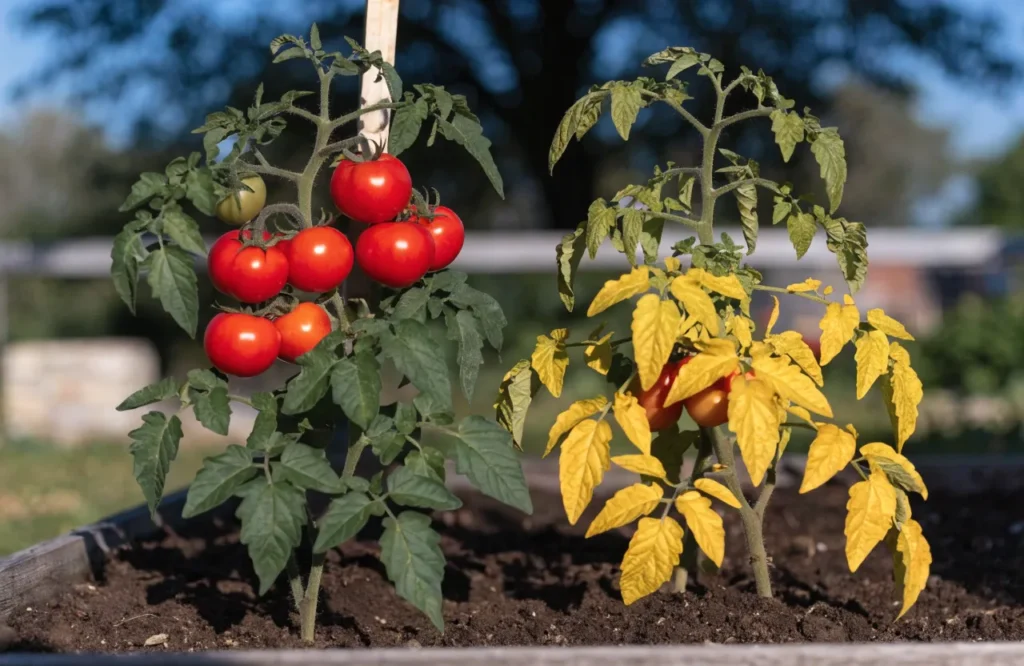
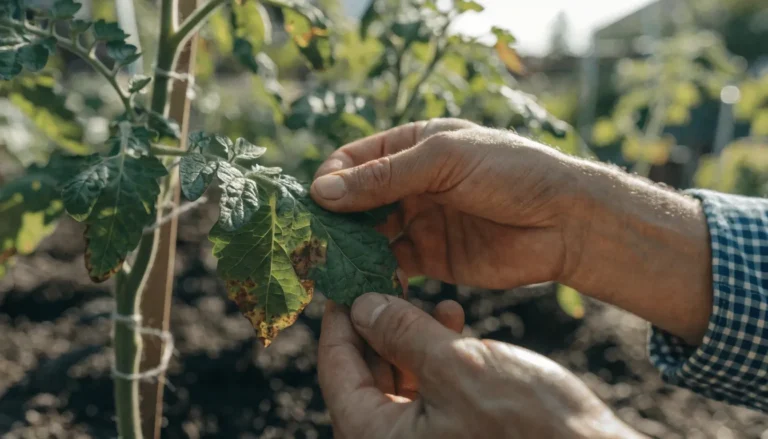
Why are my tomato plant leaves turning yellow? It’s one of the most common questions gardeners ask during the growing season. While it’s easy to assume your plant is dying, yellowing foliage is often an early warning sign that something in its growing conditions needs attention. The cause could be as simple as natural aging or inconsistent watering, or it may indicate a nutrient deficiency, pest infestation, or disease.
The key to solving the problem is identifying where the yellowing starts, how it spreads, and what other symptoms are present. Once you know the cause, you can take the right steps to help your tomato plant recover and continue producing a healthy harvest.
This guide explains the most common reasons tomato leaves turn yellow, how to diagnose each problem accurately, and the best solutions to keep your tomato plants healthy, productive, and thriving throughout the growing season.
Tomatoes are one of the most rewarding summer vegetables to grow, but yellow leaves can reduce both plant health and harvests. Learning proper tomato care is an important part of growing a productive vegetable garden. If you’re planning your seasonal garden, explore our guide to the best summer vegetables to grow.
Quick Answer
Tomato leaves usually turn yellow due to overwatering, underwatering, nutrient deficiencies, diseases, pests, poor drainage, transplant shock, or natural aging. Check whether the yellowing starts on the lower or upper leaves, inspect the soil moisture, and look for spots, insects, or wilting to identify the cause before treating the plant.
Table of Contents
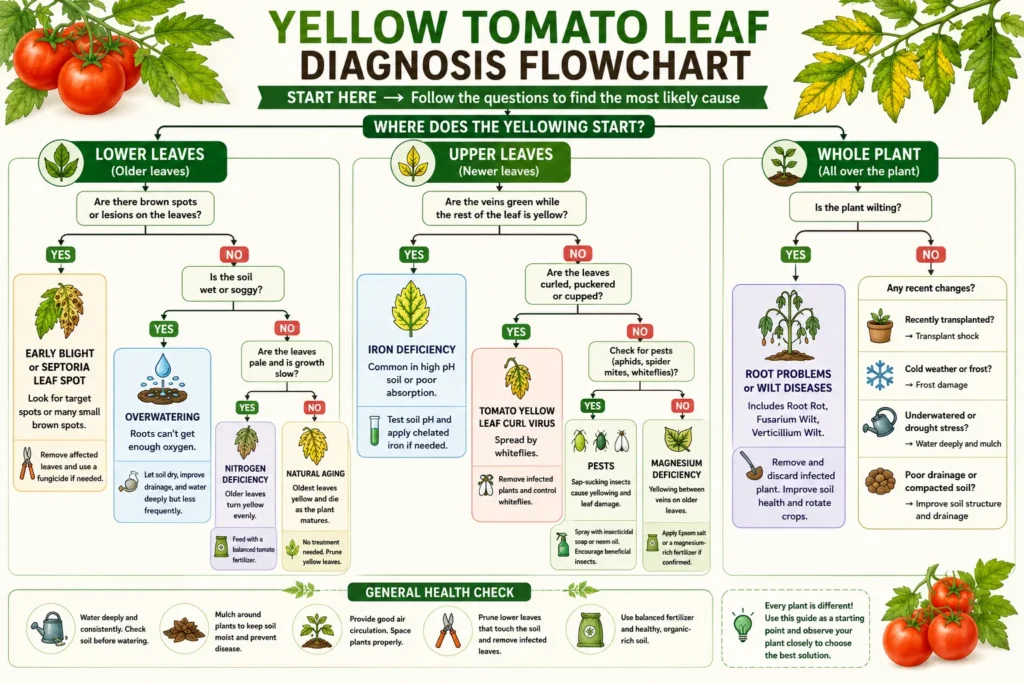
Yellow Tomato Leaf Diagnosis Flowchart
How to Diagnose Yellow Tomato Leaves
If you’re asking, “Why are my tomato plant leaves turning yellow?” use this quick diagnosis table to identify the most likely cause before applying any treatment.
Ask yourself:
- Are the lower or upper leaves turning yellow first?
- Is the soil soggy, evenly moist, or dry?
- Are the leaves yellow all over or only between the veins?
- Do you see brown spots, mold, or black lesions?
- Are insects hiding beneath the leaves?
- Has the plant recently been transplanted or exposed to extreme weather?
The answers to these questions often point to the correct diagnosis.
Quick Diagnosis Table
| If You Notice… | Most Likely Cause |
|---|---|
| Lower leaves yellow first | Natural aging, overwatering, or nitrogen deficiency |
| Upper leaves yellow first | Iron deficiency |
| Yellowing between green veins | Magnesium deficiency |
| Brown spots with yellowing | Early blight or Septoria leaf spot |
| Entire plant yellow and wilting | Root problems or wilt disease |
| Yellow, curled leaves | Water stress, pests, or Tomato Yellow Leaf Curl Virus |
| Yellow leaves after transplanting | Transplant shock |
1. Natural Aging
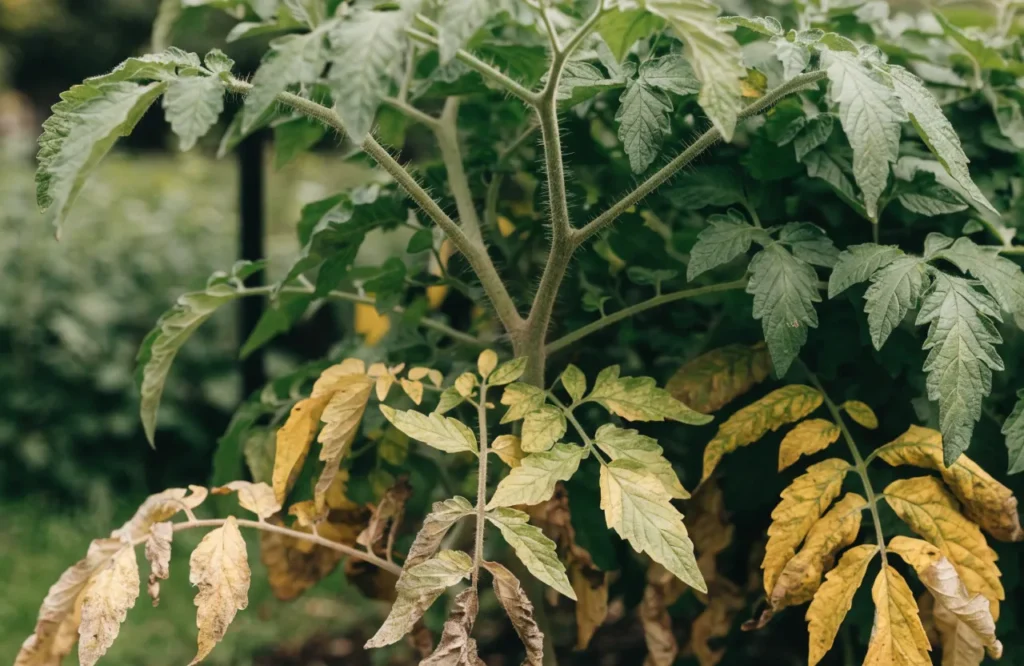
Not every yellow leaf is a cause for concern. As tomato plants mature, the oldest leaves at the bottom naturally yellow and die while the plant directs its energy toward new growth and fruit production.
Symptoms
- Yellowing begins on the lowest leaves.
- Upper growth remains green and healthy.
- No spotting or severe wilting.
- Fruit production continues normally.
How to Fix It
No treatment is needed. Remove fully yellow or dead leaves with clean pruning shears to improve airflow and reduce the risk of disease. Avoid removing healthy foliage, as tomatoes rely on their leaves to produce energy for flowering and fruiting.
2. Overwatering
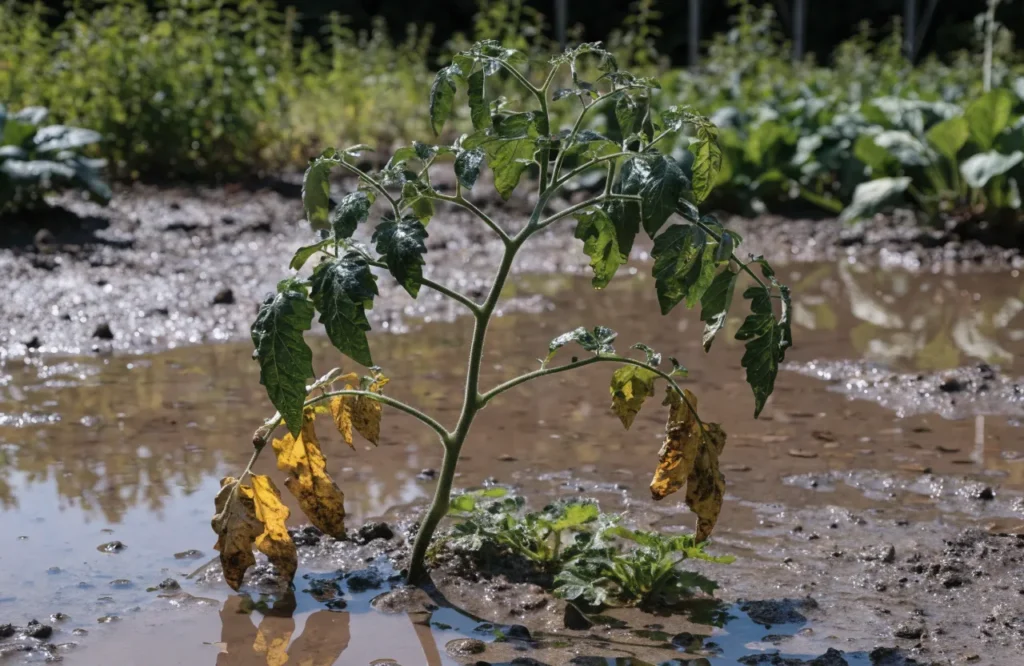
Overwatering is one of the most common reasons tomato plant leaves turn yellow. When soil stays constantly wet, roots cannot access enough oxygen, reducing their ability to absorb water and nutrients.
Symptoms
- Lower leaves turn yellow.
- Wilting despite wet soil.
- Slow growth.
- Soft stems or signs of root rot in severe cases.
How to Fix It
- Let the top 1–2 inches (2.5–5 cm) of soil dry before watering again.
- Water deeply instead of lightly every day.
- Improve drainage with compost or organic matter.
- Make sure containers have drainage holes.
Tip: Always check the soil before watering rather than following a fixed schedule.
3. Underwatering
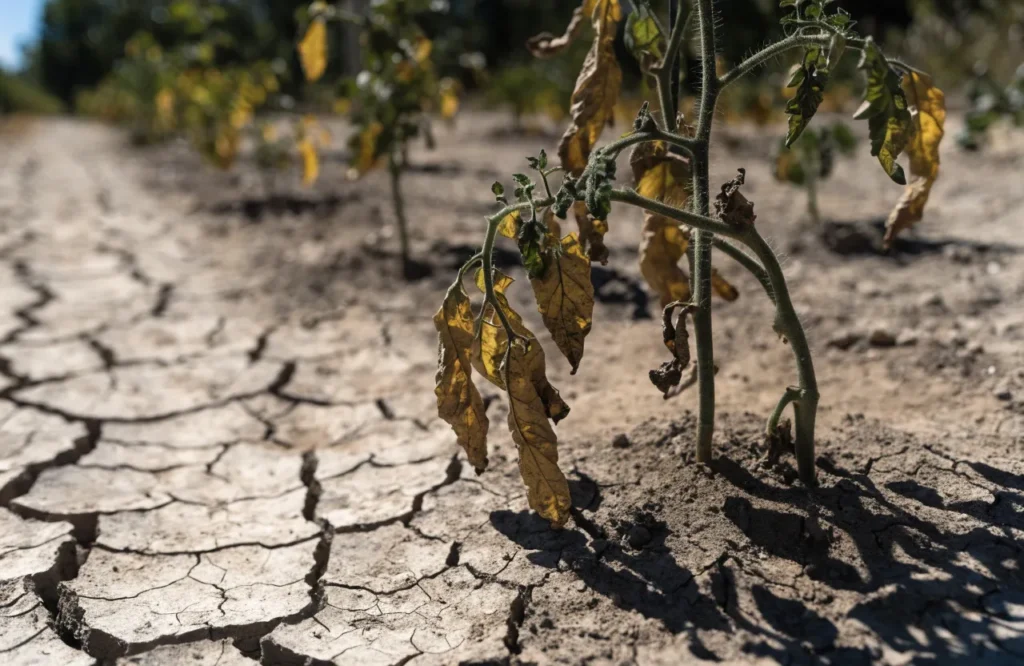
Tomatoes need consistent moisture, especially during flowering and fruit production. If the soil becomes too dry, the plant struggles to transport water and nutrients, causing the leaves to yellow and wilt.
Symptoms
- Yellow, wilted leaves.
- Dry or crispy leaf edges.
- Curling foliage.
- Dry soil below the surface.
- Blossom drop or small fruit.
How to Fix It
- Water deeply so moisture reaches the roots.
- Apply mulch to reduce evaporation.
- Water early in the morning whenever possible.
- Aim for consistent moisture instead of allowing the soil to dry out completely.
4. Nitrogen Deficiency
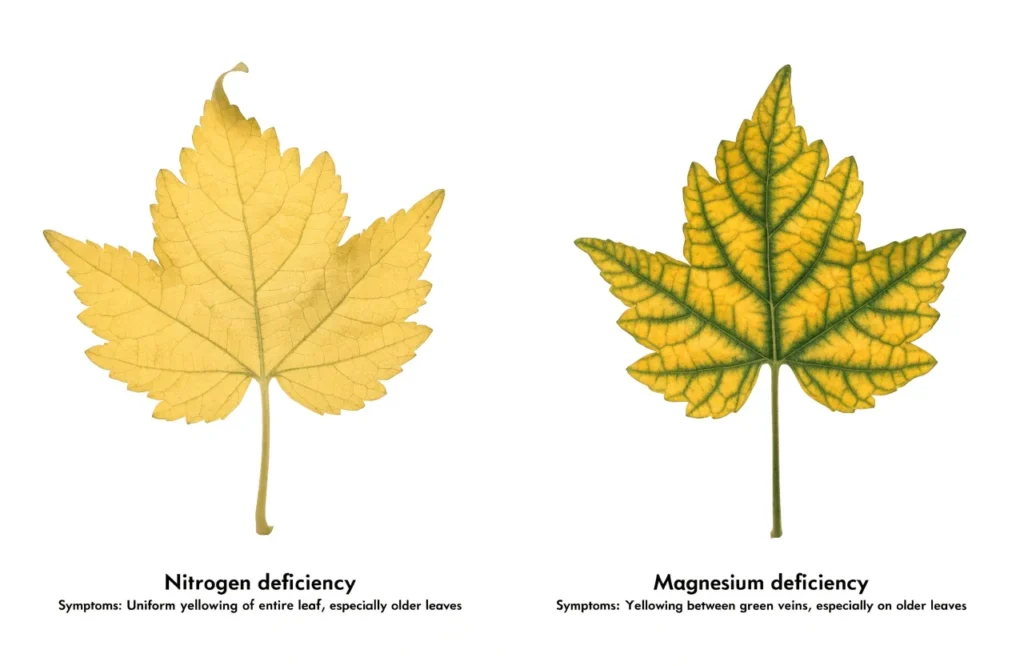
Nitrogen is essential for producing healthy green foliage. Because it’s a mobile nutrient, the plant moves nitrogen from older leaves to support new growth when supplies are low.
Symptoms
- Older leaves turn pale green, then yellow.
- Slow or weak growth.
- Thin stems.
- Reduced vigor and smaller harvests.
How to Fix It
Feed your plants with a balanced tomato fertilizer or enrich the soil with compost or well-rotted manure. Avoid excessive nitrogen, especially once plants begin flowering, as it can encourage leafy growth at the expense of fruit.
5. Magnesium Deficiency
Magnesium is a key component of chlorophyll, the pigment that gives leaves their green color. A deficiency typically appears on older leaves first.
Symptoms
- Yellowing between the veins while the veins remain green.
- Starts on lower leaves.
- Brown patches may appear as the deficiency worsens.
How to Fix It
Use a tomato fertilizer that contains magnesium or apply Epsom salt only if a magnesium deficiency has been confirmed. Improving soil health with compost can also help prevent future deficiencies.
Important: Epsom salt is not a cure for every yellowing problem. It won’t help if the cause is overwatering, disease, or another nutrient deficiency.
6. Iron Deficiency
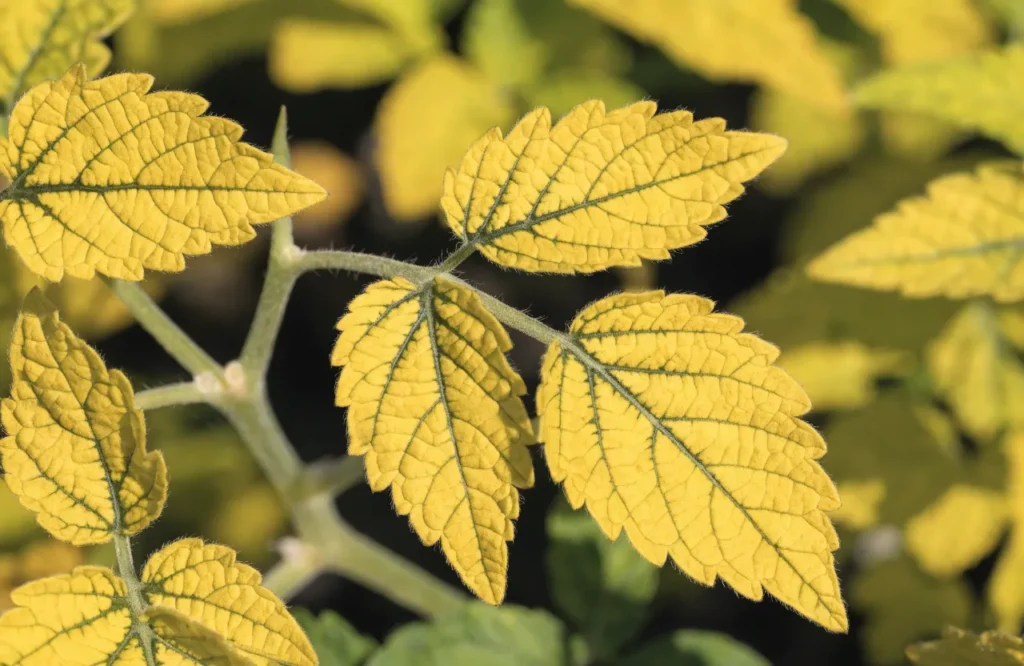
Iron deficiency is less common than nitrogen or magnesium deficiency, but it has a distinctive symptom: the newest leaves turn yellow first while the veins remain green.
Symptoms
- Yellowing begins on young, upper leaves.
- Green veins stand out against the yellow tissue.
- New growth may become pale or almost white in severe cases.
How to Fix It
- Test your soil if possible, tomatoes grow best in slightly acidic soil (pH 6.0–6.8).
- Improve drainage if the soil is constantly wet.
- Apply a chelated iron supplement only if a deficiency is confirmed.
7. Early Blight
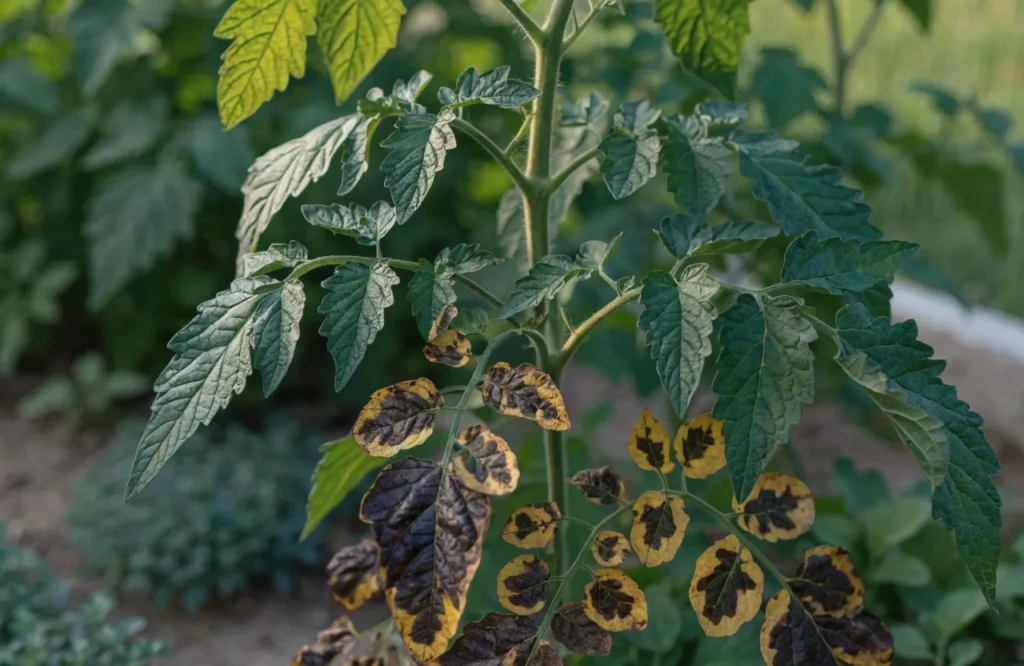
Early blight is a common fungal disease that usually starts on the oldest leaves near the base of the plant. Warm temperatures, humidity, and wet foliage encourage the disease to spread.
Symptoms
- Yellowing lower leaves.
- Brown spots with distinctive concentric rings (“target spots”).
- Leaves gradually dry out and drop.
How to Fix It
- Remove infected leaves promptly.
- Water at the base of the plant to keep foliage dry.
- Improve airflow by pruning lower leaves and spacing plants correctly.
- Apply a fungicide if the disease continues to spread.
8. Septoria Leaf Spot
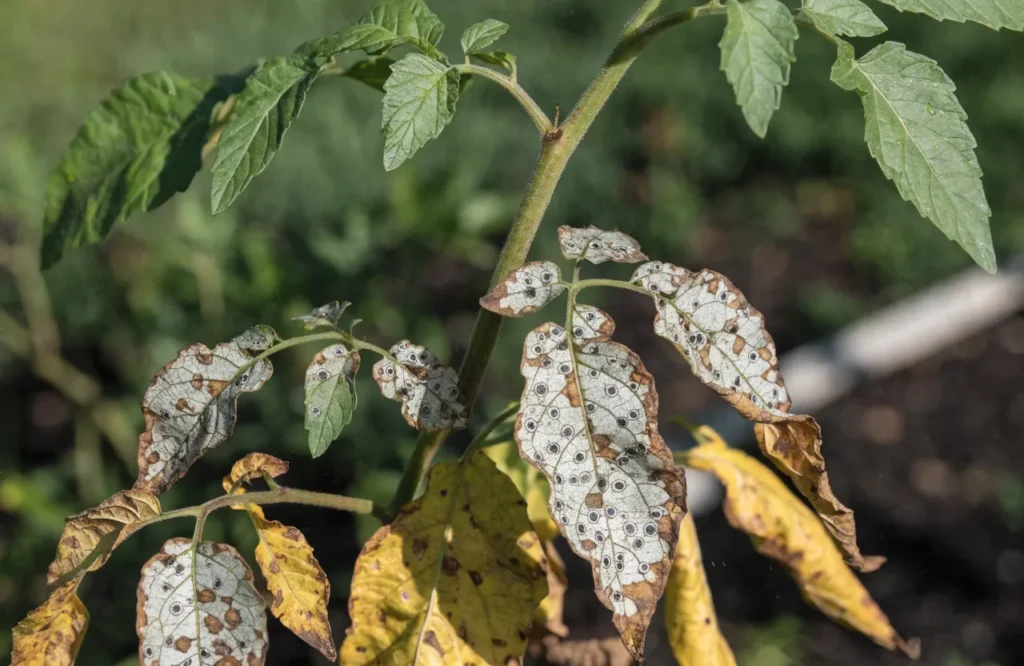
Septoria leaf spot is another fungal disease that often appears during prolonged periods of wet or humid weather.
Symptoms
- Numerous small brown or gray spots.
- Tiny black dots in the center of the spots.
- Yellowing begins on the lower leaves before moving upward.
How to Fix It
- Remove infected foliage.
- Avoid overhead watering.
- Mulch around plants to reduce soil splash.
- Use a fungicide if necessary.
Tip: Unlike early blight, Septoria leaf spot produces many small spots rather than larger target-shaped lesions.
9. Wilt Diseases (Fusarium & Verticillium)
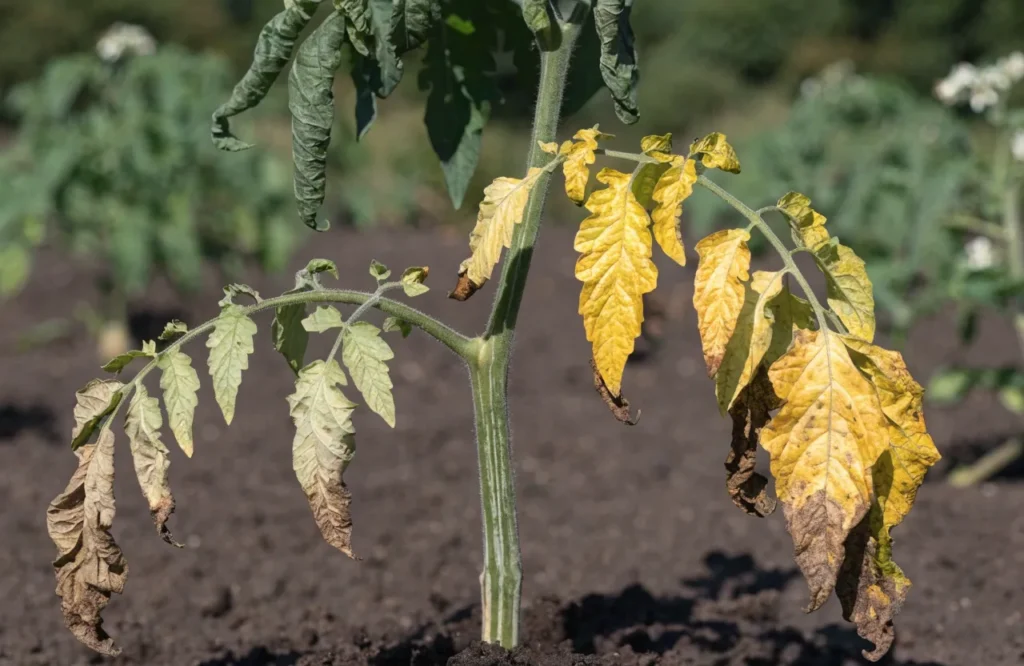
Fusarium wilt and Verticillium wilt are soil-borne fungal diseases that block the plant’s ability to transport water. Although they develop slightly differently, both eventually cause yellowing, wilting, and reduced growth.
| Disease | Common Symptoms | Treatment |
|---|---|---|
| Fusarium Wilt | Yellowing often starts on one side of the plant, followed by wilting | Remove and discard the infected plant |
| Verticillium Wilt | Gradual yellowing and wilting, often with V-shaped yellow patches on leaves | Remove and discard the infected plant |
Once you understand why are my tomato plant leaves turning yellow, preventing the problem becomes much easier with proper watering, healthy soil, and regular plant care.
Prevention
- Rotate crops every 3–4 years.
- Improve soil health with compost.
- Choose disease-resistant tomato varieties whenever possible.
Unfortunately, there is no cure once either disease infects a plant.
10. Tomato Yellow Leaf Curl Virus
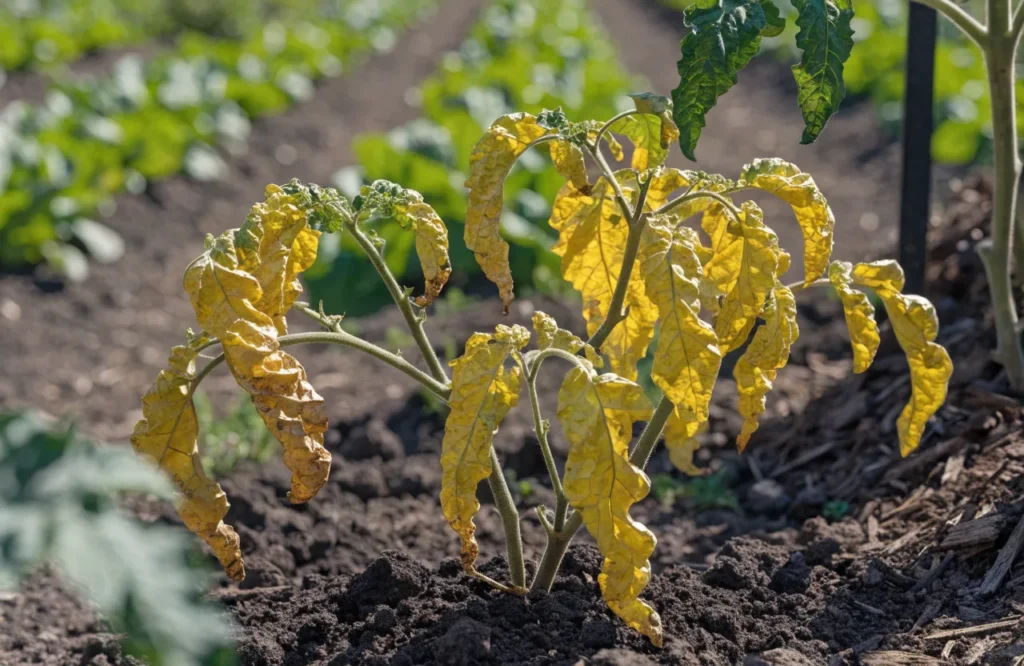
Tomato Yellow Leaf Curl Virus (TYLCV) is spread by whiteflies and can severely reduce plant growth and fruit production.
Symptoms
- Bright yellow, upward-curled leaves.
- Stunted growth.
- Reduced flowering and fewer fruits.
How to Fix It
There is no cure for infected plants.
- Remove infected plants to limit the spread.
- Control whiteflies early.
- Keep weeds under control, as they can host the virus.
- Plant resistant varieties in areas where the disease is common.
11. Sap-Sucking Pests (Aphids & Spider Mites)
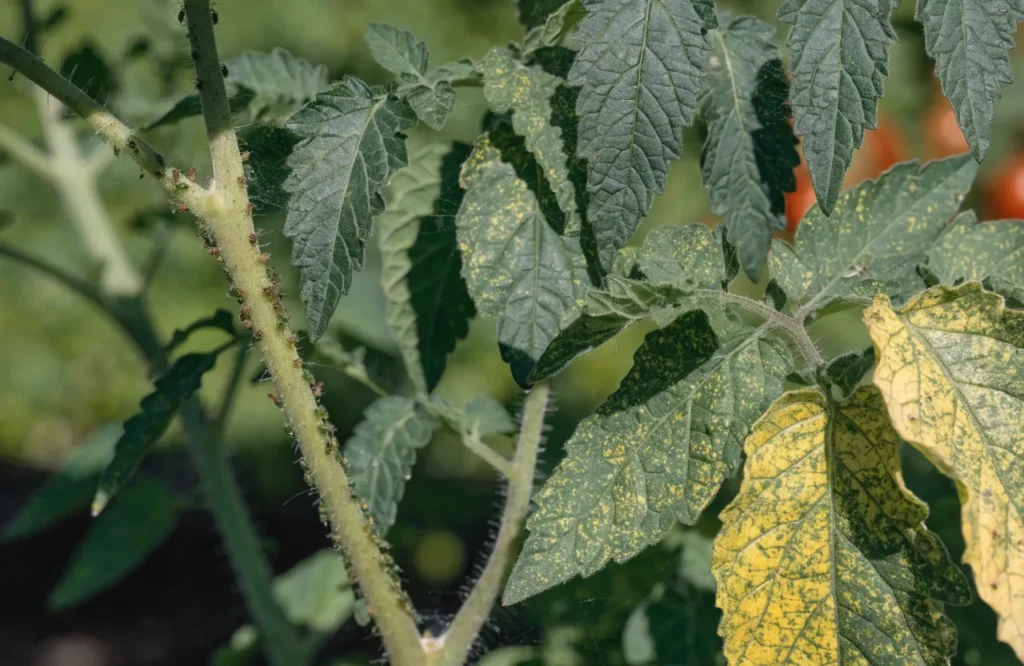
Tiny insects can weaken tomato plants by feeding on their sap, causing leaves to yellow, curl, or develop speckled discoloration.
Aphids
Symptoms
- Curled or yellow leaves.
- Sticky honeydew on foliage.
- Clusters of small insects on stems and leaf undersides.
Treatment
- Spray plants with a strong stream of water.
- Encourage beneficial insects such as ladybugs and lacewings.
- Use insecticidal soap if infestations become severe.
Spider Mites
Symptoms
- Tiny yellow speckles on leaves.
- Fine webbing beneath foliage.
- Leaves gradually turn bronze or yellow.
Treatment
- Spray the undersides of leaves with water.
- Remove heavily damaged leaves.
- Apply horticultural oil or insecticidal soap if needed.
12. Environmental Stress
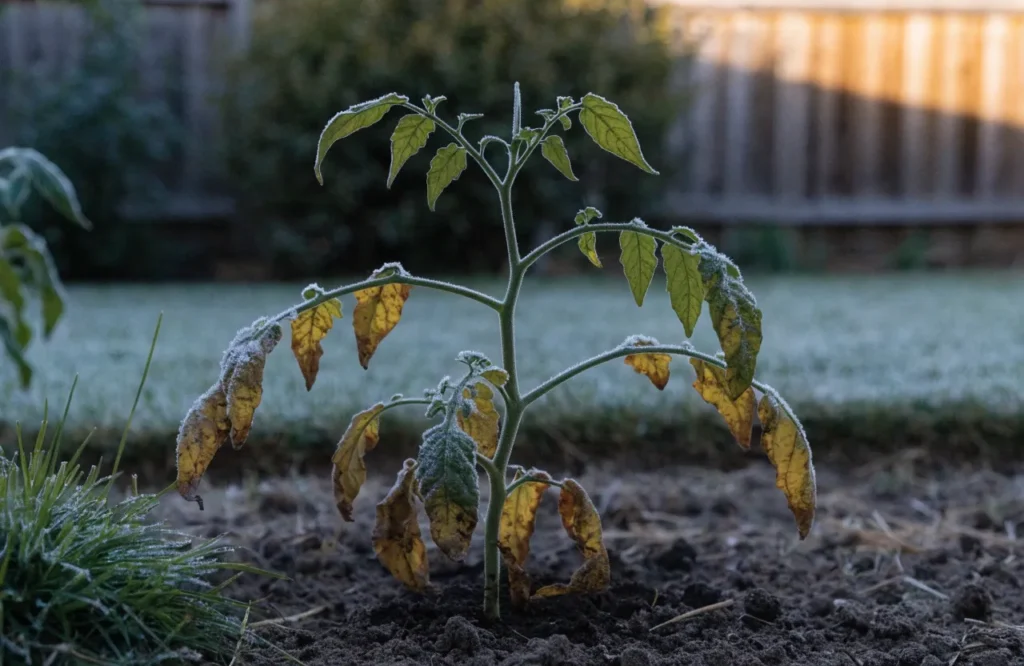
Sometimes yellow tomato leaves aren’t caused by pests or disease at all. Environmental conditions can temporarily stress plants and lead to yellowing.
Herbicide Damage
Tomatoes are extremely sensitive to herbicides, even when the spray drifts from nearby lawns or gardens.
Symptoms
- Yellow, twisted, or distorted leaves.
- Misshapen new growth.
Solution
Avoid herbicide exposure and provide consistent care while the plant recovers. Severe damage may be permanent.
Frost Damage
Cold temperatures can damage tomato foliage overnight.
Symptoms
- Yellow or water-soaked leaves.
- Blackened or collapsed foliage after frost.
Solution
Wait until new growth appears before pruning damaged leaves, and protect plants with frost cloths whenever cold weather is expected.
Transplant Shock
Recently transplanted tomatoes often develop a few yellow leaves while their roots establish.
Symptoms
- Yellow lower leaves.
- Mild wilting.
- Slow growth for several days.
Solution
Keep the soil evenly moist, avoid over-fertilizing, and give the plant time to adjust. Most healthy tomatoes recover within one to two weeks.
Soil Compaction & Poor Drainage
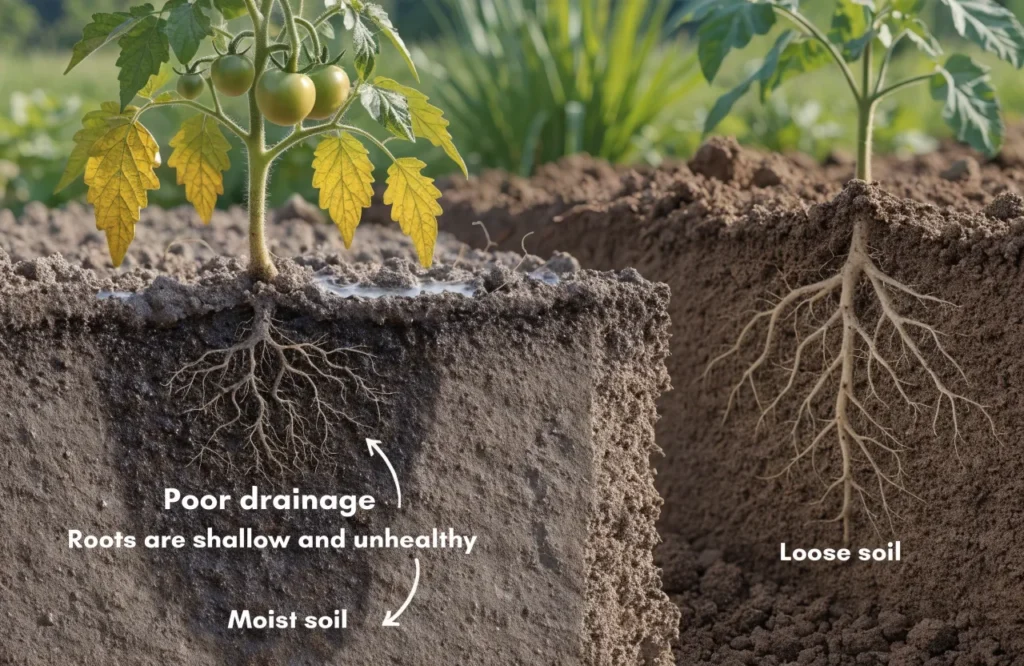
Dense or poorly drained soil limits oxygen around the roots, making it difficult for tomato plants to absorb water and nutrients.
Symptoms
- Yellow lower leaves.
- Slow growth.
- Wet soil that drains poorly.
Solution
Improve soil structure by adding compost, avoid walking on garden beds, and grow tomatoes in raised beds if drainage is consistently poor.
Quick Reminder
If you’re unsure why your tomato leaves are turning yellow:
- Check the soil moisture.
- Inspect the leaves for spots, insects, or webbing.
- Notice whether the yellowing starts on older or newer leaves.
- Think about recent weather, watering, or transplanting.
These simple observations will help you identify the correct cause before applying treatments.
Tomato Leaf Yellowing Troubleshooting Chart
Use this quick reference table to match symptoms with their most likely cause and recommended solution.
| Symptom | Most Likely Cause | What to Do |
|---|---|---|
| Lower leaves yellow naturally | Natural aging | Prune old leaves |
| Lower leaves yellow with wet soil | Overwatering | Let soil dry and improve drainage |
| Yellow leaves with dry soil | Underwatering | Water deeply and mulch |
| Older leaves yellow evenly | Nitrogen deficiency | Apply a balanced tomato fertilizer |
| Yellow between veins on older leaves | Magnesium deficiency | Correct the deficiency if confirmed |
| New leaves yellow with green veins | Iron deficiency | Check soil pH and apply chelated iron if needed |
| Brown target-shaped spots | Early blight | Remove infected leaves and treat with fungicide if necessary |
| Numerous small brown spots | Septoria leaf spot | Improve airflow and remove infected foliage |
| One-sided yellowing with wilting | Fusarium wilt | Remove infected plant |
| Gradual yellowing with wilting | Verticillium wilt | Remove infected plant |
| Yellow curled leaves with stunted growth | Tomato Yellow Leaf Curl Virus | Remove infected plant and control whiteflies |
| Sticky leaves or visible insects | Aphids | Wash off insects or use insecticidal soap |
| Yellow speckles with fine webbing | Spider mites | Spray foliage and treat if needed |
| Twisted yellow leaves | Herbicide damage | Eliminate herbicide exposure |
| Yellow leaves after frost | Cold damage | Remove damaged foliage after recovery |
| Yellow leaves after transplanting | Transplant shock | Keep soil evenly moist and allow time to recover |
How to Prevent Tomato Leaves From Turning Yellow
Most yellowing problems are preventable with consistent care and good gardening practices.
Water Properly
Tomatoes prefer deep, consistent watering rather than frequent light watering.
- Check soil moisture before watering.
- Water at the base of the plant.
- Water early in the morning.
- Avoid leaving the soil constantly soggy.
Build Healthy Soil
Healthy soil supports strong roots and improves nutrient uptake.
Mix organic matter such as:
- Compost
- Well-rotted manure
- Leaf mold
These materials improve drainage while helping the soil retain enough moisture for steady growth.
Fertilize Wisely
Tomatoes are heavy feeders, but too much fertilizer can create new problems.
- Use a balanced fertilizer designed for tomatoes. If you’re unsure which fertilizer is right for your plants, read our guide to the best fertilizer for tomatoes to learn about the best NPK ratios, fertilizer types, and feeding schedule.
- Follow the recommended application rates.
- Avoid excessive nitrogen once plants begin flowering, as it encourages leafy growth instead of fruit production.
Mulch Around Plants
Apply a 2–3 inch (5–7.5 cm) layer of organic mulch to:
- Maintain even soil moisture.
- Reduce weeds.
- Prevent soil from splashing onto leaves.
- Lower the risk of fungal diseases.
Straw, shredded leaves, or compost all make excellent mulch for tomatoes.
Give Plants Enough Space
Proper spacing improves air circulation and helps foliage dry more quickly after rain or watering.
Follow the spacing recommendations for your tomato variety to reduce the risk of fungal diseases.
Prune Lower Leaves
Once plants are established, remove leaves that touch the soil.
This simple habit helps:
- Improve airflow.
- Reduce disease spread.
- Keep foliage cleaner.
- Make watering easier.
Always use clean pruning tools to avoid spreading diseases.
Rotate Crops
Avoid planting tomatoes, or other members of the nightshade family, in the same location every year.
Rotating crops every three to four years helps reduce the buildup of soil-borne diseases such as Fusarium wilt, Verticillium wilt, and early blight.
Inspect Plants Regularly
A quick weekly inspection allows you to catch problems before they become serious.
Look for:
- Yellowing leaves
- Leaf spots
- Wilting
- Insects
- Webbing
- Mold
- Damaged stems
Early detection often makes treatment much more effective.
Common Mistakes That Cause Yellow Tomato Leaves
Many gardeners accidentally create conditions that lead to yellow foliage. Avoid these common mistakes:
- Watering on a fixed schedule without checking the soil.
- Overwatering after heavy rainfall.
- Letting plants dry out completely between waterings.
- Wetting the leaves instead of the soil.
- Over-fertilizing with nitrogen.
- Growing tomatoes in poorly drained soil.
- Crowding plants too closely together.
- Ignoring early signs of pests or disease.
Correcting these habits can prevent many yellowing problems before they affect your harvest.
When Should You Remove Yellow Leaves?
Removing yellow leaves can improve airflow and reduce disease, but timing is important.
Remove leaves that are:
- Completely yellow or brown.
- Diseased or covered with fungal spots.
- Touching the soil.
- Heavily damaged by pests.
Leave slightly yellow leaves in place until you’ve identified the cause. If the issue is corrected early, the plant can continue directing energy into healthy new growth.
Expert Tips for Healthy Tomato Plants
Keep these simple practices in mind throughout the growing season:
- Water consistently but avoid waterlogged soil.
- Feed plants regularly with a balanced tomato fertilizer.
- Keep foliage as dry as possible by watering at the base.
- Remove diseased leaves as soon as they appear.
- Improve airflow through proper spacing and pruning.
- Clean pruning tools between plants to reduce disease spread.
- Monitor plants weekly for changes in leaf color, pests, or unusual growth.
Healthy plants are far more resistant to pests, diseases, and environmental stress.
Frequently Asked Questions
Conclusion
Why are my tomato plant leaves turning yellow? The answer depends on your plant’s symptoms and growing conditions. While yellow leaves are often caused by natural aging, overwatering, or minor nutrient deficiencies, they can also signal pests, fungal diseases, or environmental stress.
By checking where the yellowing starts, how it spreads, and whether other symptoms, such as spots, curling, wilting, or insects, are present, you can identify the underlying cause and choose the right treatment.
With consistent watering, healthy soil, balanced fertilization, good air circulation, and regular inspections, you can prevent most yellowing problems and keep your tomato plants healthy, vigorous, and productive throughout the growing season.
Tomatoes thrive in full sun and need at least 6–8 hours of direct sunlight each day. If your garden receives less light, consider growing some of these vegetables that grow in shade, which are better suited to shadier conditions. Looking for more gardening tips? Explore our latest guides on vegetables, flowers, and plant care