How to Grow Tomatoes in Pots (Complete Beginner’s Guide)
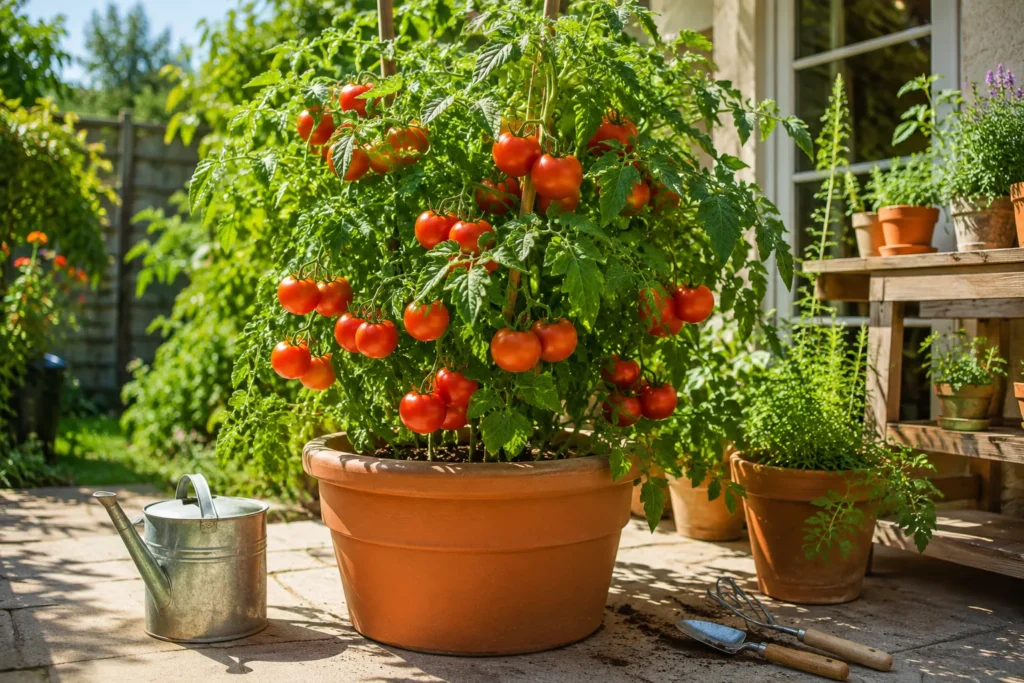
Growing tomatoes in pots is one of the easiest ways to enjoy fresh, homegrown fruit, even if you don’t have a traditional garden. Whether you have a sunny balcony, patio, deck, or small backyard, container-grown tomatoes can produce an abundant harvest with the right care.
The secret to success isn’t just choosing the right tomato variety. Healthy plants also need an appropriately sized pot, nutrient-rich potting mix, consistent watering, regular feeding, and plenty of sunlight. Get these basics right, and your plants will reward you with flavorful tomatoes throughout the growing season.
In this complete beginner’s guide, you’ll learn everything you need to know about growing tomatoes in pots, from choosing the best container and soil to watering, fertilizing, supporting your plants, and solving common problems before they affect your harvest.
Tomatoes are one of the easiest summer vegetables to grow, making them an excellent choice for beginners starting a productive kitchen garden. If you’re planning to grow more warm-season crops, explore our guide to the best summer vegetables to grow for more easy and productive options.
Table of Contents
Quick Answer: Growing Tomatoes in Pots at a Glance
Tomatoes grow exceptionally well in pots when planted in a container that’s at least 12–18 inches (30–45 cm) wide with drainage holes and filled with high-quality potting mix. Place the container in a location that receives at least 6–8 hours of direct sunlight each day, water consistently to keep the soil evenly moist, and feed the plants regularly with a balanced tomato fertilizer. With proper care, even beginners can harvest fresh tomatoes from patios, balconies, and small gardens.
| Factor | Recommendation |
|---|---|
| Best Tomato Types | Cherry, Roma, Patio Princess, Tiny Tim, Bush Early Girl |
| Container Size | At least 18–24 inches (45–60 cm) wide and deep |
| Soil | Well-draining potting mix enriched with compost |
| Sunlight | 6–8 hours of direct sunlight daily (8+ hours is ideal) |
| Watering | Water when the top 1–2 inches (2.5–5 cm) of soil feels dry |
| Fertilizer | Balanced tomato fertilizer every 2–3 weeks |
| Support | Tomato cage or stake for most varieties |
| Time to Harvest | 60–90 days after transplanting (variety dependent) |
| Difficulty | Easy – beginner friendly |
Why Grow Tomatoes in Pots?
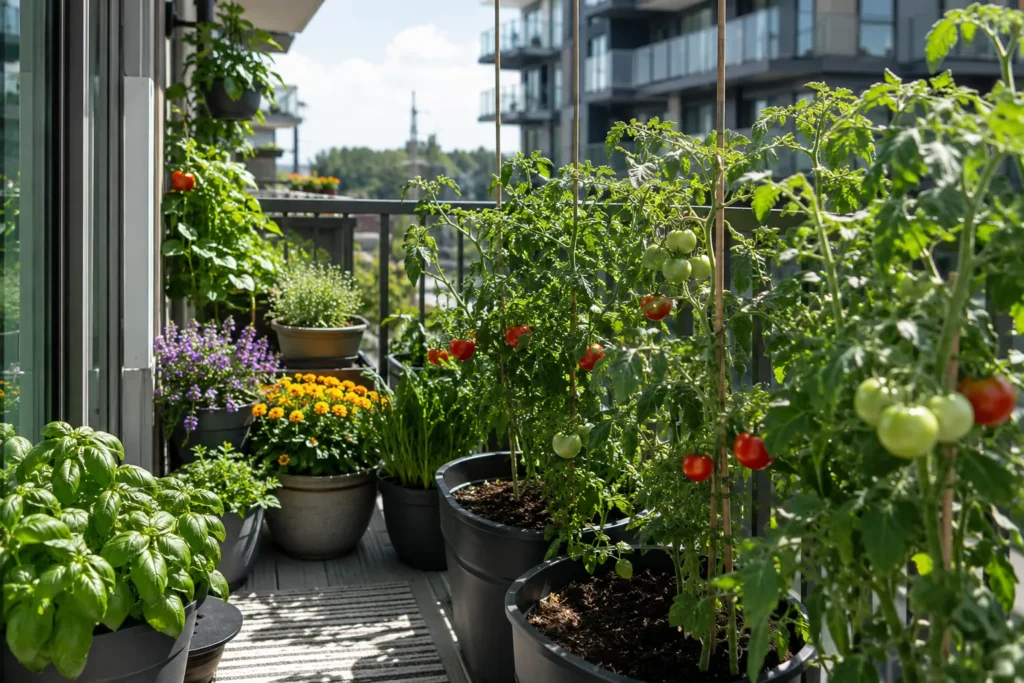
You don’t need a large vegetable garden to grow delicious tomatoes. In fact, many varieties thrive in containers and can produce impressive harvests in surprisingly small spaces.
Container gardening also gives you greater control over soil quality, drainage, and plant placement, making it easier to create the ideal growing conditions.
Container gardening is ideal for patios, balconies, and other small outdoor spaces. If you’re just getting started, our guide to growing vegetables in containers covers the basics for a wide range of edible crops.
Benefits of Growing Tomatoes in Pots
- Perfect for balconies, patios, decks, and courtyards
- Ideal for renters and gardeners with limited space
- Better control over soil quality
- Easier to manage pests and diseases
- Containers can be moved to maximize sunlight
- Improved drainage compared to heavy garden soil
- Harvest fresh tomatoes just steps from your kitchen
If space is limited, growing tomatoes in containers is one of the most rewarding ways to start a productive kitchen garden.
Can You Really Grow Tomatoes in Pots?
Absolutely.
Many gardeners assume tomatoes require a large backyard, but countless varieties have been bred specifically for container growing. Cherry tomatoes, bush tomatoes, and compact patio varieties are especially productive in pots, while larger indeterminate varieties also perform well when given enough root space and sturdy support.
The key is matching the plant to the container. A healthy root system supports vigorous growth, flowering, and fruit production, so choosing the right pot is just as important as selecting the right variety.
Best Tomato Varieties for Pots
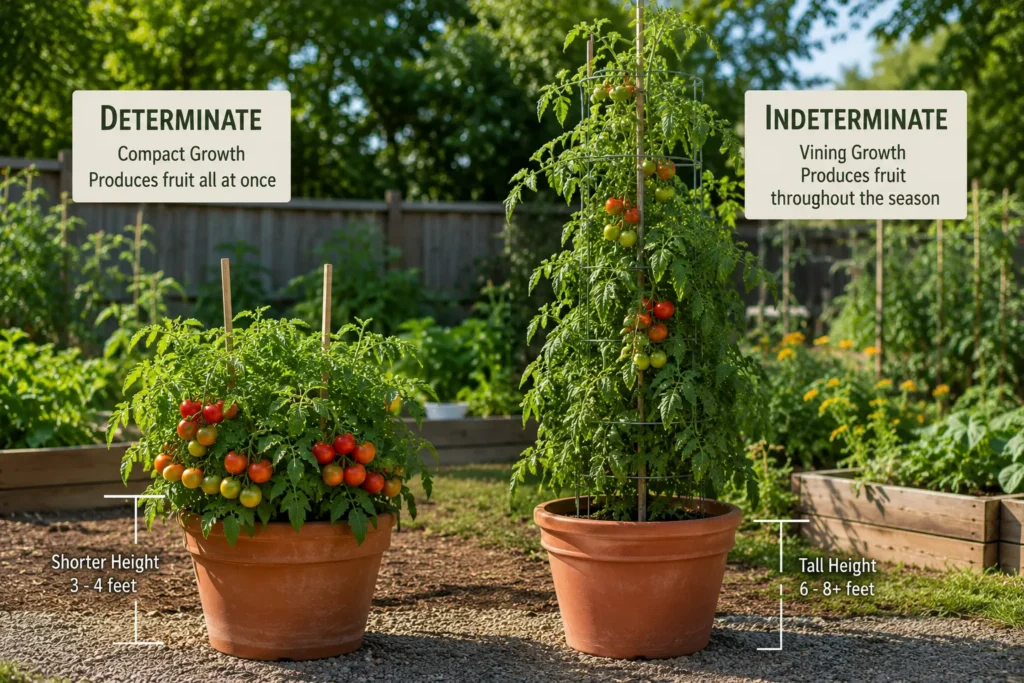
Not all tomatoes perform equally well in containers. Some continue to grow and produce fruit throughout the season, while others remain compact and mature more quickly.
Understanding the difference between determinate and indeterminate tomatoes will help you choose the best variety for your available space.
Determinate Tomatoes
Determinate tomatoes, often called bush tomatoes, grow to a predetermined size before producing most of their fruit over a shorter period.
They’re an excellent choice for beginners because they require less pruning and fit comfortably in medium-sized containers.
Popular determinate varieties include:
- Roma
- Celebrity
- Bush Early Girl
- Patio Princess
- Tiny Tim
Best for
- Small patios
- Balconies
- Beginners
- Compact containers
Indeterminate Tomatoes
Indeterminate tomatoes continue to grow, flower, and produce fruit until cold weather ends the season.
Although they require larger containers and sturdy supports, they often provide a much longer harvest.
Popular indeterminate varieties include:
- Sungold
- Sweet 100
- Better Boy
- Beefsteak
- Brandywine
Best for
- Large containers
- Long growing seasons
- Maximum harvests
Best Tomato Varieties for Containers
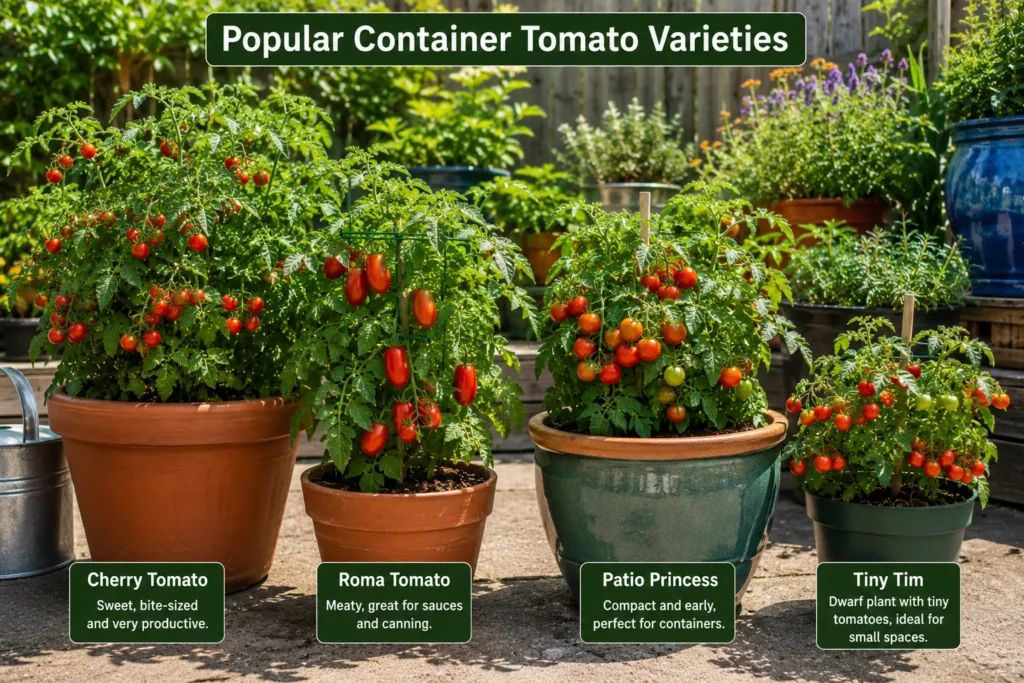
| Variety | Type | Container Size | Best For |
| Tiny Tim | Determinate | 12 inches | Small balconies |
| Patio Princess | Determinate | 14 inches | Patios |
| Roma | Determinate | 16 inches | Sauces |
| Celebrity | Determinate | 18 inches | Beginners |
| Sungold | Indeterminate | 20+ inches | Snacking |
| Sweet 100 | Indeterminate | 20+ inches | Heavy yields |
| Better Boy | Indeterminate | 20–24 inches | Large slicing tomatoes |
Tip: If this is your first time growing tomatoes, start with a cherry tomato variety. They’re generally easier to grow, mature faster, and produce heavily throughout the season.
Choosing the Right Pot
The container you choose has a direct impact on the health and productivity of your tomato plants.
Small pots dry out quickly and restrict root growth, leading to stressed plants and lower yields. A larger container holds more moisture, provides better insulation against temperature swings, and gives roots plenty of room to expand.
What Size Pot Do Tomatoes Need?
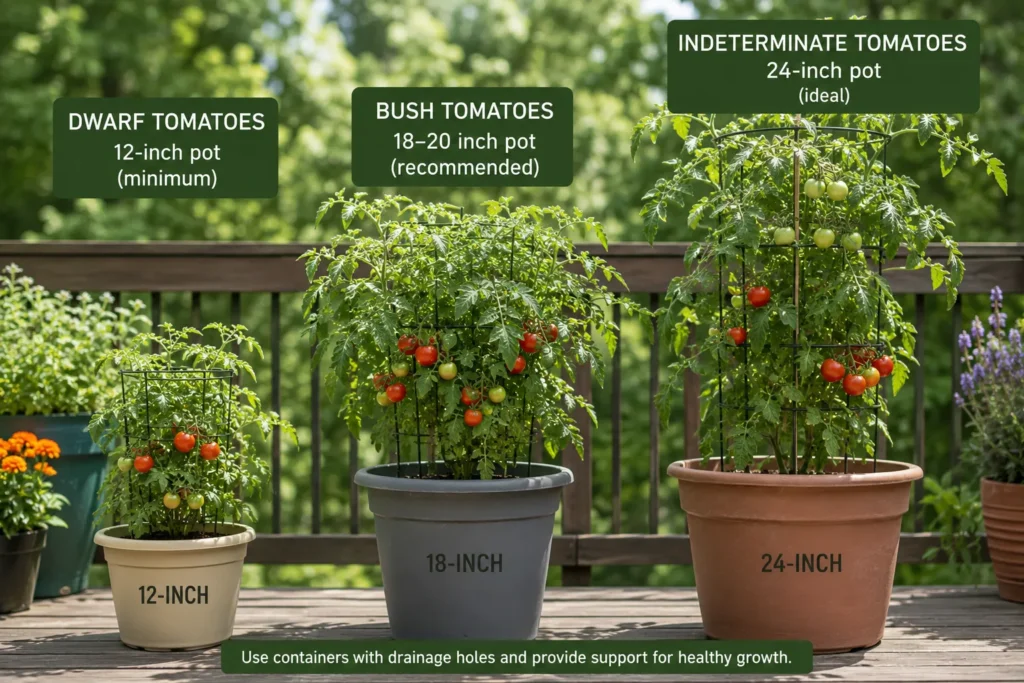
As a general rule, the larger the pot, the healthier your tomato plant will be.
Recommended Pot Sizes
| Tomato Type | Minimum Pot Size |
| Dwarf varieties | 12 inches (30 cm) |
| Bush tomatoes | 14–16 inches (35–40 cm) |
| Standard determinate | 18 inches (45 cm) |
| Indeterminate tomatoes | 20–24 inches (50–60 cm) |
Larger containers also reduce how often you’ll need to water during hot summer weather.
Best Types of Containers
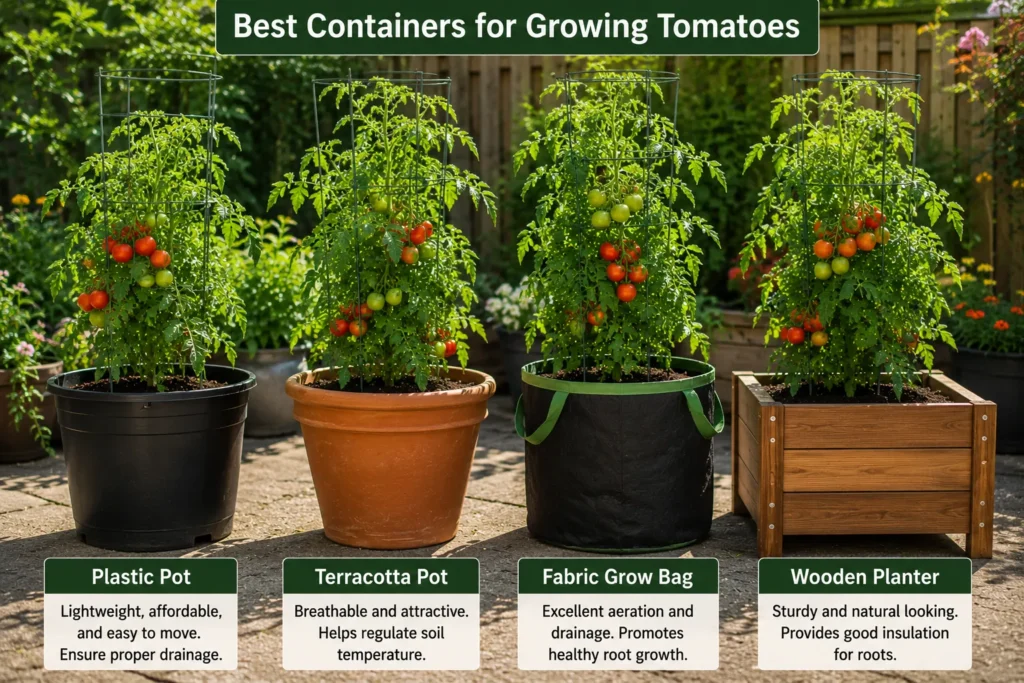
Tomatoes can be grown successfully in many different types of containers, provided they offer adequate drainage.
Plastic Pots
Pros
- Lightweight
- Affordable
- Retain moisture well
Cons
- Can overheat in direct sunlight
- Less durable than heavier materials
Terracotta Pots
Pros
- Attractive appearance
- Excellent airflow around roots
Cons
- Dry out more quickly
- Heavy to move
Fabric Grow Bags
Fabric grow bags have become increasingly popular among vegetable gardeners.
Advantages include:
- Excellent drainage
- Improved root aeration
- Reduced risk of root circling
- Lightweight and easy to store
Because grow bags lose moisture faster than rigid containers, they usually require more frequent watering during warm weather.
Wooden Planters
Wooden containers provide excellent insulation for roots and blend naturally into garden landscapes.
Use untreated or food-safe wood whenever possible, especially for edible crops.
Drainage Is Essential
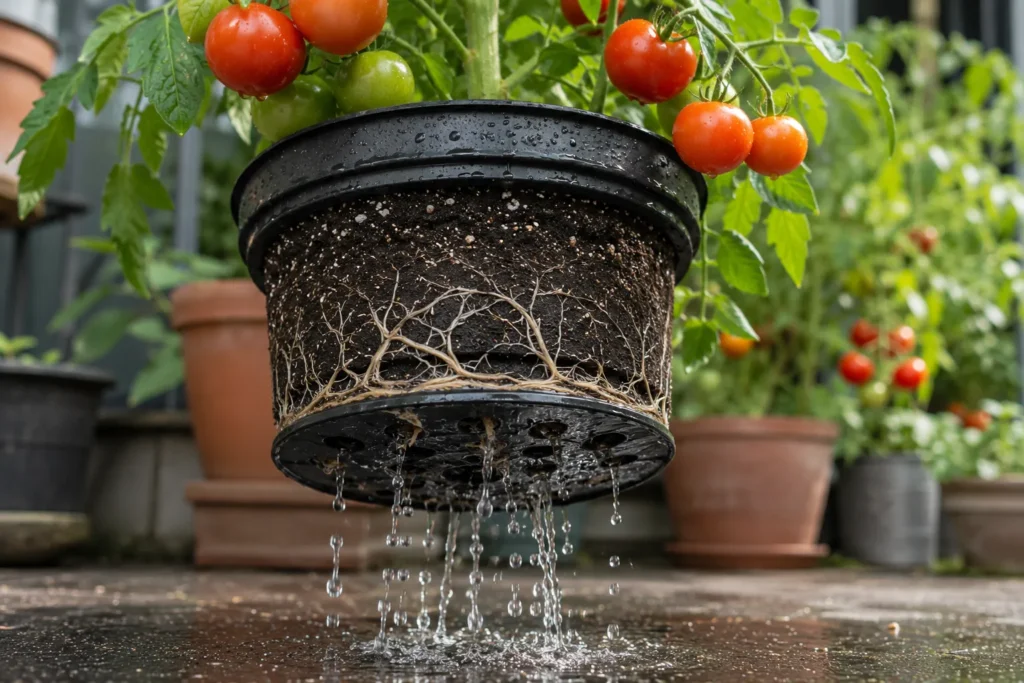
No matter which container you choose, drainage holes are non-negotiable.
Standing water deprives roots of oxygen and greatly increases the risk of root rot, nutrient deficiencies, and yellowing leaves.
Before planting, check that:
- Every container has multiple drainage holes.
- Water drains freely after watering.
- Excess water doesn’t collect beneath the pot for extended periods.
If you’re new to container gardening, our guide to growing vegetables in containers explains how to choose the right pots, potting mix, and watering routine for healthy, productive plants.
Planting Tomatoes in Pots the Right Way
Once you’ve chosen the right tomato variety and container, the next step is giving your plant the best possible start. Healthy roots develop quickly when they’re planted in quality potting mix, watered correctly, and placed in the right location.
Follow these steps to set your tomato plants up for a productive growing season.
Best Soil for Growing Tomatoes in Pots
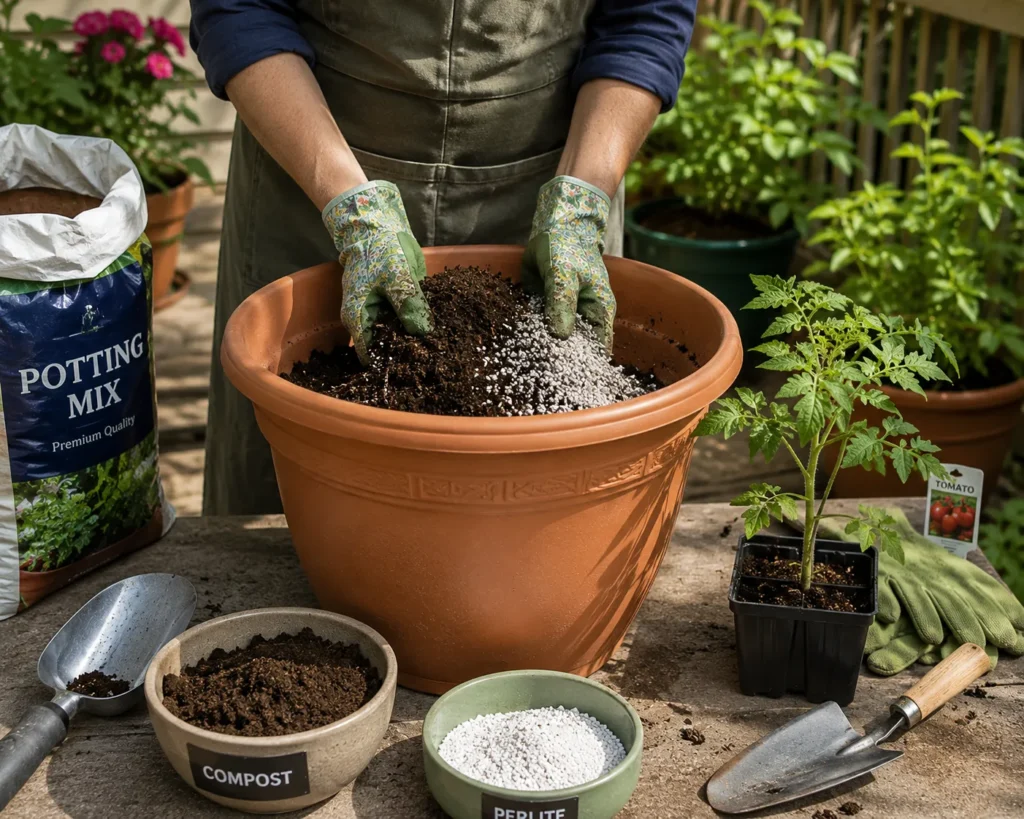
One of the biggest mistakes beginners make is filling containers with ordinary garden soil.
Garden soil becomes compacted in pots, drains poorly, and may contain weed seeds, pests, or disease-causing organisms. Instead, use a high-quality potting mix designed for vegetables or containers.
What Makes a Good Potting Mix?
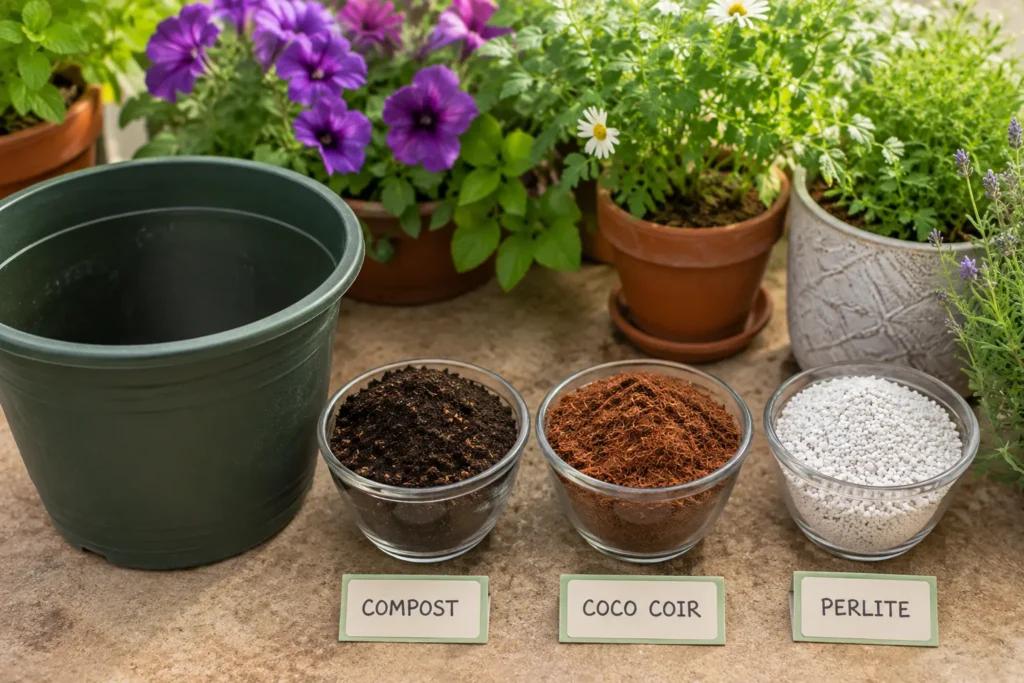
A quality potting mix should:
- Drain well without drying out too quickly.
- Retain enough moisture for healthy root growth.
- Be light and airy to encourage root development.
- Contain organic matter for nutrients.
- Have a slightly acidic pH of 6.0–6.8, which tomatoes prefer.
A Simple Potting Mix Recipe
If you prefer to make your own, combine:
| Ingredient | Amount |
| High-quality compost | 40% |
| Coco coir or peat moss | 40% |
| Perlite or coarse vermiculite | 20% |
This mix provides excellent drainage while holding enough moisture to support steady growth.
Tip: Refresh the potting mix each growing season rather than reusing old soil, which may harbor diseases and depleted nutrients
Should You Add Compost?
Yes. Compost improves soil structure, boosts beneficial microbes, and provides a slow release of nutrients.
Mix a few handfuls of well-rotted compost into your potting mix before planting. Avoid using fresh manure, as it can burn young roots and encourage excessive leafy growth.
When to Plant Tomatoes in Pots
Tomatoes are warm-season plants that dislike cold weather.
Wait until:
- The danger of frost has passed.
- Night temperatures remain above 50°F (10°C).
- Daytime temperatures are consistently warm.
Planting too early often results in slow growth and transplant shock.
If you’re planning your seasonal vegetable garden, our guide to the best summer vegetables to grow can help you choose other crops that thrive alongside tomatoes.
How to Plant Tomatoes in Pots
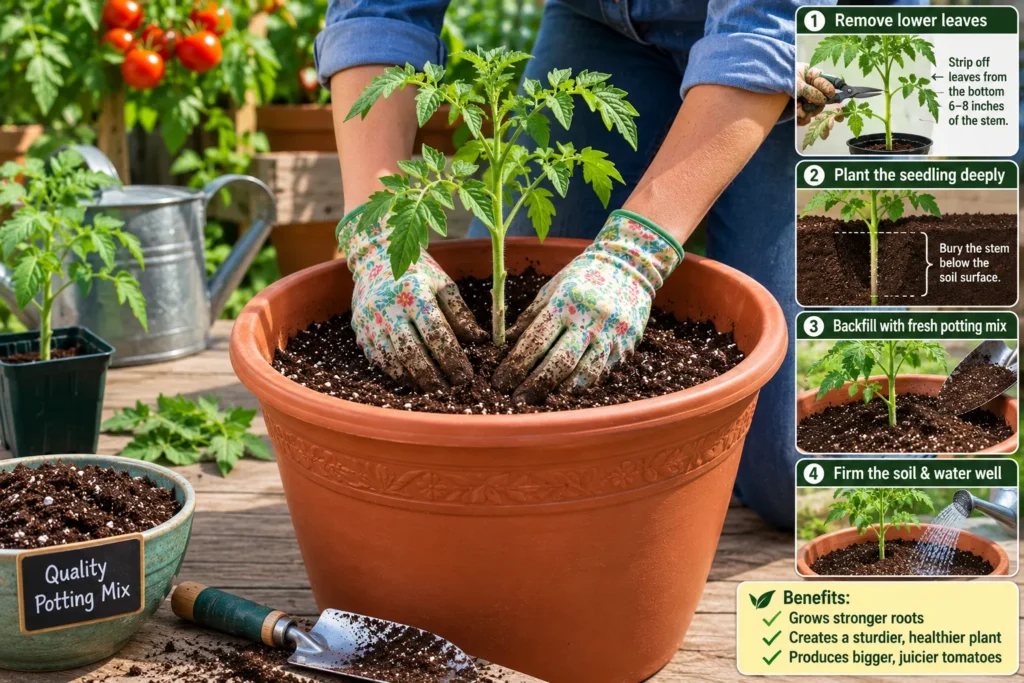
Planting tomatoes correctly is one of the easiest ways to encourage a strong, healthy root system.
Unlike many vegetables, tomatoes can develop roots along their buried stems. Planting them deeply helps produce a sturdier plant with better access to water and nutrients.
Step 1: Prepare the Container
Fill your container with potting mix until it’s about 2–3 inches (5–7 cm) below the rim. This gap makes watering easier and prevents soil from washing over the edge.
Water the potting mix lightly before planting so it’s evenly moist but not soggy.
Step 2: Remove the Lower Leaves
If your tomato seedling is tall, gently remove the lowest set of leaves.
The bare section of stem can then be buried, allowing new roots to develop underground.
Step 3: Plant Deeply
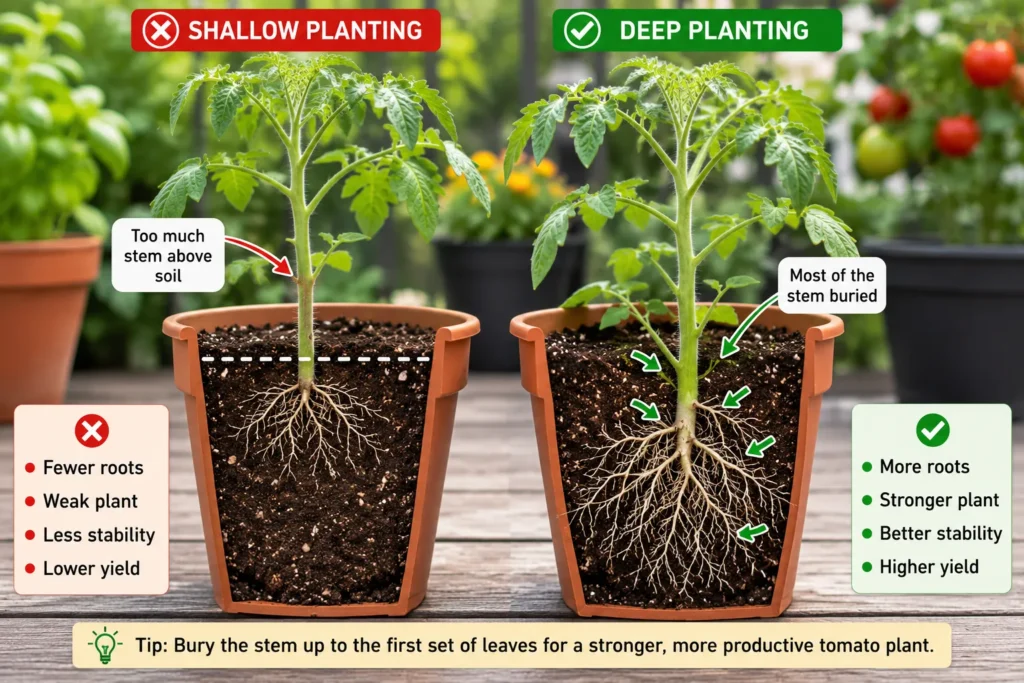
Place the seedling into the container and bury the stem up to the first set of healthy leaves.
A deeper planting creates:
- A stronger root system
- Better drought tolerance
- Improved plant stability
- Increased nutrient uptake
Step 4: Firm the Soil
Gently press the potting mix around the base of the plant to remove large air pockets without compacting the soil.
The soil should feel firm enough to support the plant while remaining loose enough for roots to grow freely.
Step 5: Water Thoroughly
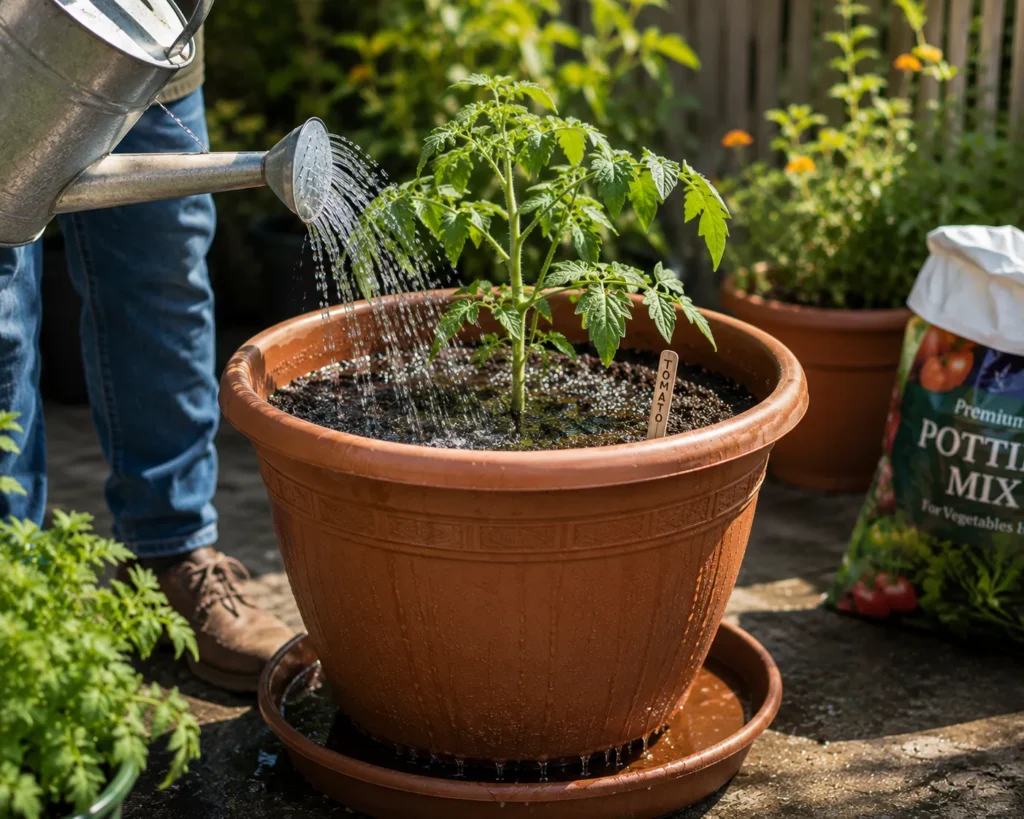
Water slowly until excess water drains from the bottom of the container.
This helps settle the potting mix around the roots and ensures the entire root ball is evenly moist.
Yellow leaves are often caused by inconsistent watering, nutrient deficiencies, or disease. Learn how to diagnose the problem in our guide to why tomato plant leaves turn yellow.
Where Should You Place Your Tomato Pots?
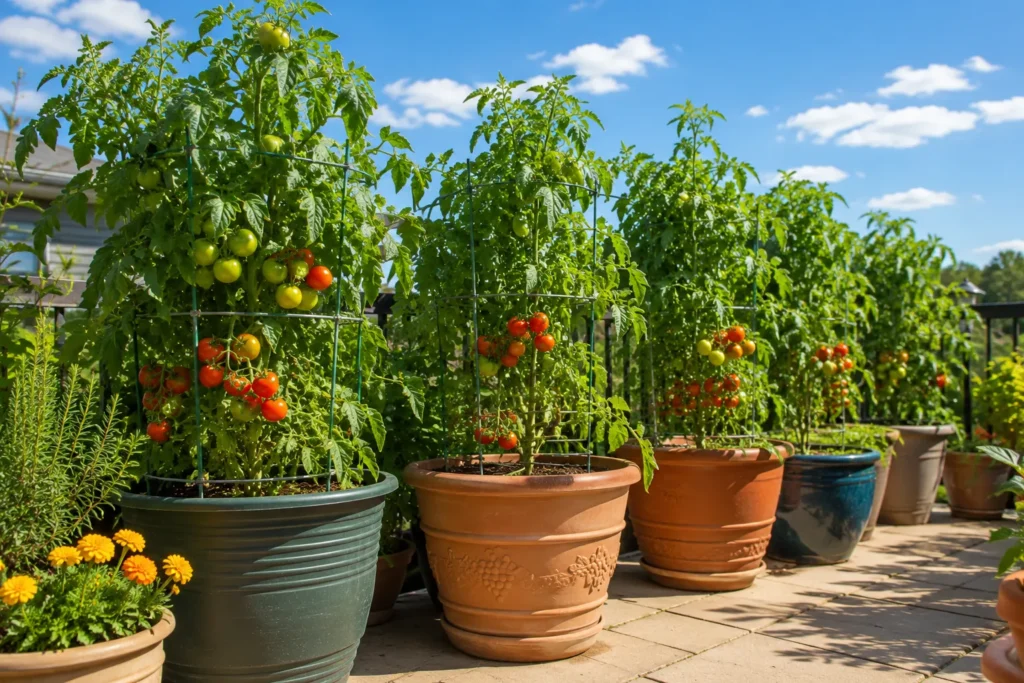
Location is just as important as soil and watering.
Tomatoes thrive in full sun and need plenty of direct light to produce flowers and fruit.
Sunlight Requirements
Aim for:
- 6–8 hours of direct sunlight every day (minimum)
- 8–10 hours for the highest yields
South-facing locations are usually ideal, especially in cooler climates.
If your tomatoes receive too little sunlight, you may notice:
- Leggy growth
- Fewer flowers
- Small fruit
- Slow ripening
- Reduced harvests
If your outdoor space is mostly shaded, consider growing some vegetables that grow in shade, as tomatoes generally perform best in sunny locations.
Should You Rotate Containers?
Yes, if one side of the plant receives more sunlight than the other.
Turn the pot about a quarter turn every week to encourage even growth. This is particularly helpful for balcony and patio gardens where sunlight may come from one direction.
Mulching Tomatoes in Pots
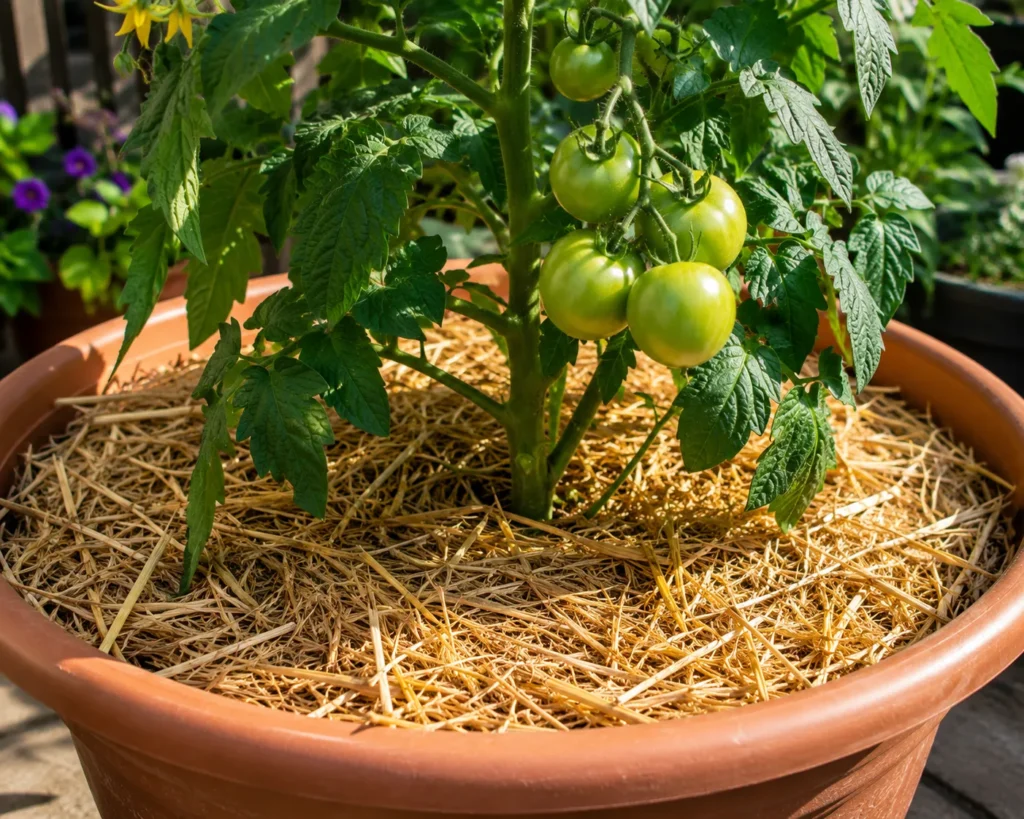
Many gardeners think mulch is only useful in garden beds, but it’s just as valuable for container-grown tomatoes.
A layer of organic mulch helps:
- Reduce moisture loss
- Keep roots cooler during hot weather
- Suppress weeds
- Minimize soil splash, which can spread disease
Apply a 2–3 inch (5–7 cm) layer of:
- Straw
- Shredded leaves
- Fine bark
- Compost
Keep mulch a small distance away from the stem to prevent excess moisture around the base of the plant.
Should You Add Support at Planting Time?
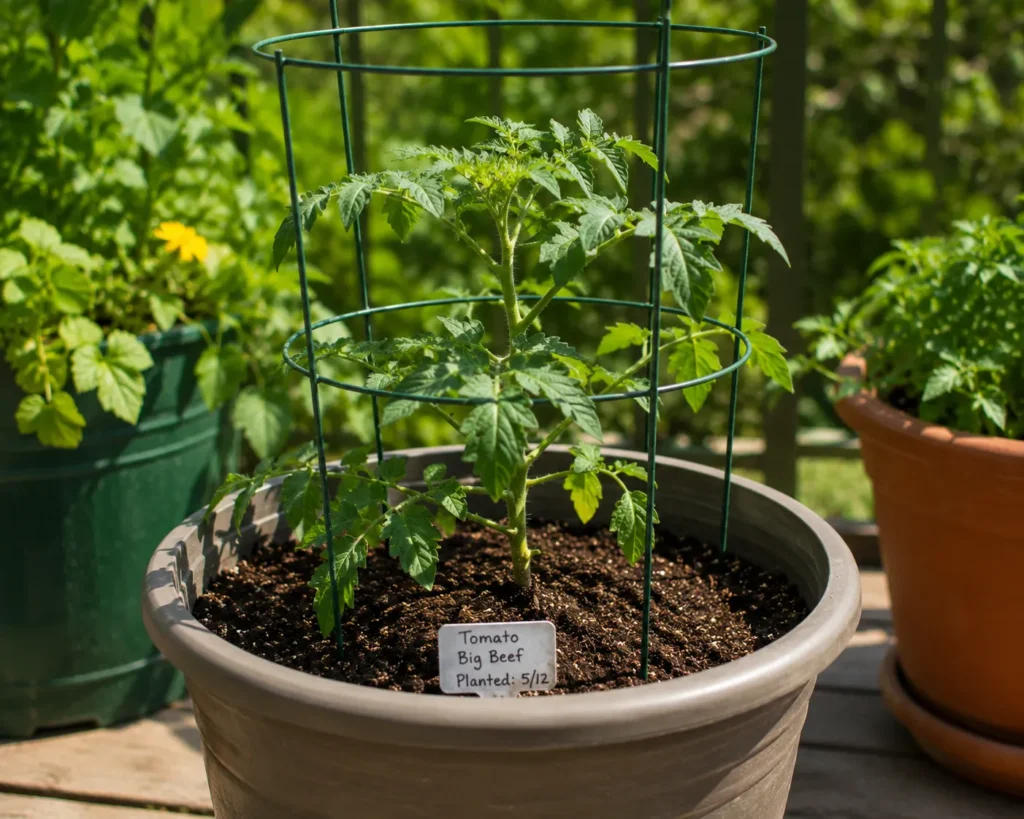
Yes.
Install a support when you plant your tomato rather than waiting until it grows larger. Adding stakes or cages later can damage the roots.
Good support options include:
- Tomato cages
- Bamboo stakes
- Spiral stakes
- Small trellises
Indeterminate tomatoes almost always need sturdy support, while many compact determinate varieties benefit from light staking as fruit develops.
How Many Tomato Plants Can You Grow in One Pot?
The answer depends on the size of the container, but in most cases:
One pot = One tomato plant
Even in large containers, growing multiple tomato plants together increases competition for water, nutrients, and sunlight.
| Container Size | Number of Plants |
| 12–16 inches | 1 dwarf tomato |
| 18–24 inches | 1 standard tomato |
| Large raised planter | Space plants according to variety |
Growing one healthy plant almost always produces a better harvest than overcrowding several plants into one container.
Common Planting Mistakes to Avoid
Avoid these common beginner mistakes to give your tomatoes the best chance of success:
- Using garden soil instead of potting mix
- Choosing a container that’s too small
- Planting before the last frost
- Burying the stem too shallowly
- Forgetting drainage holes
- Placing pots in too much shade
- Planting more than one tomato in a small container
- Waiting too long to install a support
Correct planting techniques help reduce stress and encourage stronger, more productive plants throughout the season.
Expert Tips for Healthy Container Tomatoes
- Water newly planted tomatoes immediately after transplanting.
- Place containers where they’ll receive the most consistent sunlight.
- Raise pots slightly off the ground with pot feet or bricks to improve drainage.
- Use clean containers each season to reduce the risk of disease.
- Leave enough space between pots to promote good air circulation.
Caring for Tomatoes in Pots
Once your tomatoes are planted, consistent care is the key to healthy growth and a productive harvest. Container-grown tomatoes dry out faster than those grown in the ground, so regular watering, feeding, and support are essential throughout the season.
How Often Should You Water Tomatoes in Pots?
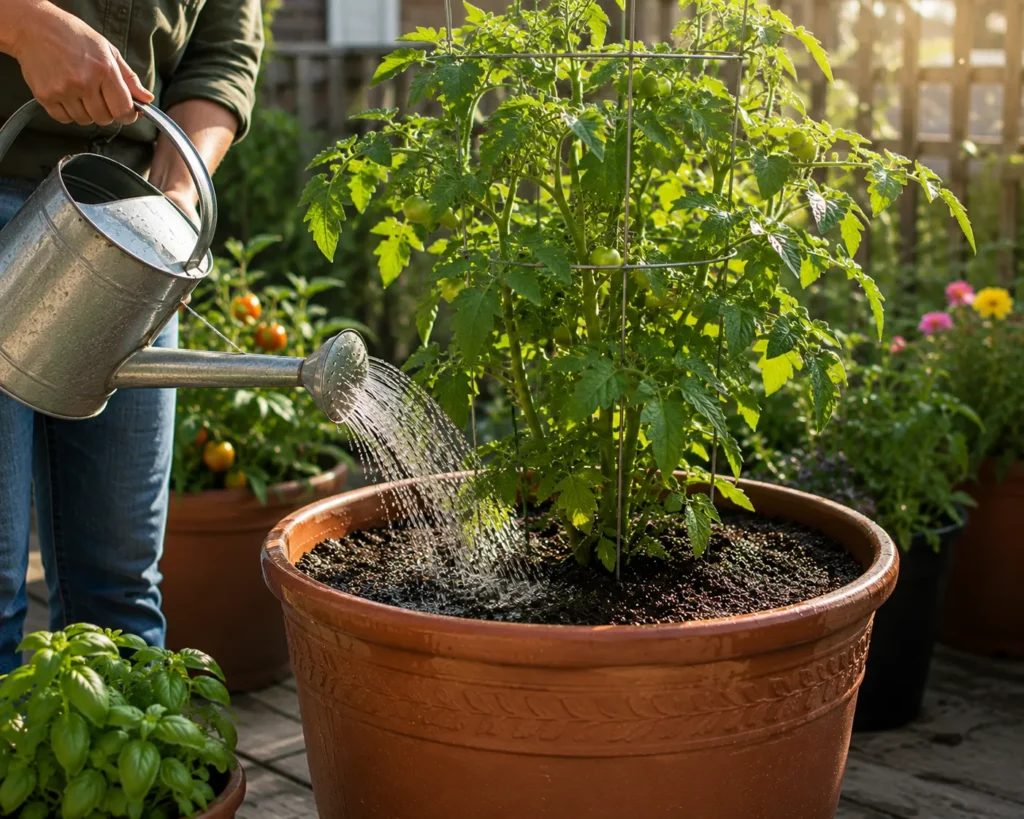
Watering is one of the most important aspects of growing tomatoes in containers. Because pots hold less soil than garden beds, they lose moisture much faster, especially during hot, windy weather.
The goal is to keep the soil consistently moist, not constantly wet or completely dry.
General Watering Guide
| Weather | Watering Frequency |
| Cool spring | Every 2–3 days |
| Mild summer | Every 1–2 days |
| Hot weather (85°F+/29°C+) | Daily, sometimes twice a day |
| Rainy periods | Water only when needed |
These are general guidelines. Always check the soil before watering rather than following a fixed schedule.
How to Check Soil Moisture
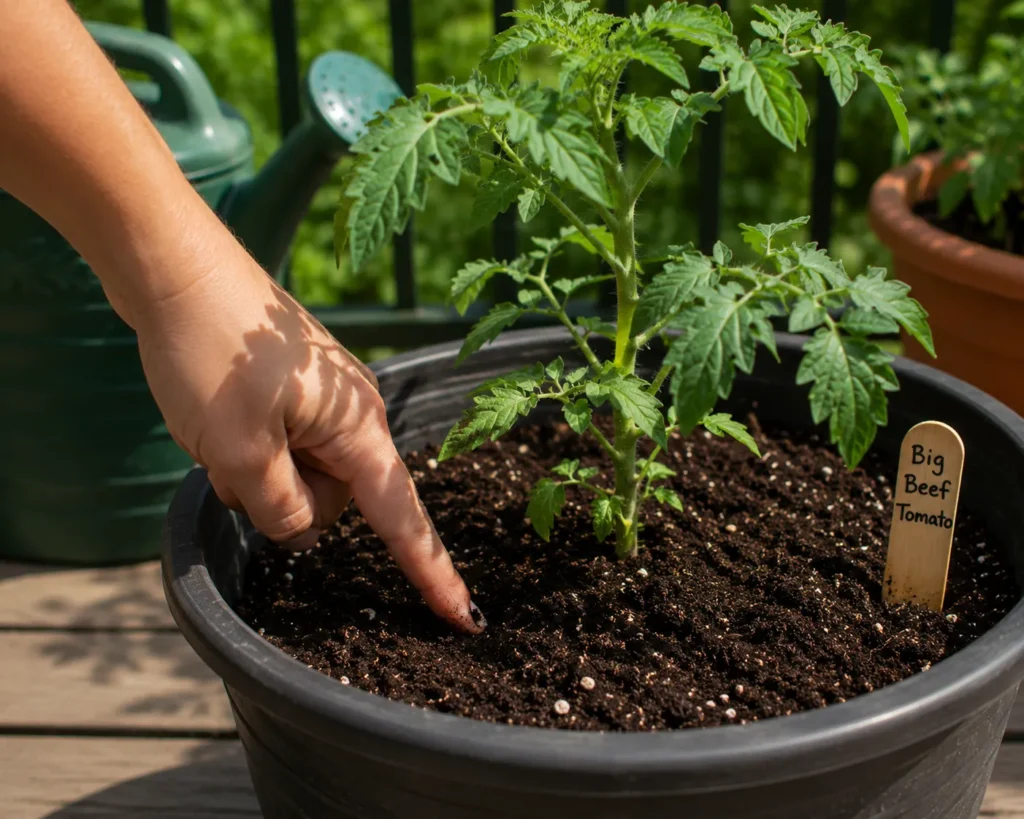
The easiest method is the finger test.
Insert your finger about 1–2 inches (2.5–5 cm) into the potting mix.
- Dry? Water thoroughly.
- Slightly moist? Wait another day.
- Wet? Don’t water yet.
This simple habit helps prevent both overwatering and underwatering.
How to Water Tomato Plants Properly
When watering:
- Water slowly at the base of the plant.
- Continue until water drains from the bottom.
- Avoid wetting the leaves whenever possible.
- Water early in the morning.
Morning watering allows excess moisture on the foliage to dry quickly, reducing the risk of fungal diseases.
Avoid frequent light watering. Deep watering encourages roots to grow deeper into the pot, creating stronger, more drought-resistant plants.
Signs Your Tomato Needs More Water
Watch for these symptoms:
- Wilting during the morning
- Dry potting mix
- Curling leaves
- Blossom drop
- Small or cracked fruit
- Slowed growth
If the plant perks up within a few hours of watering, lack of moisture was likely the cause.
Signs of Overwatering
Too much water can be just as harmful as too little.
Common symptoms include:
- Yellow lower leaves
- Constantly wet soil
- Wilting despite moist soil
- Slow growth
- Mushy stems
- Root rot in severe cases
If your tomato develops yellow leaves, our guide on why tomato plant leaves turn yellow explains how to identify whether watering, nutrient deficiencies, pests, or disease are responsible.
Fertilizing Tomatoes in Pots
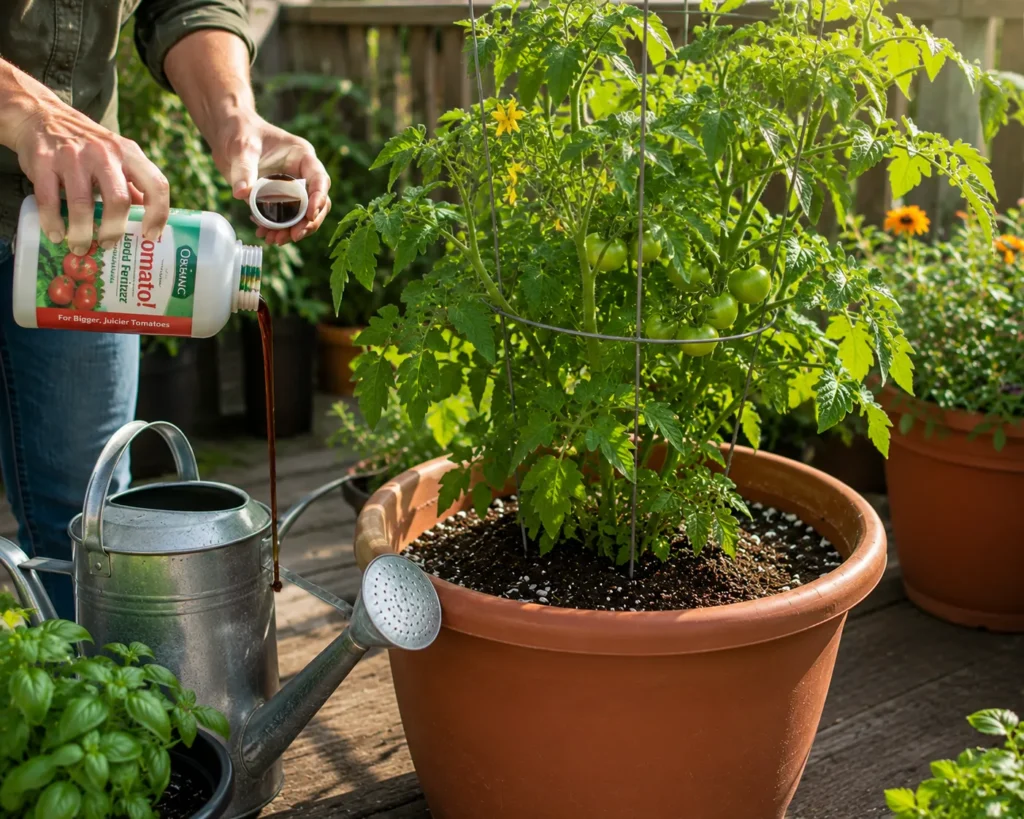
Tomatoes are heavy feeders. Since nutrients gradually wash out of containers with frequent watering, regular fertilizing is essential.
A healthy feeding schedule encourages:
- Strong root growth
- Healthy foliage
- Continuous flowering
- Better fruit production
- Improved flavor
Which Fertilizer Is Best?
Choose a fertilizer designed specifically for tomatoes or fruiting vegetables. If you’re unsure which product to use, our guide to the best fertilizer for tomatoes explains the ideal NPK ratios, fertilizer types, and feeding schedule for healthy, productive plants.
Look for one that contains:
- Nitrogen (N)
- Phosphorus (P)
- Potassium (K)
- Calcium
- Magnesium
- Essential micronutrients
Early in the season, slightly higher nitrogen supports leafy growth. Once flowers appear, a fertilizer with higher phosphorus and potassium helps encourage flowering and fruit development.
Tomato Fertilizing Schedule
| Plant Stage | Fertilizer |
| At planting | Mix compost into the potting mix |
| 2–3 weeks after planting | Balanced tomato fertilizer |
| Flowering | Continue feeding every 2 weeks |
| Fruit production | Tomato fertilizer every 1–2 weeks |
Always follow the manufacturer’s instructions, as different fertilizers vary in strength.
Should You Use Liquid or Granular Fertilizer?
Both work well.
Liquid Fertilizer
Advantages
- Fast nutrient absorption
- Easy to apply
- Ideal for containers
Granular Fertilizer
Advantages
- Longer-lasting nutrients
- Less frequent applications
- Convenient for busy gardeners
Many experienced gardeners combine slow-release fertilizer with occasional liquid feeding during peak fruit production.
Do Tomatoes Need Calcium?
Yes.
Calcium supports healthy fruit development and helps prevent blossom end rot, a common problem that causes dark, sunken patches on the bottom of tomatoes.
However, calcium deficiencies are often caused by inconsistent watering, not a lack of calcium in the soil.
Maintaining even soil moisture is one of the best ways to prevent blossom end rot.
Should You Prune Tomato Plants?
The answer depends on the variety.
Determinate Tomatoes
Determinate (bush) tomatoes require very little pruning.
Simply remove:
- Dead leaves
- Yellow foliage
- Diseased growth
Avoid heavy pruning, as these plants produce most of their fruit over a shorter period.
Indeterminate Tomatoes
Indeterminate tomatoes benefit from regular pruning.
This improves:
- Air circulation
- Sunlight penetration
- Fruit size
- Disease prevention
What Are Tomato Suckers?
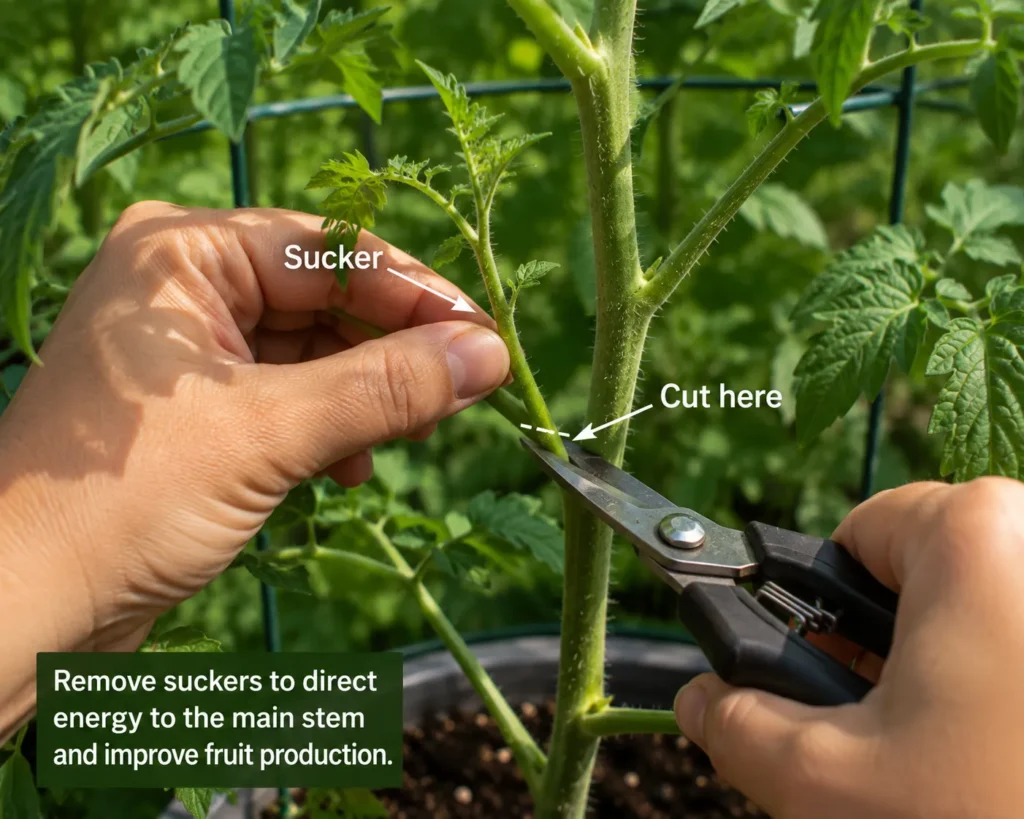
Suckers are small shoots that grow between the main stem and a leaf branch.
If left in place, they eventually develop into additional stems.
Many gardeners remove some suckers from indeterminate varieties to focus the plant’s energy on fruit production rather than excessive leafy growth.
Don’t remove every sucker, moderate pruning usually produces the best balance between growth and yield.
Supporting Tomato Plants
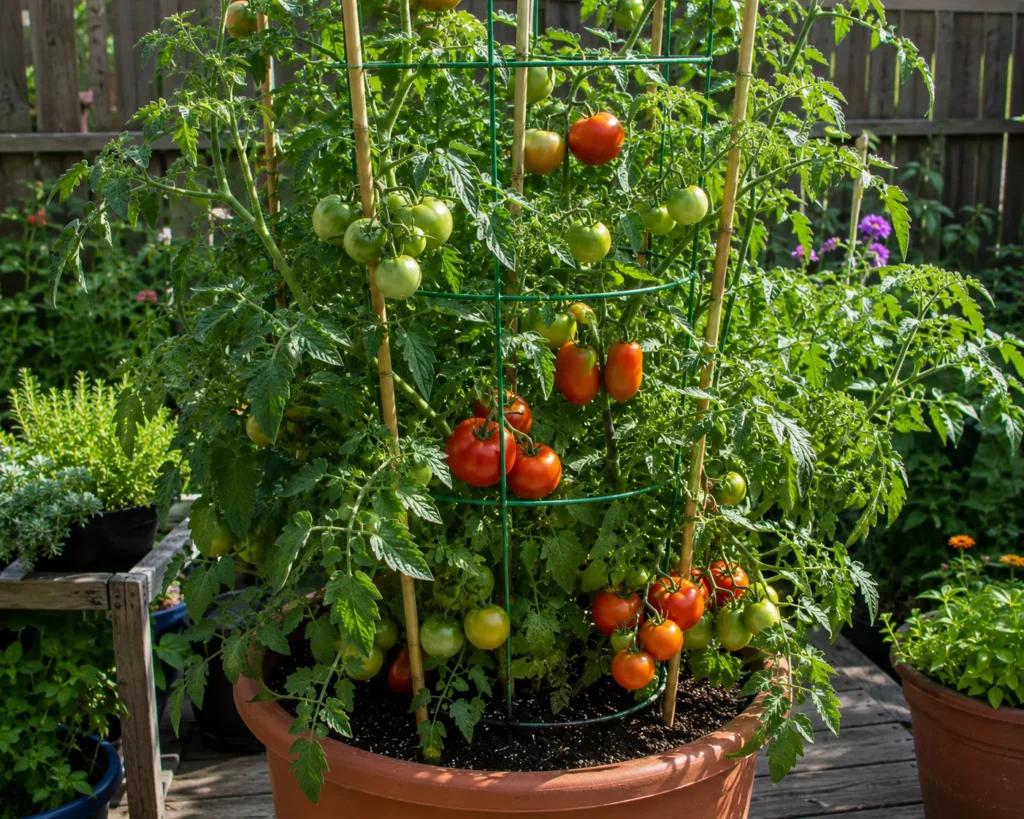
As tomato plants grow and begin producing fruit, their stems become heavier.
Providing support helps:
- Prevent broken stems
- Improve airflow
- Keep fruit off the soil
- Make harvesting easier
Tomato Cages
Best for:
- Determinate tomatoes
- Bush varieties
Advantages:
- Easy to install
- Minimal maintenance
- Supports fruit naturally
Stakes
Best for:
- Indeterminate tomatoes
Use:
- Wooden stakes
- Bamboo canes
- Metal stakes
Tie stems loosely with soft garden ties as the plant grows.
Trellises
Ideal for:
- Large containers
- Patios
- Raised planters
Trellises save space while keeping plants upright and well-ventilated.
Pollinating Tomatoes in Pots
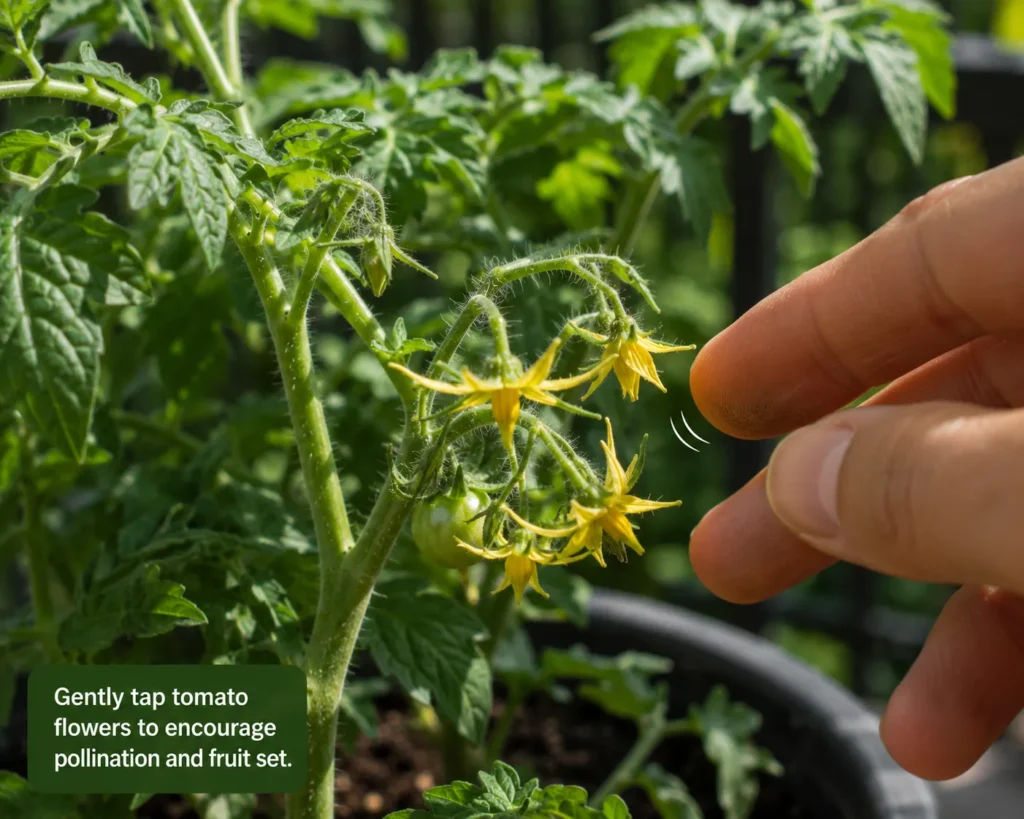
Tomatoes are self-pollinating, meaning each flower contains both male and female parts.
Outdoors, wind and bees usually do the work.
On sheltered balconies, patios, or greenhouses, gently shake the flowering stems every few days or tap the flower clusters lightly to encourage pollen transfer.
This simple step can improve fruit set, especially during calm weather.
Why Are My Tomato Flowers Falling Off?
Flower drop is common but usually temporary.
Possible causes include:
- High temperatures
- Cold nights
- Inconsistent watering
- Poor pollination
- Excess nitrogen fertilizer
- Plant stress
Correcting the underlying issue often restores normal fruit production.
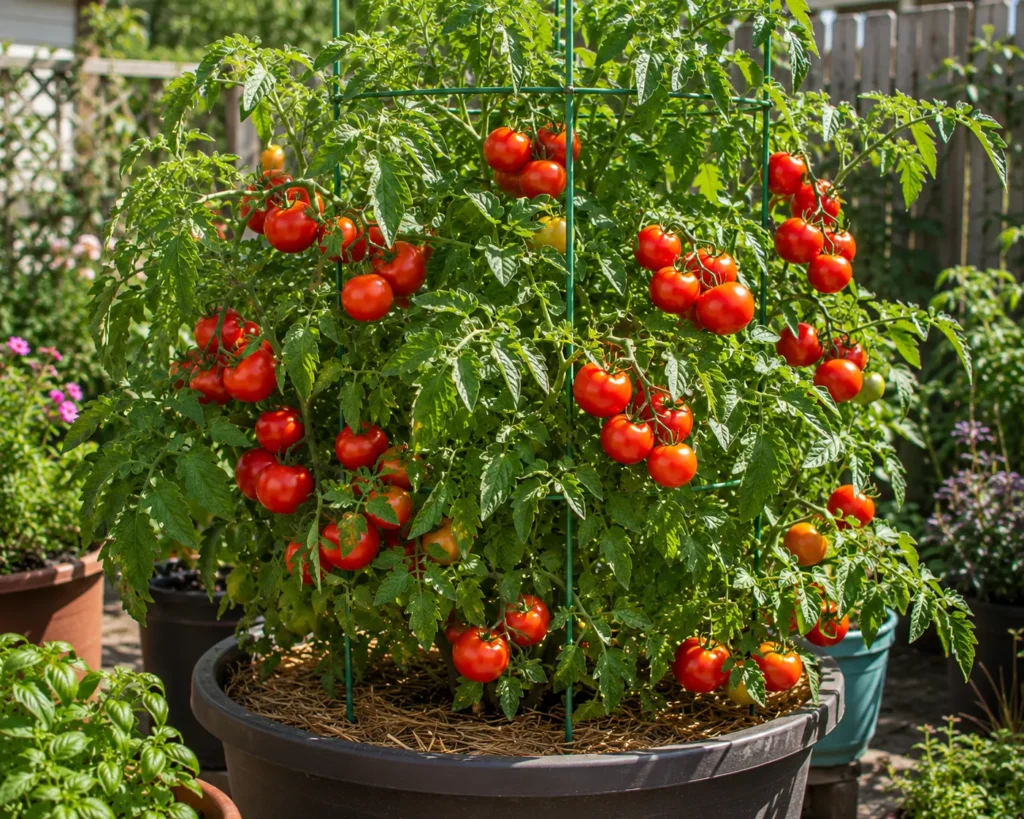
How to Encourage More Tomatoes: To maximise your harvest:
- Provide at least 6–8 hours of direct sunlight.
- Water consistently.
- Feed regularly with a tomato fertilizer.
- Harvest ripe fruit promptly.
- Remove damaged leaves.
- Support plants properly.
- Avoid overcrowding containers.
Healthy plants continue producing flowers and fruit throughout the growing season.
Common Care Mistakes
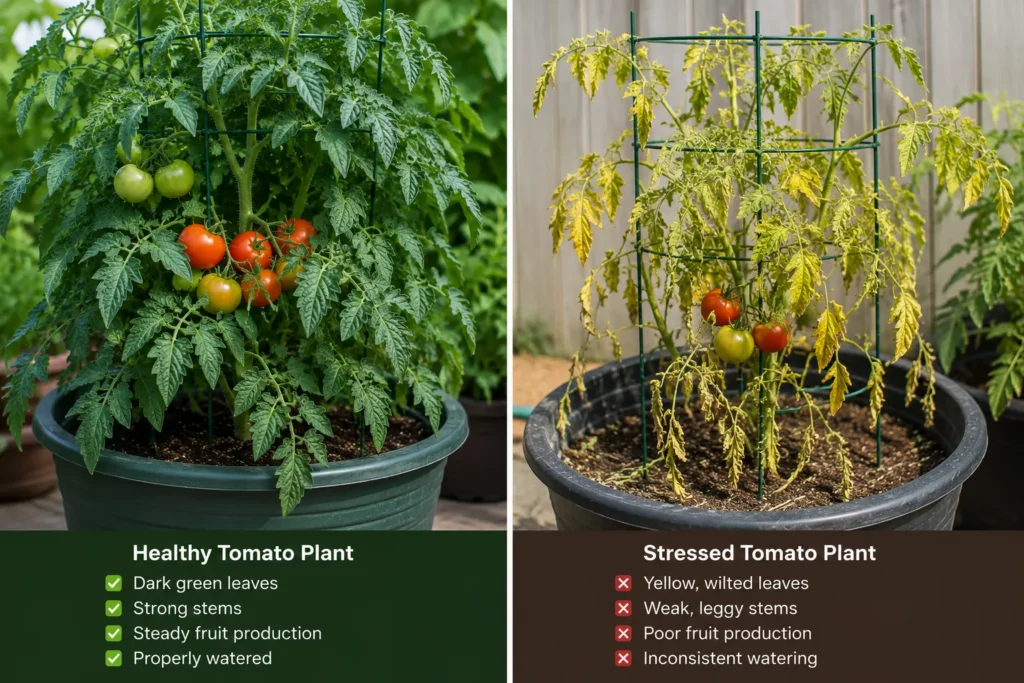
Many beginner problems can be avoided by steering clear of these common mistakes:
- Using containers that are too small
- Letting the soil dry out completely
- Overwatering
- Forgetting to fertilize
- Growing tomatoes in too much shade
- Over-pruning determinate varieties
- Ignoring pests and diseases
- Delaying support until plants become heavy
A little regular maintenance goes a long way toward producing healthy, productive plants.
Common Problems When Growing Tomatoes in Pots
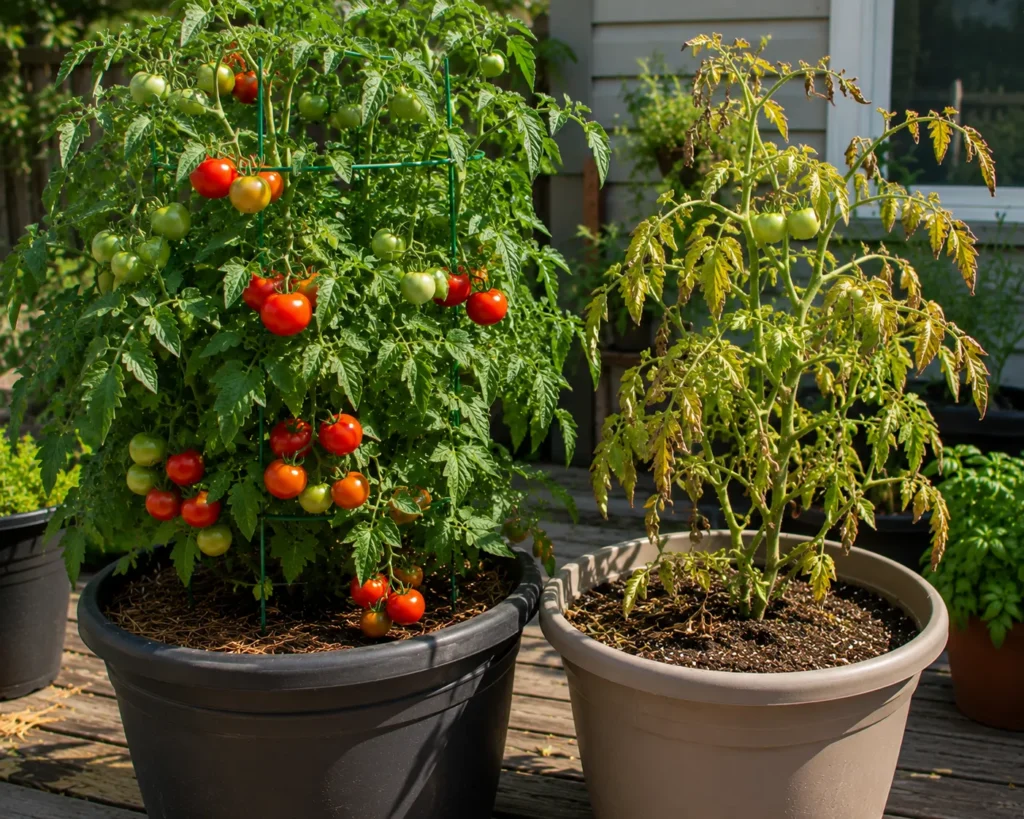
Container-grown tomatoes often experience the same challenges as garden-grown plants, but watering and nutrient-related problems are generally more common because pots dry out faster.
1. Yellow Leaves
Yellow leaves don’t always mean your tomato plant is dying.
Common causes include:
- Overwatering
- Underwatering
- Natural aging
- Nitrogen deficiency
- Magnesium deficiency
- Poor drainage
- Early blight or other diseases
What to do
- Check the soil moisture first.
- Inspect leaves for spots, insects, or mold.
- Remove completely yellow or diseased leaves.
- Correct watering or nutrient problems promptly.
For a complete diagnosis, read our guide on why tomato plant leaves turn yellow.
2. Blossom End Rot
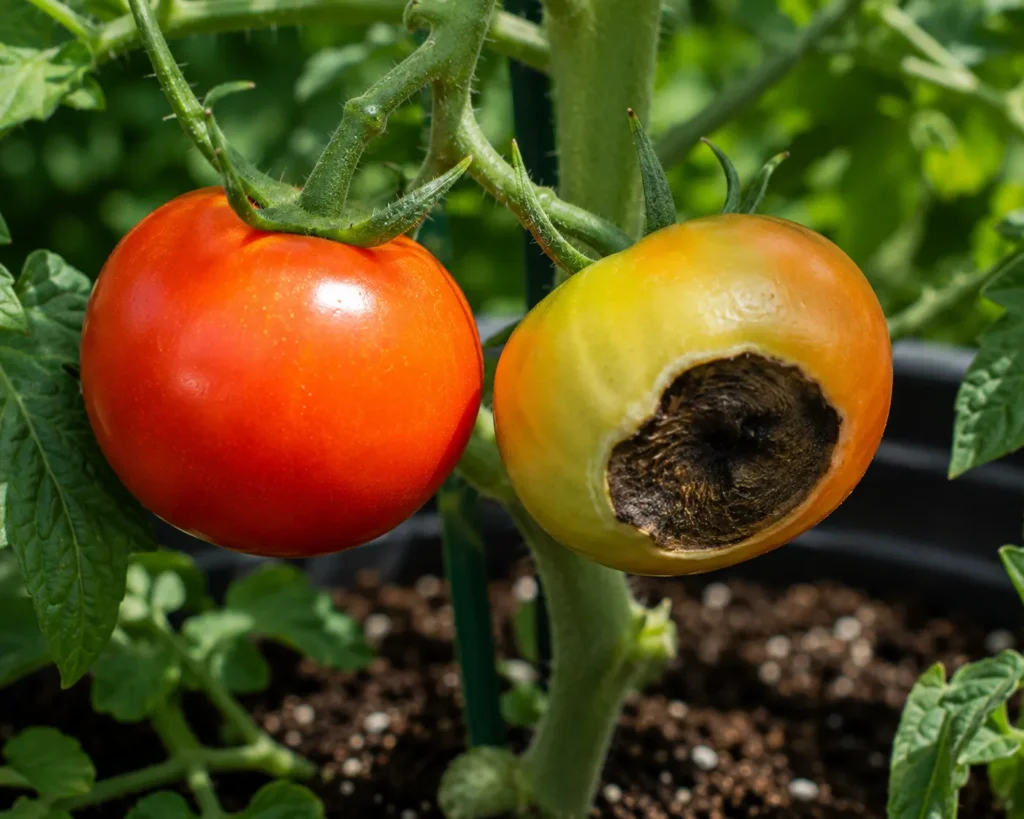
Blossom end rot appears as a dark, sunken patch on the bottom of developing fruit.
Causes
- Inconsistent watering
- Poor calcium uptake
- Root stress
How to Prevent It
- Water consistently.
- Avoid allowing the soil to dry out completely.
- Use quality potting mix.
- Mulch the surface of the container.
3. Leaf Curl
Leaves may curl upward or inward during periods of stress.
Common causes include:
- Heat
- Wind
- Inconsistent watering
- Transplant shock
- Aphids
Mild leaf curl is usually temporary and doesn’t significantly affect production.
4. Flowers Drop Without Producing Fruit
Possible causes include:
- Temperatures above 90°F (32°C)
- Cold nights below 55°F (13°C)
- Poor pollination
- Too much nitrogen
- Water stress
Maintaining consistent growing conditions usually resolves the problem.
5. Cracked Tomatoes
Fruit often cracks after heavy watering following a dry period.
Prevention
- Water regularly.
- Harvest ripe fruit promptly.
- Mulch containers to maintain even soil moisture.
Common Tomato Pests
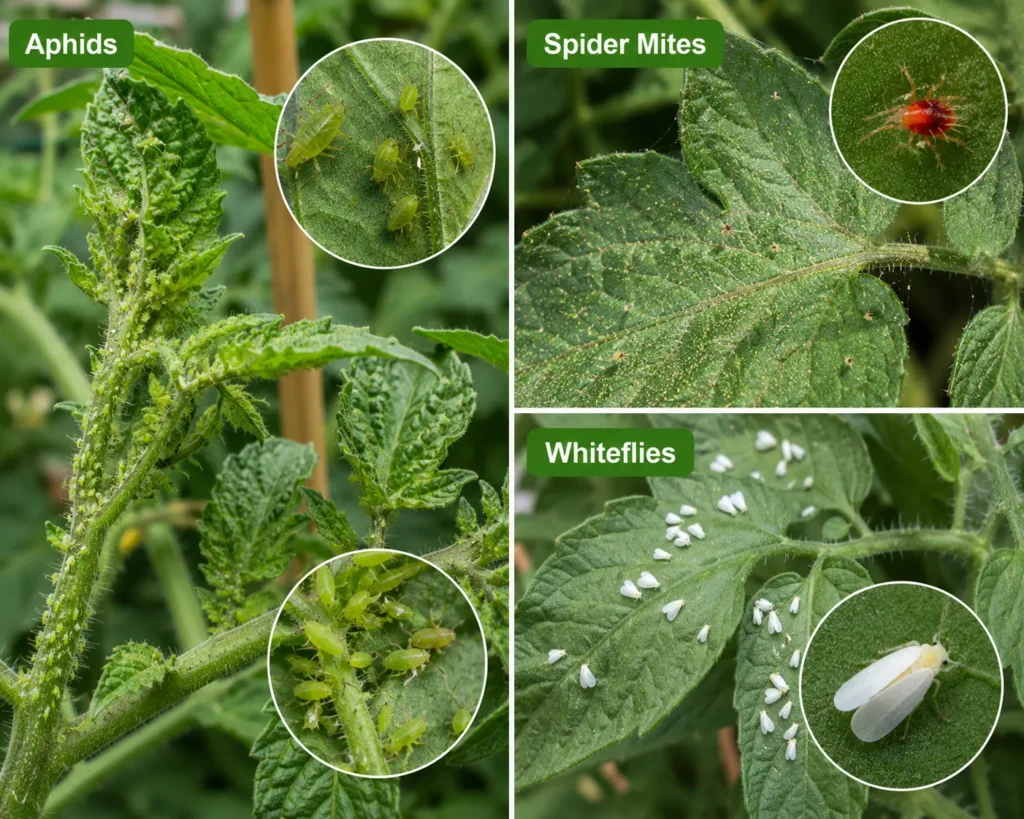
Inspect your plants at least once a week, paying close attention to the undersides of leaves where pests often hide.
Aphids
Signs include:
- Curled leaves
- Sticky honeydew
- Clusters of tiny insects
Treatment
- Spray with a strong stream of water.
- Encourage beneficial insects like ladybugs.
- Use insecticidal soap if needed.
Spider Mites
Symptoms include:
- Fine webbing
- Tiny yellow speckles
- Bronze or yellow leaves
Treatment
- Increase humidity around the plant.
- Spray leaf undersides with water.
- Remove heavily damaged foliage.
- Apply horticultural oil if necessary.
Whiteflies
Whiteflies feed on plant sap and can spread viral diseases.
Treatment
- Use yellow sticky traps.
- Inspect plants regularly.
- Treat infestations early with insecticidal soap.
Common Tomato Diseases
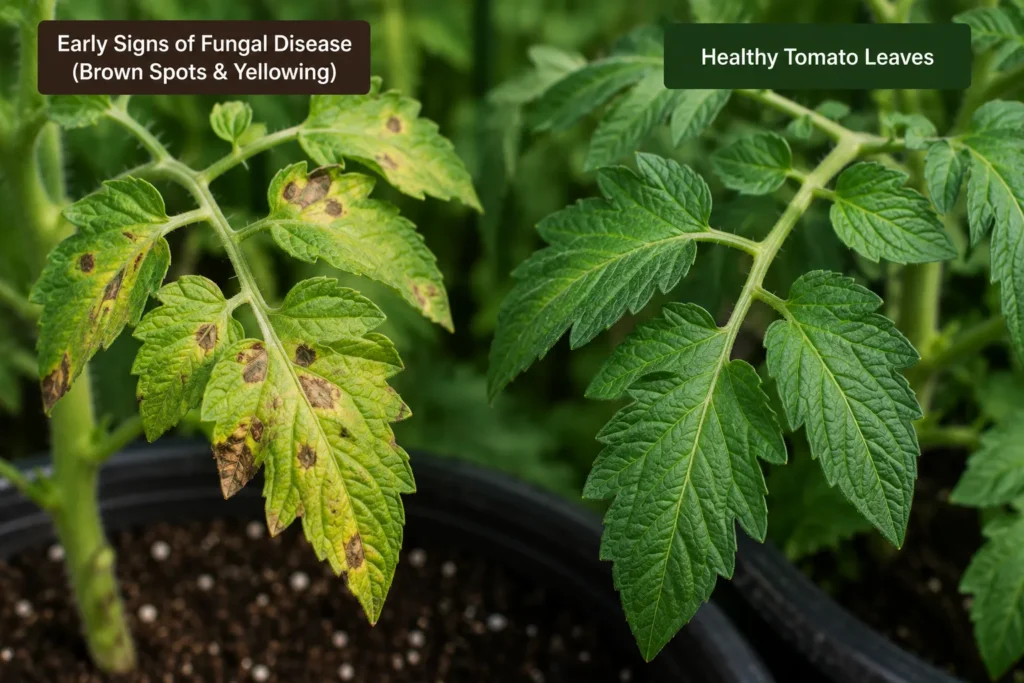
Healthy growing practices greatly reduce the risk of disease.
Watch for:
- Early blight
- Septoria leaf spot
- Fusarium wilt
- Verticillium wilt
- Powdery mildew
Prevention Tips
- Water at the base of the plant.
- Avoid overcrowding.
- Improve air circulation.
- Remove infected leaves immediately.
- Clean pruning tools between plants.
When Are Tomatoes Ready to Harvest?
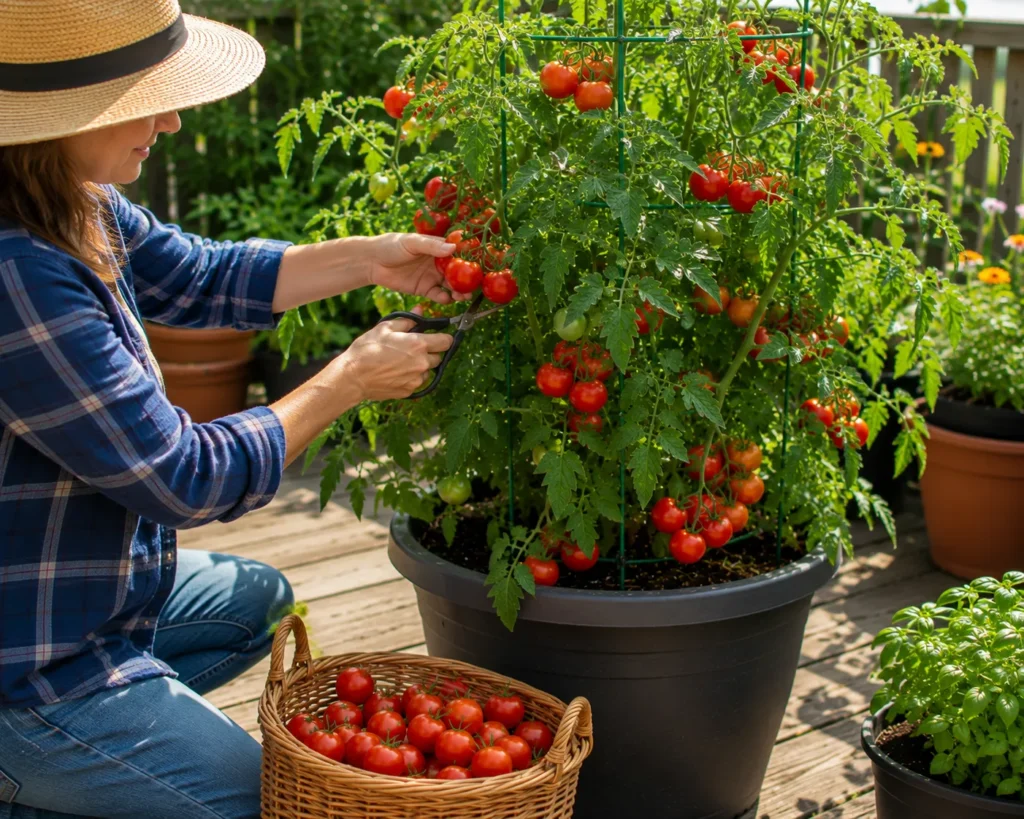
Tomatoes taste best when allowed to ripen on the vine.
Most varieties are ready when they:
- Develop their full color
- Feel slightly firm but not hard
- Separate easily from the vine with a gentle twist
Harvest regularly to encourage continued fruit production.
Can You Ripen Tomatoes Indoors?
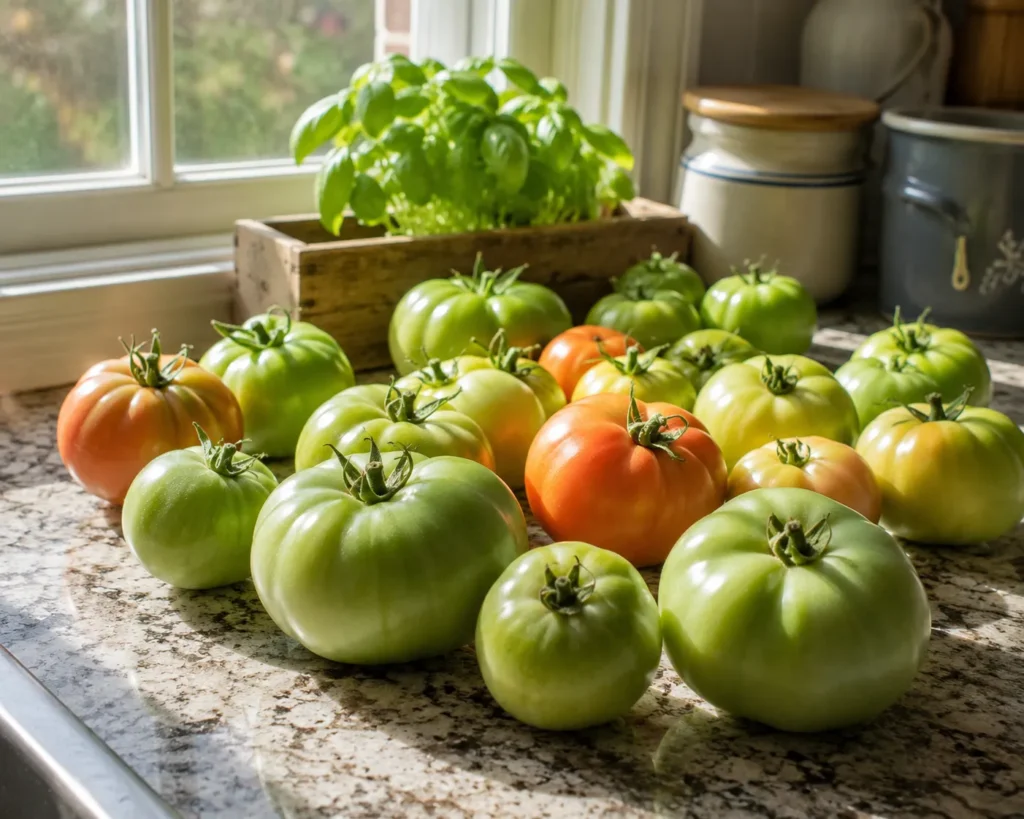
Yes.
If frost is approaching or you need to harvest early, tomatoes will continue ripening indoors.
Place them:
- On a countertop
- Out of direct sunlight
- At room temperature
Avoid refrigerating fresh tomatoes, as cold temperatures reduce flavor and alter their texture.
Tomato Growing Timeline
| Growth Stage | Approximate Time |
| Seeds germinate | 5–10 days |
| Seedlings ready for transplanting | 4–6 weeks |
| Flowers appear | 5–8 weeks after transplanting |
| First ripe tomatoes | 60–90 days (variety dependent) |
| Harvest continues | Until frost |
Tomato Troubleshooting Chart
| Problem | Most Likely Cause | Solution |
| Yellow leaves | Watering issues, nutrient deficiency, aging | Check soil and inspect foliage |
| Wilting | Dry soil or root problems | Water deeply or improve drainage |
| No flowers | Too much nitrogen or insufficient sunlight | Reduce nitrogen and increase sun exposure |
| Flowers dropping | Heat, cold, or inconsistent watering | Maintain even moisture and encourage pollination |
| Cracked fruit | Uneven watering | Water consistently and mulch |
| Small tomatoes | Too much shade or lack of nutrients | Increase sunlight and fertilize regularly |
| Blossom end rot | Inconsistent watering | Keep soil evenly moist |
| Leaf spots | Fungal disease | Remove infected leaves and improve airflow |
Expert Tips for Growing Tomatoes in Pots
Experienced gardeners follow a few simple habits that make a big difference throughout the season.
- Choose the largest container your space allows.
- Use fresh potting mix each year.
- Water deeply instead of lightly.
- Feed plants regularly once flowering begins.
- Rotate containers occasionally for even growth.
- Harvest ripe tomatoes frequently to encourage continued production.
- Inspect plants weekly for pests and disease.
- Remove damaged or diseased leaves as soon as they appear.
Healthy plants are naturally more resistant to pests, diseases, and environmental stress.
Common Mistakes to Avoid
Many tomato problems can be prevented by avoiding these common mistakes:
- Choosing a pot that’s too small
- Using garden soil instead of potting mix
- Forgetting drainage holes
- Overwatering or underwatering
- Growing tomatoes in too much shade
- Skipping regular fertilizing
- Delaying plant support
- Ignoring early signs of pests or disease
- Overcrowding containers
Small improvements in routine care often lead to healthier plants and larger harvests.
Frequently Asked Questions
Final Thoughts on How to Grow Tomatoes in Pots
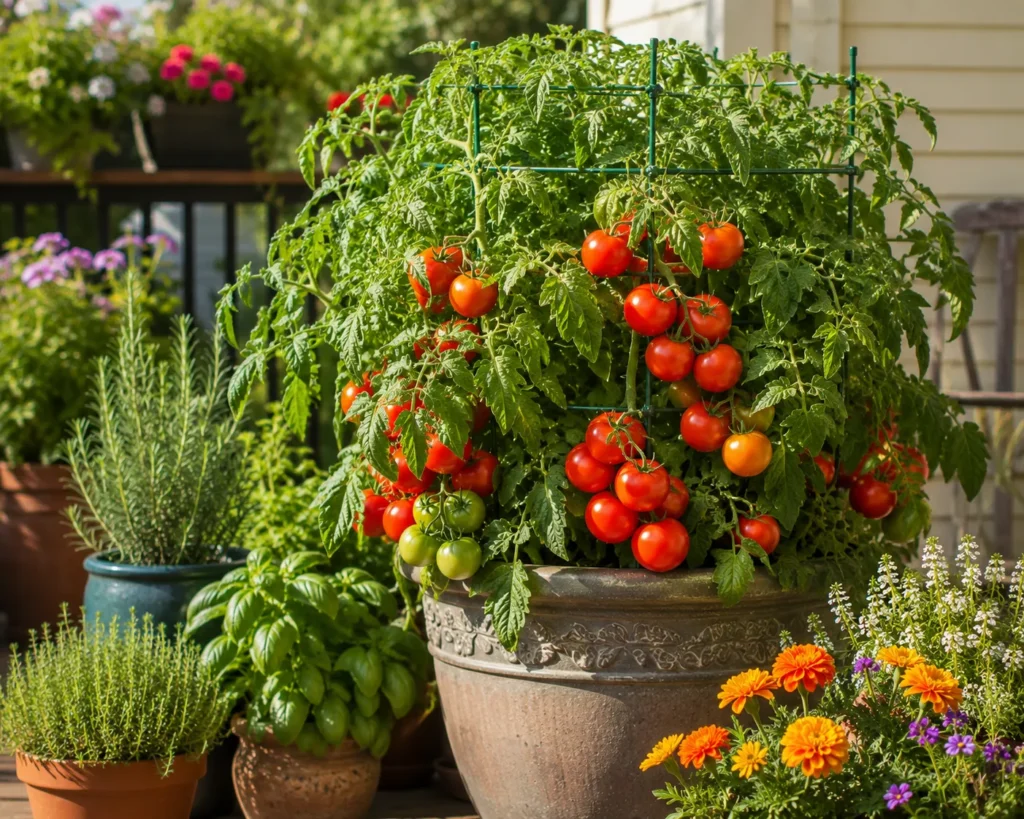
Growing tomatoes in pots is an easy and rewarding way to enjoy fresh, homegrown produce, even if you have limited outdoor space. By choosing the right variety, using a large container with quality potting mix, and providing consistent watering, sunlight, and regular feeding, you can enjoy a healthy harvest throughout the growing season.
Whether you’re gardening on a balcony, patio, or small backyard, container-grown tomatoes offer flexibility without sacrificing productivity. Check your plants regularly, respond quickly to any signs of stress, and they’ll reward you with flavorful fruit for months.
Once you’ve mastered tomatoes, consider expanding your edible garden with other summer vegetables or creating a productive herb balcony garden to make the most of your growing space.