15 Best Hydroponic Plants to Grow Indoors (Beginner-Friendly & Fast Growing)
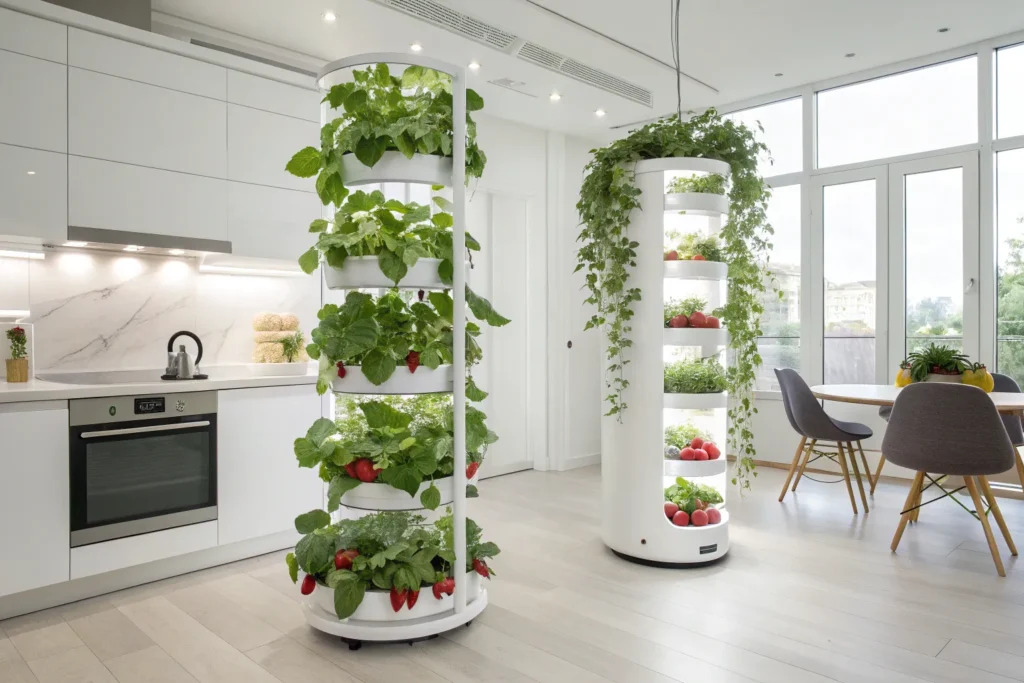
Growing fresh vegetables, herbs, and even fruit indoors is easier than ever with hydroponics. Instead of relying on soil, hydroponic plants grow in nutrient-rich water, allowing them to develop faster, stay cleaner, and often produce higher yields in less space. Whether you’re using a simple Kratky setup, a deep water culture (DWC) system, or a modern countertop garden, choosing the right plants is the key to success.
The best hydroponic plants are those that grow quickly, adapt well to indoor conditions, and thrive with consistent water, nutrients, and light. Leafy greens such as lettuce and spinach are excellent choices for beginners because they’re fast-growing and easy to maintain, while herbs like basil and mint provide fresh flavor year-round. If you’re ready for a slightly bigger challenge, compact tomatoes, peppers, strawberries, and cucumbers can also produce impressive harvests in the right hydroponic system.
In this guide, you’ll discover 15 of the best hydroponic plants to grow indoors, along with recommended varieties, growing tips, ideal hydroponic systems, and common mistakes to avoid. Whether you’re just starting your first indoor hydroponic garden or looking to expand your harvest, these plants will help you enjoy fresh, homegrown produce throughout the year.
Table of Contents
Not sure which hydroponic plant to grow first? Use this quick comparison table to compare difficulty, harvest time, and the best hydroponic system for each plant before exploring the detailed growing guides below.
Quick Comparison Table
| Plant | Difficulty | Harvest Time | Best Hydroponic System | Best For |
|---|---|---|---|---|
| Lettuce | Easy | 30–45 days | DWC, NFT, Kratky | Beginners, salads |
| Spinach | Easy | 30–45 days | DWC, NFT | Nutritious leafy greens |
| Kale | Easy | 45–60 days | DWC, NFT | Continuous harvesting |
| Basil | Easy | 25–35 days | DWC, Kratky, NFT | Fresh herbs |
| Mint | Easy | 30–40 days | DWC, Kratky | Tea and desserts |
| Strawberries | Moderate | 60–90 days | NFT, Vertical Systems | Fresh fruit |
| Tomatoes | Moderate–Advanced | 70–90 days | Dutch Bucket, Drip | High yields |
| Cucumbers | Moderate | 50–70 days | Dutch Bucket, NFT | Vertical gardening |
| Peppers | Moderate | 70–90 days | DWC, Dutch Bucket | Sweet and hot peppers |
| Swiss Chard | Easy | 40–60 days | DWC, NFT | Cut-and-come-again harvests |
| Arugula | Easy | 25–40 days | DWC, NFT, Kratky | Quick harvests |
| Oregano | Easy | 45–60 days | DWC, Kratky | Mediterranean cooking |
| Cilantro | Easy | 30–45 days | DWC, NFT | Fresh herbs |
| Chives | Easy | 30–45 days | DWC, Kratky | Low-maintenance herbs |
| Bok Choy | Easy | 30–45 days | DWC, NFT | Stir-fries and soups |
Benefits of Hydroponic Gardening
Hydroponic gardening offers an efficient and rewarding way to grow fresh produce indoors without using soil. By delivering water, oxygen, and nutrients directly to the roots, plants can focus more energy on healthy growth instead of searching for nutrients in the ground. Whether you’re growing leafy greens, herbs, or fruiting vegetables, a well-maintained hydroponic system can provide reliable harvests throughout the year.
Some of the biggest benefits of hydroponic gardening include:
- Faster Plant Growth: Since nutrients are readily available, many hydroponic plants grow 25–50% faster than those grown in soil under similar conditions.
- Year-Round Harvests: Indoor hydroponic gardens allow you to grow fresh vegetables and herbs in every season, regardless of outdoor weather.
- Uses Less Water: Most hydroponic systems recirculate water, making them significantly more water-efficient than traditional soil gardening.
- Fewer Soil-Borne Pests and Diseases: Without soil, plants are less likely to encounter common problems such as root-borne fungi, nematodes, and many soil-dwelling pests.
- Ideal for Small Spaces: Hydroponic gardens fit well in apartments, kitchens, balconies, or any area with adequate lighting, making them perfect for urban gardeners.
- Cleaner Indoor Gardening: Because there’s no soil to spill or weeds to pull, hydroponic gardening is a tidy option for growing fresh food inside your home.
- Higher Productivity: With proper lighting, nutrients, and maintenance, many hydroponic plants produce consistent harvests and can often be grown closer together than in traditional gardens.
Whether you’re a beginner setting up your first countertop system or an experienced gardener looking to maximize indoor growing space, hydroponic gardening provides a practical way to enjoy fresh, homegrown produce with greater control over the growing environment.
How to Choose the Best Hydroponic Plants
Not every plant performs equally well in a hydroponic system, especially for beginners. Choosing the right crops depends on your available space, lighting, growing experience, and the type of hydroponic setup you plan to use. Starting with plants that naturally adapt to water-based growing conditions will help you achieve healthier plants and more successful harvests.
Here are a few important factors to consider before selecting hydroponic plants:
- Start with Beginner-Friendly Plants: Fast-growing leafy greens like lettuce, spinach, bok choy, and herbs such as basil, mint, and chives are among the easiest hydroponic plants to grow. They require less maintenance and reward you with quick harvests.
- Match Plants to Your Hydroponic System: Leafy greens and herbs thrive in Deep Water Culture (DWC), Nutrient Film Technique (NFT), and Kratky systems, while larger fruiting plants like tomatoes, cucumbers, and peppers typically perform better in Dutch Bucket or drip irrigation systems that provide additional support.
- Consider Light Requirements: Most hydroponic plants need 12–16 hours of light each day. If your home doesn’t receive enough natural sunlight, use full-spectrum LED grow lights to promote healthy growth and higher yields.
- Think About Available Space: Compact crops such as lettuce, basil, cilantro, and arugula are ideal for small indoor gardens, while vining plants like tomatoes and cucumbers require more room, sturdy supports, and vertical trellises.
- Choose Plants You Enjoy Eating: Growing vegetables and herbs your family regularly uses makes hydroponic gardening more rewarding and helps reduce food waste.
- Look for Continuous Harvest Crops: Plants such as kale, Swiss chard, mint, chives, and many herbs can be harvested multiple times, providing a steady supply of fresh produce throughout the growing season.
By selecting plants that match your experience level and growing conditions, you’ll build confidence, avoid common frustrations, and enjoy a productive indoor hydroponic garden all year long.
15 Best Hydroponic Plants
1. Lettuce
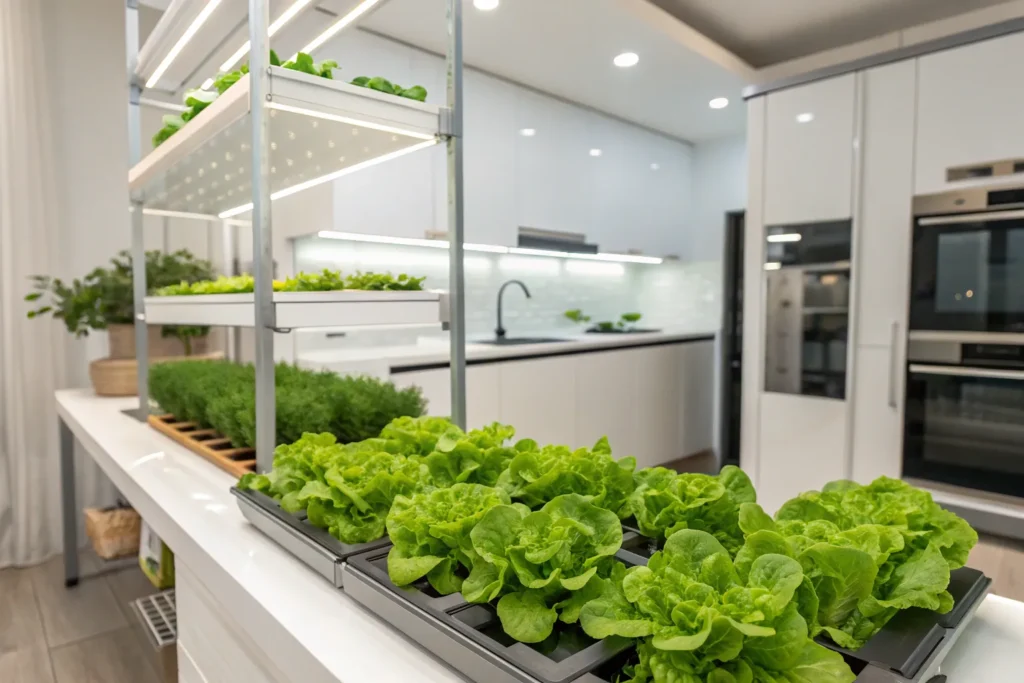
Lettuce is one of the best hydroponic plants for beginners because it grows quickly, requires minimal maintenance, and adapts well to most hydroponic systems. Unlike soil-grown lettuce, hydroponic lettuce develops clean, tender leaves with fewer pest problems and can often be harvested in as little as 30 to 45 days. Deep Water Culture (DWC), Nutrient Film Technique (NFT), and Kratky systems all work well for growing healthy lettuce indoors.
For the best results, provide 12 to 14 hours of light daily, maintain a water pH between 5.8 and 6.2, and keep temperatures around 60–70°F (16–21°C). Harvest the outer leaves as they mature to encourage continuous growth, or wait until the entire head is fully developed. Regularly checking nutrient levels and keeping the water fresh will help produce crisp, flavorful leaves throughout the growing season.
Best Varieties: Romaine, Butterhead
Expert Tip: If you’re new to hydroponics, start with Butterhead lettuce. It’s more forgiving of small nutrient fluctuations and consistently produces soft, sweet leaves, making it an excellent choice for first-time growers.
2. Spinach
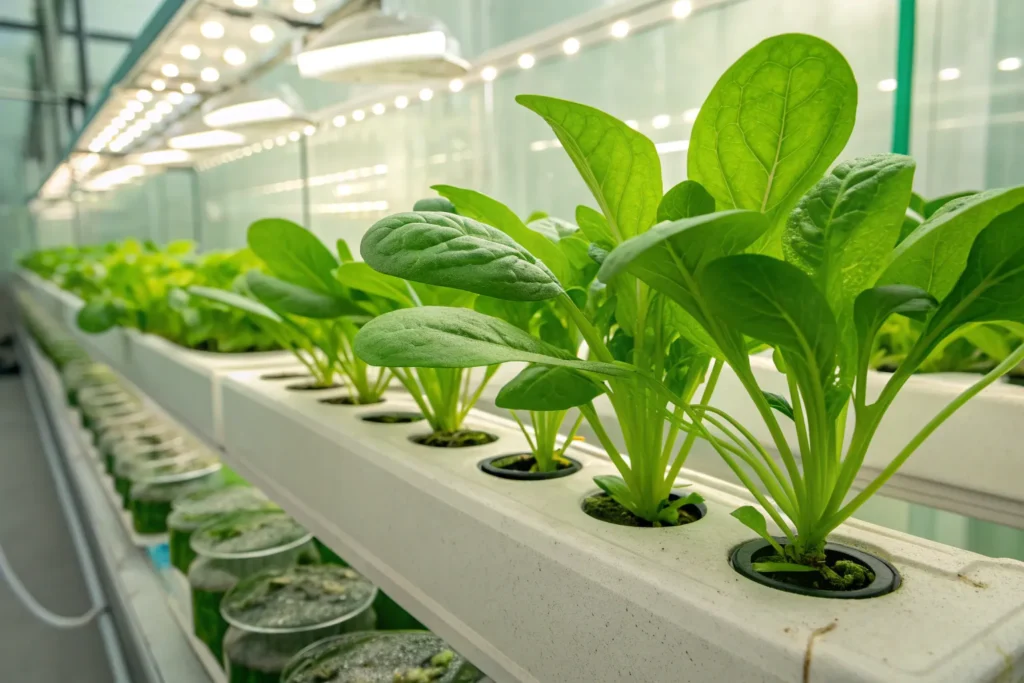
Spinach is one of the best hydroponic plants for gardeners who want a nutritious, fast-growing leafy green. It thrives in cool indoor conditions and produces tender, flavorful leaves that are perfect for salads, smoothies, soups, pasta dishes, and stir-fries. Because hydroponic systems deliver water and nutrients directly to the roots, spinach often grows faster and stays cleaner than when grown in soil.
For healthy growth, keep the nutrient solution at a pH of 5.8–6.5 and maintain water temperatures between 60–70°F (16–21°C). Provide 12 to 14 hours of bright light each day, and ensure good air circulation to help prevent fungal problems. You can begin harvesting the outer leaves in as little as 30 to 45 days, allowing the center of the plant to continue producing fresh growth for multiple harvests.
Best Varieties: Bloomsdale, Space
Expert Tip: Avoid exposing spinach to excessive heat or prolonged high temperatures, as this can cause the plants to bolt prematurely. Keeping the growing environment cool will encourage larger, sweeter leaves and extend your harvest period.
3. Kale
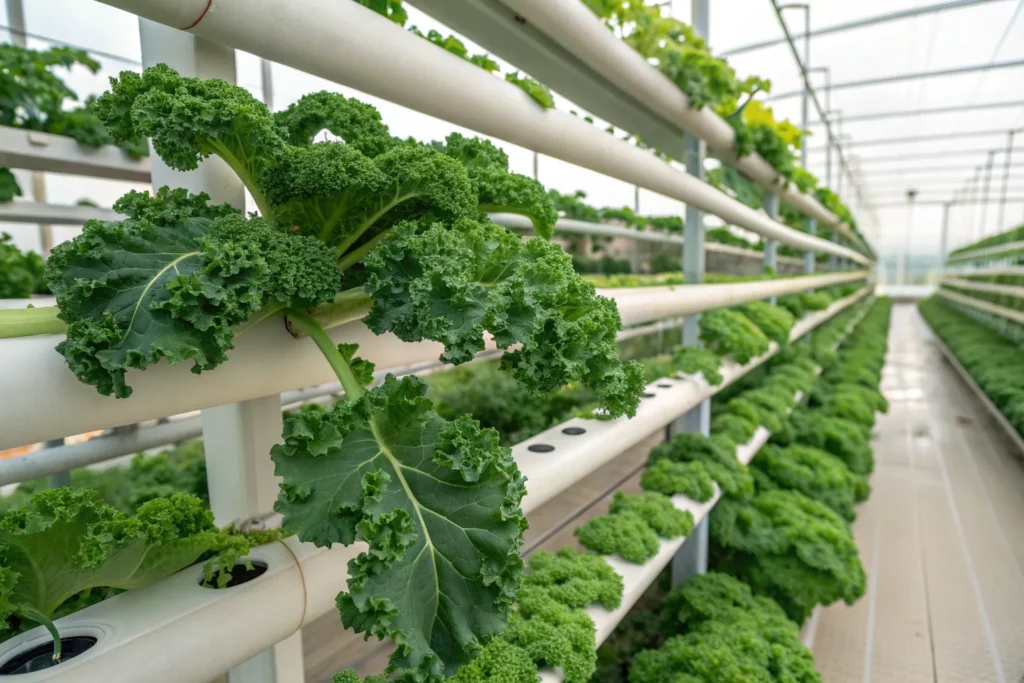
Kale is one of the best hydroponic plants for indoor gardeners because it’s hardy, highly productive, and continues producing fresh leaves for months with proper care. Rich in vitamins A, C, and K, as well as antioxidants, kale is an excellent choice for healthy salads, smoothies, soups, and sautés. In a hydroponic system, the plants receive a steady supply of water and nutrients, resulting in tender, flavorful leaves that are often less fibrous than soil-grown kale.
Kale grows best in Deep Water Culture (DWC), Nutrient Film Technique (NFT), and other recirculating hydroponic systems. Maintain a nutrient solution pH of 5.8–6.5, provide 12 to 16 hours of light daily, and keep temperatures between 60–75°F (16–24°C) for vigorous growth. Harvest the older outer leaves first while leaving the center intact, allowing the plant to continue producing new foliage for an extended harvest season.
Best Varieties: Lacinato, Red Russian
Expert Tip: Pick kale leaves regularly rather than waiting for the entire plant to mature. Frequent harvesting encourages continuous new growth and helps keep the leaves tender, sweet, and less bitter.
4. Basil
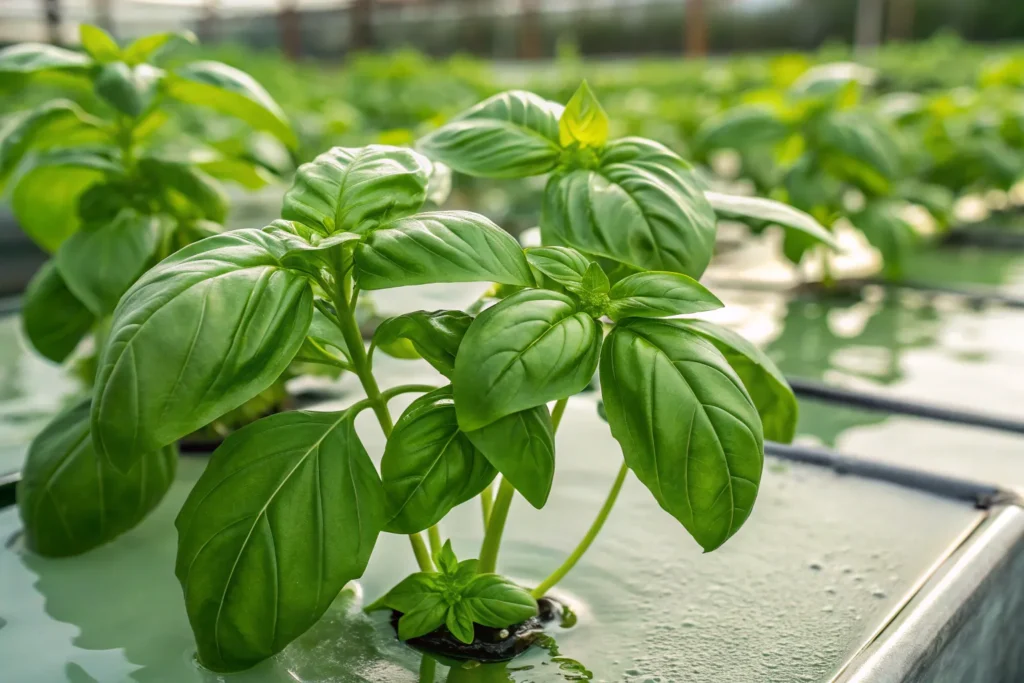
If you’re looking for a fragrant herb that thrives indoors, basil is an excellent choice for a hydroponic garden. Its rapid growth, compact size, and continuous leaf production make it one of the easiest hydroponic herbs to grow year-round. With a consistent supply of water, nutrients, and warmth, basil develops lush green foliage with a stronger flavor and aroma than plants stressed by inconsistent soil conditions.
Basil performs best in Deep Water Culture (DWC), Kratky, and NFT hydroponic systems. Keep the nutrient solution at a pH of 5.5–6.5, provide 14 to 16 hours of bright light each day, and maintain temperatures between 70–80°F (21–27°C) for vigorous growth. Regularly pinch off the growing tips and remove flower buds as they appear to encourage bushier plants and extend the harvest.
Best Varieties: Genovese, Thai Basil
Expert Tip: Harvest basil by cutting stems just above a pair of leaves instead of removing individual leaves. This encourages the plant to branch out, producing fuller growth and a continuous supply of fresh basil for pesto, pasta, salads, and homemade sauces.
5. Mint
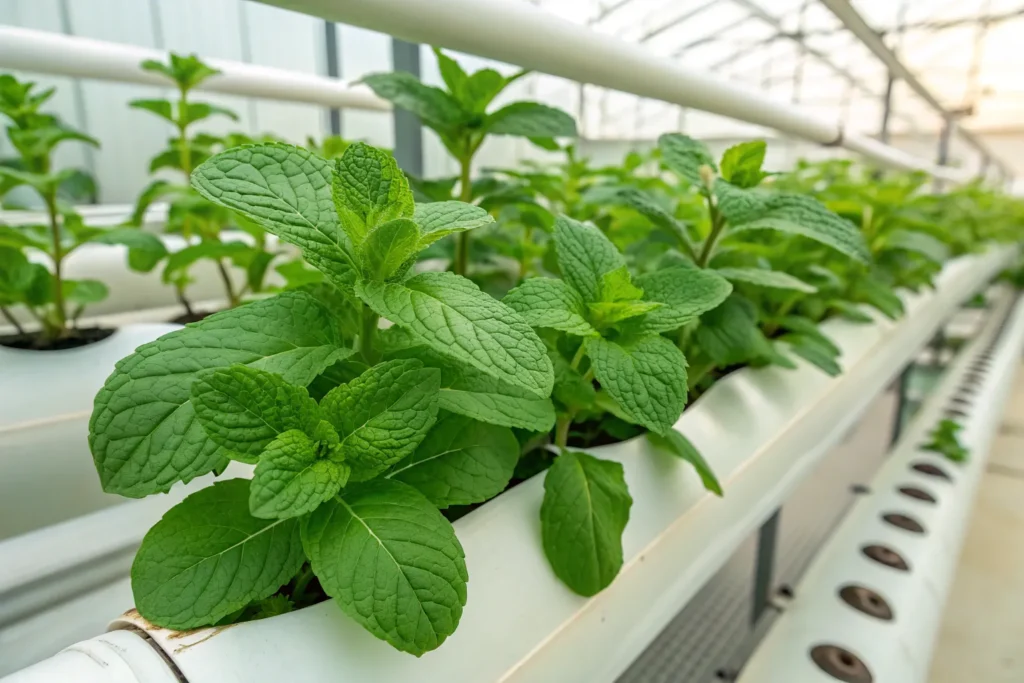
Few herbs grow as quickly and reliably in an indoor hydroponic garden as mint. Known for its vigorous growth and refreshing aroma, mint thrives in water-based systems where it has constant access to nutrients and moisture. Fresh leaves can be harvested throughout the year and used to flavor teas, lemonade, desserts, salads, sauces, and homemade cocktails.
Mint grows well in Kratky, Deep Water Culture (DWC), and NFT hydroponic systems. For healthy, productive plants, maintain a nutrient solution pH of 5.5–6.5, provide 12 to 16 hours of light daily, and keep temperatures between 65–75°F (18–24°C). Since mint spreads rapidly, it’s best to give each plant its own growing space and trim it regularly to encourage fresh, compact growth.
Best Varieties: Spearmint, Peppermint
Expert Tip: Harvest mint often by cutting the stems just above a leaf node. Regular pruning encourages bushier growth, prevents the plant from becoming leggy, and provides a continuous supply of fragrant leaves for everyday use.
6. Strawberries
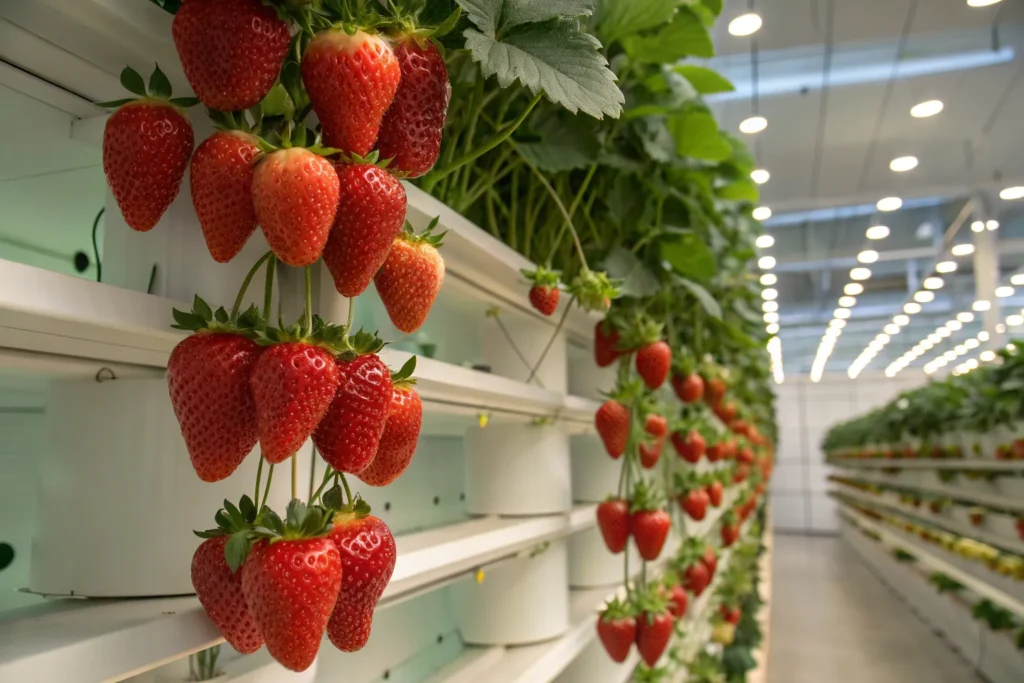
Fresh, homegrown strawberries aren’t just for outdoor gardens, they’re also among the most rewarding hydroponic plants to grow indoors. With the right care, hydroponic strawberries produce sweet, juicy berries while taking up very little space, especially in vertical hydroponic systems or Nutrient Film Technique (NFT) setups. Day-neutral varieties can continue flowering and fruiting for much of the year, giving you multiple harvests from a single planting.
Strawberries thrive with a nutrient solution pH of 5.5–6.5, 14 to 16 hours of bright light, and temperatures between 65–75°F (18–24°C). Good air circulation and proper spacing help improve pollination and reduce the risk of fungal diseases. If you’re growing indoors without natural pollinators, gently brush the flowers or use a small fan to help transfer pollen and encourage better fruit production.
Best Varieties: Albion, Seascape
Expert Tip: Remove the first few flowers after planting so the plants can establish stronger roots before producing fruit. This simple step often leads to healthier plants and larger, sweeter strawberries during later harvests.
7. Tomatoes
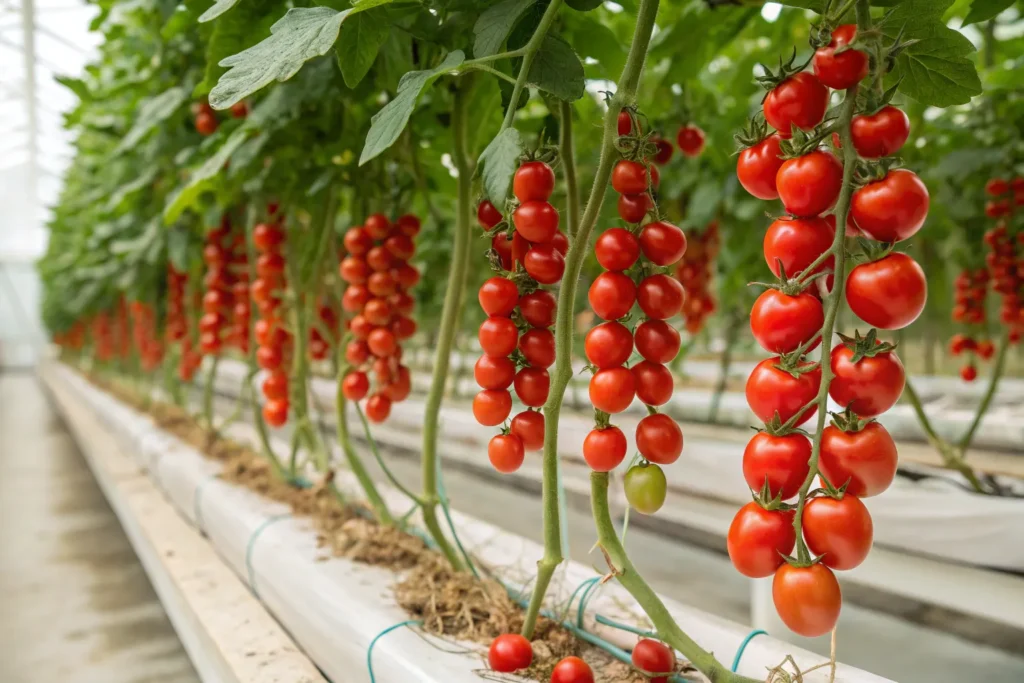
For gardeners who want a high-yield indoor crop, tomatoes are among the most productive hydroponic vegetables you can grow. They develop faster in a well-maintained hydroponic system, producing flavorful, juicy fruits with fewer soil-borne diseases. Compact and indeterminate varieties perform especially well indoors, making them a favorite for year-round harvesting.
Tomatoes grow best in Dutch Bucket, Deep Water Culture (DWC), or drip hydroponic systems. Maintain a nutrient solution pH of 5.8–6.3, provide 14 to 16 hours of full-spectrum LED light, and keep temperatures between 70–80°F (21–27°C) during the day. As the plants grow, use stakes, cages, or trellises to support the vines and prune suckers regularly to improve airflow, direct energy into fruit production, and encourage larger harvests.
Best Varieties: Cherry, Roma
Expert Tip: Gently shake the flowering stems, or use a small electric toothbrush to vibrate the blossoms every few days gently. This improves pollination indoors, resulting in better fruit set and a more abundant tomato harvest. If your plants develop pale or discolored foliage, learn why tomato leaves are turning yellow to diagnose the problem early. For stronger growth and higher yields, choose the best tomato fertilizer, and if you’d like to compare container growing with hydroponics, see our guide on how to grow tomatoes in pots.
8. Cucumbers
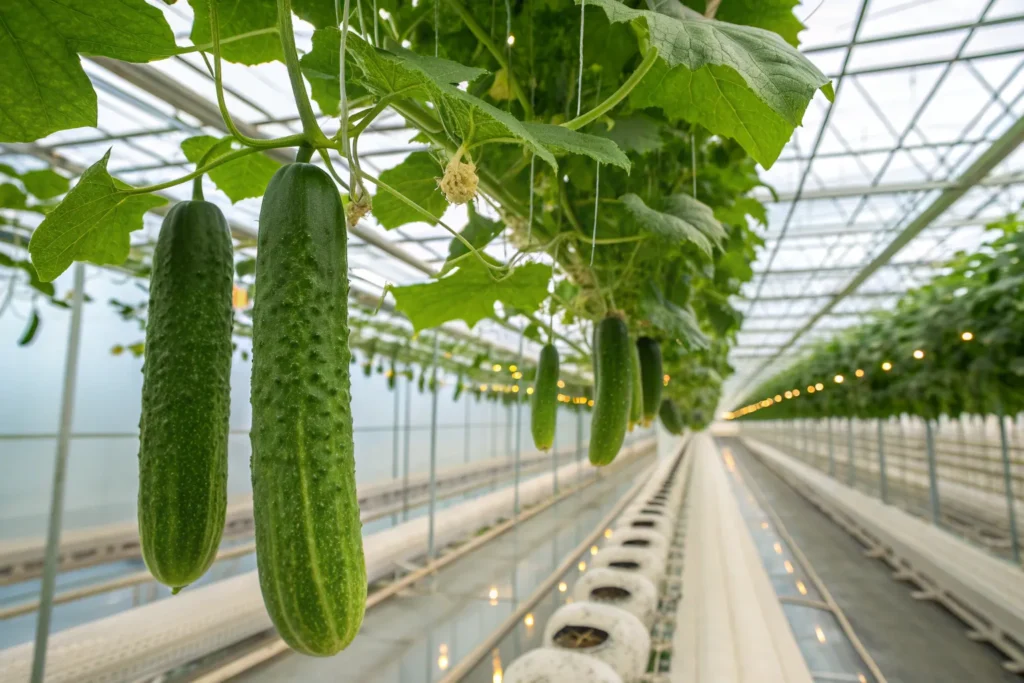
If you want fresh, crisp cucumbers throughout the year, they’re an excellent addition to an indoor hydroponic garden. Cucumbers are fast-growing hydroponic vegetables that thrive in nutrient-rich water and make efficient use of vertical space by climbing trellises or supports. Growing them hydroponically also helps minimize many common soil-borne diseases, resulting in healthier plants and cleaner, better-quality fruit.
Cucumbers perform best in Dutch Bucket, drip irrigation, or Nutrient Film Technique (NFT) hydroponic systems. Maintain a nutrient solution pH of 5.5–6.0, provide 14 to 16 hours of bright light each day, and keep temperatures between 70–80°F (21–27°C). Train the vines upward using a sturdy trellis to improve airflow, maximize growing space, and make harvesting easier. Consistent watering and balanced nutrients are essential for producing straight, flavorful cucumbers.
Best Varieties: Bush Champion, Marketmore
Expert Tip: Harvest cucumbers while they’re still young and firm rather than waiting until they become oversized. Frequent harvesting encourages the plant to keep producing new flowers and fruit, leading to a longer and more productive growing season.
9. Peppers
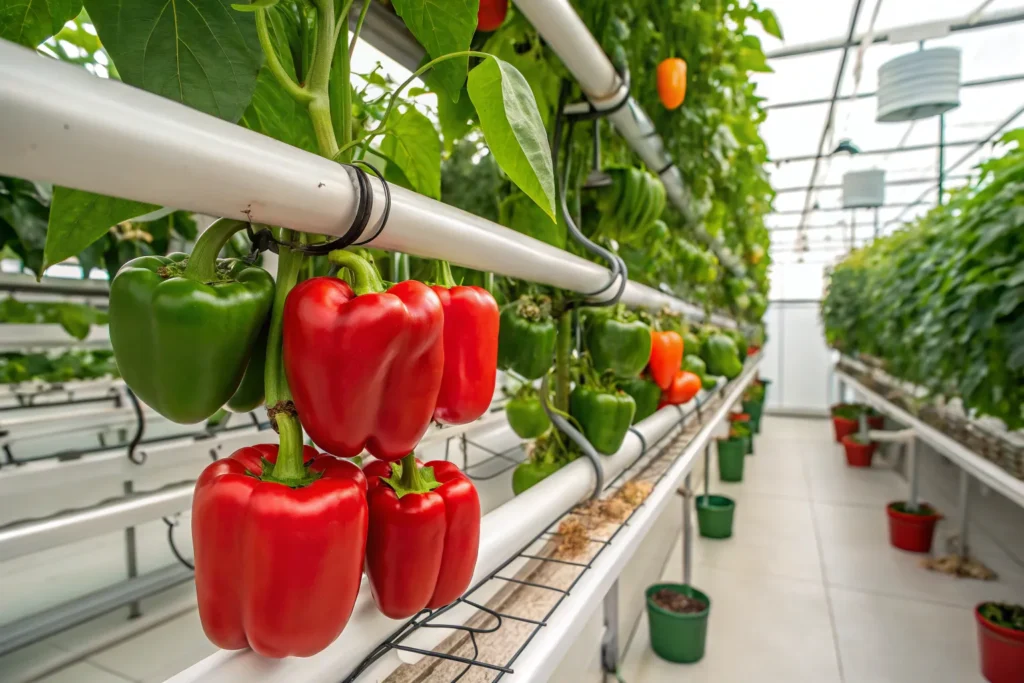
Whether you prefer sweet bell peppers or fiery chili peppers, these colorful hydroponic vegetables are a rewarding choice for indoor gardening. Peppers grow vigorously in a well-balanced hydroponic system, where they receive a steady supply of water and nutrients. With plenty of light and warmth, they produce vibrant, flavorful fruits that are perfect for salads, stir-fries, roasting, and fresh salsa while also adding ornamental appeal to your indoor growing space.
Peppers grow best in Deep Water Culture (DWC), Dutch Bucket, or drip hydroponic systems. Keep the nutrient solution at a pH of 5.8–6.5, provide 14 to 16 hours of full-spectrum light daily, and maintain temperatures between 70–80°F (21–27°C) for healthy growth and abundant fruit production. As the plants mature, support heavy branches with stakes or cages to prevent them from bending under the weight of developing peppers.
Best Varieties: California Wonder (Bell Pepper), Jalapeño
Expert Tip: Once flowers begin to appear, gently shake the plants every few days or use a small fan to improve pollination indoors. Better pollination leads to more peppers and a larger, more consistent harvest.
10. Swiss Chard
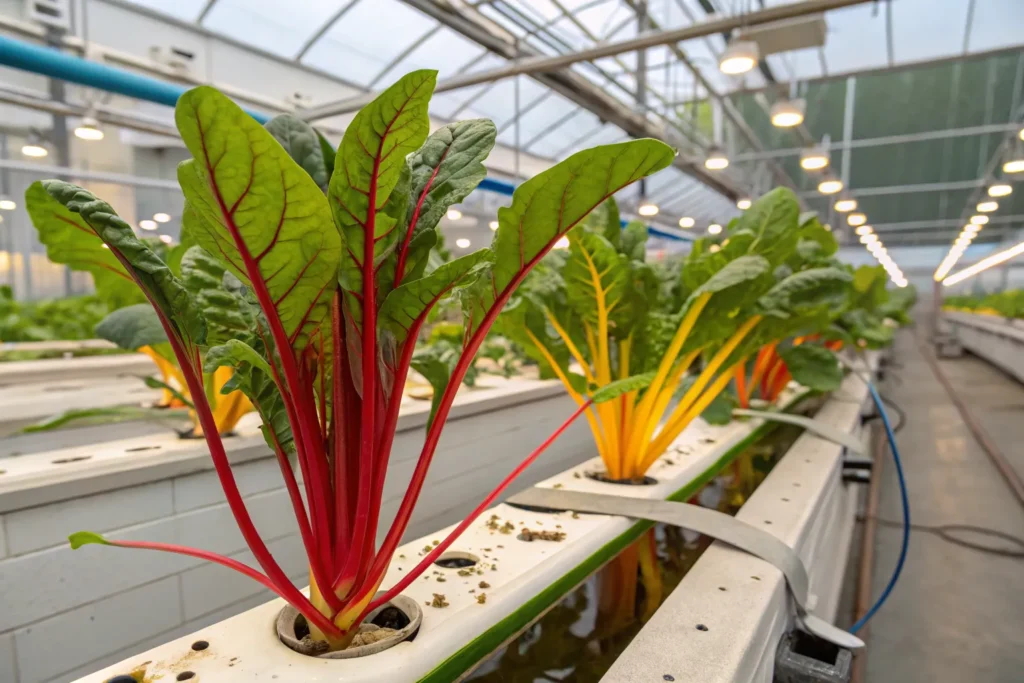
With its vibrant stems and lush green leaves, Swiss chard is one of the most attractive and productive hydroponic leafy greens you can grow indoors. This nutrient-rich vegetable thrives in a hydroponic system, producing continuous harvests of tender leaves that are perfect for salads, sautés, soups, and smoothies. As a cut-and-come-again crop, Swiss chard keeps growing after each harvest, making it an excellent choice for gardeners who want a steady supply of fresh greens.
Swiss chard grows well in Deep Water Culture (DWC), Nutrient Film Technique (NFT), and Kratky systems. Maintain a nutrient solution pH of 6.0–6.5, provide 12 to 14 hours of bright light each day, and keep temperatures between 60–75°F (16–24°C) for healthy growth. Harvest the larger outer leaves first while leaving the center untouched so the plant can continue producing new foliage throughout the season.
Best Varieties: Bright Lights, Fordhook Giant
Expert Tip: Pick Swiss chard leaves regularly before they become too large. Younger leaves are more tender and flavorful, while frequent harvesting encourages continuous new growth and extends your harvest for months.
11. Arugula
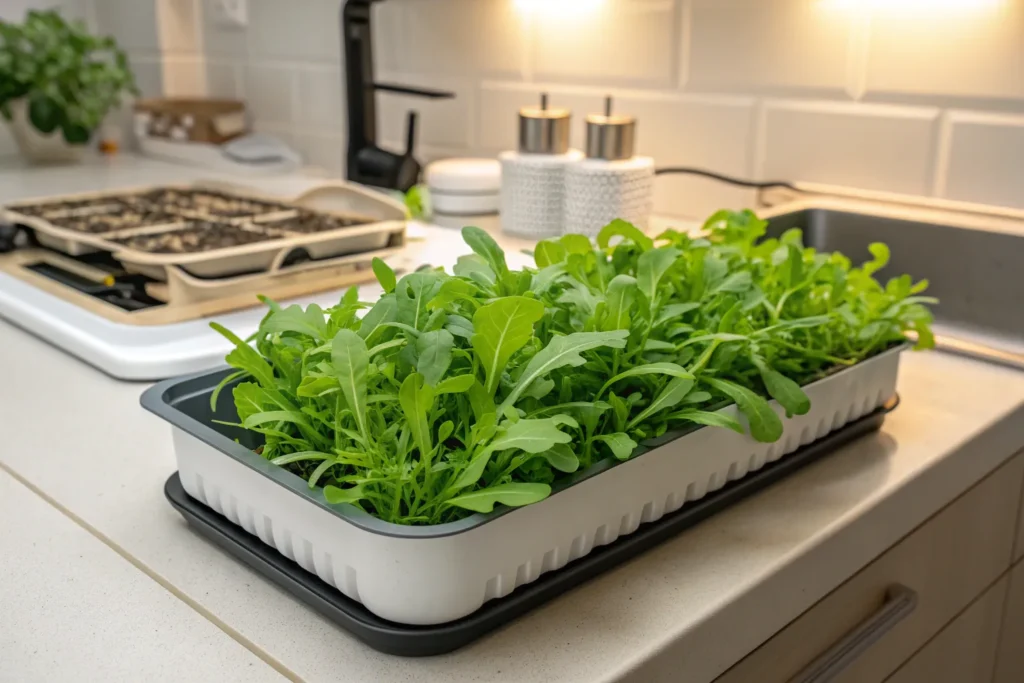
If you enjoy bold, peppery flavors, arugula is one of the fastest-growing hydroponic leafy greens for an indoor garden. Its compact size makes it ideal for small hydroponic setups, while its tender leaves add a fresh, spicy kick to salads, sandwiches, pizzas, and pasta dishes. Because arugula matures quickly, it’s an excellent choice for gardeners looking for frequent harvests throughout the year.
Arugula performs best in Deep Water Culture (DWC), Nutrient Film Technique (NFT), and Kratky hydroponic systems. Keep the nutrient solution at a pH of 6.0–6.5, provide 12 to 14 hours of bright light daily, and maintain temperatures between 55–70°F (13–21°C). Cooler conditions help produce sweeter, less bitter leaves and slow down bolting. Harvest the outer leaves when they’re young, allowing the center of the plant to continue producing fresh growth.
Best Varieties: Rocket, Astro
Expert Tip: Harvest arugula regularly before the leaves become too large. Young leaves have the best flavor and texture, and frequent picking encourages continuous growth while helping prevent the plant from flowering too early.
12. Oregano
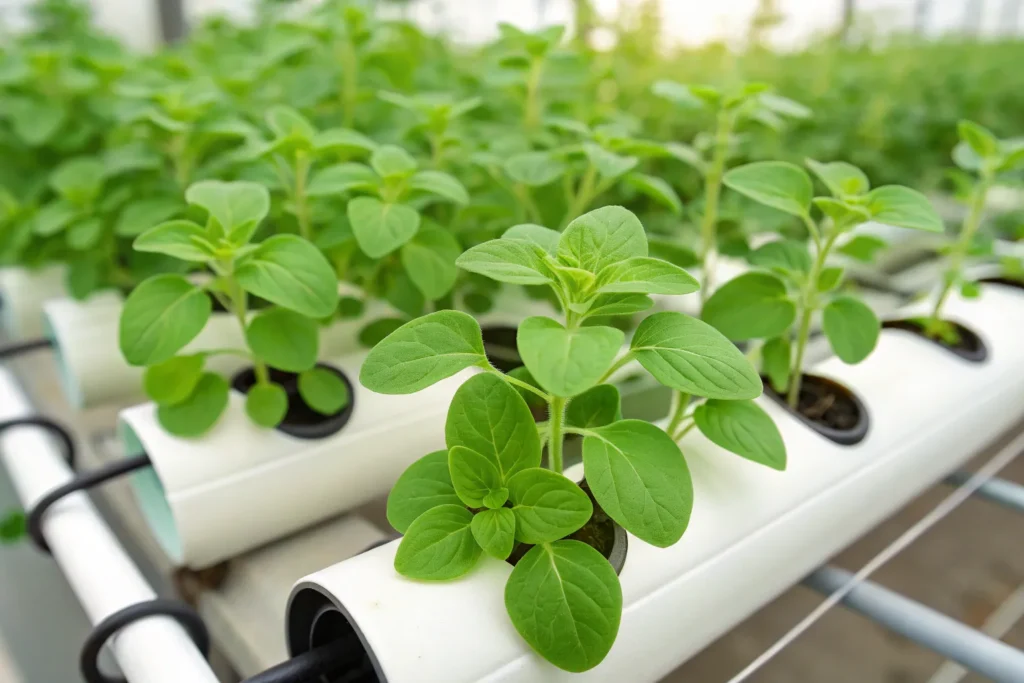
Known for its rich aroma and robust flavor, oregano is one of the easiest hydroponic herbs to grow indoors. This Mediterranean favorite thrives in a hydroponic garden, producing fragrant leaves year-round that enhance pizzas, pasta, roasted vegetables, soups, marinades, and homemade sauces. With a constant supply of water and nutrients, hydroponic oregano develops healthy foliage rich in essential oils for maximum flavor.
Oregano grows well in Kratky, Deep Water Culture (DWC), and Nutrient Film Technique (NFT) systems. Maintain a nutrient solution pH of 6.0–6.5, provide 12 to 16 hours of bright light each day, and keep temperatures between 65–75°F (18–24°C). Regular pruning encourages bushier growth and prevents the stems from becoming woody, resulting in a continuous supply of fresh, tender leaves.
Best Varieties: Greek Oregano, Italian Oregano
Expert Tip: Harvest oregano just before the plant begins to flower, as this is when the leaves contain the highest concentration of essential oils, delivering the strongest flavor and aroma for cooking.
13. Cilantro
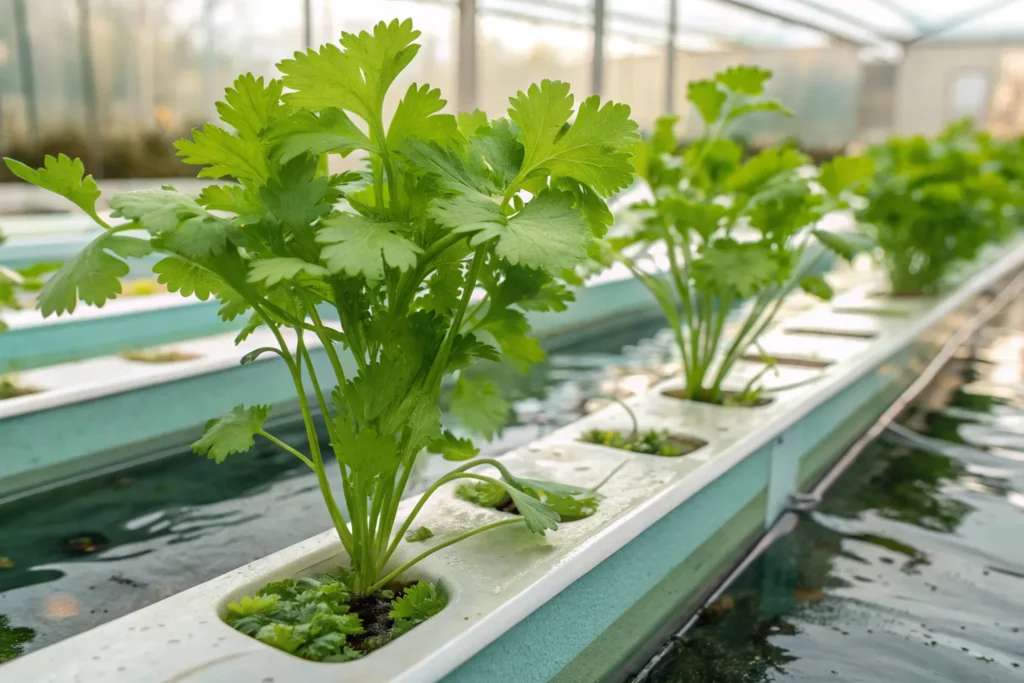
Fresh cilantro is one of the most rewarding hydroponic herbs to grow indoors, especially if you enjoy cooking with vibrant, aromatic flavors. Unlike soil-grown plants that often bolt quickly in warm weather, cilantro benefits from the stable conditions of a hydroponic system, allowing it to produce tender leaves for a longer period. Its fresh flavor makes it a staple for salsas, tacos, curries, soups, salads, and a wide range of international dishes.
Cilantro grows best in Deep Water Culture (DWC), Nutrient Film Technique (NFT), and Kratky hydroponic systems. Maintain a nutrient solution pH of 6.0–6.5, provide 12 to 14 hours of bright light daily, and keep temperatures between 60–70°F (16–21°C). Cooler growing conditions help delay bolting and encourage a longer harvest season. Harvest the outer leaves first while allowing the center of the plant to continue producing fresh growth.
Best Varieties: Santo, Leisure
Expert Tip: Sow new cilantro seeds every two to three weeks for a continuous harvest. Succession planting ensures you’ll always have fresh, flavorful leaves available, even after older plants begin to flower.
14. Chives
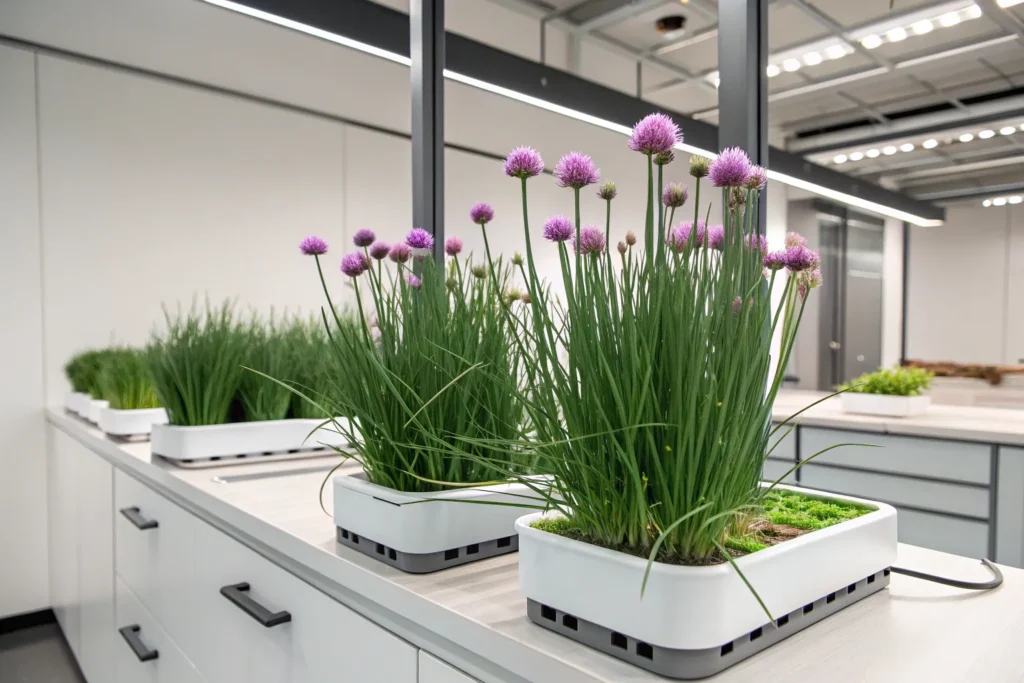
Compact, productive, and beginner-friendly, chives are among the easiest hydroponic herbs to grow indoors. Their slender green leaves have a mild onion flavor that adds freshness to soups, salads, scrambled eggs, baked potatoes, dips, and many other everyday dishes. Because chives regrow quickly after each harvest, they’re an excellent choice for gardeners who want a continuous supply of fresh herbs with minimal maintenance.
Chives thrive in Kratky, Deep Water Culture (DWC), and Nutrient Film Technique (NFT) hydroponic systems. Maintain a nutrient solution pH of 6.0–6.5, provide 12 to 14 hours of bright light each day, and keep temperatures between 60–75°F (16–24°C). Harvest by trimming the leaves about 1–2 inches (2.5–5 cm) above the base, allowing the plant to regenerate quickly for repeated harvests throughout the year.
Best Varieties: Common Chives, Garlic Chives
Expert Tip: Remove any flower buds as soon as they appear to keep the plant focused on producing tender, flavorful leaves. Regular harvesting also encourages thicker, healthier growth and extends the productive life of your chive plants.
15. Bok Choy
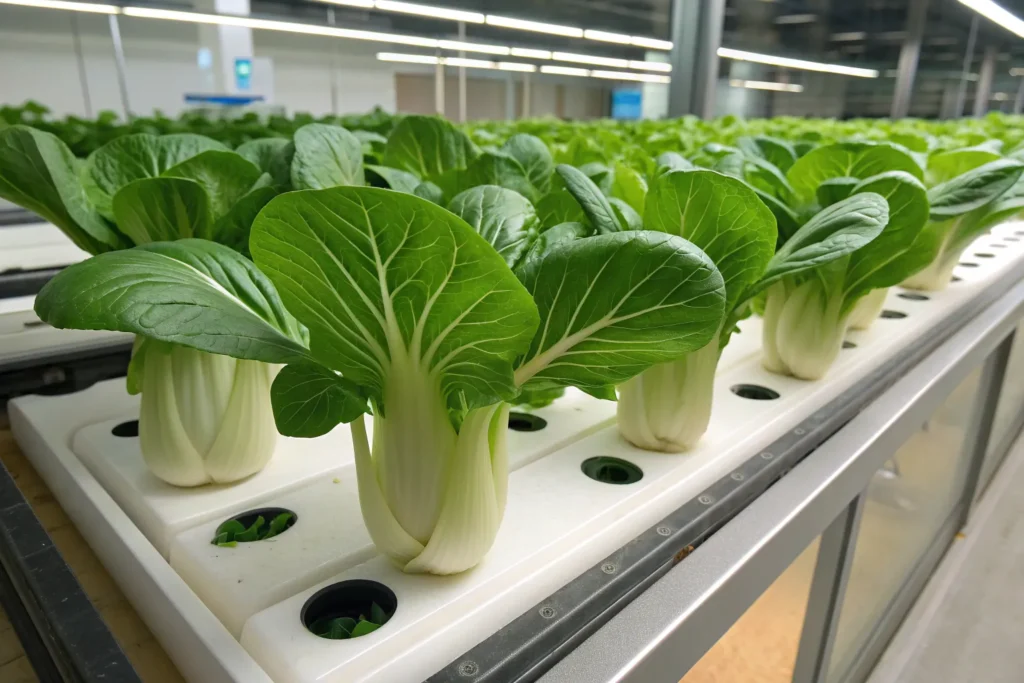
Bok choy, also known as Chinese cabbage, is one of the fastest-growing hydroponic leafy greens for indoor gardens. It thrives in nutrient-rich water, producing crisp white stems and tender green leaves that are perfect for stir-fries, soups, salads, and steamed dishes. Thanks to its quick growth and compact size, bok choy is an excellent choice for both beginners and experienced hydroponic gardeners looking for reliable harvests throughout the year.
Bok choy performs best in Deep Water Culture (DWC), Nutrient Film Technique (NFT), and Kratky hydroponic systems. Maintain a nutrient solution pH of 6.0–7.0, provide 12 to 14 hours of bright light each day, and keep temperatures between 60–70°F (16–21°C). You can harvest the entire head once mature or pick the outer leaves individually to encourage continued growth and multiple harvests.
Best Varieties: Shanghai Green, Joi Choi
Expert Tip: Harvest bok choy while the stems are still young and tender for the sweetest flavor and crispest texture. Consistent watering, cool temperatures, and regular nutrient monitoring will help prevent bitterness and encourage healthy, vigorous growth.
Common Beginner Mistakes When Growing Hydroponic Plants
Hydroponic gardening is simple once you understand the basics, but a few common mistakes can slow plant growth or reduce your harvest. The good news is that most problems are easy to prevent with regular monitoring and proper care. Avoiding these beginner errors will help your hydroponic plants stay healthy and productive throughout the growing season.
- Choosing Difficult Plants First: Start with easy crops like lettuce, basil, spinach, or bok choy before moving on to larger fruiting plants such as tomatoes or peppers.
- Ignoring pH Levels: Most hydroponic plants grow best with a nutrient solution pH between 5.5 and 6.5. Check the pH regularly to ensure your plants can absorb essential nutrients efficiently.
- Using Too Much or Too Little Nutrient Solution: Overfeeding can damage roots, while underfeeding can slow growth. Always follow the manufacturer’s recommendations and adjust nutrient strength as plants mature.
- Not Providing Enough Light: Most indoor hydroponic plants need 12–16 hours of light each day. If natural sunlight is limited, use full-spectrum LED grow lights to support healthy growth.
- Skipping Water Changes: Replace or refresh the nutrient solution every 1–2 weeks to prevent nutrient imbalances, algae growth, and poor water quality.
- Overcrowding Plants: Give each plant enough room to grow. Proper spacing improves airflow, reduces disease risk, and allows leaves to receive adequate light.
- Neglecting System Cleaning: Clean reservoirs, pumps, and growing containers regularly to prevent algae, bacteria, and clogged equipment that can affect plant health.
- Poor Air Circulation: Stagnant air encourages fungal diseases and weak growth. A small oscillating fan can improve airflow, strengthen stems, and support healthy indoor plants.
With consistent care and routine maintenance, hydroponic gardening becomes much easier. Monitoring your plants, keeping your system clean, and making small adjustments when needed will reward you with healthier plants and abundant harvests year-round.
Frequently Asked Questions
Conclusion
Growing your own food doesn’t require a large backyard or even a garden bed. With the right hydroponic system, you can enjoy fresh vegetables, herbs, and fruits indoors throughout the year while using less water and eliminating the need for soil. Whether you’re just getting started or looking to expand your indoor garden, choosing the best hydroponic plants will set you up for a productive and rewarding growing experience.
If you’re a beginner, start with easy favorites like lettuce, basil, spinach, mint, or bok choy, as they’re fast-growing, low-maintenance, and forgiving. As you gain confidence, you can move on to more demanding crops such as tomatoes, cucumbers, peppers, and strawberries for larger harvests and greater variety.
Every plant featured in this guide can thrive with the right balance of light, nutrients, and regular care. By selecting varieties that suit your space and hydroponic setup, you’ll enjoy healthier plants, quicker harvests, and a continuous supply of homegrown produce all year long.
Looking for more indoor gardening inspiration? Explore our other hydroponic gardening, indoor plant, and kitchen gardening guides to discover more practical tips, growing techniques, and easy-to-grow plants for every skill level.