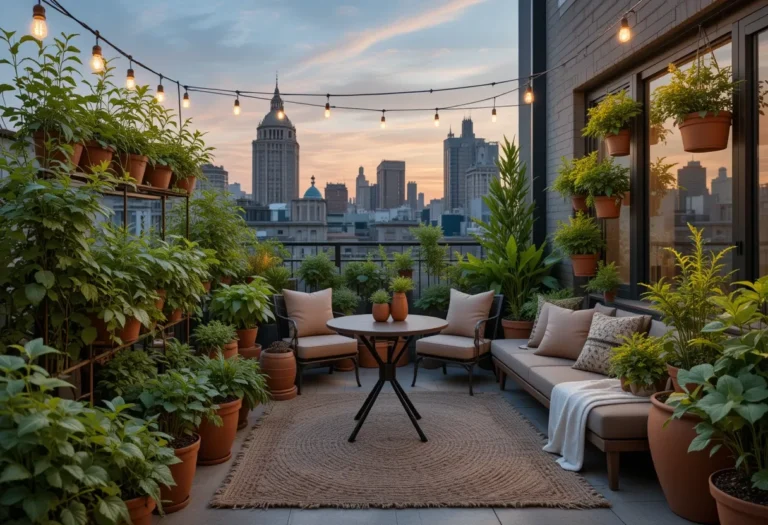
28 Kitchen Herb Garden Ideas to Grow Fresh Herbs Right Where You Cook
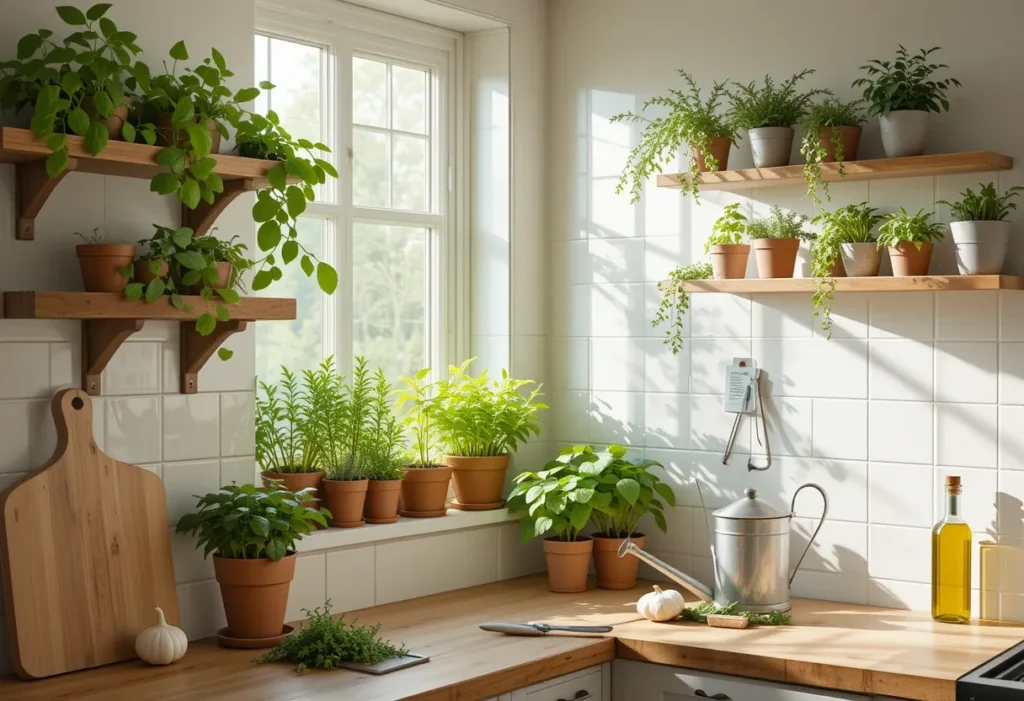
Nothing beats the convenience of reaching for fresh basil while stirring pasta sauce or clipping a few sprigs of thyme just before dinner. A kitchen herb garden keeps your favorite culinary herbs within arm’s reach, adds natural greenery to your home, and makes everyday cooking feel a little more rewarding.
The best part? You don’t need a large backyard or a dedicated greenhouse to grow fresh herbs. A sunny windowsill, a countertop, a floating shelf, or even a small wall planter can provide enough space for herbs like basil, parsley, mint, chives, rosemary, and thyme to thrive indoors.
In this collection, you’ll discover 28 stylish kitchen herb garden ideas for every type of home, from compact apartment kitchens to spacious family kitchens. Whether you prefer a clean modern look, cozy farmhouse charm, Scandinavian simplicity, or clever space-saving solutions, these ideas will help you create an indoor herb garden that’s both beautiful and practical.
Along the way, you’ll also find simple growing tips to help your herbs stay healthy, productive, and ready to harvest throughout the year.
Love growing your own food? After creating your kitchen herb garden, explore our Kitchen Garden Ideas for inspiration on growing fresh vegetables at home, or discover the Best Summer Vegetables to Grow in Pots if you’re working with a patio, balcony, or other small outdoor space. If you’re planning to grow tomatoes, check out our guide on how to grow tomatoes in pots, learn why tomato leaves are turning yellow so you can spot problems early, and find the best tomato fertilizer to keep your plants healthy and productive.
Table of Contents
Best Herbs to Grow in a Kitchen Herb Garden
Choosing the right herbs is the first step toward creating a thriving kitchen herb garden. While many culinary herbs grow well indoors, some are easier to maintain and better suited to everyday cooking than others. The table below compares some of the most popular kitchen herbs based on their sunlight needs, growing difficulty, and best culinary uses, making it easy to choose the varieties that fit your space and cooking style.
| Herb | Sunlight | Difficulty | Best For |
|---|---|---|---|
| Basil | 6–8 hrs | Easy | Pasta, pesto |
| Parsley | 4–6 hrs | Easy | Salads, soups |
| Chives | 4–6 hrs | Very Easy | Eggs, potatoes |
| Thyme | 6+ hrs | Easy | Roasts |
| Rosemary | 6–8 hrs | Moderate | Meat dishes |
| Mint | 4–6 hrs | Very Easy | Tea, desserts |
| Oregano | 6+ hrs | Easy | Pizza, Italian food |
| Cilantro | 4–6 hrs | Moderate | Mexican & Asian cuisine |
Gardening Expert’s Advice
Expert Insight: One of the most common mistakes beginner gardeners make is treating all herbs the same. Mediterranean herbs such as rosemary, thyme, oregano, and sage thrive in well-draining soil and prefer to dry out slightly between waterings, while herbs like basil, parsley, cilantro, and mint perform best with more consistently moist soil. Grouping herbs with similar light and watering needs makes indoor care much easier, reduces the risk of overwatering, and encourages healthier, more productive plants year-round.
1. Modern Countertop Kitchen Herb Garden
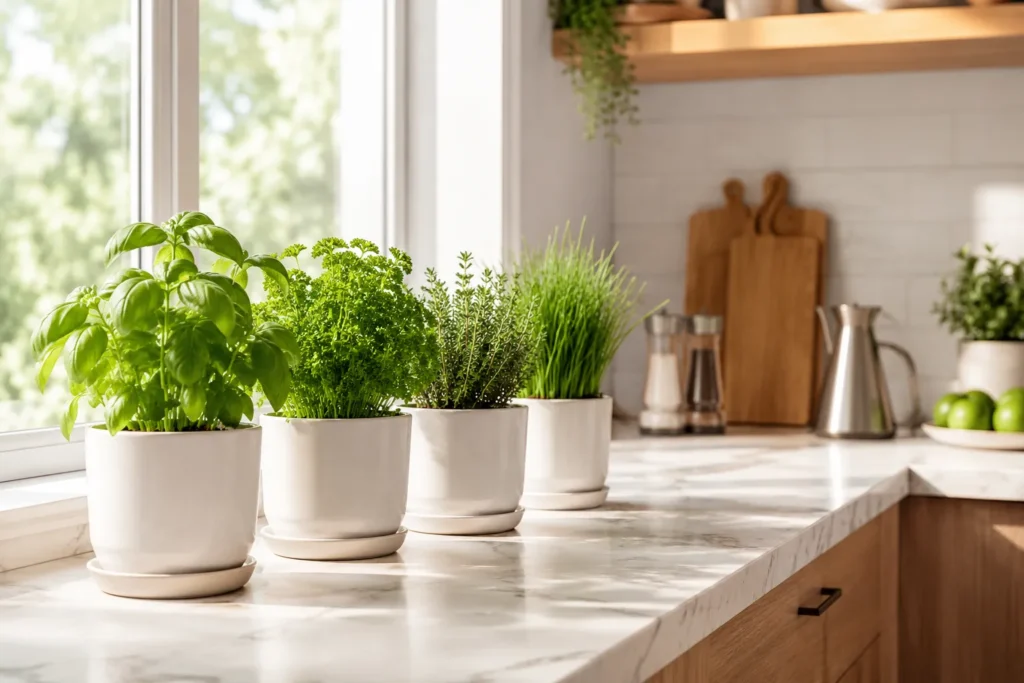
A bright kitchen countertop with matching ceramic pots filled with basil, parsley, thyme, and chives beside a sunny window, creating a clean and modern cooking space.
A countertop herb garden is one of the easiest ways to keep fresh herbs within reach while cooking. A row of matching ceramic or terracotta pots instantly adds warmth and greenery to your kitchen while making it convenient to snip basil for pasta, parsley for soups, or chives for scrambled eggs.
Place your herbs near a bright window where they’ll receive at least six hours of sunlight each day. If your kitchen doesn’t get enough natural light, a compact LED grow light can keep herbs healthy throughout the year. Using a tray beneath the pots helps protect your countertop and makes watering much easier.
Best herbs: Basil, parsley, chives, cilantro, and thyme.
Pro Tip: Group herbs with similar watering needs together. Basil and parsley enjoy consistently moist soil, while rosemary and thyme prefer to dry slightly between waterings.
2. Tiered Kitchen Herb Planters for Small Spaces
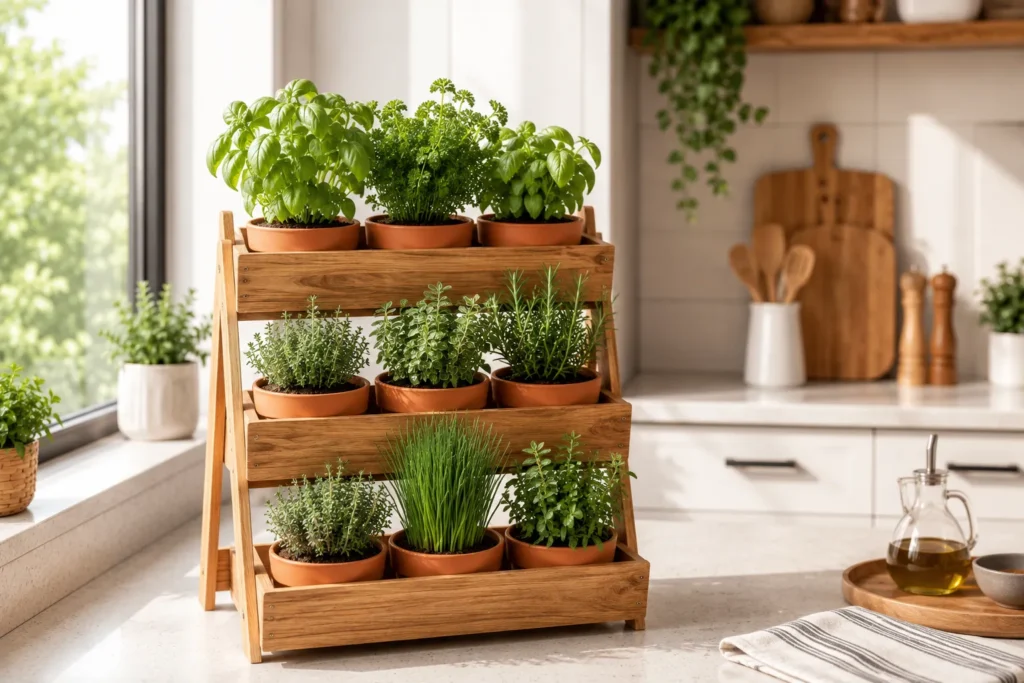
A compact three-tier herb planter displayed on a bright kitchen countertop, filled with basil, thyme, oregano, parsley, and rosemary beside a sunny window.
If you’re short on counter space, a tiered herb planter is one of the smartest ways to grow several culinary herbs without creating clutter. By stacking pots vertically, you can keep fresh basil, thyme, parsley, oregano, and rosemary within easy reach while leaving plenty of room for meal prep.
Place the planter near a sunny window where each level receives adequate light. Rotating the planter every few days helps ensure all your herbs grow evenly. If natural light is limited, a slim LED grow light mounted under a cabinet can provide the extra light your herbs need, especially during winter.
Choose planters with built-in drainage trays to protect your countertops and prevent excess moisture from collecting around the roots.
Best herbs: Basil, thyme, oregano, parsley, rosemary, and chives.
Pro Tip: Position taller herbs like rosemary on the top tier and shorter, leafy herbs like parsley or chives on the lower shelves so every plant receives plenty of light and airflow.
3. Rustic Wooden Herb Planters for a Warm Kitchen
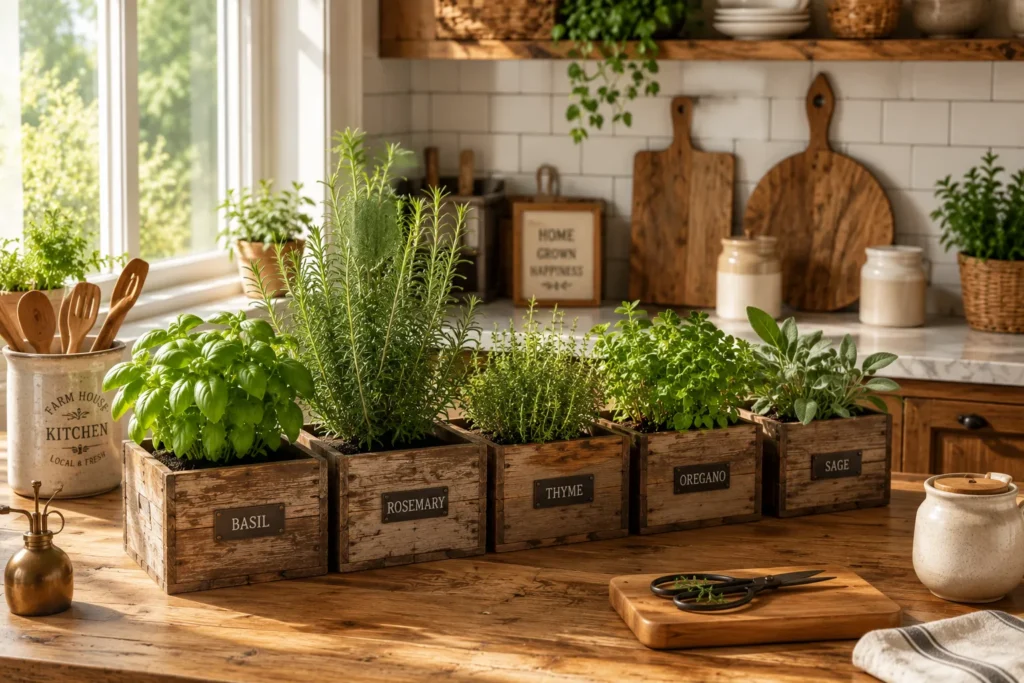
Rustic wooden planters filled with basil, rosemary, and thyme displayed on a bright kitchen shelf, bringing natural warmth and fresh greenery to the cooking space.
Wooden herb planters are an easy way to add warmth and texture to your kitchen while keeping your favorite herbs close to where you cook. Basil, rosemary, and thyme create a beautiful mix of colors and fragrances, turning an ordinary countertop or open shelf into a practical herb station you’ll reach for every day.
The natural wood finish pairs well with modern, farmhouse, and Scandinavian kitchens, making it a versatile choice for almost any décor. Place the planters near a sunny window or beneath a full-spectrum grow light to help your herbs stay healthy and productive throughout the year. A shallow tray underneath will catch excess water and protect your countertops from moisture.
Best herbs: Basil, rosemary, thyme, oregano, and sage.
Pro Tip: Since rosemary prefers drier soil than basil, grow them in separate pots within the wooden planter or use individual containers with good drainage to make watering easier.
4. Rustic Kitchen Herb Garden with a Stone Path
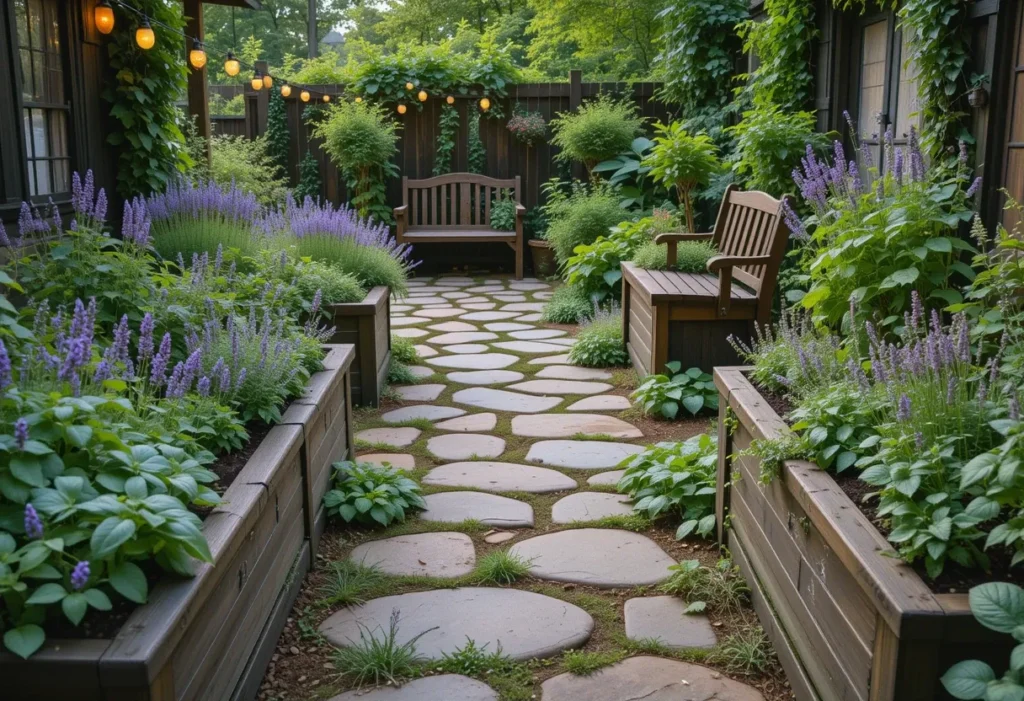
A rustic kitchen herb garden with wooden raised planters filled with basil, lavender, and other culinary herbs, connected by a charming stone pathway that leads to the kitchen.
If you have a sunny kitchen entrance, breakfast nook, or enclosed sunroom, a rustic herb garden with raised wooden planters creates a natural extension of your cooking space. Fresh basil, thyme, parsley, and lavender stay within easy reach, making it easy to harvest herbs just before preparing a meal while adding fragrance and greenery to your home.
Raised planters improve drainage, keep herbs organized, and make harvesting more comfortable without constant bending. A simple stone pathway adds character and keeps the area clean, especially when carrying freshly picked herbs into the kitchen. This timeless design blends beautifully with farmhouse, cottage, and country-style homes.
Have a courtyard outside your kitchen? Take a look at our Courtyard Vegetable Garden Ideas for creative ways to grow herbs and fresh vegetables together.
Best herbs: Basil, thyme, parsley, oregano, chives, and culinary lavender.
Pro Tip: Reserve lavender for its own section or container. It thrives in drier soil than moisture-loving herbs like basil and parsley, making separate planting easier to manage and healthier for both plants.
5. Rustic Kitchen Herb Corner with Terracotta Pots
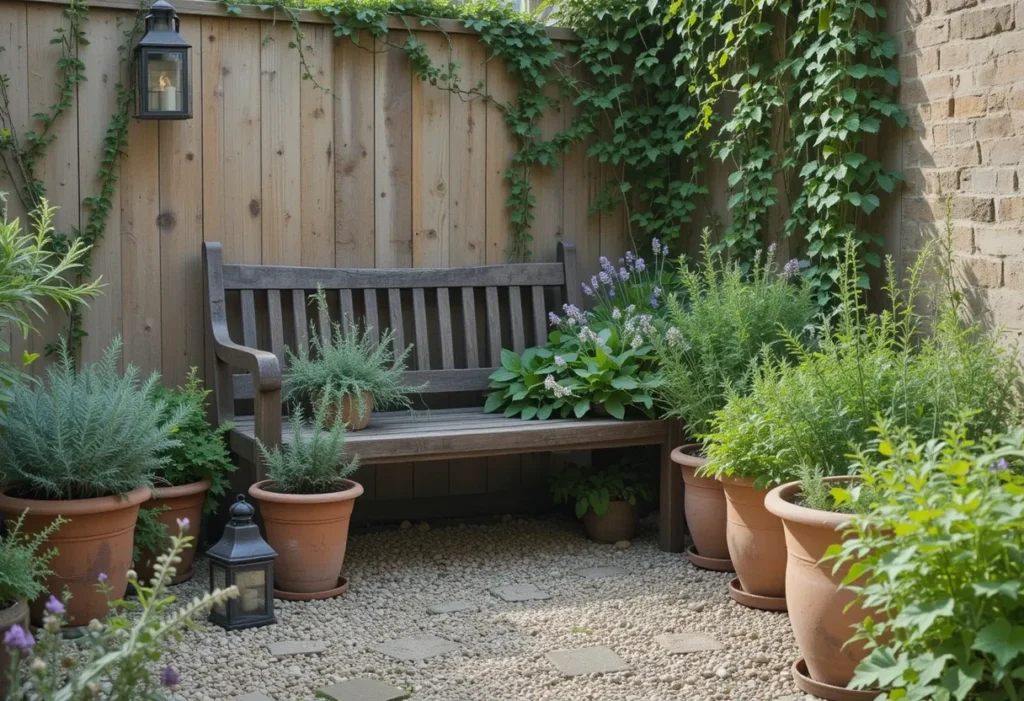
Terracotta pots filled with rosemary, thyme, and oregano arranged beside a rustic wooden bench, creating a charming herb corner just outside the kitchen.
If your kitchen opens onto a small courtyard, sunroom, or back entrance, a collection of terracotta pots makes it easy to grow fresh culinary herbs just steps from your cooking space. Rosemary, thyme, and oregano thrive in individual clay pots, giving each plant the drainage it needs while adding timeless farmhouse charm.
Grouping herbs in matching terracotta containers creates an organized display that’s easy to care for and simple to rearrange as plants grow. A nearby bench offers a convenient spot to repot herbs, trim plants, or gather freshly picked sprigs before heading back to the kitchen. It’s a practical setup that combines everyday convenience with rustic character.
Best herbs: Rosemary, thyme, oregano, sage, and lavender.
Pro Tip: Terracotta naturally absorbs moisture, helping prevent overwatering. It’s an excellent choice for Mediterranean herbs like rosemary, thyme, oregano, and sage, which prefer slightly drier soil than basil or parsley.
6. Minimalist Indoor Kitchen Herb Garden
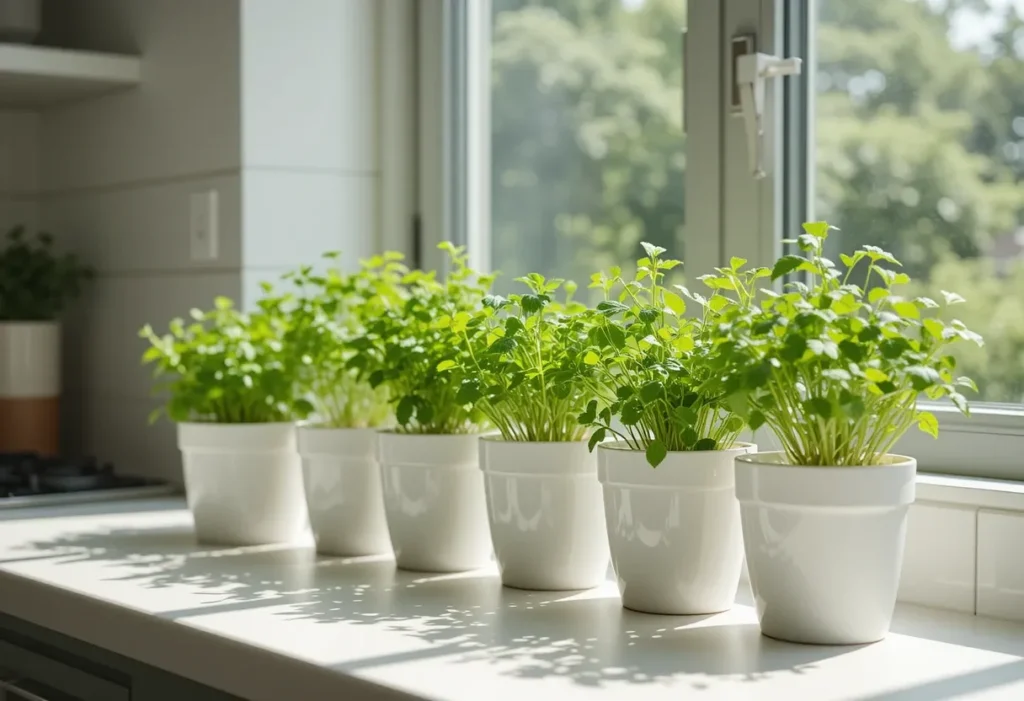
A row of white ceramic pots filled with basil, parsley, and cilantro sits on a sunny kitchen windowsill, creating a clean and functional herb garden for everyday cooking.
A minimalist kitchen herb garden proves you don’t need an elaborate setup to enjoy fresh herbs year-round. Matching white ceramic pots create a clean, uncluttered look while letting the vibrant greens of basil, parsley, and cilantro become the focal point. This simple arrangement blends effortlessly with modern, Scandinavian, and contemporary kitchens.
Position the pots near a south- or west-facing window where they’ll receive at least six hours of sunlight each day. If your kitchen doesn’t get enough natural light, a discreet full-spectrum LED grow light mounted beneath an upper cabinet can keep your herbs healthy through every season. Choose containers with drainage holes and empty excess water after watering to help prevent root rot.
If your kitchen doesn’t receive enough direct sunlight, choose herbs that tolerate lower light conditions, such as parsley, mint, and chives. For more edible plants that grow well with limited sun, explore our guide to Vegetables That Grow in Shade.
Best herbs: Basil, parsley, cilantro, chives, and dill.
Pro Tip: Harvest herbs regularly by trimming the outer stems instead of removing only a few leaves. Frequent harvesting encourages fuller, bushier growth and gives you a continuous supply of fresh herbs for cooking.
7. Kitchen Island Herb Planters for Fresh Herbs Within Reach
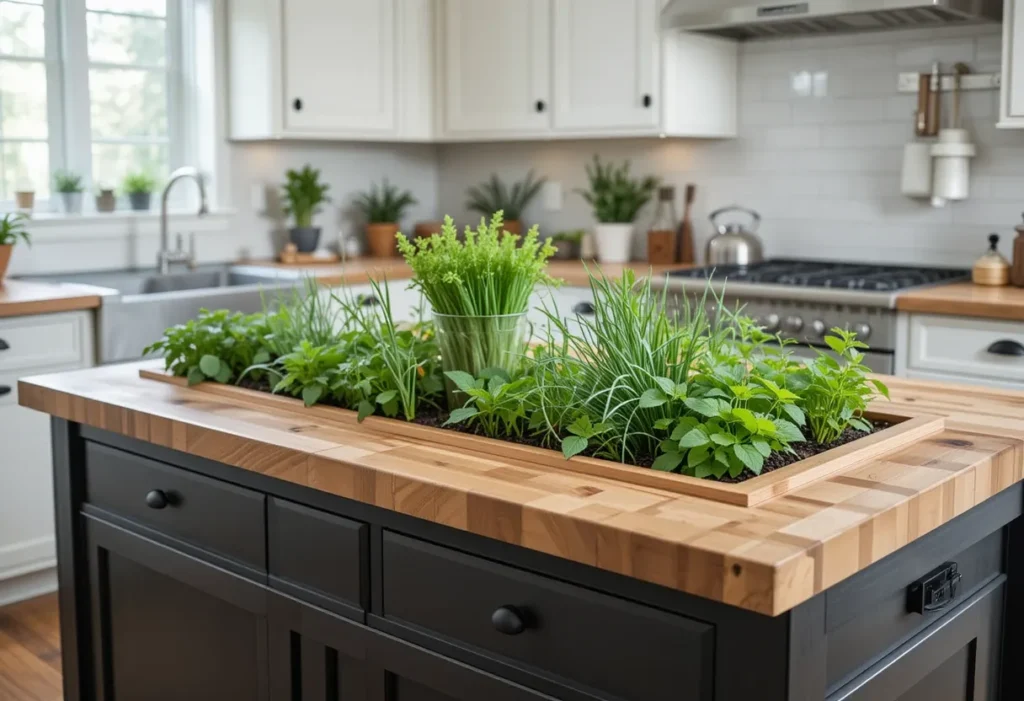
A modern kitchen island with built-in wooden planters filled with fresh mint, chives, oregano, and basil, creating a functional centerpiece that’s both beautiful and practical.
A kitchen island with built-in herb planters keeps fresh herbs exactly where you need them, just a few steps from your chopping board. Whether you’re adding basil to homemade pasta, snipping chives for baked potatoes, or garnishing soups with oregano, having herbs growing in the heart of your kitchen makes everyday cooking more convenient.
Built-in planters also turn an ordinary kitchen island into a striking focal point. Choose moisture-resistant wood or sealed composite materials, and make sure each planter has proper drainage to protect both your herbs and the cabinetry below. Position the island where it receives plenty of natural light, or install discreet overhead grow lights if your kitchen lacks a sunny window.
Best herbs: Basil, chives, oregano, parsley, thyme, and mint.
Pro Tip: Plant vigorous growers like mint in their own container inside the planter. Mint spreads quickly and can crowd out slower-growing herbs if they’re planted together.
8. Boho Kitchen Herb Garden with Macramé Hangers
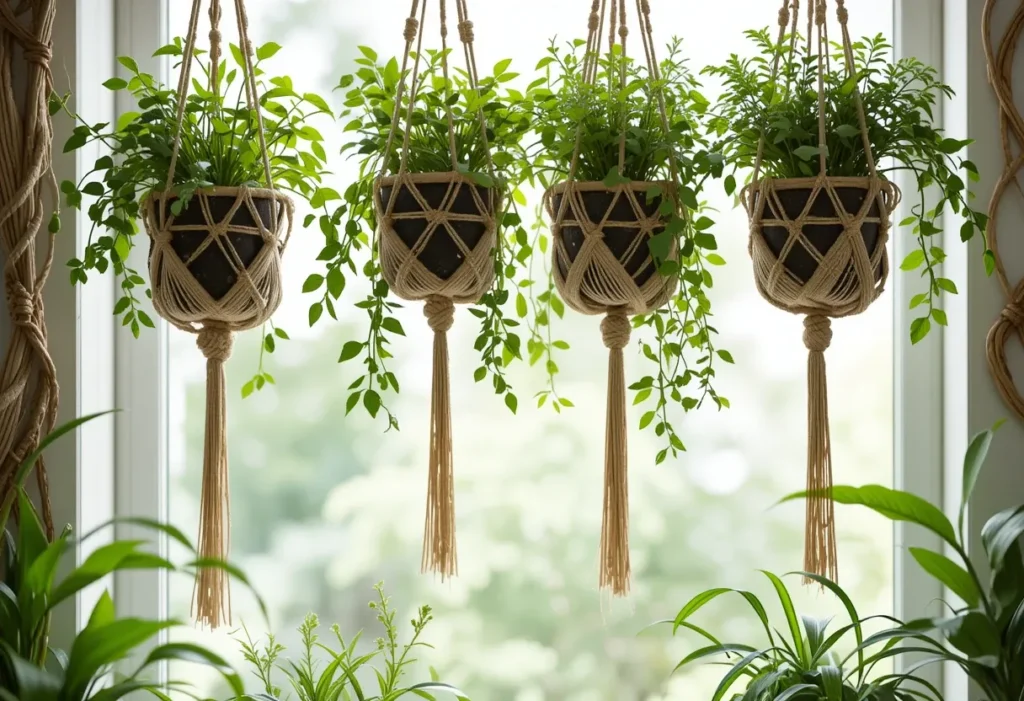
Macramé plant hangers suspended in front of a sunny kitchen window, displaying basil, sage, and thyme in ceramic pots for a cozy boho-inspired herb garden.
Macramé plant hangers are a stylish way to grow fresh herbs without taking up valuable counter space. Hanging herbs like basil, sage, and thyme near a bright kitchen window keeps them within easy reach while adding warmth, texture, and natural greenery to your cooking space. This setup is especially useful in apartments or small kitchens where every inch of workspace matters.
Choose lightweight pots with drainage holes and hang them where they’ll receive at least six hours of bright light each day. Since hanging planters dry out faster than countertop pots, check the soil regularly and water when the top inch feels dry. Pairing woven macramé hangers with ceramic pots, wooden shelves, or rattan accessories creates a relaxed bohemian look that feels inviting without overwhelming the space.
Best herbs: Basil, thyme, sage, oregano, and trailing mint.
Pro Tip: Avoid hanging heavy planters directly above your main food preparation area. Position them beside a sunny window or near the sink, where harvesting and watering are both safer and more convenient.
9. French-Inspired Kitchen Window Herb Garden
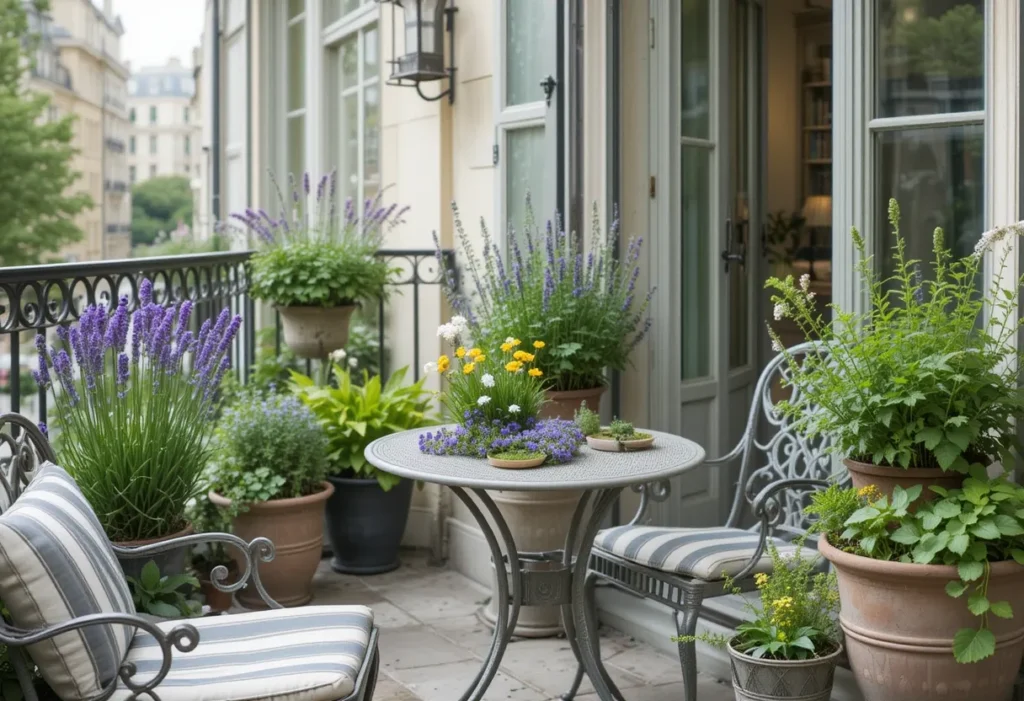
Elegant cast-iron window planters filled with lavender, chervil, and tarragon bring timeless French charm to a bright kitchen window.
Bring the charm of a Parisian café into your home with a French-inspired kitchen herb garden. Decorative cast-iron window planters filled with fragrant herbs like chervil, tarragon, and culinary lavender create a beautiful display while keeping fresh ingredients close at hand for everyday cooking. The classic metalwork adds vintage character, making even a simple kitchen window feel warm and inviting.
Position the planters where they’ll receive plenty of natural sunlight, and choose herbs you’ll regularly use in the kitchen. French favorites such as tarragon, chervil, thyme, and parsley are perfect for seasoning chicken, fish, salads, and homemade sauces. Pair the display with neutral linen curtains, vintage ceramic pots, or wooden cutting boards to complete the timeless European look.
Best herbs: Tarragon, chervil, thyme, parsley, and culinary lavender.
Pro Tip: Herbs growing near windows can experience temperature changes throughout the day. During hot afternoons or cold winter nights, rotate the pots occasionally and avoid letting the leaves touch the glass to reduce heat or cold stress.
10. Compact Herb Wall for a Small Apartment Kitchen
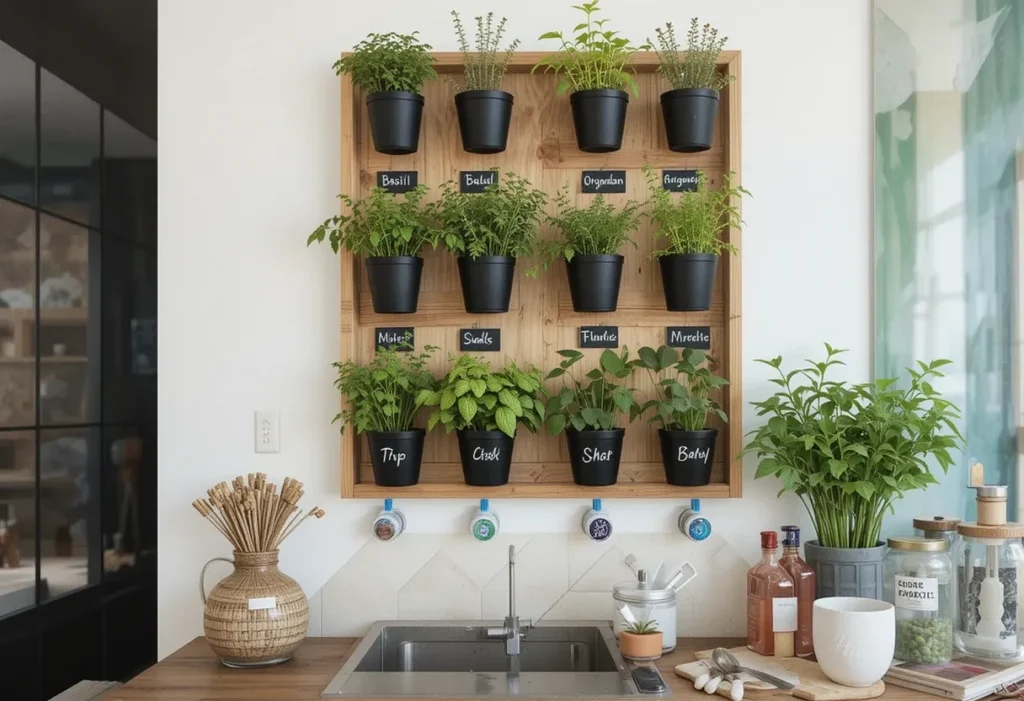
Mounted herb pots arranged on vertical wooden slats transform a blank kitchen wall into a space-saving herb garden filled with basil, mint, oregano, and other fresh culinary herbs.
A wall-mounted herb garden is one of the smartest ways to grow fresh herbs in a small kitchen without sacrificing valuable countertop space. By using vertical wooden slats or a mounted rail system, you can turn an unused wall into a functional display that keeps your favorite herbs organized, healthy, and always within reach while cooking.
Install the herb wall near a bright window so each plant receives plenty of natural light. If sunlight is limited, a slim LED grow light mounted above the planters can provide consistent light throughout the year. Choose lightweight pots with good drainage and leave enough space between them to improve airflow and make harvesting easier.
Whether your kitchen has a modern, farmhouse, or Scandinavian style, a vertical herb wall adds natural greenery while making everyday cooking more convenient.
If you’re looking for an even more compact indoor growing solution, a countertop hydroponic system is worth considering. Our guide to Best Hydroponic Plants highlights herbs and leafy greens that thrive in water-based systems, making them perfect for small kitchens and apartments.
Best herbs: Basil, oregano, parsley, chives, thyme, and mint.
Pro Tip: Label each planter with the herb’s name and planting date. It makes harvesting easier, helps you track growth, and reminds you when it’s time to prune or replace older plants.
11. Cottagecore Kitchen Herb Garden in Wooden Crates
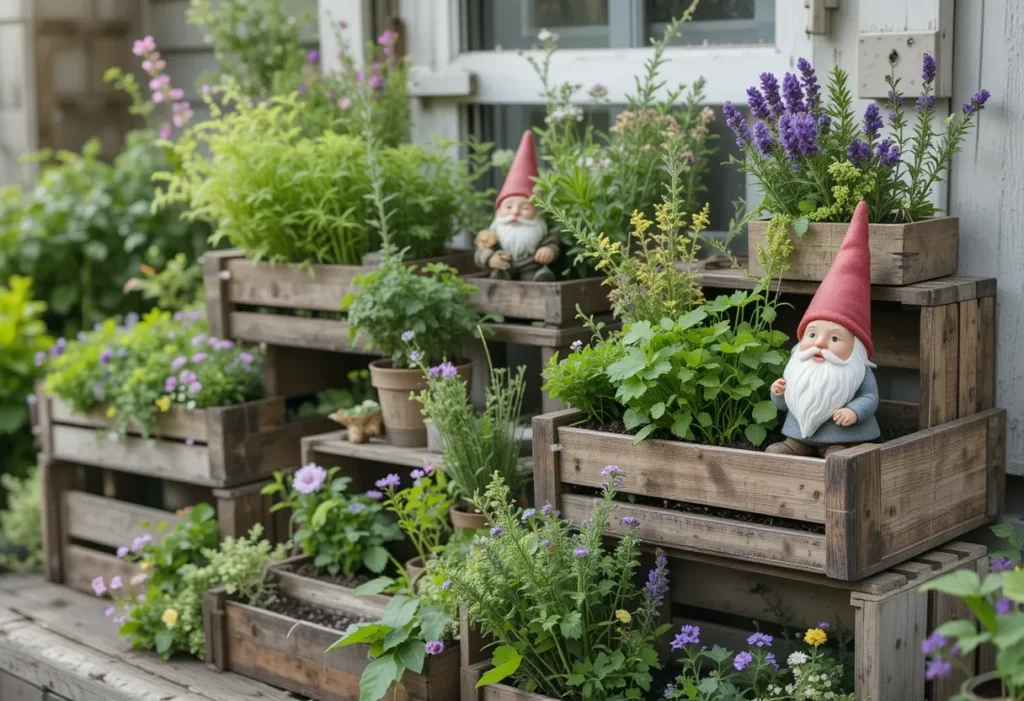
Wooden crates bring cozy cottage charm to a kitchen while doubling as functional herb planters. Filled with fragrant herbs like basil, parsley, thyme, and oregano, they create a relaxed, lived-in look that feels right at home on open shelving, a kitchen cart, or beside a sunny window. The mix of natural wood and fresh greenery adds warmth without taking up much space.
Line each crate with a waterproof tray or individual pots to protect the wood from moisture and make watering easier. Using separate containers also lets you group herbs with similar care needs, helping them stay healthy throughout the year. Complete the display with vintage plant labels, woven baskets, or ceramic jars for an inviting cottage-inspired kitchen.
Best herbs: Basil, parsley, thyme, oregano, chives, and dill.
Pro Tip: If you place crates on open shelves, choose lightweight pots and leave enough space around each herb to improve airflow. Good air circulation helps reduce excess moisture and keeps indoor herbs growing strong.
12. Scandinavian Kitchen Herb Garden with Open Shelving
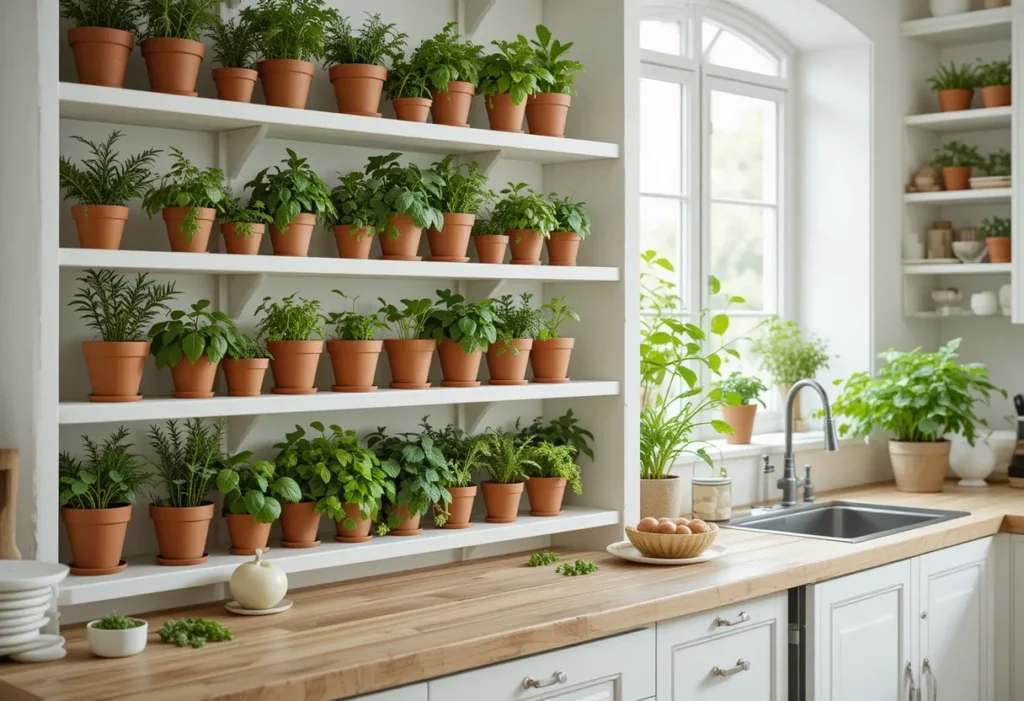
Scandinavian design is all about simplicity, functionality, and bringing natural elements indoors, making open shelving the perfect place to grow fresh herbs. Arranging herbs in matching ceramic or terracotta pots keeps your kitchen organized while adding vibrant greenery that complements the clean lines and neutral tones of Nordic interiors. Position the shelves near a bright window so your herbs receive plenty of natural light while staying within easy reach during meal preparation.
To keep the display looking tidy, choose pots with built-in drainage trays and group herbs according to their watering needs. This not only makes plant care easier but also creates a balanced, uncluttered arrangement that’s both decorative and practical. Pair the shelves with wooden cutting boards, glass storage jars, and woven baskets to complete the timeless Scandinavian aesthetic.
Best herbs: Basil, parsley, thyme, rosemary, chives, and dill.
Pro Tip: Rotate your herb pots every few days so each plant receives even sunlight. This simple habit encourages upright, balanced growth and prevents herbs from leaning toward the window.
13. Hanging Herb Garden Above the Kitchen Sink
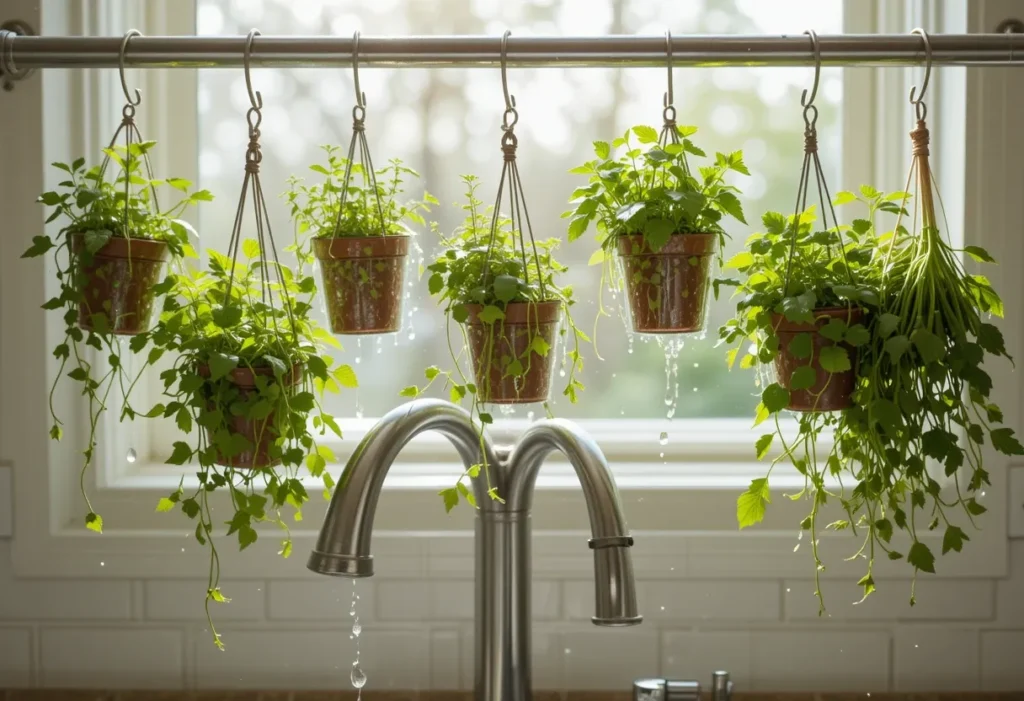
The area above the kitchen sink is often one of the brightest spots in the home, making it an ideal location for a hanging herb garden. Suspending lightweight planters keeps countertops clear while ensuring fresh herbs are always within reach for cooking. Basil, parsley, mint, and chives thrive in this setup, adding both vibrant greenery and everyday convenience to your kitchen.
Choose sturdy hooks and lightweight pots with proper drainage, and hang them high enough to avoid interfering with daily tasks. If your sink sits beneath a south- or east-facing window, your herbs will receive the sunlight they need to grow well. Decorative macramé hangers or minimalist metal planters can complement almost any kitchen style while making the space feel brighter and more inviting.
Best herbs: Basil, parsley, chives, mint, cilantro, and oregano.
Pro Tip: Water hanging herbs carefully over the sink or remove the pots before watering to allow excess water to drain completely. This helps prevent water stains on your walls and keeps your kitchen clean while protecting your plants from soggy roots.
14. Indoor Herb Cart on Wheels
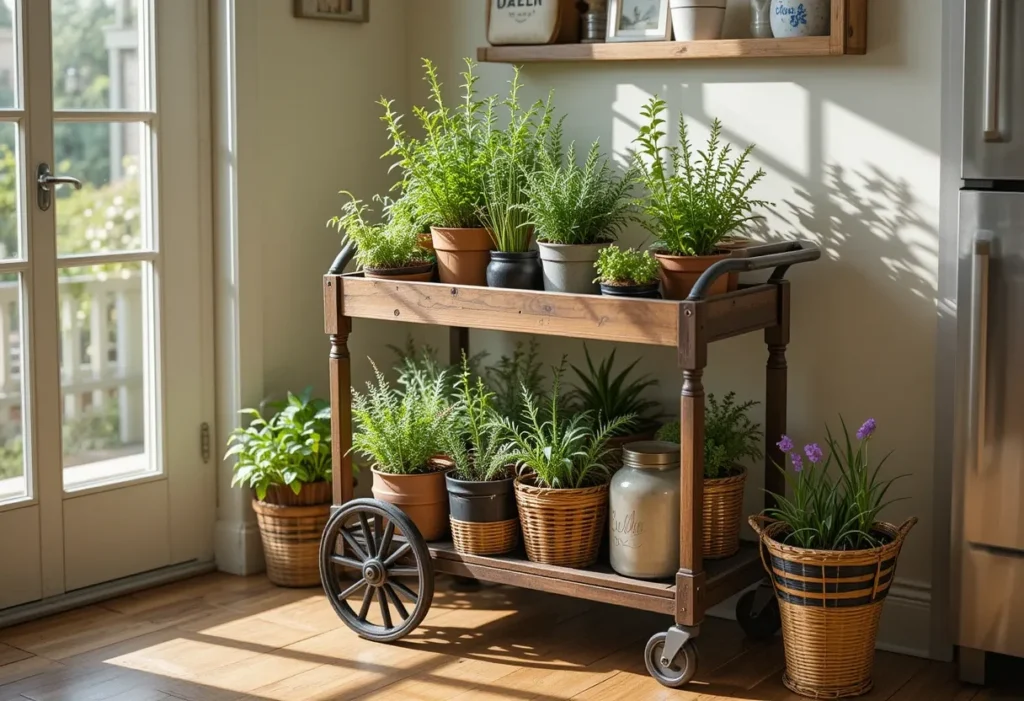
A rolling herb cart is a practical solution for kitchens that don’t receive consistent sunlight throughout the day. Instead of keeping your herbs in one fixed location, you can simply move the cart to follow the sunlight or position it near a bright window while still keeping fresh herbs close to your cooking area. It’s an excellent option for renters and apartment dwellers who want a flexible indoor herb garden without installing shelves or wall planters.
Choose a sturdy cart with two or three tiers to organize herbs by height and watering needs. Place taller herbs like rosemary on the top shelf where they’ll receive the most light, and keep compact herbs such as parsley, basil, and chives on the lower levels. A small tray beneath each pot catches excess water, making cleanup quick and protecting the cart from moisture.
Best herbs: Basil, parsley, thyme, rosemary, chives, oregano, and cilantro.
Pro Tip: Lock the cart’s wheels once it’s in place to prevent accidental movement while harvesting or watering. Rotating the cart every few days also helps all your herbs receive even light, encouraging healthy, balanced growth.
15. Hanging Glass Jar Herb Garden
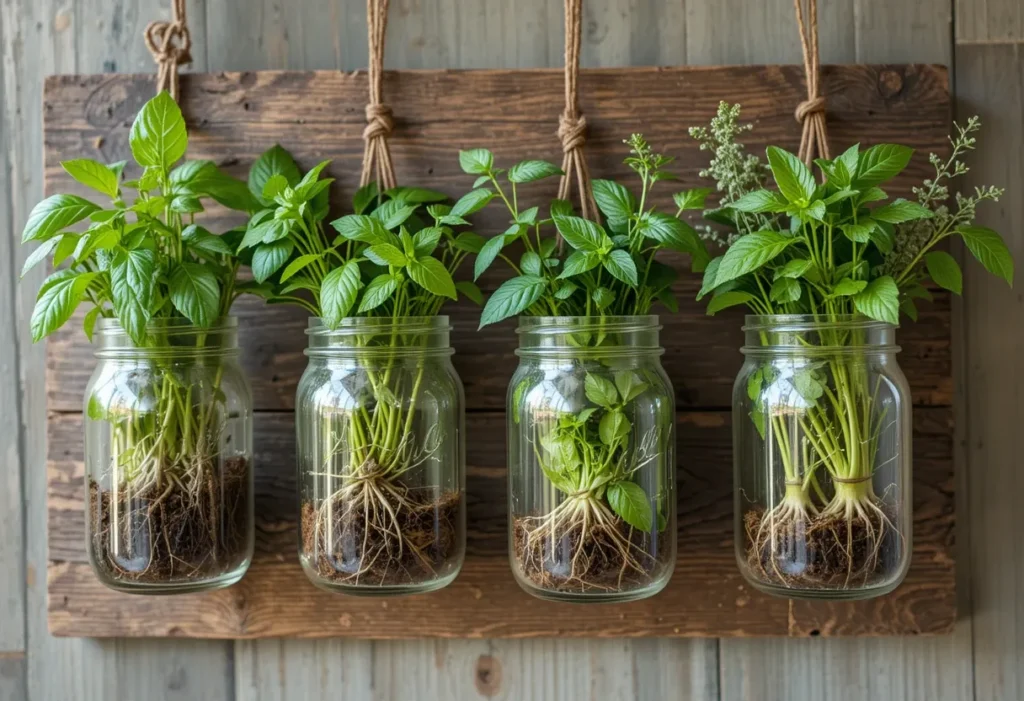
Hanging glass jars offer a creative way to display fresh herbs while making the most of vertical space in a small kitchen. Their transparent design lets you see the roots and soil level, adding visual interest while helping you monitor when your herbs need water. Hung near a bright window, they bring natural greenery into your cooking space without taking up valuable countertop room.
For healthy growth, use glass jars as decorative cachepots by placing herbs in small nursery pots that can be removed for watering and proper drainage. If you plant directly in the jars, add a layer of pebbles beneath the soil and water sparingly to avoid excess moisture around the roots. Pair the jars with wooden shelves, brass hardware, or macramé hangers for a warm, modern look.
Best herbs: Mint, basil, thyme, oregano, parsley, and chives.
Pro Tip: Most culinary herbs don’t thrive in containers without drainage. Using removable pots inside the glass jars makes watering easier and helps prevent root rot while preserving the clean, elegant appearance of the display.
16. Kitchen Window Herb Shelf
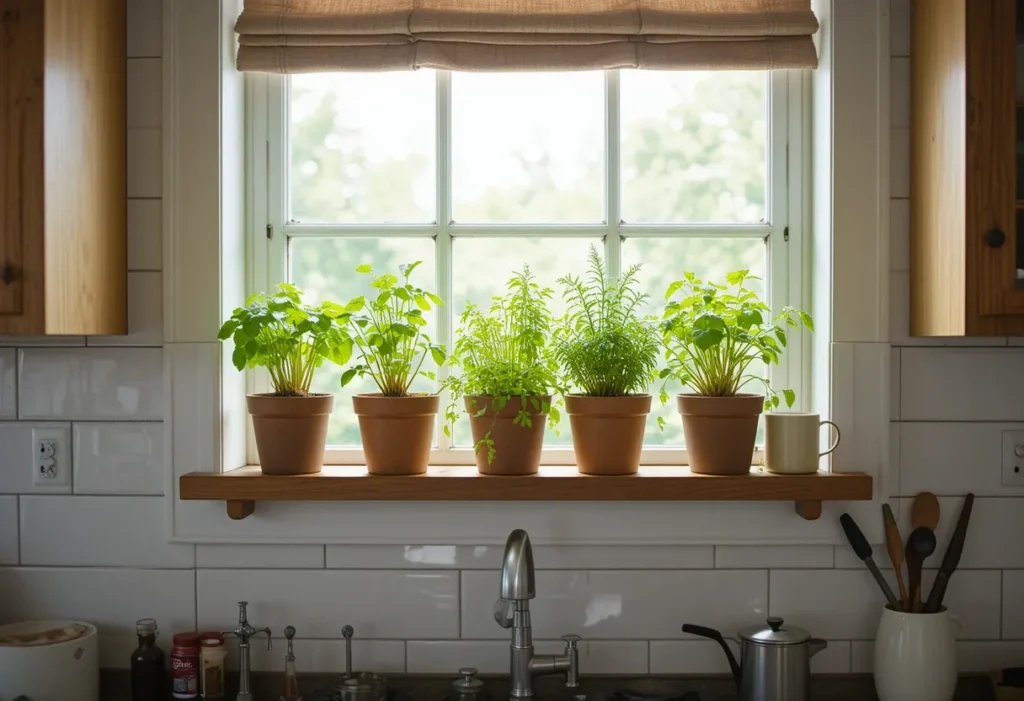
A dedicated herb shelf transforms an ordinary kitchen window into a productive growing space where fresh herbs are always within easy reach. Installing one or two narrow shelves allows you to grow several herbs without sacrificing valuable countertop space, making it an ideal solution for small kitchens. The combination of natural sunlight and convenient access encourages regular harvesting, which helps many herbs grow fuller over time.
Choose sturdy shelves that can support the weight of potted plants and use containers with drainage holes to keep roots healthy. Arrange taller herbs like rosemary toward the back and shorter varieties such as basil, parsley, and chives at the front so every plant receives plenty of light. Rotating the pots every week also promotes even growth and prevents them from leaning toward the window.
Best herbs: Basil, parsley, thyme, rosemary, chives, oregano, and cilantro.
Pro Tip: Kitchen windows can become hot during summer afternoons or chilly in winter. Keep herb leaves from touching the glass to reduce temperature stress and help your plants stay healthy year-round.
17. Mason Jar Wall Herb Garden
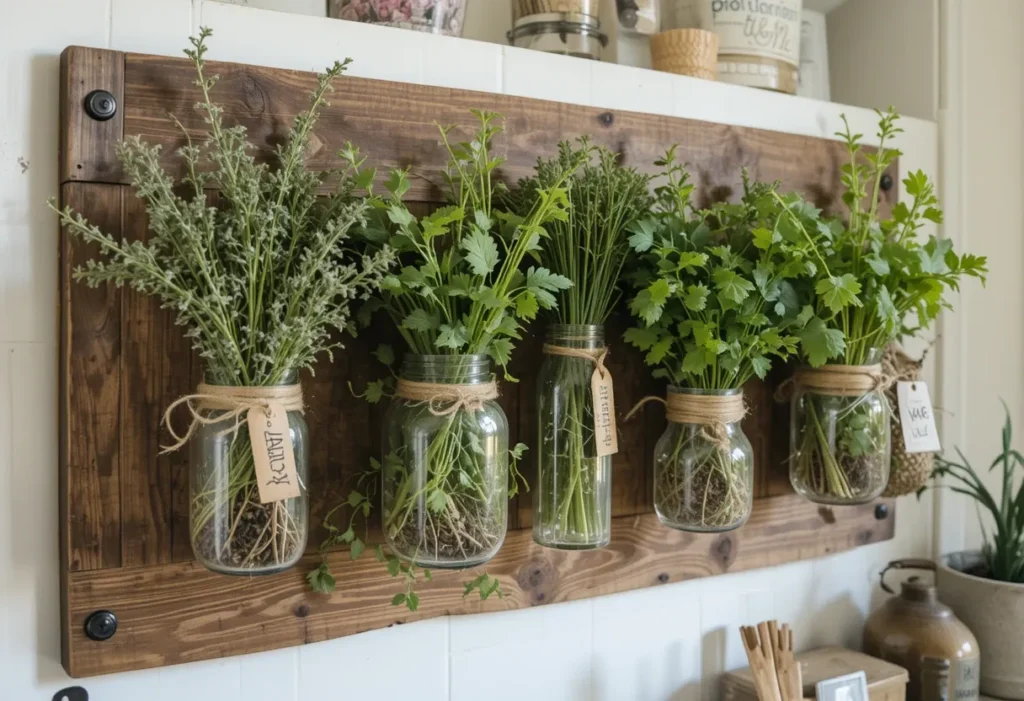
A mason jar herb garden is a simple way to add rustic charm while making fresh herbs easy to access during meal preparation. Mounted on a kitchen wall or backsplash, the jars transform unused vertical space into a decorative display that keeps your favorite culinary herbs organized and within arm’s reach. This budget-friendly project works especially well in farmhouse, cottage, and modern rustic kitchens.
Secure the jars with sturdy metal clamps or brackets and position the herb garden near a bright window whenever possible. Since mason jars don’t have drainage holes, it’s best to place herbs in small nursery pots that fit inside the jars or use a layer of pebbles with careful watering to prevent excess moisture from collecting around the roots. Adding wooden plant markers or chalkboard labels makes it easy to identify each herb while enhancing the handcrafted look.
Best herbs: Basil, parsley, chives, mint, oregano, and thyme.
Pro Tip: Leave a small gap between each jar to improve air circulation and make harvesting easier. Healthy airflow helps reduce excess humidity around the foliage, keeping indoor herbs vigorous and less prone to fungal problems.
18. Colorful Kitchen Herb Garden with Painted Pots
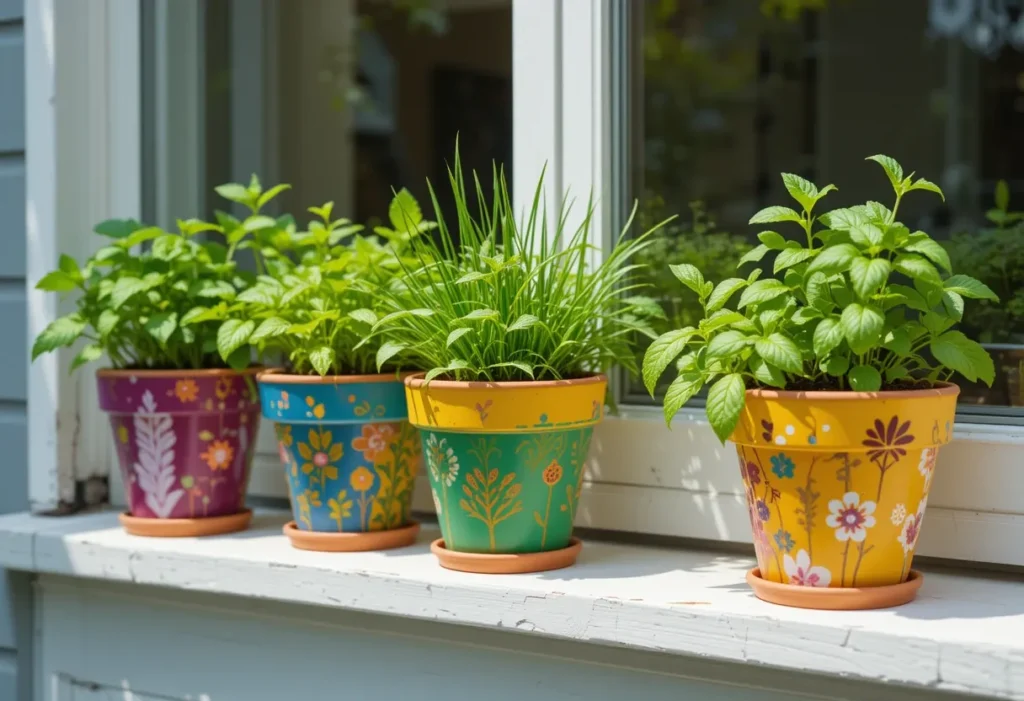
If you want your kitchen herb garden to feel as lively as the meals you prepare, painted pots are an easy way to introduce color and personality. Whether you choose bold hues, soft pastels, or hand-painted patterns, colorful containers turn everyday herbs into eye-catching décor while keeping fresh ingredients close at hand. This simple update works well in modern, eclectic, cottage, or family kitchens.
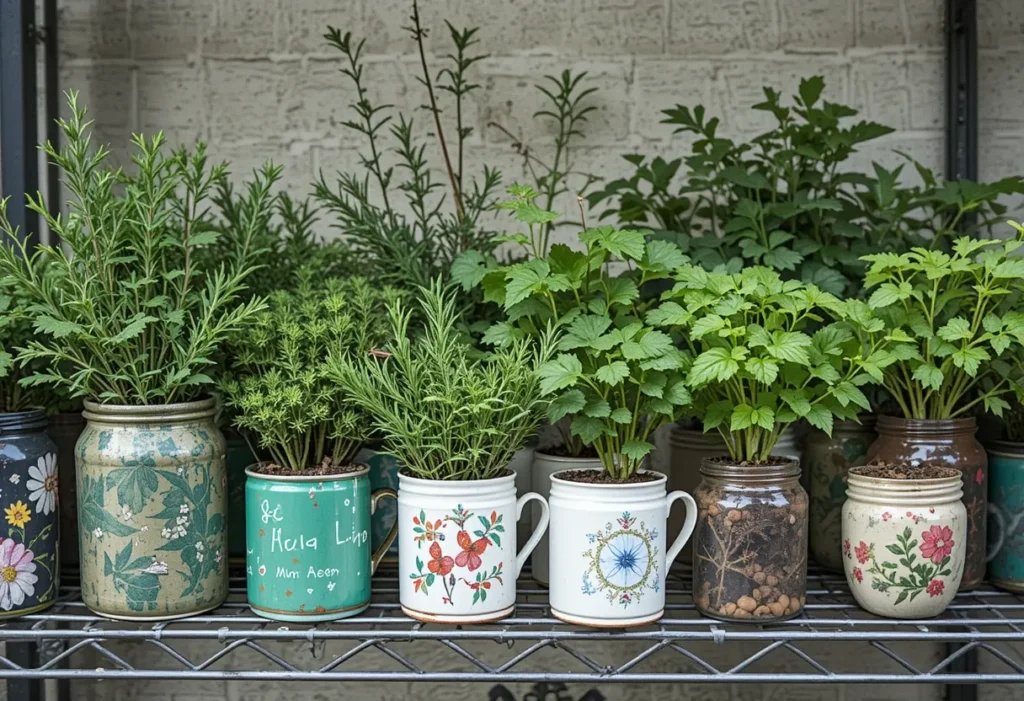
Arrange the pots on a sunny windowsill, open shelf, or countertop where your herbs can receive at least six hours of bright light each day. Choose containers with drainage holes and matching saucers to protect your surfaces from excess water. Labeling each pot with the herb’s name adds a decorative touch while making it easier to identify plants as they grow.
Best herbs: Basil, parsley, chives, cilantro, thyme, and oregano.
Pro Tip: Use light-colored pots for sunny windows, as they absorb less heat than dark containers. This helps keep the soil cooler during warm afternoons and reduces moisture loss, especially for herbs like parsley and cilantro that prefer evenly moist soil.
19. Vertical Herb Ladder Garden
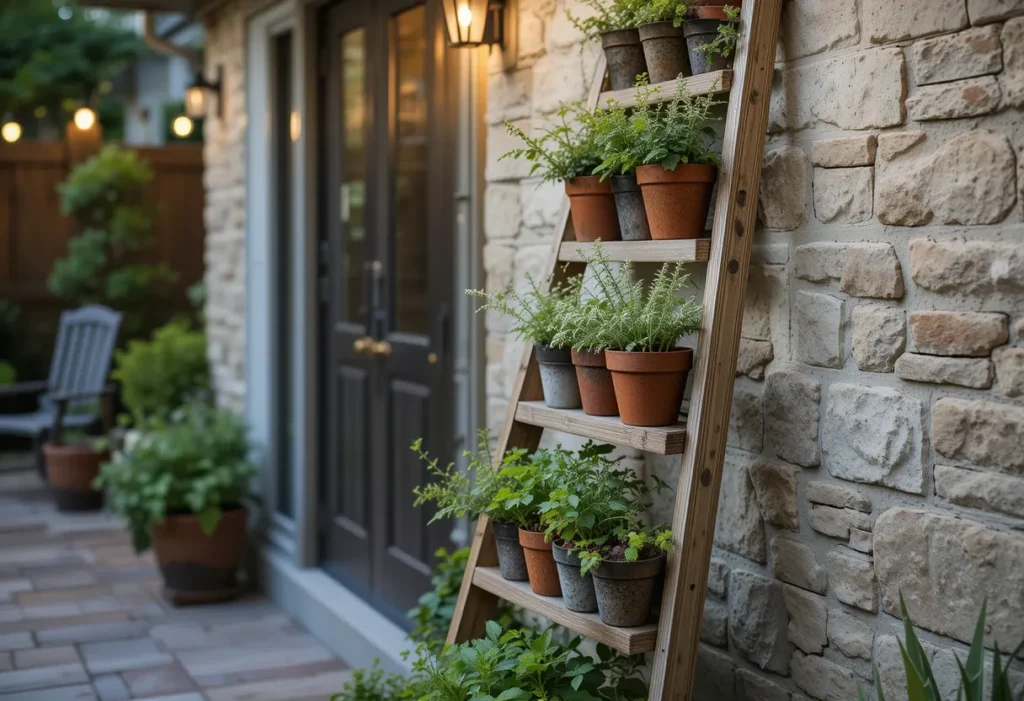
A ladder shelf is a stylish way to grow fresh herbs while making the most of vertical space in your kitchen. Each tier provides room for several herb pots, allowing you to organize plants by size and light requirements without cluttering your countertops. The open design also improves airflow around the plants, helping them stay healthy and making watering and harvesting more convenient.
Place the ladder near a bright window where every shelf receives plenty of natural light. Position taller herbs like rosemary and bay laurel on the upper shelves, while compact varieties such as basil, parsley, thyme, and chives can be displayed on the lower levels for easy access while cooking. Decorative baskets, ceramic pots, or woven planters can add warmth and complement farmhouse, Scandinavian, or modern kitchen styles.
Best herbs: Basil, parsley, thyme, rosemary, chives, oregano, and sage.
Pro Tip: Leave a few inches of space between pots so air can circulate freely around the leaves. Good airflow helps reduce excess humidity, encourages stronger growth, and lowers the risk of common indoor fungal problems.
20. Apothecary-Style Herb Station
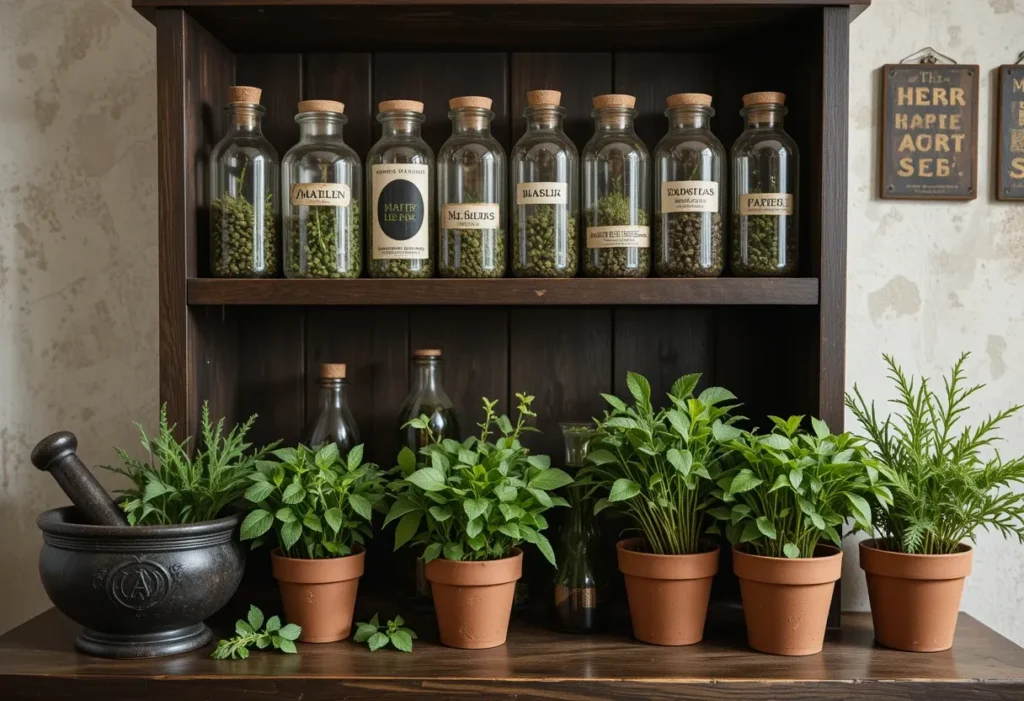
An apothecary-style herb station brings old-world charm to a modern kitchen while keeping fresh herbs beautifully organized. Combining potted herbs with labeled glass jars, vintage containers, and natural wood shelving creates a display that’s both decorative and practical. Position the station near your main prep area so fresh basil, thyme, rosemary, or sage is always within easy reach when cooking.
Use sturdy shelves or a dedicated countertop corner with plenty of natural light to help your herbs thrive. Store dried herbs in airtight amber or clear glass jars nearby to create a cohesive look while keeping your favorite seasonings organized. Mixing fresh and dried herbs in one dedicated space makes everyday cooking more efficient and gives your kitchen a timeless, collected feel.
Best herbs: Basil, rosemary, thyme, sage, oregano, parsley, and chives.
Pro Tip: Keep fresh herbs and dried herbs separate. Fresh herbs need bright light and regular watering, while dried herbs stay freshest when stored in airtight containers away from direct sunlight, heat, and moisture. This simple habit helps preserve their flavor and aroma for longer.
21. Hanging Wire Basket Herb Garden
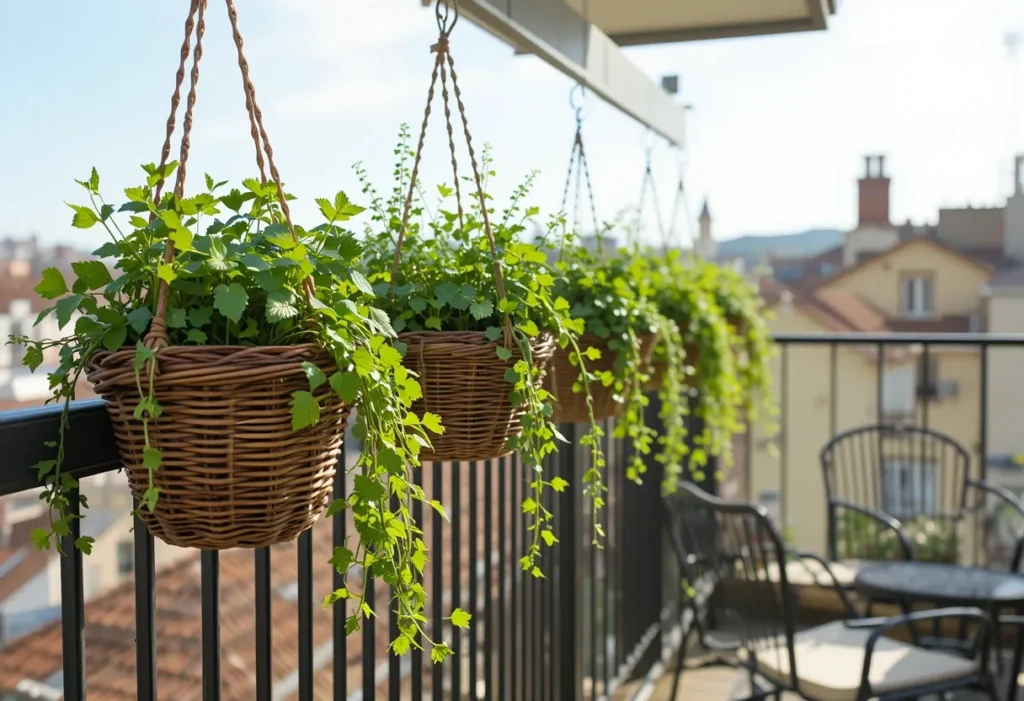
Hanging wire baskets are a simple way to grow fresh herbs while making use of unused vertical space in your kitchen. Suspended near a sunny window or from a sturdy ceiling hook, they keep herbs within easy reach for cooking while leaving countertops free for food preparation. Their open design also promotes good air circulation, helping herbs stay healthy and reducing excess moisture around the foliage.
Line each wire basket with a coco liner or decorative planter before adding pots with drainage holes. This keeps the display tidy while allowing you to remove individual herbs for watering or harvesting. Pair the baskets with wooden shelves, black metal accents, or woven storage to create a modern farmhouse or industrial-inspired kitchen that’s both functional and inviting.
Best herbs: Basil, parsley, thyme, mint, oregano, and chives.
Pro Tip: Hang wire baskets at a comfortable height so you can easily harvest herbs without stretching. If growing mint, keep it in its own pot inside the basket since it spreads quickly and can compete with neighboring herbs.
22. Built-In Window Herb Garden Box
A built-in window herb garden box is one of the most practical ways to grow fresh herbs indoors. Positioned directly beneath a sunny kitchen window, it provides herbs with the natural light they need while keeping them just steps away from your prep area. The streamlined design blends seamlessly with the surrounding cabinetry, creating a custom look that feels both functional and elegant.
Choose a planter box with proper drainage or removable liners to prevent excess water from damaging the windowsill. Group herbs with similar watering needs together, and leave enough space between plants to improve airflow and encourage healthy growth. Whether your kitchen has a modern, farmhouse, or traditional design, a built-in herb box creates a lush focal point that’s as useful as it is attractive.
Best herbs: Basil, parsley, chives, thyme, oregano, and rosemary.
Pro Tip: South- or east-facing windows usually provide the best light for indoor herbs. If your window receives limited sunlight during winter, supplement with a compact full-spectrum LED grow light to maintain healthy growth and enjoy fresh herbs year-round.
23. Rustic Trough Herb Planter
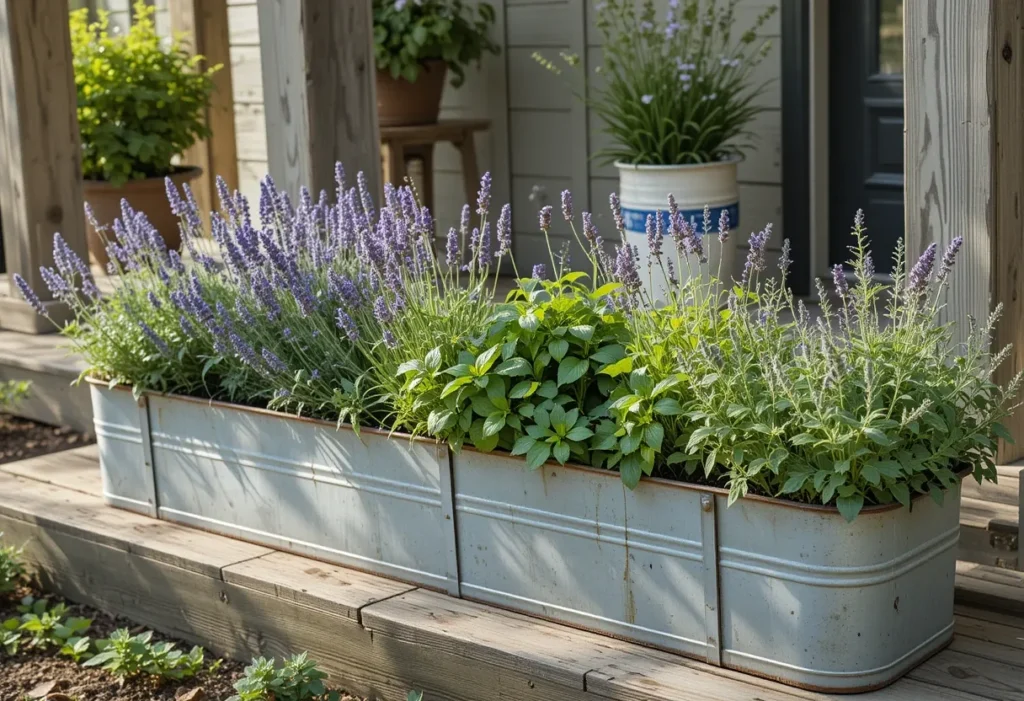
A rustic trough planter offers a simple way to grow several culinary herbs together while adding natural warmth to your kitchen. Its long, narrow design fits beautifully on a sunny windowsill, kitchen island, or countertop, making it easy to harvest fresh herbs while preparing meals. The weathered wood pairs especially well with farmhouse, cottage, and rustic-inspired kitchens, creating a display that’s as practical as it is inviting.
Choose a trough planter with drainage holes or use removable nursery pots inside the container to prevent excess moisture from collecting around the roots. Arrange herbs according to their growth habits, placing taller varieties like rosemary toward the back and compact herbs such as basil, parsley, and thyme at the front for easier access and better light exposure.
Best herbs: Basil, parsley, thyme, rosemary, oregano, and chives.
Pro Tip: Although a trough planter looks like one large container, herbs grow best when grouped by similar watering needs. Keep moisture-loving herbs like basil and parsley together, and plant rosemary, thyme, and oregano in a separate section or individual pots since they prefer slightly drier soil.
24. Modern Cube Herb Display
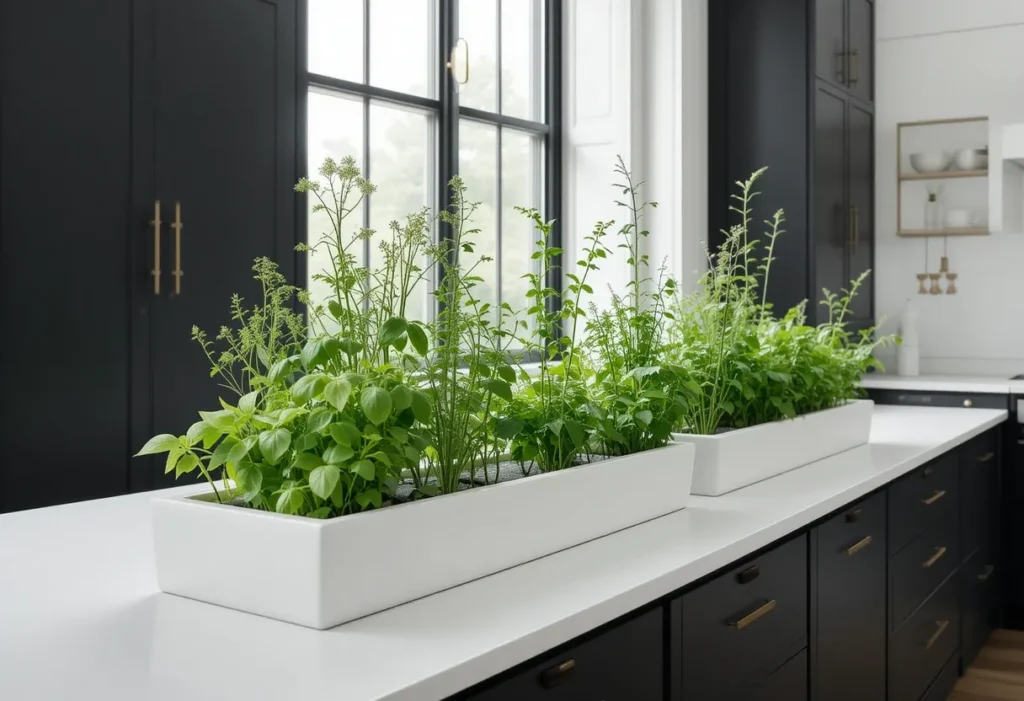
Cube planters offer a clean, contemporary way to grow fresh herbs while complementing modern kitchen designs. Their simple geometric shape creates a tidy, uniform display that fits neatly on countertops, floating shelves, or a kitchen island without overwhelming the space. Keeping your favorite herbs close to your prep area makes it easy to add fresh flavor to everyday meals while bringing a touch of greenery indoors.
Choose cube planters with drainage holes and matching trays to protect your countertops from excess water. Group herbs with similar care requirements together and place the display near a south- or west-facing window for the best natural light. Neutral finishes such as white, black, concrete, or natural wood blend effortlessly with modern, Scandinavian, and minimalist kitchens.
Best herbs: Basil, parsley, thyme, rosemary, oregano, and chives.
Pro Tip: Resist the urge to overcrowd each planter. Herbs need enough room for their roots to develop, and proper spacing improves airflow, helping plants stay healthier and produce more flavorful leaves throughout the growing season.
25. Corner Shelf Herb Garden
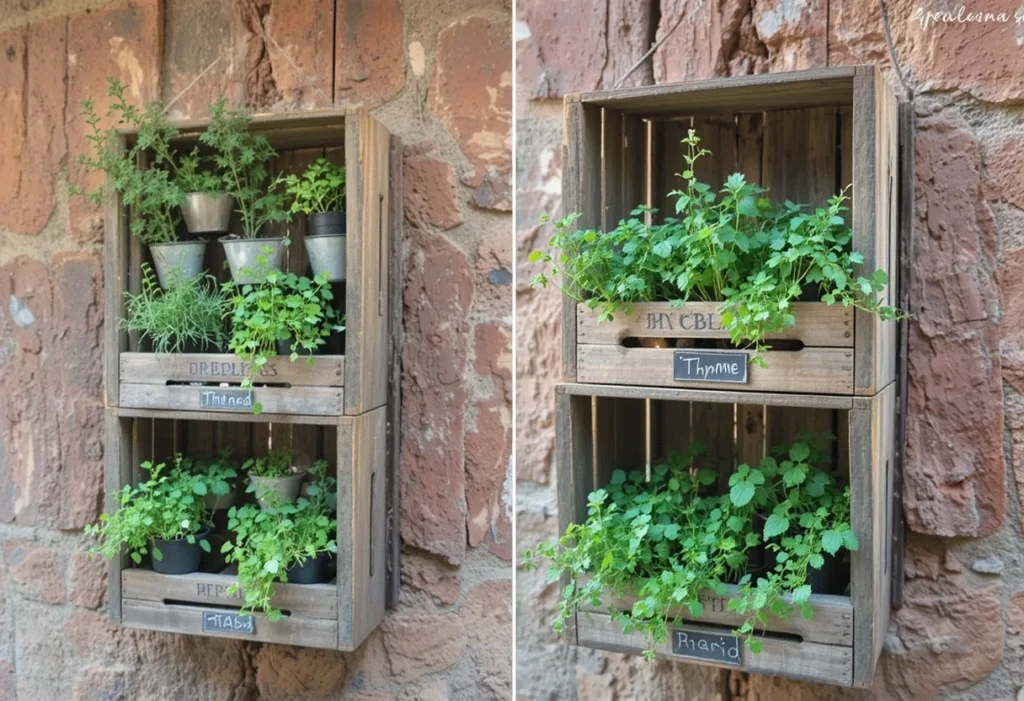
An empty kitchen corner can become a practical growing space with a simple corner shelf designed for fresh herbs. By using vertical storage, you can keep several culinary herbs organized without sacrificing valuable countertop space. Positioned near a bright window, the shelves provide easy access to herbs while adding natural greenery that softens the look of the kitchen.
Choose a sturdy corner shelf with enough room between tiers so each plant receives adequate light and airflow. Place taller herbs like rosemary on the top shelf and compact varieties such as basil, parsley, thyme, and chives on the lower levels for easier harvesting. Matching pots or woven baskets help create a cohesive display that complements modern, farmhouse, or Scandinavian kitchen styles.
Best herbs: Basil, parsley, thyme, rosemary, chives, oregano, and cilantro.
Pro Tip: Rotate the pots every week so each herb receives even sunlight. If the corner doesn’t get at least six hours of natural light, add a compact full-spectrum LED grow light to encourage healthy, year-round growth.
26. Countertop Herb Garden in Matching Pots
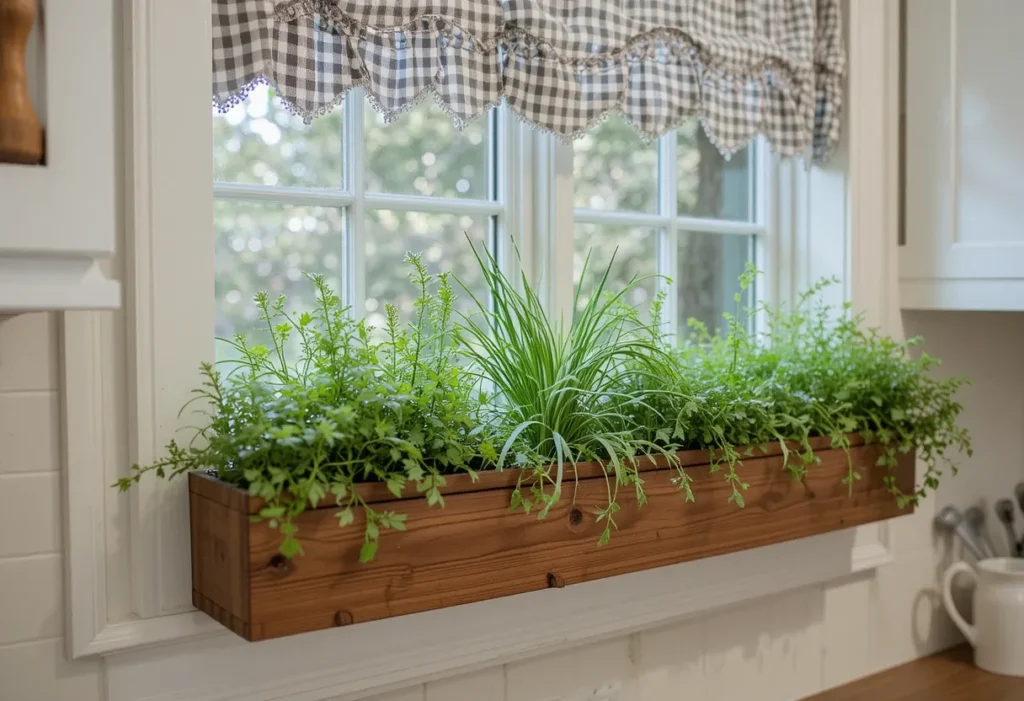
A row of matching herb pots instantly gives your kitchen a clean, organized look while making fresh ingredients part of your everyday cooking routine. Whether placed beside a sunny window or along an open countertop, this simple setup combines practicality with timeless style. The uniform containers create visual balance, allowing the vibrant greens of your herbs to become the focal point.
Choose pots with drainage holes and matching saucers to protect your countertops from excess water. Arrange taller herbs like rosemary toward the back and shorter varieties such as basil, parsley, and chives at the front for easy harvesting and better light exposure. If your kitchen receives limited natural light, a compact full-spectrum LED grow light can help keep your herbs thriving throughout the year.
Best herbs: Basil, parsley, thyme, rosemary, chives, oregano, and cilantro.
Pro Tip: Keep a small pair of herb scissors nearby and harvest your herbs regularly. Frequent trimming encourages bushier growth and provides a steady supply of fresh herbs for soups, salads, pasta dishes, and everyday cooking.
27. Apothecary Shelf with Labeled Jars
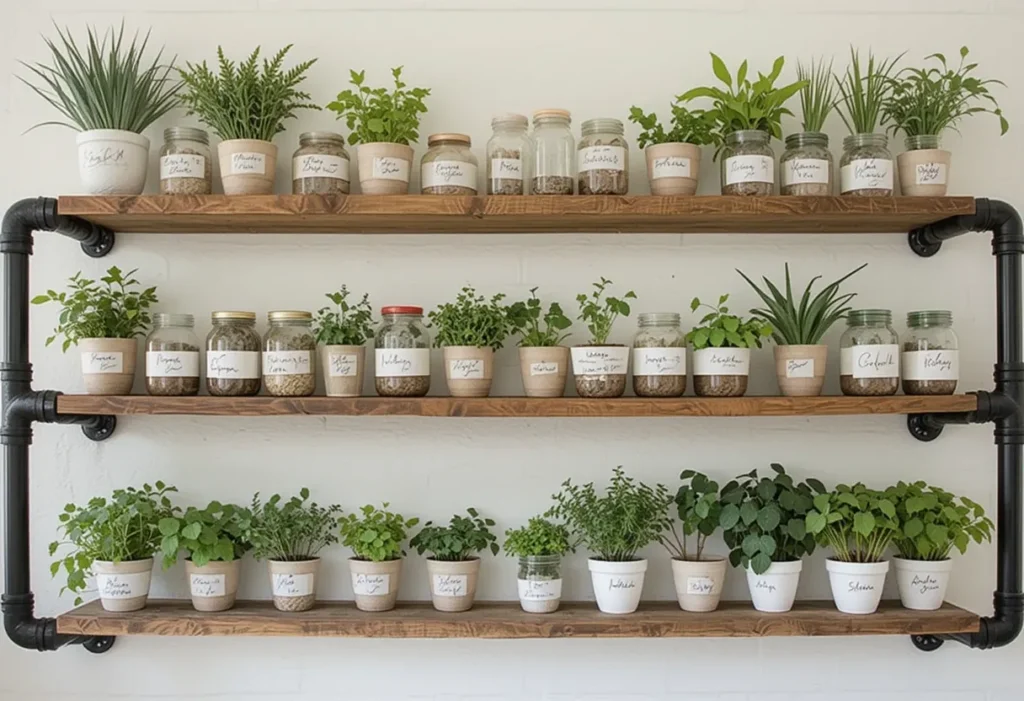
An apothecary shelf brings together the best of both worlds by displaying fresh herbs alongside neatly labeled jars of dried seasonings. Keeping potted basil, parsley, thyme, or rosemary close to your cooking area makes it easy to harvest fresh herbs, while labeled jars keep dried favorites organized for everyday meals. The combination creates a practical workspace with plenty of vintage charm.
Install a sturdy open shelf near your prep area or a bright kitchen window, using matching glass jars and ceramic pots to create a cohesive look. Store only dried herbs in airtight jars, while fresh herbs remain in well-draining containers with access to natural light. Wooden labels, amber glass bottles, or brass accents can enhance the classic apothecary aesthetic without sacrificing functionality.
Best herbs: Basil, parsley, rosemary, thyme, oregano, sage, and chives.
Pro Tip: Label each jar with the herb name and the date it was dried or purchased. Dried herbs gradually lose their flavor over time, so replacing them every 6–12 months helps keep your cooking fresh and flavorful.
28. Herb Crate Display on Wheels
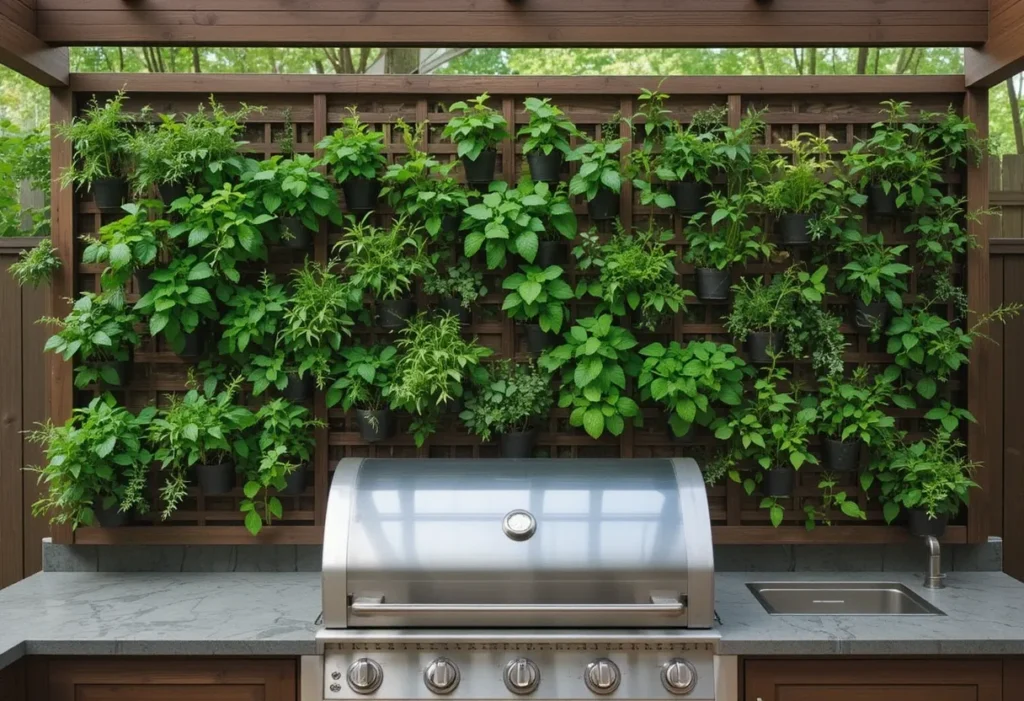
A rolling herb crate combines rustic charm with everyday practicality, making it a great addition to kitchens where natural light changes throughout the day. The portable design lets you move your herbs closer to a sunny window during the morning and back beside your prep area when it’s time to cook. It’s also a convenient solution for renters or anyone who prefers a flexible indoor herb garden.
Use a sturdy wooden crate fitted with locking caster wheels and place individual herb pots inside rather than planting directly into the crate. This makes watering, repotting, and rearranging your herbs much easier while protecting the wood from excess moisture. Pair the display with woven baskets, ceramic pots, or vintage-style plant labels to complement farmhouse, cottage, or rustic kitchen décor.
Best herbs: Basil, parsley, rosemary, thyme, oregano, chives, and cilantro.
Pro Tip: Lock the wheels once the crate is in its sunny spot to keep it stable while watering or harvesting. Group herbs with similar light and watering needs together to make routine care simpler and encourage healthier growth.
Common Kitchen Herb Garden Mistakes to Avoid
- Overwatering herbs
- Using pots without drainage
- Mixing herbs with different watering needs
- Not harvesting often enough
- Growing herbs in low light
- Crowding too many herbs into one container
Kitchen Herb Garden Ideas Tips for Healthy, Flavorful Herbs
1. Choose Herbs You’ll Actually Use
Grow herbs that match your cooking habits rather than planting every variety. Basil, parsley, chives, thyme, oregano, rosemary, and mint are excellent choices for most home kitchens because they’re easy to grow and frequently used in everyday recipes. Starting with a few favorites also makes your kitchen herb garden easier to maintain.
2. Give Your Herbs Enough Light
Most culinary herbs thrive with 6–8 hours of bright sunlight each day. A south- or west-facing window is ideal, but if your kitchen doesn’t receive enough natural light, a full-spectrum LED grow light can keep herbs healthy year-round. Rotate pots every week so plants grow evenly instead of leaning toward the light.
3. Choose Containers with Proper Drainage
Healthy roots are the foundation of a thriving kitchen herb garden. Always use pots with drainage holes and saucers to prevent excess water from collecting around the roots. Group herbs with similar watering needs together—for example, rosemary and thyme prefer drier soil, while basil and parsley appreciate more consistent moisture.
4. Water Based on the Soil, Not the Calendar
One of the biggest mistakes in indoor herb gardening is overwatering. Before watering, check whether the top inch of soil feels dry. Empty any excess water from saucers after watering to reduce the risk of root rot. Herbs like mint enjoy slightly moist soil, while Mediterranean herbs such as rosemary, oregano, and thyme prefer to dry out between waterings.
5. Harvest Often to Encourage New Growth
Regular harvesting helps herbs become fuller and more productive. Trim stems just above a leaf node instead of removing individual leaves, and avoid cutting more than one-third of the plant at a time. Frequent harvesting not only provides fresh herbs for cooking but also encourages healthy new growth.
6. Keep Herbs Close to Your Cooking Area
Place your kitchen herb garden where you’ll naturally see and use it, such as on a countertop, windowsill, open shelf, or kitchen island. Keeping herbs within easy reach makes it more likely you’ll cook with fresh ingredients while remembering to water and care for your plants.
7. Refresh Soil and Repot When Needed
Indoor herbs eventually outgrow their containers or use up the nutrients in their potting mix. Refresh the top layer of soil every few months, and repot plants into a slightly larger container if roots begin growing through the drainage holes. Using a high-quality indoor potting mix helps herbs stay vigorous and productive.
8. Enjoy the Journey
A kitchen herb garden does more than provide fresh ingredients—it brings life, fragrance, and greenery into your home. Whether you’re harvesting basil for pasta or mint for tea, caring for your herbs can become a relaxing daily ritual that makes cooking even more enjoyable.
Expert Tip: Harvest Herbs the Right Way
Expert Tip: Harvest herbs regularly, but never remove more than one-third of the plant at a time. Always snip stems just above a pair of healthy leaves or a leaf node instead of pulling off individual leaves. This encourages branching, creates fuller, bushier plants, and provides a continuous supply of fresh herbs for cooking. If flower buds begin to form on herbs like basil, pinch them off promptly to keep the leaves tender and flavorful.