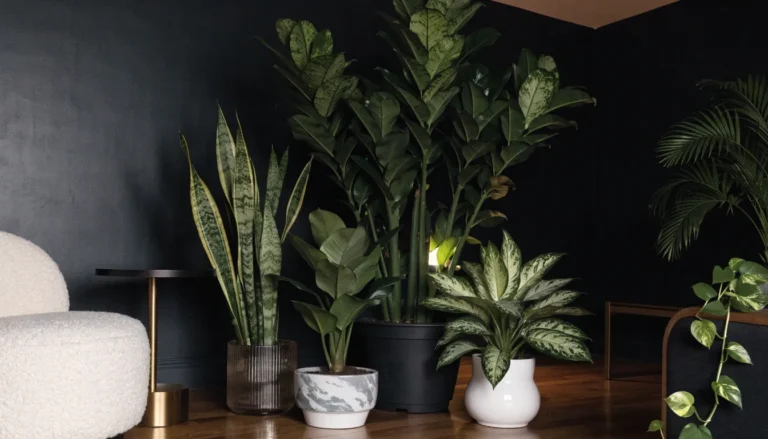
Winter Houseplant Care: How to Keep Indoor Plants Healthy Until Spring
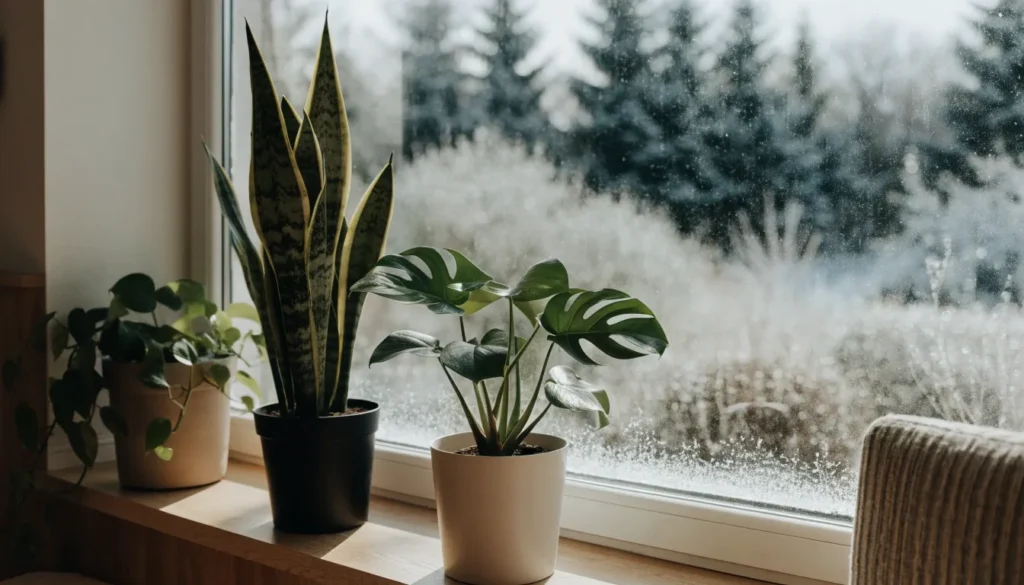
Winter houseplant care comes down to four changes: give plants the brightest light you have, water only when the soil has dried to the right depth (often every two to three weeks, not every week), stop fertilizing until spring, and keep plants away from cold glass and heating vents. Most winter plant losses come from sticking to a summer routine.
Southern Hemisphere readers (Australia): your winter runs roughly June to August, so use this guide then. Singapore has no true winter, but the watering and cold-draft advice still applies to plants kept in air-conditioned rooms.
Table of Contents
Winter houseplant care at a glance
| Task | Winter adjustment |
|---|---|
| Light | Move plants to your brightest windows, keep leaves off cold glass, wipe dust from leaves |
| Water | Check the soil first. Leafy plants often need water every 2 to 3 weeks; succulents about monthly or less |
| Humidity | Most houseplants prefer 40 to 50%; heated homes are often far drier |
| Temperature | About 65 to 75°F by day and 60 to 65°F at night; avoid anything below 50°F |
| Fertilizer | Pause until new growth starts in spring |
| Repotting | Wait until early spring unless it is an emergency |
| Pests | Check leaf undersides and the soil surface weekly; fungus gnats peak in winter |
Why winter houseplant care is different
Shorter days and a lower sun angle mean less light reaches your plants, even in a sunny window. Less light slows growth, and slower growth means the plant uses far less water. At the same time, heating dries the air, and cold glass and drafts can chill leaves.
The key idea: winter care depends on the conditions around each plant, not the date on the calendar. A pothos under a grow light may dry out almost as fast as it did in July, while the same plant in a cool, dim corner can stay wet for weeks.
1. Give plants the brightest light you have
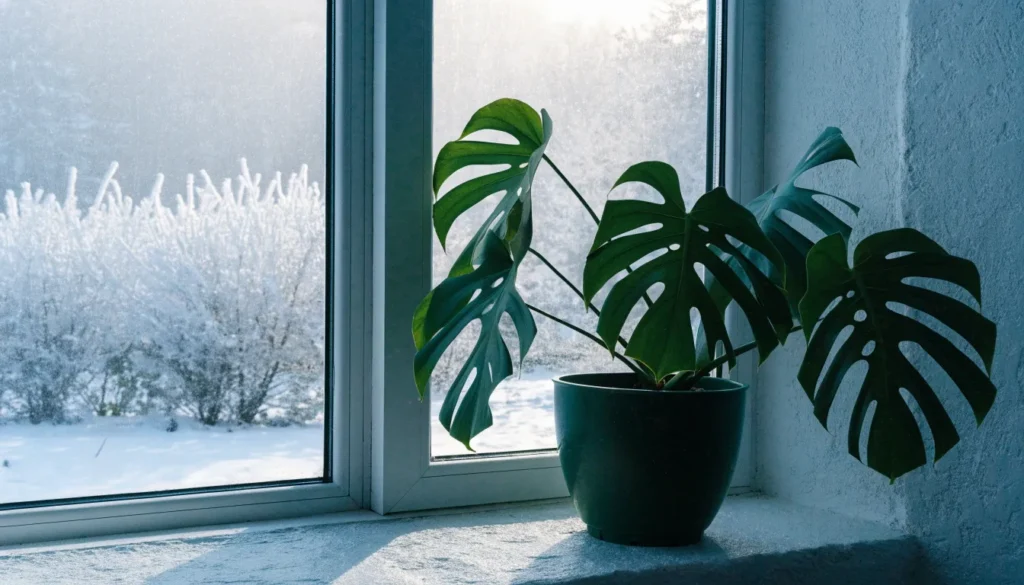
Light is the biggest limit in winter houseplant care. Look at where sun actually falls in your home now, because the midsummer pattern no longer applies.
- Move light-hungry plants (succulents, cacti, citrus, flowering plants) to your brightest window. South-facing windows are usually best in the Northern Hemisphere; north-facing in the Southern Hemisphere.
- Keep shade-tolerant plants in bright, indirect light. Low light does not mean no light.
- Leave a gap of a few inches between leaves and cold window glass.
- Rotate pots a quarter turn every week or two so growth does not lean toward the window.
- Wipe dust from large, smooth leaves with a soft damp cloth. A dusty leaf captures less of the little light available.
- If you move a plant into stronger light, do it over several days to avoid leaf scorch.
Quick shadow test: hold your hand about a foot above a leaf around midday. A sharp, dark shadow means bright light; a soft, blurry shadow means medium light; a barely visible shadow means low light. It is a rough check, but it shows you which spots are worth using.
If your brightest window is still not enough, a full-spectrum LED grow light helps. Put it on a timer so the plant gets a steady daily schedule (many growers use 8 to 12 hours), and follow the manufacturer’s distance guidance.
For a deeper dive, see our guide to best low-light indoor plants and our plants for dark rooms picks, plus how to care for low-light plants through winter. And if you want colour in the darker months, these indoor flowering plants bloom indoors all year.
2. How often to water houseplants in winter
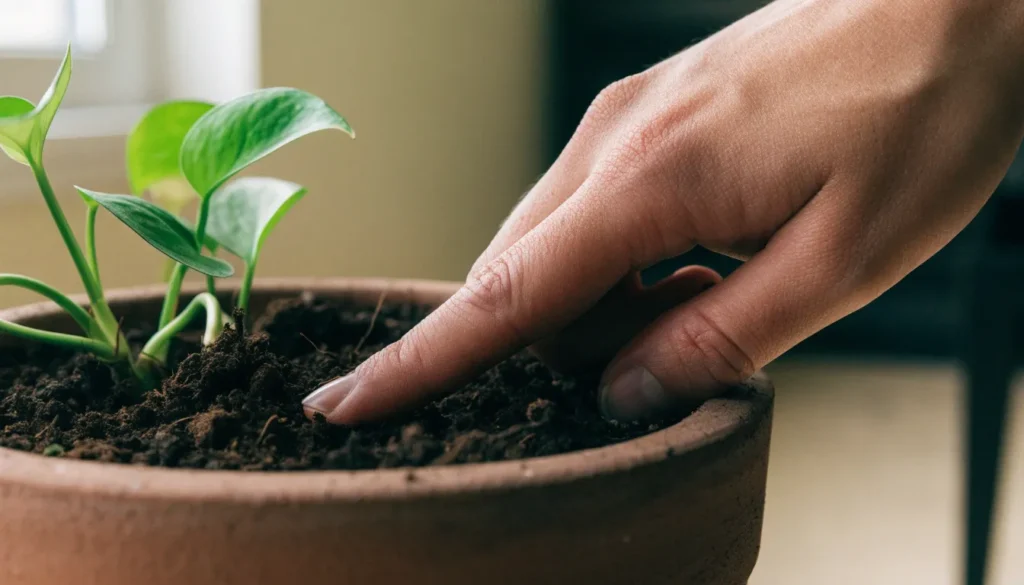
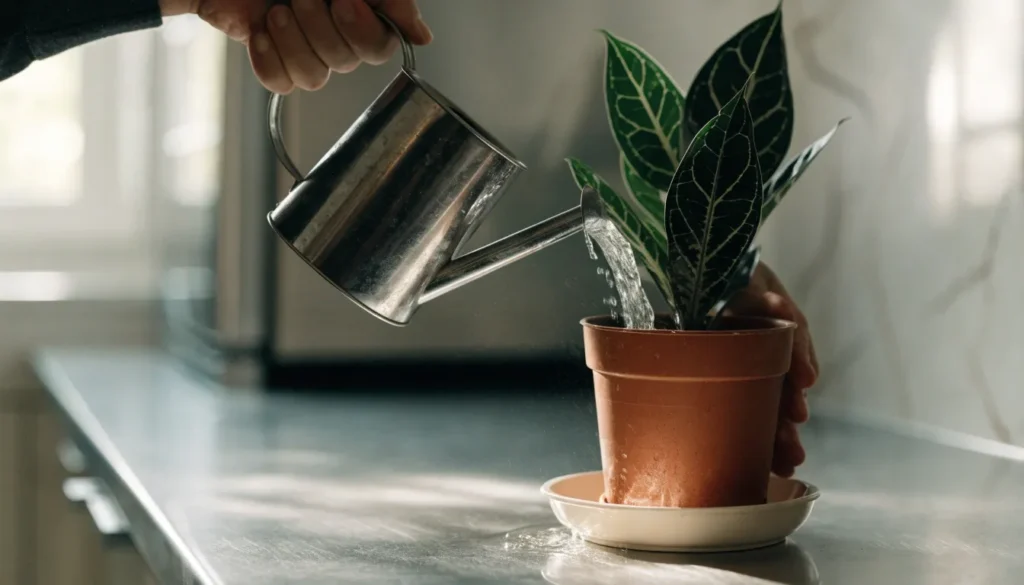
Short answer: most leafy houseplants need water about every two to three weeks in winter, while succulents and cacti may need it only once a month or less. For winter houseplant care, treat those as starting points, not a schedule. Water when the soil has dried to the depth your plant prefers, because light, pot size, and room temperature all change the timing.
How to check before you water
- Push a finger 1 to 2 inches into the mix, or use a wooden chopstick for deep pots. Pull it out: dark, damp soil clinging to it means wait.
- Lift the pot. A pot that feels light compared with right after watering is ready for a drink.
- When you water, water thoroughly until it runs out of the drainage holes, then empty the saucer after about 30 minutes.
- Use room-temperature water. Icy tap water can chill the roots.
Reducing winter watering is mostly about timing, not volume. Give the pot a full drink, but wait longer before the next one.
A starting rule for finding your interval
A common rule of thumb is to wait about twice as long between waterings as you do in summer. If a plant was watered every two weeks in summer, try every four weeks and adjust. Then keep a simple note on your phone for three watering cycles: the date you watered and how dry the soil was when you did. By the third cycle, you will know your plant’s real winter interval in your home.
Winter watering by plant type
| Plant | Water when… | Winter light | Watch for |
|---|---|---|---|
| Pothos | Top 1 to 2 inches of mix is dry | Bright to medium indirect | Yellow leaves if soil stays wet |
| Monstera | Top 1 to 2 inches is dry | Bright indirect | Leaf drop near cold glass or heat vents |
| Snake plant | Mix is dry most of the way down | Tolerates low light; brighter is better | Mushy base from overwatering; dislikes cold |
| ZZ plant | Mix is dry most of the way down | Low to bright indirect | Yellowing, soft stems from too much water |
| Peace lily | Top inch is dry; do not let it go bone dry | Medium indirect | Dramatic droop when thirsty; brown tips in dry air |
| Succulents and cacti | Mix is fully dry; slight wrinkling is a cue | Brightest window, cooler room | Stretching if light is too low |
| Ferns (Boston fern) | Keep evenly slightly moist, never soggy | Bright indirect | Crispy fronds from dry air |
| Calathea and prayer plants | Top inch is dry; mix stays lightly moist | Medium indirect | Curling, crispy edges in heated rooms |
| Rubber plant | Top 1 to 2 inches is dry | Bright indirect | Leaf drop from drafts |
| Spider plant | Top inch is dry | Bright to medium indirect | Brown tips from dry air or fertilizer salts |
These are typical starting points. Always confirm against your own plant’s soil and conditions.
Signs you are watering wrong
- Too much: yellowing leaves, wilting with wet soil, mushy stems, a sour smell, fungus gnats.
- Too little: leaves that feel dry and crisp (not soft), soil pulling away from the pot edge, wilting that perks up quickly after watering.
3. Raise humidity where it matters
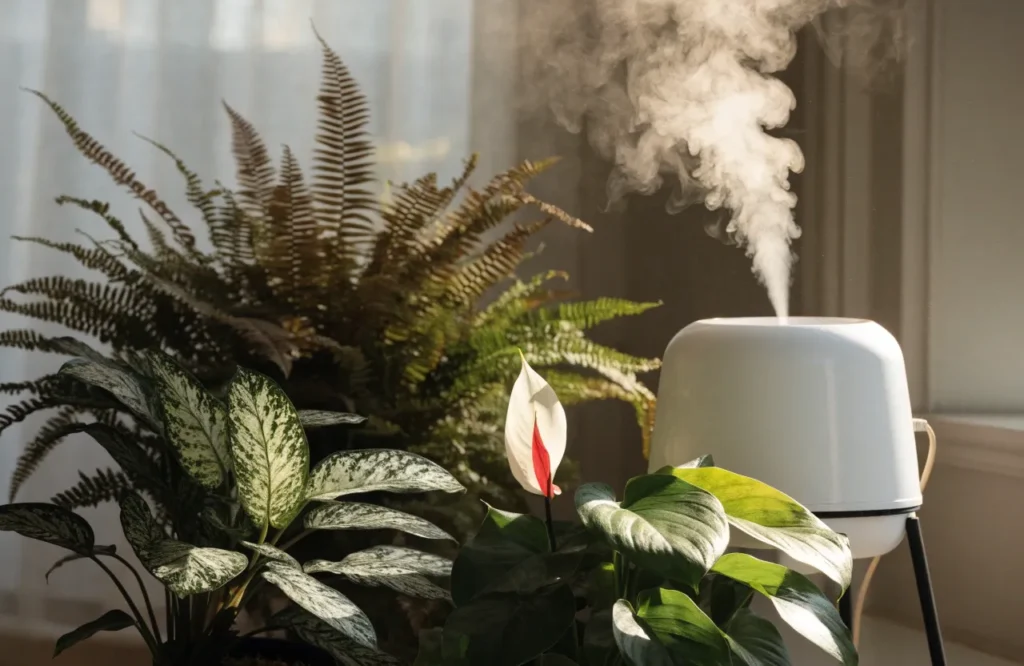
Extension sources report that heated homes can fall as low as 10 to 20% relative humidity in winter, while most houseplants prefer around 40 to 50%. Dry air is a common winter houseplant care problem. It shows up as brown tips and curling leaves, especially on ferns, calatheas, and palms. Many tougher plants (snake plants, ZZ plants, succulents) do not need extra humidity at all. If you want plants that forgive a dry winter home, start with these easy indoor plants.
For plants that do:
- Group plants together so they raise the humidity around each other.
- Run a small humidifier near your tropical plants. This is the most reliable fix.
- Use a pebble tray, with the water level below the base of the pot.
- Move humidity lovers to a bright bathroom or kitchen if the light is good enough.
- Buy a cheap hygrometer so you measure rather than guess.
Misting raises humidity for only a few minutes, so do not rely on it. If brown tips persist after you fix humidity, check for dry soil, fertilizer salts, or heat blowing on the plant.
4. Protect plants from cold and heat
Most houseplants do well at ordinary home temperatures: roughly 65 to 75°F by day and 60 to 65°F at night. In winter houseplant care, steady temperatures matter more than hitting an exact number. Temperatures below about 50°F, or rapid fluctuations, can harm many tropical plants.
Tropical foliage plants can also suffer chilling injury at temperatures above freezing, from just over 32°F up to around 59°F, and the longer the exposure, the worse the damage. Watch for these spots:
- Windowsills on cold nights. Check by feeling the glass after dark, or slide plants back from the window at night.
- Doors that open to the outside and drafty window frames.
- Radiators, heat vents, fireplaces, and space heaters, which dry leaves out.
- Cold air-conditioning output (relevant in Singapore).
Cacti and succulents are the exception. They tend to prefer a cooler, bright room, around 55 to 60°F, as long as it stays above about 45°F.
5. Pause fertilizer until spring
With less light, most houseplants barely grow, so they cannot use the nutrients. Leftover fertilizer salts build up in the mix and can burn roots and leaf edges. Stop feeding in fall and restart in spring when you see new growth. Pausing fertilizer is one of the simplest parts of winter houseplant care.
The exception is a plant growing strongly under a grow light. Use a diluted fertilizer on those and only as part of an established routine. If you see a white crust on the soil surface or rim of a clay pot, that is usually mineral and salt buildup. Flush the pot with plain water, let it drain fully, and hold off on feeding.
6. Check for pests, especially fungus gnats
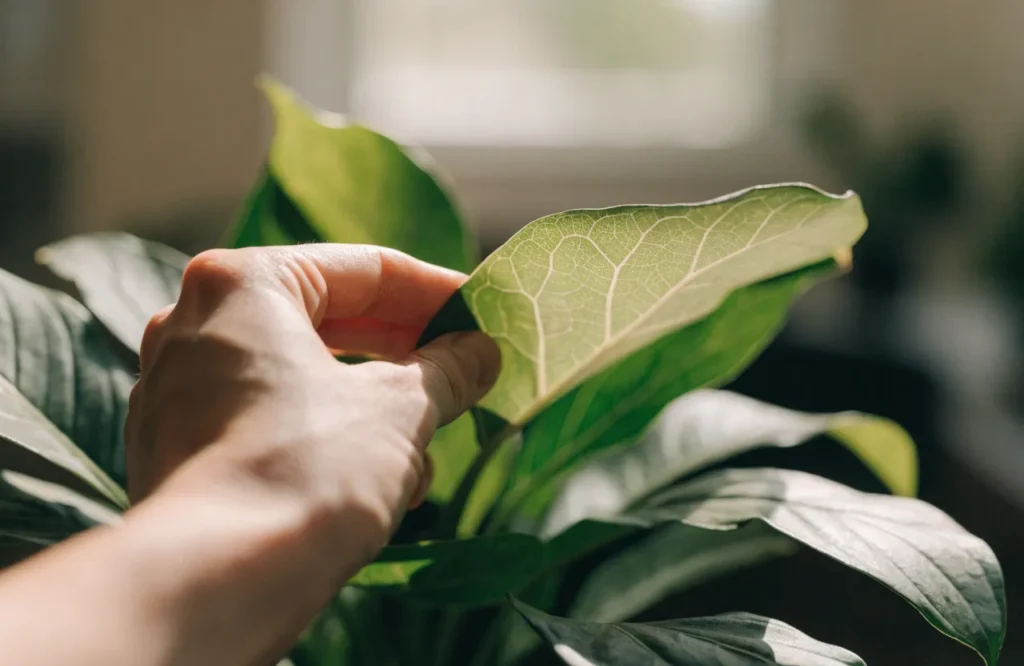
Pest checks belong in every winter houseplant care routine, because dry indoor air and crowded plants help pests spread. Plants you moved indoors this fall are the ones to check first — they often carry pests in from outside. Once a week, look at the undersides of leaves, stem joints, and the soil surface for:
- Fine webbing or pale speckling: spider mites.
- Cottony white clusters: mealybugs.
- Brown or tan bumps on stems and leaves: scale.
- Clusters of small soft insects on new growth: aphids.
Isolate any affected plant. Wipe off what you can see, rinse sturdy leaves with lukewarm water, and use insecticidal soap or neem oil only as the label directs. Recheck in a week, because many pests hatch in cycles.
Fungus gnats
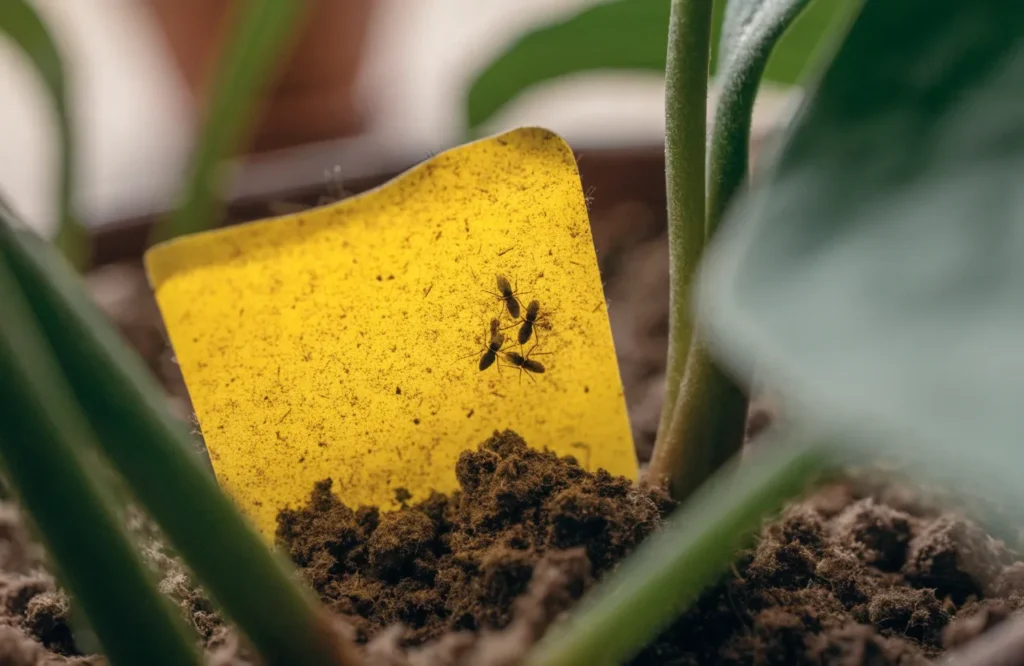
If small dark flies rise from the soil when you water, those are fungus gnats. Extension specialists note they are more common in winter and almost always trace back to overwatering. The adults are mostly a nuisance; it is the larvae in wet soil that can nibble roots, especially on young plants.
- Let the top of the soil dry out between waterings. This is the single most effective fix.
- Empty saucers and never let a pot sit in water.
- Use yellow sticky cards to catch adults and track the problem.
- If it persists, treat the soil with a product labeled for fungus gnats (some use the biological control Bti) and follow the label exactly.
7. Hold off on repotting and heavy pruning
The best time to repot is early spring, when growth restarts. In winter, plants may not have enough light to recover from root disturbance. Remove dead or damaged leaves whenever you see them, but save major pruning and size upgrades for spring.
Repot in winter only for a true emergency, such as severe root rot, a cracked pot, or roots so packed that water runs straight through. Choose a pot only slightly larger and use a fast-draining mix.
Common winter houseplant care problems and what they mean
| What you see | Likely winter cause | What to do |
|---|---|---|
| Yellow lower leaves, soil stays wet | Watering on a summer schedule, low light | Let the mix dry to the right depth; improve light and drainage |
| Brown, crispy tips | Dry air, hot airflow, fertilizer salts, or underwatering | Check soil first; add humidity; flush salts; move away from vents |
| Sudden leaf drop | Cold draft or rapid temperature change | Move away from doors, cold glass, and heaters |
| Thin, pale, stretched growth | Too little light | Move to a brighter window or add a grow light |
| Drooping with wet soil | Stressed or rotting roots | Stop watering; check roots; repot into fresh mix if soft and brown |
| Drooping with dry soil | Thirst | Water thoroughly and check again in a few days |
| Tiny black flies | Fungus gnats from wet soil | Dry the top layer; sticky cards; reduce watering |
| Webbing or speckled leaves | Spider mites | Isolate, rinse or wipe leaves, treat per label |
| No new growth | Normal winter rest | Keep the plant healthy; do not force it with fertilizer |
A five-minute weekly winter houseplant care routine
- Check soil moisture before you water anything.
- Look under a few leaves for pests.
- Pick up fallen leaves from the soil surface.
- Turn plants that lean toward the light.
- Notice cold drafts, heating vents, or major temperature changes.
Frequently Asked Questions
The bottom line
Good winter houseplant care is mostly about doing less: less water, no fertilizer, and no big changes. Give plants the brightest light you can, check the soil before every watering, keep them away from drafts and heat vents, and look for pests once a week. Do that and your plants will be ready to grow again in spring.