17 Best Fall Herbs to Grow for a Thriving Autumn Garden
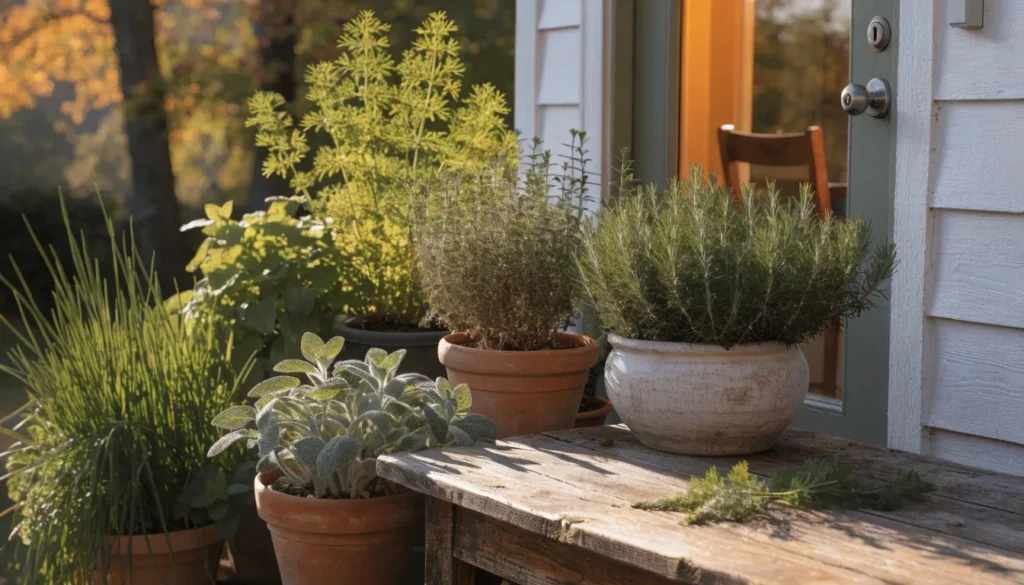
Most gardeners put their trowels away once summer ends, but fall is actually one of the best seasons to grow herbs. Cooler air slows bolting, reduces pest pressure, and gives cold-hardy herbs the mild conditions they actually prefer. If you’re already working out what to plant in September or lining up a list of fall vegetables to grow, herbs are one of the easiest, lowest-effort additions to that same bed or container. Whether you’re building a full fall herb garden from scratch or just tucking a few pots by the kitchen door, this guide covers 17 fall herbs to grow, how to care for them, and which ones are worth your space this season.
Table of Contents
Why Fall Is a Great Time to Plant Herbs
Warm-season herbs like basil fade fast once nights cool down, but many culinary herbs actually perform better in autumn. Lower temperatures mean less bolting for herbs like cilantro and dill, which turn bitter and go to seed the moment summer heat sets in. Cold-hardy perennial herbs, thyme, sage, rosemary, oregano, use the mild fall weather to establish strong root systems before winter dormancy, often returning even stronger the following spring.
Fall planting also means less watering. Cooler days and shorter daylight hours reduce moisture loss, so a new herb garden needs far less babysitting in October than it would in July. As a general rule of thumb, giving perennial herbs several weeks of root establishment before your first hard freeze improves their odds of surviving winter, though the exact timing depends on the herb, your soil, and how mild or severe your winters typically are.
A quick climate note: cold tolerance below varies by USDA hardiness zone, local microclimate, and whether a plant is grown in the ground or in a container (container roots are more exposed to cold than roots in garden soil). Treat the guidance in this article as a starting point, and check your specific zone and cultivar before relying on exact temperature figures.
The Best Fall Herbs to Grow, at a Glance
| Herb | Type | Best for | Starting method |
|---|---|---|---|
| Parsley | Biennial | Everyday cooking, garnish | Starter plant (seed is slow) |
| Dill | Annual | Pickles, fish, potato salad | Direct sow |
| Cilantro | Annual | Salsa, tacos, cool-season harvests | Direct sow |
| Chives | Perennial | Beginner-friendly, soups, eggs | Starter plant |
| Oregano | Perennial | Pizza, pasta sauce, Mediterranean dishes | Starter plant |
| Sage | Perennial | Stuffing, roasted squash, poultry | Starter plant |
| Thyme | Perennial | Low-maintenance all-purpose cooking | Starter plant |
| Rosemary | Perennial | Containers, mild climates | Starter plant |
| Tarragon | Perennial | French cooking, sauces | Cuttings or division (not seed) |
| Winter Savory | Perennial | Beans, lentils, hearty soups | Starter plant or seed |
| Mint | Perennial | Tea, drinks, desserts | Starter plant, contained |
| Lemon Balm | Perennial | Tea, calming drinks | Starter plant, contained |
| Marjoram | Tender perennial/annual | Eggs, delicate finishing dishes | Seed or starter plant |
| Fennel (herb) | Perennial/self-seeding | Fish, salads, pollinator gardens | Seed, contained |
| Chervil | Annual | French fines herbes | Seed |
| Lovage | Perennial | Soups and stocks, celery substitute | Seed or starter plant |
| Calendula | Annual/short-lived perennial | Edible flowers, pollinator support | Seed |
The Best Fall Herbs to Grow
Best for Cool-Season Sowing
These herbs actively prefer the cooler, shorter days of fall over summer heat, and most are grown as annuals or biennials rather than long-term perennials.
1. Parsley
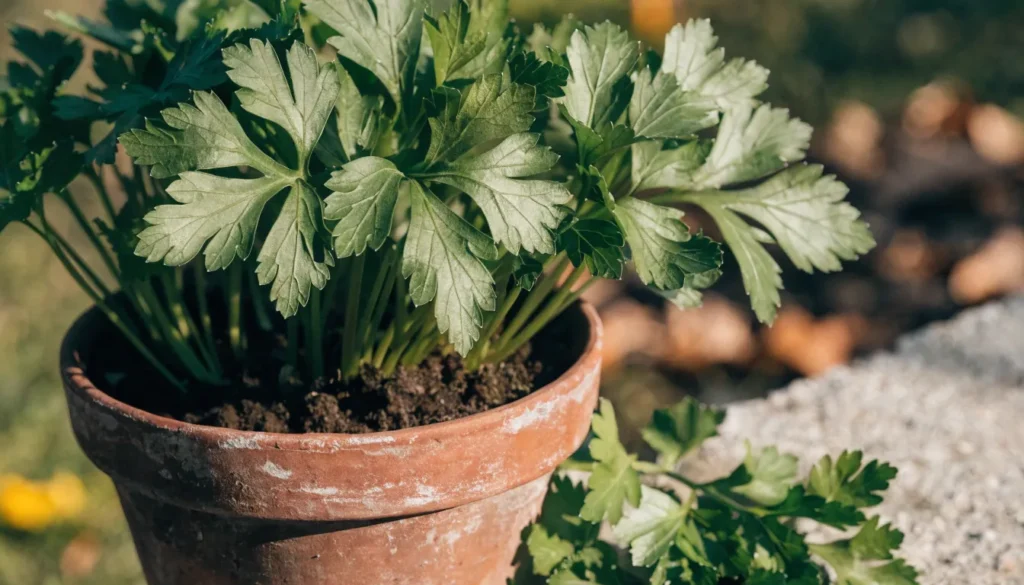
Parsley is one of the most forgiving fall herbs to grow, tolerating cool nights and even light frost without much complaint. As a biennial, an established parsley plant can survive a mild winter and resume growth the following spring. Give it full sun to partial shade and consistently moist, well-drained soil, and harvest the outer stems first so the center keeps producing.
Flat-leaf (Italian) parsley has a stronger flavor for cooking, while curly parsley holds up well as a garnish. Because parsley seed is notoriously slow to germinate, often three to four weeks, a nursery starter plant is the faster route to a usable fall harvest.
2. Dill
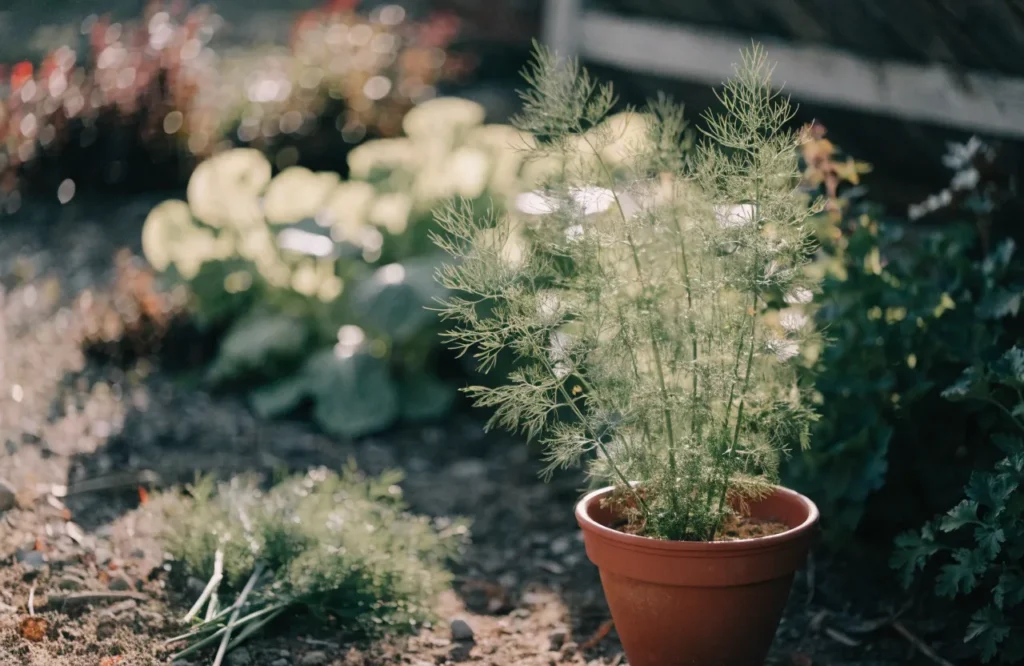
Dill thrives in the exact conditions that ruin it in summer: cool, mild weather. It grows best between roughly 40°F and 75°F, so once late-summer heat breaks, dill seed germinates quickly and produces feathery fronds for weeks. Because it develops a long taproot, direct-sow dill seed where you want it to grow rather than transplanting a seedling.
Dill pairs naturally with pickles, potato salad, and fish, and any flowers that go to seed can be collected and dried for winter cooking.
3. Cilantro
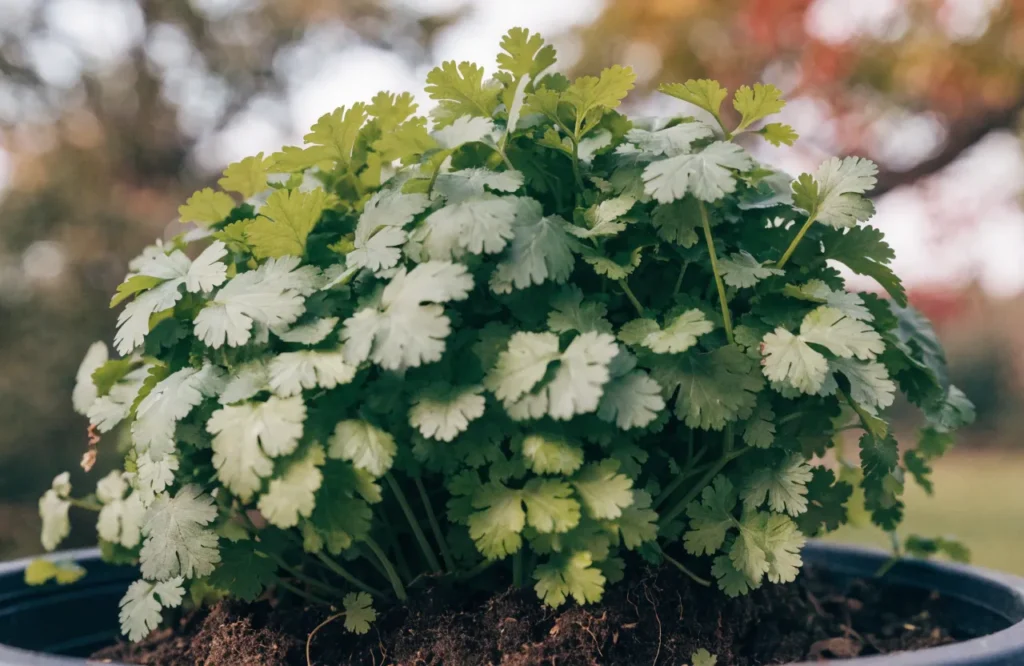
Cilantro is a classic cool-season herb that struggles all summer and then thrives the moment fall arrives. High heat pushes cilantro to bolt, flowering and turning bitter within weeks, so cooler autumn days give the plant a much longer productive window. Sow seed directly in full sun to partial shade, and succession-sow every two to three weeks for a continuous harvest through fall.
In mild-winter climates, cilantro can often be grown straight through to spring.
Cold-Hardy Perennial Herbs for Fall
Once established, these herbs are built to shrug off cold weather and, in most climates, return again the following spring.
4. Chives
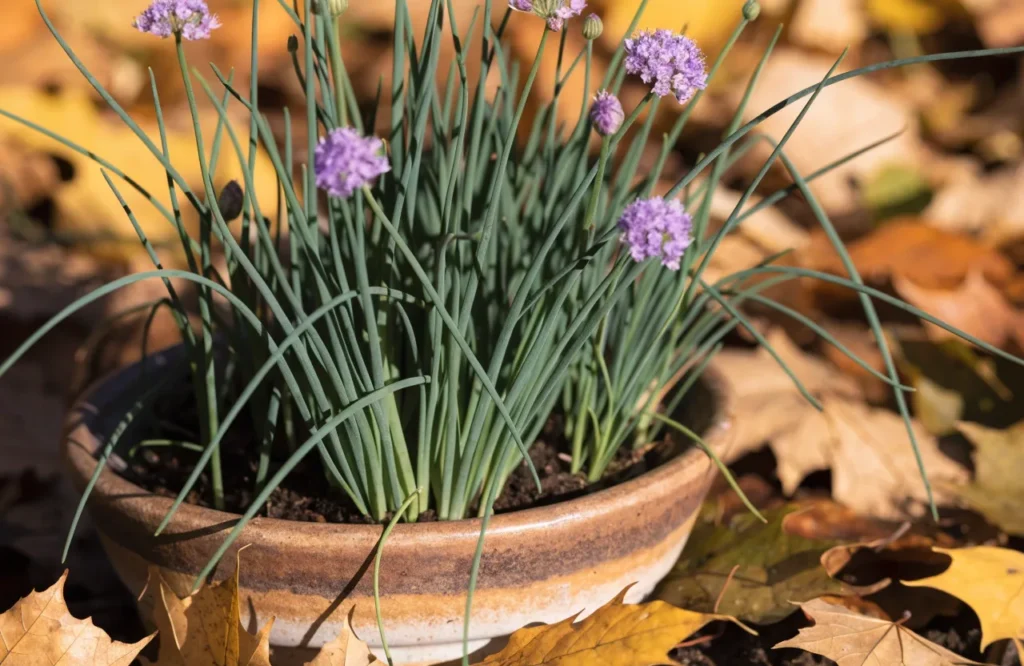
Chives are a low-maintenance, cold-hardy perennial that regrows quickly after each harvest, making them one of the most reliable fall herbs for beginners. Their mild onion flavor works well in soups, eggs, and baked potatoes, and the edible purple blooms attract pollinators.
Plant chives from a nursery start rather than seed for a faster fall harvest. In colder zones, the foliage dies back after a hard freeze, but the underground bulbs stay dormant and send up new growth in spring.
5. Oregano
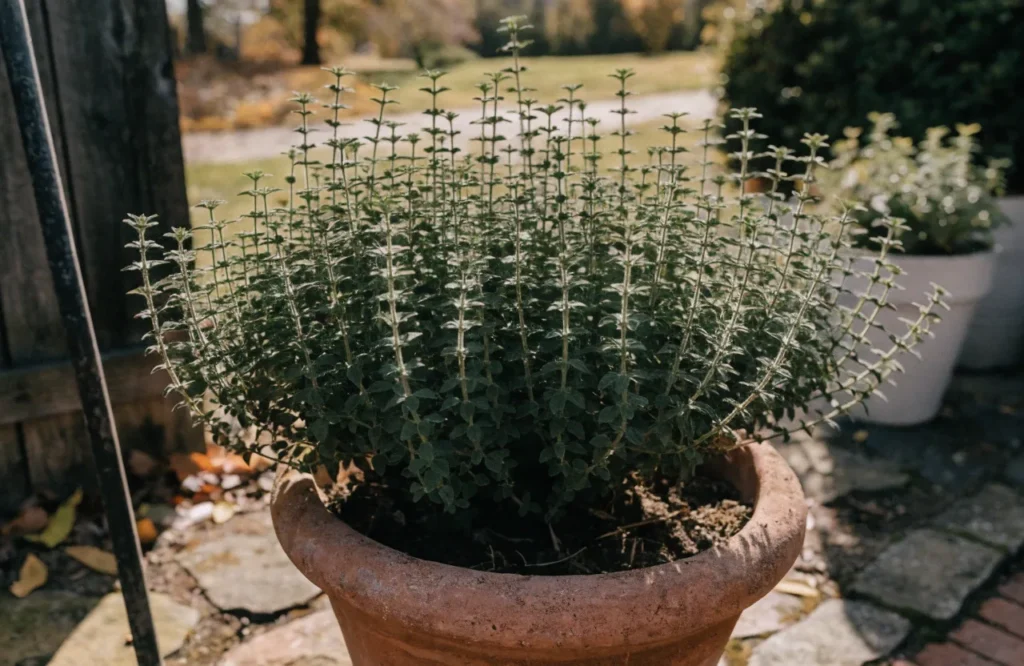
Oregano is a vigorous perennial herb, with many common cultivars winter-hardy to around USDA zone 5, though hardiness varies by specific type, so it’s worth checking the tag or description for your plant. It prefers full sun and soil on the drier side. Because oregano spreads by both seed and creeping stems, it’s best contained in a pot or raised bed rather than planted directly into open garden soil, where it can crowd out neighboring plants.
Regular harvesting encourages bushier growth, so don’t be shy about cutting it back for pizza, pasta sauce, and Mediterranean dishes.
6. Sage
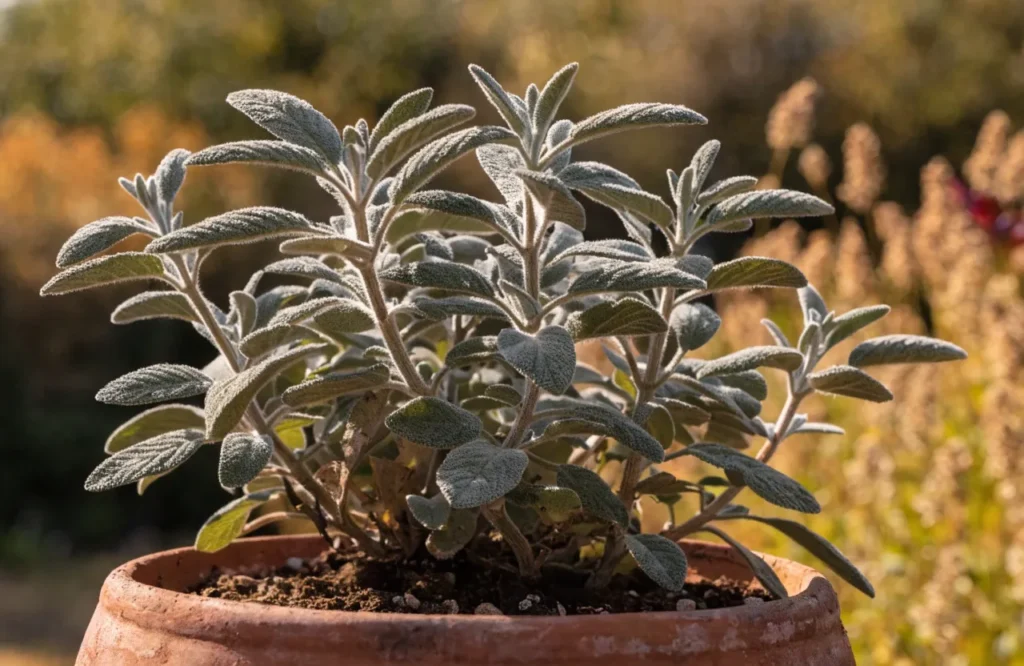
Sage brings an earthy, slightly peppery flavor that defines classic fall cooking, think stuffing, roasted squash, and brown butter sauce. This semi-woody perennial is cold-hardy in much of the country, with many varieties tolerating winters down to around zone 5, though this depends on the cultivar and how established the plant is. Root rot from soggy winter soil, not cold itself, is one of the more common ways container sage is lost, so a pot with strong drainage matters as much as winter protection in most climates.
7. Thyme
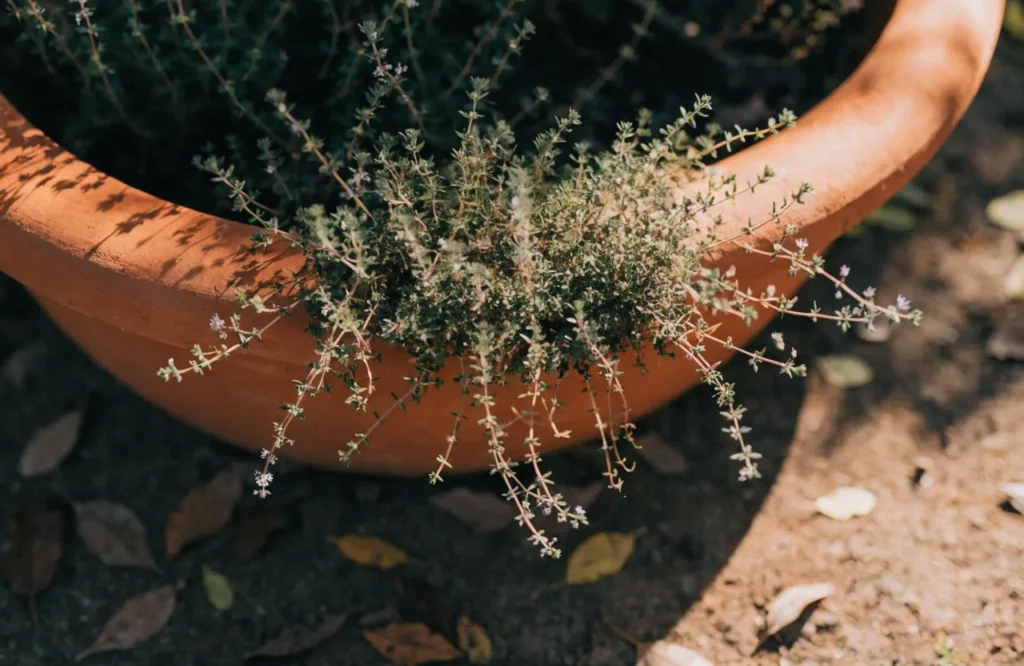
Thyme is one of the easiest cold-hardy herbs to grow, tolerating both heat and cold once established, and it genuinely prefers being left alone. Native to the rocky Mediterranean coast, thyme tends to perform worse in rich, moisture-retentive soil than in lean, well-drained mix. A shallow, wide container mimics its native growing conditions better than a deep pot.
Give thyme at least six hours of direct sun, and expect it to keep producing with minimal care through fall and often into winter.
Best Fall Herbs for Containers and Mild Climates
These herbs handle a light frost reasonably well but are more sensitive to hard freezes than the truly cold-hardy perennials above, which makes them good candidates for pots you can move indoors or to a sheltered spot.
8. Rosemary
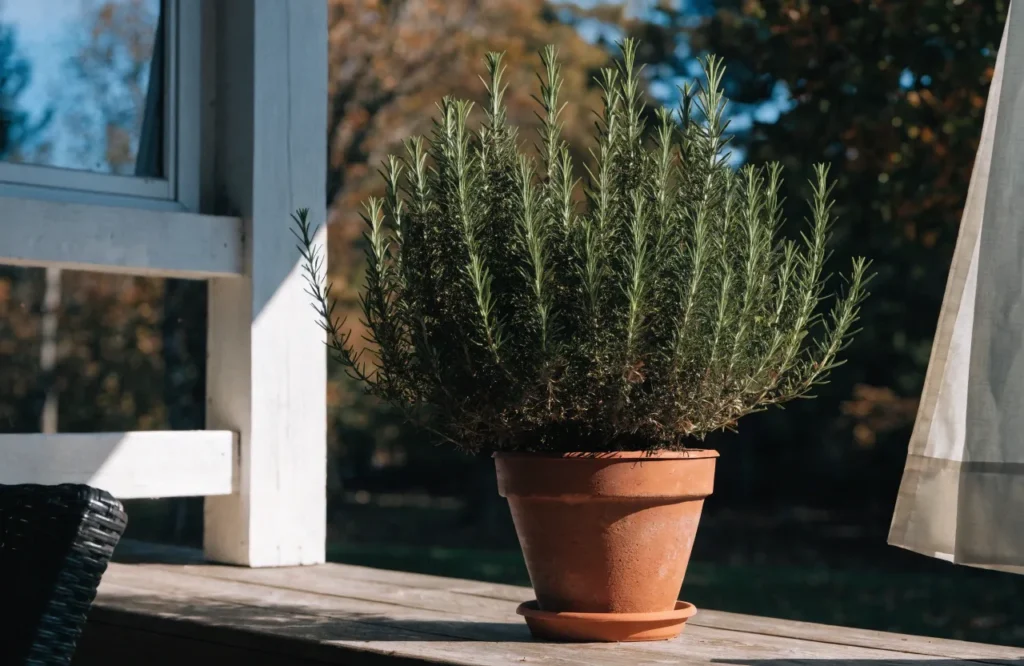
Rosemary is a woody, Mediterranean evergreen that tolerates more cold than many people expect for a plant associated with warm climates, with some established varieties reportedly handling temperatures down into the teens (°F). Cold tolerance varies significantly by cultivar and how well-established the plant is, so treat any specific number as a rough guide rather than a guarantee. Rosemary needs full sun and excellent drainage above all else; wet winter soil is often a bigger threat than frost itself.
Gardeners in colder zones often grow rosemary in containers so it can be moved to a sheltered spot before the hardest freezes of the year.
More Cold-Hardy Perennials for Fall Cooking
9. Tarragon
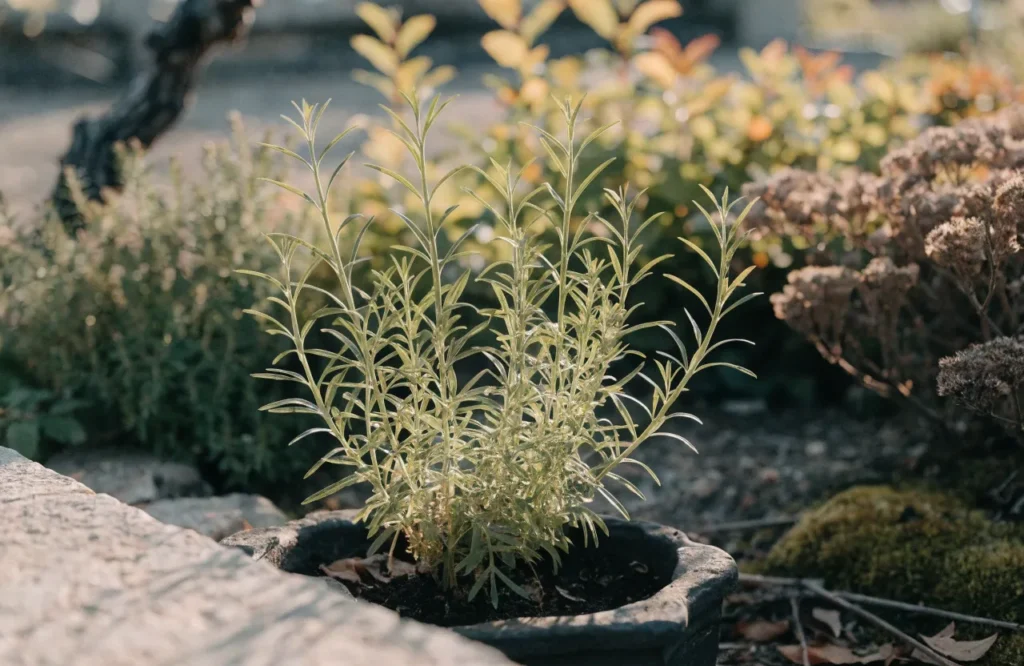
French tarragon delivers the anise-like flavor essential to béarnaise sauce and classic French cooking. It’s a perennial that prefers full sun to light afternoon shade and loose, well-drained soil, with good drainage especially critical in winter, since wet, dormant roots are prone to rot.
One important note: true French tarragon rarely produces viable seed, so it’s propagated by cuttings or divisions. Seed packets simply labeled “tarragon” are almost always the blander Russian variety.
10. Winter Savory
As the name suggests, winter savory is built for cool weather. Unlike its softer annual cousin, summer savory, this perennial herb survives cold winters once established and brings a peppery, slightly resinous flavor traditionally paired with dried beans, lentils, and hearty soups.
Plant winter savory in full sun and well-drained soil; it tolerates dry conditions well and needs little fuss once rooted in.
Best Fall Herbs for Tea and Drinks
11. Mint
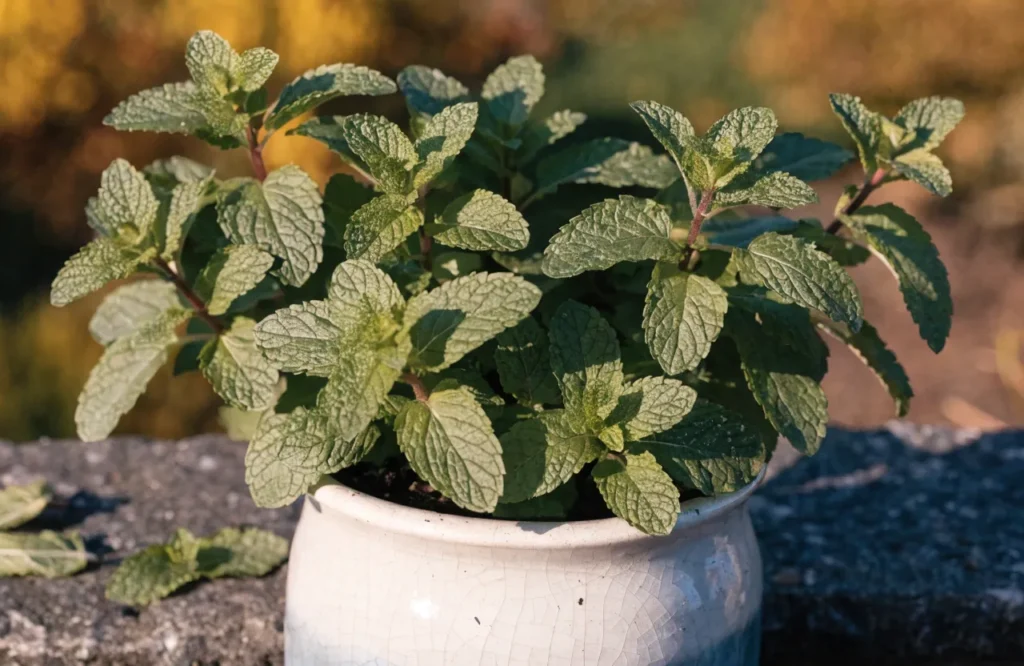
Mint is exceptionally cold-hardy and often the last herb standing after a frost, dying back to the roots in winter and returning vigorously in spring. Because it spreads aggressively through underground runners, mint is best grown in a container rather than an open bed. It tolerates partial shade and prefers consistently moist soil, and its fresh leaves are useful well beyond tea, think sauces, salads, and desserts.
12. Lemon Balm
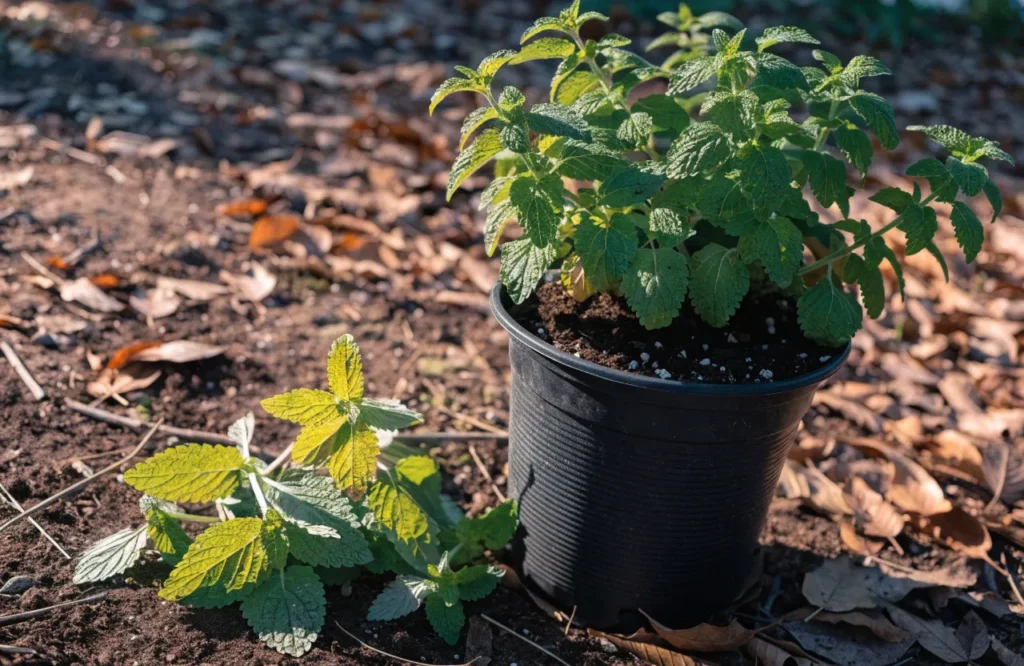
A member of the mint family, lemon balm shares that same cold tolerance and the same spreading habit, so container growing is strongly recommended. Its bright, lemony leaves are excellent steeped fresh for tea or muddled into drinks. Plant it in full sun to partial shade with consistent moisture, and expect it to fill out a container quickly once established.
Specialty and Larger-Space Herbs Worth Considering
The last few herbs on this list are a bit more particular, some need extra space, some are climate-dependent, and one is technically a flower, but each earns its spot for a specific reason.
13. Marjoram
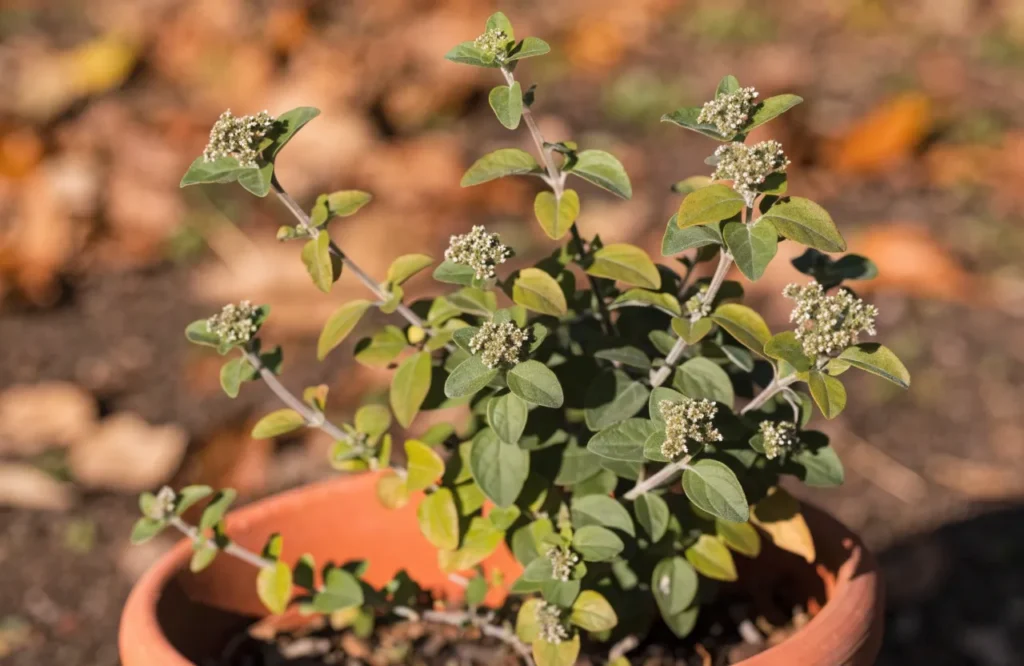
Marjoram is a close, sweeter-flavored cousin of oregano, better suited to delicate dishes like eggs, roasted vegetables, and dishes finished off the heat rather than long-cooked sauces. It needs full sun and well-drained soil. In consistently mild, frost-free climates it can persist as a short-lived perennial, but in most of the country it’s more reliably grown as an annual, since it doesn’t handle hard freezes well. If you’re unsure how it will fare where you live, treat it as an annual and enjoy it as one more reason to try it again next fall.
14. Fennel
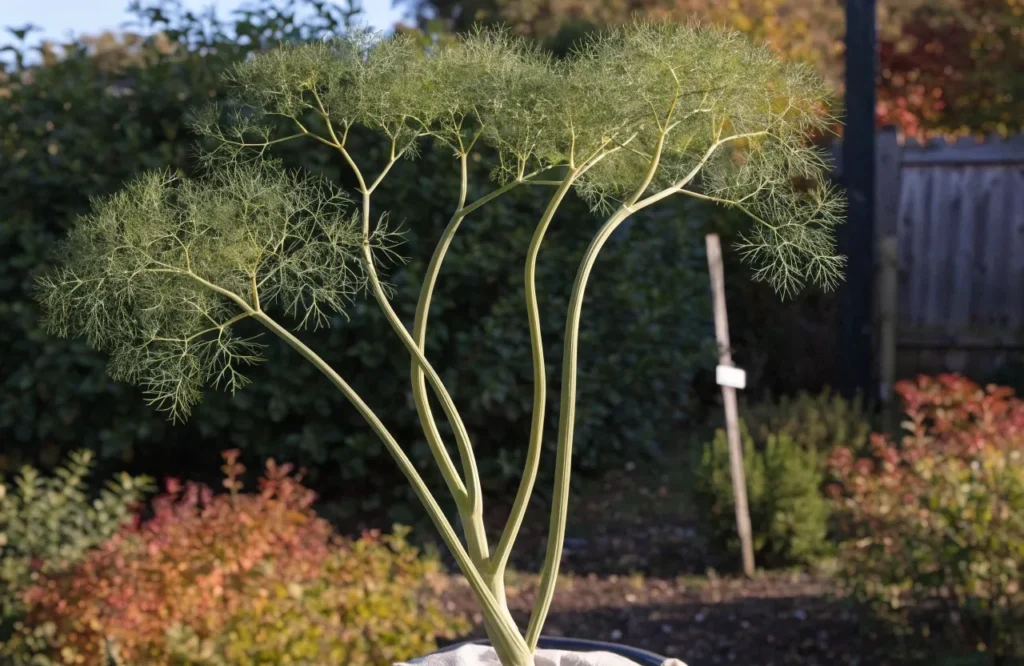
Herb fennel (distinct from the bulb-forming vegetable variety) adds a mild anise flavor to fish and salads, and its feathery foliage doubles as a host plant for swallowtail butterfly caterpillars, putting it in the same category as other good fall flowers for pollinators. It tolerates heat and drought once established, grows quite tall at maturity, and self-seeds readily. In several regions it’s flagged as invasive in open landscapes because of how easily it spreads, so growing it in a container near your home rather than directly in garden beds near natural areas is the more responsible choice.
15. Chervil
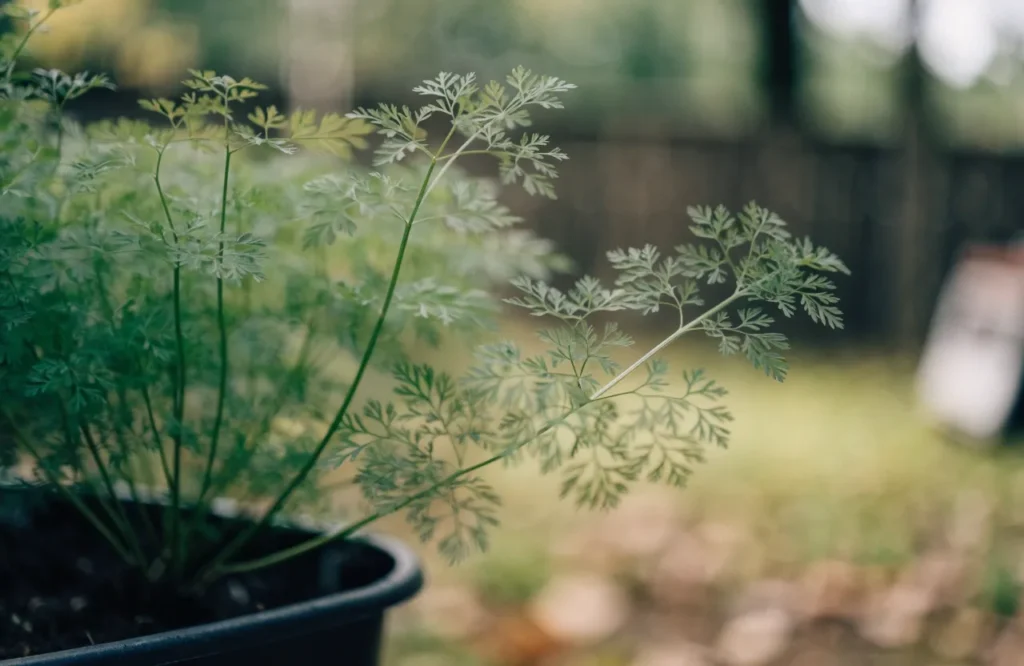
Chervil is a delicate, cool-season annual central to French fines herbes, with a mild anise-parsley flavor that fades quickly once cut or dried, meaning fresh, home-grown chervil is really the only way to experience it properly. It prefers partial shade, consistent moisture, and cool temperatures, making fall (and early spring) its true growing window.
16. Lovage
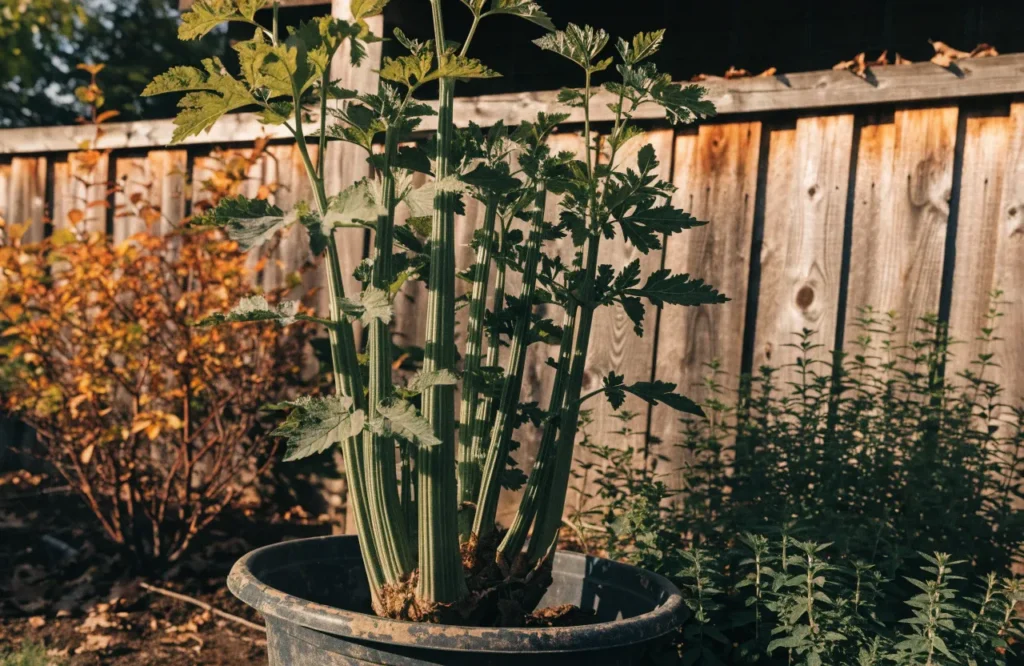
Lovage tastes like a more concentrated version of celery, and a small handful of chopped leaves can replace a whole stalk in soups and stocks. It’s a cold-hardy perennial, but it grows large, three to six feet at maturity, so it needs real garden space or a large container rather than a small tabletop pot.
17. Calendula
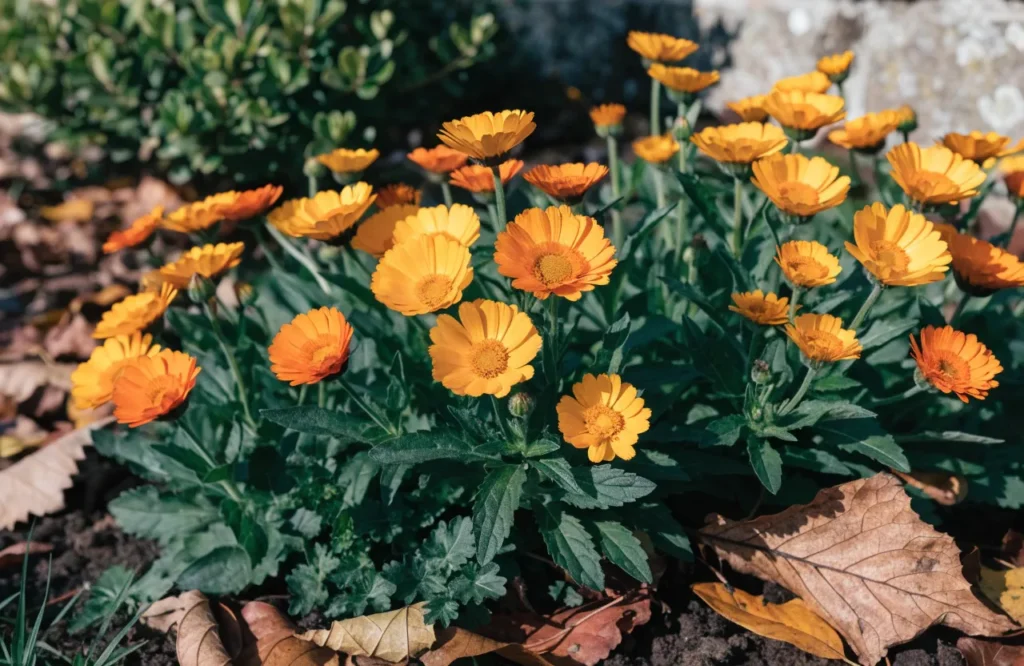
Technically a flowering herb, calendula (pot marigold) is more cold-tolerant than most annual flowers and can often survive a light freeze, with cold tolerance improving as the plant matures. It produces edible, antioxidant-rich blooms in classic fall colors like gold, orange, and peach, holding its own alongside other fall-blooming flowers and September flowers for a fall garden. It’s easy to start from seed and one of the more forgiving flowers to plant in September if you’re new to fall planting, tolerates cool weather well, and can also act as a decoy plant that draws aphids away from fall salad greens, a useful, low-effort addition even if you’re mainly growing culinary herbs.
Choosing Fall Herbs by Use, Not Looks
The most common mistake in fall herb shopping is picking whatever looks fullest on the nursery display rather than what you’ll actually cook with. A quick way to shortcut that decision:
- For soups and roasts: thyme, sage, rosemary
- For fresh garnishes: parsley, chives, cilantro
- For tea and drinks: mint, lemon balm
- For specialty or French-style cooking: tarragon, chervil, lovage
- For beans and hearty dishes: winter savory
Grouping herbs by their growing needs also simplifies care. Mediterranean herbs, thyme, rosemary, sage, oregano, winter savory, generally want full sun and fast-draining, lean soil. Cool-season herbs like cilantro, dill, and chervil prefer some afternoon shade and steadier moisture, since heat pushes them to bolt.
Growing Fall Herbs in Containers
Containers are ideal for a fall herb garden because they’re easy to move as temperatures shift, onto a covered porch, against a sheltered wall, or indoors ahead of a hard freeze. Almost every herb on this list adapts well to container growing, with a few rules of thumb:
- Choose pots with drainage holes. Waterlogged soil is more damaging to most perennial herbs than cold air alone.
- Match container depth to root type. Taprooted herbs like dill and cilantro need deeper pots; shallow-rooted herbs like thyme do better in wide, shallow containers.
- Give spreaders their own space. Mint, lemon balm, and oregano spread aggressively and should be contained separately from less vigorous herbs.
- Use a quality potting mix. A well-draining, nutrient-rich mix supports steady growth through the shorter fall days.
If you’re still deciding on a layout, a few kitchen herb garden ideas or balcony herb garden ideas can help you settle on groupings and container styles before you commit to a design.
Frequently Asked Questions
Final Thoughts
A fall herb garden doesn’t need to be complicated, and your best choices ultimately depend on your USDA hardiness zone and whether you’re planting in the ground or in containers. If you want a simple starting point: plant parsley, thyme, and chives for an easy, low-maintenance fall herb garden. Add cilantro or dill for a fast cool-season harvest, and lean on containers for anything, like rosemary or marjoram, that needs extra winter protection in your climate.
From there, give your herbs well-drained soil and enough sun, and let the cooler weather do most of the work. Whether you’re growing parsley on a windowsill or mixing rosemary, sage, and thyme into a few front porch flower pot ideas, fall remains one of the most rewarding seasons to keep fresh herbs within reach.