October Garden Checklist: 15 Things to Do Before the First Frost
October is the garden’s busiest bridge month. Summer crops are winding down, the soil is still workable, and the first frost is quietly approaching. Everything you do now — or skip — shapes how your garden wakes up next spring. That’s why a clear October garden checklist matters more than any other monthly to-do list: it turns a frantic few weeks into a calm, ordered wind-down.
This October garden checklist is built around one simple angle: before the first frost. Every task below is something worth finishing while the ground is still soft and the days are still mild. Work through the October garden checklist in order, and you’ll head into winter with tender crops saved, spring bulbs in the ground, and beds resting under mulch instead of weeds.
Table of Contents
Why an October Garden Checklist Built Around Frost Works
Most fall gardening advice is a loose grab bag of tasks. The problem is timing: some jobs genuinely can’t wait, while others can slide into November. Organizing your October garden checklist around your first frost date gives every task a deadline that actually means something.
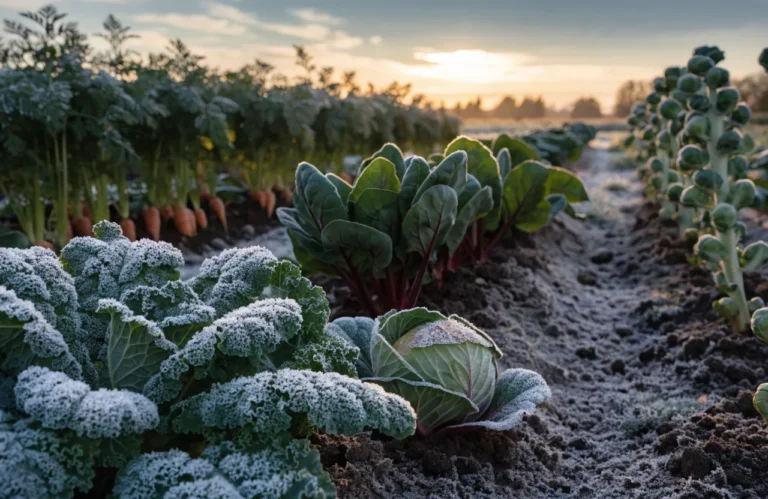
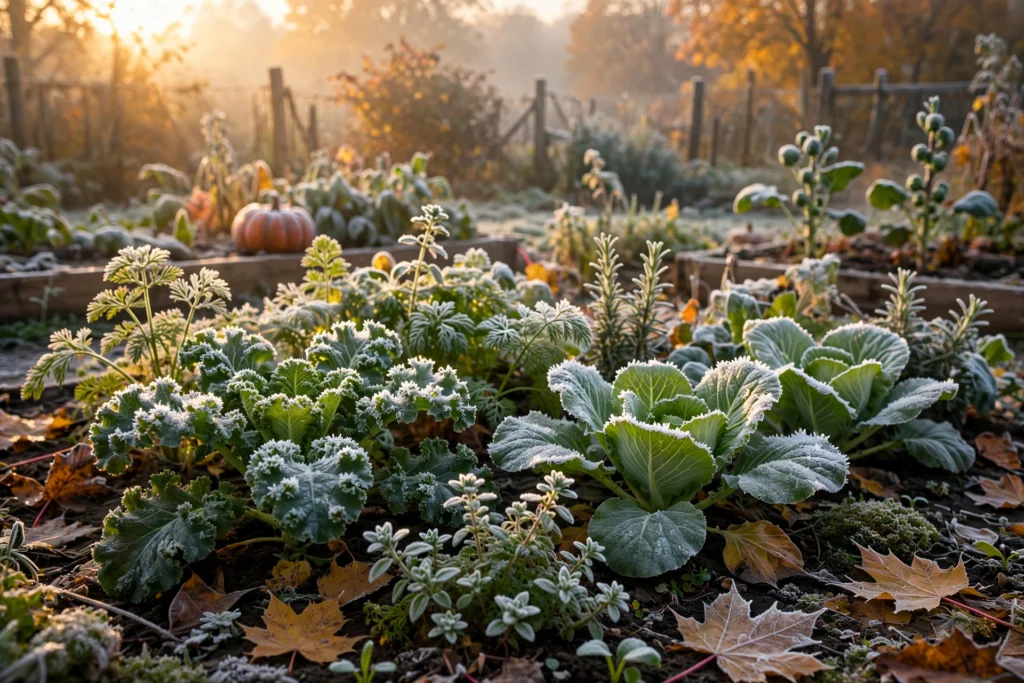
A light frost (29–32°F) will blacken basil, ruin peppers, and end your tomatoes. A hard freeze (below 28°F for several hours) goes deeper, it can heave unmulched perennials, split terracotta pots, and burst a hose left full of water. Your checklist should treat the light frost as the warning bell and the hard freeze as the hard stop. Check your local average first frost date, then count backward: that’s your working window.
Your October Garden Checklist: 15 Things to Do Before the First Frost
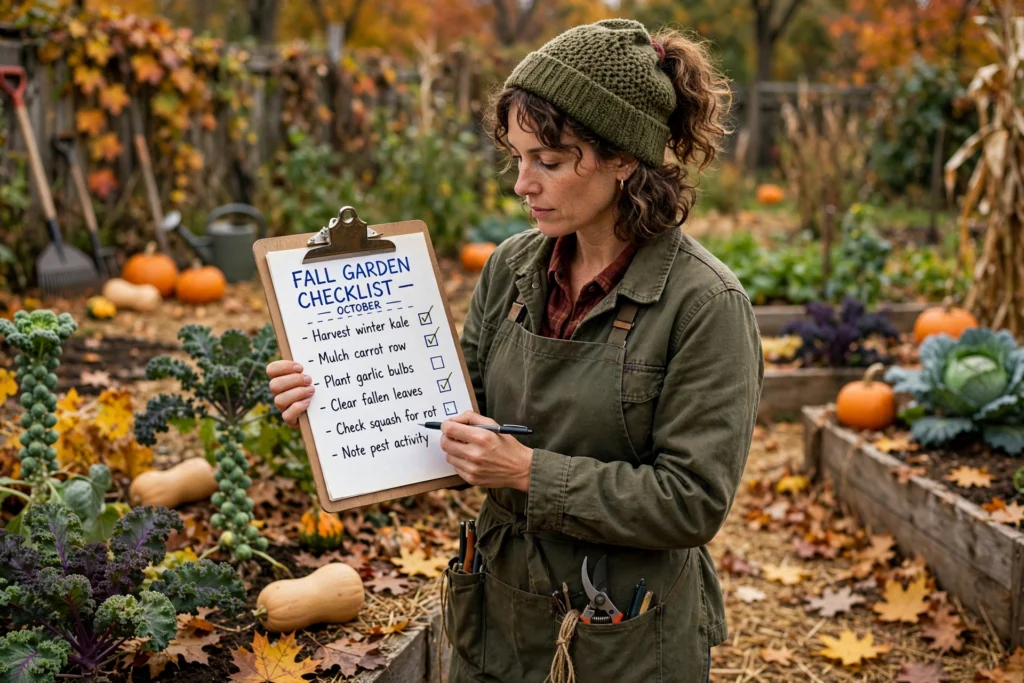
1. Harvest Remaining Tender Crops
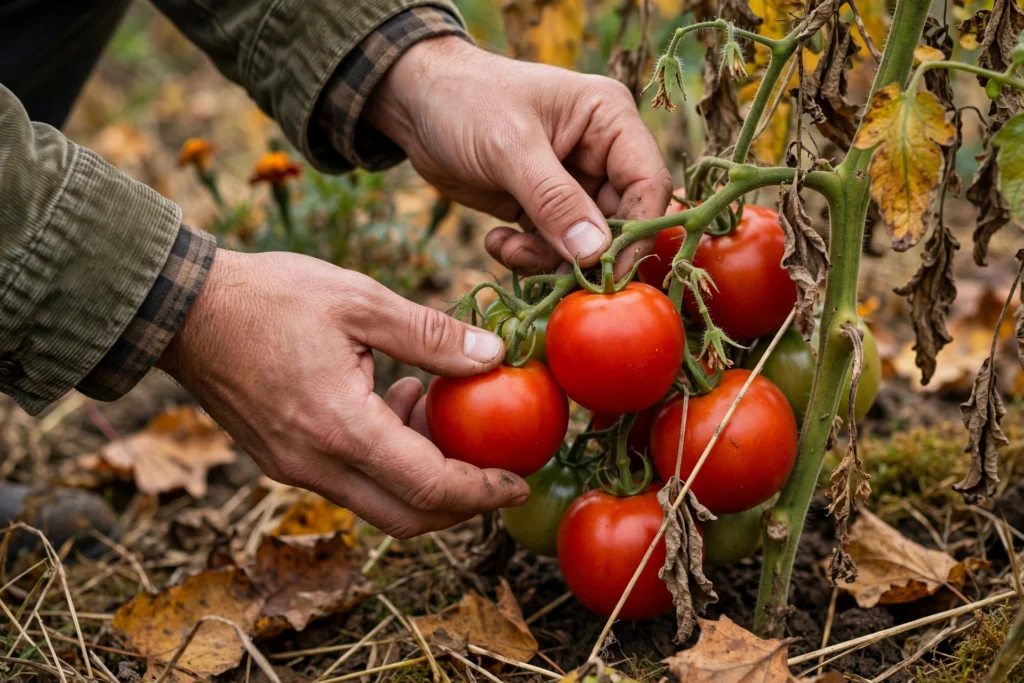
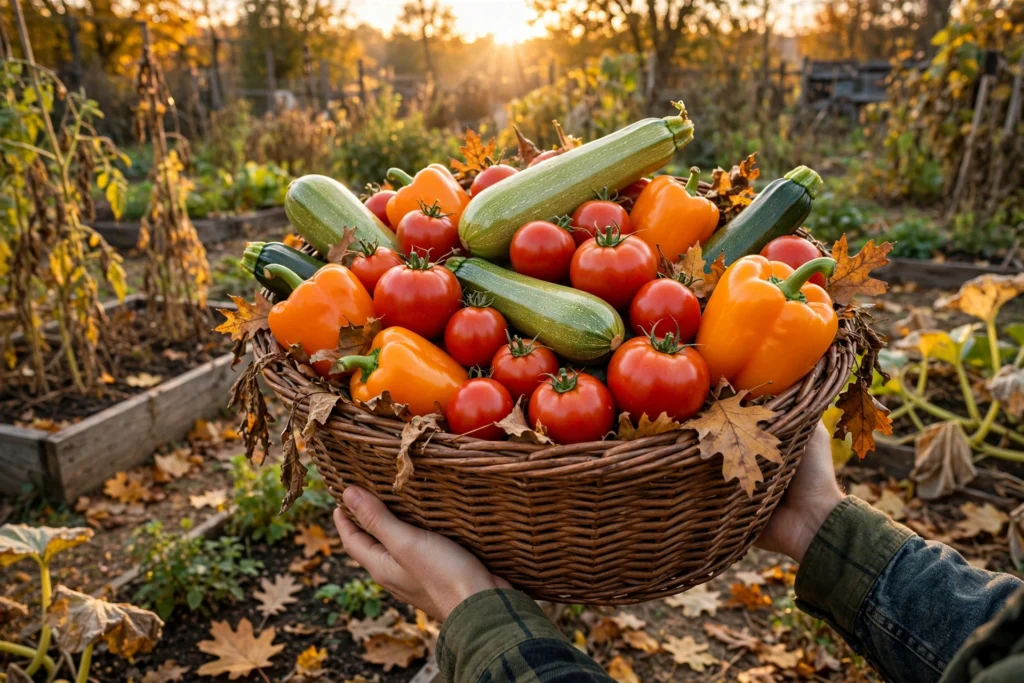
Walk the vegetable beds with a basket before the forecast dips near freezing. Tomatoes, peppers, beans, cucumbers, squash, basil, and eggplant all take damage from even a light frost. Pick everything worth saving, mature green tomatoes will ripen indoors on a windowsill or in a paper bag with a banana. This is the first item on any October garden checklist for a reason: one cold night can erase weeks of almost-ripe produce. After harvest, pull the spent plants to deny pests and diseases a winter hideout. To know which crops can stay out through a frost, see which vegetables survive frost.
2. Check Your Frost Dates
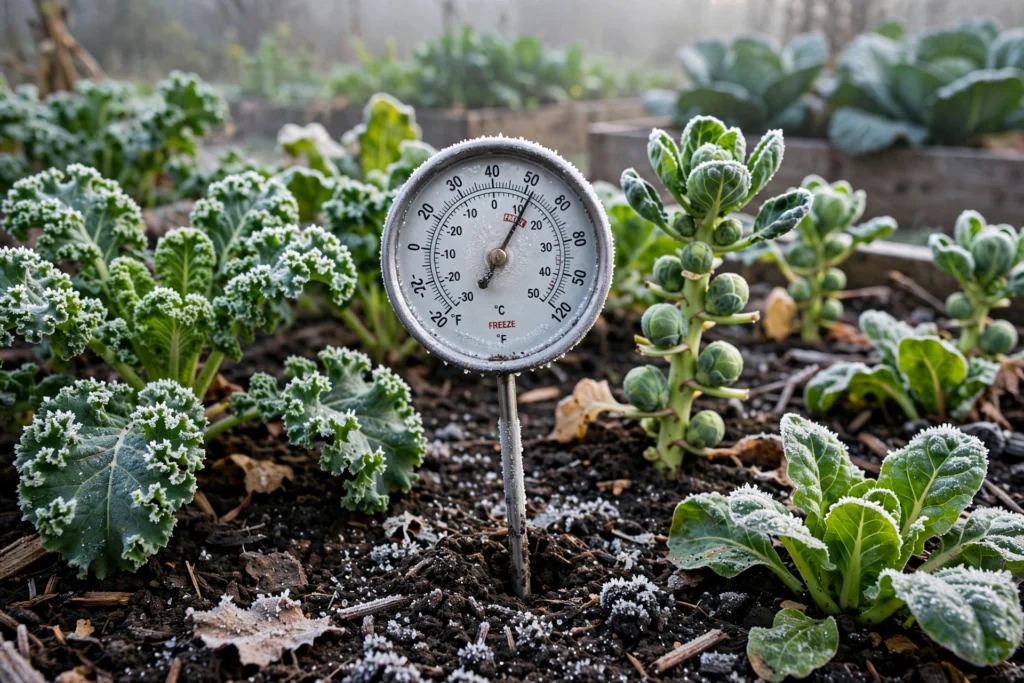
Look up your area’s average first frost date and write it on the calendar. Then watch the actual 10-day forecast, because averages are just averages, a frost can arrive two weeks early or hold off until November. Every remaining item on this checklist gets scheduled against that date. If frost is a week out, prioritize harvesting and protection; if you have three weeks, you still have time for planting garlic and dividing perennials.
3. Protect Tender Plants
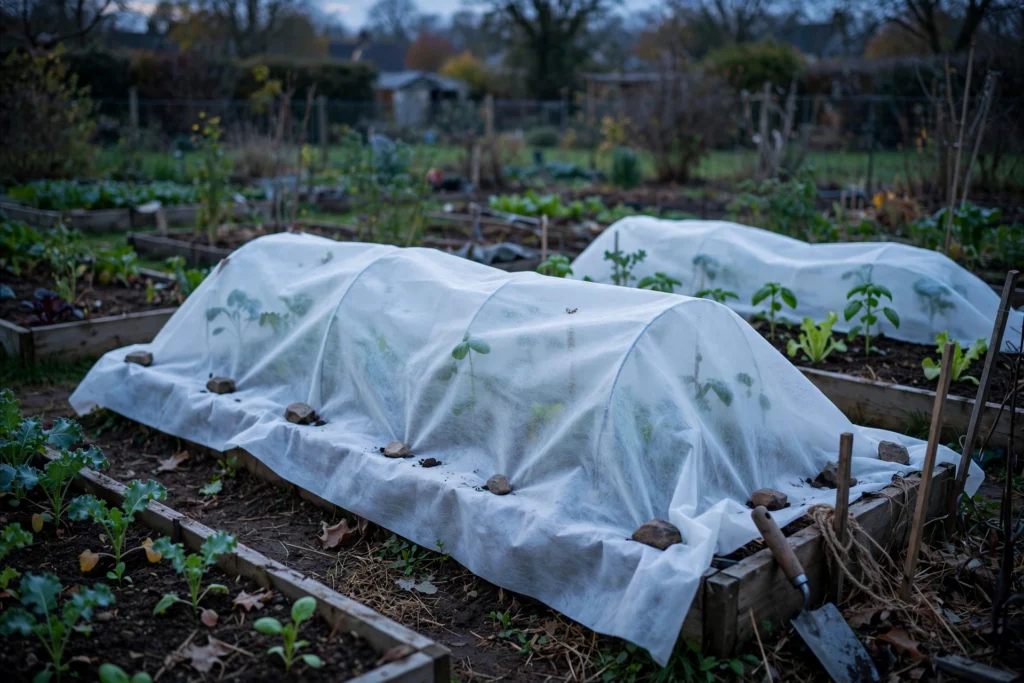
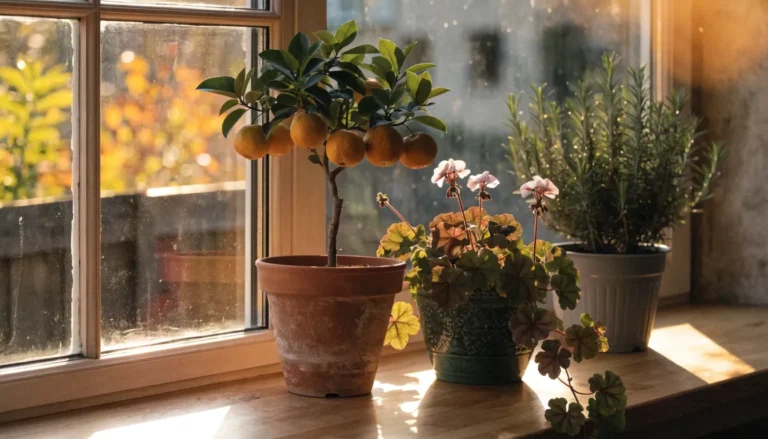
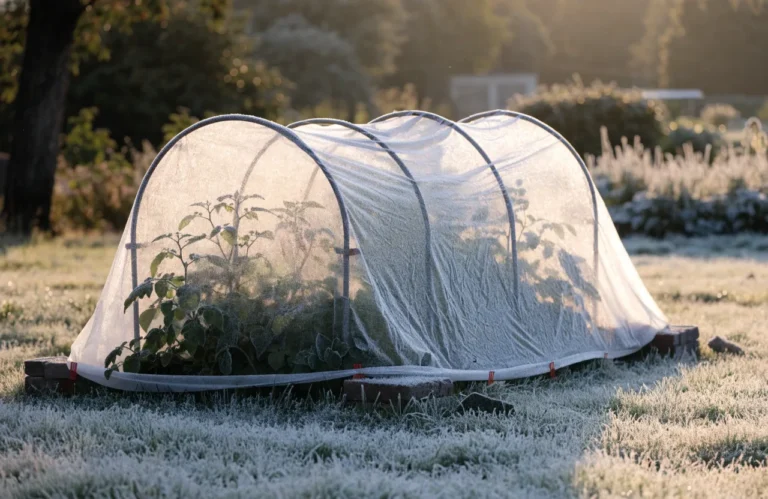
Not everything needs to come inside yet. Tender perennials, late-blooming annuals, and container plants can often ride out the first light frosts with simple protection. Drape frost cloth or old bedsheets over vulnerable plants in the evening and remove the covers in the morning so heat doesn’t build up. Move pots against a south-facing wall, which radiates warmth overnight. For plants that can’t take any frost at all, now is the moment to bring them indoors, see our guide on plants to bring indoors before frost.
4. Plant Garlic
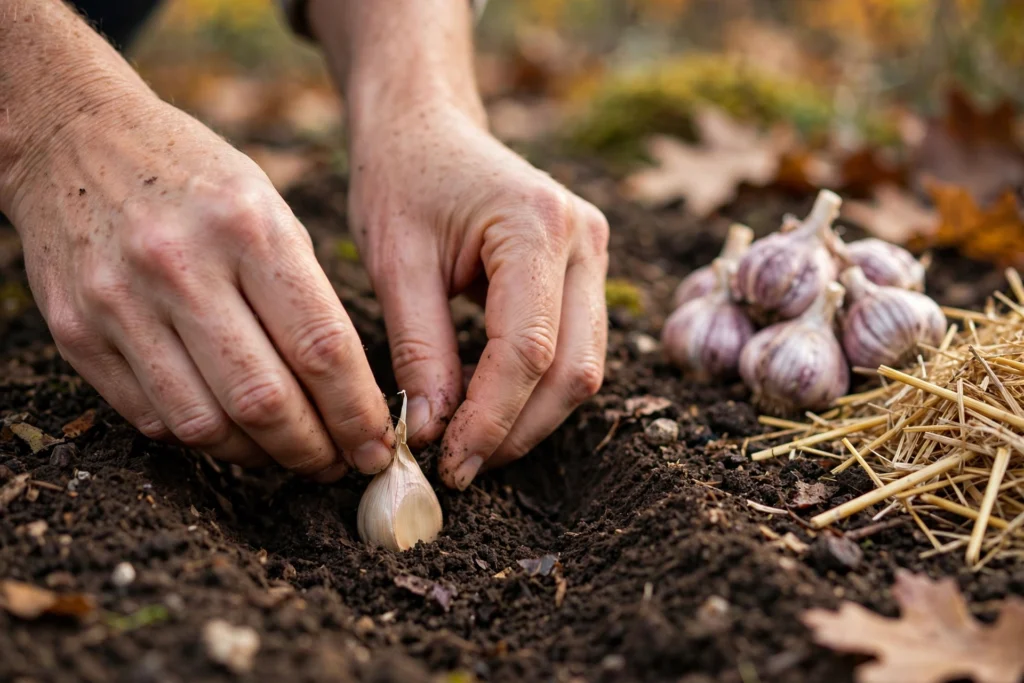
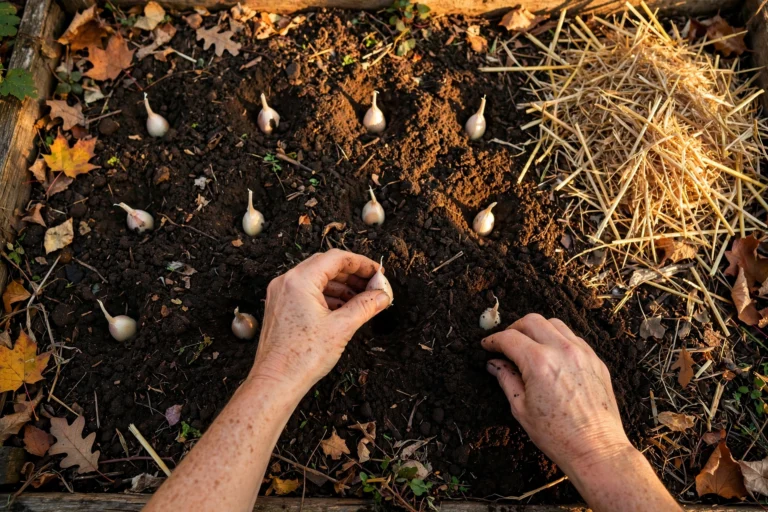
October is prime garlic-planting month across most climates. Garlic needs cold weeks in the ground to form proper bulbs, so getting cloves in now, a few weeks before the ground freezes, is ideal. Plant individual cloves 2–3 inches deep, pointed end up, about 4–6 inches apart, then mulch heavily with straw. For the full timing, depth, and spacing breakdown, follow our October garlic planting guide. This is one October garden checklist task with a genuine payoff: plant now, harvest big bulbs next July.
5. Plant Spring Bulbs
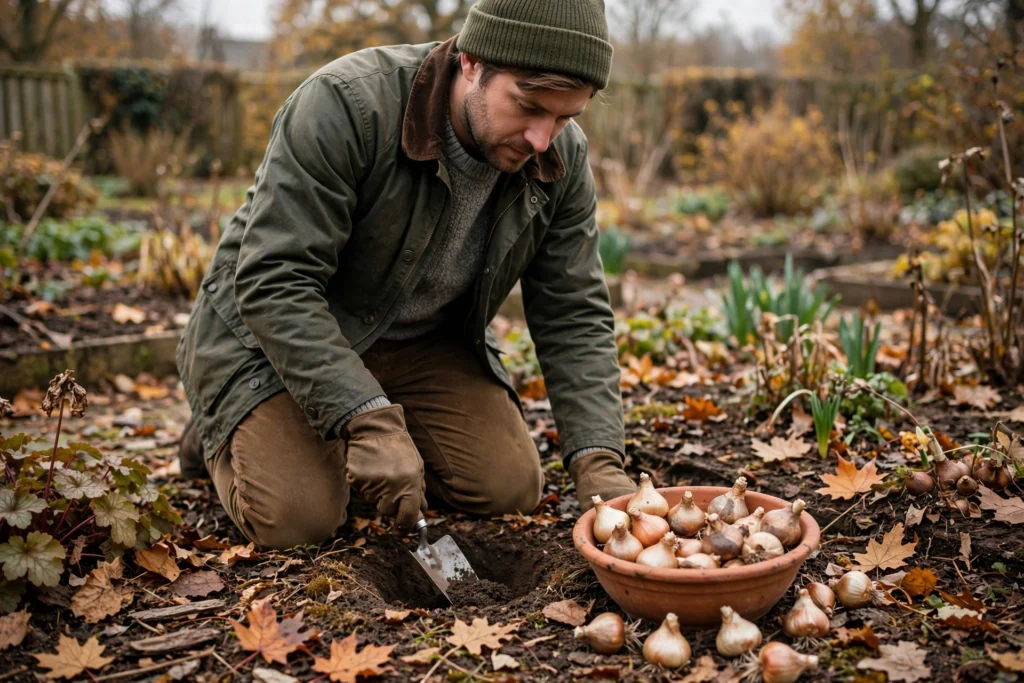
Tulips, daffodils, crocuses, and alliums all go in the ground in October, while the soil is still workable but cool. The rule of thumb: plant each bulb two to three times as deep as the bulb is tall, pointed end up, in well-draining soil. Aim to finish at least two to three weeks before the ground freezes so roots can establish. Our spring bulb planting guide covers timing, depth, and spacing for every major bulb type. Few October garden checklist items are as rewarding, this is next spring’s color, planted today.
6. Mulch Vulnerable Plants
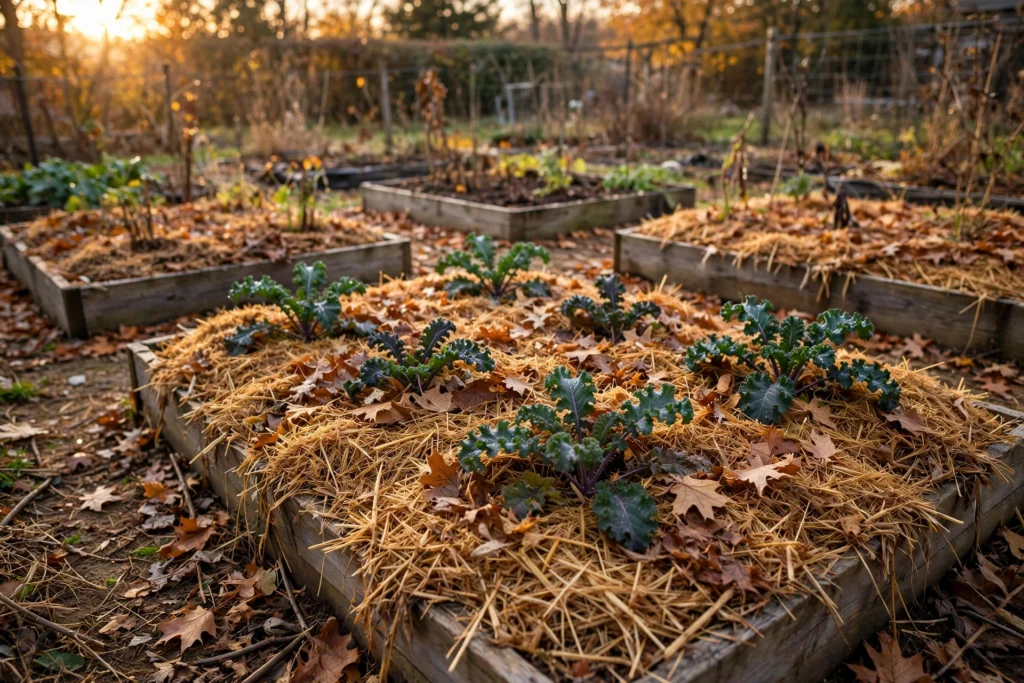
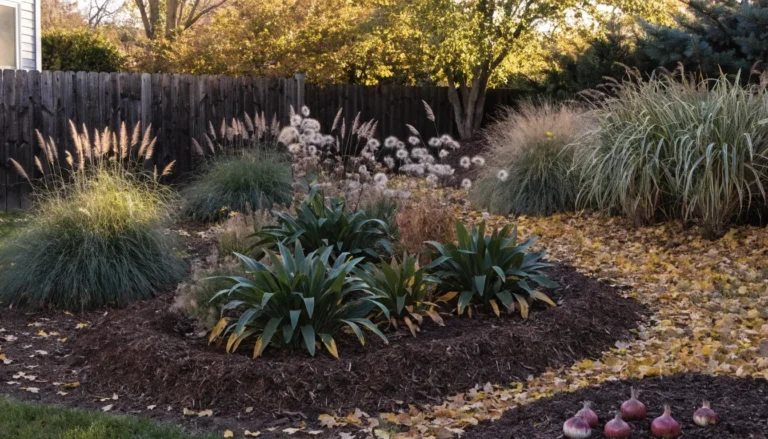
Once you’ve planted garlic and bulbs, mulch everything that stays in the ground. A 2–3 inch layer of shredded leaves, straw, or bark mulch insulates roots against freeze-thaw cycles, which heave plants out of the soil more destructively than steady cold does. Mulch roses, newly planted perennials, strawberries, and the garlic bed. Keep mulch a couple of inches away from stems and trunks to prevent rot and discourage rodents from nesting against bark.
7. Clean Up Diseased Plant Debris
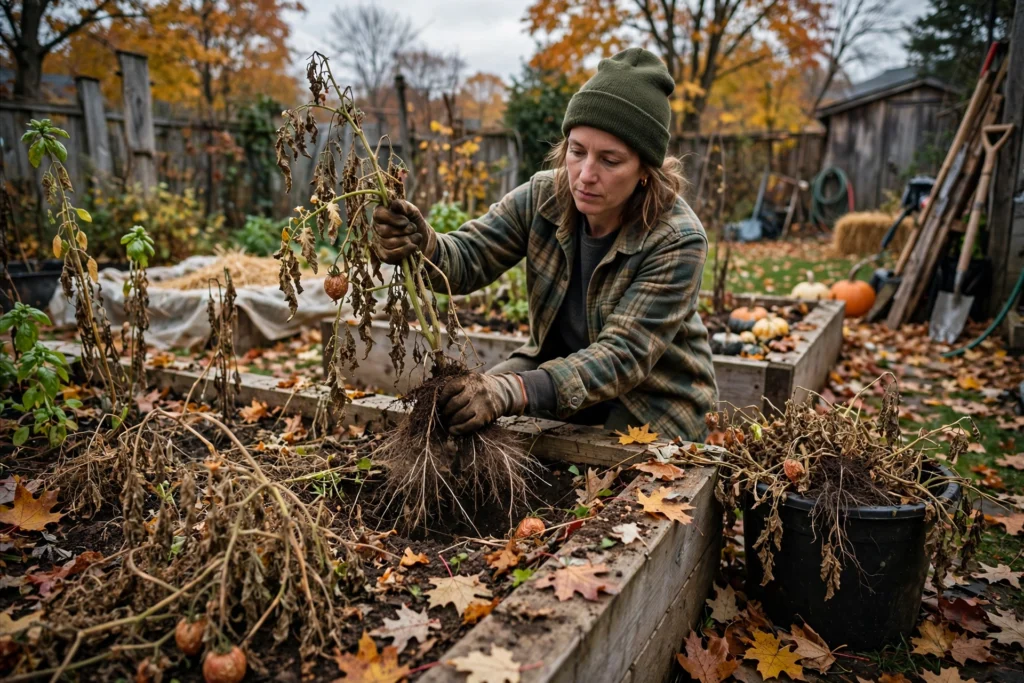
Here’s the cleanup task that actually matters for plant health: remove any foliage showing signs of disease, black spot on roses, blighted tomato leaves, mildewed squash vines. Fungal spores and bacteria overwinter happily in dead leaves, so rake up and dispose of diseased material in the trash or municipal green waste, never in your home compost pile (backyard piles rarely get hot enough to kill pathogens). Healthy spent foliage can be composted or left as habitat, but the sick stuff has to go. Skipping this step is one of the classic fall gardening mistakes.
8. Collect Seeds
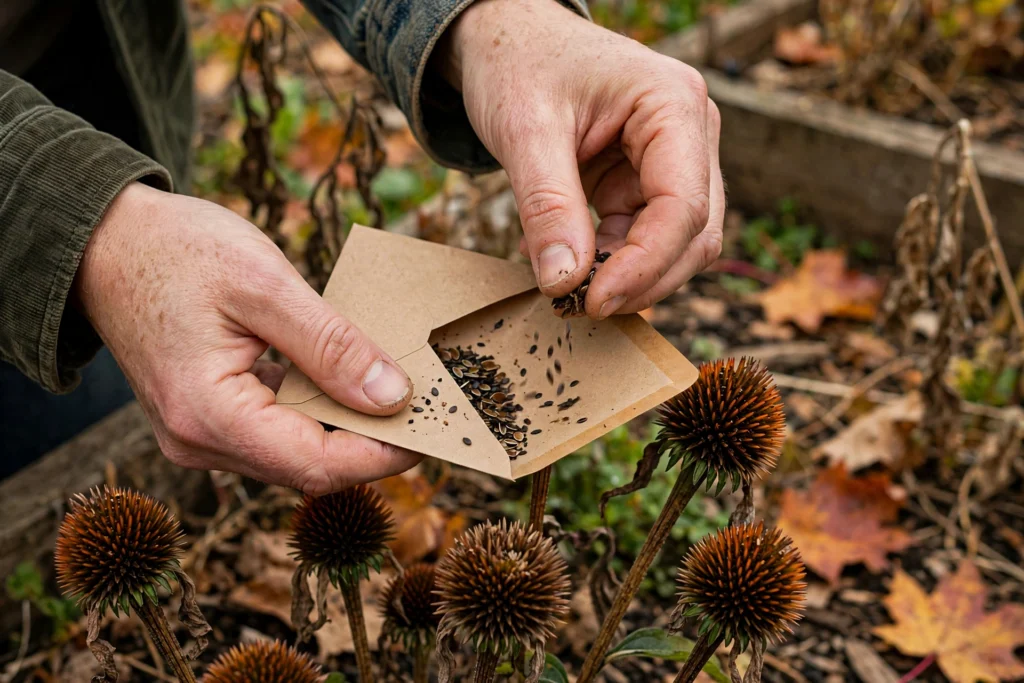
Before frost finishes your best performers, save seeds from open-pollinated varieties you want to grow again. Let seed heads dry fully on the plant, then collect on a dry day, clean off the chaff, and store in labeled paper envelopes in a cool, dark, dry spot. Good candidates: tomatoes, peppers, beans, marigolds, zinnias, and herbs like dill and cilantro. Skip hybrids (often labeled F1), they won’t grow true to type. Seed saving turns this October garden checklist item into next year’s free plants.
9. Test Your Soil
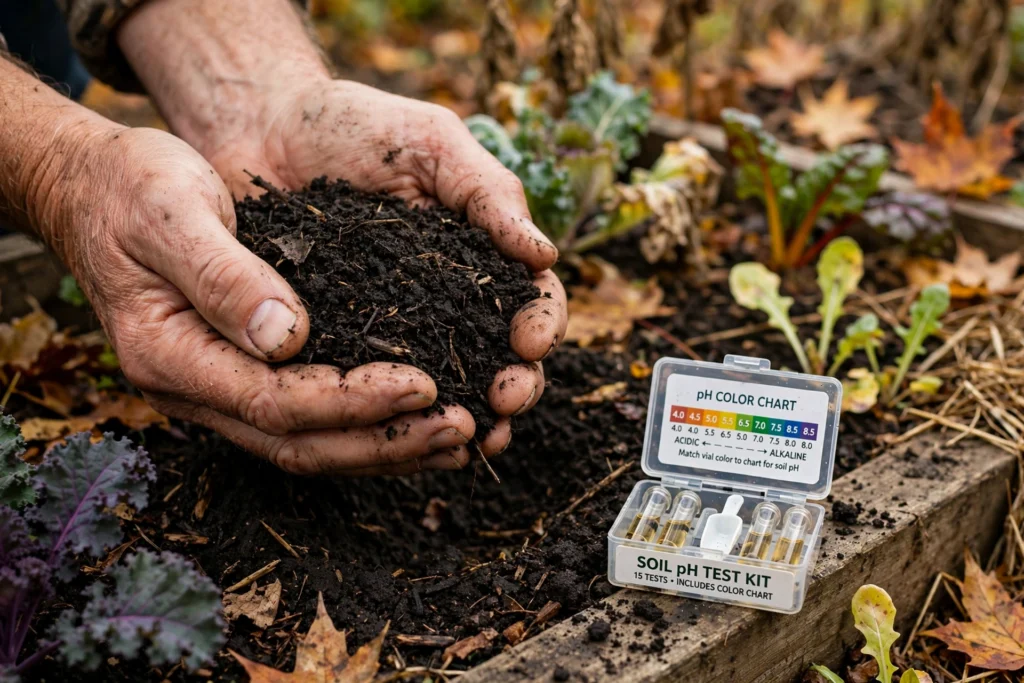
October is the ideal moment for a soil test. Labs are less backed up than in spring, and you’ll have all winter to act on the results. A basic test reveals pH and the levels of nitrogen, phosphorus, and potassium, so you can amend precisely instead of guessing. Most vegetables prefer a pH between 6.0 and 7.0. If your soil needs lime to raise pH or sulfur to lower it, fall application gives the amendments months to work before spring planting. Contact your local cooperative extension office for an affordable test kit.
10. Plant Cover Crops
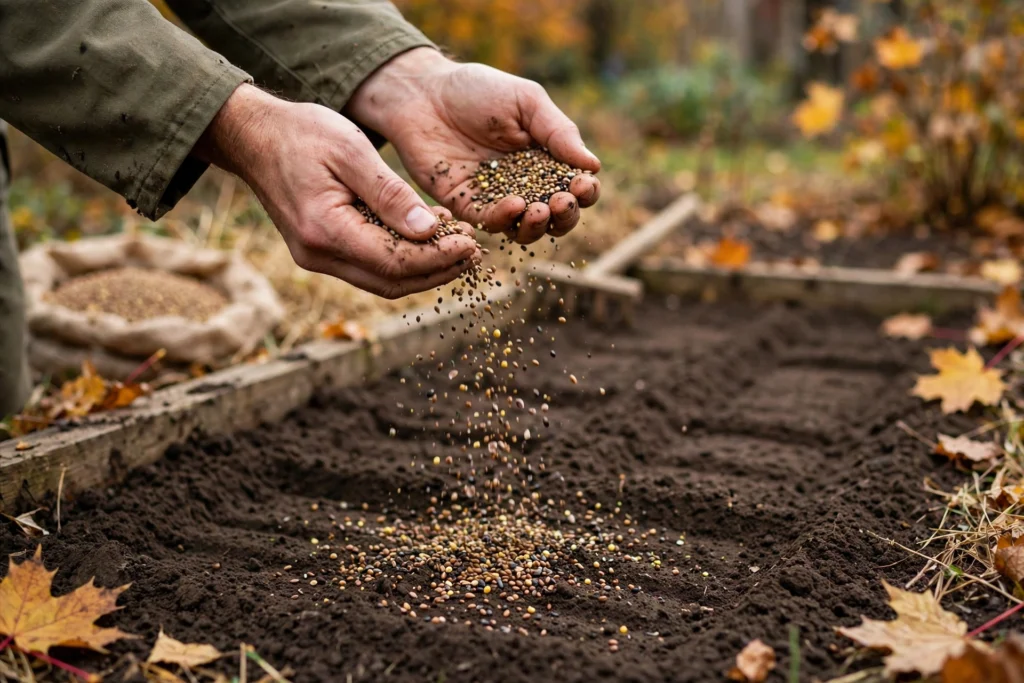
Bare soil over winter is an invitation to erosion, nutrient leaching, and weeds. Cover crops, also called green manures, protect and feed the bed while you wait for spring. In October, sow winter rye, hairy vetch, or crimson clover in empty vegetable beds; they’ll establish before the cold and can be turned under in spring for a nitrogen boost. Even a thick layer of shredded leaves works as a mulch cover if you’re out of sowing time. This October garden checklist step is what separates rested, living soil from compacted, lifeless dirt come April.
11. Divide Suitable Perennials
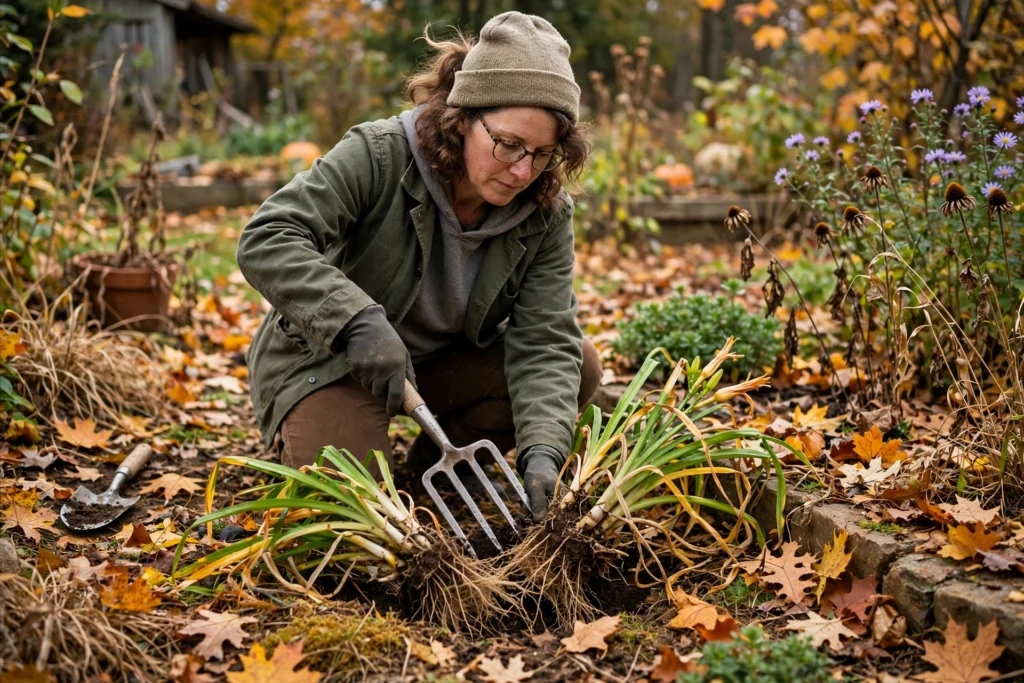
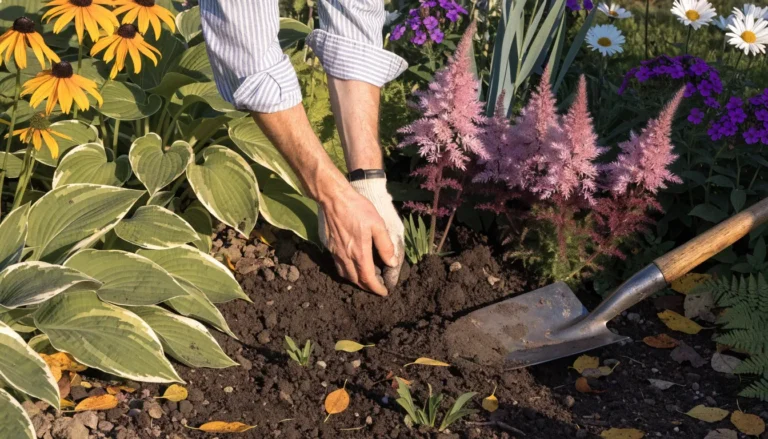
Fall division gives overcrowded perennials a fresh start while the soil is still warm enough for roots to settle. Good candidates for October dividing: daylilies, hostas, coneflowers, black-eyed Susans, and bearded iris. Dig the whole clump, pull or cut it into sections with healthy roots and shoots, and replant immediately at the same depth, watering well. Skip this task for fall-blooming perennials like asters and ornamental grasses, divide those in spring instead. Add compost to each new planting hole to fuel establishment.
12. Clean and Sharpen Tools
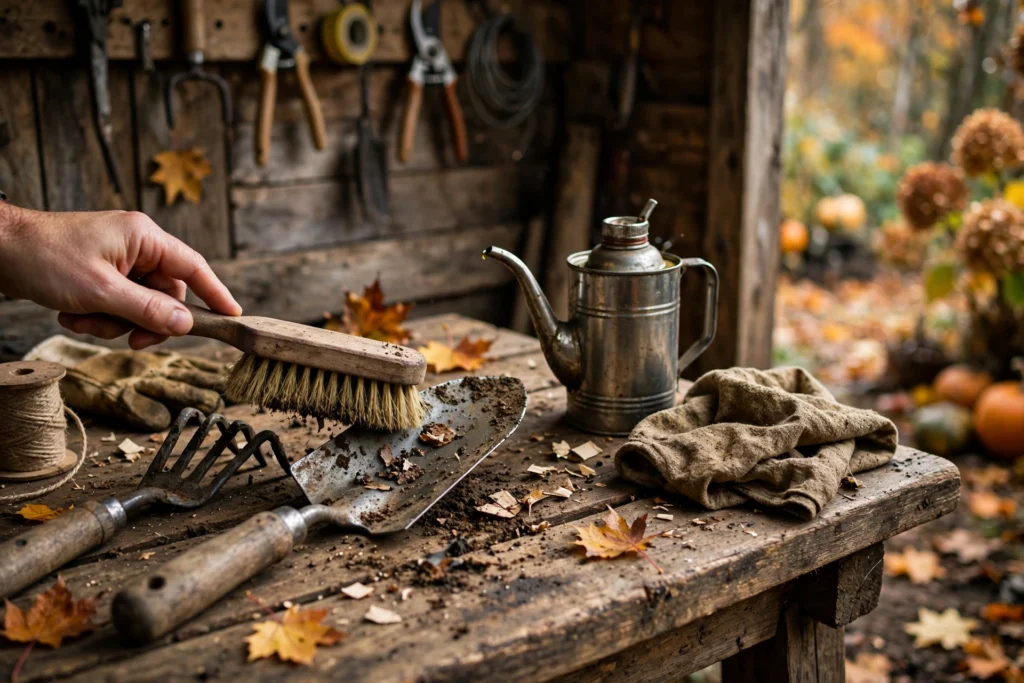
Your tools just did a season of hard work, put them away clean and they’ll last years longer. Knock off soil, wash with soapy water, and dry thoroughly to prevent rust. Sharpen pruners, loppers, and hoes with a file or whetstone; a sharp edge makes cleaner cuts that heal faster next season. Wipe metal parts with an oily rag, and rub wooden handles with linseed oil to prevent cracking. This ten-minute October garden checklist job pays off every time you reach for a tool next year.
13. Empty Hoses and Containers
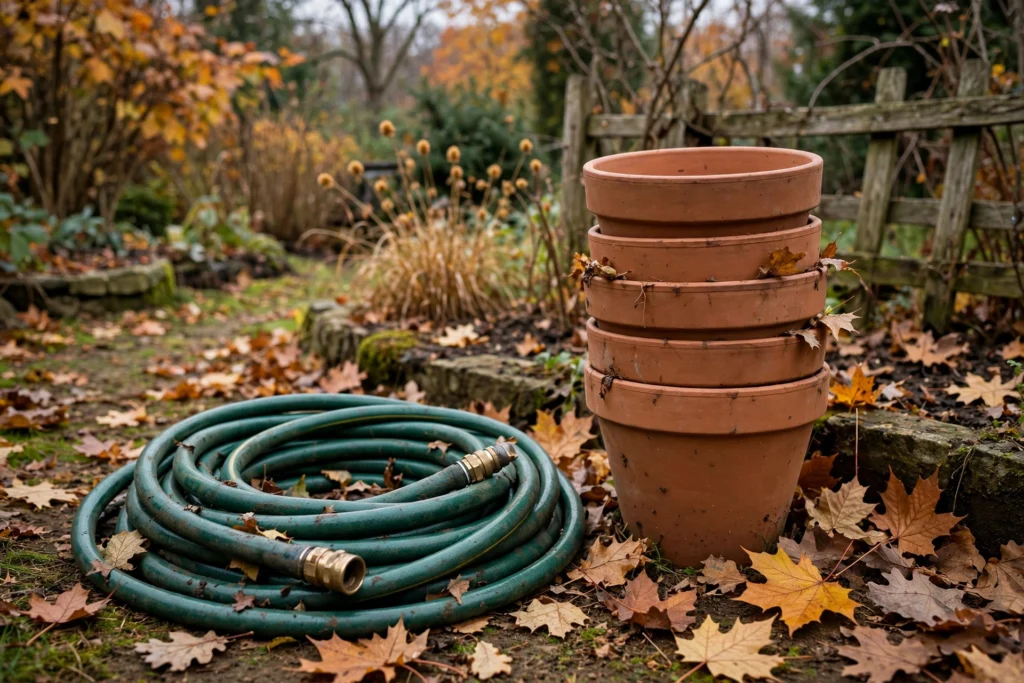
Water expands when it freezes, and that simple fact destroys more garden gear than any pest. Drain garden hoses completely, coil them, and store indoors. Empty rain barrels or leave the spigot open so ice has room to expand. Dump saucers and small containers, and either bring terracotta pots inside or turn them upside down, terracotta is porous and will crack when absorbed water freezes. Disconnect timers and store them somewhere dry. A frozen, burst hose in spring is an entirely avoidable expense.
14. Compost Fallen Leaves
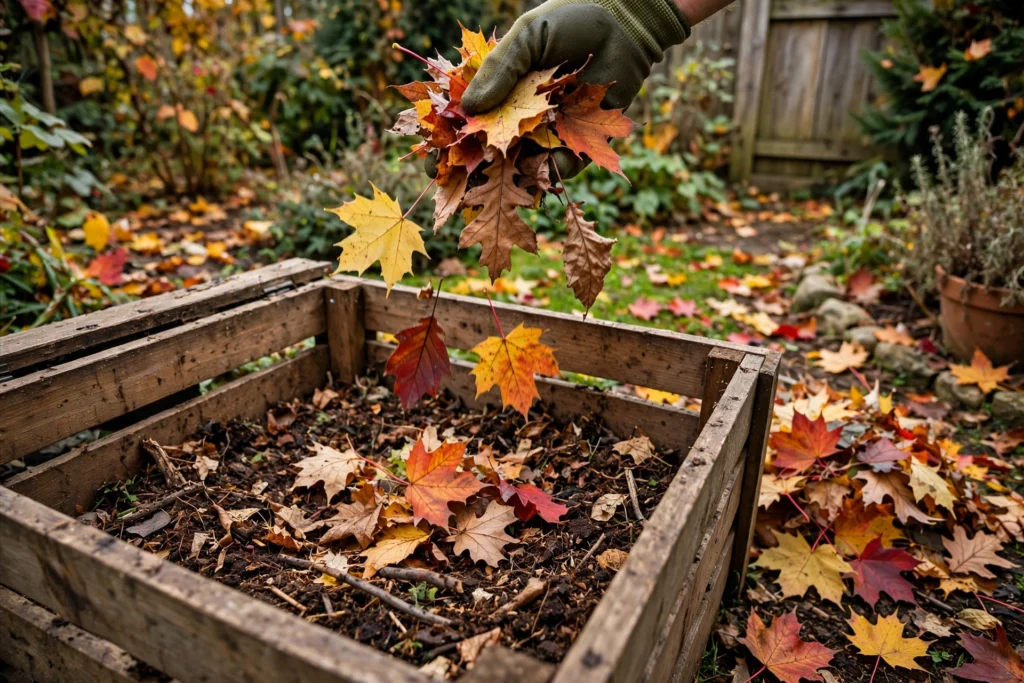
Stop bagging leaves for the curb, they’re one of the best free soil amendments you own. Shred them first with a mower (whole leaves mat down and smother the soil), then layer them into your compost bin with nitrogen-rich greens like kitchen scraps or grass clippings. Or simply spread shredded leaves 2–3 inches thick over empty beds as winter mulch; worms will pull them down all winter. Our fall garden preparation guide has more on turning autumn’s mess into spring’s fertility.
15. Make a Winter Garden Plan
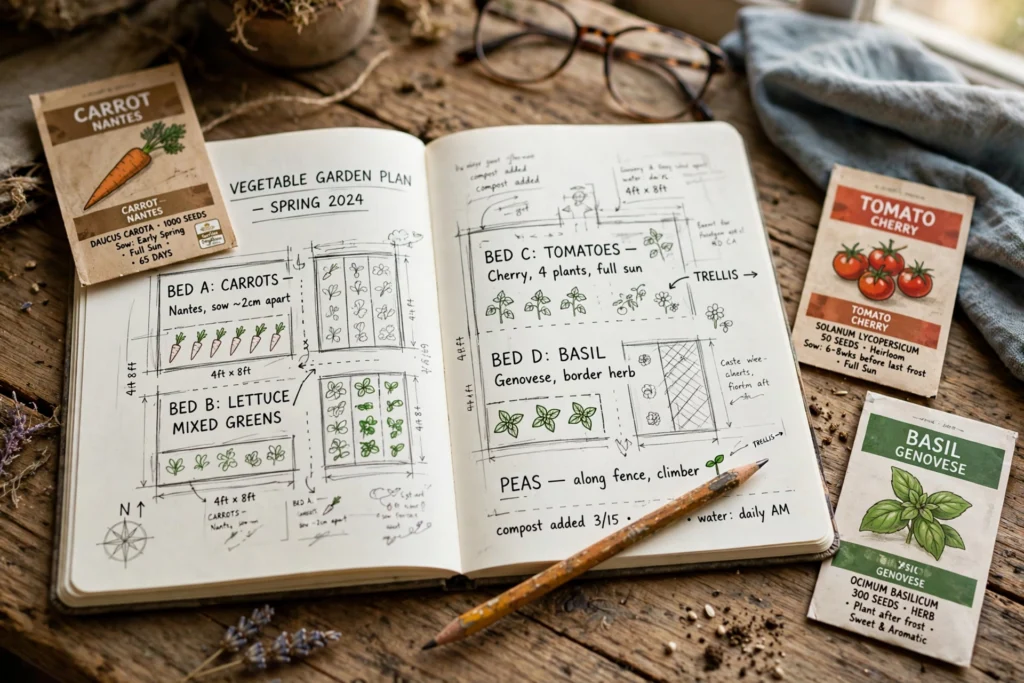
Finish your October garden checklist at the kitchen table, not in the beds. Sketch next year’s layout while this season is fresh in your mind: note what thrived, what struggled, and where disease appeared. Plan crop rotations so heavy feeders don’t follow heavy feeders in the same bed. List the seeds you want to order in January, popular varieties sell out. A written plan turns October’s observations into spring’s head start, and it’s the quiet task that makes every other item on the October garden checklist more effective next year.
Frequently Asked Questions
When should I start working through my October garden checklist?
Start on October 1st, but let your first frost date set the pace. If frost is two weeks out, tackle harvesting and plant protection first. If you have a full month, you can work through the checklist in the order above without rushing.
Do I really need to do all 15 tasks?
No — prioritize by impact. Harvesting tender crops, protecting vulnerable plants, and planting garlic and spring bulbs are time-sensitive. Tool cleaning and garden planning can slide into November if frost arrives early.
What happens if frost arrives before I finish my October garden checklist?
A light frost ends tender crops but doesn’t close the window for everything. You can still plant garlic and spring bulbs until the ground freezes solid, and mulching, tool cleaning, and planning are frost-independent. Only the harvest and protection tasks are truly urgent.
Can I still plant vegetables in October?
Yes, selectively. Garlic is the star October planting, and cover crops protect empty beds. In mild climates you can still sow cold-hardy greens like spinach and mâche.
Should I cut back all my perennials in fall?
No. Cut back diseased foliage and spent annuals, but leave healthy perennial stems and seed heads standing — they shelter beneficial insects and feed birds through winter. Do the full cutback in early spring instead.
How do I find my exact first frost date?
Use your local cooperative extension service or a frost-date calculator for your zip code. Remember it’s an average: watch the real 10-day forecast through October and be ready to cover plants on short notice.
Wrapping Up Your October Garden Checklist
October rewards the gardener who works with the season instead of against it. This October garden checklist isn’t about doing more, it’s about doing the right things before the first frost makes the decisions for you. Harvest what’s tender, protect what’s vulnerable, plant what needs cold, and put the garden to bed properly. Come spring, you’ll be glad October-you did the work.