How to Protect Plants From Frost: 10 Simple Methods
To protect plants from frost, cover tender plants when the forecast low drops to about 36°F (2°C), and take the covers off once the morning warms above freezing. That one habit saves most gardens from most frosts.
This guide to frost protection for plants covers what to protect, how to cover it, and the mistakes that turn a protected night into a damaged crop. It applies equally to the first frost of fall and a late frost in spring.
Table of Contents
At a glance
- Frost can form before the thermometer reads 32°F (0°C), so act on a forecast low of 33–36°F (1–2°C).
- Protect tender vegetables, annuals, tropical plants and anything newly planted. Most hardy perennials and shrubs need no help.
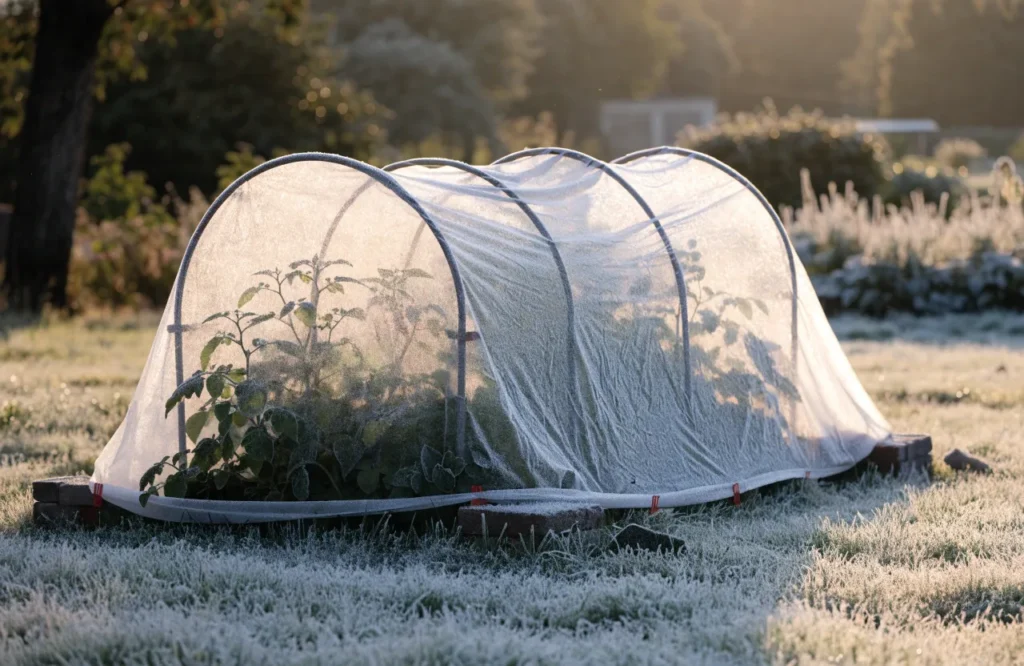
- To protect plants from frost, use breathable fabric that reaches the ground, is anchored at the edges, and is held off the leaves.
- Move containers to shelter whenever you can. Potted roots lack the insulation of surrounding soil.
- Water lightly well before dusk. Moist soil holds heat; standing water at night does not help.
- Uncover the next morning so plants do not overheat or sit in trapped condensation.
Frost vs freeze: the numbers that matter
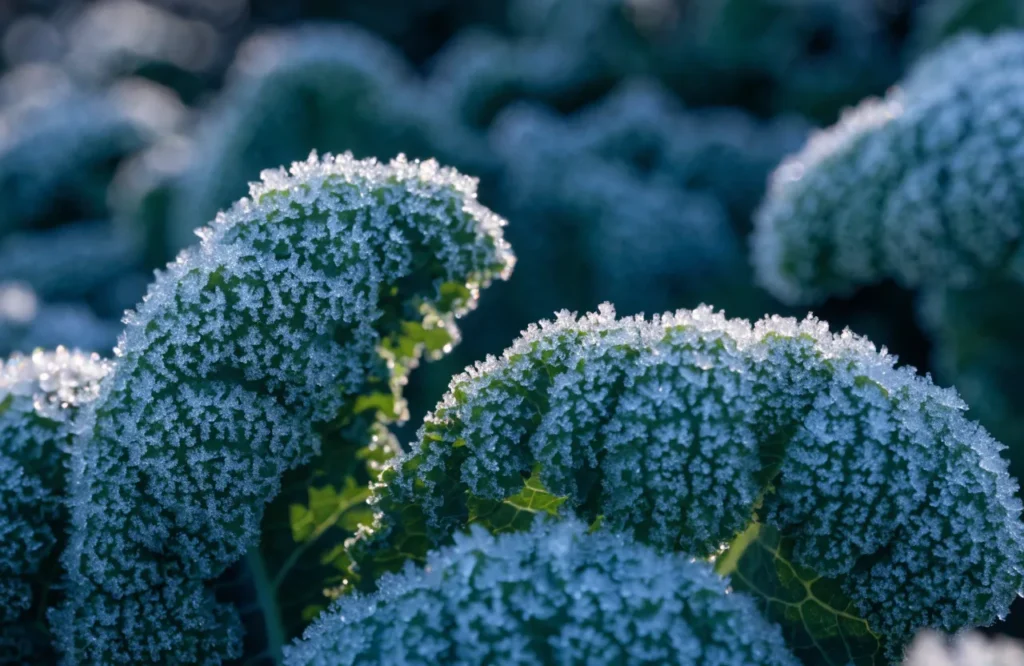
A frost damages leaf surfaces; a freeze damages the whole plant. Frost is ice forming on the outside of a leaf. It can happen when the air is still slightly above 32°F (0°C), because the leaf surface cools faster than the air around it. A freeze is when the air and the inside of the plant fall below 32°F. Cells freeze, and tissue turns brown or black, wilts or collapses.
| Forecast low | What to expect | What to do |
|---|---|---|
| 33–36°F (1–2°C) | Frost is possible, especially on clear, calm nights | Cover or move tender plants |
| 32°F (0°C) and below | Freeze: tender plants are damaged within hours | Cover tender plants; double the layers for a hard freeze |
| About 28°F (-2°C) and below | Covers usually stop being enough, and damage can still occur above 28°F if the cold lasts 5 hours or more | Rely on hardy crops; bring containers inside |
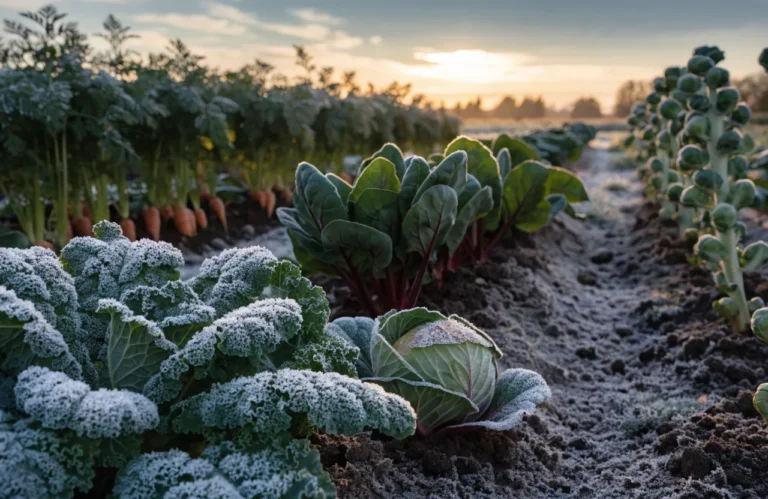
| 26–28°F (-3 to -2°C) | Hardy cool-season crops such as cabbage and kale often come through | Cover young seedlings only |
Tomatoes are damaged at around 32–34°F (0–1°C). Cabbage can tolerate 26–28°F without failing. Learn the threshold for the crops you grow most, then compare it to the forecast each evening so you know when to protect plants from frost.
The type of cold matters too. On a clear, still night, heat radiates out of the soil and cold air settles at ground level. This is a radiation freeze, and covers work well against it because they hold the ground’s heat around the plants. When a cold, dry air mass arrives with wind (an advection freeze), covers have less warmth to trap, so anchor them well and expect less protection.
How to protect plants from frost: what to cover and what to leave alone
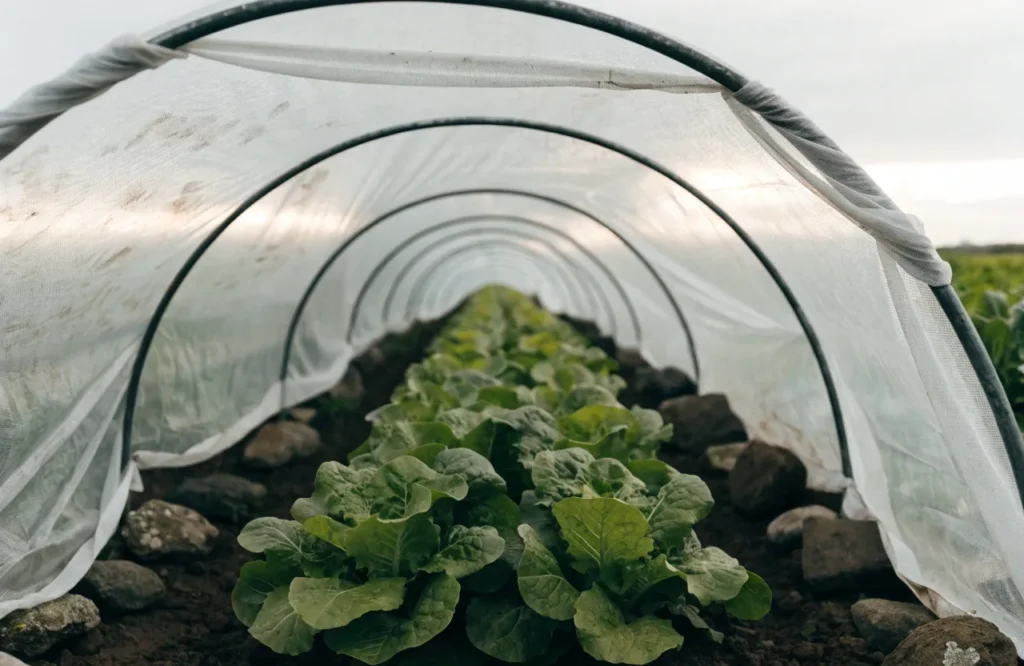
Protect by tenderness, not by plant category. Sort what you grow into three tiers.
| Tier | Examples | Action |
|---|---|---|
| Very tender | Tomatoes, peppers, basil, cucumbers, beans, squash, melons, zucchini, sweet potatoes | Cover or move when the forecast nears 36°F (2°C) |
| Frost-tolerant | Beets, carrots, lettuce, chard, celery, onions, parsley, potatoes | Fine in a light frost; cover young plants |
| Hardy | Kale, spinach, cabbage family, peas, radishes, turnips, Brussels sprouts | Often improve in flavor after frost; keep a cover handy for seedlings |
Also protect annuals, tropical plants (palms, bananas), half-hardy and tender perennials, and anything recently transplanted. Young seedlings are weaker than mature plants of the same species. Container plants are more exposed than those in the ground, because the pot offers no insulation.
Sources disagree on shrubs and perennials, and the difference is worth understanding. Iowa State’s extension advises against covering hardy perennials, woody shrubs, roses and small trees. These plants need cold to enter dormancy, and most tolerate temperatures at or just below freezing. Homes & Gardens recommends covering borderline-hardy plants such as agapanthus, tree ferns and cordyline. The two are consistent once you ask whether the plant is hardy in your zone. Leave zone-hardy plants alone and shelter the ones you are stretching beyond their range.
A useful reminder from Iowa State: after a night at 31°F (-0.5°C), a petunia in a container stayed green while the coleus beside it was killed. Plants in the same pot can have very different limits.
Reading the forecast like a gardener
Start checking the forecast a few weeks before your average first fall frost date, and again as your average last spring frost date approaches. These dates are averages, not guarantees. Use them to plan, and treat a cold forecast as the real warning.
Then look beyond the predicted low:
- Sky and wind. Clear, calm nights let heat escape from the soil, so frost is more likely, especially in open areas and low spots. Cloud cover and wind usually soften it.
- Margin. A forecast of 36°F (2°C) is not safe on a clear night. Treat 33–36°F as a cover-up night for tender crops.
- Duration. Several hours below freezing do far more harm than a brief dip.
- Your garden. Your yard may run colder than the official forecast, particularly in low pockets.
Set a daily evening habit: check the overnight low, then decide whether you need to protect plants from frost that night. A forecast that suddenly drops at 10 p.m. is much easier to handle if the covers are already within reach.
Before sunset: water, harvest and a ready kit
Water the soil lightly if it is dry, but time it well. Moist soil holds and releases more heat overnight than dry soil, which helps roots and the lowest leaves. The sources differ on when to do it: one says late afternoon, another says morning and warns that watering at night can freeze around roots. Both fit one rule. Water in the morning or early afternoon so the surface has soaked in by dusk, and never leave wet, soggy soil or puddles to freeze after dark. Do not overdo it either. Plants that are not actively growing take up less water, and excess water freezes around roots.
If tender fruit is close to ripe and cannot be covered, pick it before the cold arrives. Tomatoes and peppers can often finish ripening indoors.
Keep a frost kit where you can grab it in the dark:
- Lightweight row cover fabric, plus old sheets or towels for larger plants
- Clothespins and rocks or bricks to anchor the edges
- Stakes, hoops or PVC pipe to hold covers off the foliage
- A few clear cloches or cut milk jugs for single plants
- Twine, clips and scissors
How to protect plants from frost with covers and shelter
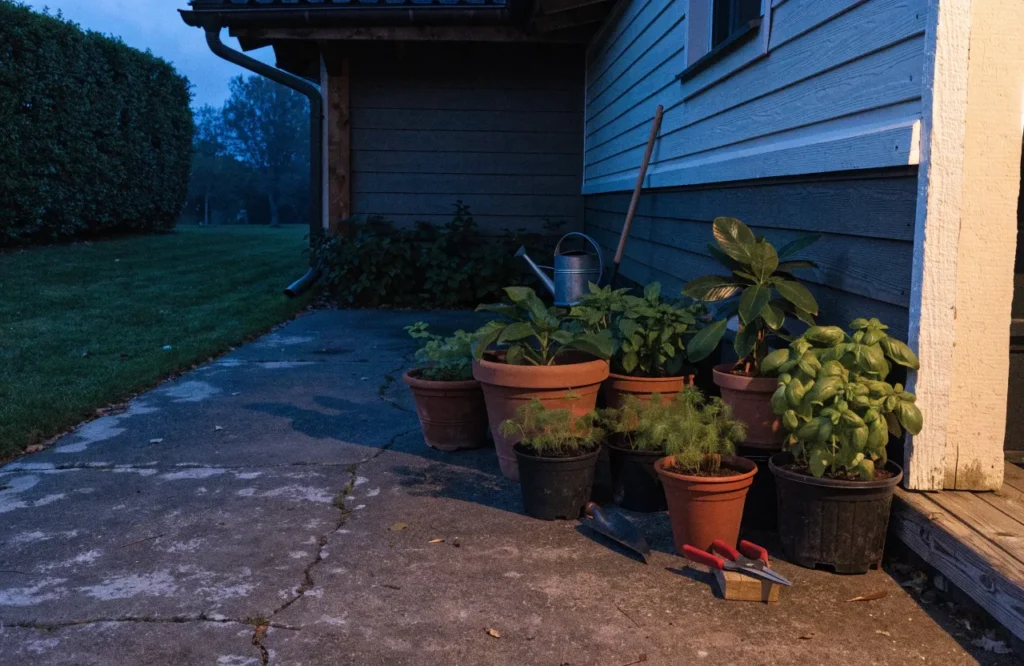
Move first, cover second. Anything you can lift is safest indoors or in an unheated garage, shed or porch, or against a south-facing wall. A move to shelter can make a difference of 5–10°F compared with the open yard. Avoid a spot that is too warm, because plants that are meant to rest can be pushed back into growth.
For plants that stay put, choose the cover to fit the job:
| Cover | Best for | How to use it |
|---|---|---|
| Row cover or frost cloth | Beds and larger plants | Drape loosely, reach the ground, anchor with rocks or bricks |
| Sheets, blankets, towels, tarps | Quick fixes and big plants | Hold off the leaves with stakes, PVC, wire loops or furniture |
| Cloches (glass, plastic, cut milk jug) | Single seedlings and small plants | Push 1 inch (2.5 cm) into the soil; cap at night, vent in the morning |
| Hoop tunnel | A bed of lettuce or young brassicas | Flexible hoops with fabric on top; a centre ridge line sheds light frost |
| Cold frame or small greenhouse | Seedlings and a longer season | Close before dusk, open on warm days for ventilation |
Three rules apply to every cover. First, it must reach the ground, so warm air from the soil stays in. Second, it must be anchored, because a cover that flaps all night does not hold heat. Third, it should not press against foliage, as contact points can still freeze. In a hard freeze, add a second layer and seal the edges all round.
For tall or woody plants, drive stakes around the plant, wrap them with burlap, and fill the space with straw or leaves. Remove it when the freeze passes.
Containers. Wrap pots with bubble wrap or burlap if you cannot move them, or sink them into the ground. Raise them on pot feet or bricks so they never sit in icy water.
Mulch: useful for roots, not for leaves
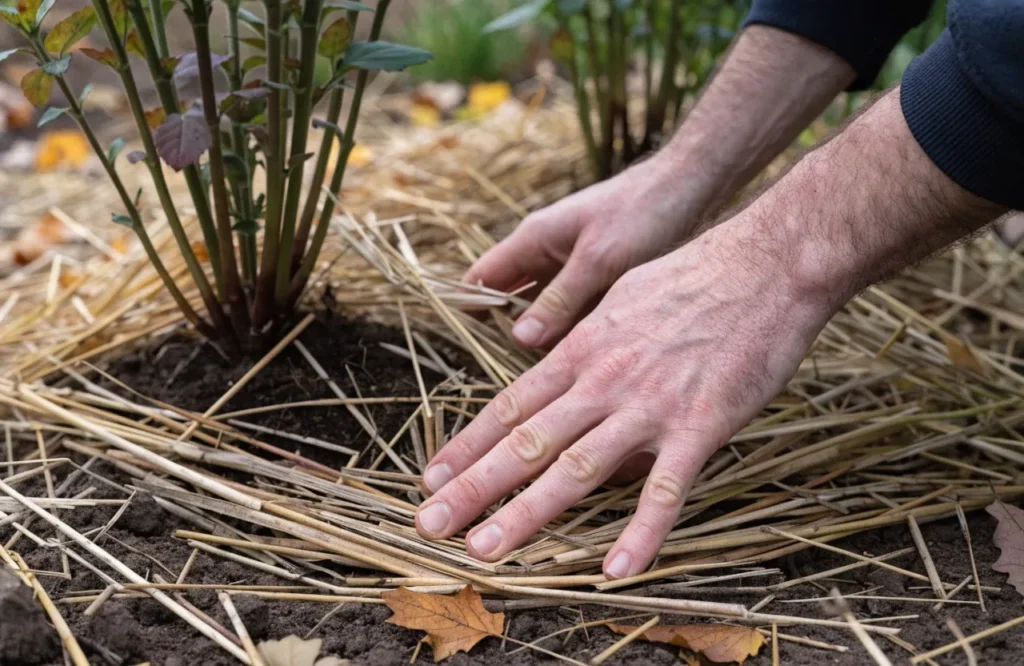
Mulch helps protect plants from frost at the roots, not the leaves, so use it for crowns and roots rather than as a night-before fix for tender leaves. Dry straw, chipped bark and leaf mold around the crowns of borderline-hardy perennials such as agapanthus add insulation, and the Arkansas extension service suggests mulching the root zone of plants facing a freeze. A mulch will not stop frost forming on the foliage above it, so tomatoes, peppers and basil still need a cover.
One source avoids wood mulch in raised vegetable beds altogether and keeps beds topped with finished compost instead. That is a reasonable house rule for a kitchen garden, not a frost requirement. If you use straw or leaves on perennial crowns, pull them back in spring so growth is not smothered.
Microclimates: free frost insurance
Cold air sinks, so low spots and the middle of an open lawn frost first. Stone, brick and water absorb heat by day and release it at night, so the area near them stays slightly warmer. To protect plants from frost naturally, plant heat lovers against a south- or west-facing wall or fence, and keep frost-prone plants out of obvious low pockets.
One exception: early-flowering shrubs such as magnolias and camellias should not face the morning sun. Rapid thawing of frozen buds can blacken them and make them drop. Near a wall, a sheltered patio or a pergola, wind exposure also falls, which reduces frost damage.
Mistakes that cause the damage
- Plastic pressed against leaves. Plastic is not breathable and holds water against the plant, which increases damage where it touches. If you use it as a rain shield, keep it off the foliage and put breathable fabric underneath. Clear plastic is acceptable only when held clear of the plant and removed first thing in the morning.
- Leaving covers on in the sun. Plants can overheat, scorch and stretch. Condensation under a cover can also freeze.
- Loose edges. An unanchored cover lets the warm air escape.
- Covering the wrong plants. Protecting hardy perennials and shrubs wastes effort and can keep them from going dormant.
- Watering after dark or too often. Wet soil that freezes at night does harm, and plants take up less water as growth slows.
- Planting out too early in spring. Tomatoes, peppers, green beans and tender annuals should wait until after your typical frost-free date. Cool-season crops such as spinach, kale, beets, lettuce and chard can go in early.
- Skipping hardening off. Greenhouse or indoor-raised transplants that have been acclimated to cooler temperatures survive a light frost far better.
The morning after
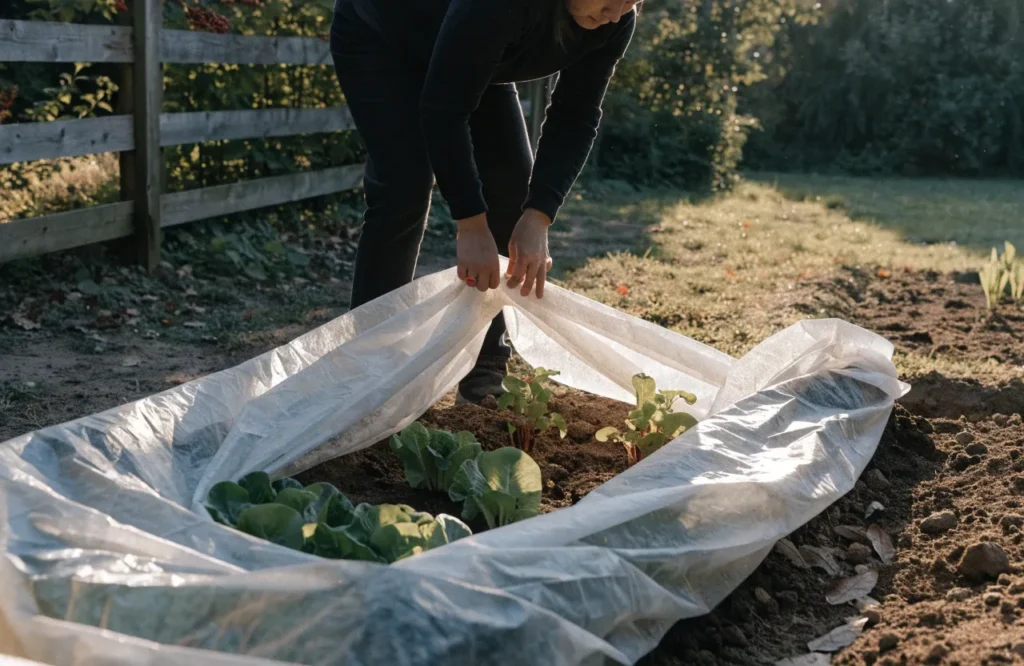
The last step to protect plants from frost is removing the covers once temperatures climb above freezing, by mid-morning at the latest. Take off clear plastic, sheets and blankets first, since heat and condensation build quickly. Cloches and cold frames should be vented as the day warms.
If a frost got through, look for blackened, limp or distorted growth. Do not touch plants that are still frozen, and brush heavy snow off gently so it does not weigh branches down. Wait before pulling anything out. Some plants lose their leaves but regrow from the stems, and in some cases from the roots.
The cold-night checklist
- Check the overnight low in the evening and note clear, calm conditions
- Water lightly by early afternoon if the soil is dry
- Pick tender fruit you cannot cover
- Move containers to shelter
- Cover tender plants with breathable fabric held off the leaves, reaching the ground
- Anchor every edge; add a second layer for a hard freeze
- Put cloches on single seedlings
- Set a reminder to uncover once it is above freezing