How to Prepare Garden for Fall: A Complete Checklist
To prepare garden for fall, harvest what’s left, remove diseased plants and weeds, feed the soil with compost, plant cool-season crops and bulbs, cover bare ground with mulch or a cover crop, and store your tools clean. Work in roughly that order, timed around your area’s average first frost date.
I do this over a few weekends instead of one exhausting cleanup. Here is how to prepare garden for fall in ten steps, and where my approach differs from standard advice, I say so.
Quick tip: Days get shorter in fall, so crops grow more slowly than they did in spring. Add one to two weeks to the “days to maturity” on the seed packet, then count back from your average first frost date to find your last safe planting day.
Table of Contents
Quick Checklist to Prepare Garden for Fall
- Find your average first frost date
- Harvest warm-season crops and save seed from healthy plants
- Remove diseased plants and weeds before they set seed
- Test your soil
- Add 2 to 3 inches (5 to 8 cm) of compost
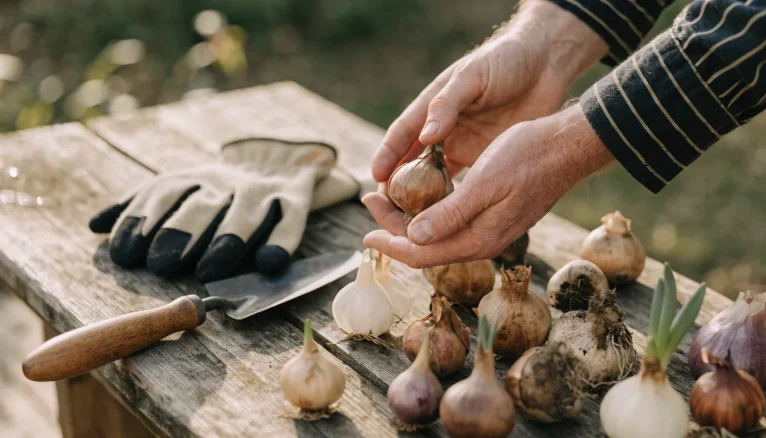
- Plant cool-season vegetables, garlic, and spring bulbs at the right time for your region
- Cover bare soil with mulch or a cover crop
- Divide perennials; plant trees and shrubs
- Lift tender bulbs and bring container plants indoors
- Clean, sharpen, and store tools; drain hoses
Step 1: Find Your First Frost Date and Build a Timeline
Timing is the most important part of learning how to prepare garden for fall, and nearly every task is timed against your average first frost date. It’s an average, so frost can arrive a couple of weeks early or late. Late summer is also when you decide what to plant in September, since the slowest crops need the longest runway.
How to find yours: In the US, your local Cooperative Extension office or a frost-date calculator gives dates by ZIP code. Elsewhere, try your national weather or agricultural service, a local gardening society, or experienced neighbors. Your own garden notes are often the most accurate source.
| When | What to do |
|---|---|
| 8 to 12 weeks before frost | Plant slow fall crops (carrots, beets, broccoli, cabbage). Start seeds indoors if it’s still hot. |
| 4 to 6 weeks before frost | Sow quick crops (radishes, lettuce, spinach, arugula). Start clearing finished beds and sow cover crops. |
| 1 to 2 weeks before frost | Harvest tomatoes, peppers, and squash. Lift tender bulbs. Bring houseplants in. Get frost cloth ready. |
| Around and after first frost | Divide perennials, mulch, and clean tools. Plant garlic and spring bulbs when the timing suits your region (see Steps 6 and 7). |
| Before the ground freezes | Drain irrigation, water new plantings one last time, and finish mulching. |
Step 2: Harvest, Preserve, and Save Seeds
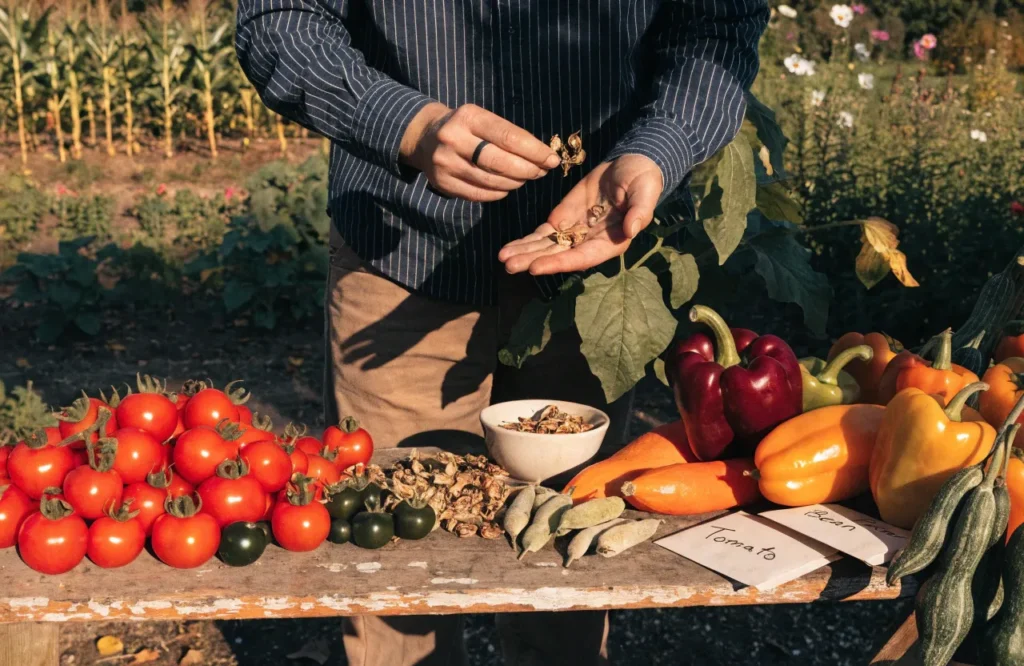
Pick warm-season vegetables before frost, and it helps to know when to harvest tomatoes so you aren’t left with a vine of fruit at the wrong stage. Green tomatoes can ripen indoors, though some stall for reasons that explain why tomatoes aren’t ripening, and unripe fruit can also be pickled.
Saving seed lets you keep favorite varieties, swap with neighbors, and gradually adapt plants to your conditions. The basics, consistent with University of Minnesota Extension guidance:
- Save seed from open-pollinated or heirloom varieties. Hybrids won’t reliably match the parent.
- Save only from healthy plants, since some diseases can travel on seed.
- Dry seeds (beans, peas, many flowers) are easiest. Wet seeds (tomatoes, cucumbers) need a couple of days of fermentation to remove the gel coating.
- Consider cross-pollination. Beans need far less isolation than sweet corn.
- Label everything and store seed cool, dry, and dark.
Step 3: Clean Up the Garden (Without Overdoing It)
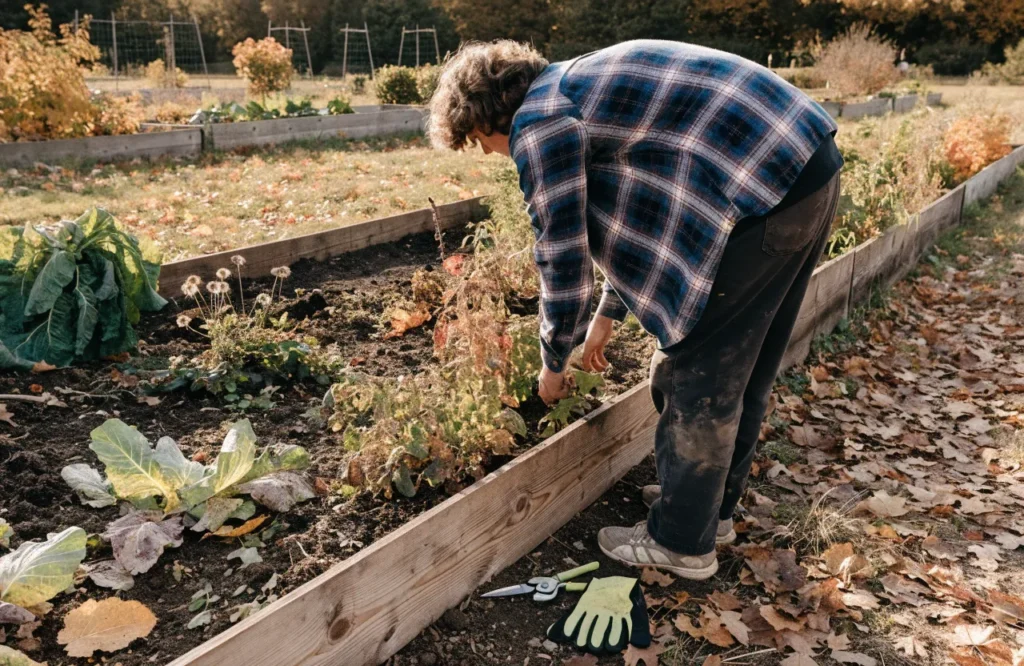
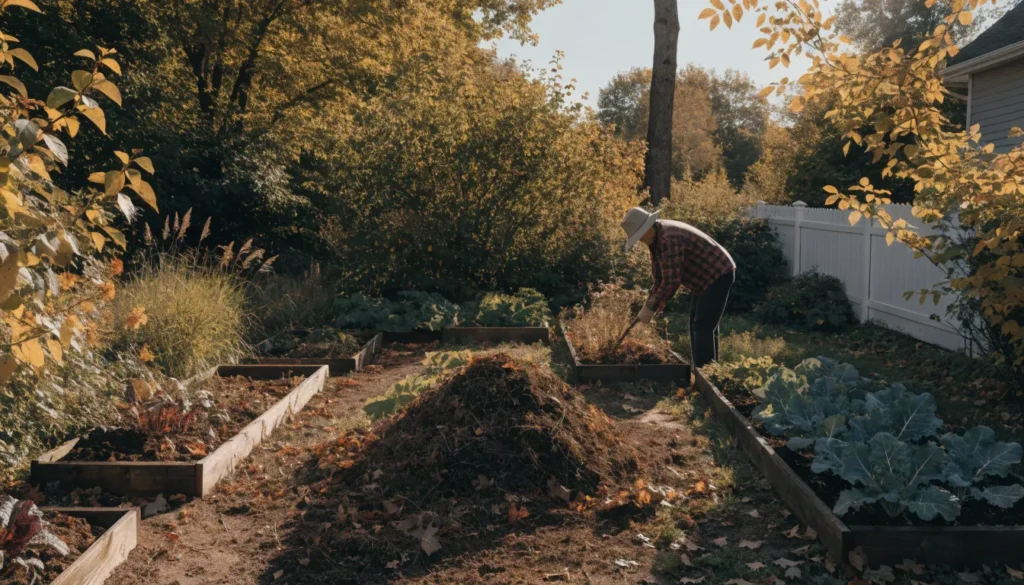
Cleanup cuts down on pests and disease, but a spotless garden isn’t the goal. Aim for targeted cleanup:
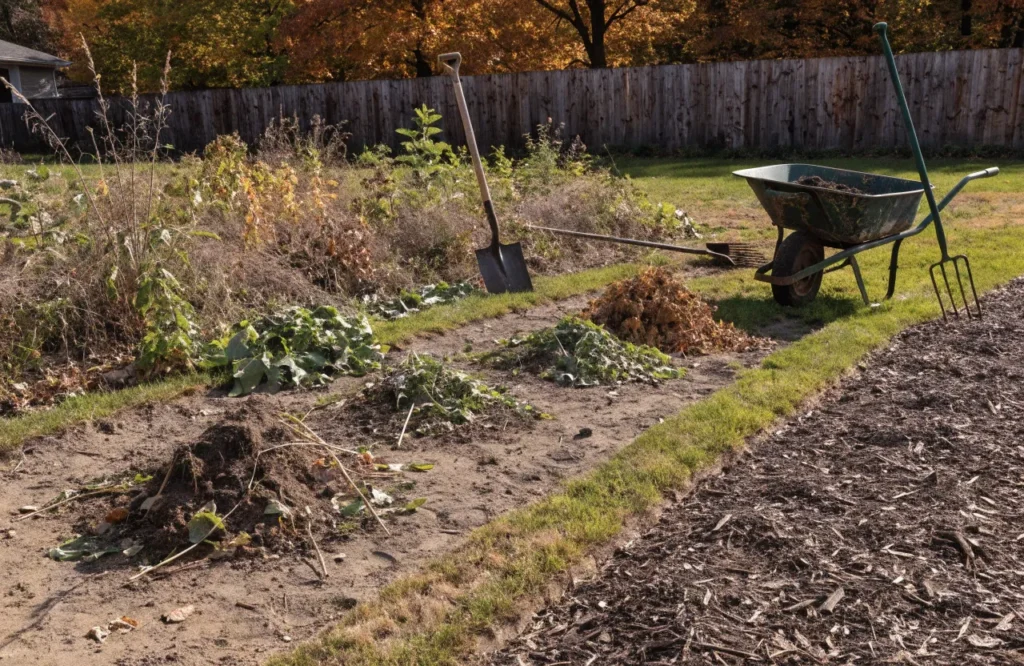
- Remove diseased plants first. Bag plants showing tomato diseases like blight, along with anything with mildew or rust, and put them in the trash. Home compost piles often don’t stay hot long enough to reliably kill pathogens, so it’s safer to keep diseased material out.
- Pull weeds before they set seed. It’s easier after rain.
- Cut healthy spent plants at soil level and leave the roots to decompose in place, which feeds soil life.
- Chop healthy stalks and leaves for mulch, or compost them if disease-free.
- Clear fallen fruit, which can shelter pests.
- Leave some habitat. A few seed heads and hollow stems feed birds and shelter overwintering insects.
For heavy crop residue, University of Minnesota Extension describes three options with trade-offs: work it into the soil, chop it and leave it on the surface, or compost it. Tilling breaks residue down faster but can harm soil structure over time. Surface residue avoids that but decomposes more slowly.
Step 4: Test and Feed Your Soil
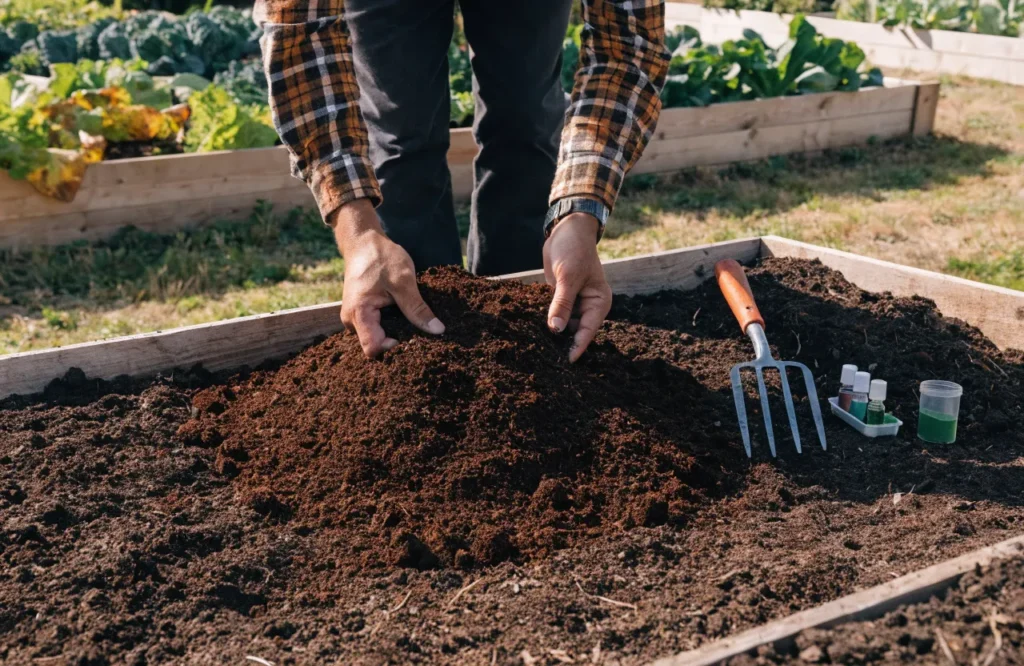
Soil is the heart of any plan to prepare garden for fall, and fall is a good time for soil work because you have time to act on test results, and winter moisture and freeze-thaw cycles help move amendments into the soil.
- Test your soil through a local lab or a home kit. It shows pH and nutrient levels so you add only what’s needed. Slow-acting amendments like lime benefit from months to work.
- Add 2 to 3 inches (5 to 8 cm) of compost, leaf mold, or well-rotted manure over the surface.
- Loosen compaction gently. Push in a garden fork, rock it back slightly, and lift, without turning the soil over. This disturbs soil life less than deep tilling.
- Don’t leave soil bare (see Step 5).
Step 5: Cover Bare Beds with a Cover Crop or Mulch
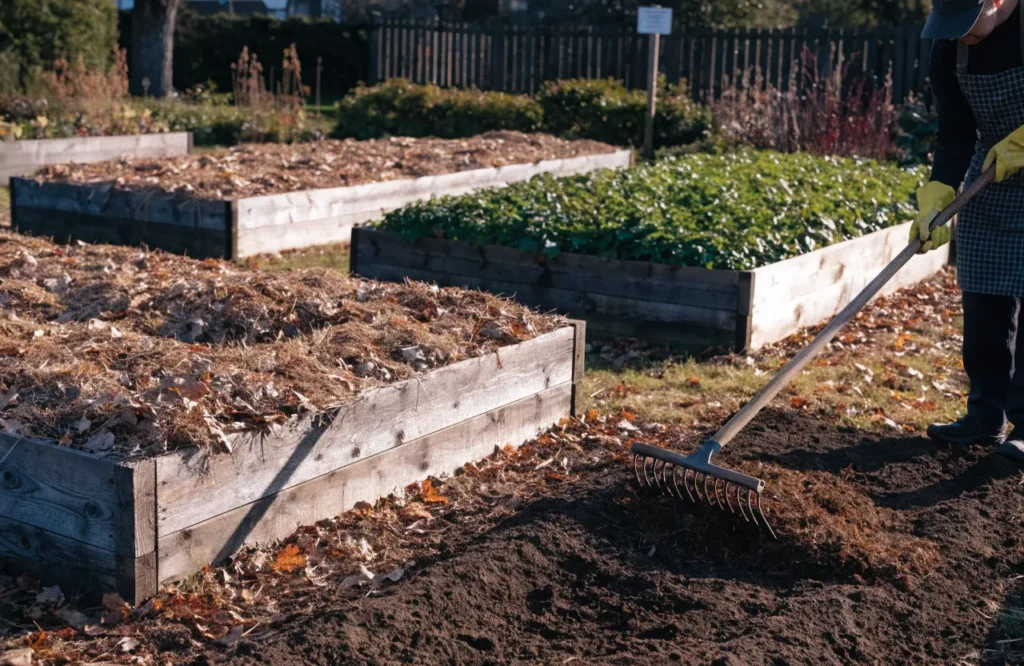
Bare soil is exposed to heavy rain, drying wind, and winter weeds. Cover it with one of these:
Cover crops protect and improve soil over winter:
- Legumes (clover, hairy vetch, fava beans, field peas) host bacteria that fix nitrogen from the air. That nitrogen becomes available to later crops as the plants break down, not immediately.
- Grasses (winter rye, oats, barley) add organic matter and help suppress weeds.
- Oats and peas together are a popular beginner mix. In colder climates they typically die back over winter, leaving an easy seedbed (per University of Minnesota Extension).
- Sow most cover crops about a month before frost so they establish. Some cold-hardy types can go in closer to frost. Check the seed packet for your area.
Mulch is the low-effort option: 2 to 4 inches (5 to 10 cm) of shredded leaves, straw, or wood chips.
Step 6: Plant Cool-Season Vegetables
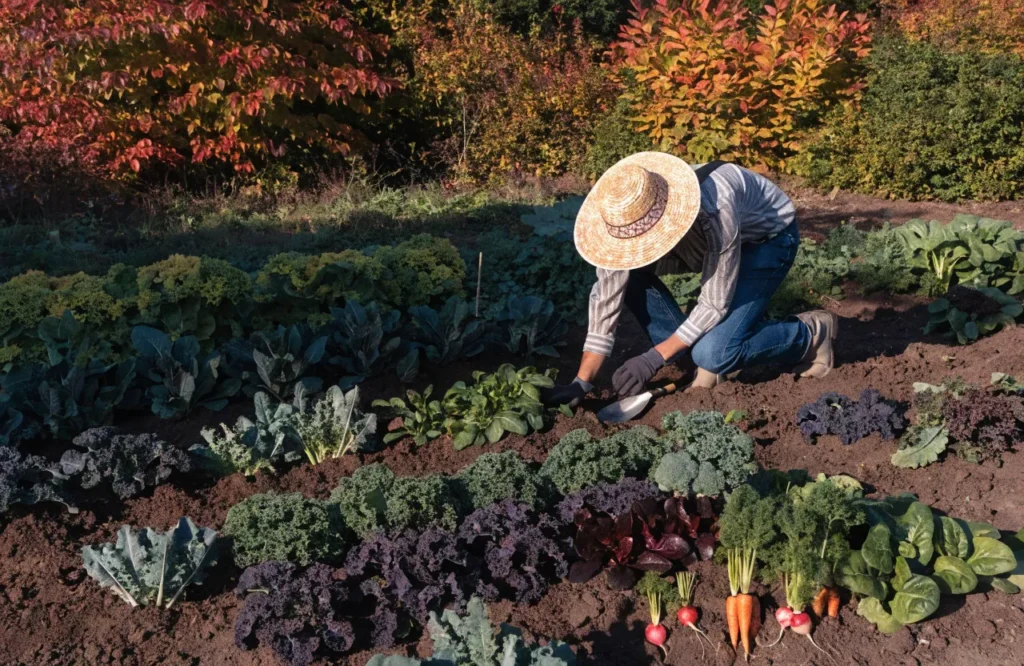
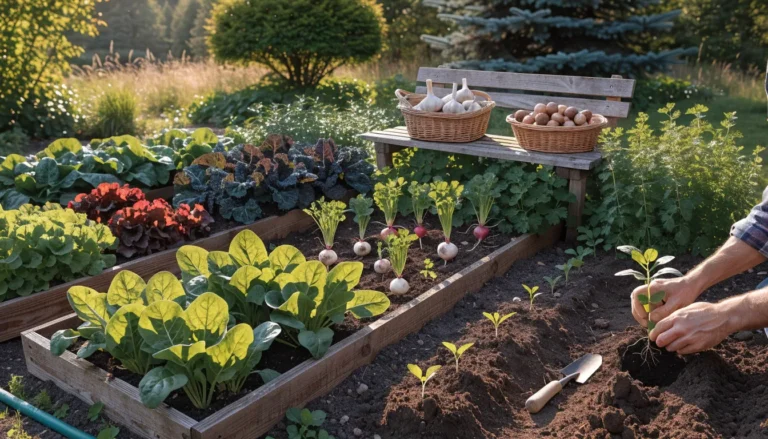
Planting is the most rewarding part when you prepare garden for fall. Cool weather suits plenty of crops, and the fall vegetables to grow in September are mostly the ones that finish fast. Carrots, kale, and Brussels sprouts often taste sweeter after a light frost.
- Leafy greens: lettuce, spinach, arugula, kale, chard, mustard
- Roots: carrots, beets, turnips, radishes
- Brassicas: broccoli, cabbage, cauliflower, kohlrabi
- Alliums: green onions, leeks, garlic
- Herbs: parsley, cilantro, and chives are among the best fall herbs to grow
- Fast finishers (about 40 days or less): radishes, baby greens, spinach, turnips
Fall planting tips:
- Keep seeded rows evenly moist until sprouting, since fall soil can still be warm and dry.
- Sow slightly deeper than in spring, where deeper soil is cooler and moister.
- Rotate crops: avoid planting the same family where it grew this year.
- A cold frame, row cover, or low tunnel can extend harvests past frost.
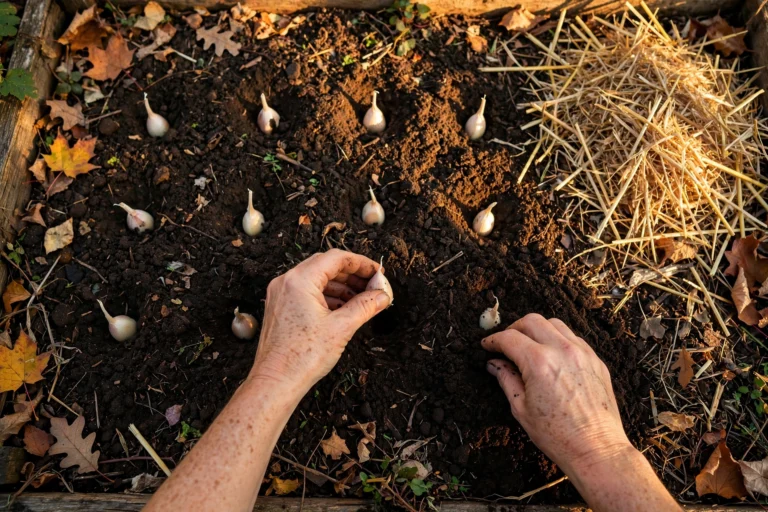
Garlic: Plant in fall, timed for your region. In cold climates that’s typically several weeks before the ground freezes, so roots form but shoots don’t get far. In milder climates it can be later in the season. Choose a variety suited to your area (hardneck types generally suit cold winters, softneck types milder ones), and mulch after planting. Confirm timing with a local extension service or garlic grower.
Step 7: Plant Bulbs, Perennials, Trees, and Shrubs
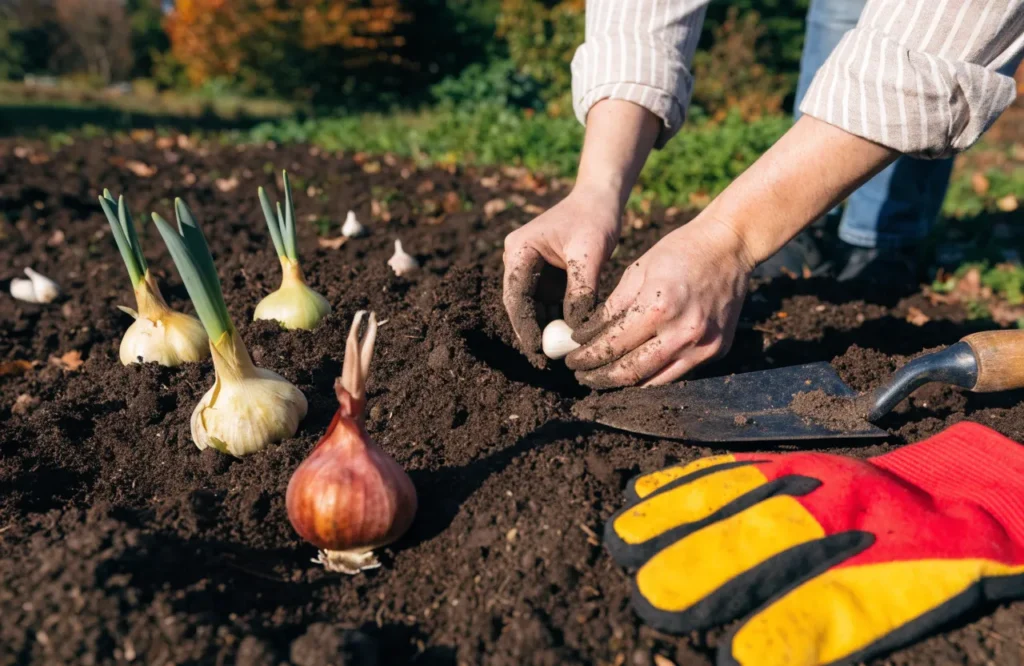
In many climates, fall is an excellent time to plant trees, shrubs, and perennials: soil is still warm enough for root growth while cooler air reduces stress. In regions with very harsh winters or hot, dry autumns, timing varies, so check local guidance.
- Spring-blooming bulbs (tulips, daffodils, crocus, alliums, hyacinths): plant once the soil has cooled, early enough for roots to establish before the ground freezes. Many guides use soil temperatures around 60°F (15°C) as a rough trigger, but the ideal window differs by region, so check your bulb supplier’s advice. Depth and spacing matter as much as timing, and the details of how to plant spring bulbs differ by type. As a rule of thumb, plant at about three times the bulb’s height, pointed end up.
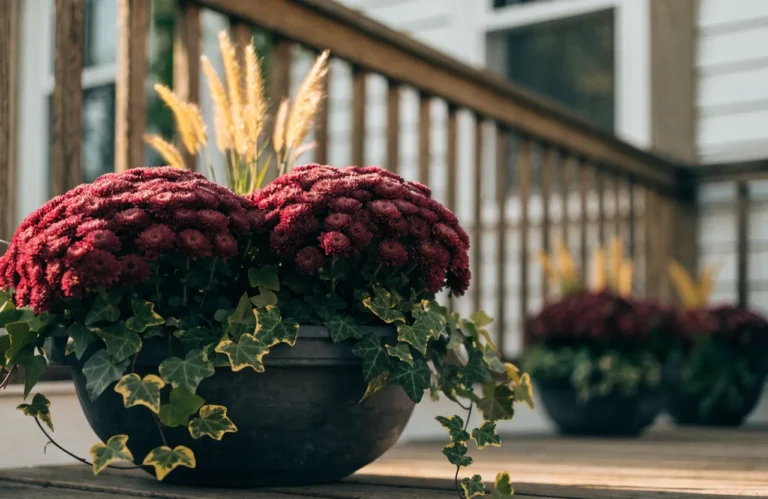
- Add fall color and pollinator food. Fall-blooming flowers keep beds lively before frost, and fall flowers for pollinators give bees and butterflies late-season nectar. If you’re planting now, these flowers to plant in September go in easily.
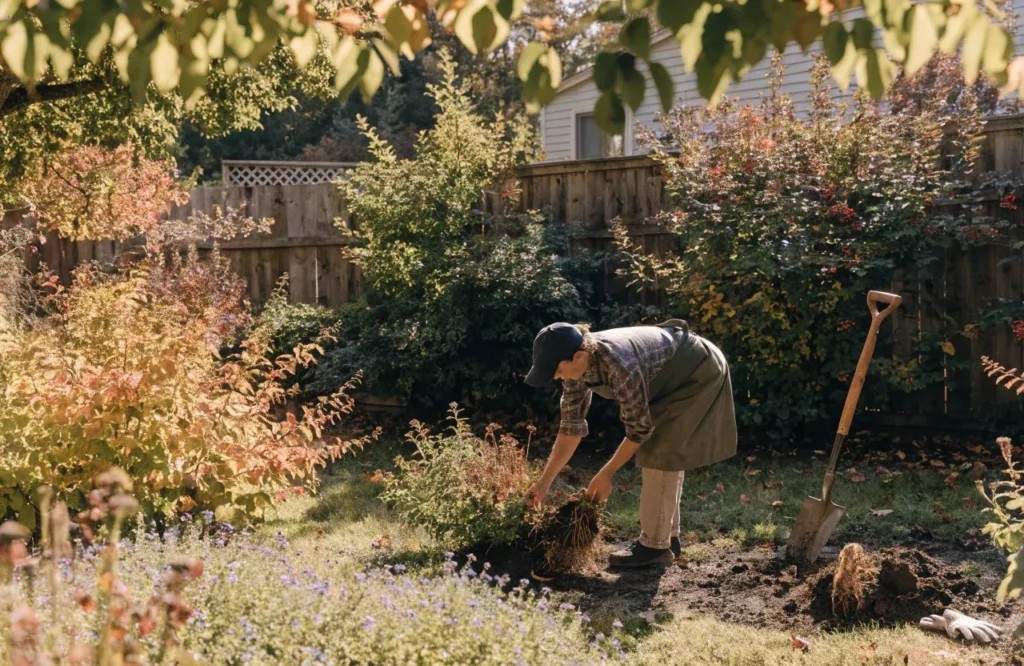
- Divide overcrowded perennials such as hostas, daylilies, irises, and chives, particularly spring and early-summer bloomers.
- Water new plantings deeply until the ground freezes or reliable rain takes over.
- Prune lightly. Remove dead or damaged growth, and save major pruning for dormancy or late winter. Skip spring-flowering shrubs like lilac and forsythia now, or you’ll remove next year’s flowers.
Step 8: Protect Tender Plants and Containers
- Lift tender bulbs and tubers (dahlias, cannas, gladiolus, begonias, caladiums) after frost blackens the foliage. Dry them for a few weeks, then store cool and dry in peat moss or shredded paper.
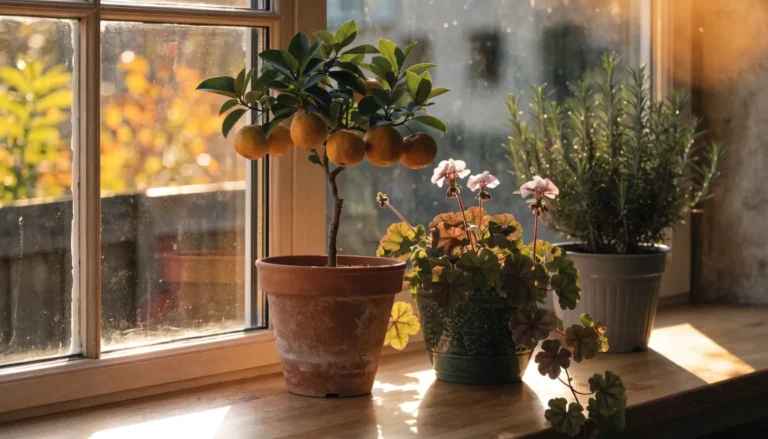
- Bring houseplants and potted herbs indoors before nights drop below about 50°F (10°C). Which of your plants to bring indoors before frost depends on how tender they are. Rinse leaves and check for pests first.
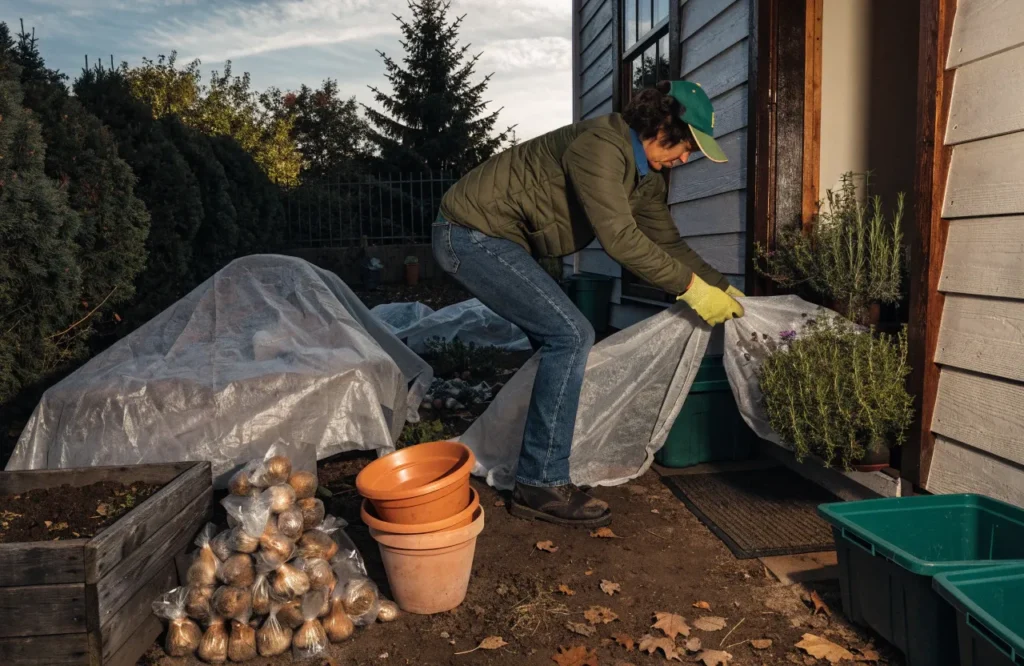
- Protect borderline-hardy plants with burlap, frost cloth, or thick mulch.
- Store empty pots dry. Terra cotta can crack when wet and frozen.
Step 9: Winterize Tools and Irrigation
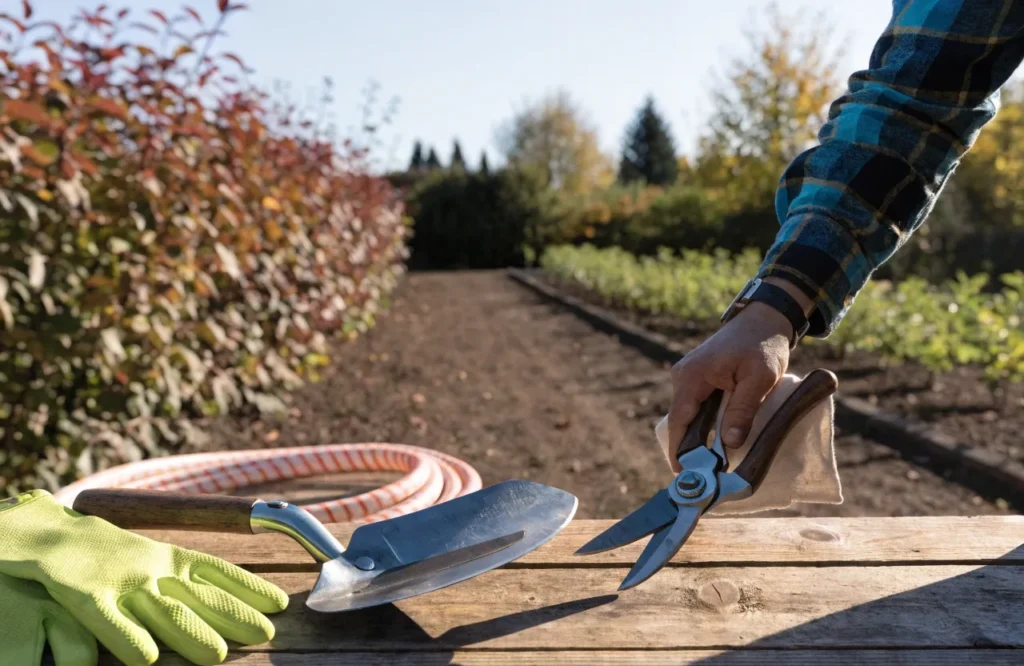
- Clean tools, sharpen blades, and wipe metal with a light coat of oil.
- Drain hoses and irrigation lines wherever freezing occurs, and shut off outdoor taps.
- Repair beds, trellises, and fences while beds are empty.
- Store stakes and cages under cover.
- Start a leaf mold bin or compost pile from fall leaves.
Step 10: Assess and Plan for Spring
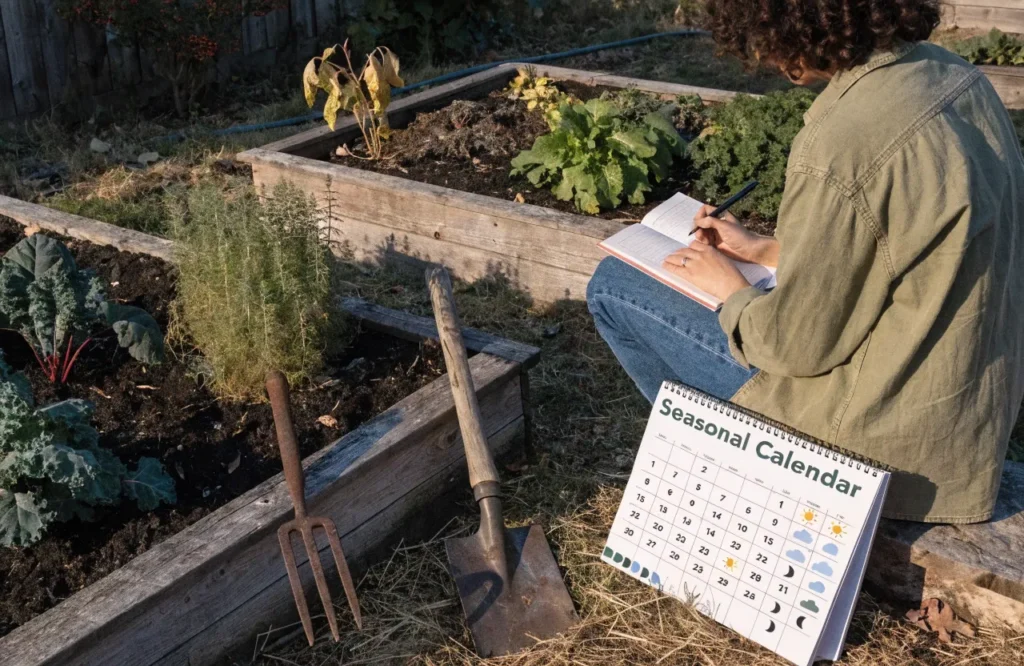
The last step to prepare garden for fall properly is planning. While it’s fresh, note what grew well, what struggled, where pests or disease appeared, and what you’d change. Sketch next year’s layout and rotation, and list seeds to order. A garden journal turns each season into useful data.
How to Prepare Garden for Fall in Different Growing Situations
- Raised beds: Soil settles over the season, so top off with compost, then mulch or sow a cover crop.
- Containers: Refresh or replace potting mix, especially after tomatoes grown in pots, and clean pots that held diseased plants.
- Mild or warm climates: Fall can act as a second spring. Plant carrots, broccoli, lettuce, and peas, and start seeds indoors if summer heat lingers.
- Cold climates: Focus on quick crops, garlic, cover crops, and winterizing. Mulch perennials after the ground begins to freeze.
Not sure which applies to you? US gardeners can use the USDA Plant Hardiness Zone Map. Elsewhere, use your national equivalent or local climate data.
7 Mistakes to Avoid When You Prepare Garden for Fall
These seven come up most often, and there are more fall gardening mistakes worth knowing before you start.
- Composting diseased plants. You risk carrying disease into next season.
- Leaving soil bare. Winter rain and wind strip nutrients and damage structure.
- Cutting everything to the ground. You lose food and shelter for birds and beneficial insects.
- Planting crops too late. Count back from your frost date and add days to maturity.
- Skipping the soil test. You may over- or under-fertilize.
- Over-tilling. It can harm soil structure and beneficial organisms.
- Forgetting to water. New plantings need moisture until the ground freezes.
Frequently Asked Questions
How do I prepare garden for fall?
To prepare garden for fall, harvest remaining crops, remove diseased plants and weeds, add compost, test the soil, plant cool-season vegetables, garlic, and bulbs, cover bare soil, and clean and store your tools.
When should I start preparing my garden for fall?
Start 8 to 12 weeks before your average first frost date, when slow crops like carrots and broccoli go in. Most gardeners begin fall prep in late summer and finish cleanup after the first frost.
How do I prepare garden soil for spring?
Test your soil, then spread 2 to 3 inches of compost or leaf mold over the surface. Loosen compaction gently with a garden fork and keep beds covered with mulch or a cover crop over winter.
Should I till my garden in the fall?
Usually not. Over-tilling harms soil structure and beneficial organisms, so loosen gently with a fork and let roots and worms do the work.
Should I cut everything back in the fall?
No. Cut healthy spent plants at soil level and leave the roots in place, but leave seed heads and hollow stems standing — they feed birds and shelter overwintering insects.
What vegetables can I plant in the fall?
Leafy greens (lettuce, spinach, kale, arugula), roots (carrots, beets, radishes), brassicas (broccoli, cabbage, cauliflower), plus garlic and herbs like parsley and cilantro. Fast finishers like radishes and baby greens mature in about 40 days.
Can I leave dead plants in the garden over winter?
Remove diseased plants and anything with mildew or rust first. You can leave healthy roots in place to decompose, and a few standing seed heads for wildlife.
What is the best cover crop for fall?
For beginners, a mix of oats and field peas is hard to beat — they establish quickly and usually winter-kill in cold climates. Clover and hairy vetch add nitrogen, while winter rye suppresses weeds and adds organic matter.
Is fall a good time to plant trees and shrubs?
Yes. In many climates, fall is an excellent time to plant trees, shrubs, and perennials because the soil is still warm enough for roots to establish. Water new plantings deeply until the ground freezes.
Final Thoughts
Now you know how to prepare garden for fall, and a little effort now means a garden that wakes up in better shape in spring: richer soil, fewer weeds and pests, tools ready to go, and bulbs and garlic already rooting. Start with your frost date, tackle one section at a time, and keep notes so next year is easier.