Fall Container Gardening: Best Plants, Ideas & Winter Care
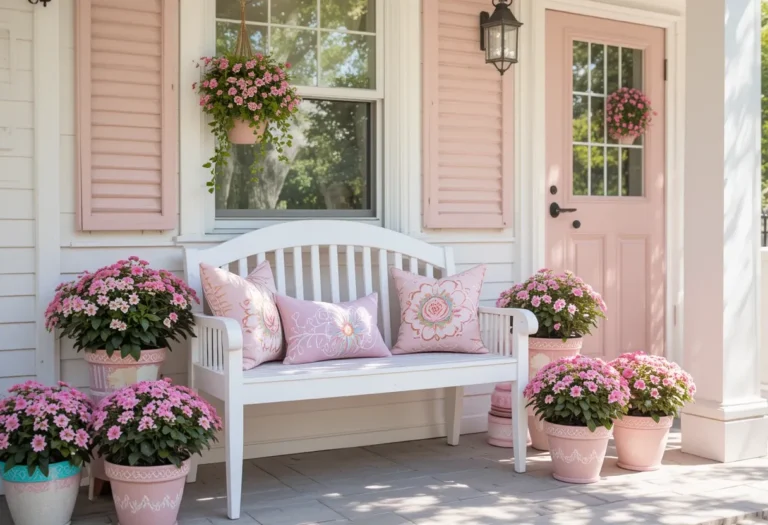
When summer annuals start to fade, it’s tempting to pack your pots away for the season. But fall container gardening lets you keep your porch, patio, and entryway full of color for months longer, often straight through the first hard frost and into winter. The trick is knowing which plants to use, how to arrange them, and how to protect your containers once temperatures really start to drop.
This guide covers the best plants for fall containers, ready-to-copy design combinations, and the winter-proofing steps that keep your pots looking full long after summer color has disappeared.
Table of Contents
Why Fall Container Gardening Is Worth It
Cooler weather opens up a completely different plant palette than summer does, rich burgundies, golds, deep greens, and the architectural texture of ornamental grasses all come into their own once the heat breaks. Fall container gardening isn’t just a way to fill the gap before winter; many fall-blooming flowers keep going through light frosts, evergreen foliage holds its structure all winter long, and edible additions like herbs and greens give your containers a practical purpose alongside their seasonal good looks.
Best Plants for Fall Containers
The foundation of any strong fall container garden is plant selection. The best choices combine cold tolerance with dependable seasonal color, and several can carry a container from October through the coldest part of winter without needing to be replaced.
Fall Flowers
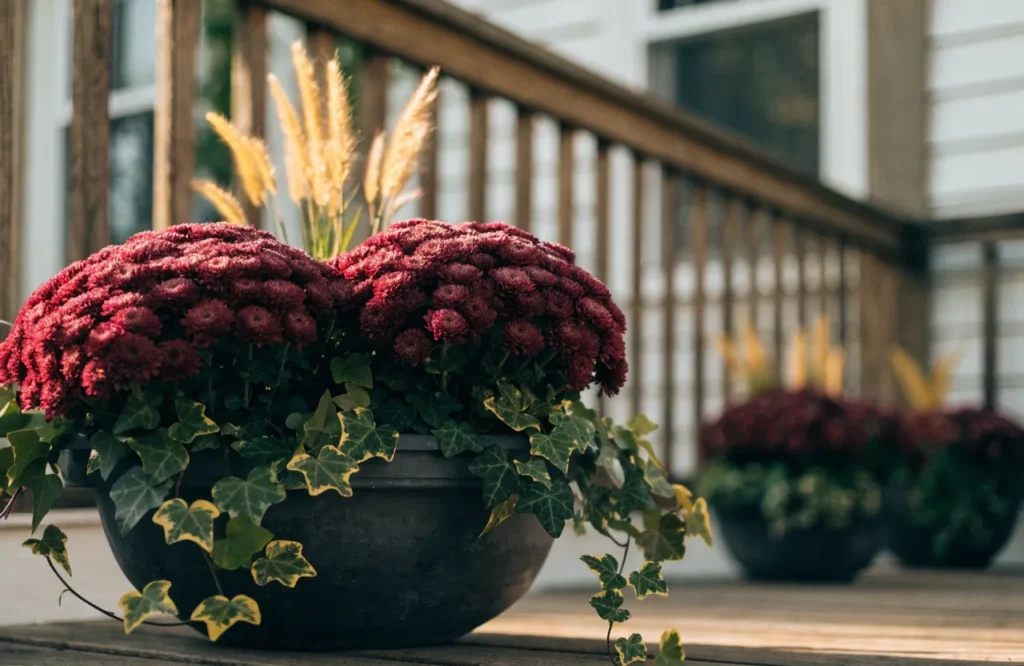
- Mums (Chrysanthemum sp.) — the traditional fall container plant, available in gold, burgundy, orange, purple, and white. Blooms are short-lived, but many varieties are hardy enough to move into the garden once they finish flowering in containers.
- Pansies and violas (Viola sp.) — among the best all-around flowers for fall and winter containers. Pansies have larger blooms; violas flower more heavily and need less deadheading. Both keep blooming well after the first frost and often carry into spring.
- Snapdragons (Antirrhinum majus) — compact varieties bloom heavily in fall and early spring, slowing only during the coldest stretch of winter.
- Compact asters (Symphyotrichum sp.) — dwarf perennial asters bred for container use, with prolific blooms in blue, pink, and purple, and one of the more reliable fall flowers for pollinators still active late in the season.
- Sweet alyssum (Lobularia maritima) — a trailing annual with fragrant white, pink, or purple flowers, ideal for softening a container’s edge.
Foliage and Ornamental Grasses
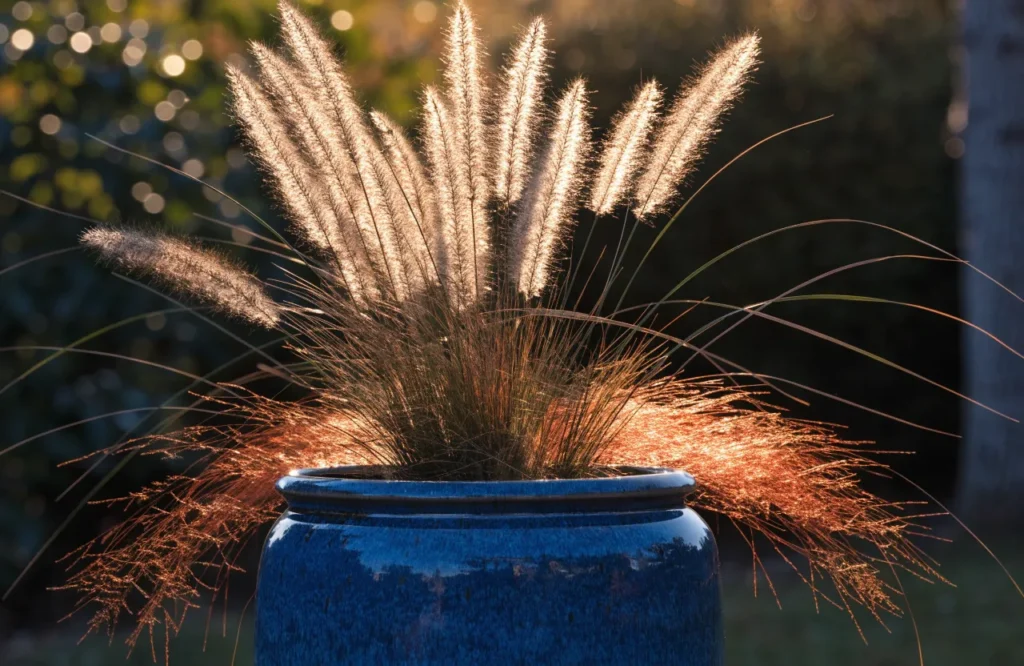
Ornamental grasses are essential to fall container gardening because they add height, movement, and a sun-catching golden texture that flowers can’t match on their own. Dwarf sedges tuck easily into small arrangements, while taller grasses work well as a centerpiece in larger pots.
- Sedges (Carex sp.), including ‘Frosted Curls’ and orange hair sedge, add grassy texture and bright variegation.
- Switchgrass (Panicum virgatum), such as ‘Northwind’, gives a golden backdrop that pairs beautifully with berries and fall foliage.
- Miscanthus varieties, like ‘Gracillimus,’ ‘Adagio,’ and ‘Morning Light,’ make striking tall centerpieces in sunny spots and can often tolerate a few weeks of shade during fall’s shorter season.
- Heuchera and heucherella offer some of the richest foliage color available for autumn containers, from amber and gold to deep purple.
Evergreens and Berry-Producing Plants
If you want a fall container that carries through winter without a full replant, lean on evergreen and fruiting plants. Dwarf conifers, boxwood, false holly, and firethorn (Pyracantha) all hold their color and shape long after flowering annuals have finished. Firethorn adds a festive touch with bright orange or red berries that also attract birds through the colder months.
Edible Plants and Herbs
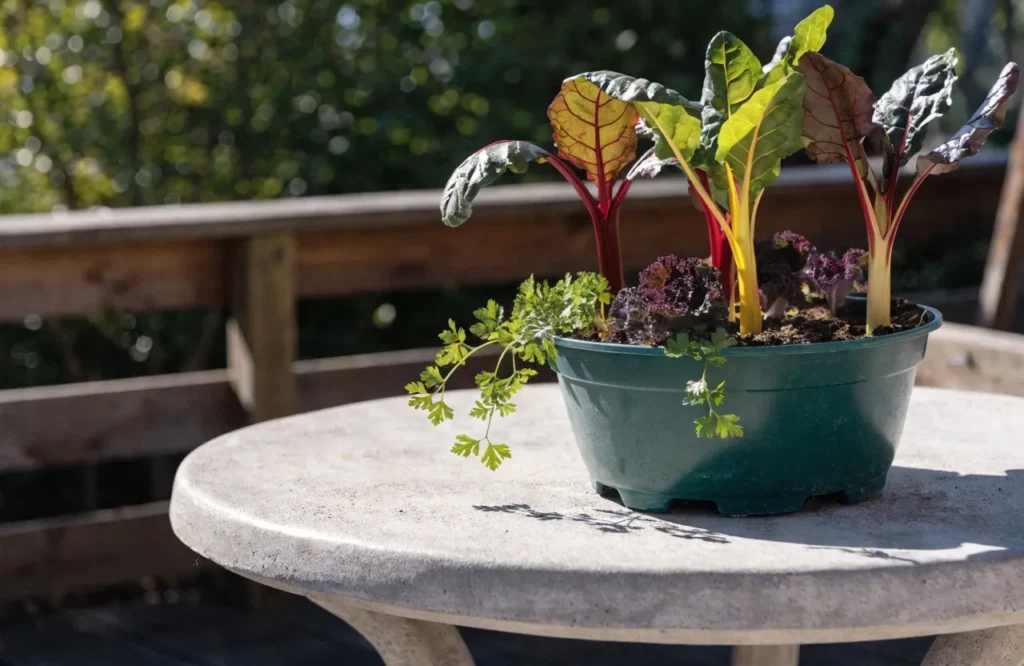
Edible fall container gardening has grown in popularity because so many fall vegetables to grow in September are just as ornamental as classic foliage plants.
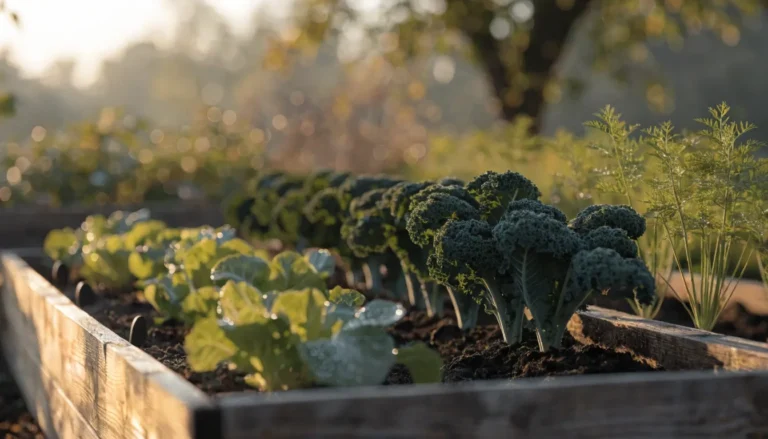
- Ornamental cabbage and kale (Brassica oleracea) offer ruffled, colorful foliage in white, purple, pink, and green.
- Swiss chard (Beta vulgaris) brings vertical structure with stems in red, yellow, orange, or white.
- Bull’s Blood beet (Beta vulgaris ‘Bull’s Blood’) adds deep burgundy foliage and edible leaves, useful as a filler with color similar to red mustard.
- Red Giant mustard (Brassica juncea ‘Red Giant’) contributes rich reddish-purple foliage with a peppery flavor — a different plant from Bull’s Blood beet, though the two pair well together.
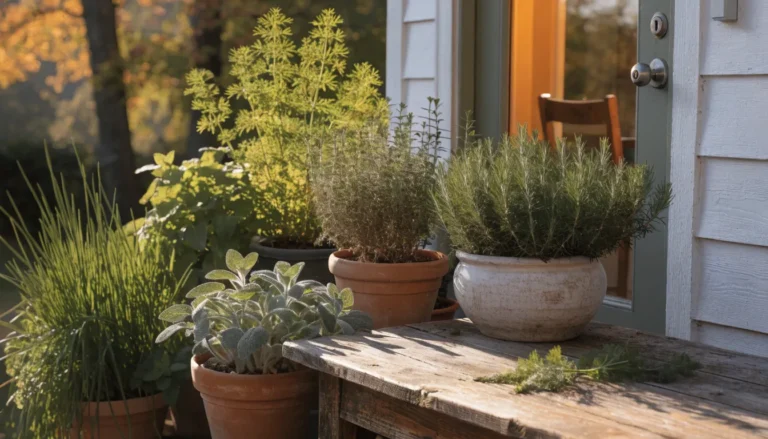
- Rosemary and parsley, two of the best fall herbs to grow, are evergreen enough to survive with minimal protection, keeping fresh herbs on hand well into winter.
- Ornamental peppers, such as ‘Black Pearl’ or ‘Calypso Red,’ add glossy, colorful fruit that holds for weeks.
Quick-Reference: Fall Container Plants at a Glance
| Plant | Light | Best Use | Cold Tolerance | Container Role |
|---|---|---|---|---|
| Mums | Full sun | Seasonal color | Moderate | Filler |
| Pansies/violas | Sun to part shade | Fall + winter color | High | Filler |
| Carex (sedge) | Sun to part shade | Texture | High | Thriller/filler |
| Heuchera | Part shade | Foliage color | High | Filler |
| Sweet alyssum | Full sun | Trailing color | Moderate | Spiller |
| Firethorn | Full sun | Berries/structure | High | Thriller |
| Ornamental kale | Sun to part shade | Foliage color | High | Filler |
| Rosemary | Full sun | Evergreen herb | High | Filler/thriller |
10 Fall Container Garden Ideas
If you’re not sure where to start, these combinations are a good jumping-off point for fall container gardening in almost any climate or light condition.
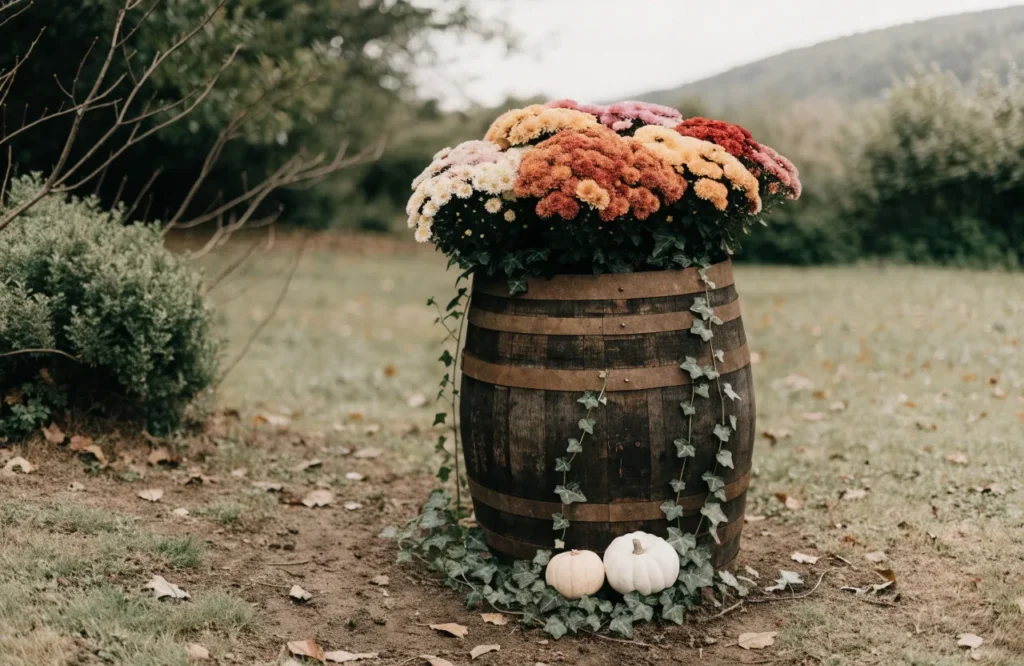
- Classic mum and pumpkin planter — mums surrounded by trailing ivy, with mini pumpkins tucked at the base.
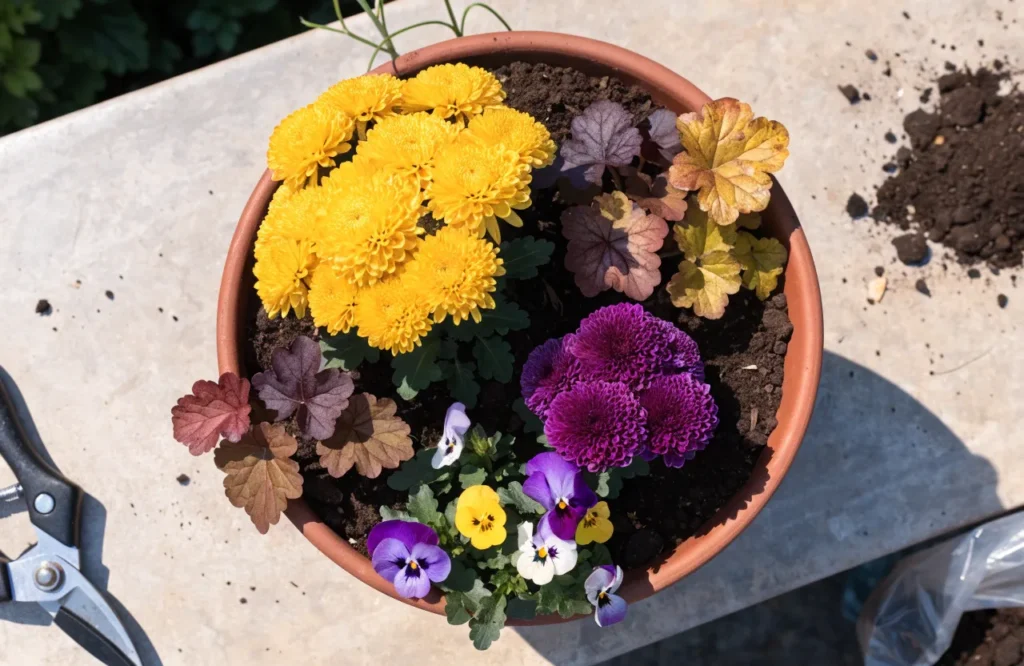
- Pansy and heuchera container — pansies or violas filling in around burgundy heuchera for long-lasting color.
- Ornamental grass fall planter — a single tall grass, like switchgrass, underplanted with sedum and dusty miller.
- Rustic porch container — one of the easiest front porch flower pot ideas to copy: birch branches as a centerpiece, ornamental cabbage and pansies at the base.
- Evergreen winter container — a dwarf conifer paired with false holly and trailing ivy for year-round structure.
- Fall herb container — rosemary and parsley combined with a trailing thyme for a container you can cook from.
- Edible kale and chard container — Swiss chard as the thriller, ornamental kale as filler, trailing herbs as spiller.
- Small-space alpine container — sedum, dwarf mondo grass, and small stones arranged in a shallow bowl.
- Berry-filled winter container — firethorn or holly berries paired with evergreen foliage for a festive, long-lasting look.
- Branch-and-flower container — a bundle of curly willow or dogwood branches rising above mums and trailing ivy.
How to Design a Fall Container
Strong fall container gardening isn’t only about which plants you choose, it’s about how those plants are arranged. A few repeatable formulas make it easy to build displays that feel intentional rather than random.
Thriller, Filler, Spiller
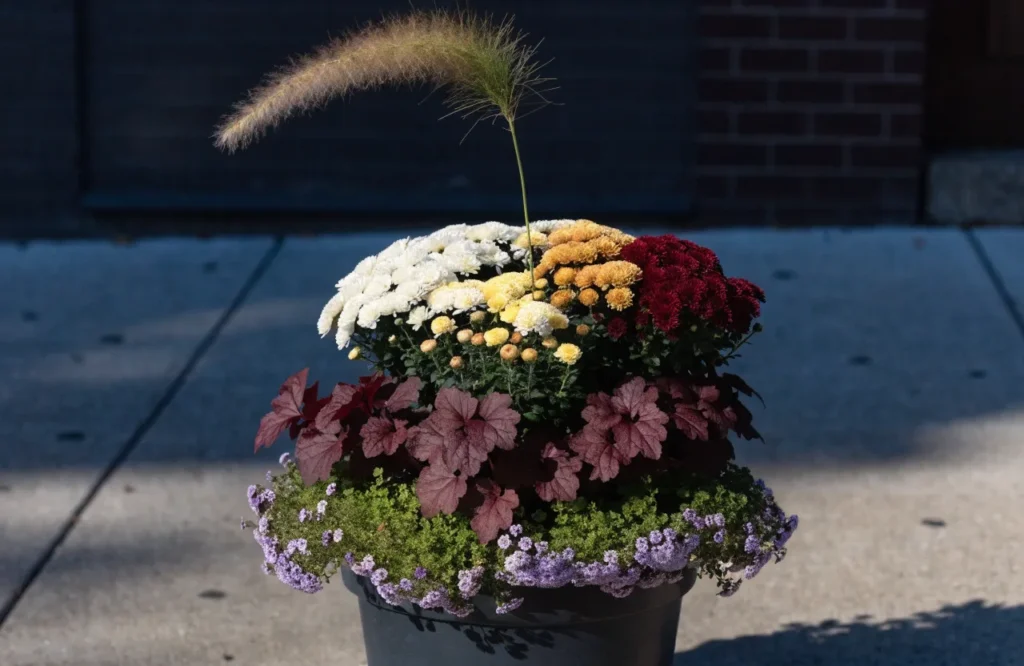
This classic container design formula applies just as well to autumn arrangements as it does to summer ones. The “thriller” is a tall, eye-catching centerpiece; “fillers” are the mid-height plants that build volume around it; “spillers” trail over the edge and soften the container’s lines. A few combinations to try:
Sunny fall container
- Thriller: purple fountain grass
- Filler: burgundy heuchera and mums
- Spiller: sweet alyssum
Shade container
- Thriller: dwarf conifer
- Filler: heuchera and violas
- Spiller: ivy
Edible container
- Thriller: Swiss chard
- Filler: parsley and kale
- Spiller: trailing herb such as creeping thyme
How to Use Height
Not every fall container needs a tall flowering plant to achieve a strong vertical element. Bundles of cut branches make an effective substitute “thriller,” especially in shadier spots where tall grasses won’t thrive. Birch poles, curly willow, dogwood, and fantail willow can be zip-tied to a stake and inserted into the center of a pot, then surrounded with fall flowers and foliage at the base. Preserved eucalyptus is often layered in to soften the transition between branches and plants. Sturdier branches like birch can be cleaned and stored for reuse across multiple seasons, making this an economical way to add height without buying a new tall plant every year.
Fall Color Combinations
Fall container gardening naturally leans toward warm palettes, rust, gold, burgundy, and deep orange, but cooler combinations can be just as striking. Lavender-toned foliage set against a backdrop of orange autumn leaves, or icy blue-green sedum paired with chartreuse grasses, both stand out against a more predictable orange-and-gold scheme. Matching a container’s colors to its backdrop, whether that’s a brick wall, a painted door, or nearby turning foliage, helps the whole display feel cohesive.
How to Protect Fall Containers From Frost and Freezing
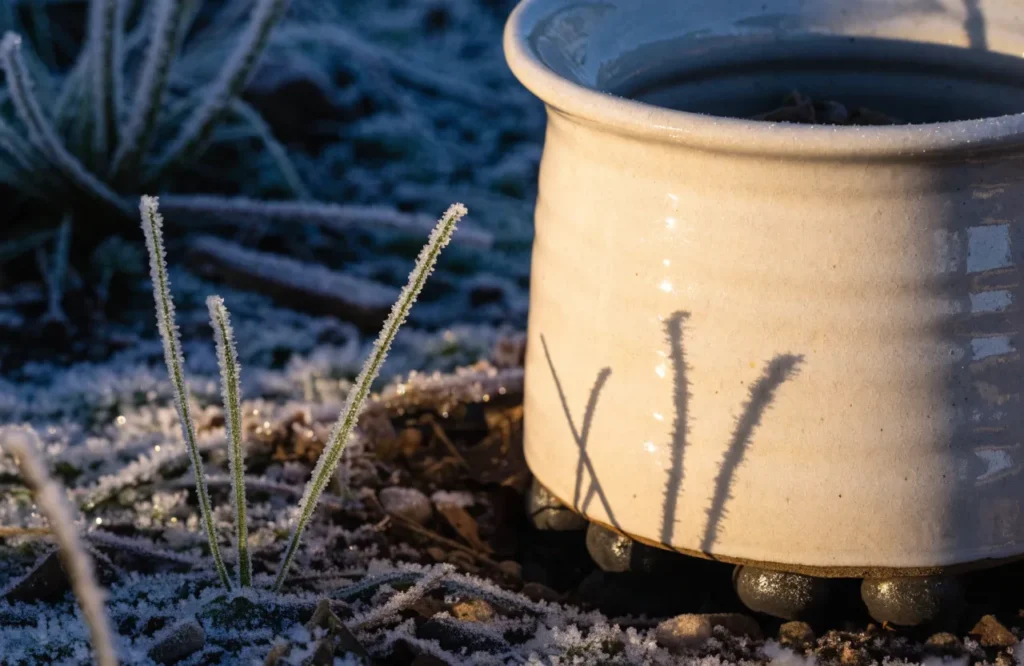
Cold weather doesn’t just affect plants, it can damage the containers themselves. These steps help fall containers survive freezing temperatures without cracking or losing plants:
- Elevate pots with pot feet. Lifting the base off the ground lets water drain quickly instead of freezing and expanding inside the container.
- Start with a well-draining potting mix and clear drainage holes. Good drainage matters more than any single amendment, make sure water can move freely out of the container rather than pooling around the roots.
- Use gravel as a top dressing, not a mix-in. A layer of gravel on the soil surface helps retain moisture and gives conifers or succulents a tidy, finished look, but adding gravel throughout the potting mix can actually reduce effective drainage rather than improve it.
- Choose vase-shaped containers for anything staying outdoors all winter, since straight or flared sides give freezing, expanding soil somewhere to go. Lining the sides with bubble wrap adds extra cushioning.
- Use a plastic liner inside urn-shaped pots that taper at the top, since that shape can crack under pressure from expanding frozen soil. A properly sized nursery pot dropped inside also makes it easy to swap plantings later.
How to Transition Fall Containers Into Winter
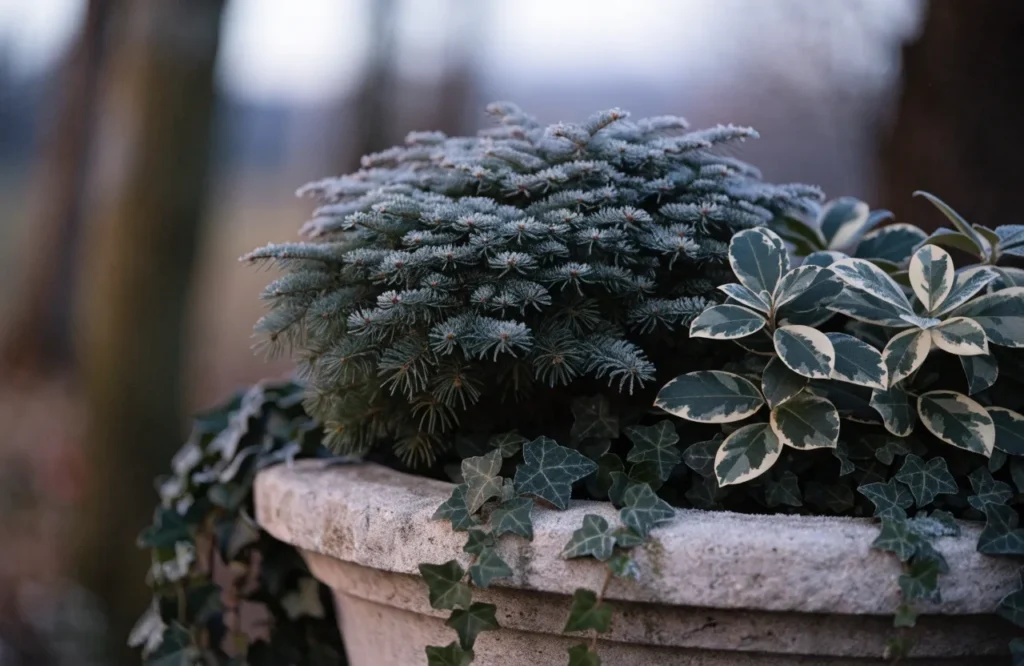
One of the biggest advantages of fall container gardening is that, with the right plant choices, your containers don’t need to go dormant once the holidays pass.
Refreshing Tired Containers
Before building a new display, look over what’s already in your pots. Separate healthy, reusable plants from ones past their prime, and compost anything that won’t survive the transition. Established perennials pulled from summer containers, an overgrown sedge or a mature heuchera, for example, often make excellent additions to a fresh fall arrangement since they already have a full season of growth behind them.
Bringing Tender Plants Indoors
Not everything needs to brave the cold. Small, hard-to-replace plants, tropical foliage, ferns, and anything that fits the criteria for low-light plants, can be pulled from outdoor containers and grouped into decorative indoor pots. This is also a good way to repurpose a summer arrangement: cut back tropical foliage, keep the soil on the dry side, and let the plant rest indoors until it’s time to divide and replant the following season.
Fall Container Gardening for Small Spaces
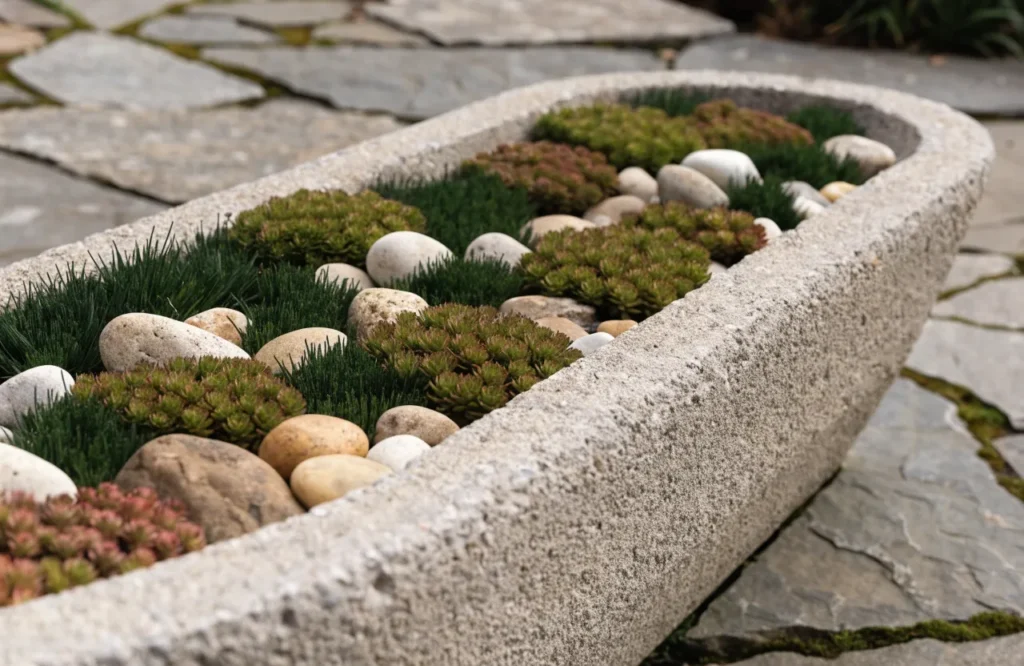
Not every fall container needs to be large. Miniature arrangements, sometimes called alpine troughs, use small stones, sedum, dwarf conifers, and tiny grasses to create a miniature landscape in a single concrete or ceramic bowl. These compact designs can last a year or more with minimal upkeep and make excellent gifts.
A single dramatic specimen, a dwarf mugo pine paired with a trailing vine, for instance, can stand in for an entire arrangement on a small porch or step. Top-dressing with gravel keeps the display looking tidy even after perennials go dormant for the season. For a mobile option that’s easy to shift into a sheltered spot before a hard freeze, some of the wheelbarrow planter ideas built for summer work just as well filled with cool-season plants.
Common Mistakes to Avoid
- Waiting too long to plant. The earlier you assemble your fall container garden after the first cool spell, the longer you’ll get to enjoy it before winter fully sets in, the same reasoning behind most guidance on what to plant in September.
- Ignoring drainage. Containers that hold too much water are far more likely to suffer freeze damage once temperatures drop below freezing.
- Mixing incompatible light needs. Sun-loving ornamental grasses may struggle when paired with shade plants in the same pot, match your thriller, filler, and spiller choices to the container’s actual light exposure.
- Skipping edible-safe soil and fertilizer. If you’re combining herbs or vegetables with ornamentals in the same container, stick to potting mixes and fertilizers rated safe for edibles.
Frequently Asked Questions
Final Thoughts
Fall container gardening rewards a little planning with months of color, texture, and interest, often stretching from the first crisp morning all the way through the depths of winter. By combining cold-hardy flowers like pansies and mums, structural elements like ornamental grasses and evergreen shrubs, and a few smart techniques for protecting your pots from freezing temperatures, you can build displays that outlast a typical summer planting by a wide margin. Start with the thriller, filler, spiller formula, lean into rich autumn color palettes, and don’t be afraid to experiment with branches, berries, and miniature landscapes. With the right approach to fall container gardening, your porch and patio can stay just as beautiful in November as they were in July.