15 Best Fall Flowers for Pollinators: Plants Bees, Butterflies & Hummingbirds Love
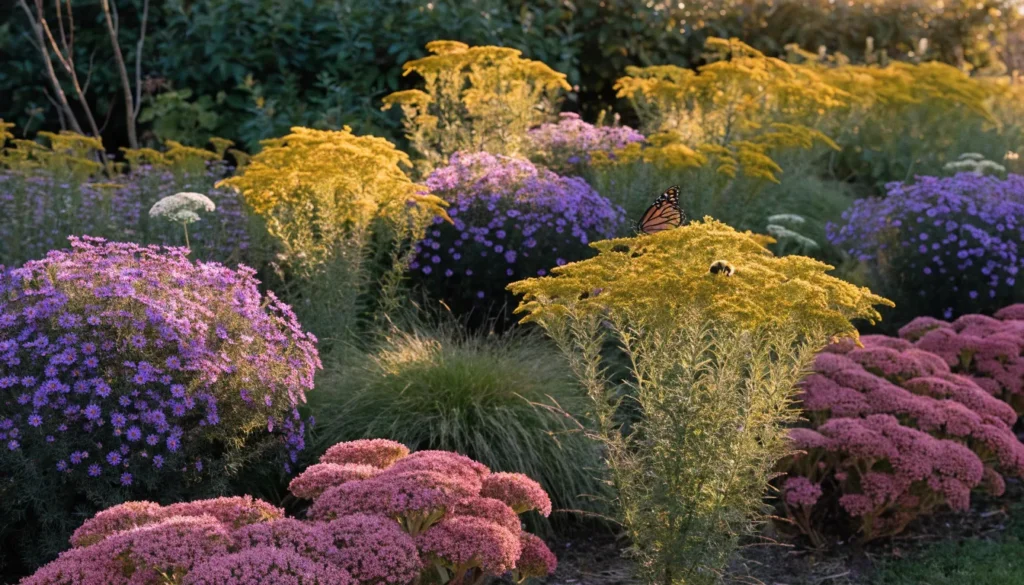
Fall isn’t the end of the pollinator season, it’s an important feeding period. As summer fades, many gardens quietly go quiet for pollinators right when bees, butterflies, and hummingbirds need fuel the most before winter. Migrating monarchs, late-season bees, and moths can all benefit from reliable fall nectar sources as summer blooms fade. Choosing the right fall flowers for pollinators keeps your garden buzzing long after most summer flowers have finished.
Here are 15 of the best fall flowers for supporting different pollinators, from bees and butterflies to hummingbirds and nighttime moths, including a few genuinely underused options most fall flower guides skip entirely. If you’re planning your beds month by month, 26 September Flowers for a Colorful Fall Garden is a good companion for filling in what to plant right now by zone and light condition.
Table of Contents
Quick Answer
Best fall flowers for pollinators:
- Bees: Asters, goldenrod, sedum, anise hyssop, ironweed
- Butterflies: Asters, Joe Pye weed, zinnias, black-eyed Susan
- Hummingbirds: Salvia, fuchsia, anise hyssop
- Moths: Evening primrose, four o’clocks, moonflower
- Best overall: Asters and goldenrod, both bloom heavily in fall and draw a wide range of bees and butterflies.
All 15 Fall Pollinator Flowers at a Glance
Use this table to compare all 15 fall flowers for pollinators side by side before diving into the plant-by-plant details below.
| Flower | Main Pollinators | Bloom Time | Plant Type | Native Status | Sun |
|---|---|---|---|---|---|
| Anise hyssop | Bees, hummingbirds | Summer–fall | Perennial | Native depending on species | Full sun |
| Joe Pye weed | Butterflies, bees | Late summer–fall | Perennial | Native to North America | Sun–part shade |
| Ironweed | Bees, butterflies | Late summer–fall | Perennial | Native to North America | Full sun |
| Four o’clocks | Moths | Summer–fall | Tender perennial/annual | Non-native ornamental | Full sun |
| Evening primrose | Moths, bees | Summer–fall | Biennial | Native to North America | Sun–part shade |
| Moonflower | Moths | Summer–fall | Annual vine | Non-native ornamental | Full sun |
| Aster | Bees, butterflies | Late summer–fall | Perennial | Native to North America | Full sun |
| Goldenrod | Bees, butterflies | Late summer–fall | Perennial | Native to North America | Full sun |
| Sedum | Bees, butterflies | Late summer–fall | Perennial | Non-native ornamental | Full sun |
| Salvia | Hummingbirds, bees | Summer–fall | Perennial or annual | Native depending on species | Full sun |
| Chrysanthemum | Bees | Fall | Perennial | Non-native ornamental | Full sun |
| Zinnia | Butterflies, bees | Summer–fall | Annual | Non-native ornamental | Full sun |
| Black-eyed Susan | Bees, butterflies | Summer–fall | Perennial or biennial | Native to North America | Full sun |
| Coneflower | Bees, butterflies | Summer–fall | Perennial | Native to North America | Full sun |
| Fuchsia | Hummingbirds | Summer–fall | Perennial or annual | Non-native ornamental | Part shade |
Bloom windows, hardiness, and exact native range vary by species, cultivar, climate, and planting date, treat the table as a general guide rather than a fixed schedule.
How to Choose Fall Flowers for Your Garden
Not sure where to start? This quick-reference table narrows down the best fall flowers for pollinators based on what you’re trying to attract or the conditions you’re working with.
| If you want… | Choose… |
|---|---|
| Bees | Asters, goldenrod, anise hyssop |
| Butterflies | Joe Pye weed, asters, coneflower |
| Hummingbirds | Salvia, fuchsia, anise hyssop |
| Moths | Four o’clocks, evening primrose, moonflower |
| Full sun | Asters, goldenrod, sedum |
| Part shade | Joe Pye weed, evening primrose |
| Native plants | Asters, goldenrod, ironweed, Joe Pye weed |
| Containers | Sedum, salvia, fuchsia |
Anise Hyssop: A Long-Blooming Nectar Source for Bees and Hummingbirds
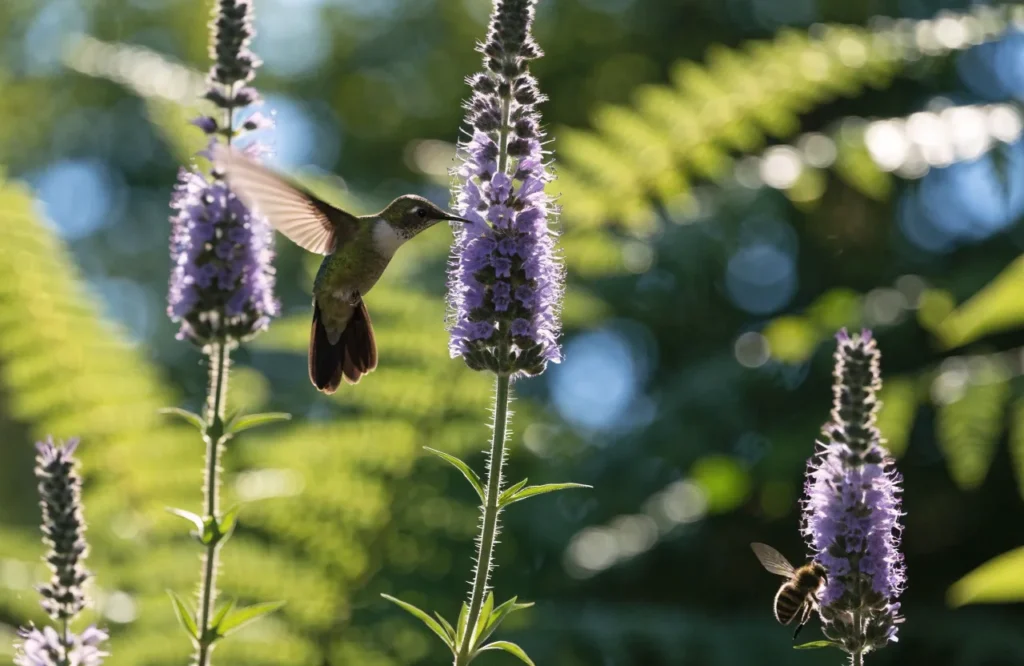
Anise hyssop (Agastache) is one of the best fall flowers for pollinators thanks to its long bloom window: it produces tall spikes of purple-blue flowers from midsummer clear through fall, making it one of the longer-blooming nectar sources in the pollinator garden. Its licorice-scented foliage is a bonus for gardeners, but it’s the flowers that matter to wildlife, bees and hummingbirds visit regularly, and the seed heads later feed songbirds through winter.
This tough perennial thrives in full sun and well-drained soil, tolerating drought once established. It’s a solid choice for gardeners who want reliable pollinator traffic without much upkeep, deadheading isn’t required, though it does extend the bloom period slightly.
Popular Anise Hyssop Varieties
- Blue Fortune – A reliable hybrid with dense purple-blue spikes that can attract a range of bees and other pollinators.
- Golden Jubilee – Features chartreuse foliage alongside lavender blooms, adding color contrast even before flowering begins.
Joe Pye Weed: A Native Draw for Late-Season Butterflies
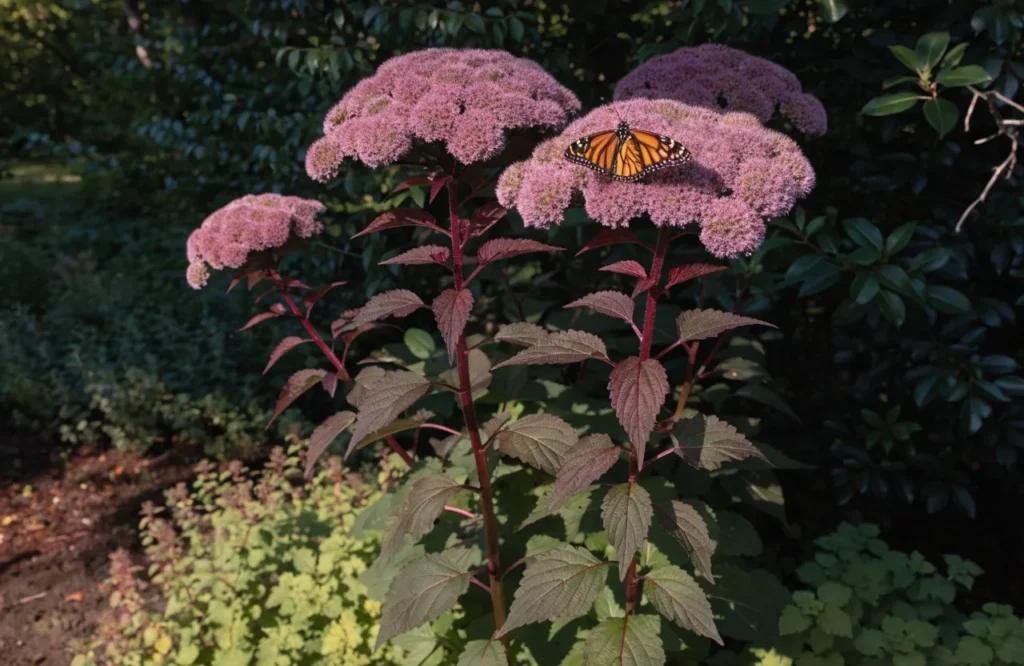
Joe Pye weed brings height and drama to the back of a border, with large, dusty-mauve flower clusters that open in late summer and hold well into fall. Its large flower clusters can attract numerous butterflies, including monarchs, swallowtails, and skippers, making it a favorite pit stop during monarch migration.
Growing 3 to 6 feet tall depending on variety, Joe Pye weed prefers full sun to partial shade and moist, well-drained soil. It’s an easy native perennial for anyone with the space to let it reach full size, and its seed heads add winter interest after the petals fade.
Popular Joe Pye Weed Varieties
- Gateway – A compact cultivar (around 5 feet) with wine-red stems and large mauve-pink flower clusters.
- Little Joe – A dwarf variety reaching just 3–4 feet, better suited to smaller borders while still drawing solid pollinator traffic.
Ironweed: Deep Purple Blooms Bees Seek Out
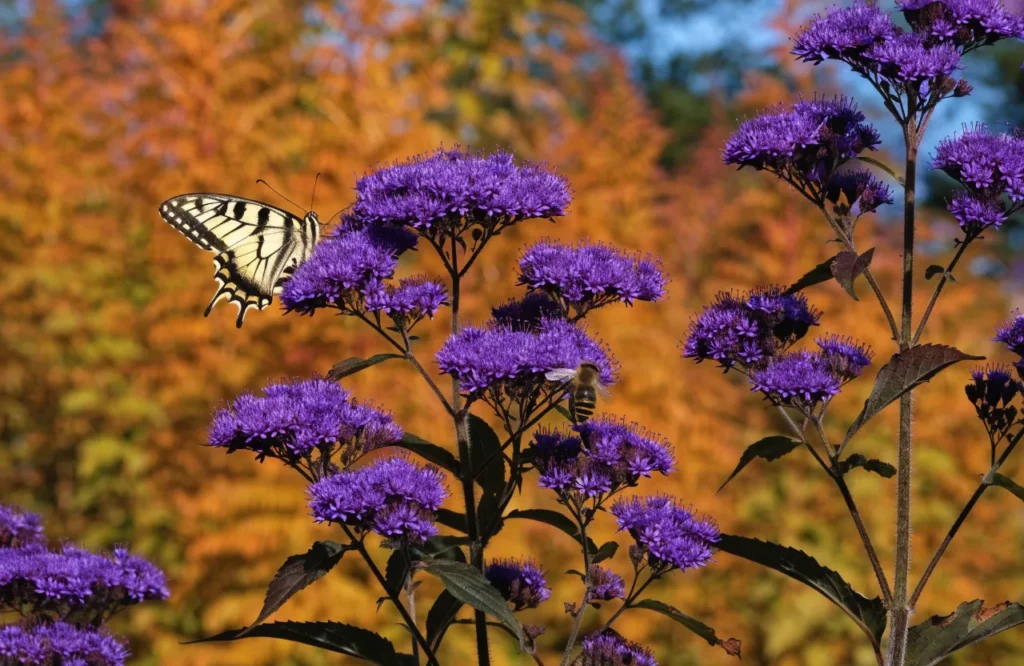
Ironweed is an under-planted native perennial with clusters of intense violet-purple flowers that bloom from late summer into fall. Its intense violet-purple color provides a striking contrast to the golds, oranges, and pinks common in fall gardens, making it a standout in a mixed pollinator border. Bees and butterflies visit heavily, particularly in the weeks before frost when nectar sources are scarce.
Ironweed thrives in full sun and consistently moist soil, making it a strong choice for rain gardens or low spots that stay damp. It can reach 4 to 6 feet, so give it room at the back of a bed.
Popular Ironweed Varieties
- New York Ironweed (Vernonia noveboracensis) – The most widely available species, with feathery purple flower clusters visited by bees and swallowtail butterflies.
Fall Flowers for Night Pollinators
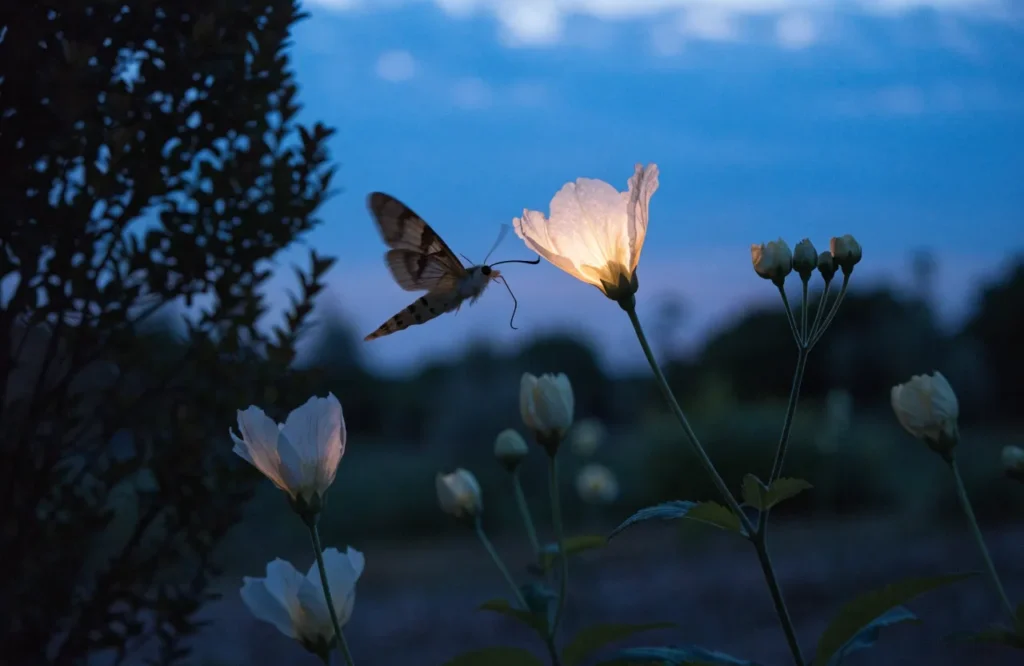
Most guides to fall flowers for pollinators focus entirely on daytime visitors, bees and butterflies get most of the attention, but moths, beetles, and other nighttime pollinators need fall nectar sources too.Very few flowers open or stay fragrant after dark, these are some of the more useful and accessible choices for supporting nighttime pollinators.
A few traits make certain flowers especially well suited to this job. Pale white or yellow blooms are easier for moths to locate in low light than darker colors, which fade quickly once the sun goes down. Strong evening fragrance helps compensate for reduced visibility, drawing pollinators in from a distance. And flowers that stay open after dusk provide nectar at a time when most daytime bloomers have already closed up for the night, filling a gap the rest of the garden leaves empty.
Four O’Clocks
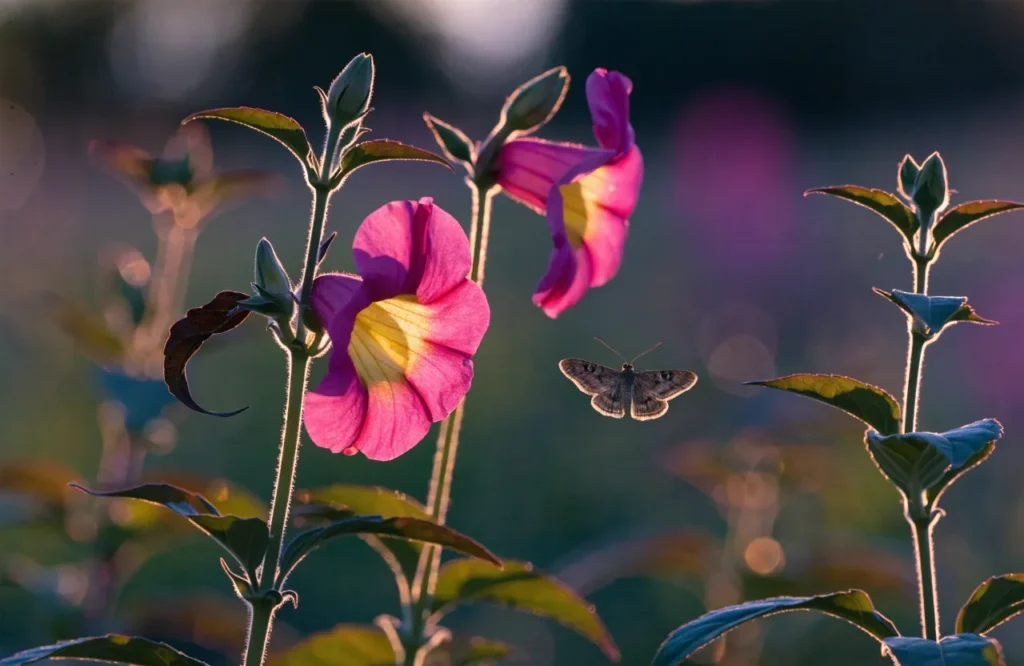
Four o’clocks open in the late afternoon and remain open through the night, with their fragrance attracting night-flying moths. They bloom in pink, yellow, white, and magenta from summer into fall and thrive in full sun. In colder climates they’re typically grown as annuals, though they can behave as tender perennials where winters stay mild.
Evening Primrose
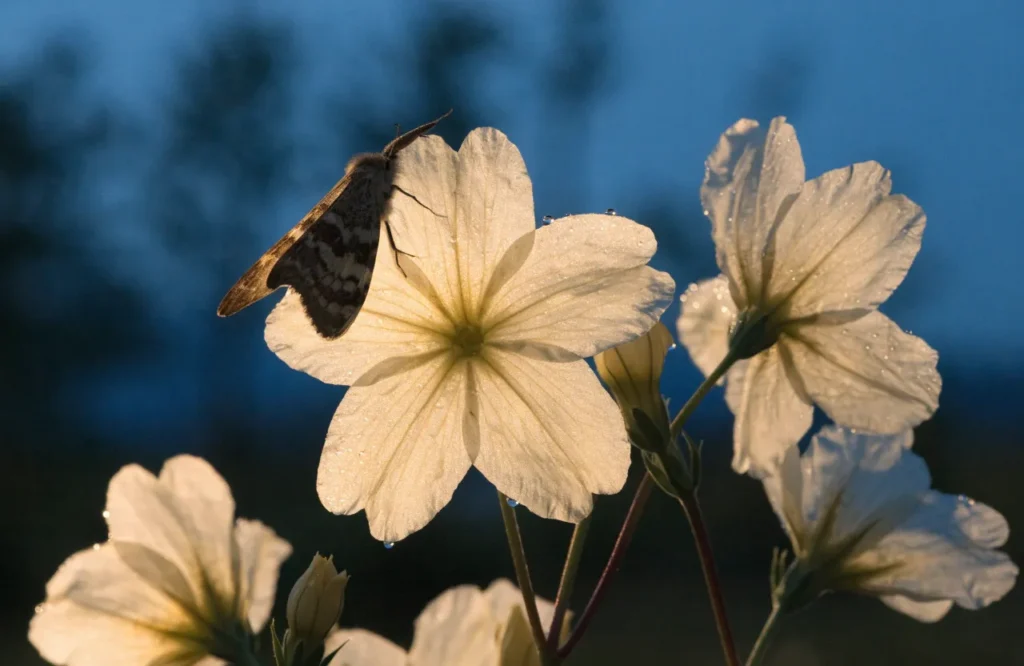
Pale yellow, lemon-scented flowers unfurl at dusk and close by mid-morning, making this biennial a key nectar source for night-flying moths. It self-seeds readily and tolerates poor, dry soil better than most fall bloomers, which makes it a low-maintenance option for tougher spots in the garden.
Moonflower
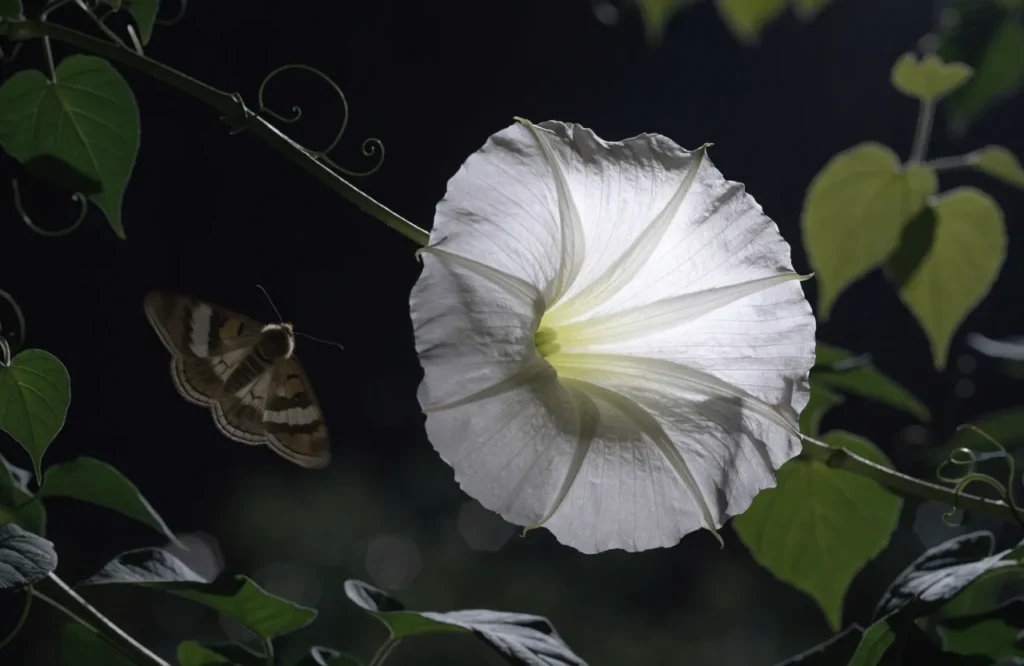
A fast-growing annual vine with large, fragrant white blooms that open only at night, moonflower’s night-opening flowers are particularly attractive to moths and other nighttime pollinators, one of the more dramatic additions you can make to a pollinator garden. Give it a trellis or fence to climb, since it can cover significant vertical space in a single season.
Tip: If night pollinators are a priority, plant at least one white or pale-colored bloomer near a patio or path, pale flowers are far more visible to moths after sunset than bright reds or purples.
9 More Fall Flowers That Support Pollinators
Rounding out the full list of 15 fall flowers for pollinators, the remaining nine are fall performers already covered in full detail elsewhere on the site. Here’s how each one supports pollinators specifically, with links to their complete growing guides.
Aster
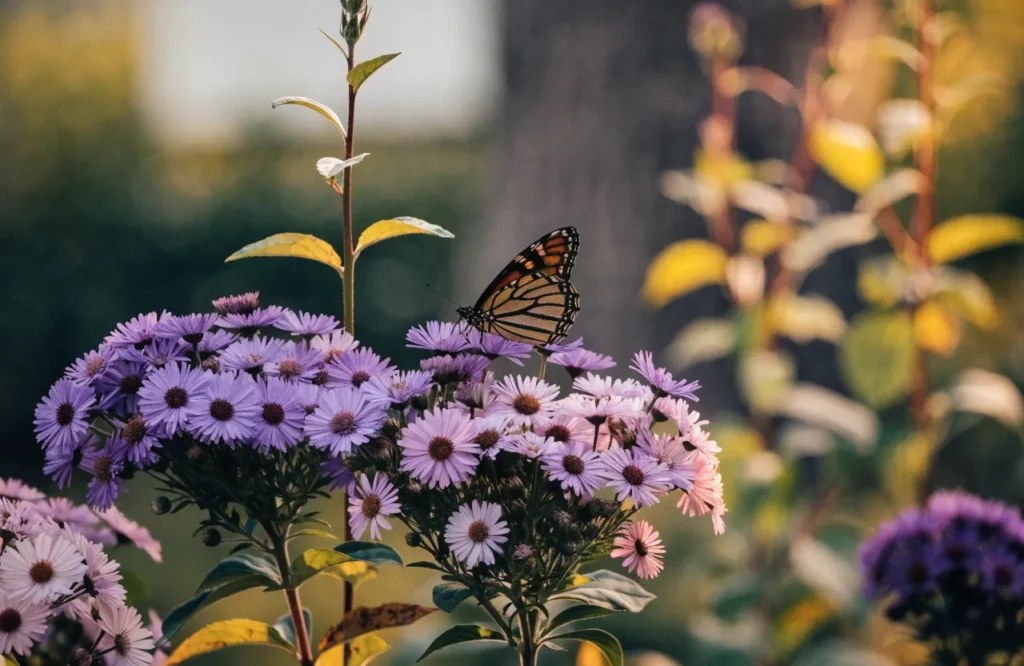
Asters produce daisy-like blooms in purple, pink, and white from late summer well into fall, often holding on right up to the first hard frost. That extended window makes them a reliable late-season nectar source for bees, and a regular stop for migrating monarch butterflies. Aster growing guide
Goldenrod
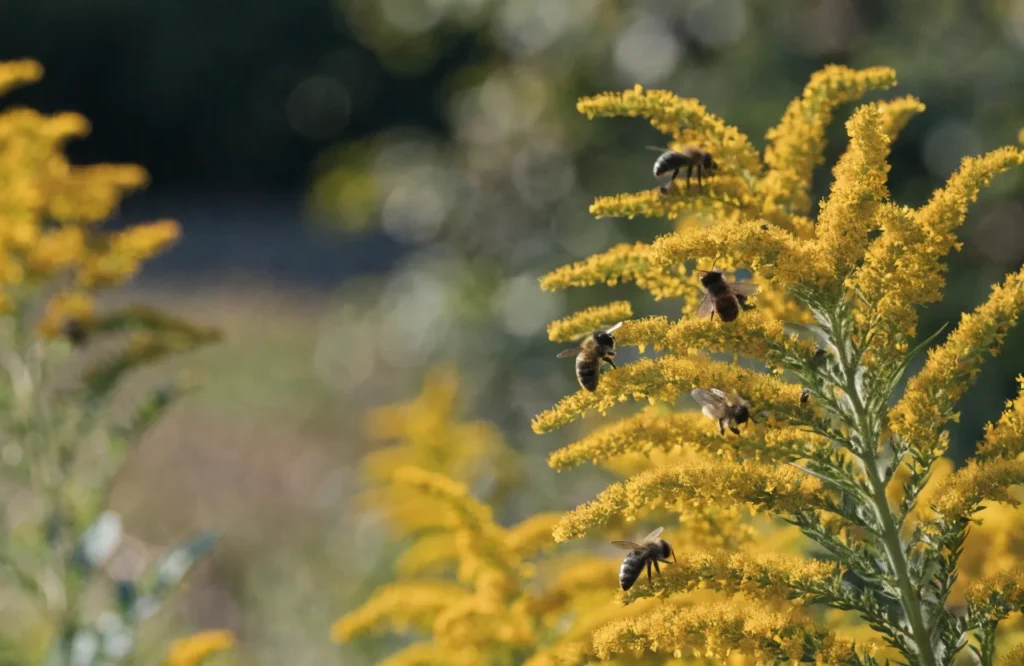
Goldenrod is often blamed for fall allergies, but that’s actually ragweed blooming at the same time; goldenrod’s pollen is too heavy and sticky to travel far on the wind. Its tall, plume-like flower clusters open in late summer and are used by bees and a wide range of other beneficial insects looking for accessible nectar and pollen. Goldenrod growing guide
Sedum
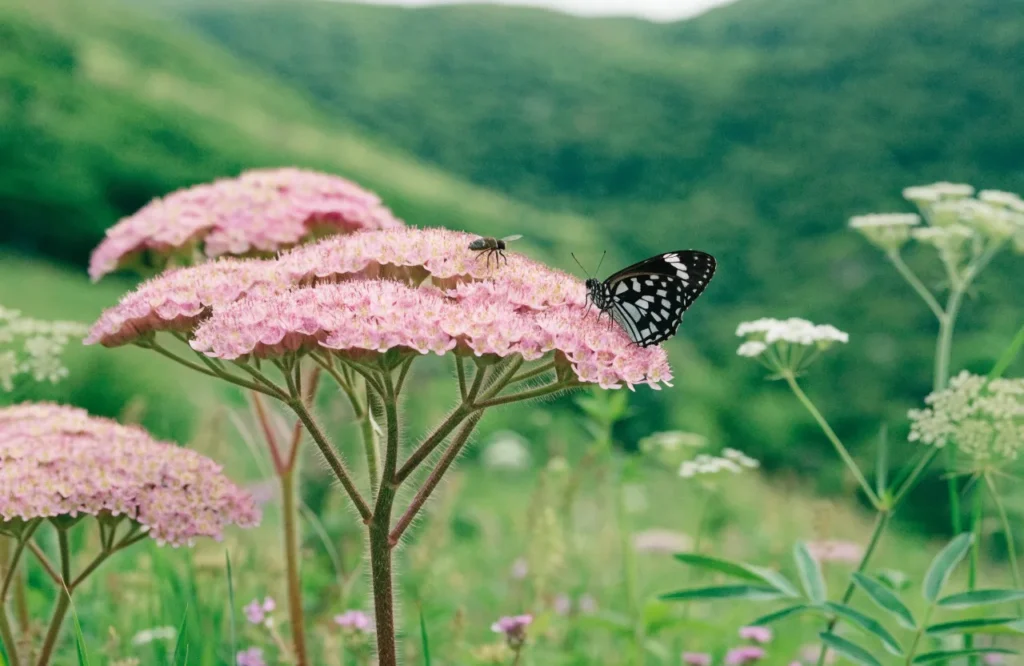
Sedum’s broad, flat flower clusters sit atop sturdy stems and act as an easy landing pad for butterflies and hoverflies, which prefer a stable surface to feed from. It blooms from late summer into fall and holds its color well as temperatures drop. Sedum care guide
Salvia
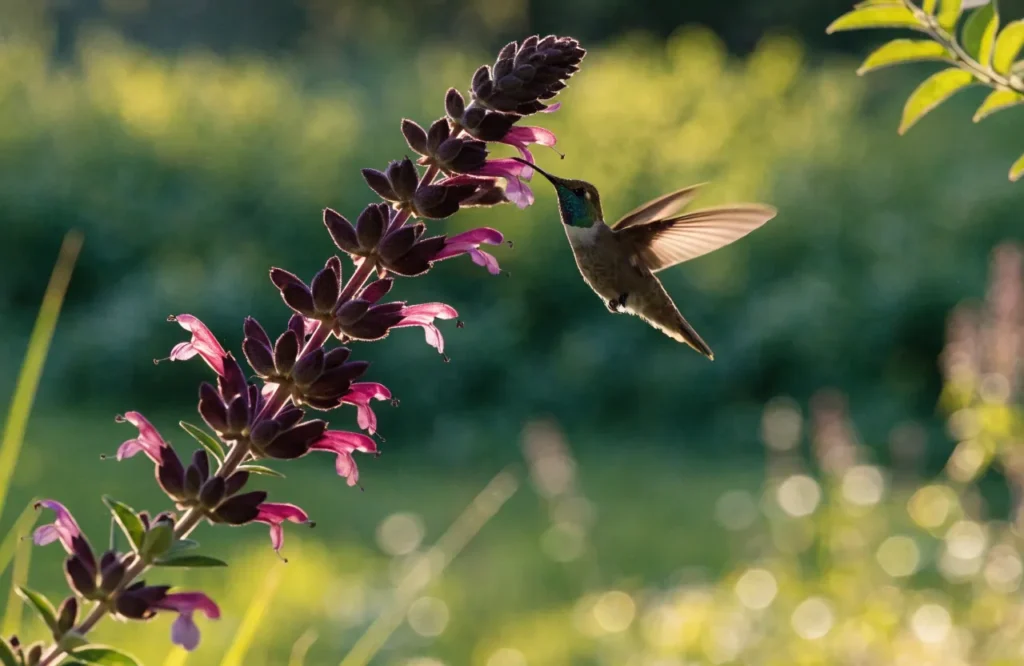
Salvia’s narrow, tubular flowers are shaped to fit a hummingbird’s bill, and many varieties keep blooming from summer through the first frost. Bees also work the same spikes, particularly long-tongued species that can reach the nectar inside each tube. Salvia growing guide
Chrysanthemum
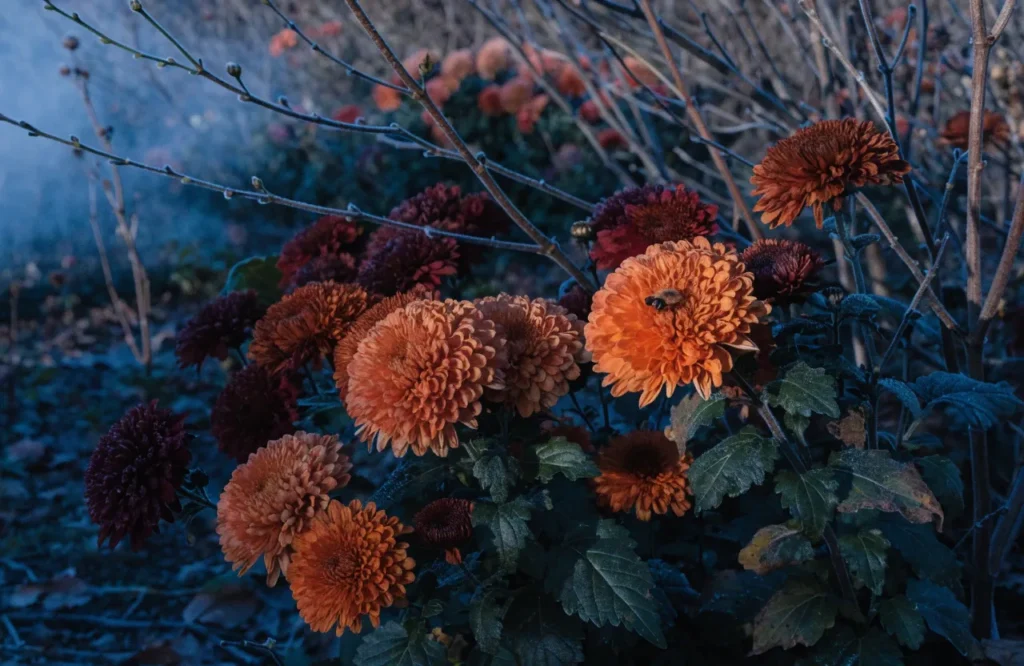
Mums are one of the last major bloomers before frost, opening in fall when many other nectar sources have already faded. That timing makes them useful for bees and other pollinators still active late in the season, though their flower structure limits access for some insects compared with open, daisy-shaped blooms. Chrysanthemum growing guide
Zinnia
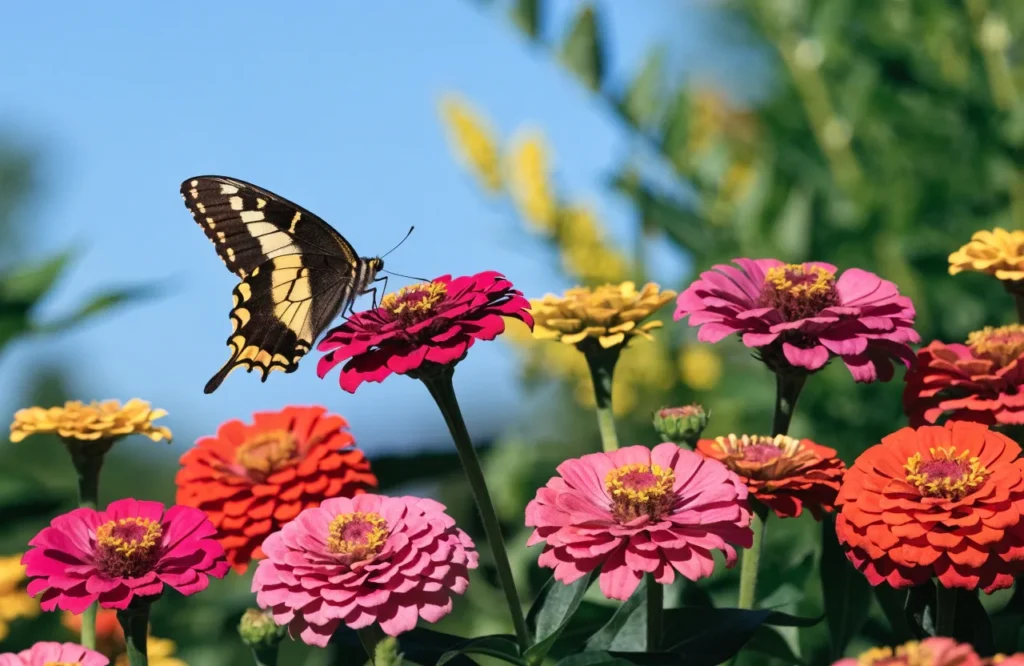
Zinnias bloom from summer clear through fall, giving butterflies a consistent nectar source across most of the growing season rather than just a short fall window. Their flat, open flower heads also make them easy for smaller pollinators to access. Zinnia growing guide
Black-Eyed Susan
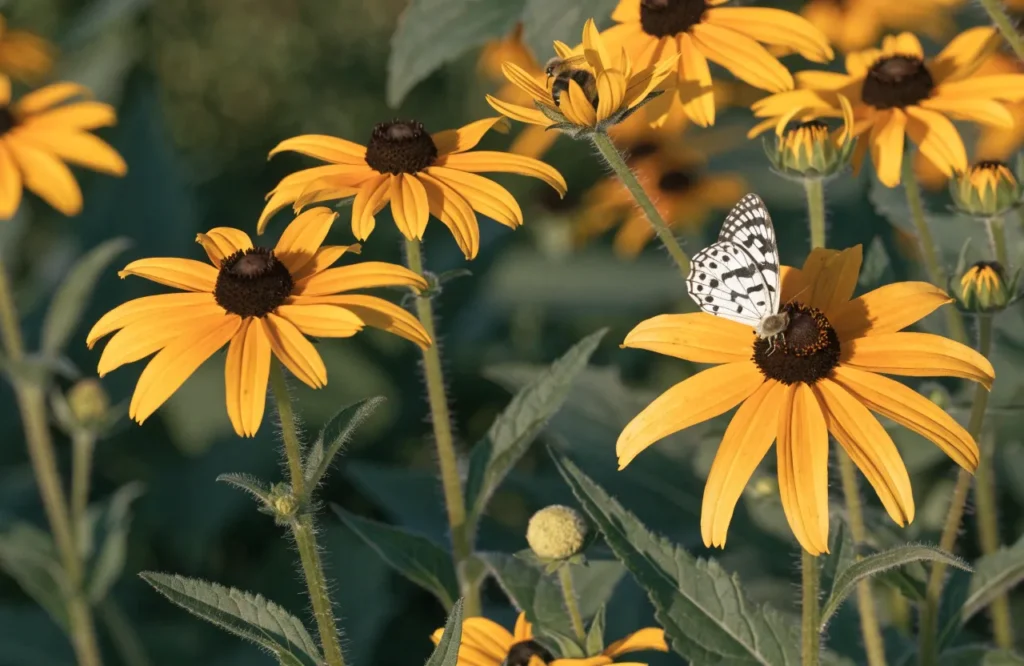
Drought-tolerant and easy to grow, black-eyed Susan blooms from summer through fall and is regularly visited by bees and small butterflies. Its open, daisy-like form makes nectar and pollen easy to reach for a wide range of insect visitors. Black-eyed Susan growing guide
Coneflower
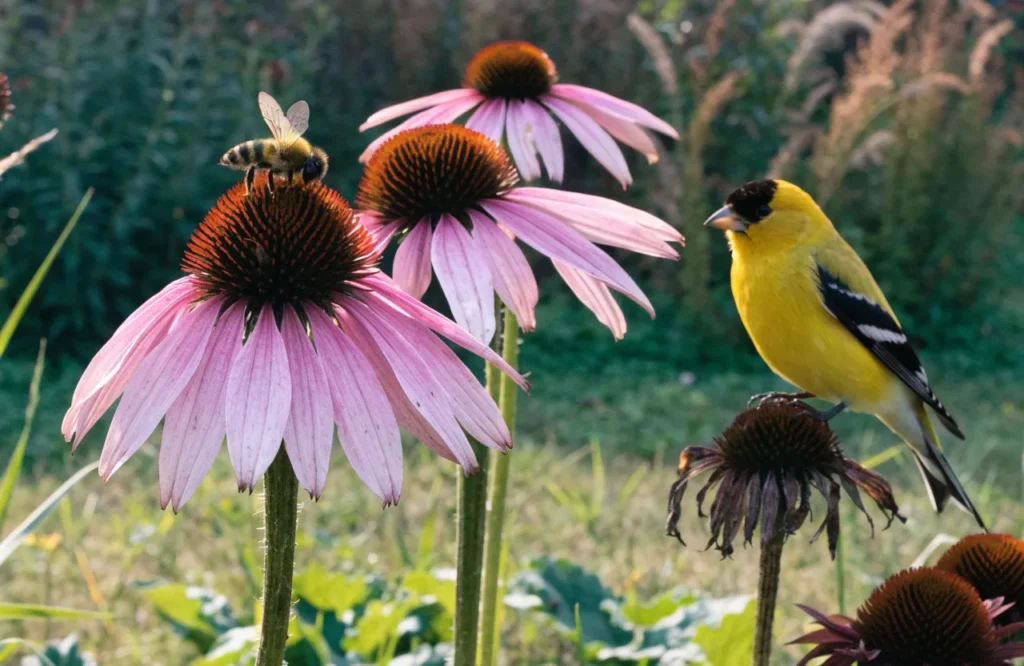
Coneflower’s raised central cone gives bees and butterflies an easy perch while feeding through summer and fall. Once the petals fade, the seed heads that remain feed goldfinches and other birds well into winter, so it’s worth leaving them standing. Coneflower growing guide
Fuchsia
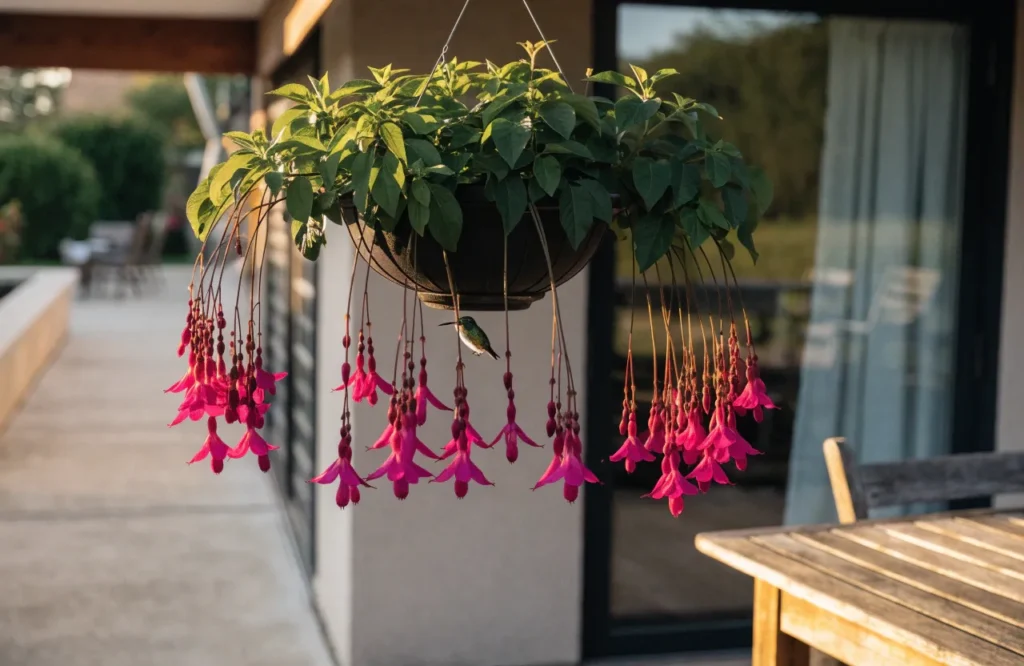
Fuchsia’s pendant, tubular blooms are a strong hummingbird draw, especially in hanging baskets near patios where they’re easy for hummingbirds to spot and feed from repeatedly. It typically blooms from summer through fall, tapering off with the first cold snap. Fuchsia growing guide
Best Fall Flowers by Pollinator Type
Different fall flowers for pollinators shine for different visitors, the Quick Answer above covers the short list, and here’s a bit more on why each group works.
Best Fall Flowers for Bees
Asters, goldenrod, sedum, anise hyssop, ironweed, and chrysanthemums bloom in overlapping windows through fall, so planting several together helps keep nectar available as bees prepare for colder weather.
Best Fall Flowers for Butterflies
Asters and Joe Pye weed pair well for butterflies because their bloom times overlap and both draw heavy traffic during monarch migration, planting them near each other can make your garden a more reliable stop.
Best Fall Flowers for Hummingbirds
Salvia, fuchsia, and anise hyssop all have tubular flowers well suited to hummingbird feeding, and can continue blooming late into the season depending on species, cultivar, and local conditions.
Best Fall Flowers for Moths
Four o’clocks, evening primrose, and moonflower stand out mainly because so few other fall bloomers open or stay fragrant after dark, see the section above for what makes them work.
How to Build a Fall Pollinator Garden
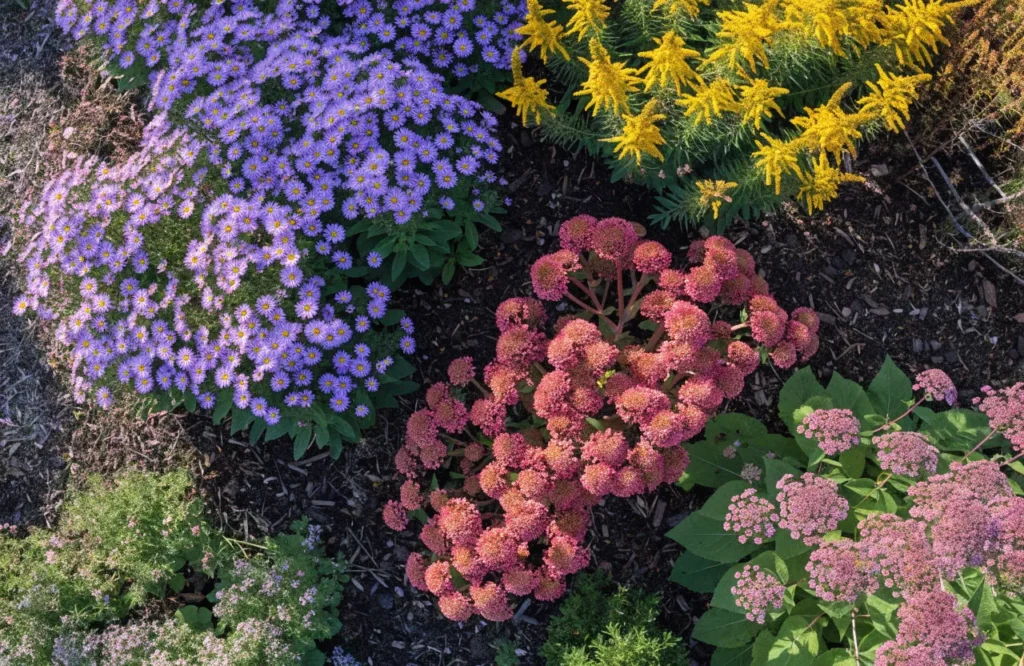
Picking the right fall flowers for pollinators is only half the job, how you plant them matters just as much for the wildlife you’re trying to support.
Plant in Drifts, Not Single Stems Pollinators tend to find and feed more efficiently on clusters of the same flower rather than single scattered plants. Whenever space allows, plant several plants of the same species together rather than scattering individual stems throughout the garden.
Create a Continuous Bloom Sequence The goal isn’t simply to plant “fall flowers”, it’s to keep nectar available as continuously as possible from late summer through frost. A rough example sequence, which will shift depending on your climate and cultivar choices:
- Late summer: Anise hyssop, Joe Pye weed
- Early fall: Ironweed, asters begin
- Mid-fall: Goldenrod, sedum, asters peak
- Late fall: Chrysanthemums, asters finish
For a wider palette of fall-blooming flowers for additional late-season color, see 23 Gorgeous Fall Blooming Flowers to Keep Your Garden Colorful.
Leave the Seed Heads Standing Resist deadheading everything in late fall. Coneflower, ironweed, and goldenrod seed heads feed birds through winter and shelter overwintering insects.
Choose a Range of Flower Shapes Tubular flowers (salvia, fuchsia) suit hummingbirds and long-tongued bees; flat clusters (sedum, goldenrod) suit butterflies and hoverflies; open daisy shapes (asters, black-eyed Susan) work for nearly everyone.
Avoid Pesticide Exposure During Bloom Avoid spraying flowers while they are in bloom whenever possible. If treatment is necessary, follow the product label carefully and choose application timing that minimizes exposure to active pollinators, keeping in mind that some pollinators, like moths, are active in the evening and at night.
Prioritize Native Plants Where Practical Asters, goldenrod, Joe Pye weed, and ironweed are native to much of North America and can support a wide range of local pollinator species. That said, non-native ornamentals like salvia and zinnias still have real value in a pollinator garden, the relationship between “native” and “pollinator-friendly” varies by plant and region, so aim for a mix rather than an all-or-nothing approach.
Expert Tip: Don’t mulch every square inch of bare soil. About 70% of native bee species nest in the ground, not in hives, and a thick layer of mulch can block them out entirely. Leave a few open, undisturbed patches of bare soil in a sunny corner of the garden, ideally somewhere that won’t be walked on or tilled, so ground-nesting bees have somewhere to overwinter and emerge from next spring.
Frequently Asked Questions
Which flowers attract pollinators in fall?
The best fall flowers for pollinators include asters, goldenrod, sedum, anise hyssop, salvia, and Joe Pye weed. These bloom from late summer into fall when pollinators need nectar most, drawing bees, butterflies, hummingbirds, and moths.
What are the best fall perennial flowers for pollinators?
Top perennial choices include asters, goldenrod, sedum, coneflower, anise hyssop, Joe Pye weed, and ironweed. These return year after year and bloom heavily from late summer into fall, providing reliable nectar for bees and butterflies.
What are the best native fall flowers for pollinators?
Asters, goldenrod, Joe Pye weed, and ironweed are native to much of North America. Planting natives helps support local bee and butterfly populations with the flowers they evolved alongside.
What flowers attract night pollinators like moths?
Four o’clocks, evening primrose, and moonflower are the best choices for moths. Four o’clocks open in the late afternoon, evening primrose unfurls at dusk, and moonflower’s large white blooms open only at night.
What flowers attract monarch butterflies in fall?
Asters and Joe Pye weed are particularly noted for attracting monarchs in fall, along with zinnias and black-eyed Susan. These provide the late-season nectar monarchs need during their fall migration.
Final Thoughts
Planting fall flowers for pollinators doesn’t just make your garden look better, it does real work, fueling bees, butterflies, and hummingbirds through one of the most demanding stretches of their year. A mix of reliable staples like asters and goldenrod, extended bloomers like anise hyssop, and a night-blooming flower or two gives visiting wildlife steady support from late summer through frost.
For more fall planting ideas, explore our September flower guide for zone-specific options, our complete fall-blooming flower guide for additional varieties beyond this pollinator-focused list, or our what-to-plant-in-September guide if you’re also planning vegetables, herbs, and bulbs this month. For research-backed pollinator habitat guidance, visit the Xerces Society.