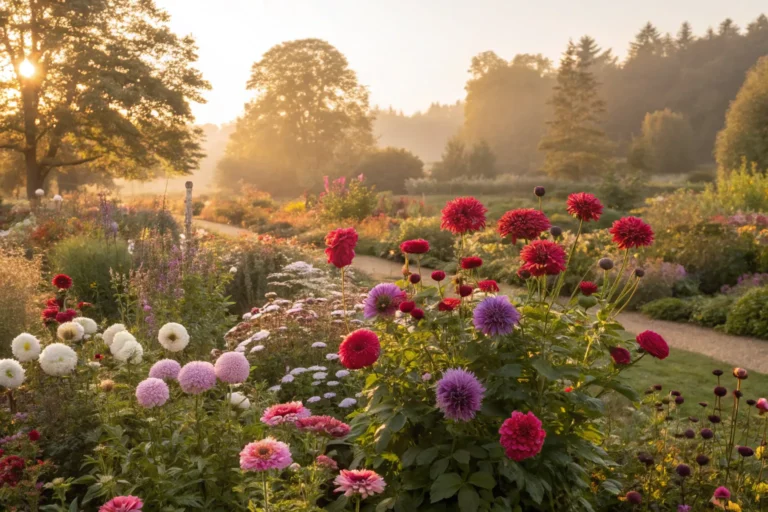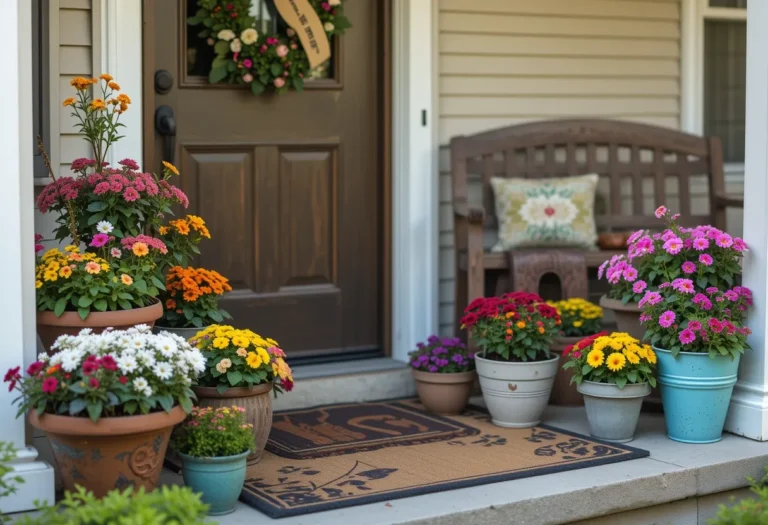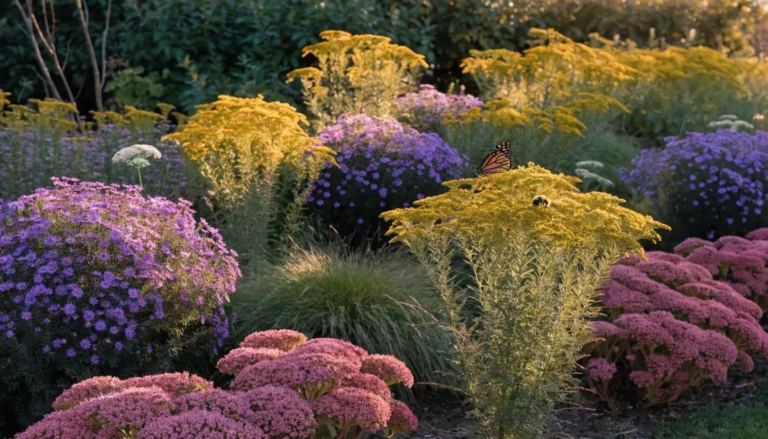
26 September Flowers for a Colorful Fall Garden; What to Plant This Month
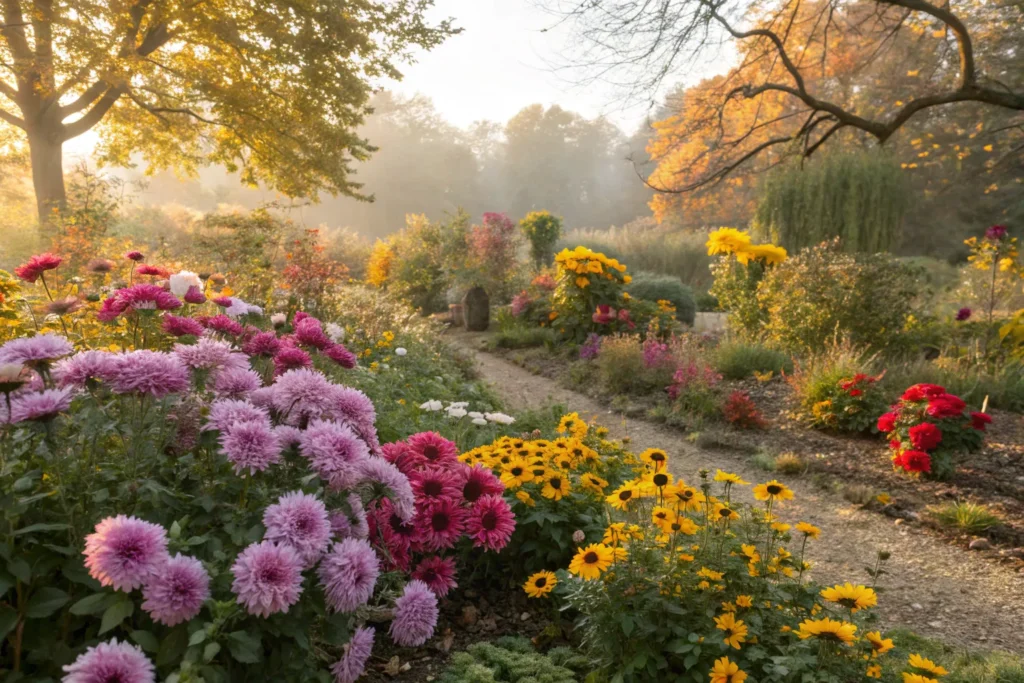
Looking for the best flowers to plant in September for fall color? As summer fades into autumn, your garden can still be full of vibrant color and seasonal charm. September is one of the best planting windows of the year, cooler air reduces stress on new plants while the soil is still warm enough to encourage strong root growth before winter. With the right mix of blooms, you can create a stunning fall garden that stays lively well into the cooler months.
From the fiery warmth of black-eyed Susans and hardy hibiscus to the airy elegance of cosmos and the cool-weather charm of pansies, September flowers offer endless possibilities for every garden style. In this guide, you’ll discover the best flowers to grow this month, along with practical ideas, by sun, shade, container, and zone, for designing a colorful, welcoming fall garden that continues to bloom long after summer ends.
Best Flowers to Plant in September
If you’re wondering what flowers you can plant in September, here’s the good news: early fall is actually one of the best planting windows of the year. Cooler air temperatures reduce stress on new plants, while the soil is still warm enough to encourage strong root growth before winter sets in. That makes September ideal for both cool-season annuals and hardy perennials.
For quick color this season, plant pansies, chrysanthemums, and ornamental kale, they establish fast and bloom within weeks. For a longer-term investment in your garden, September is also prime time to plant perennials like asters, coneflowers, Russian sage, and sedum, since they’ll spend fall and early winter building strong root systems before putting on a bigger show next year. Spring-flowering bulbs such as gladiolus can go in now too, in milder climates.
A simple rule of thumb: if you want blooms this fall, choose annuals or mature perennials from the nursery. If you’re planting for next year, bare-root perennials and bulbs planted in September will give your garden a head start.
1. Marigold: Easy-Care Blooms for Bright Fall Gardens
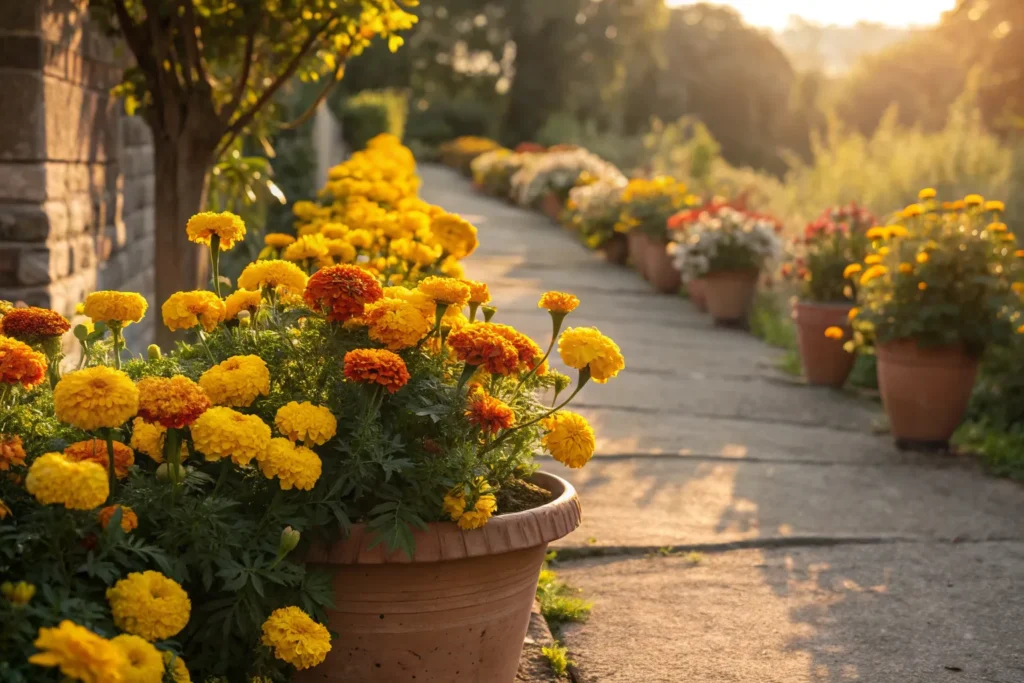
Marigolds are a timeless favorite for adding warm shades of yellow, orange, and red to a fall garden. Their cheerful blooms brighten flower beds, borders, patio containers, and vegetable gardens throughout September, creating a welcoming autumn display. Marigolds pair beautifully with zinnias, chrysanthemums, and sunflowers, bringing rich seasonal color to any outdoor space.
These hardy annuals thrive in full sun and well-drained soil, requiring very little maintenance while producing continuous blooms. In addition to their beauty, marigolds are known for helping deter certain garden pests, making them an excellent companion plant for vegetables and herbs. If you’re looking for dependable September flowers that combine vibrant color with practical garden benefits, marigolds are an ideal choice.
2. Cosmos: Airy Elegance for Cottage-Style Fall Gardens
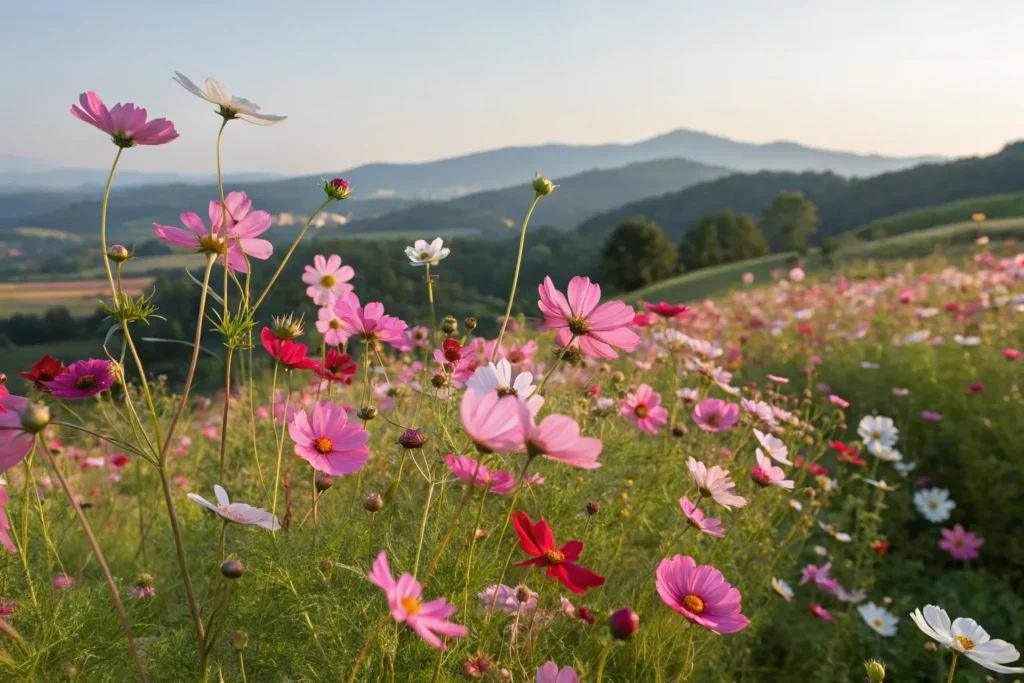
Cosmos bring graceful beauty to a fall garden with their delicate, daisy-like blooms and soft, feathery foliage. Available in shades of pink, white, crimson, and purple, these charming flowers add a light, natural feel to flower borders, cottage gardens, and wildflower-inspired landscapes. Their gentle movement in the breeze creates texture and complements bolder September flowers like dahlias, zinnias, and sunflowers.
Thriving in full sun and well-drained soil, cosmos bloom continuously through September with very little maintenance. They’re also excellent cut flowers, allowing you to enjoy fresh autumn bouquets indoors. Their nectar-rich blooms attract butterflies and other beneficial pollinators, while their ability to self-seed means they’ll often return year after year, filling your garden with effortless seasonal beauty.
3. Coneflower (Echinacea): A Pollinator Favorite for Lasting Autumn Beauty
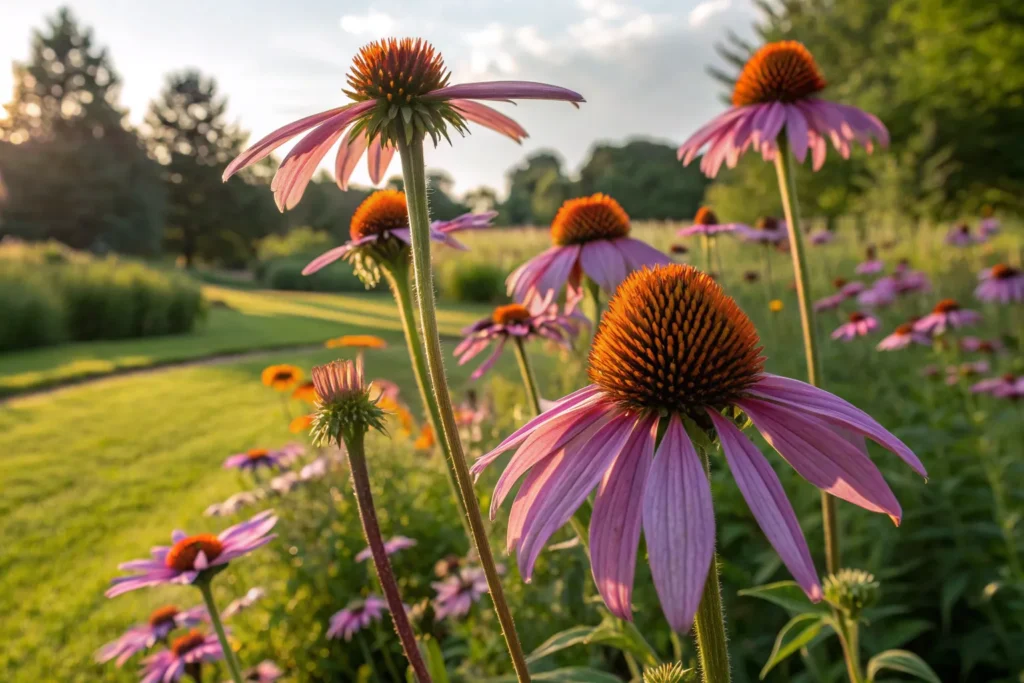
Coneflowers, also known as Echinacea, are resilient perennials that bring bold color and lasting structure to the autumn garden. Their striking purple, pink, or white petals surround a distinctive cone-shaped center, creating eye-catching contrast in flower beds and borders. These hardy blooms pair beautifully with ornamental grasses, asters, and goldenrods, adding depth and natural charm to late-season landscapes.
Thriving in full sun and well-drained soil, coneflowers are easy to grow and return year after year with even more impressive displays. Their nectar-rich blooms attract butterflies, bees, and other beneficial pollinators throughout the flowering season, while their seed heads provide a valuable food source for birds as autumn progresses. For gardeners seeking low-maintenance plants that support wildlife and extend seasonal interest, coneflowers are an exceptional addition.
4. Black-Eyed Susan: Golden Blooms That Brighten the Autumn Landscape
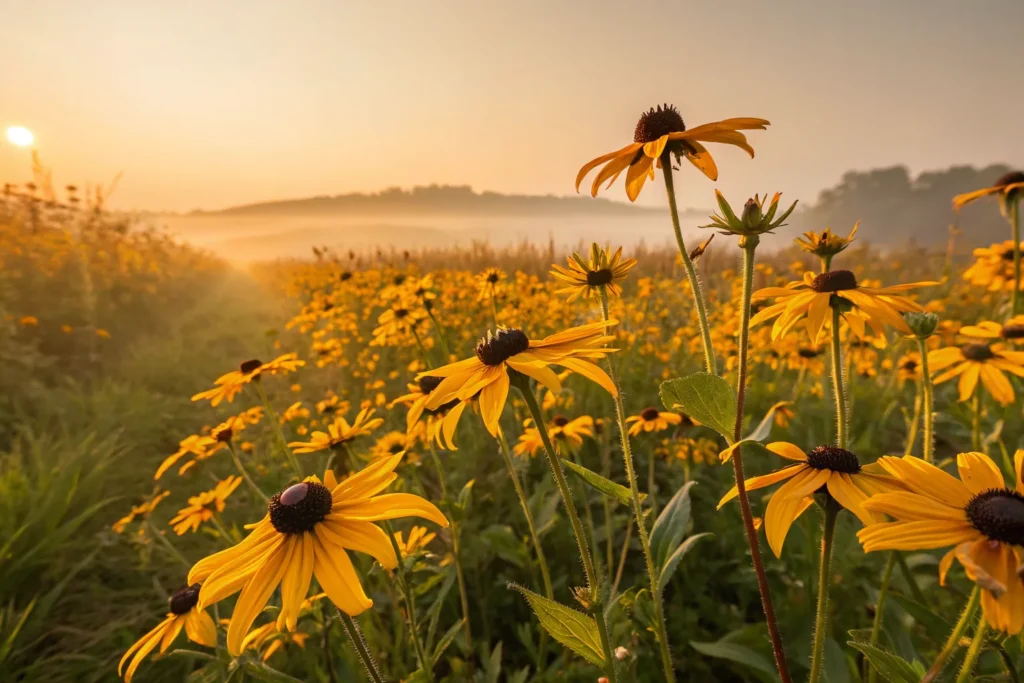
Black-Eyed Susans are beloved for their cheerful golden-yellow petals and distinctive dark centers, bringing warmth and vibrant color to the garden as the seasons change. These hardy perennials bloom from late summer into early autumn, making them an excellent choice for extending seasonal interest in borders, cottage gardens, and naturalized landscapes. Their sunny blooms pair beautifully with coneflowers, asters, and ornamental grasses for a classic fall display.
Thriving in full sun and well-drained soil, Black-Eyed Susans are remarkably low-maintenance and tolerate heat, drought, and a wide range of soil conditions. Their nectar-rich flowers attract bees, butterflies, and other beneficial pollinators, while their sturdy stems also make excellent cut flowers for fresh seasonal arrangements. If you’re looking for reliable autumn blooms that combine beauty, resilience, and wildlife value, Black-Eyed Susans are a perfect addition to your garden.
5. Russian Sage: Graceful Texture and Color for Autumn Gardens
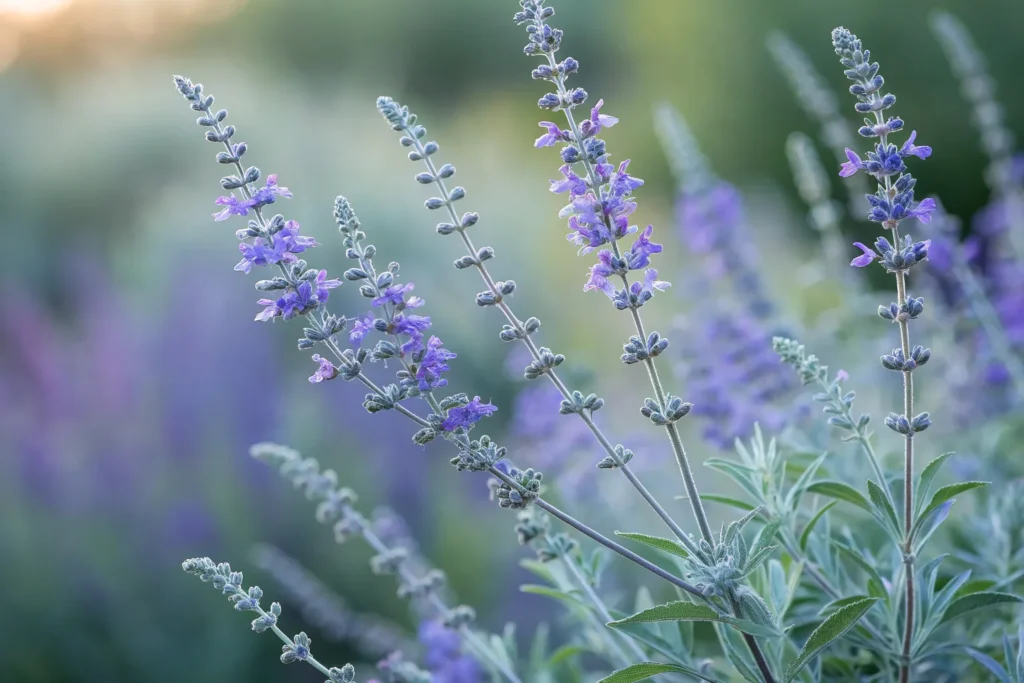
Russian Sage brings elegance and movement to the garden with its airy spikes of lavender-blue flowers and attractive silvery foliage. Blooming from late summer into autumn, this hardy perennial creates a soft, cloud-like effect that contrasts beautifully with bold blooms such as dahlias, black-eyed Susans, and chrysanthemums. Its upright form also adds height and texture to borders, cottage gardens, and contemporary landscapes.
Thriving in full sun and well-drained soil, Russian Sage is highly drought-tolerant and requires very little maintenance once established. It also resists deer and rabbits, making it an excellent choice for low-maintenance landscapes. Loved by bees and butterflies, this long-flowering perennial provides lasting seasonal interest while bringing a graceful, natural charm to any fall-inspired garden.
6. Hardy Hibiscus: Tropical Beauty That Lasts Into Autumn
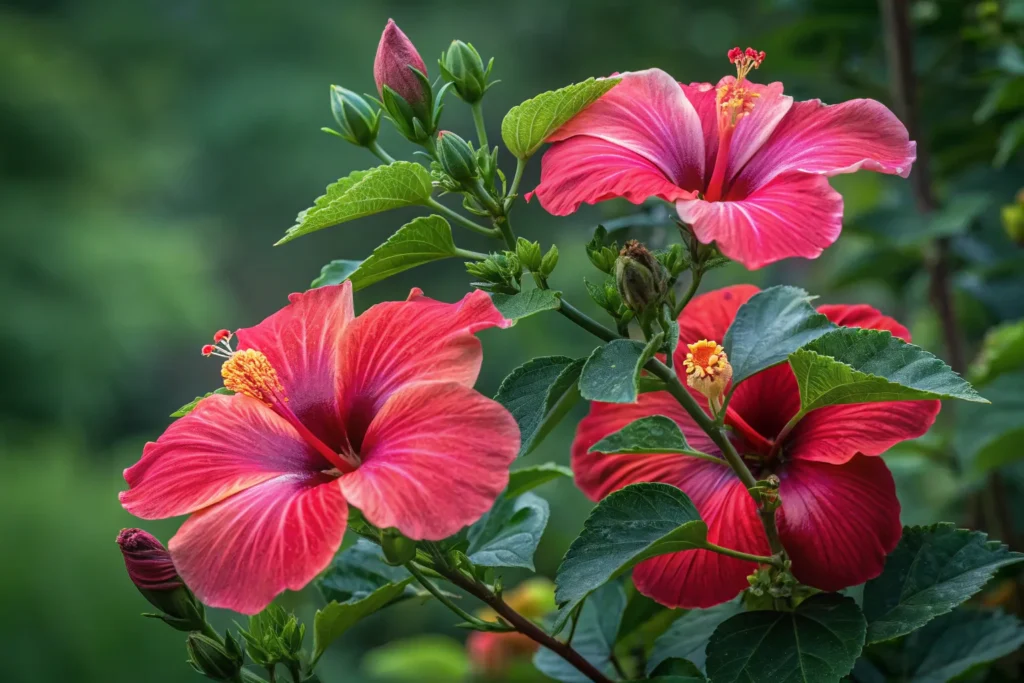
Hardy hibiscus adds a bold, tropical touch to the garden with its enormous blooms in shades of red, pink, and white. Flowering well into early autumn, these impressive blossoms create stunning focal points in flower beds, borders, and water-wise landscapes. Their dramatic appearance pairs beautifully with ornamental grasses, Russian sage, and other late-season perennials, adding vibrant contrast and visual impact.
Despite their exotic look, hardy hibiscus plants are surprisingly easy to grow. They thrive in full sun and consistently moist, well-drained soil, rewarding gardeners with spectacular blooms that can reach dinner-plate size. Their nectar-rich flowers also attract hummingbirds, butterflies, and other pollinators, making them an excellent choice for gardeners who want to combine striking beauty with wildlife-friendly planting. If you’re looking to make a statement in your autumn garden, hardy hibiscus is a show-stopping addition.
7. Gladiolus: Elegant Flower Spikes for Dramatic Fall Displays
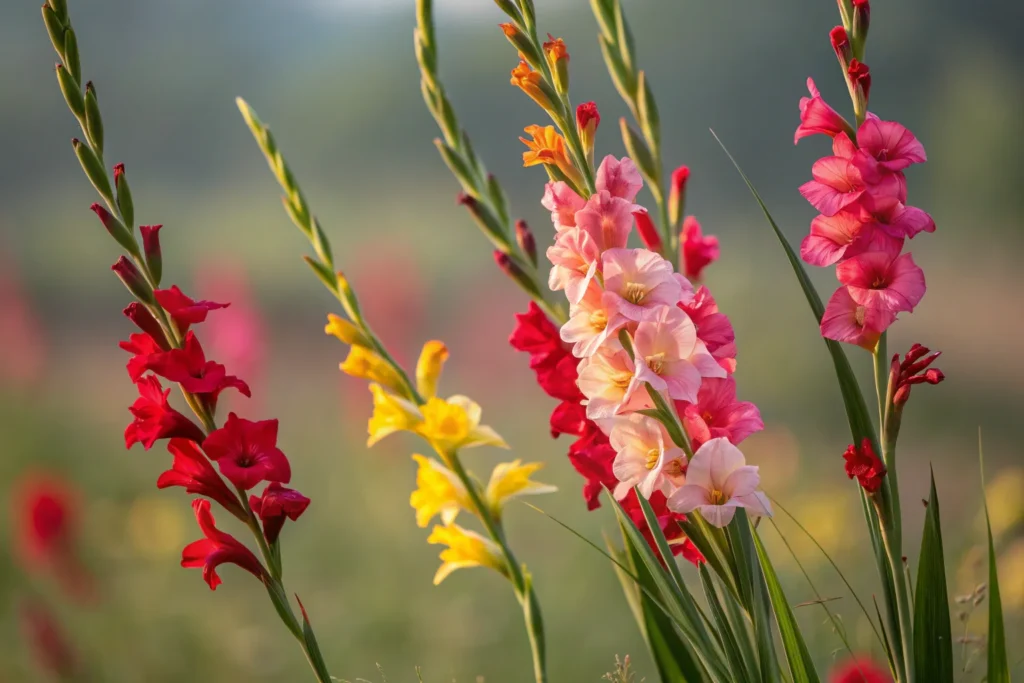
Gladiolus brings striking height and vibrant color to the garden with its tall flower spikes covered in elegant blossoms. Blooming from late summer into early autumn, these graceful flowers are available in almost every shade, making them perfect for adding vertical interest to borders, cutting gardens, and mixed flower beds. They pair beautifully with dahlias, zinnias, and ornamental grasses, creating a balanced and eye-catching seasonal display.
Growing best in full sun and fertile, well-drained soil, gladiolus rewards gardeners with weeks of spectacular blooms. Their long, sturdy stems make them one of the finest flowers for fresh bouquets and floral arrangements, allowing you to bring the beauty of your garden indoors. If you’re looking to add structure, elegance, and long-lasting color to your autumn landscape, gladiolus is an excellent choice.
8. Nicotiana: Fragrant Evening Blooms for a Welcoming Autumn Garden
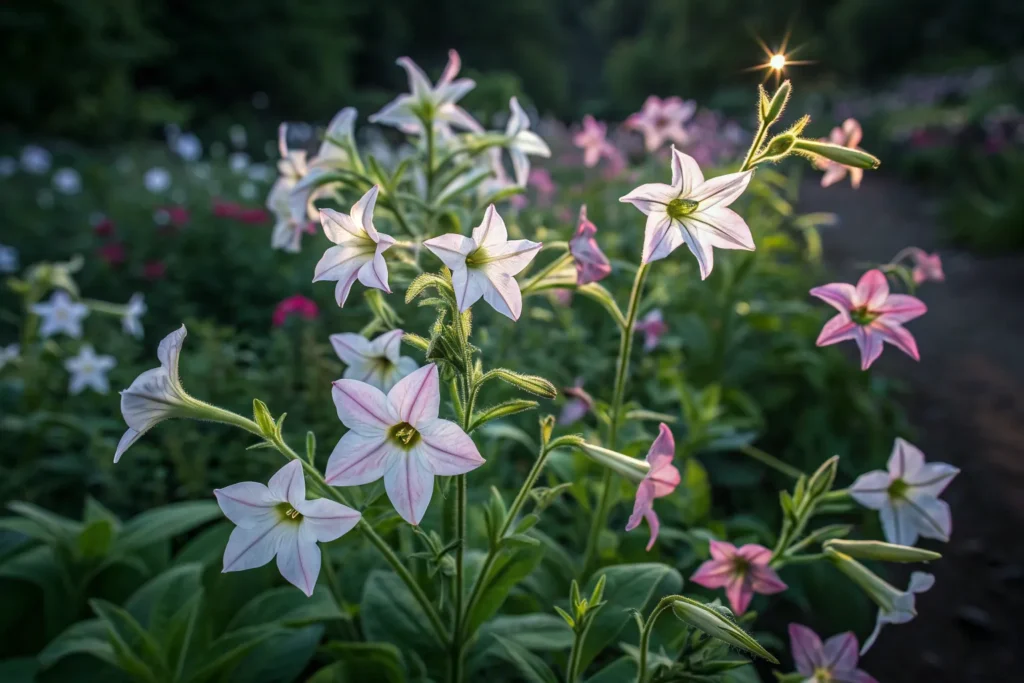
Nicotiana, commonly known as flowering tobacco, brings both beauty and fragrance to the garden with its elegant, star-shaped blooms. Available in shades of white, pink, red, lime green, and deep burgundy, these graceful flowers brighten borders, cottage gardens, and patio containers while releasing a sweet scent as evening approaches. Their soft colors and delicate form blend beautifully with other late-season favorites, creating a relaxing outdoor retreat.
Thriving in full sun to partial shade with fertile, well-drained soil, nicotiana is easy to grow and flowers continuously through early autumn. Its nectar-rich blooms attract hummingbirds, butterflies, and other beneficial pollinators, adding movement and life to your landscape. If you’re looking to create a fragrant, inviting garden that’s just as enjoyable at dusk as it is during the day, nicotiana is a wonderful addition.
9. Impatiens: Colorful Blooms for Shady Autumn Spaces
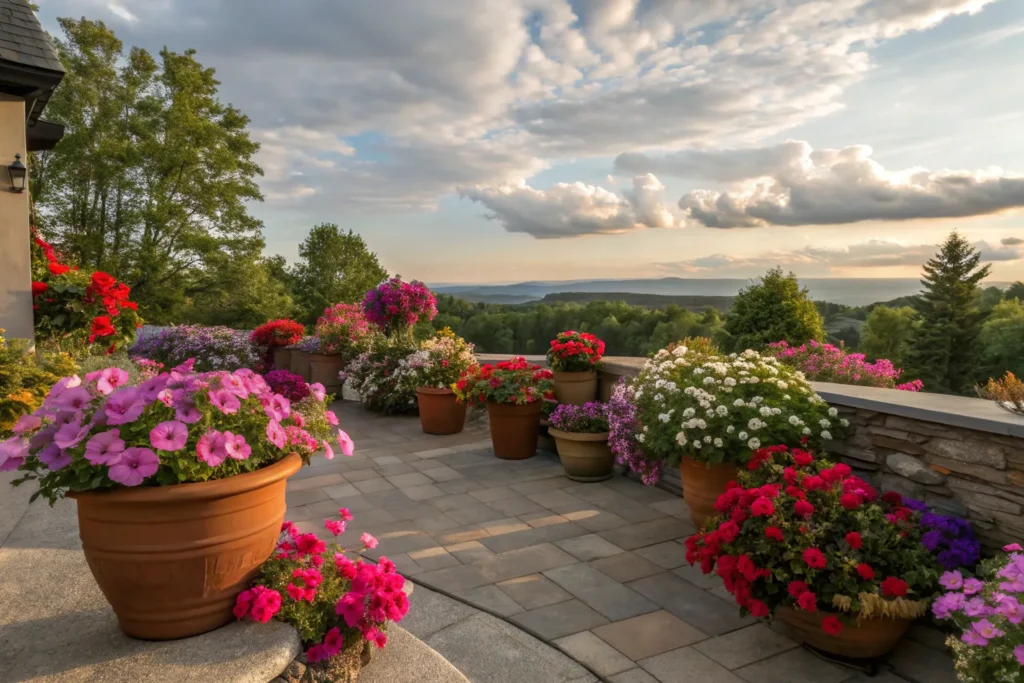
Impatiens are the perfect choice for bringing vibrant color to shaded areas where many other flowering plants struggle to thrive. Their continuous blooms in shades of pink, red, white, purple, and coral brighten garden beds, woodland borders, hanging baskets, and patio containers from summer until the first frost. These cheerful flowers create a beautiful contrast with ferns, hostas, and Japanese anemones, adding life and softness to low-light landscapes.
Thriving in partial to full shade with consistently moist, well-drained soil, impatiens are easy to grow and require minimal maintenance. Their long-lasting blooms provide reliable seasonal color, making them ideal for refreshing dark corners of the garden. If you’re looking to create a lush and inviting autumn landscape, impatiens are a dependable choice that delivers beauty throughout the season.
10. Pansy: Cool-Weather Color for Welcoming Fall Displays
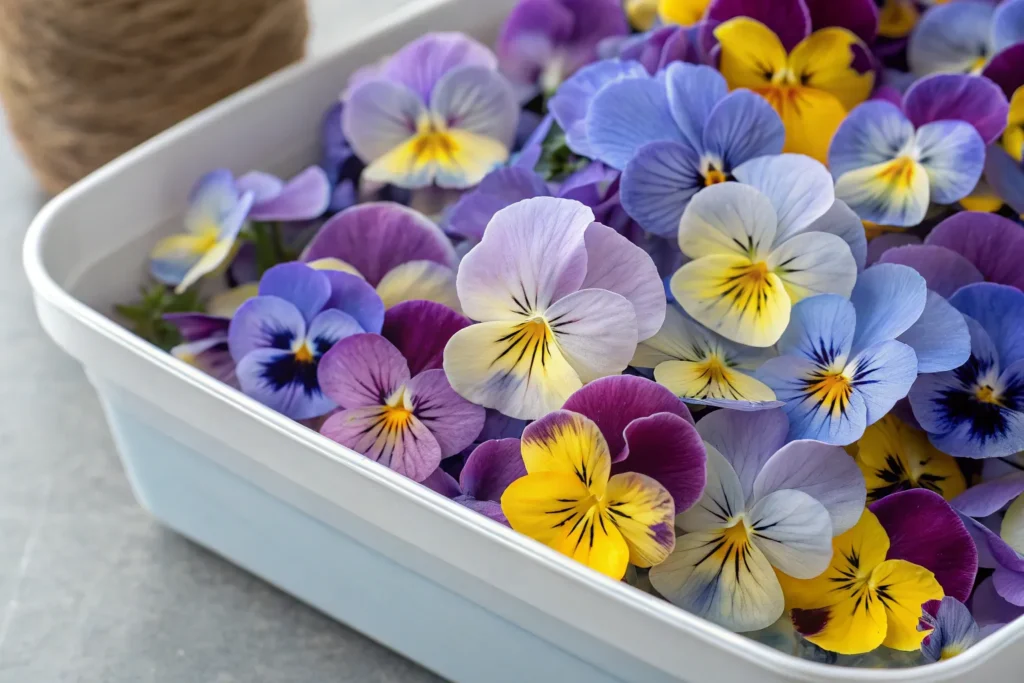
Pansies are among the first flowers to thrive as temperatures begin to cool, making them a perfect choice for refreshing the garden in early autumn. Their charming, face-like blooms appear in vibrant shades of purple, yellow, blue, orange, white, and striking bi-colors, bringing instant color to containers, window boxes, borders, and garden beds. They pair beautifully with ornamental kale, chrysanthemums, and decorative grasses for a classic seasonal display.
These cool-season favorites flourish in full sun to partial shade with fertile, well-drained soil, producing continuous blooms throughout the cooler months with regular watering and deadheading. Their edible flowers also make beautiful garnishes for salads, cakes, and desserts, adding both beauty and creativity beyond the garden. If you’re looking for reliable cool-weather blooms that brighten your outdoor space, pansies are an excellent addition to any autumn landscape.
11. Monkshood (Aconitum): Dramatic Autumn Blooms for Shaded Gardens
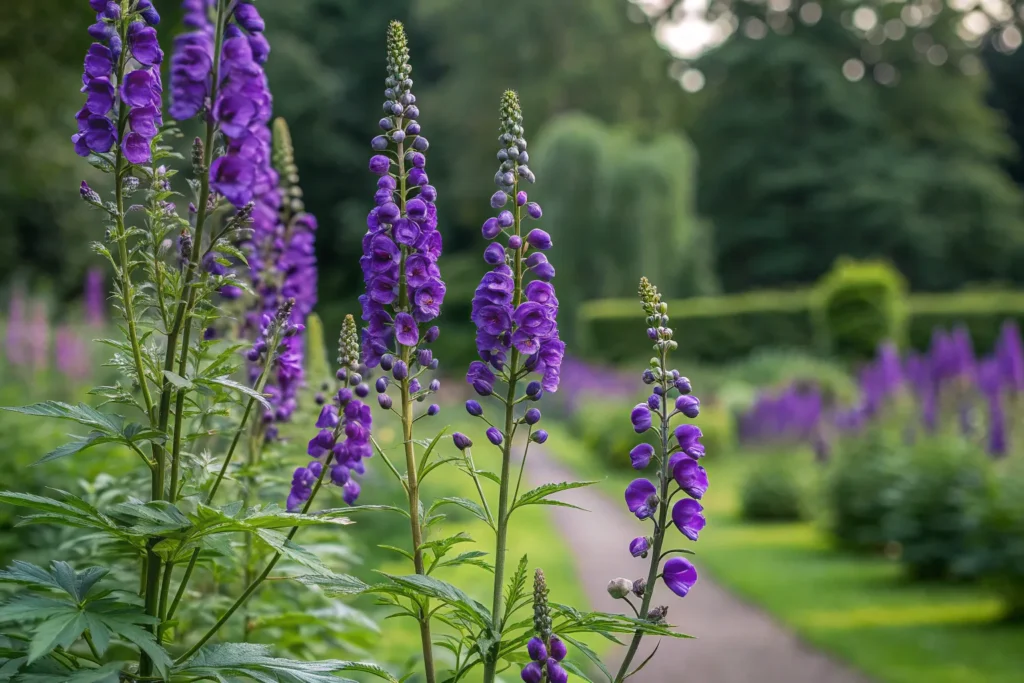
Monkshood, also known as Aconitum, brings bold elegance to the autumn garden with its tall spikes of deep blue and rich purple, hood-shaped flowers. Blooming in early fall, this striking perennial adds height, texture, and cool-toned color to shaded borders and woodland-style landscapes. Its dramatic blooms pair beautifully with Japanese anemones, ferns, and hostas, creating a sophisticated late-season display.
This hardy perennial thrives in partial shade and consistently moist, well-drained soil, making it an excellent choice for cooler garden areas. While monkshood is admired for its unique beauty, all parts of the plant are toxic if ingested and should be handled with care, especially around children and pets. When planted thoughtfully, it rewards gardeners with a distinctive architectural presence and long-lasting seasonal interest.
12. Cyclamen: Elegant Cool-Season Blooms for Shaded Gardens
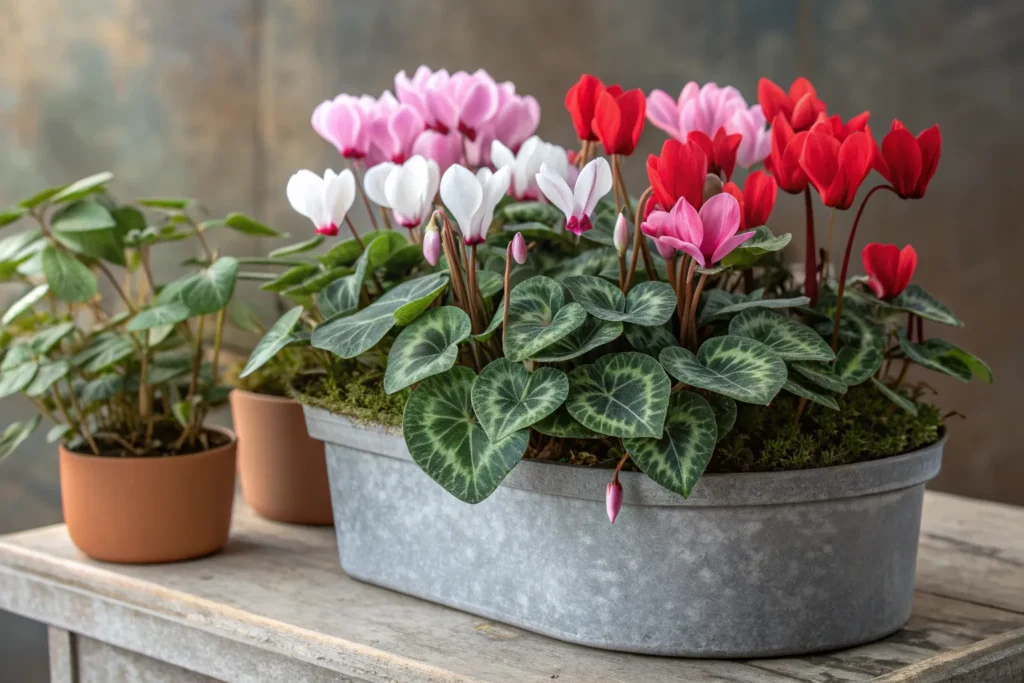
Cyclamen brings delicate beauty to the garden with its graceful, upswept flowers and attractive heart-shaped leaves marked with silver patterns. Blooming in shades of pink, red, white, and magenta, these charming plants brighten shaded borders, woodland gardens, and patio containers as the weather turns cooler. Their compact size and unique flower shape make them an excellent choice for adding color and elegance to smaller garden spaces.
Cyclamen thrives in partial shade with fertile, well-drained soil and performs best in cool autumn temperatures. Its long-lasting blooms provide reliable seasonal interest while pairing beautifully with ferns, pansies, and other shade-loving plants. Whether planted in containers or tucked beneath trees and shrubs, cyclamen adds refined beauty and a welcoming touch to any autumn landscape.
More September Flowers Worth Growing (13–26)
Beyond the featured picks above, several other classic September bloomers deserve a spot in your fall garden. Each is covered in full detail, including variety recommendations, in our companion guide, 23 Fall Blooming Flowers to Brighten Your Autumn Garden.
- Aster — Star-shaped purple, pink, and blue blooms that are a magnet for bees and butterflies. Full growing guide →
- Chrysanthemum (Mums) — The classic autumn flower in bold yellow, orange, red, and white. Full growing guide →
- Sedum (Stonecrop) — Low-maintenance clusters that deepen from pink to rust-red as fall progresses. Full growing guide →
- Goldenrod — Bright golden spikes beloved by pollinators, often mistaken for a weed. Full growing guide →
- Japanese Anemone — Graceful pink and white blooms for shaded, woodland-style beds. Full growing guide →
- Salvia — Tall purple, blue, and red flower spikes that hummingbirds love. Full growing guide →
- Helenium (Sneezeweed) — Warm gold, orange, and copper daisy-like blooms. Full growing guide →
- Verbena — Long-flowering clusters, great for trailing over containers and baskets. Full growing guide →
- Dahlia — Bold, show-stopping blooms in nearly every color imaginable. Full growing guide →
- Sunflower — Golden, sturdy blooms that keep flowering well into fall. Full growing guide →
- Zinnia — Fast-growing, heat-tolerant color that lasts until first frost. Full growing guide →
- Coreopsis (Tickseed) — Cheerful golden-yellow daisies that bloom for months. Full growing guide →
- Hydrangea — Large flower clusters that shift to vintage tones as the season progresses. Full growing guide →
- Autumn Crocus (Colchicum) — Delicate lavender and pink blooms that emerge without foliage. Full growing guide →
Now that you’ve seen all 26 flowers, here’s how to match them to your garden’s specific conditions, whether you’re working with full sun, deep shade, containers, or a particular hardiness zone.
September Flowers by Growing Condition and Zone
Not every September flower fits every garden. Use these quick groupings to find the right blooms for your space, light conditions, and climate.
September Flowers for Full Sun
Most of the boldest fall bloomers need at least 6 hours of direct sun to perform their best. If your garden bakes in afternoon light, lean on these:
- Chrysanthemum – classic fall color, thrives in full sun (full guide)
- Dahlia – needs full sun for maximum bloom size (full guide)
- Sunflower – full sun is non-negotiable for strong stems and big blooms (full guide)
- Zinnia – fast-growing and heat-tolerant (full guide)
- Salvia – full sun brings out the deepest flower color (full guide)
- Russian Sage – actually prefers hot, dry, sunny spots
- Black-Eyed Susan – tolerates heat and drought in full sun
- Gladiolus – needs sun for tall, sturdy flower spikes
September Flowers for Shade
Shaded borders and woodland-style beds don’t have to lose color in fall. These varieties handle partial to full shade well:
- Japanese Anemone – one of the best true shade performers (full guide)
- Hydrangea – prefers partial shade, especially afternoon shade (full guide)
- Impatiens – built for low-light color
- Cyclamen – thrives in cool, shaded spots
- Monkshood (Aconitum) – prefers partial shade and moist soil
September Flowers for Containers
Compact growth habits and long bloom windows make these ideal for pots, window boxes, and patio displays:
- Pansy – classic container filler for cooler weather
- Marigold – compact varieties do especially well in pots
- Verbena – trails nicely over container edges (full guide)
- Zinnia – dwarf varieties are container-friendly
- Nicotiana – fragrant, great for patio pots near seating areas
- Impatiens – reliable in shaded hanging baskets and window boxes
Best September Flowers by USDA Zone
Bloom timing shifts depending on where you garden. Here’s a general guide:
- Zones 3–5 (cold climates): Focus on cold-hardy perennials that finish blooming before first frost — asters, sedum, goldenrod, and black-eyed Susans perform reliably. Tender bulbs like gladiolus should be dug up before hard frost.
- Zones 6–7 (temperate climates): The widest range of options, chrysanthemums, dahlias, coneflowers, Russian sage, and hardy hibiscus all thrive through September with a longer bloom window.
- Zones 8–10 (warm/mild climates): Warm-season bloomers like zinnias, cosmos, and salvia often continue flowering well into October and November, alongside cool-season additions like pansies started early.
If you’re unsure of your hardiness zone, look it up before selecting perennials, hardiness, not just bloom appearance, determines whether a plant will survive winter in your area.
Flowers That Bloom From September Into October
If you want color that carries past September without replanting, these varieties have some of the longest fall bloom windows:
- Aster – often blooms into late October
- Sedum – flowers deepen in color as it moves into October
- Chrysanthemum – long bloom period, especially in milder climates
- Zinnia – continues until first frost
- Pansy – blooms through cooler October and November weather
- Ornamental Kale – colors intensify as temperatures drop, holding through late fall
This list covers what to plant specifically in September. Gardeners chasing color all the way from late summer to the first hard frost will also want shade specialists like toad lily and fuchsia, along with drought-tolerant standouts like gaillardia, which round out the full fall bloom season.
Tips for Creating a Beautiful Fall Garden with September Flowers
A few simple gardening practices can help your autumn landscape stay colorful and healthy well into the season.
Choose Plants with Different Bloom Times
Combine early, mid-, and late-season bloomers to enjoy continuous color throughout autumn. Pair flowers like hardy hibiscus, cosmos, coneflowers, and pansies to keep your garden vibrant as the seasons change.
Layer Plants for More Visual Interest
Create depth by placing taller plants such as gladiolus, hardy hibiscus, and Russian sage at the back of borders, medium-height flowers in the middle, and compact varieties like pansies or marigolds along the front.
Add Texture with Foliage and Ornamental Grasses
Mix flowering plants with ornamental grasses, colorful foliage, or evergreen shrubs to create a landscape that remains attractive even after some blooms begin to fade.
Feed Your Plants with Compost
Refresh garden beds with compost or organic matter to improve soil health and provide nutrients that support healthy roots and long-lasting blooms throughout the fall.
Remove Spent Flowers
Regular deadheading encourages many flowering plants to produce more blooms while keeping beds and containers looking tidy and colorful.
Water Deeply During Dry Weather
Although temperatures are cooler, many autumn-blooming plants still need consistent moisture. Water deeply when rainfall is limited to help plants continue flowering.
Create a Pollinator-Friendly Garden
Include nectar-rich plants such as coneflowers, black-eyed Susans, nicotiana, and Russian sage to attract butterflies, bees, and hummingbirds while supporting local wildlife. For a deeper dive into extending nectar sources through fall, see our guide to fall flowers for pollinators.
Decorate with Seasonal Elements
Complete your fall garden by adding pumpkins, gourds, ornamental kale, decorative planters, or rustic garden accessories that complement the rich colors of your seasonal blooms.
Frequently Asked Questions
Wrap-Up
A colorful garden doesn’t have to end when summer does. By choosing the right combination of September bloomers, you can create an outdoor space that’s just as vibrant and inviting in autumn as it is during the warmer months. Whether you prefer the fiery warmth of black-eyed Susans, the airy elegance of cosmos, or the dramatic height of hardy hibiscus, these flowering plants offer endless ways to refresh your landscape the moment fall arrives.
Mix different heights, textures, and bloom times to create a balanced garden that stays attractive well into the cooler months, then let it carry into October and beyond with reliable long-bloomers like sedum and zinnia. Add pollinator-friendly favorites, ornamental grasses, and decorative fall accents for even more visual interest. With a little planning and the right plant selection, your September garden can become a beautiful retreat filled with lasting color, texture, and wildlife throughout the season.
If you’re planting more than flowers this month, our what-to-plant-in-September guide covers vegetables, herbs, and bulbs by zone. And if you’re looking for more outdoor inspiration, check out our guide to Cottage Garden Shed Ideas for tips on designing a cozy, colorful backyard.